
The Constitution of the United States of America
- Slides: 22
The Constitution of the United States of America
Structure & Principles – Section 1 The Constitution of the United States of America
Today’s Objectives �Students will describe the structure of the Constitution �Students will describe the principles behind the constitution
Key Terms � Article � Jurisdiction � Supremacy clause � Amendment � Popular sovereignty � Federalism � Separation of powers � Checks and balances � Veto � Judicial review
Why does this matter? The Founders created the Constitution more than 200 years ago. They believed in a separation of powers. They divided the federal government into legislature, executive, and judicial branches. The constitution established a republic in which power is held by voting citizens through their elected representatives. It provides citizens with information about their rights and about what they expect of their government. The success of this type of government depends on an informed and participating citizenry. An understanding of the constitution is key to understanding the structure and daily function of American government.
Drafting the Constitution
Structure �Compared with constitutions of other countries, the U. S. constitution is simple and brief. It establishes the structure and powers of government but does not spell out every aspect of how government will function. The founders wisely left it to future generations to work out small details that arise It contains about 7000 words and divided into 3 parts ▪ The preamble ▪ The articles ▪ The Amendments
The Preamble �Preamble, the introduction to the constitution and states why the Constitution was written.
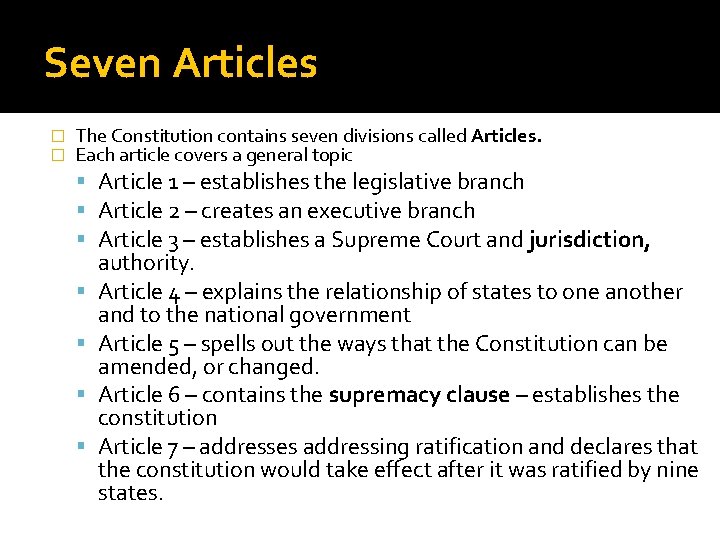
Seven Articles � � The Constitution contains seven divisions called Articles. Each article covers a general topic Article 1 – establishes the legislative branch Article 2 – creates an executive branch Article 3 – establishes a Supreme Court and jurisdiction, authority. Article 4 – explains the relationship of states to one another and to the national government Article 5 – spells out the ways that the Constitution can be amended, or changed. Article 6 – contains the supremacy clause – establishes the constitution Article 7 – addresses addressing ratification and declares that the constitution would take effect after it was ratified by nine states.
Principles of the Constitution
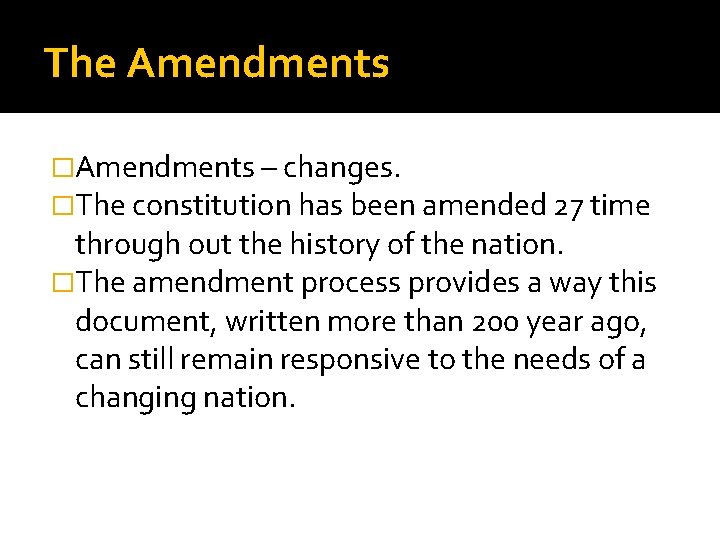
The Amendments �Amendments – changes. �The constitution has been amended 27 time through out the history of the nation. �The amendment process provides a way this document, written more than 200 year ago, can still remain responsive to the needs of a changing nation.
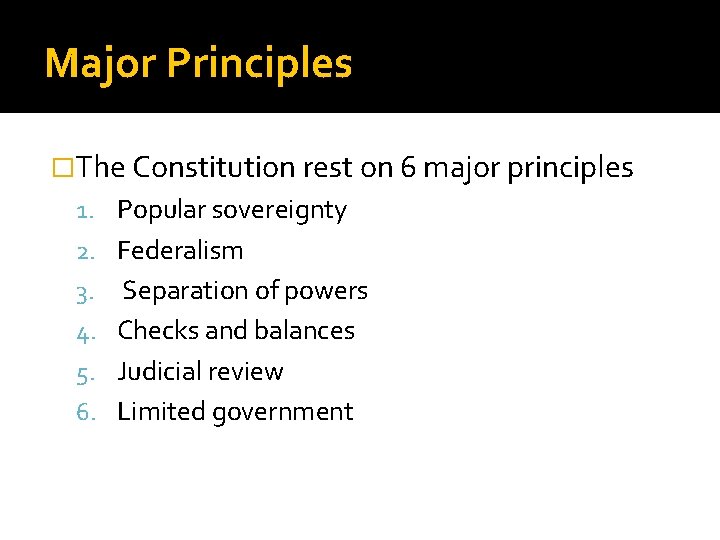
Major Principles �The Constitution rest on 6 major principles 1. Popular sovereignty 2. Federalism Separation of powers 4. Checks and balances 5. Judicial review 6. Limited government 3.
Popular Sovereignty �Popular Sovereignty – rule by the people. The United States government is based upon the consent of the governed. �The authority for the government flows from the people.
Where is the source of Power for the United States Government? The People gives the government it power!
Federalism �Federalism and federal system describe the basic structure of American government. �Should not be confused with the term federal government, which refers to the national government in Washington DC �Federalism, power is divided between national and state government. �Both levels have their own agencies and officials and pass laws that directly affect citizens �Federalism represented a middle ground in comparison to the Articles of Confederation
Separation of Powers �The Constitution limits the Central government by dividing power between the legislative, executive, and judicial branches. �Separation of Powers each branch has it responsibilities �This was a system the founders hoped would prevent any branch from gaining too much power.
Separation of Powers
Checks and Balance �Checks and Balances each branch of government exercises some control over the others. Congress passes laws, but President can check Congress by rejecting (vetoing) its legislature. The federal courts restrain Congress by ruling on the constitutionality of laws. The President appoints members to the Supreme court, but Congress have to approve them.
Checks and Balances
Judicial Review �Judicial Review is the power of the courts to declare laws and actions of local, state, or national governments, invalid if they violate the Constitution. �All federal courts have this power but the Supreme Court is the final authority on the meaning of the Constitution. �The Supreme Court Case Marbury v. Madison in 1803 established the precedent for federal courts to rule on actions of the government.
Limited Government �The principle of limited government means that the Constitution limits the action of government by specifically listing powers it does and does not have. �The first 10 amendments set specific limits in areas of freedom of expression, personal security, and fair trials. �Although the principles of the Constitution have existed for more than 200 years, it is consistently remains a flexible and dynamic instrument for meeting the changing needs of American Government.
Shared Powers of the Constitution