
The Constitution A Brief History Colonial Policies King
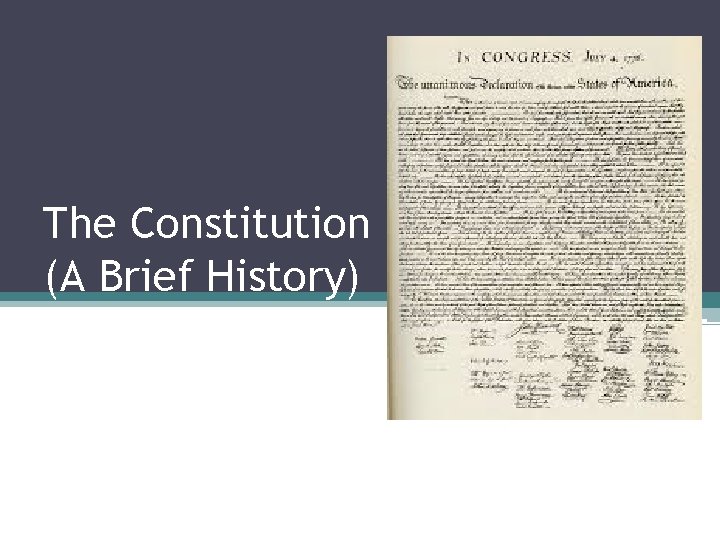
The Constitution (A Brief History)

Colonial Policies • King controls the colonies, Parliament has little control • 2, 000 miles away- too hard to govern ▫ Colonies become used to self-governing • Federal relationship • More taxation
Colonial Unity • Albany Plan ▫ Ben Franklin’s idea: yearly congress of delegates Raise defense Trade Criminal matters • Stamp Act Congress ▫ Act requires stamps on all paper products ▫ Delegates to New York- draft grievances against King
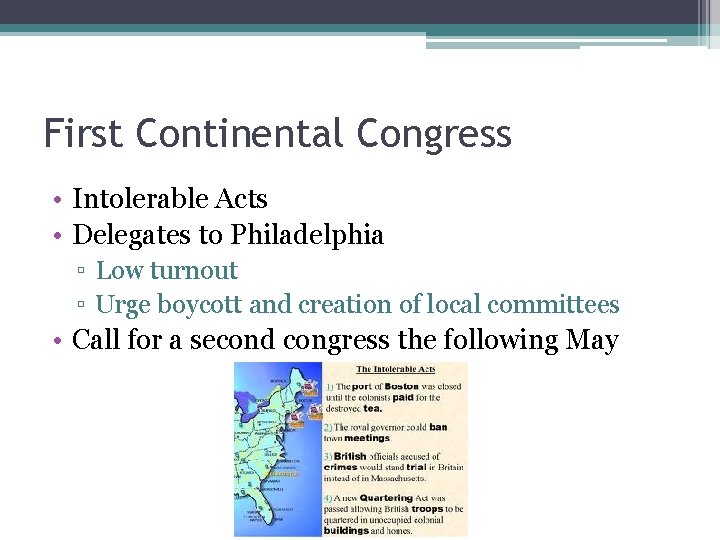
First Continental Congress • Intolerable Acts • Delegates to Philadelphia ▫ Low turnout ▫ Urge boycott and creation of local committees • Call for a second congress the following May
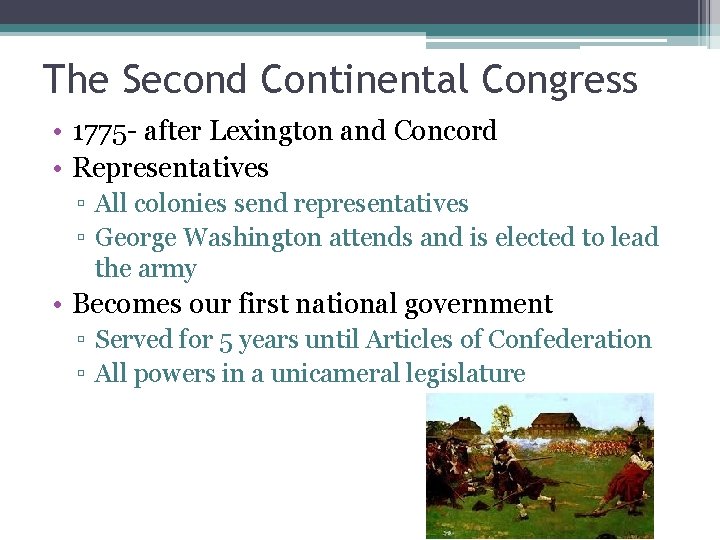
The Second Continental Congress • 1775 - after Lexington and Concord • Representatives ▫ All colonies send representatives ▫ George Washington attends and is elected to lead the army • Becomes our first national government ▫ Served for 5 years until Articles of Confederation ▫ All powers in a unicameral legislature

The Articles of Confederation • Approved in 1777 ratified in 1781 • Government structure: ▫ Unicameral congress ▫ One state-one vote ▫ One member to be the presiding officer • This is a Confederate form of government ▫ Very weak central government
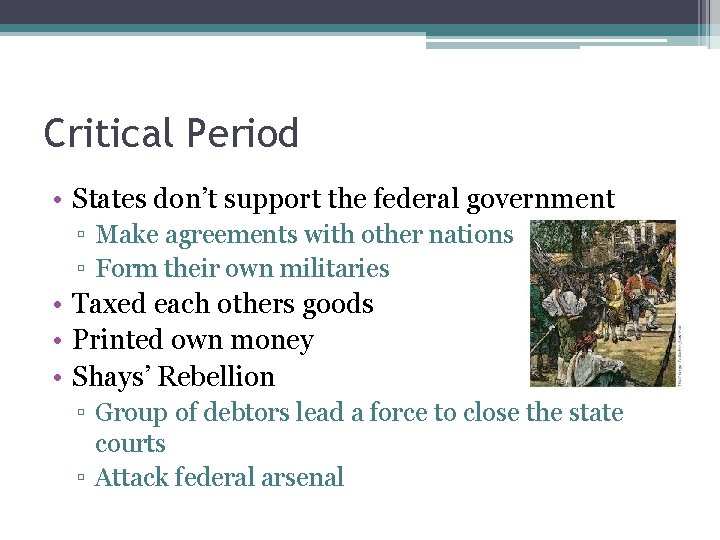
Critical Period • States don’t support the federal government ▫ Make agreements with other nations ▫ Form their own militaries • Taxed each others goods • Printed own money • Shays’ Rebellion ▫ Group of debtors lead a force to close the state courts ▫ Attack federal arsenal
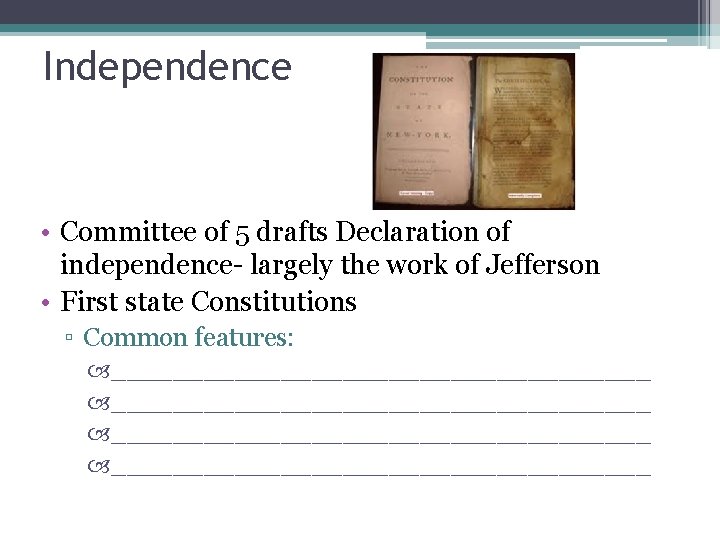
Independence • Committee of 5 drafts Declaration of independence- largely the work of Jefferson • First state Constitutions ▫ Common features: ___________________________________

The Constitutional Convention • The Framers ▫ 12 states send delegates: not _______ ▫ Average age: 42, most in their 30 s • Procedure ▫ George Washington elected __________________________________ ▫ Worked in secrecy ▫ The decision: ____________________________________
The Virginia Plan • • • Madison _________________________________ Power of veto _________________ Considered radical
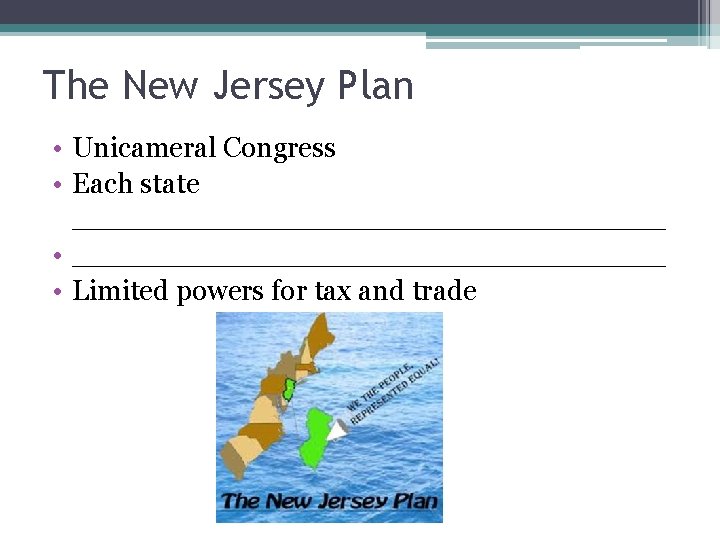
The New Jersey Plan • Unicameral Congress • Each state _________________________________ • Limited powers for tax and trade
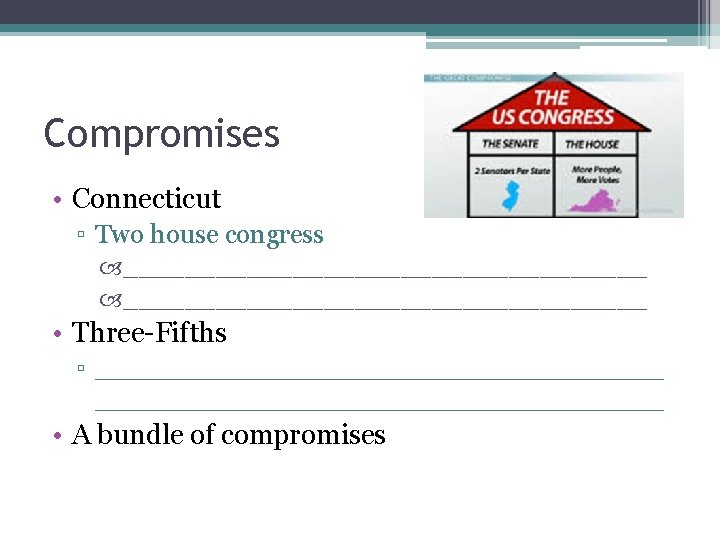
Compromises • Connecticut ▫ Two house congress __________________________________ • Three-Fifths ▫ __________________________________ • A bundle of compromises
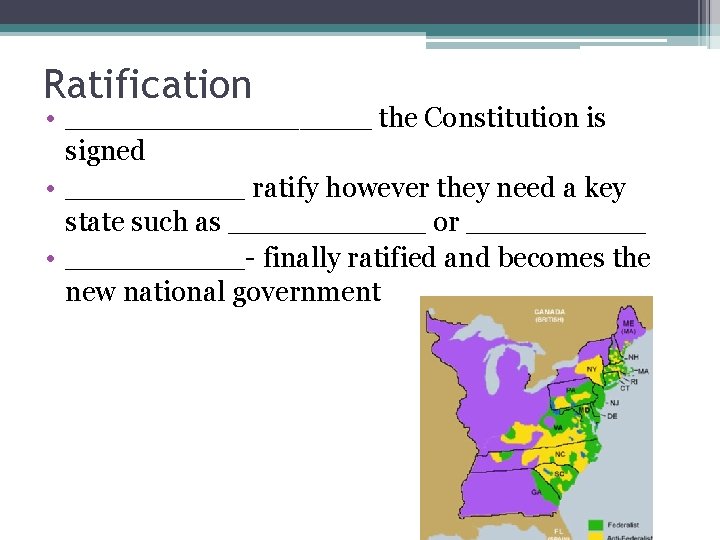
Ratification • _________ the Constitution is signed • _____ ratify however they need a key state such as ______ or _____ • _____- finally ratified and becomes the new national government
SEVEN BASIC PRINCIPLES OF THE CONSTITUTION · Popular Sovereignty- the governments right to rule comes from the people · Limited Government- the government has only the powers that the Constitution gives to it · Separation of Power-the Constitution divides the government into three branches: Congress-legislative branch makes laws President-executive branch carries out the laws Courts-judicial branch explains and interprets the laws · Checks and Balances- each branch of government has the power to check or limit the actions of the other two · Federalism-division of power between the federal government and the states. · Republicanism- citizens elect representatives to carry out their will · Individual rights-The Constitution protects individual rights such as freedom of speech, freedom religion etc
- Slides: 14