
The Consonants Fricatives Articulatory Description For consonants threepart
![Voiceless [p] pat [t] tie [k] kill [f] fat [s] sip [T] thigh [S]](https://slidetodoc.com/presentation_image_h2/a0480136bc97696c8e71cd318de6fde5/image-4.jpg "Voiceless [p] pat [t] tie [k] kill [f] fat [s] sip [T] thigh [S]")


![[ʃ] [ʒ] Uses rear of alveolar ridge and tongue tip/blade. example sibilant Sibilant (sounds](https://slidetodoc.com/presentation_image_h2/a0480136bc97696c8e71cd318de6fde5/image-28.jpg "[ʃ] [ʒ] Uses rear of alveolar ridge and tongue tip/blade. example sibilant Sibilant (sounds")
![[h] �Voiceless �Glottal (produced in the glottis) �Fricative �Always followed by a vowels. �/h/](https://slidetodoc.com/presentation_image_h2/a0480136bc97696c8e71cd318de6fde5/image-32.jpg "[h] �Voiceless �Glottal (produced in the glottis) �Fricative �Always followed by a vowels. �/h/")
- Slides: 33
The Consonants Fricatives
Articulatory Description For consonants, three-part classification system: 1) Voicing 2) Place (of articulation) 3) Manner (of articulation) e. g. , [v]: voiced labiodental fricative
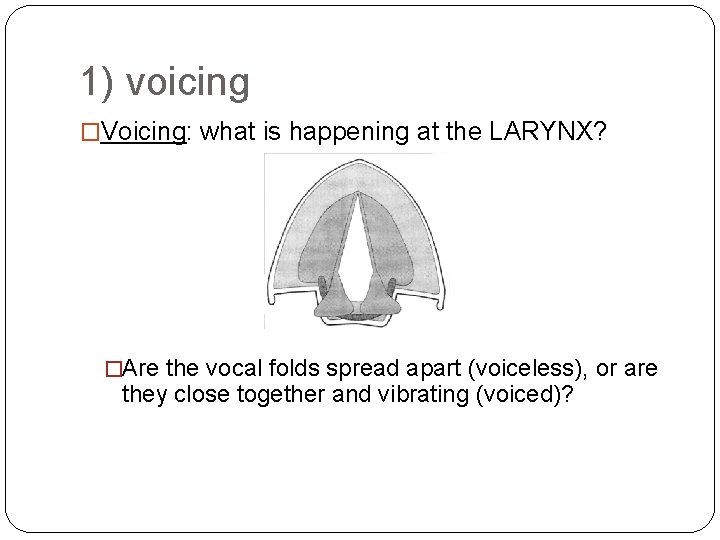
1) voicing �Voicing: what is happening at the LARYNX? �Are the vocal folds spread apart (voiceless), or are they close together and vibrating (voiced)?
Voiceless [p] pat [t] tie [k] kill [f] fat [s] sip [T] thigh [S] dilution [t. S] etch Voiced [b] bat [d] die [g] gill [v] vat [z] zip [D] thy [Z] delusion [d. Z] edge
2) Place �Place (of articulation): WHERE in the vocal tract is the constriction being made?
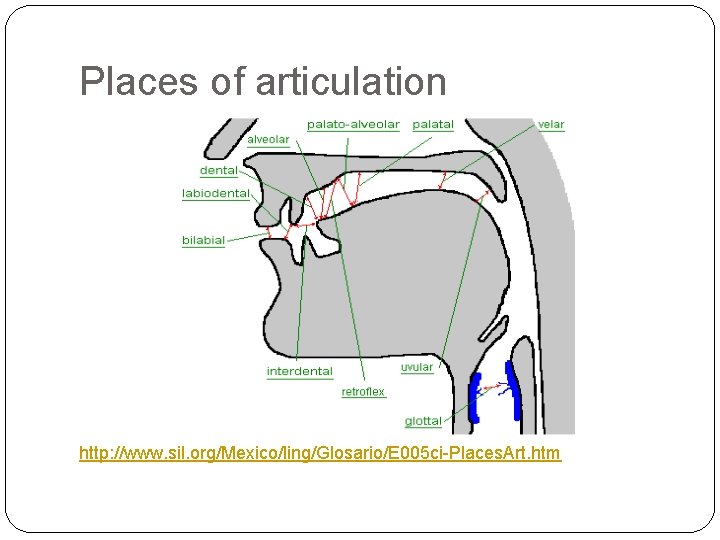
Places of articulation http: //www. sil. org/Mexico/ling/Glosario/E 005 ci-Places. Art. htm
3) Manner �Manner (of articulation): HOW is the air being modified as it moves through the vocal tract?
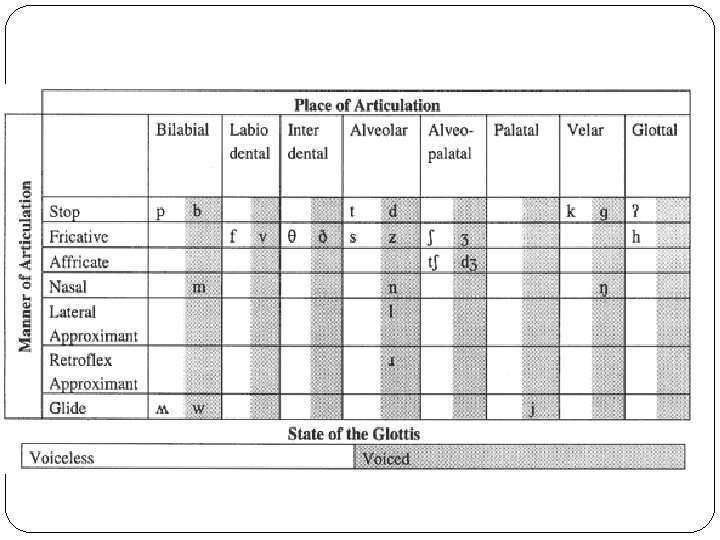
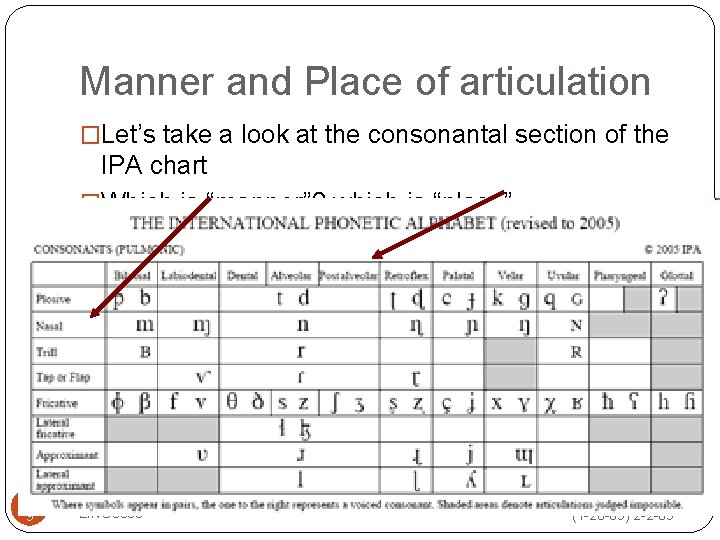
Manner and Place of articulation �Let’s take a look at the consonantal section of the IPA chart �Which is “manner”? which is “place” 9 LING 3330 (1 -28 -09) 2 -2 -09
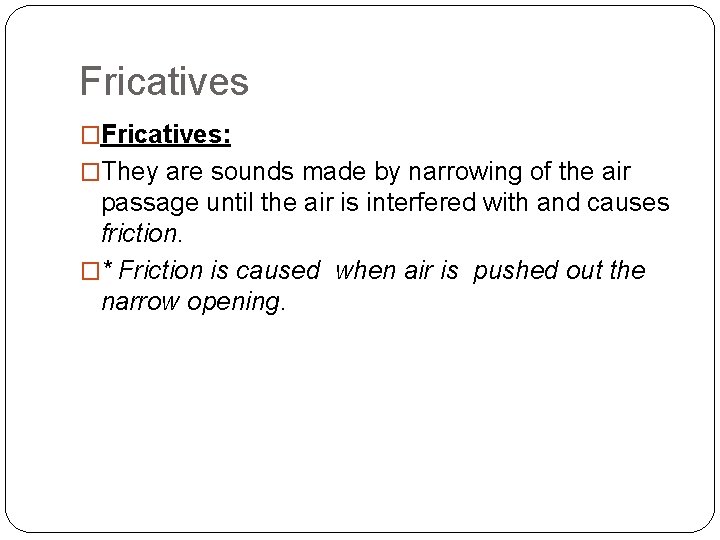
Fricatives �Fricatives: �They are sounds made by narrowing of the air passage until the air is interfered with and causes friction. �* Friction is caused when air is pushed out the narrow opening.
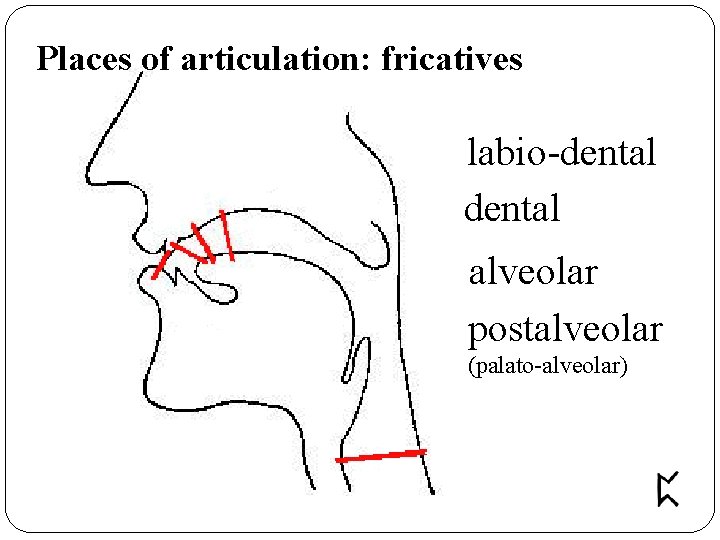
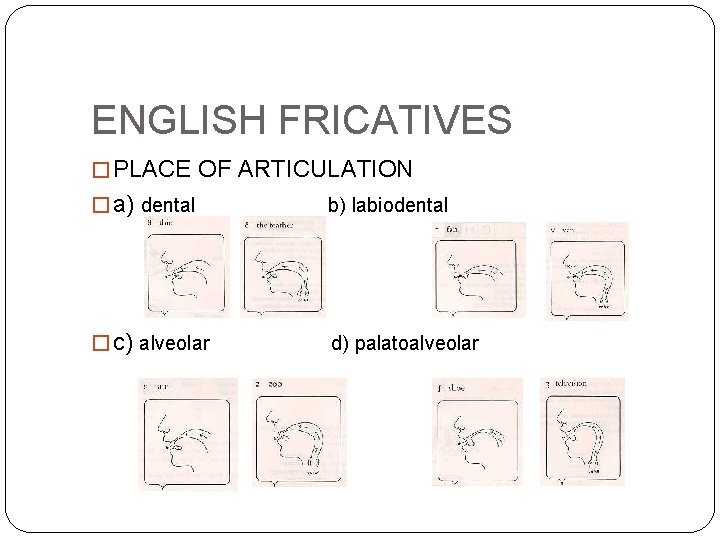
Places of articulation: fricatives labio-dental alveolar postalveolar (palato-alveolar)
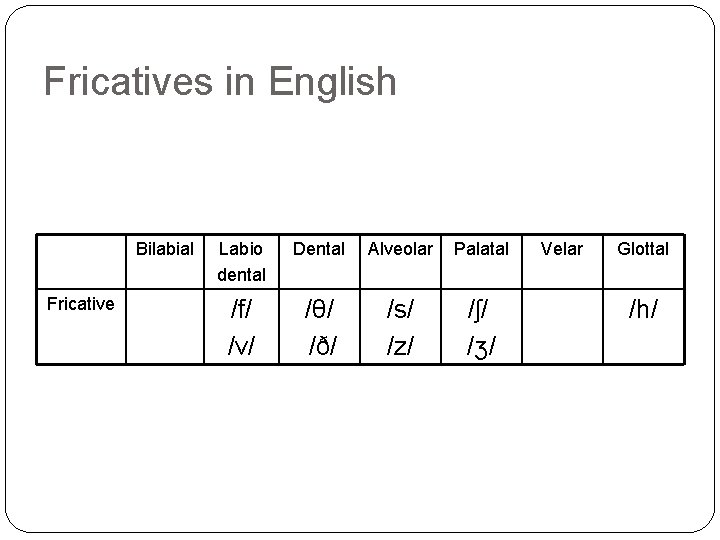
Fricatives in English Bilabial Fricative Labio dental Dental Alveolar Palatal /f/ /v/ /θ/ /ð/ /s/ /z/ /ʃ/ /ʒ/ Velar Glottal /h/
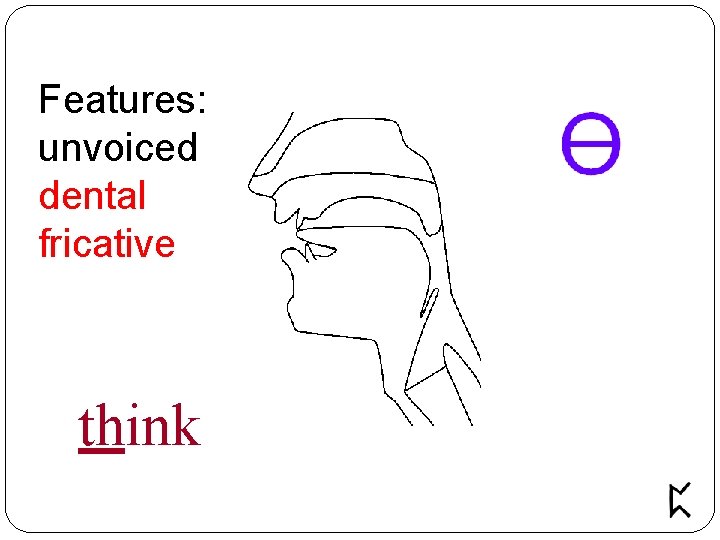
Features: unvoiced dental fricative think
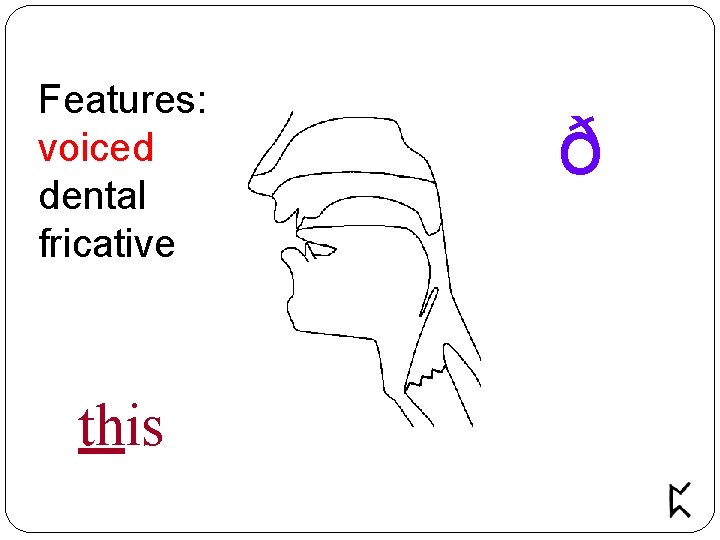
Features: voiced dental fricative this ð
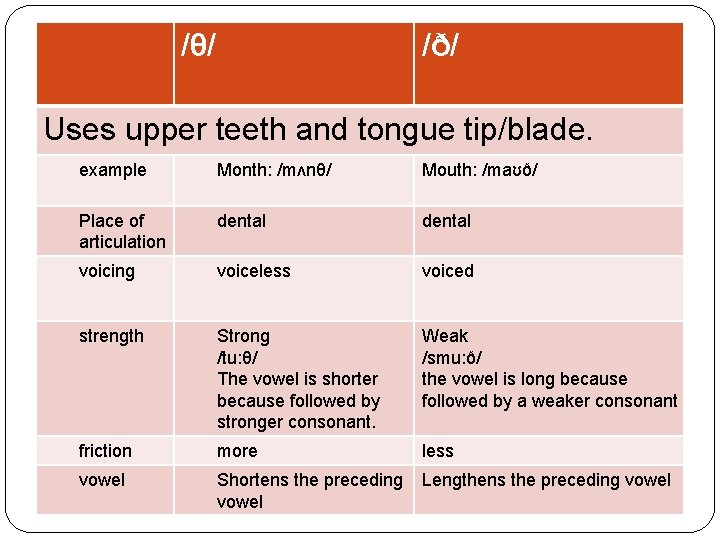
/θ/ /ð/ Uses upper teeth and tongue tip/blade. example Month: /mʌnθ/ Mouth: /maʊð/ Place of articulation dental voicing voiceless voiced strength Strong /tu: θ/ The vowel is shorter because followed by stronger consonant. Weak /smu: ð/ the vowel is long because followed by a weaker consonant friction more less vowel Shortens the preceding vowel Lengthens the preceding vowel
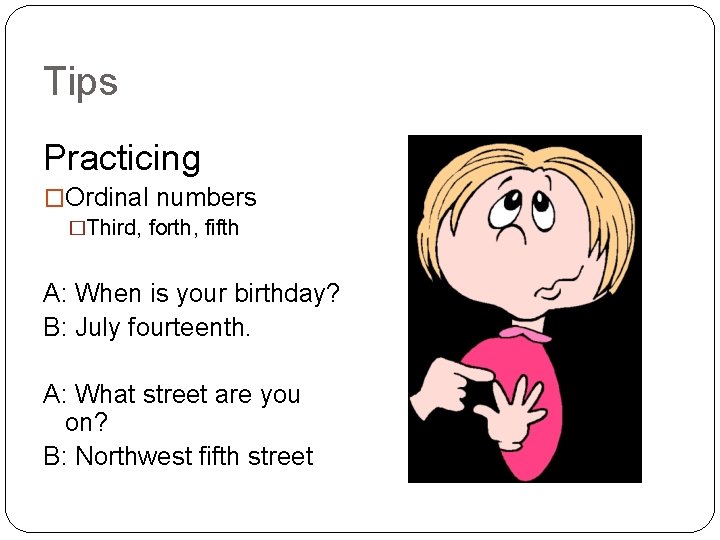
Tips Practicing �Ordinal numbers �Third, forth, fifth A: When is your birthday? B: July fourteenth. A: What street are you on? B: Northwest fifth street
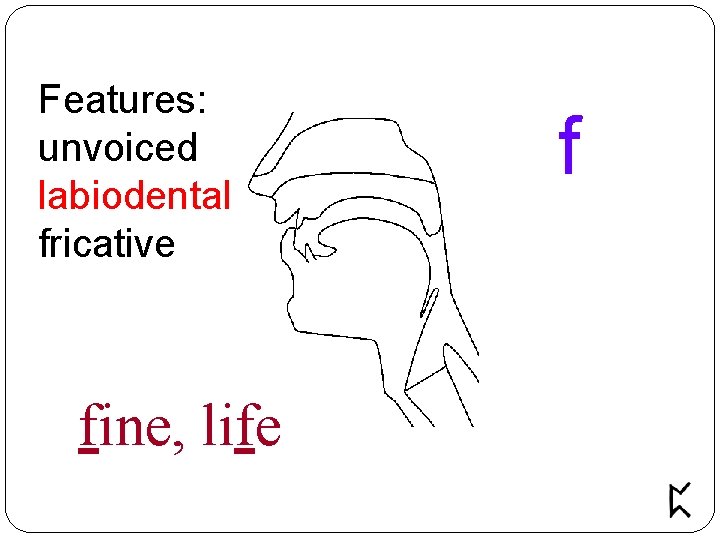
Features: unvoiced labiodental fricative fine, life f
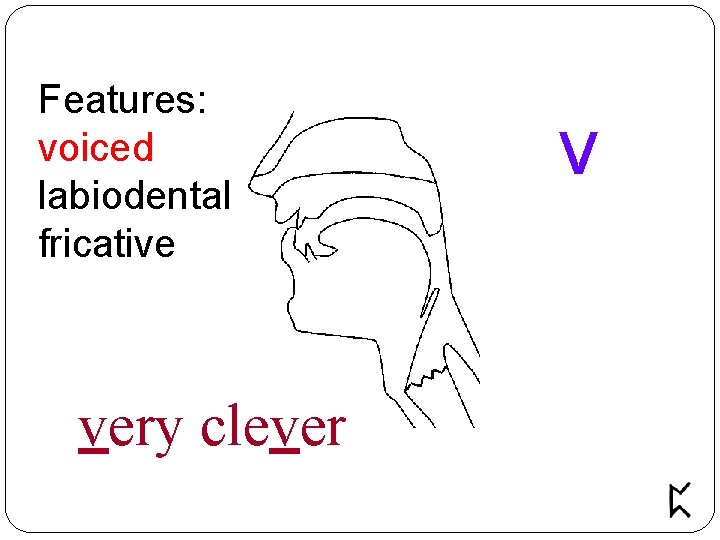
Features: voiced labiodental fricative very clever v
�http: //www. youtube. com/watch? v=n 2 p. Rcsup. Lu. I&f eature=related �http: //www. youtube. com/watch? v=Gu. R 53 x. Lt. JDQ &feature=related
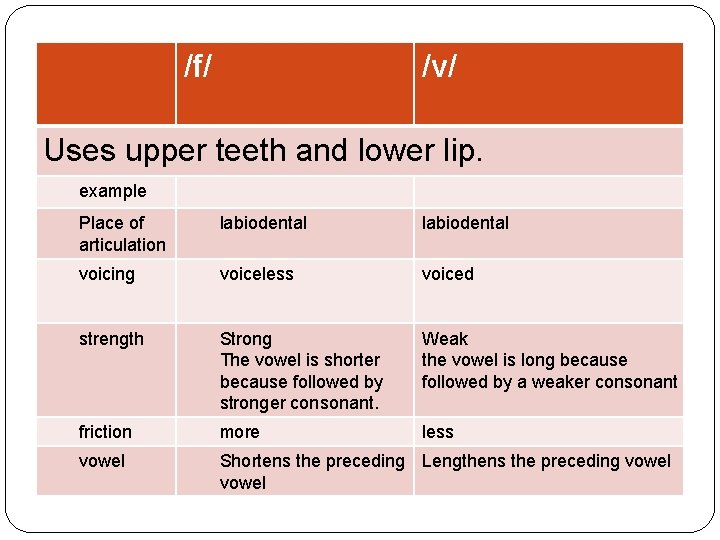
/f/ /v/ Uses upper teeth and lower lip. example Place of articulation labiodental voicing voiceless voiced strength Strong The vowel is shorter because followed by stronger consonant. Weak the vowel is long because followed by a weaker consonant friction more less vowel Shortens the preceding Lengthens the preceding vowel
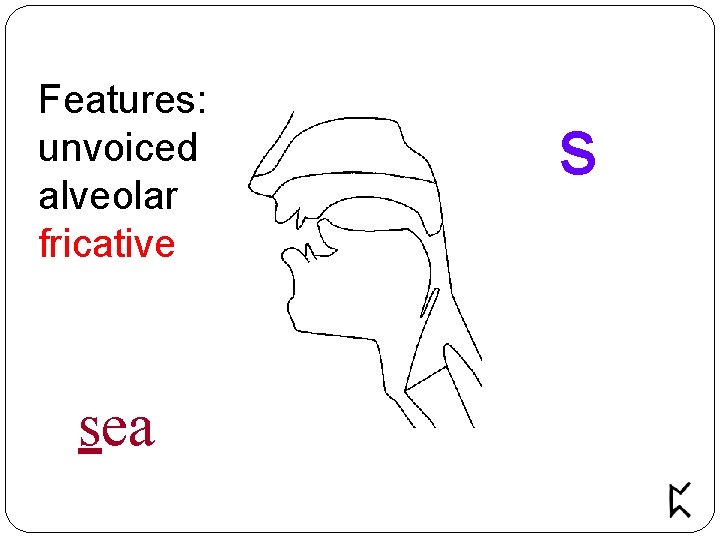
Features: unvoiced alveolar fricative sea s
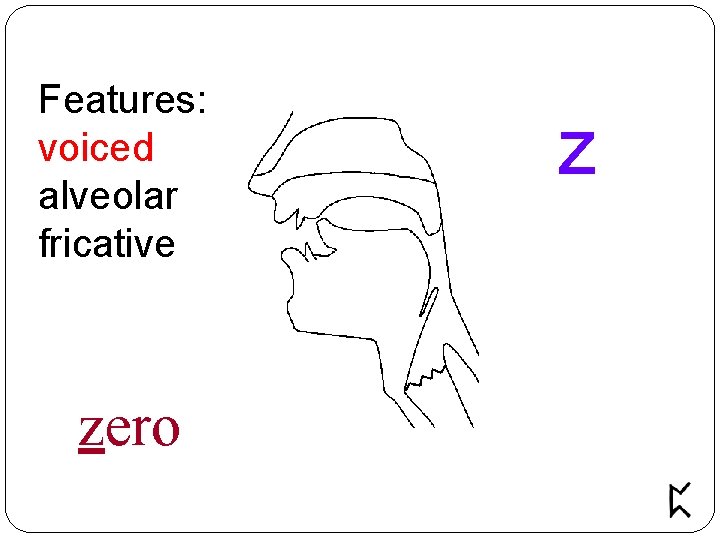
Features: voiced alveolar fricative zero z
�http: //www. youtube. com/watch? v=C 2 d. HZn. NHTd Q&feature=related �http: //www. youtube. com/watch? v=HK 0 N 0 UJg 6 Pk &feature=related
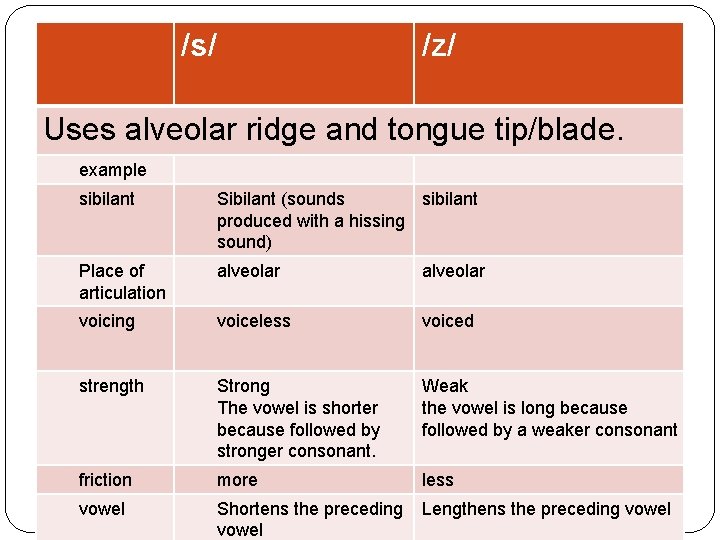
/s/ /z/ Uses alveolar ridge and tongue tip/blade. example sibilant Sibilant (sounds sibilant produced with a hissing sound) Place of articulation alveolar voicing voiceless voiced strength Strong The vowel is shorter because followed by stronger consonant. Weak the vowel is long because followed by a weaker consonant friction more less vowel Shortens the preceding vowel Lengthens the preceding vowel
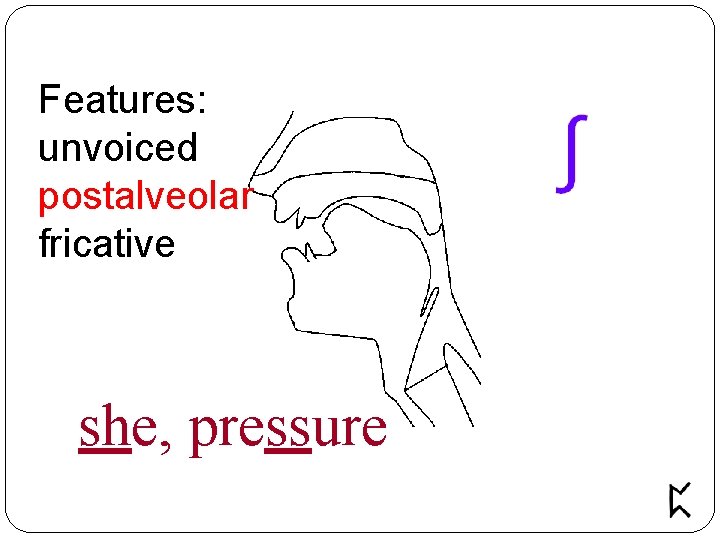
Features: unvoiced postalveolar fricative she, pressure
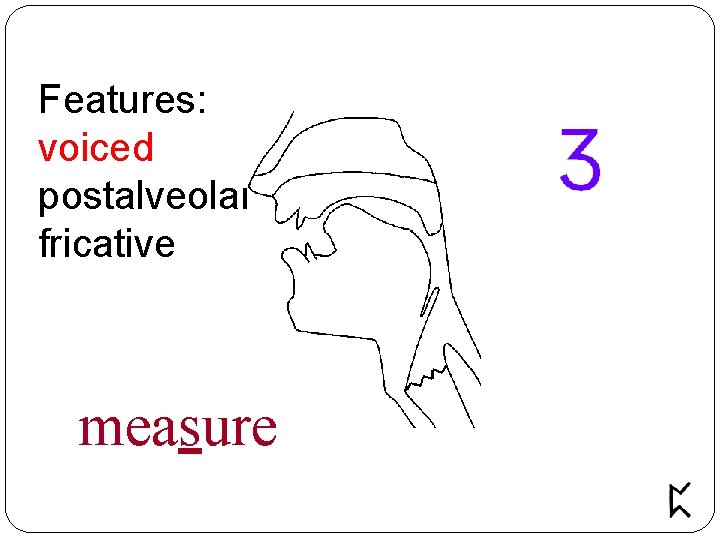
Features: voiced postalveolar fricative measure
�http: //www. youtube. com/watch? v=8 qt. PHW 84 a 6 o �http: //www. youtube. com/watch? v=8 Mrsw. KHGzbg &feature=related
[ʃ] [ʒ] Uses rear of alveolar ridge and tongue tip/blade. example sibilant Sibilant (sounds produced with a hissing sound) sibilant Place of articulation Post-alveolar (palato - alveolar) voicing voiceless voiced strength Strong The vowel is shorter because followed by stronger consonant. Weak the vowel is long because followed by a weaker consonant friction more less vowel Shortens the Lengthens the preceding
ENGLISH FRICATIVES � PLACE OF ARTICULATION � a) dental b) labiodental � c) alveolar d) palatoalveolar
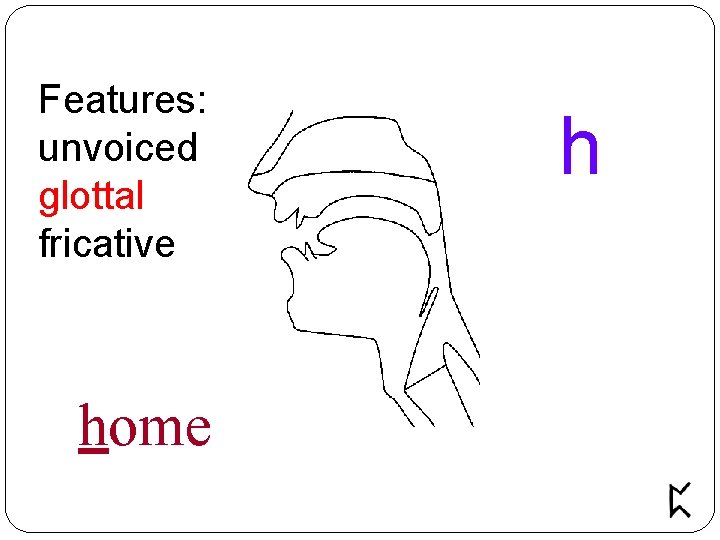
Features: unvoiced glottal fricative home h
�http: //www. youtube. com/watch? v=o. UMVSs. YPe. U c&feature=related
[h] �Voiceless �Glottal (produced in the glottis) �Fricative �Always followed by a vowels. �/h/ pronounced according to the vowel that follows �Between vowels the /h/ becomes voiced �The /h/ never occurs at the end of English words.
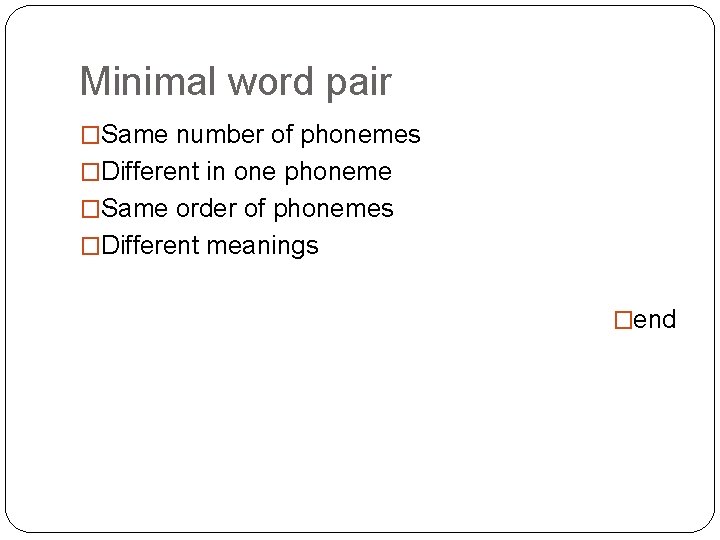
Minimal word pair �Same number of phonemes �Different in one phoneme �Same order of phonemes �Different meanings �end