
The Congress Chapter 10 Section 2 Members of

The Congress Chapter 10 Section 2
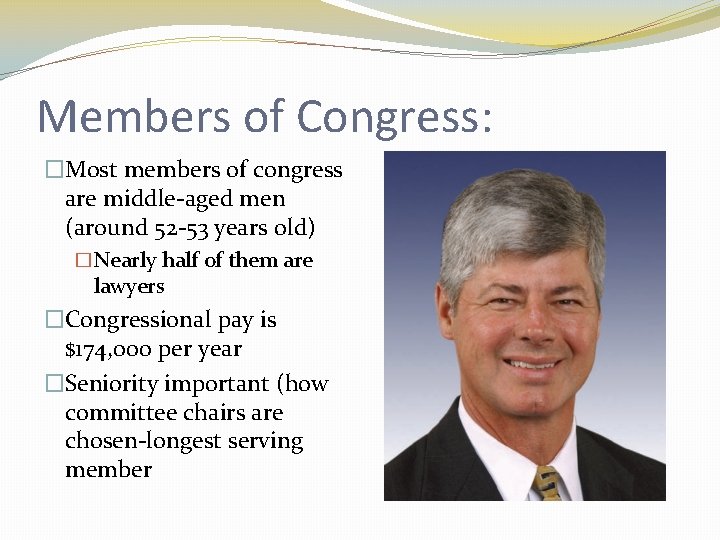
Members of Congress: �Most members of congress are middle-aged men (around 52 -53 years old) �Nearly half of them are lawyers �Congressional pay is $174, 000 per year �Seniority important (how committee chairs are chosen-longest serving member
Members of Congress: �The way a congressperson votes can be influenced by �Their constituents’ views �Their party membership �Their personal views �Over 90% of incumbents are re-elected every election �Ability to raise money �People recognize their name �http: //www. colbertnation. com/the-colbert-reportvideos/421159/november-12 -2012/colbert-super-pac-shh---karl-rove---jon-stewart Colbert PAC
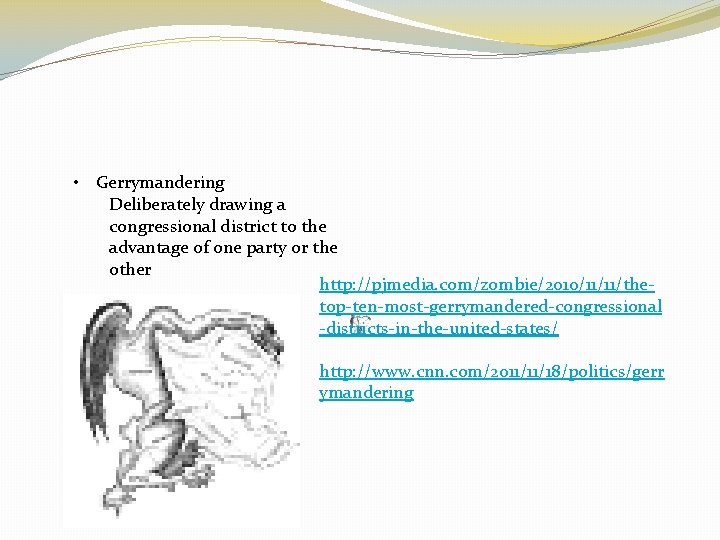
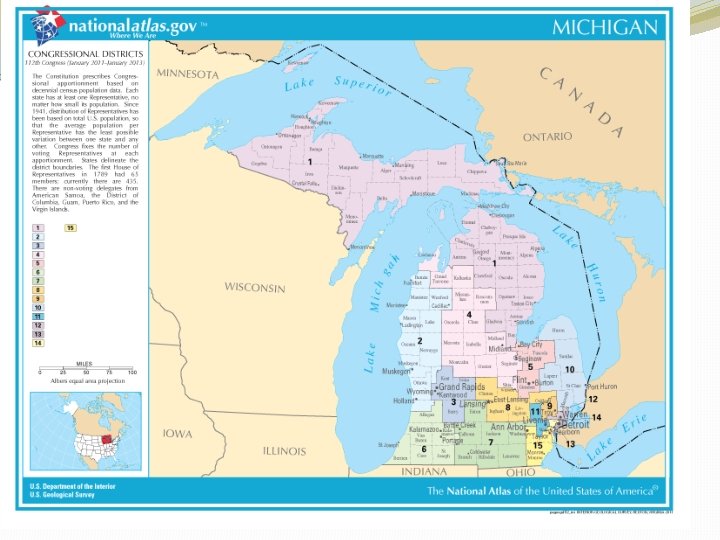
• Gerrymandering Deliberately drawing a congressional district to the advantage of one party or the other http: //pjmedia. com/zombie/2010/11/11/thetop-ten-most-gerrymandered-congressional -districts-in-the-united-states/ http: //www. cnn. com/2011/11/18/politics/gerr ymandering
Congressional Staff: �Personal Staff: Staff who work directly for a congressperson �Committee Staff: Staff who work for a specific committee �Huge increases in staffing, attributed to �Growing complexity of lawmaking (ADA, environmental laws, trade agreements, etc. ) �Demands that are placed on lawmakers by constituents �It helps them get re-elected

�http: //www. colbertnation. com/the-colbert-reportvideos/421160/november-12 -2012/colbert-super-pacshh----secret-second-501 c 4 ---trevor-potter �Colbert keep the money
Congressional Staff: �Administrative Assistants: Take care of the office, set appointments, answer phones, etc. �Legislative Assistants: Make sure the congressperson is up on current issues and is informed about pending legislation �Caseworkers: Take care of dealing with constituents (social security, NIMBY issues, etc. ) �Congressional Budget Office (CBO): Studies the President’s budget & does counter studies to use for and against him �General Accounting Office (GAO): keeps track of congressional spending, reviews finances �General Procurement Office (GPO): Prints everything, congressional records, bills, etc.
How a Bill Becomes a Law: �A bill is introduced by dropping it into the “hopper” �This can only be done by a member of congress �Concurrent Resolutions: Do not have the force of law, are just used to make a statement �Joint Resolutions: Have the force of law and require the President’s approval �https: //www. youtube. com /watch? v=tye. J 55 o 3 El 0
How a Bill Becomes a Law: �In both the House & the Senate: �A bill is introduced & assigned to a committee �The bill is assigned to a subcommittee & then usually goes back to the main committee for approval �After committee approval, House bills usually go to the Rules committee, where rules are set for debating the bill on the floor �The bill then goes to the Committee of the Whole for further discussion & revision �Finally, the bill goes to the House floor for a highly restricted debate (amendments are offered & the entire house votes on the bill)
How a Bill Becomes a Law: �The Senate has no Rules Committee or Committee of a Whole �Once a bill gets committee approval in the Senate, it goes right to the Senate floor for debate �Debate in the Senate is almost completely unrestricted, anyone as long as they want � It’s this that allows for a “filibuster” which is to talk until the opposition decides to change or abandon their position � Can be stopped by a vote of cloture (requiring 60 votes)
How a Bill Becomes a Law: �The bill then goes to a conference committee (if necessary) where both houses work out differences in the bills �The compromise bill then goes back to the House & Senate for a vote �If it passes this, it goes to the President for approval or veto �If vetoed, it can be overridden by a 2/3 vote of both houses
- Slides: 12