
The Conducting System Figure 18 13 Impulse Conduction

- Slides: 37
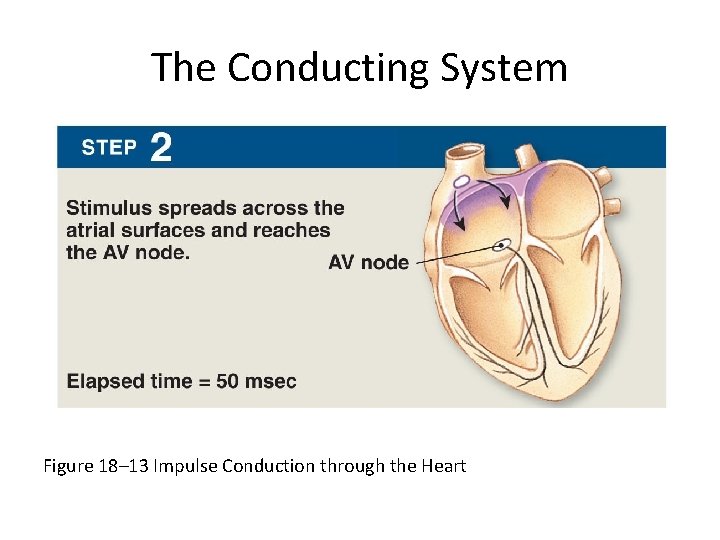
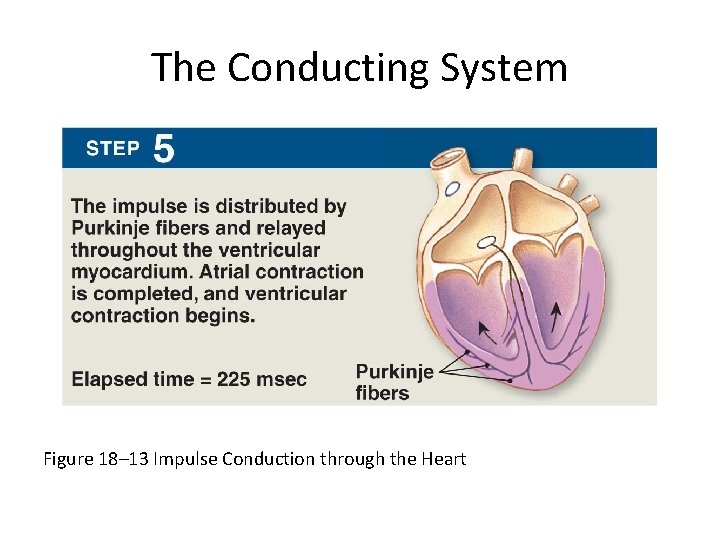
The Conducting System Figure 18– 13 Impulse Conduction through the Heart
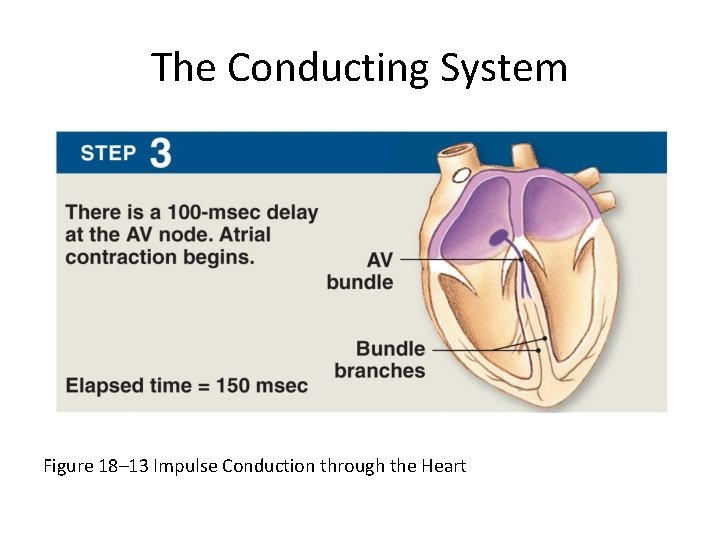
The Conducting System Figure 18– 13 Impulse Conduction through the Heart
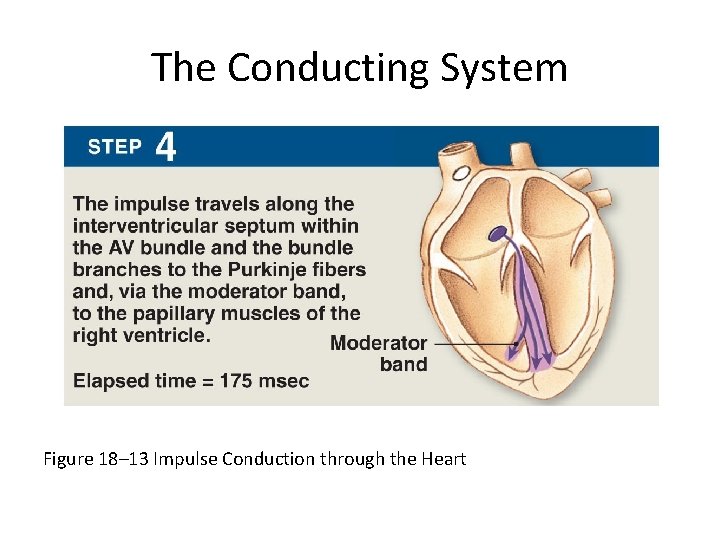
The Conducting System • The AV Bundle – In the septum – Carries impulse to left and right bundle branches • Which conduct to Purkinje fibers (Step 4) – And to the moderator band • Which conducts to papillary muscles
The Conducting System Figure 18– 13 Impulse Conduction through the Heart
The Conducting System • Purkinje Fibers – Distribute impulse through ventricles (Step 5) – Atrial contraction is completed – Ventricular contraction begins
The Conducting System Figure 18– 13 Impulse Conduction through the Heart
The Conducting System • Abnormal Pacemaker Function – Bradycardia: abnormally slow heart rate – Tachycardia: abnormally fast heart rate – Ectopic pacemaker • Abnormal cells • Generate high rate of action potentials • Bypass conducting system • Disrupt ventricular contractions
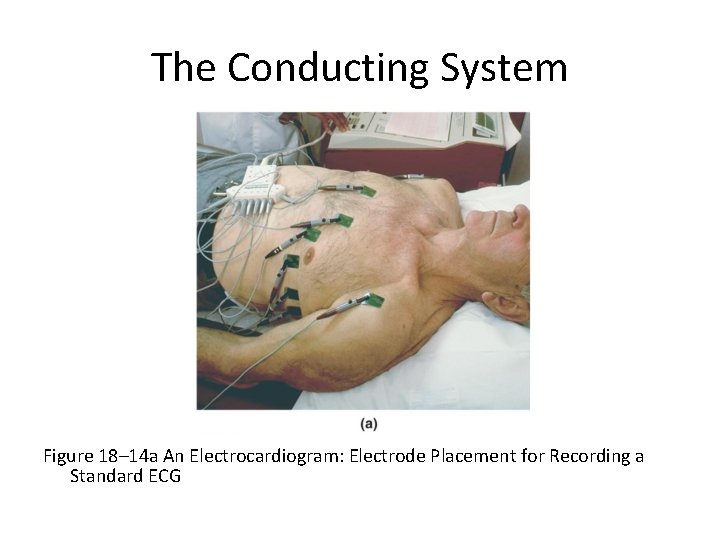
The Conducting System • Electrocardiogram (ECG or EKG) – A recording of electrical events in the heart – Obtained by electrodes at specific body locations – Abnormal patterns diagnose damage
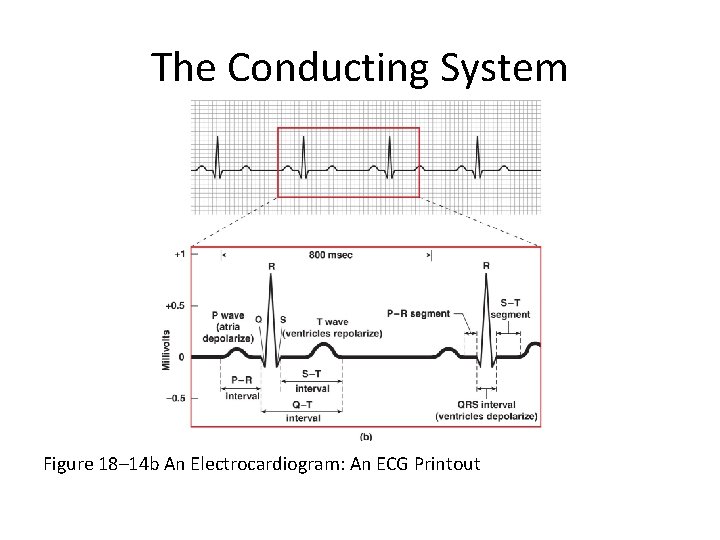
The Conducting System • Features of an ECG – P wave • Atria depolarize – QRS complex • Ventricles depolarize – T wave • Ventricles repolarize
The Conducting System • Time Intervals Between ECG Waves – P–R interval • From start of atrial depolarization • To start of QRS complex – Q–T interval • From ventricular depolarization • To ventricular repolarization
The Conducting System Figure 18– 14 a An Electrocardiogram: Electrode Placement for Recording a Standard ECG
The Conducting System Figure 18– 14 b An Electrocardiogram: An ECG Printout
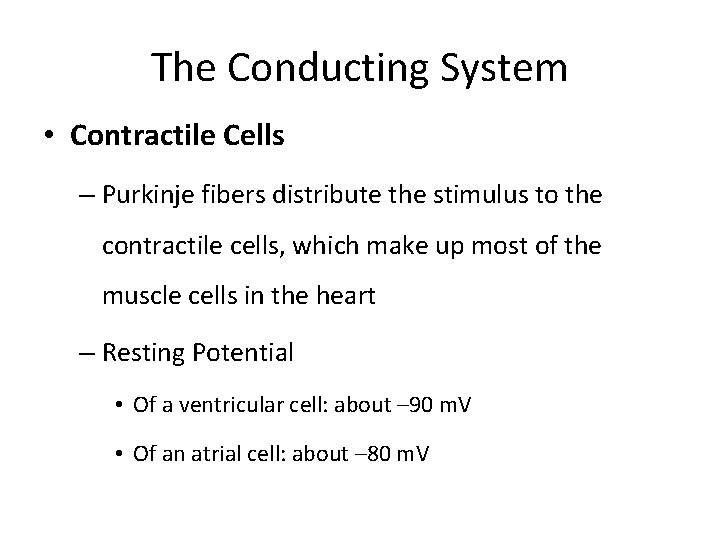
The Conducting System • Contractile Cells – Purkinje fibers distribute the stimulus to the contractile cells, which make up most of the muscle cells in the heart – Resting Potential • Of a ventricular cell: about – 90 m. V • Of an atrial cell: about – 80 m. V
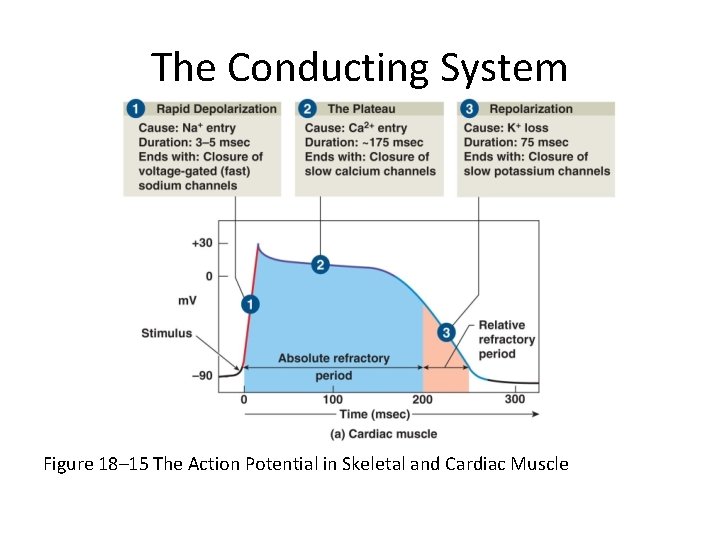
The Conducting System Figure 18– 15 The Action Potential in Skeletal and Cardiac Muscle
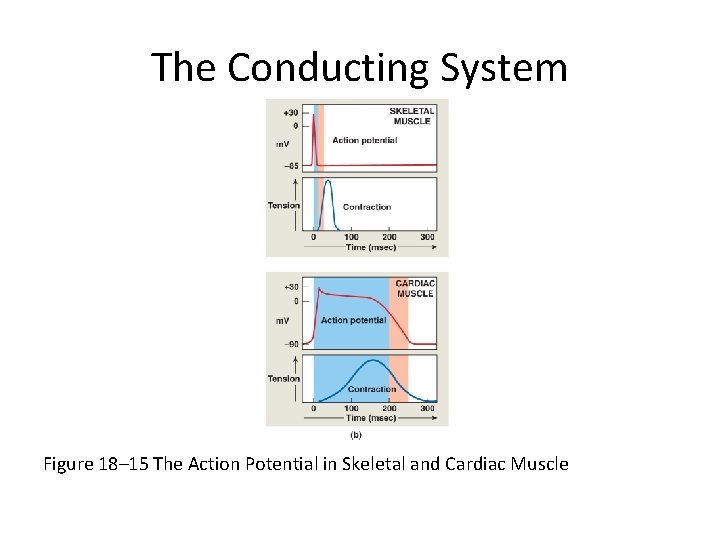
The Conducting System Figure 18– 15 The Action Potential in Skeletal and Cardiac Muscle
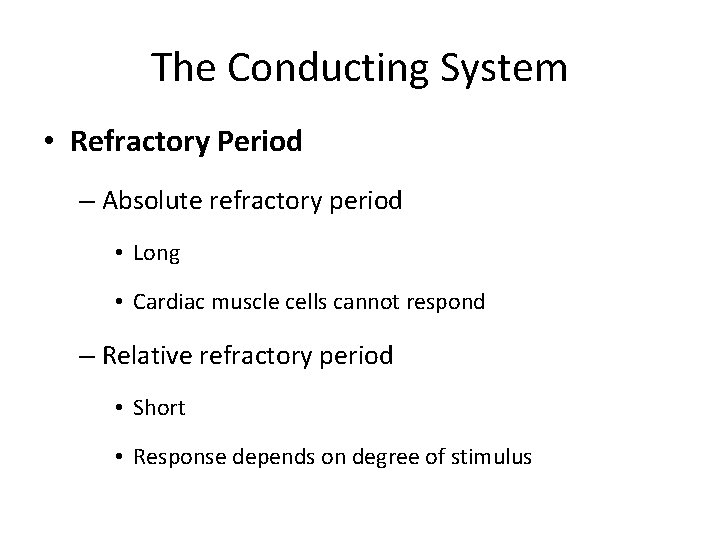
The Conducting System • Refractory Period – Absolute refractory period • Long • Cardiac muscle cells cannot respond – Relative refractory period • Short • Response depends on degree of stimulus
The Conducting System • Timing of Refractory Periods – Length of cardiac action potential in ventricular cell • 250– 300 msecs: – 30 times longer than skeletal muscle fiber – long refractory period prevents summation and tetany
The Conducting System • The Role of Calcium Ions in Cardiac Contractions – Contraction of a cardiac muscle cell is produced by an increase in calcium ion concentration around myofibrils
The Conducting System • The Role of Calcium Ions in Cardiac Contractions – 20% of calcium ions required for a contraction • Calcium ions enter plasma membrane during plateau phase – Arrival of extracellular Ca 2+ • Triggers release of calcium ion reserves from sarcoplasmic reticulum
The Conducting System • The Role of Calcium Ions in Cardiac Contractions – As slow calcium channels close • Intracellular Ca 2+ is absorbed by the SR • Or pumped out of cell – Cardiac muscle tissue • Very sensitive to extracellular Ca 2+ concentrations
The Conducting System • The Energy for Cardiac Contractions – Aerobic energy of heart • From mitochondrial breakdown of fatty acids and glucose • Oxygen from circulating hemoglobin • Cardiac muscles store oxygen in myoglobin
The Cardiac Cycle • Cardiac cycle = The period between the start of one heartbeat and the beginning of the next • Includes both contraction and relaxation
The Cardiac Cycle • Phases of the Cardiac Cycle – Within any one chamber • Systole (contraction) • Diastole (relaxation)
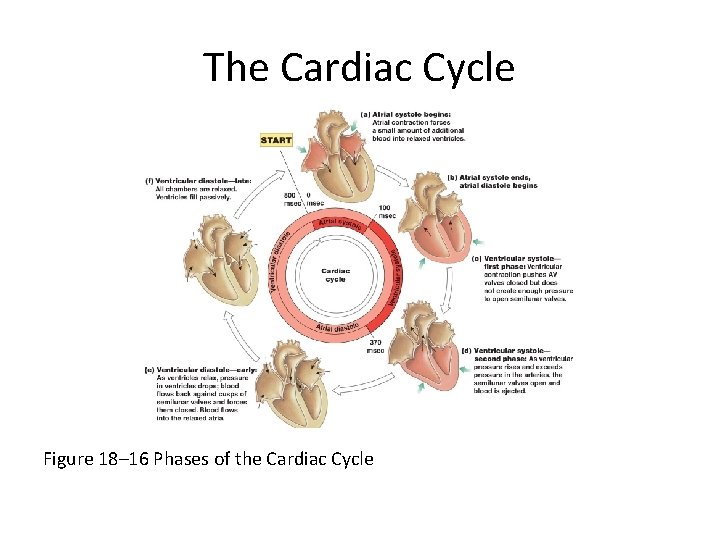
The Cardiac Cycle Figure 18– 16 Phases of the Cardiac Cycle
The Cardiac Cycle • Blood Pressure – In any chamber • Rises during systole • Falls during diastole – Blood flows from high to low pressure • Controlled by timing of contractions • Directed by one-way valves
The Cardiac Cycle • Cardiac Cycle and Heart Rate – At 75 beats per minute • Cardiac cycle lasts about 800 msecs – When heart rate increases • All phases of cardiac cycle shorten, particularly diastole
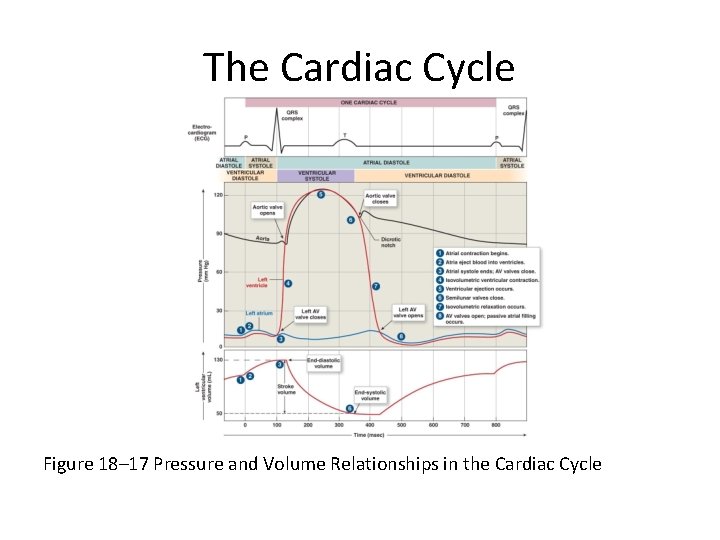
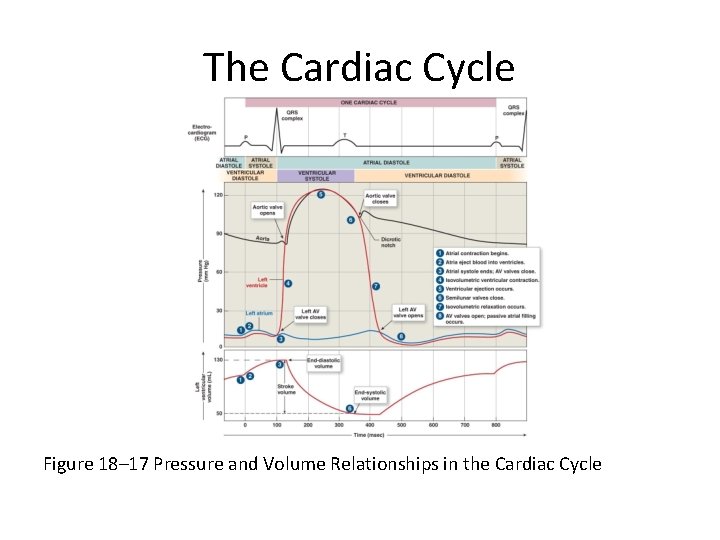
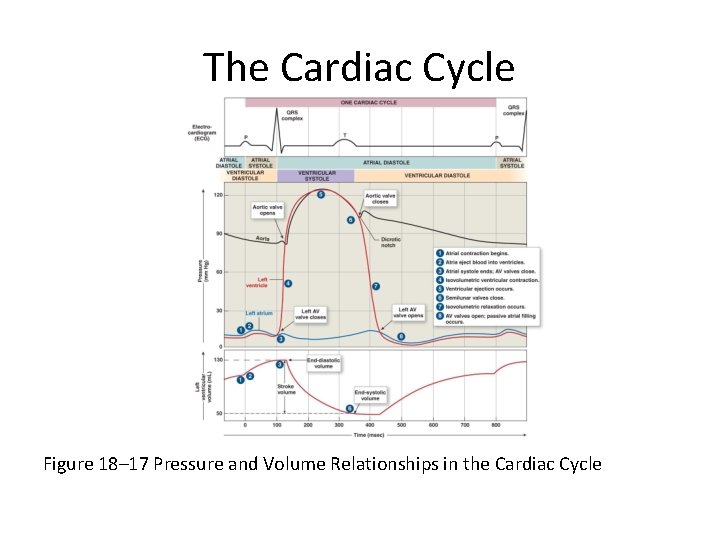
The Cardiac Cycle Eight Steps in the Cardiac Cycle 1. Atrial systole • Atrial contraction begins • Right and left AV valves are open 2. Atria eject blood into ventricles • Filling ventricles 3. Atrial systole ends • AV valves close • Ventricles contain maximum blood volume • Known as end-diastolic volume (EDV)
The Cardiac Cycle Figure 18– 17 Pressure and Volume Relationships in the Cardiac Cycle
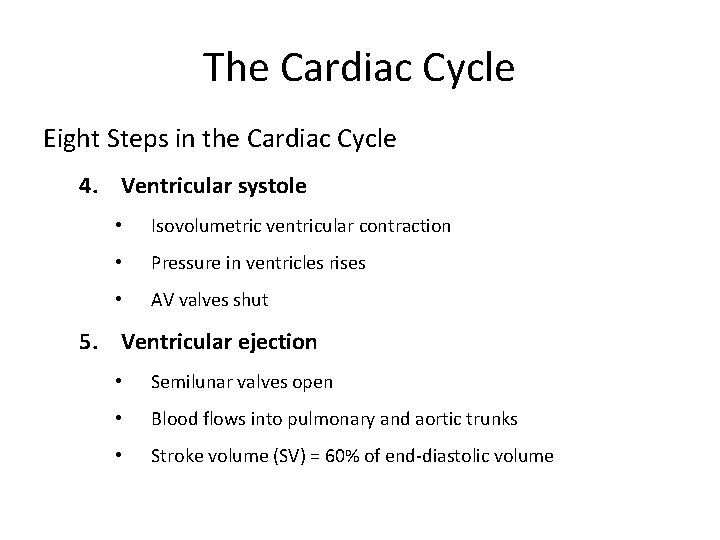
The Cardiac Cycle Eight Steps in the Cardiac Cycle 4. Ventricular systole • Isovolumetric ventricular contraction • Pressure in ventricles rises • AV valves shut 5. Ventricular ejection • Semilunar valves open • Blood flows into pulmonary and aortic trunks • Stroke volume (SV) = 60% of end-diastolic volume
The Cardiac Cycle Figure 18– 17 Pressure and Volume Relationships in the Cardiac Cycle
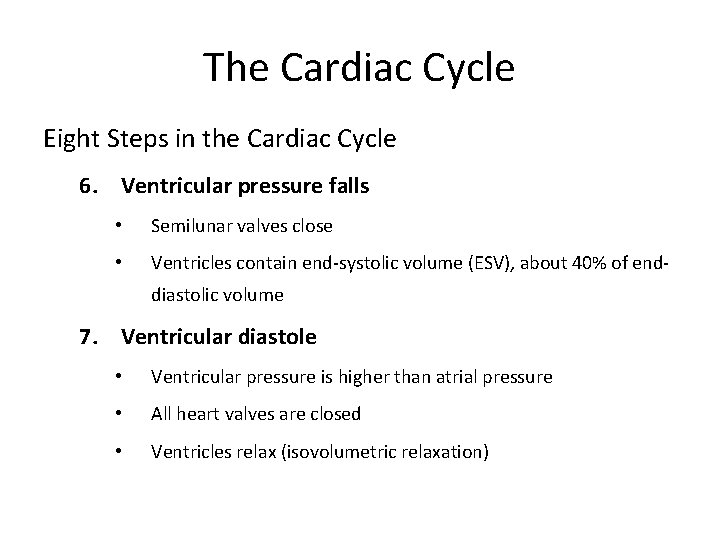
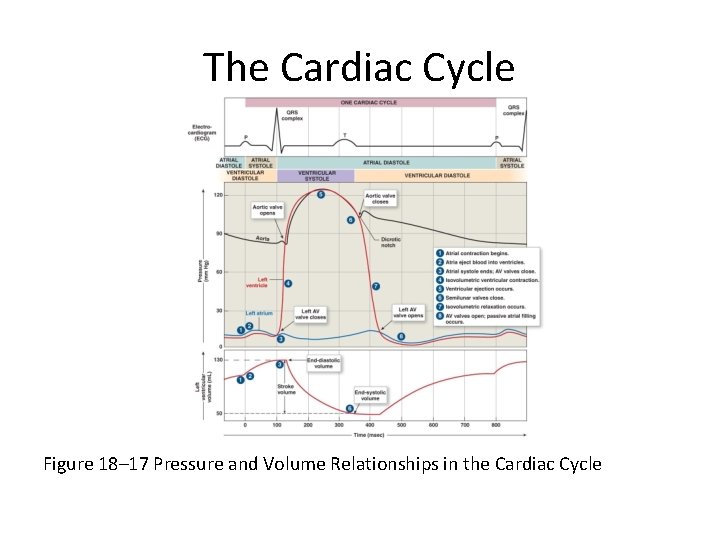
The Cardiac Cycle Eight Steps in the Cardiac Cycle 6. Ventricular pressure falls • Semilunar valves close • Ventricles contain end-systolic volume (ESV), about 40% of enddiastolic volume 7. Ventricular diastole • Ventricular pressure is higher than atrial pressure • All heart valves are closed • Ventricles relax (isovolumetric relaxation)
The Cardiac Cycle Figure 18– 17 Pressure and Volume Relationships in the Cardiac Cycle
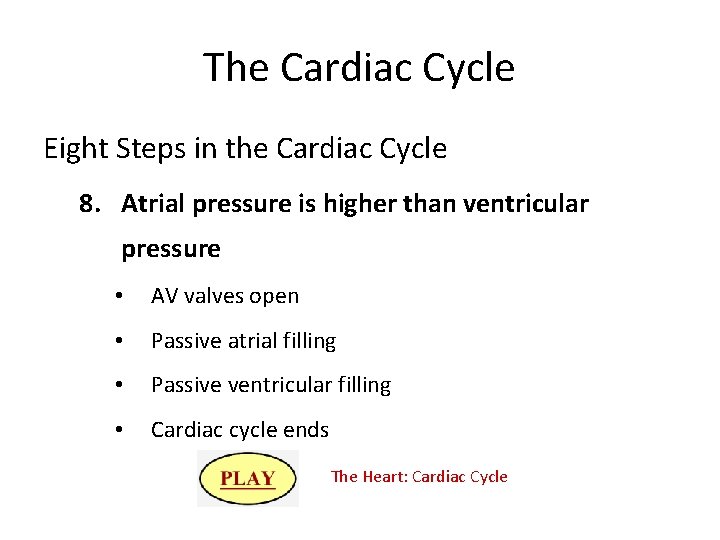
The Cardiac Cycle Eight Steps in the Cardiac Cycle 8. Atrial pressure is higher than ventricular pressure • AV valves open • Passive atrial filling • Passive ventricular filling • Cardiac cycle ends The Heart: Cardiac Cycle
The Cardiac Cycle Figure 18– 17 Pressure and Volume Relationships in the Cardiac Cycle
The Cardiac Cycle • Heart Sounds – S 1 • Loud sounds • Produced by AV valves – S 2 • Loud sounds • Produced by semilunar valves – S 3, S 4 • Soft sounds • Blood flow into ventricles and atrial contraction
The Cardiac Cycle • Heart Murmur – Sounds produced by regurgitation through valves