
The concept and use of evidence based policy
The concept and use of evidence based policy Situation in the Czech Republic

Evidence based policymaking Policy decisions are informed by rigorously established objective evidence.

Evidence based policymaking approach Prioritizes rigorous research findings, data, analytics, and evaluation of new innovations above anecdotes, ideology, marketing, and inertia around the status quo. Underlying condition: democratic process sets goals for policies and programs, and evidence-based policymaking is an important tool to help achieve those goals.

Why policymaking based in evidence? • Results of behavioural science show us problems of policies set up without analysis of their (possible) impacts. • Moreover our society is complex and any policy issue is drived by many different forces that can be hardly isolated and tested beforehand. • Behavioural theory is stepping out of this narrow understanding of reality and ask to test all the public policies. As one of the most fruitful impact of the behavioural science we can see practical implication of „Nudge theory“ that highlights its constructive core.

„Nudge theory“ – practical implications
Four principles of evidence based policy making 1. Build and compile rigorous evidence about what works, including costs and benefits. 2. Monitor program delivery and use impact evaluation to measure policy program effectiveness. 3. Use rigorous evidence to improve programs, scale what works, and redirect funds away from consistently ineffective programs 4. Encourage innovation and test new approaches.

Where the evidence come from? Especially in clinical medicine is evidence based approach used as a principle of work/not work treatment. For this purposes especially experiments were used to. Importance of the experiment and piloting or even though experiment is crucial randomized controlled trials.
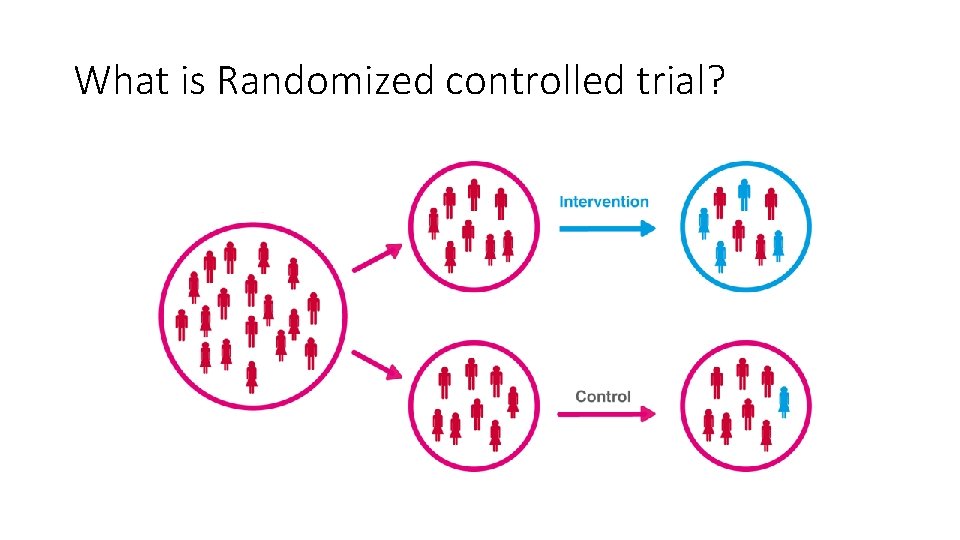
What is Randomized controlled trial?
Limits of RCT • Ethics • Costs • Time Other sources of evidence?

Trends in policymaking in the Czech Republic 1. Not enough evidence in our policy making - contemporary policy making is critisized formalistic implementation of policies witout reflection of its purpose and results. 2. Implementation of the policies is still in the sence of New public management with its typical results for public administration. 3. Evidence based policy is not mainstream in Czech policy making and public adminnistration. There were an attempts to make it part of the RIA but the level of evidence used for assessment of possible impacts of regulatory changes stays in its beginning. As stated In Strategy Czech Republic 2030

New public management vs New public governance „comand control“ Top-down Functional specialization Separeted from daly work On output, standardized external Fullfil the plan, budget, manage the worker Cantract based „system thinking“ PERSPECTIVE WORKING DESIGN Outside - inside DECISSION MONITORING MOTIVATION MANAGEMENT Part of the work RELATIONSHIP WITH CLIENTS Fullfiling oth the clients needs Outcome monitoring internal Design and manage the system Based on the needs

Regulatory impact assesment Every czech law must be assesed using complex of ex ante analysis. • Definition of the problem solved • Risk assesment • Possible variants • Cost-benefit analysis • Impact analysis on public budged, competetivness of czech economy, social impacts, environmental impacts, security
Latest news in EBP in the Czech Republic Early bird – Program for social inovation support Specifically support of advocacy and founding of knowledge platforms that develops, test and evaluate social innovation in topics such as: • Homelessness • Ageing • Mental illness • Social excluded areas • Migration • Probation The goal is to provide tested solutions for any institutions dealing with the topic
- Slides: 13