
The Computer Misuse Act of 1990 The Copyright

- Slides: 14
The Computer Misuse Act of 1990 The Copyright, Designs & Patents Act of 1989 www. ICT-Teacher. com
• This section applies to current British legislation and its relationship to the Council of Europe Convention directives. • Software and data misuse: • Describe the provisions of the Computer Misuse Act. • Describe the principles of software copyright and licensing agreements.
The Computer Misuse Act 1990 • The widespread use of computers and computer systems and the misuse of them in the 1980’s led to a law making it a criminal offence to do certain things. • The Act covers a variety of misuses that couldn’t be covered by the existing laws of the time. These include: – – – Deliberate damage by planting viruses Using computers to carry out unauthorised work Copying computer programs Hacking into a system to view private information Various frauds including stealing money from banks
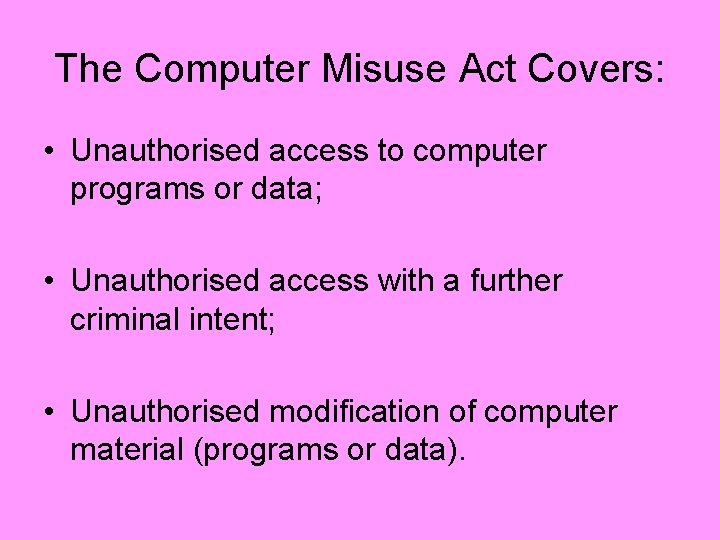
The Computer Misuse Act Covers: • Unauthorised access to computer programs or data; • Unauthorised access with a further criminal intent; • Unauthorised modification of computer material (programs or data).
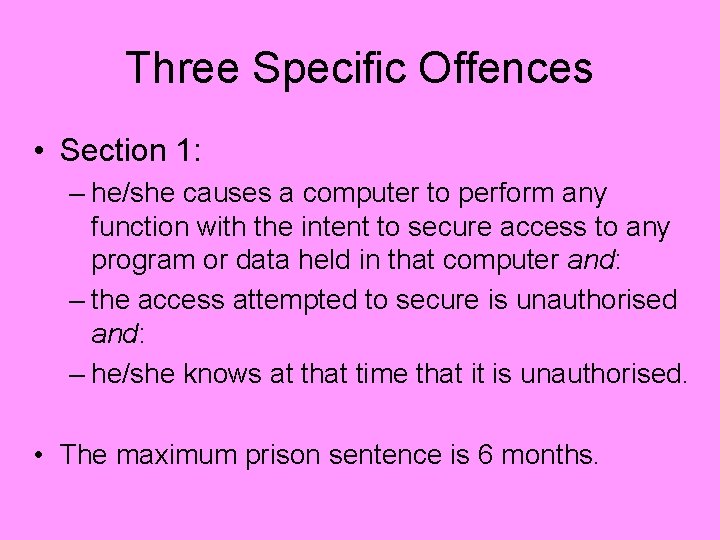
Three Specific Offences • Section 1: – he/she causes a computer to perform any function with the intent to secure access to any program or data held in that computer and: – the access attempted to secure is unauthorised and: – he/she knows at that time that it is unauthorised. • The maximum prison sentence is 6 months.
Offences • Section 2: – Committing an offence under section 1 with the intent of committing a further offence such as blackmail, theft etc, even if they get someone else to do it for them. • The maximum prison sentence is 5 years.
Offences • Section 3: – Committing an offence under section 1 and causing actual modification of the contents which results in: – Any impairment of the operation of the computer – Prevention of access to a program or data – Impair the operation of a program or the reliability of data. • The maximum prison sentence is 5 years.
The Copyright, Designs and Patents Act 1989 covers: • Illegal copying of software. • Illegal running of copyright software on more than one machine unless covered by the licence. • Illegal for an organisation to encourage or pressure its employees to copy of distribute illegal software.
Software Copyright • The illegal copying of software • Illegal transmission of software over a telecommunications line creating a copy. • What are the consequences of illegal use of software? • Consider the writers, the manufacturers, and the marketing companies. • Microsoft Office ’ 97 was copied and sold for £ 3 in Russia. • Data paid for and collected by one organisation may be of value to other organisations.
Copying Software • The copying of software is in breach of the licence you agree when you first load the program. This is policed by the local councils and the police. • Software companies will take individuals or businesses to court if they find out that their copyright has been breached. • The police are entitled to remove all equipment which has illegal software running on it. For a company this could mean the removal of the entire computer system and disastrous consequences for business. It normally would mean the business would collapse.
Licensing Agreements • When buying a computer program you are buying the right to use it, not to own it. • You are bound by the rules of the manufacturer. • There are different types of licensing agreements: – public domain – shareware – demonstration • The above are free to use but still come with restrictions, and almost always ban copying.
• What is: Public domain, Shareware, and Demonstration software? • Are you able to legally copy your software program from your desktop to your laptop? • When you upgrade your computer to a modern version do you need to buy the software again? • Are you entitled to sell your copy of MS Excel to your friend, 1) if you have removed it from your computer; 2) if you have kept a copy on your computer?
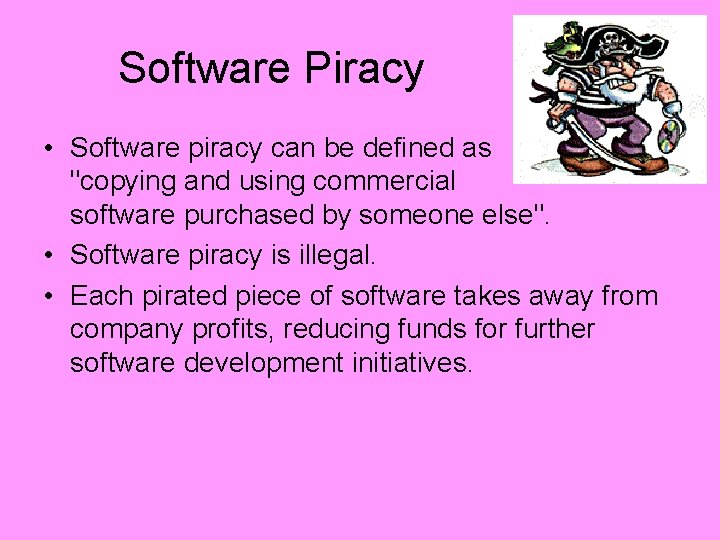
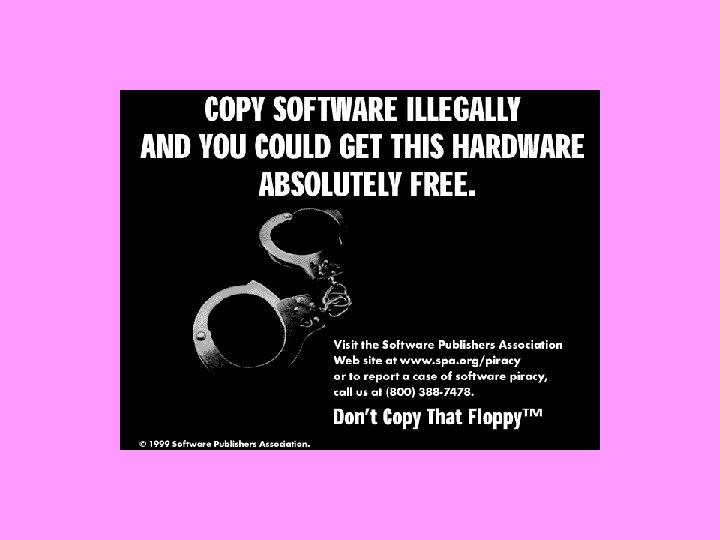
Software Piracy • Software piracy can be defined as "copying and using commercial software purchased by someone else". • Software piracy is illegal. • Each pirated piece of software takes away from company profits, reducing funds for further software development initiatives.