
THE COMPOUND LIGHT MICROSCOPE An Introduction Sec 1


- Slides: 25
THE COMPOUND LIGHT MICROSCOPE An Introduction Sec 1
2
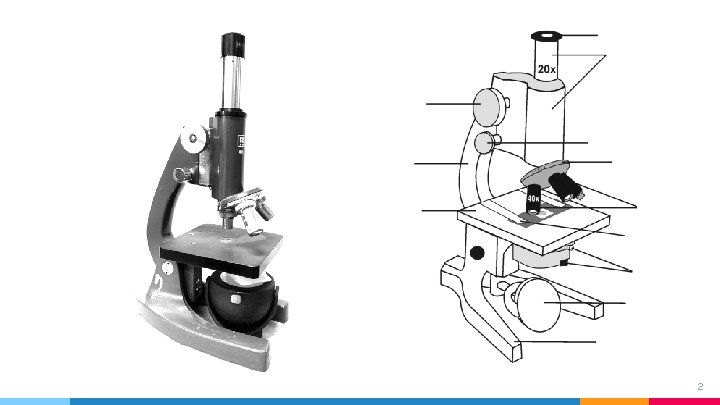
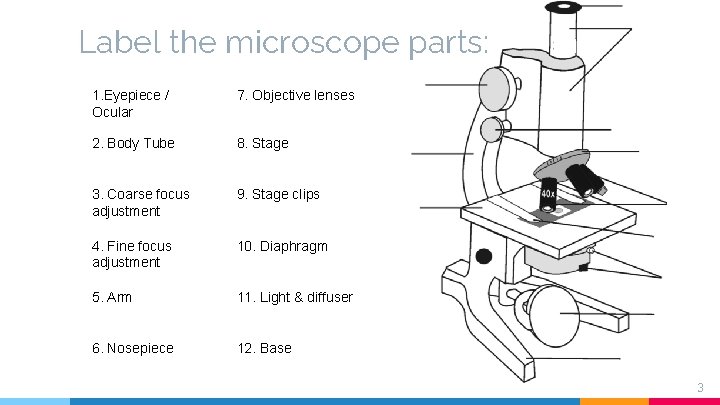
Label the microscope parts: 1. Eyepiece / Ocular 7. Objective lenses 2. Body Tube 8. Stage 3. Coarse focus adjustment 9. Stage clips 4. Fine focus adjustment 10. Diaphragm 5. Arm 11. Light & diffuser 6. Nosepiece 12. Base 3
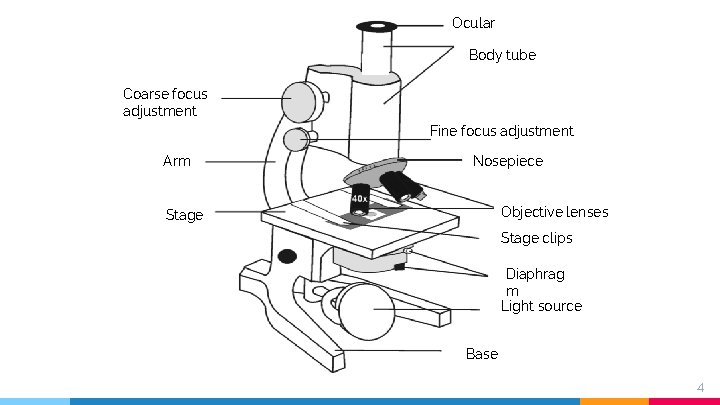
Ocular Body tube Coarse focus adjustment Fine focus adjustment Arm Nosepiece Objective lenses Stage clips Diaphrag m Light source Base 4
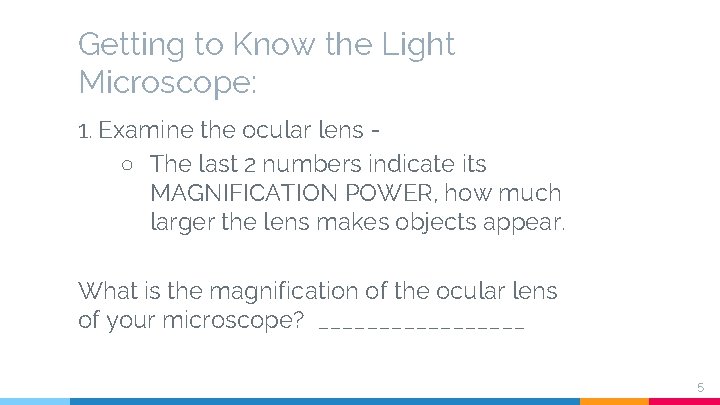
Getting to Know the Light Microscope: 1. Examine the ocular lens ○ The last 2 numbers indicate its MAGNIFICATION POWER, how much larger the lens makes objects appear. What is the magnification of the ocular lens of your microscope? _________ 5
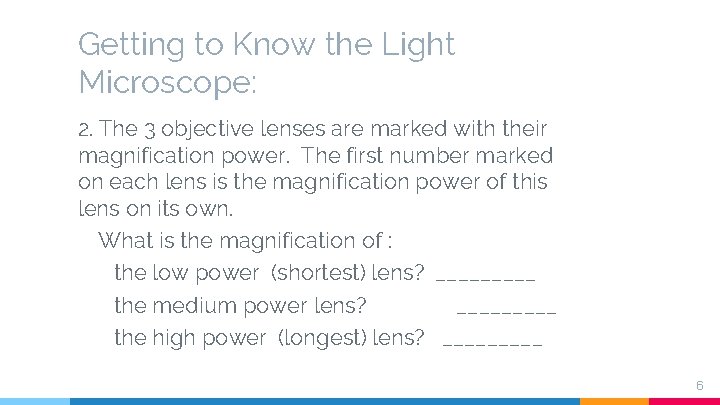
Getting to Know the Light Microscope: 2. The 3 objective lenses are marked with their magnification power. The first number marked on each lens is the magnification power of this lens on its own. What is the magnification of : the low power (shortest) lens? _____ the medium power lens? _____ the high power (longest) lens? _____ 6
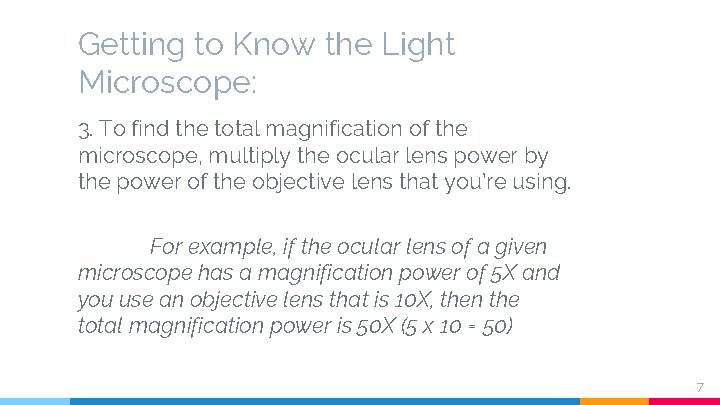
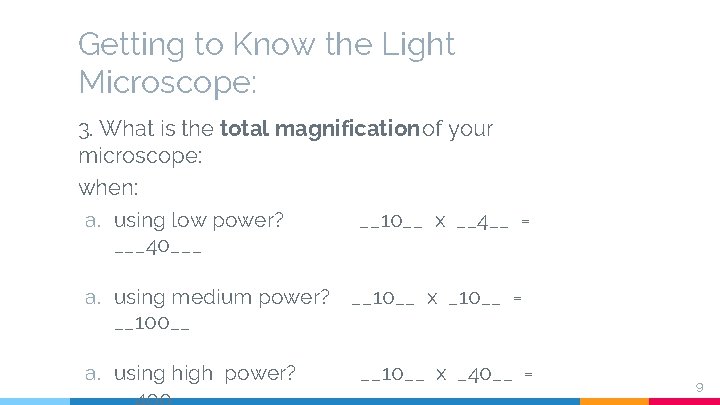
Getting to Know the Light Microscope: 3. To find the total magnification of the microscope, multiply the ocular lens power by the power of the objective lens that you’re using. For example, if the ocular lens of a given microscope has a magnification power of 5 X and you use an objective lens that is 10 X, then the total magnification power is 50 X (5 x 10 = 50) 7
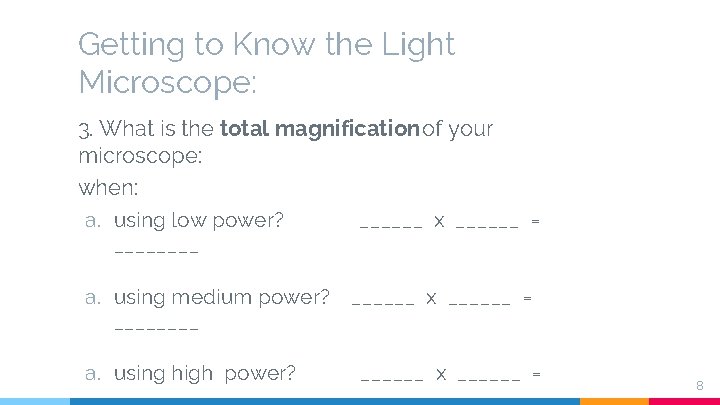
Getting to Know the Light Microscope: 3. What is the total magnification of your microscope: when: a. using low power? ______ x ______ = ____ a. using medium power? ____ a. using high power? ______ x ______ = 8
Getting to Know the Light Microscope: 3. What is the total magnification of your microscope: when: a. using low power? __10__ x __4__ = ___40___ a. using medium power? __100__ a. using high power? __10__ x _10__ = __10__ x _40__ = 9
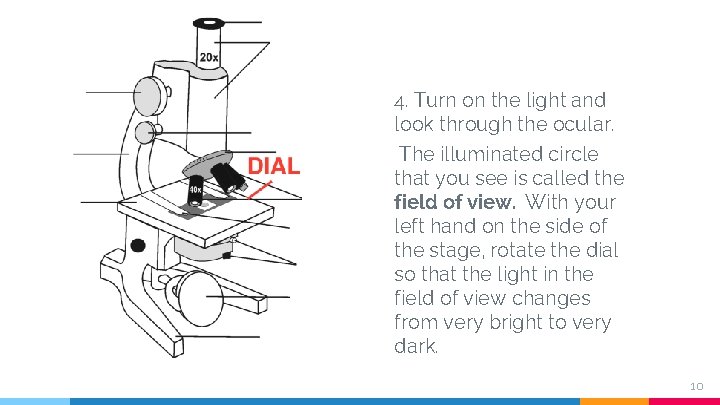
4. Turn on the light and look through the ocular. The illuminated circle that you see is called the field of view. With your left hand on the side of the stage, rotate the dial so that the light in the field of view changes from very bright to very dark. 10
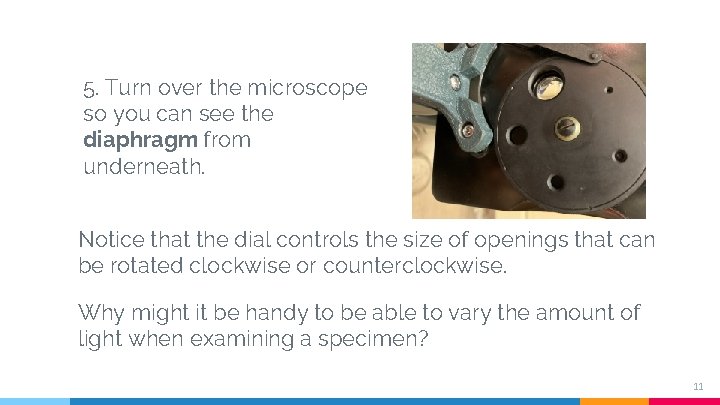
5. Turn over the microscope so you can see the diaphragm from underneath. Notice that the dial controls the size of openings that can be rotated clockwise or counterclockwise. Why might it be handy to be able to vary the amount of light when examining a specimen? 11
USING A LIGHT MICROSCOPE The Letter “e”
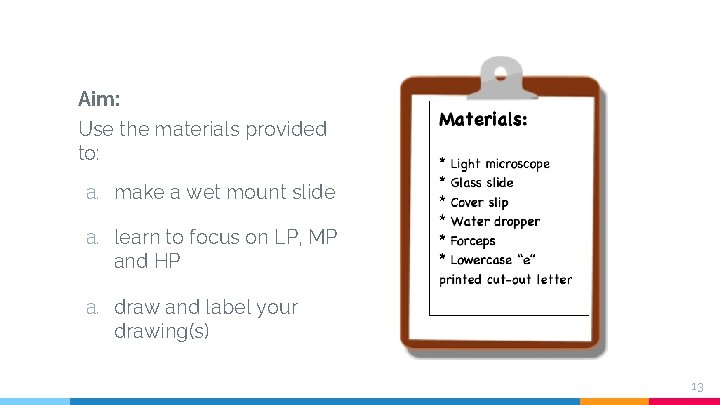
Aim: Use the materials provided to: a. make a wet mount slide a. learn to focus on LP, MP and HP a. draw and label your drawing(s) 13
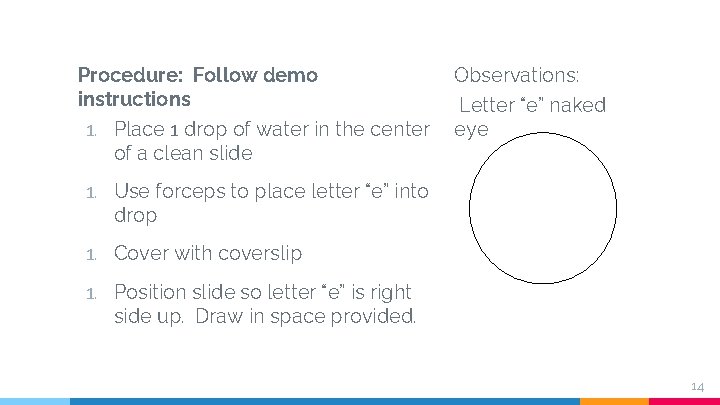
Procedure: Follow demo instructions 1. Place 1 drop of water in the center of a clean slide Observations: Letter “e” naked eye 1. Use forceps to place letter “e” into drop 1. Cover with coverslip 1. Position slide so letter “e” is right side up. Draw in space provided. 14
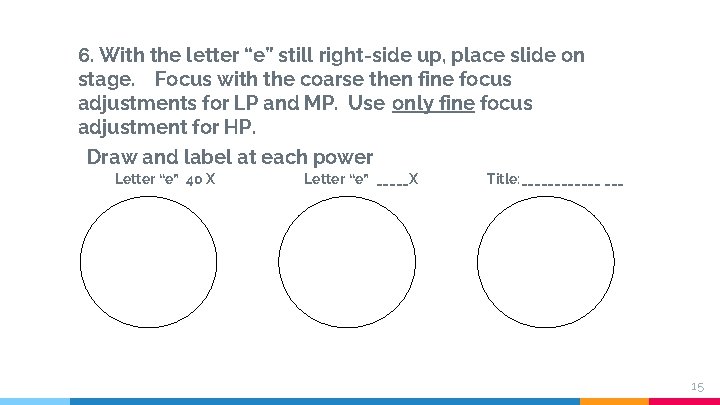
6. With the letter “e” still right-side up, place slide on stage. Focus with the coarse then fine focus adjustments for LP and MP. Use only fine focus adjustment for HP. Draw and label at each power Letter “e” 40 X Letter “e” _____X Title: ______ ___ 15
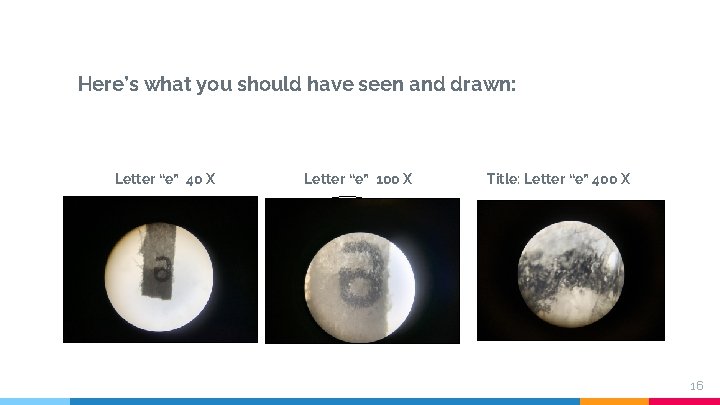
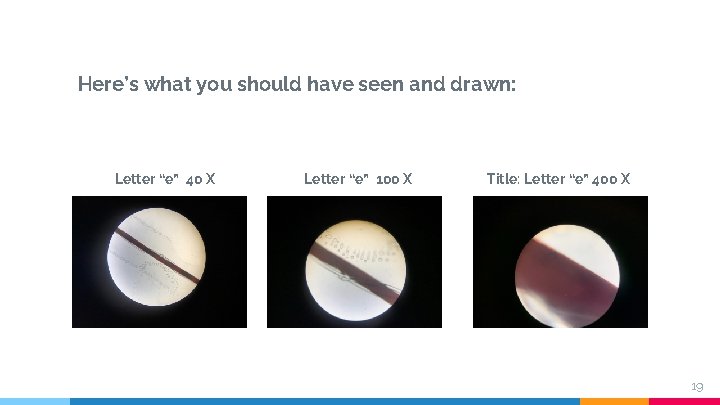
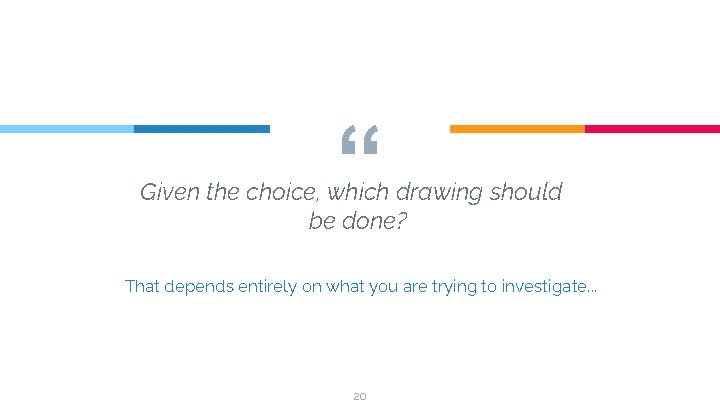
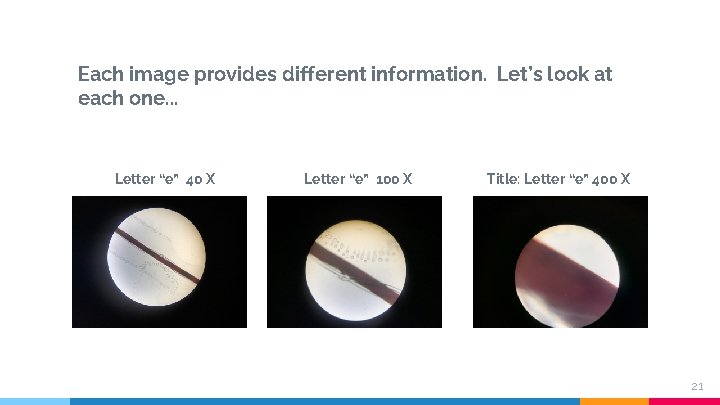
Here’s what you should have seen and drawn: Letter “e” 40 X Letter “e” 100 X Title: Letter “e” 400 X 16
SCALED DRAWINGS Let’s practise some of the skills we’ve learned 17
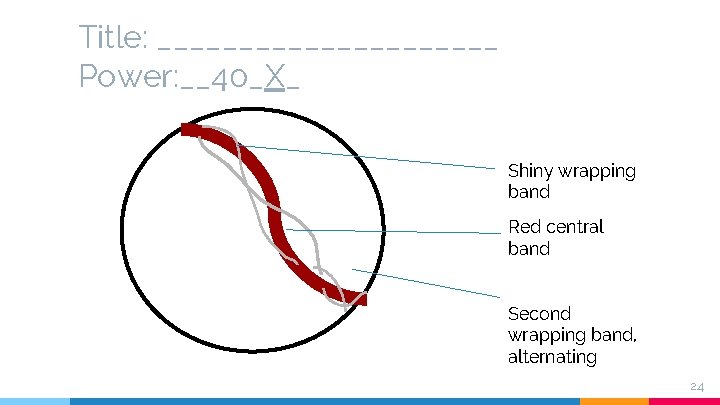
Focussing and scaled drawings: Use the prepared slide to practise ▷ Examine the specimen on LP, MP and HP ○ Scan, focus, center, refocus. . . ▷ Choose which power to use (most info) ○ Evaluate scale- how many fit across? How wide? . . . ○ Ignore slide “garbage” - bubbles, scratches, dust. . . 18
Here’s what you should have seen and drawn: Letter “e” 40 X Letter “e” 100 X Title: Letter “e” 400 X 19
“ Given the choice, which drawing should be done? That depends entirely on what you are trying to investigate. . . 20
Each image provides different information. Let’s look at each one. . . Letter “e” 40 X Letter “e” 100 X Title: Letter “e” 400 X 21
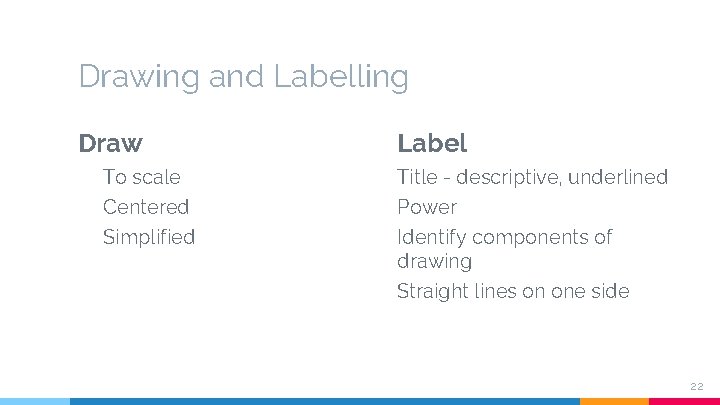
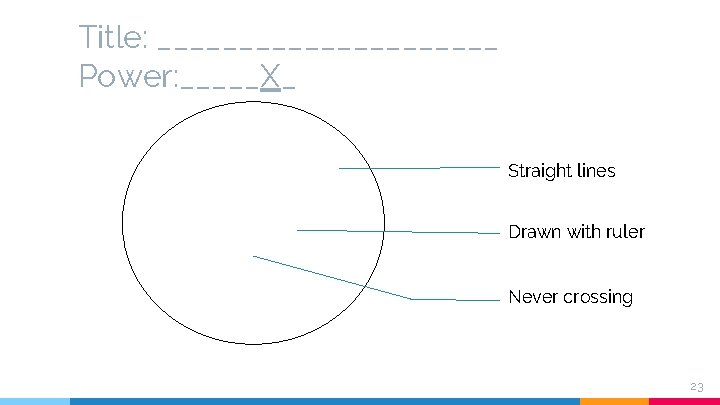
Drawing and Labelling Draw To scale Centered Simplified Label Title - descriptive, underlined Power Identify components of drawing Straight lines on one side 22
Title: ___________ Power: _____X_ Straight lines Drawn with ruler Never crossing 23
Title: ___________ Power: __40_X_ Shiny wrapping band Red central band Second wrapping band, alternating 24
25