
The Complexity of Identity Beverly Daniel Tatum Who
The Complexity of Identity Beverly Daniel Tatum “Who am I? The answer depends in large part on who the world around me says I am”


“The concept of identity is a complex one, shaped by individual characteristics, family dynamics, historical factors, and social and political contexts”(Tatum).
Individual characteristics Funny Curly-haired Curious Musical Quiet
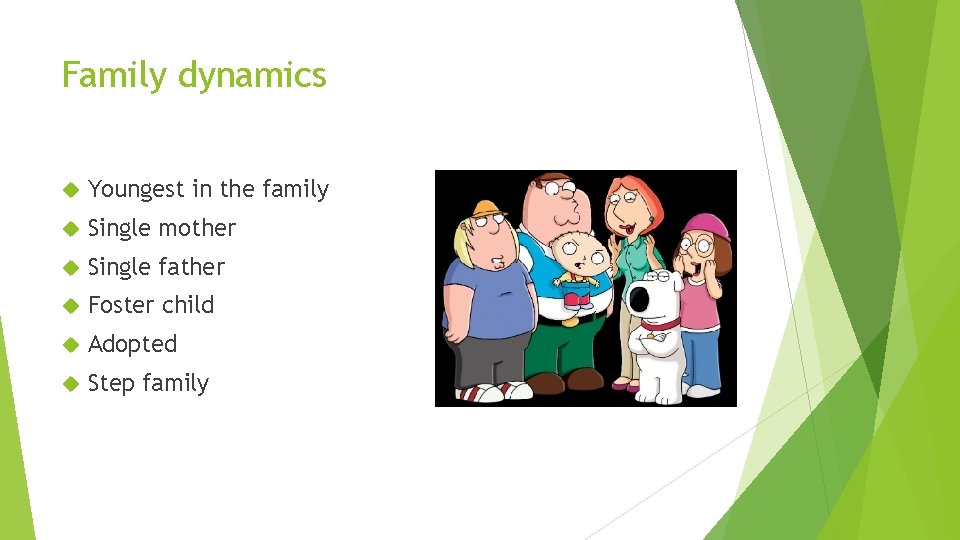
Family dynamics Youngest in the family Single mother Single father Foster child Adopted Step family
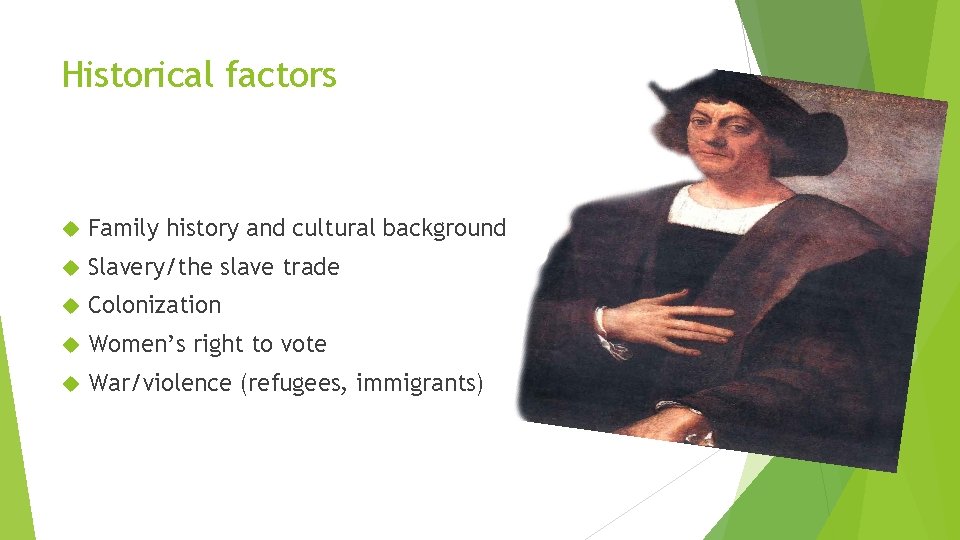
Historical factors Family history and cultural background Slavery/the slave trade Colonization Women’s right to vote War/violence (refugees, immigrants)
Social and political contexts distribution of power (Who has power? Who makes decisions? Example: government officials, wealthy/influential people, CEOs) formal and informal rules that govern the interactions among different people (social norms—how we treat each other, how we interact)

Dominant (Advantaged) Social Group “…systematically advantaged by the society because of group membership”(Tatum). “The dominant group is seen as the norm for humanity”(Tatum). “Holds the power and authority in society relative to the subordinates”(Tatum). Membership to this group is often invisible Subordinate (Targeted) Social Group Systematically disadvantaged Seen as “different” or “other”
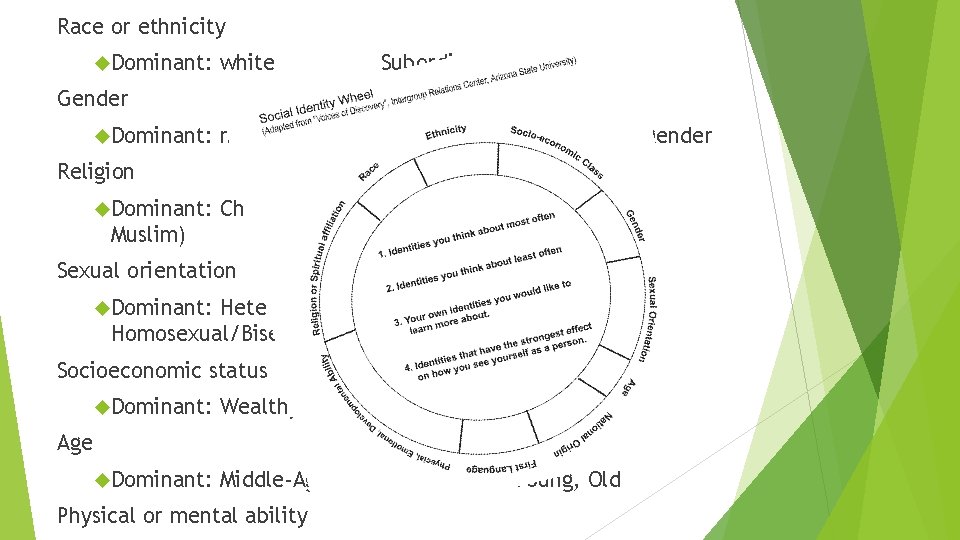
Race or ethnicity Dominant: white Subordinate: non-white men Subordinate: women/transgender Christian Subordinate: other (i. e. Gender Dominant: Religion Dominant: Muslim) Sexual orientation Dominant: Heterosexual Subordinate: Homosexual/Bisexual/Asexual Socioeconomic status Dominant: Wealthy Subordinate: Poor Dominant: Middle-Aged Subordinate: Young, Old Age Physical or mental ability
- Slides: 10