
The Complexities of Care Towards MultiLevel Interventions to

- Slides: 31
The Complexities of Care: Towards Multi-Level Interventions to Promote Health Equity La. Ron E. Nelson, Ph. D, RN, FNP, FNAP, FAAN Associate Dean for Global Affairs & Planetary Health Independence Foundation Associate Professor of Nursing
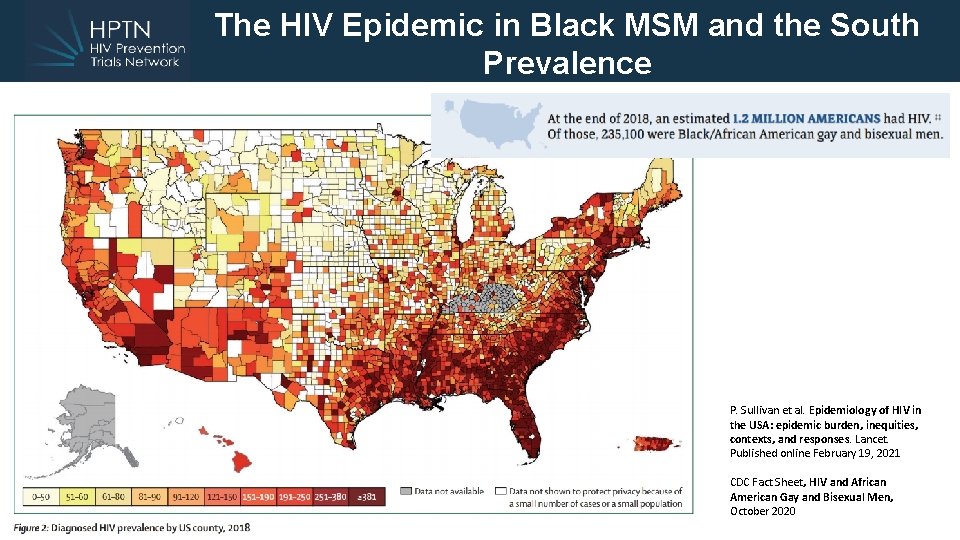
The HIV Epidemic in Black MSM and the South Prevalence P. Sullivan et al. Epidemiology of HIV in the USA: epidemic burden, inequities, contexts, and responses. Lancet. Published online February 19, 2021 CDC Fact Sheet, HIV and African American Gay and Bisexual Men, October 2020
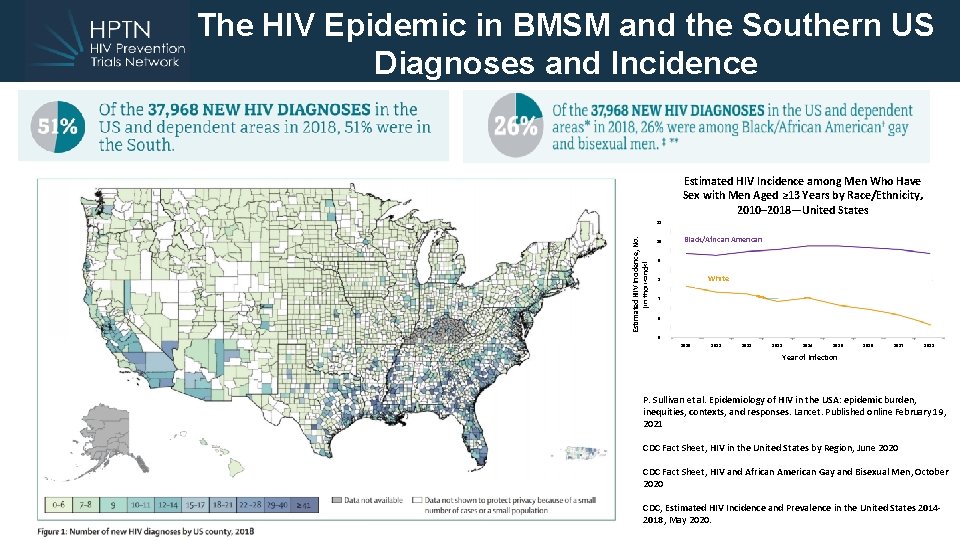
The HIV Epidemic in BMSM and the Southern US Diagnoses and Incidence Estimated HIV Incidence among Men Who Have Sex with Men Aged ≥ 13 Years by Race/Ethnicity, 2010– 2018—United States Estimated HIV Incidence, No. (in thousands) 11 10 Black/African American 9 White 8 7 6 5 2010 2011 2012 2013 2014 2015 2016 2017 2018 Year of Infection P. Sullivan et al. Epidemiology of HIV in the USA: epidemic burden, inequities, contexts, and responses. Lancet. Published online February 19, 2021 CDC Fact Sheet, HIV in the United States by Region, June 2020 CDC Fact Sheet, HIV and African American Gay and Bisexual Men, October 2020 CDC, Estimated HIV Incidence and Prevalence in the United States 20142018, May 2020.
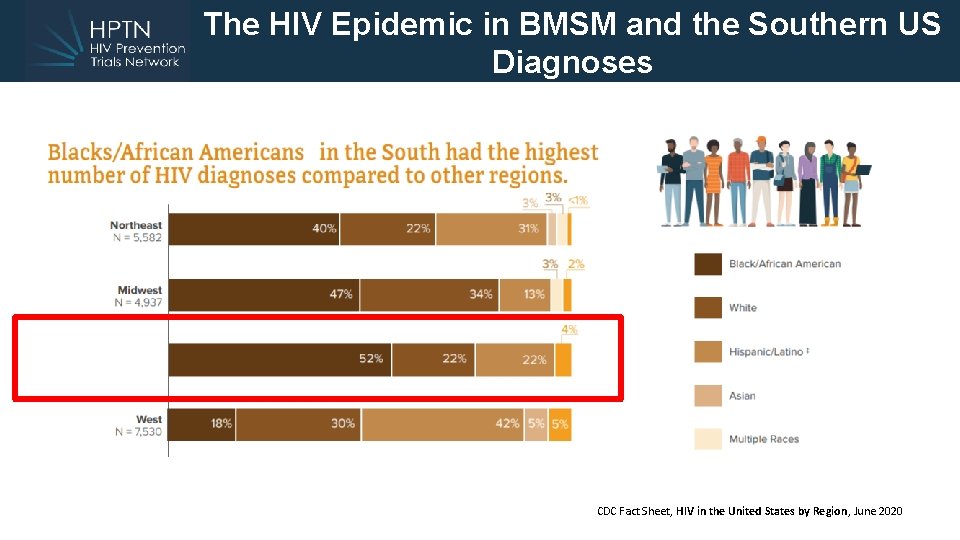
The HIV Epidemic in BMSM and the Southern US Diagnoses CDC Fact Sheet, HIV in the United States by Region, June 2020
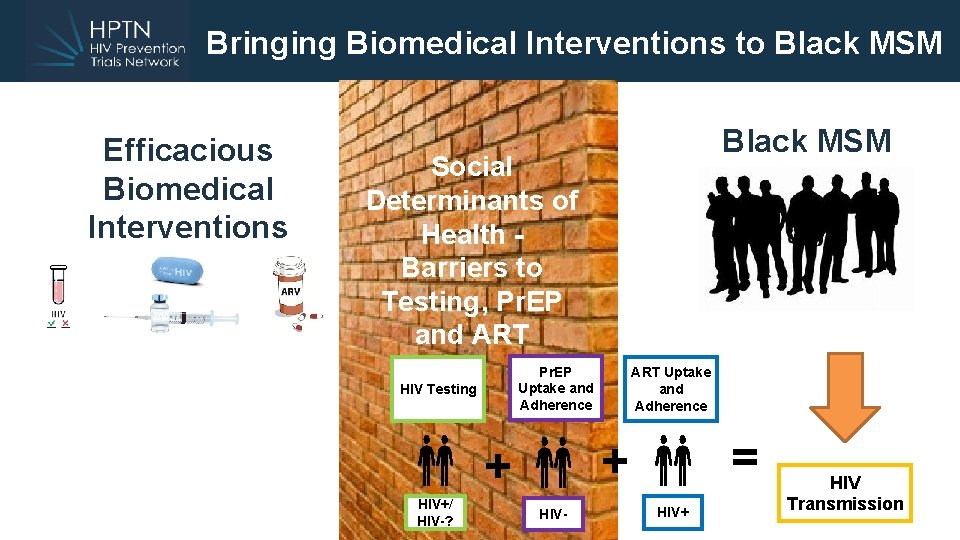
Bringing Biomedical Interventions to Black MSM Efficacious Biomedical Interventions Black MSM Social Determinants of Health Barriers to Testing, Pr. EP and ART Pr. EP Uptake and Adherence HIV Testing = + + HIV+/ HIV-? ART Uptake and Adherence HIV- HIV+ HIV Transmission
Purpose: Reduce HIV Incidence in Black MSM To assess an integrated, HIV status-neutral, population-based approach designed to reduce HIV incidence among Black men who have sex with men (Black MSM) in the Southern US by increasing HIV testing, pre-exposure prophylaxis (Pr. EP) uptake and adherence, and viral suppression rates.
Sponsor and Funder Other Partners
HPTN 096: Proposed Study Outcomes 1. Prevalence of Pr. EP use (biological samples, cross-sectional) 2. Viral Suppression (based on CDC surveillance data)
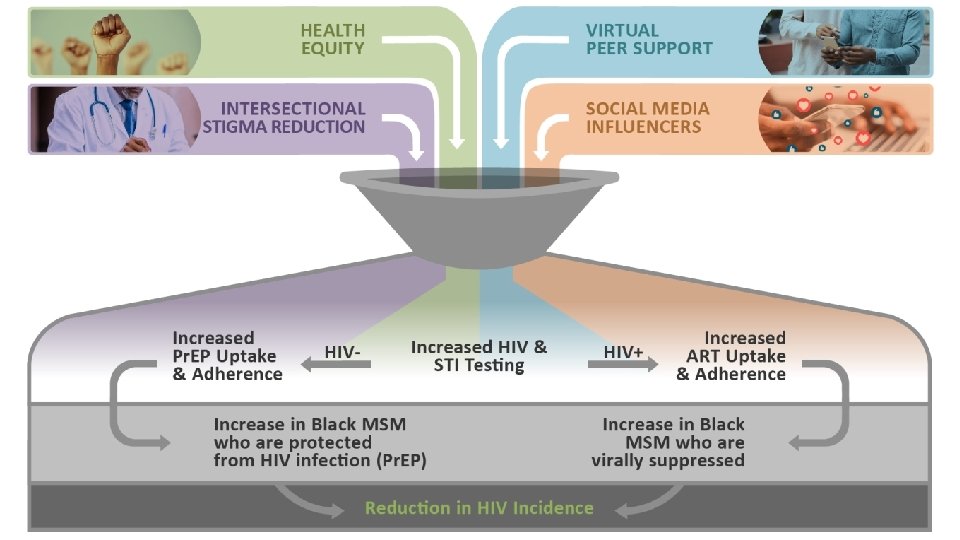
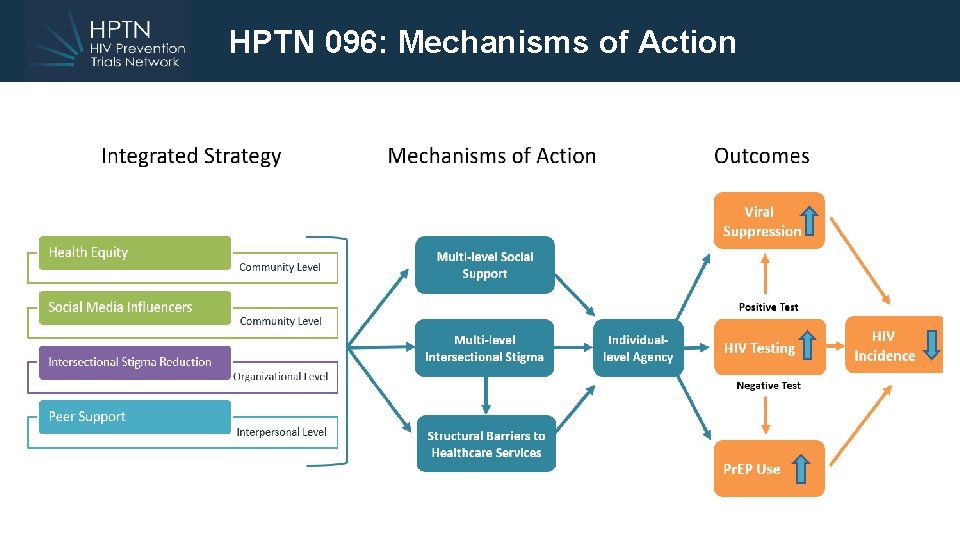
HPTN 096: Interventions Health Equity Hypothesis: Implementing a standardized, nationally replicable community coalition model will contribute to the reduction of HIV incidence among Black MSM in intervention communities by: 1) Facilitating the effects of the other HPTN 096 interventions by minimizing barriers to HIV testing, Pr. EP use and viral suppression through sensitizing a local network of service providers (e. g. , social, legal, economic sectors) to the needs of Black MSM and maintaining an online platform for exchanging information about the local network that can be used to link Black MSM to resources and services. 2) Amplifying the effects of the other HPTN 096 interventions by increasing the Black MSM’s receptivity to those interventions through the integration and promotion of HPTN 096 into the activities of the community coalition model.
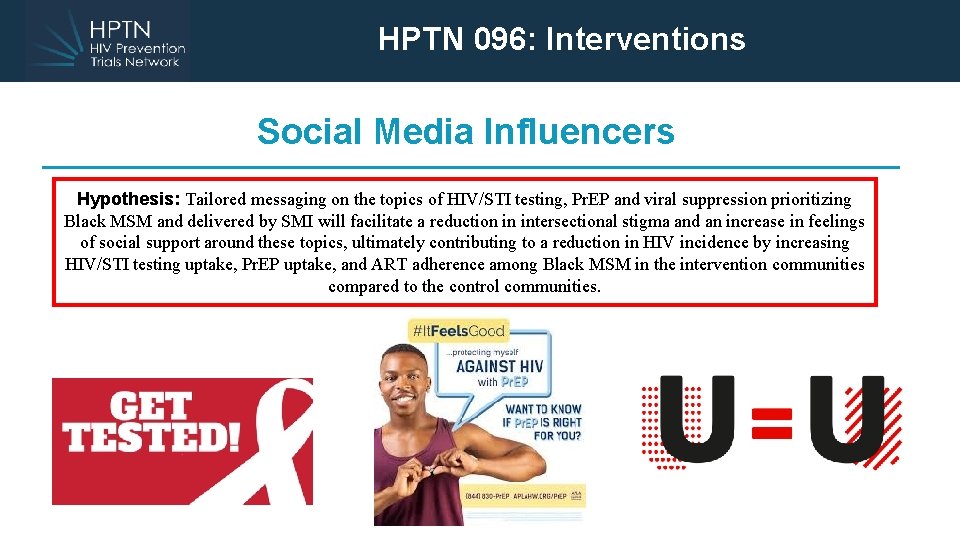
HPTN 096: Interventions Social Media Influencers Hypothesis: Tailored messaging on the topics of HIV/STI testing, Pr. EP and viral suppression prioritizing Black MSM and delivered by SMI will facilitate a reduction in intersectional stigma and an increase in feelings of social support around these topics, ultimately contributing to a reduction in HIV incidence by increasing HIV/STI testing uptake, Pr. EP uptake, and ART adherence among Black MSM in the intervention communities compared to the control communities.
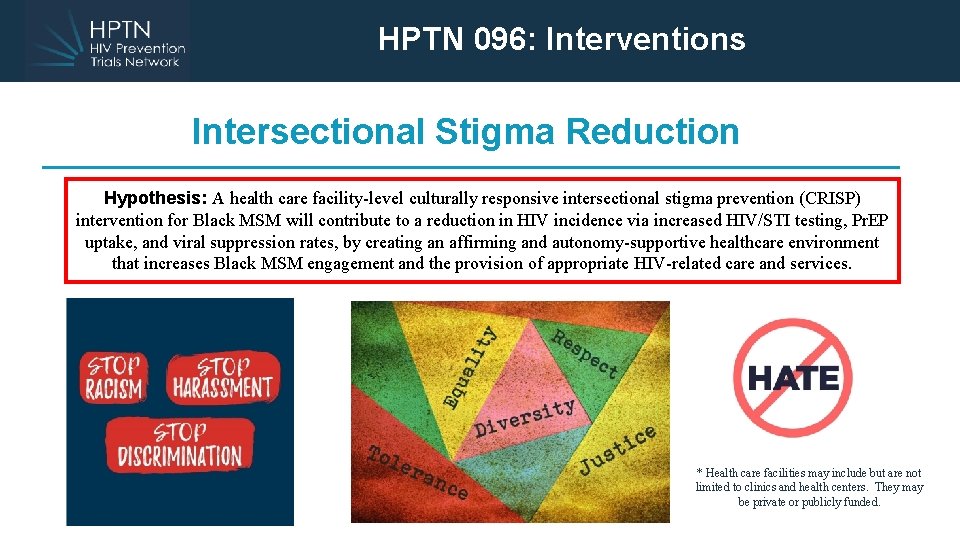
HPTN 096: Interventions Intersectional Stigma Reduction Hypothesis: A health care facility-level culturally responsive intersectional stigma prevention (CRISP) intervention for Black MSM will contribute to a reduction in HIV incidence via increased HIV/STI testing, Pr. EP uptake, and viral suppression rates, by creating an affirming and autonomy-supportive healthcare environment that increases Black MSM engagement and the provision of appropriate HIV-related care and services. * Health care facilities may include but are not limited to clinics and health centers. They may be private or publicly funded.
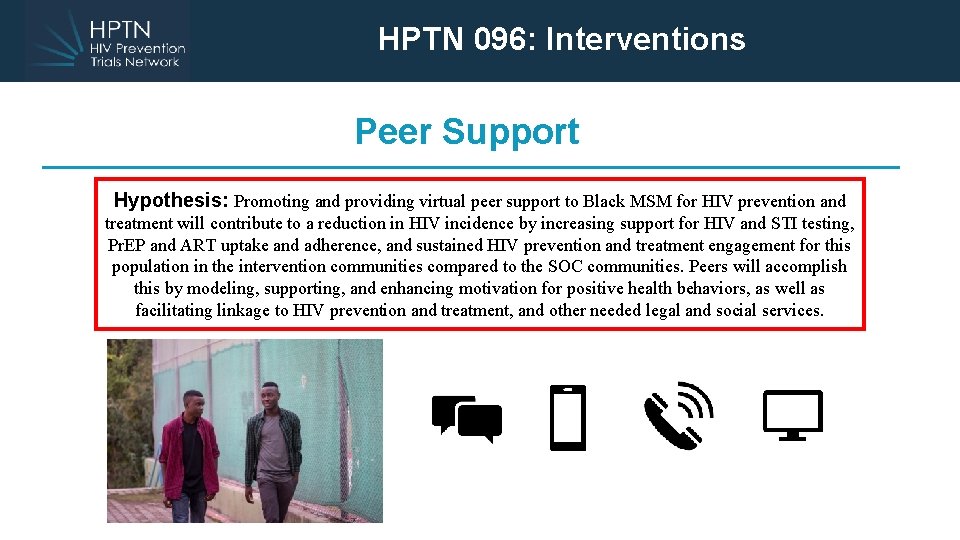
HPTN 096: Interventions Peer Support Hypothesis: Promoting and providing virtual peer support to Black MSM for HIV prevention and treatment will contribute to a reduction in HIV incidence by increasing support for HIV and STI testing, Pr. EP and ART uptake and adherence, and sustained HIV prevention and treatment engagement for this population in the intervention communities compared to the SOC communities. Peers will accomplish this by modeling, supporting, and enhancing motivation for positive health behaviors, as well as facilitating linkage to HIV prevention and treatment, and other needed legal and social services.
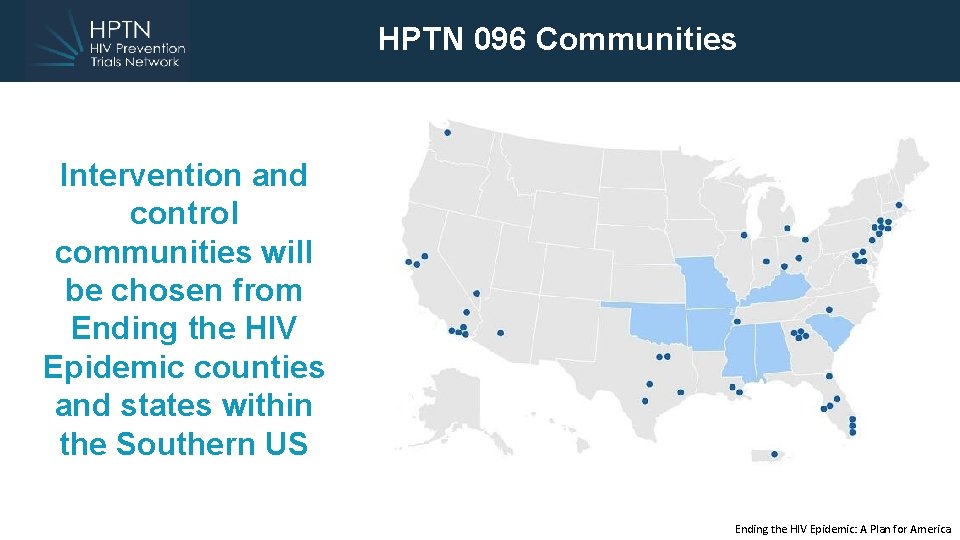
HPTN 096 Communities Intervention and control communities will be chosen from Ending the HIV Epidemic counties and states within the Southern US Ending the HIV Epidemic: A Plan for America
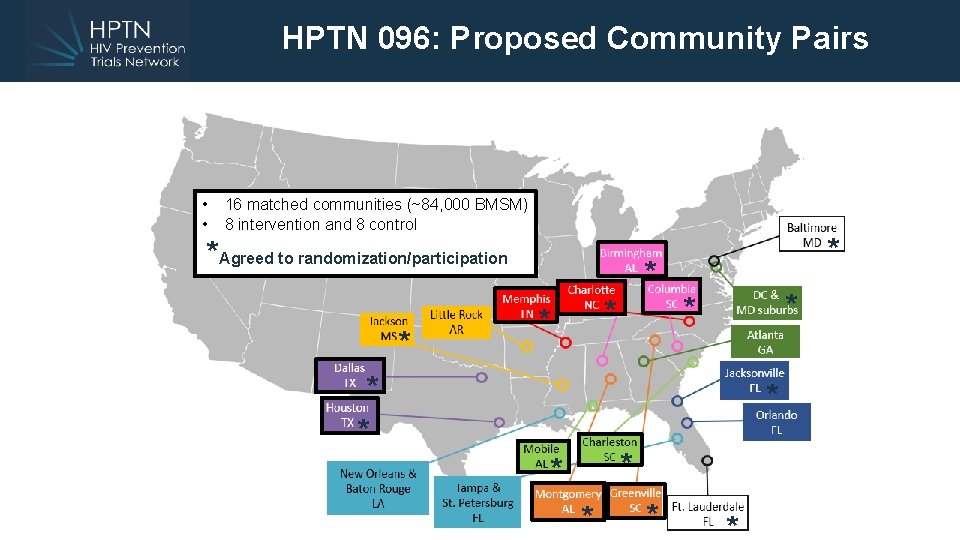
HPTN 096: Proposed Community Pairs • • 16 matched communities (~84, 000 BMSM) 8 intervention and 8 control *Agreed to randomization/participation * * * *
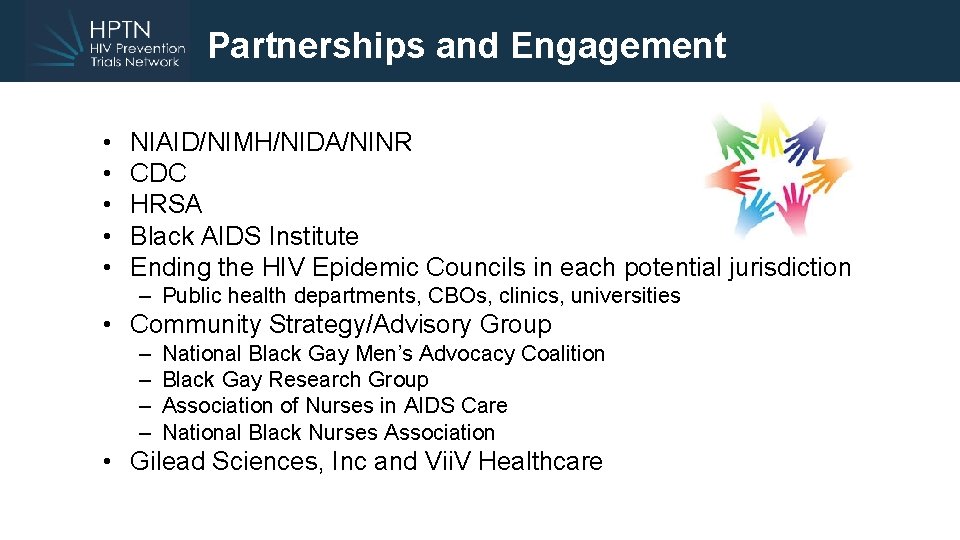
Partnerships and Engagement • • • NIAID/NIMH/NIDA/NINR CDC HRSA Black AIDS Institute Ending the HIV Epidemic Councils in each potential jurisdiction – Public health departments, CBOs, clinics, universities • Community Strategy/Advisory Group – – National Black Gay Men’s Advocacy Coalition Black Gay Research Group Association of Nurses in AIDS Care National Black Nurses Association • Gilead Sciences, Inc and Vii. V Healthcare
HPTN 096: Pr. EP and ART Provision • HPTN 096 will provide Pr. EP to at least one facility in each community, free of charge • We will try to provide the most effective and safe option available (e. g. , CAB-LA) • Already in discussion with pharma companies or P E Pr T AR
HPTN 096: Mechanisms of Action
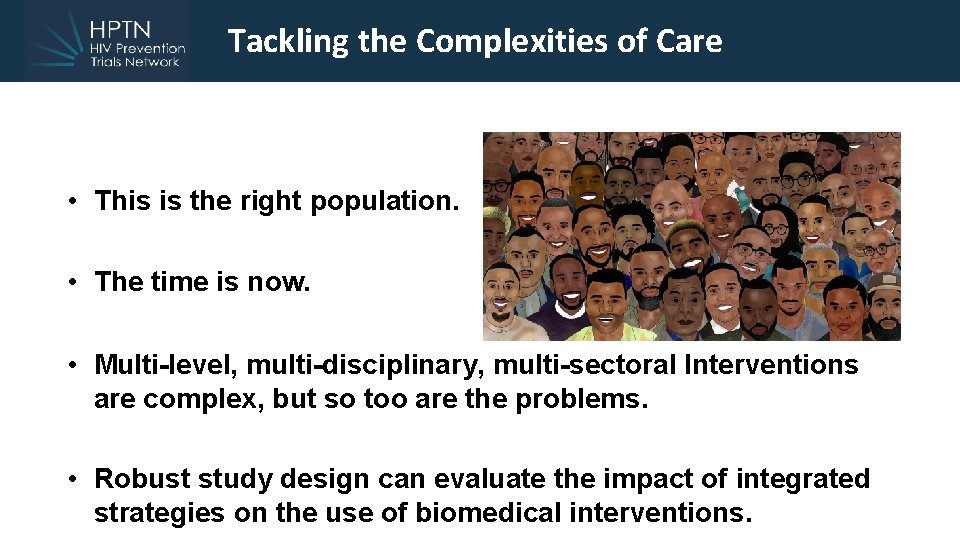
Tackling the Complexities of Care • This is the right population. • The time is now. • Multi-level, multi-disciplinary, multi-sectoral Interventions are complex, but so too are the problems. • Robust study design can evaluate the impact of integrated strategies on the use of biomedical interventions.
THANK YOU