
The Competence Project leader Nico Drok Hogeschool Windesheim


- Slides: 32
The Competence Project leader: Nico Drok, Hogeschool Windesheim, Zwolle, The Netherlands Research by Carmen Koch & Vinzenz Wyss, Zurich University of Applied Sciences, Winterthur
European Higher Education Area Keywords: q. Quality: European quality assurance and accreditation q. Mobility: Mutual recognition of courses and diplomas 3 major steps: 1. 2. Transparent and comparable degrees (Bama) A European Credit transfer system (ECts) 3. Tuning of competences and qualifications Skopje June 28 th 2011 Competences EJTA 2
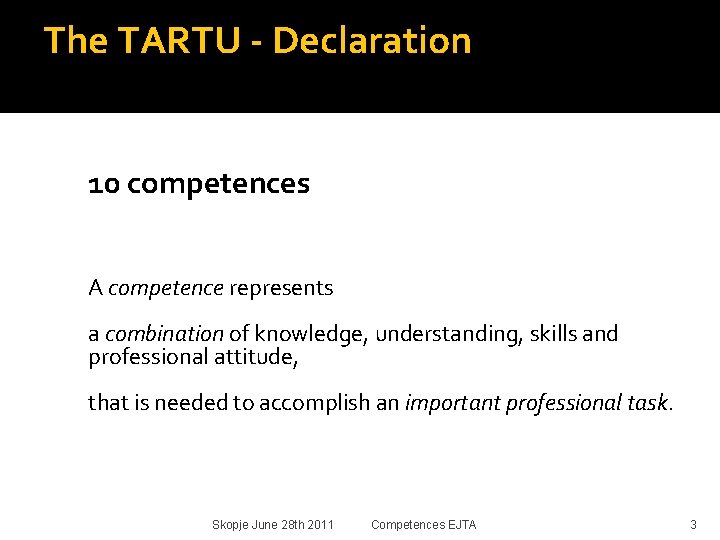
The TARTU - Declaration 10 competences A competence represents a combination of knowledge, understanding, skills and professional attitude, that is needed to accomplish an important professional task. Skopje June 28 th 2011 Competences EJTA 3
10 competences, focused on important professional tasks 1. Reflect on the societal role of and developments within journalism 2. Find relevant issues and angles, given the public and production aims of a certain medium or different media 3. Organise and plan journalistic work 4. Gather information swiftly, using customary newsgathering techniques and methods of research 5. Select the essential information 6. Structure information in a journalistic manner 7. Present information in appropriate language and an effective journalistic form 8. Evaluate and account for journalistic work 9. Cooperate in a team or an editorial setting 10. Work in a professional organisation or as a freelancer Skopje June 28 th 2011 Competences EJTA 4
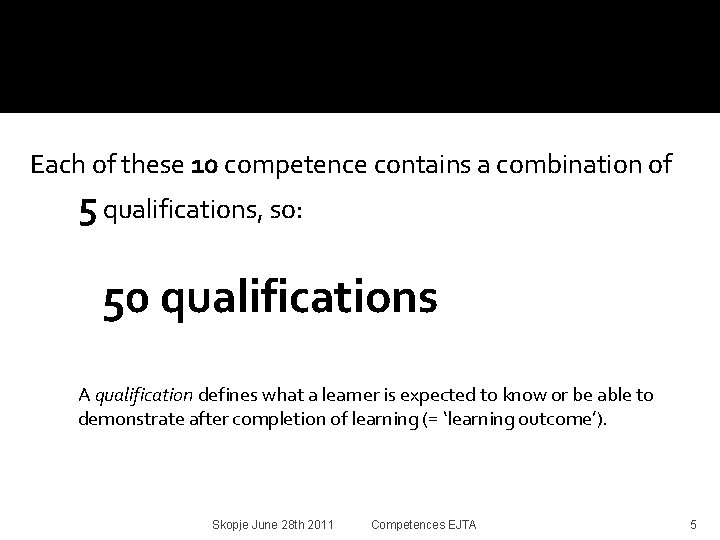
Each of these 10 competence contains a combination of 5 qualifications, so: 50 qualifications A qualification defines what a learner is expected to know or be able to demonstrate after completion of learning (= ‘learning outcome’). Skopje June 28 th 2011 Competences EJTA 5
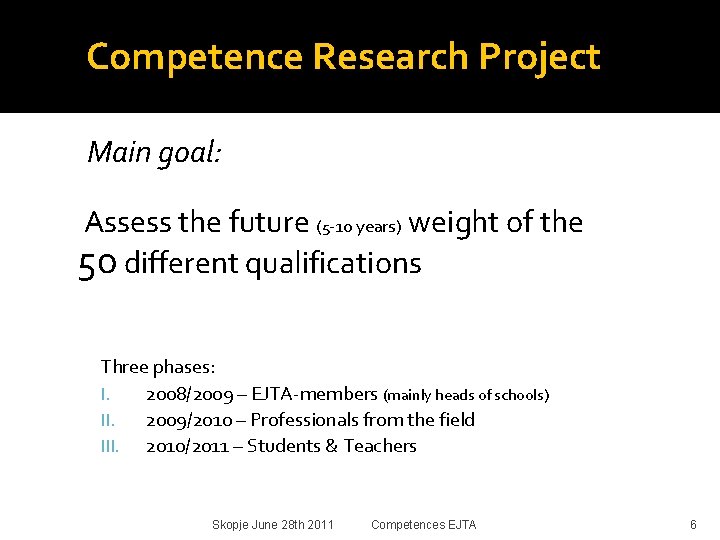
Competence Research Project Main goal: Assess the future (5 -10 years) weight of the 50 different qualifications Three phases: I. 2008/2009 – EJTA-members (mainly heads of schools) II. 2009/2010 – Professionals from the field III. 2010/2011 – Students & Teachers Skopje June 28 th 2011 Competences EJTA 6
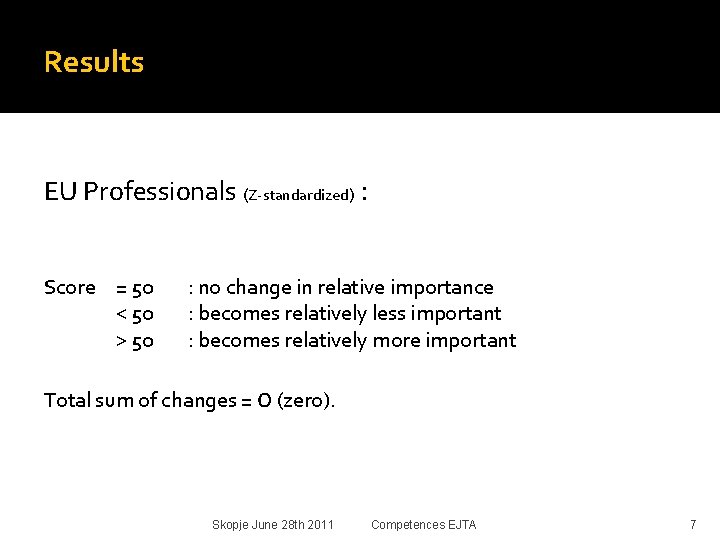
Results EU Professionals (Z-standardized) : Score = 50 < 50 > 50 : no change in relative importance : becomes relatively less important : becomes relatively more important Total sum of changes = 0 (zero). Skopje June 28 th 2011 Competences EJTA 7
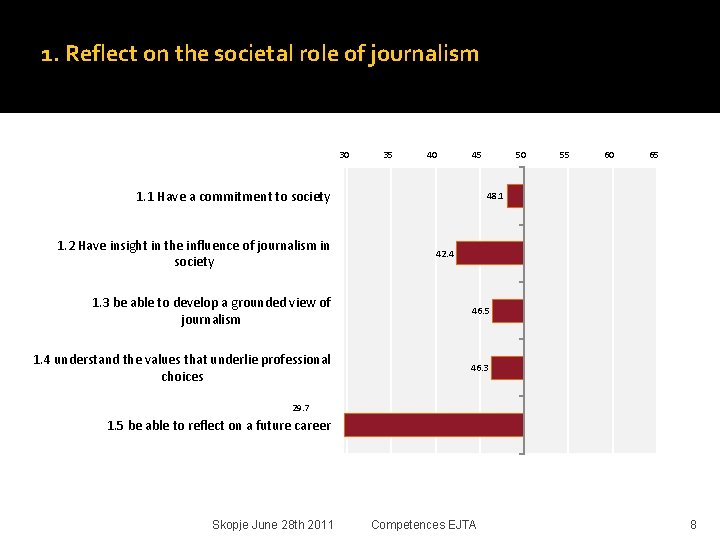
1. Reflect on the societal role of journalism 30 35 40 45 1. 1 Have a commitment to society 1. 2 Have insight in the influence of journalism in society 50 55 60 65 48. 1 42. 4 1. 3 be able to develop a grounded view of journalism 46. 5 1. 4 understand the values that underlie professional choices 46. 3 29. 7 1. 5 be able to reflect on a future career Skopje June 28 th 2011 Competences EJTA 8
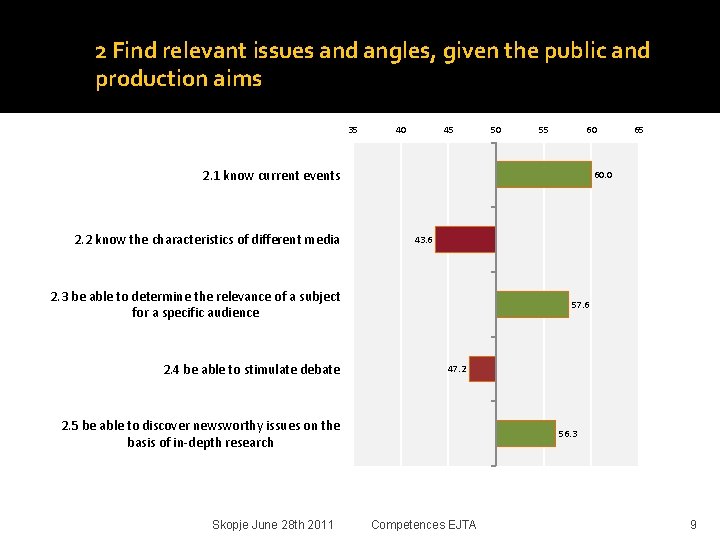
2 Find relevant issues and angles, given the public and production aims 35 40 45 50 55 60 2. 1 know current events 2. 2 know the characteristics of different media 60. 0 43. 6 2. 3 be able to determine the relevance of a subject for a specific audience 2. 4 be able to stimulate debate 57. 6 47. 2 2. 5 be able to discover newsworthy issues on the basis of in-depth research Skopje June 28 th 2011 65 56. 3 Competences EJTA 9
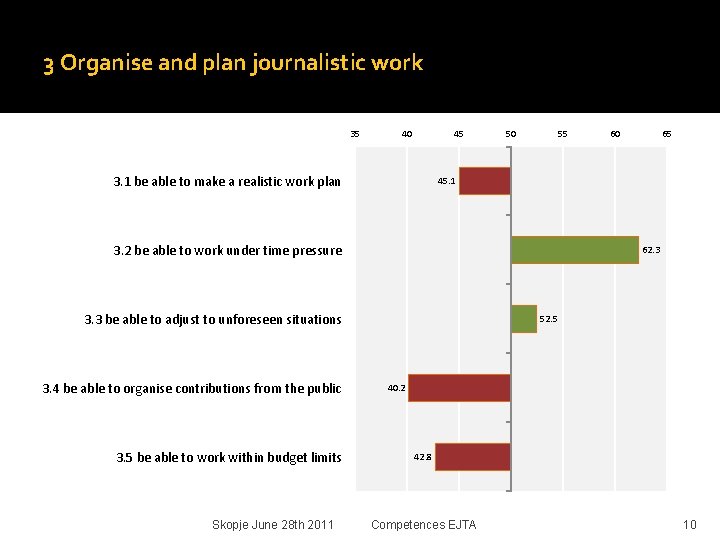
3 Organise and plan journalistic work 35 40 45 3. 1 be able to make a realistic work plan 50 55 62. 3 3. 3 be able to adjust to unforeseen situations 3. 5 be able to work within budget limits Skopje June 28 th 2011 65 45. 1 3. 2 be able to work under time pressure 3. 4 be able to organise contributions from the public 60 52. 5 40. 2 42. 8 Competences EJTA 10
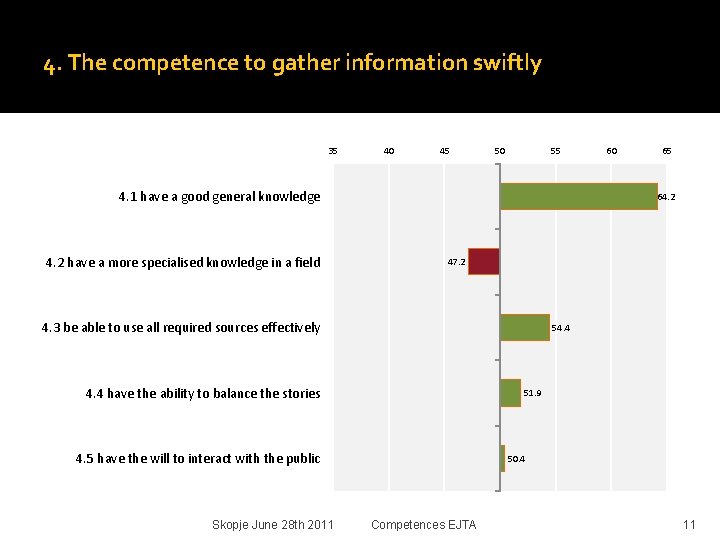
4. The competence to gather information swiftly 35 40 45 50 55 4. 1 have a good general knowledge 4. 2 have a more specialised knowledge in a field 65 64. 2 47. 2 4. 3 be able to use all required sources effectively 54. 4 have the ability to balance the stories 51. 9 4. 5 have the will to interact with the public Skopje June 28 th 2011 60 50. 4 Competences EJTA 11
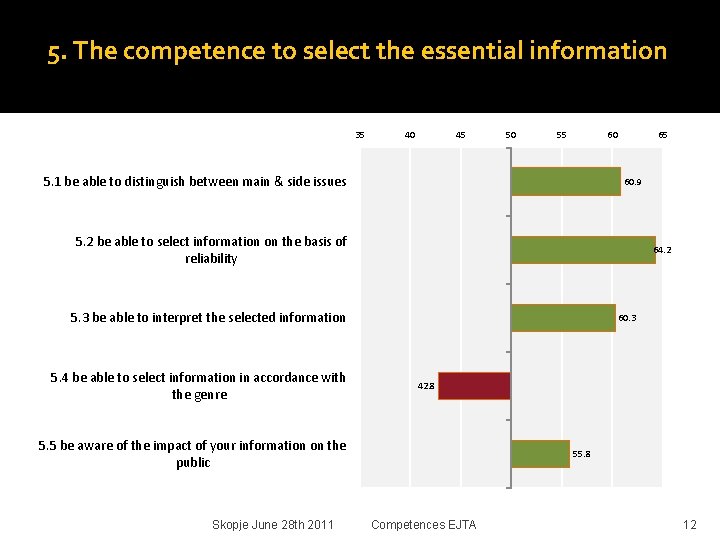
5. The competence to select the essential information 35 40 45 50 55 60 5. 1 be able to distinguish between main & side issues 65 60. 9 5. 2 be able to select information on the basis of reliability 64. 2 5. 3 be able to interpret the selected information 5. 4 be able to select information in accordance with the genre 60. 3 42. 8 5. 5 be aware of the impact of your information on the public Skopje June 28 th 2011 55. 8 Competences EJTA 12
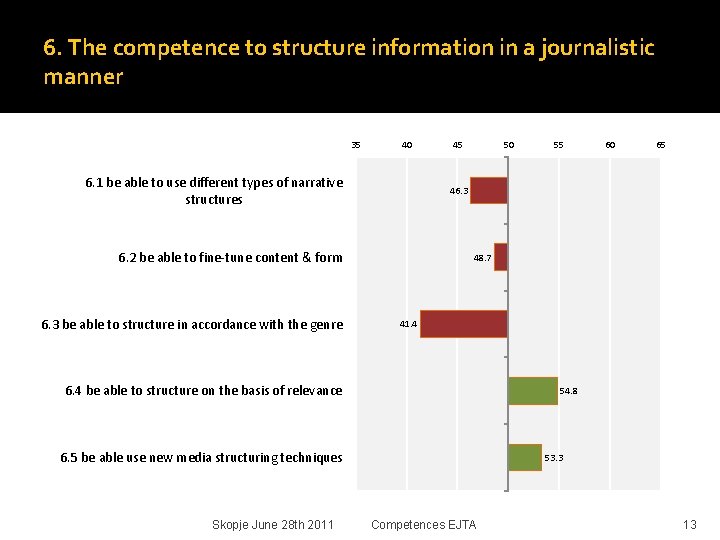
6. The competence to structure information in a journalistic manner 35 40 6. 1 be able to use different types of narrative structures 50 60 65 48. 7 41. 4 6. 4 be able to structure on the basis of relevance 54. 8 6. 5 be able use new media structuring techniques Skopje June 28 th 2011 55 46. 3 6. 2 be able to fine-tune content & form 6. 3 be able to structure in accordance with the genre 45 53. 3 Competences EJTA 13
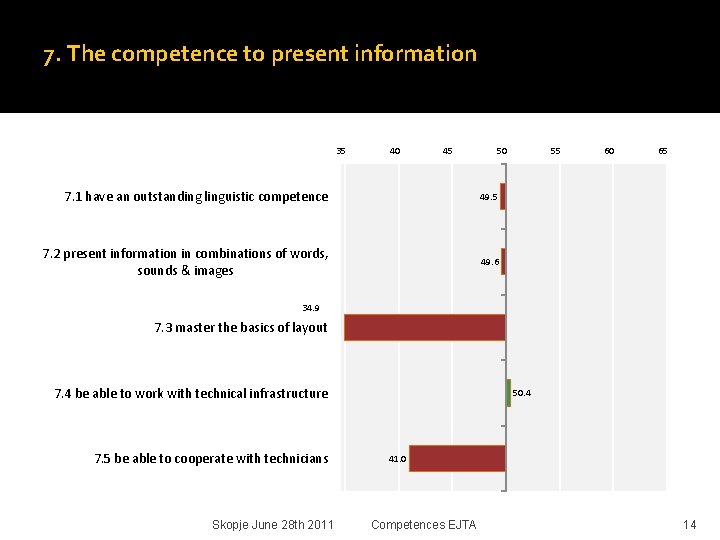
7. The competence to present information 35 40 45 50 7. 1 have an outstanding linguistic competence 49. 5 7. 2 present information in combinations of words, sounds & images 49. 6 55 60 65 34. 9 7. 3 master the basics of layout 7. 4 be able to work with technical infrastructure 7. 5 be able to cooperate with technicians Skopje June 28 th 2011 50. 4 41. 0 Competences EJTA 14
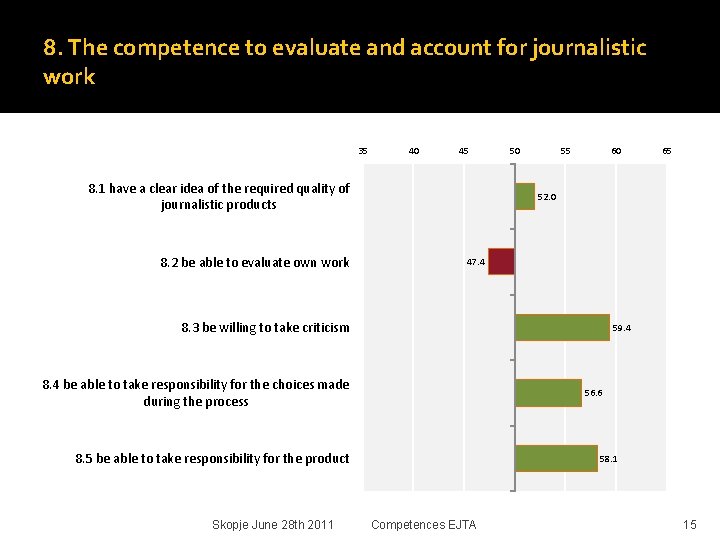
8. The competence to evaluate and account for journalistic work 35 40 45 8. 1 have a clear idea of the required quality of journalistic products 8. 2 be able to evaluate own work 50 55 60 52. 0 47. 4 8. 3 be willing to take criticism 59. 4 8. 4 be able to take responsibility for the choices made during the process 56. 6 8. 5 be able to take responsibility for the product Skopje June 28 th 2011 65 58. 1 Competences EJTA 15
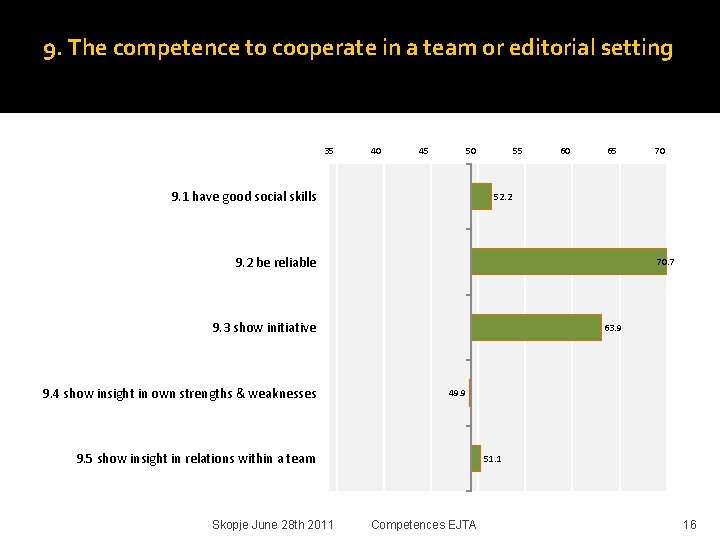
9. The competence to cooperate in a team or editorial setting 35 40 45 50 9. 1 have good social skills 55 60 65 52. 2 9. 2 be reliable 70. 7 9. 3 show initiative 9. 4 show insight in own strengths & weaknesses 63. 9 49. 9 9. 5 show insight in relations within a team Skopje June 28 th 2011 70 51. 1 Competences EJTA 16
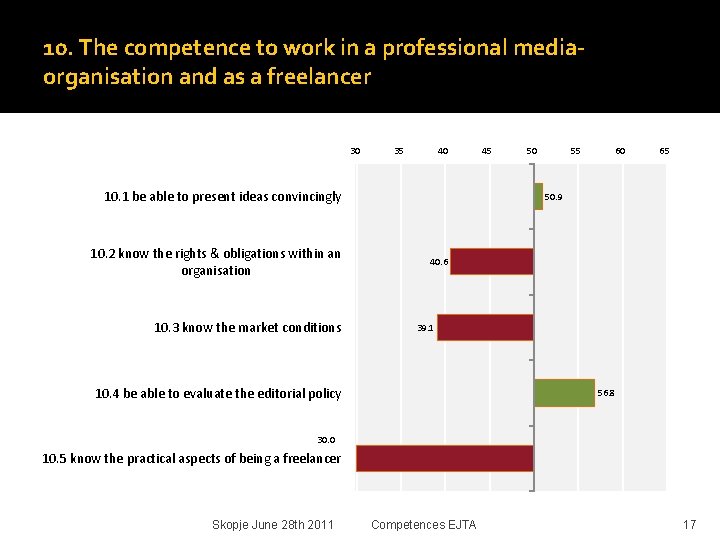
10. The competence to work in a professional mediaorganisation and as a freelancer 30 35 40 10. 1 be able to present ideas convincingly 10. 2 know the rights & obligations within an organisation 10. 3 know the market conditions 45 50 55 60 65 50. 9 40. 6 39. 1 10. 4 be able to evaluate the editorial policy 56. 8 30. 0 10. 5 know the practical aspects of being a freelancer Skopje June 28 th 2011 Competences EJTA 17
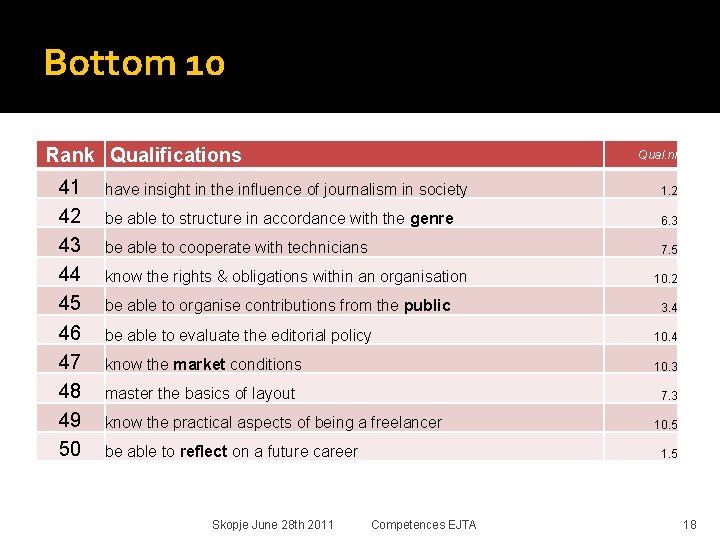
Bottom 10 Rank Qualifications 41 42 43 44 45 46 47 48 49 50 Qual. nr. have insight in the influence of journalism in society 1. 2 be able to structure in accordance with the genre 6. 3 be able to cooperate with technicians 7. 5 know the rights & obligations within an organisation be able to organise contributions from the public 10. 2 3. 4 be able to evaluate the editorial policy 10. 4 know the market conditions 10. 3 master the basics of layout 7. 3 know the practical aspects of being a freelancer be able to reflect on a future career Skopje June 28 th 2011 10. 5 1. 5 Competences EJTA 18
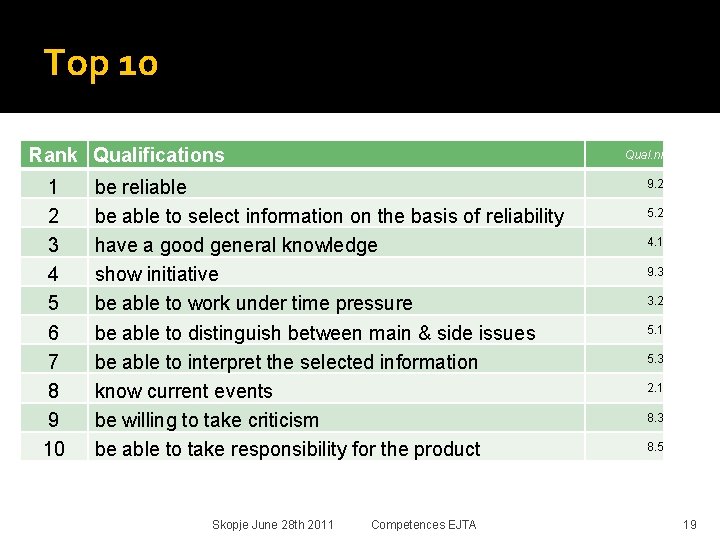
Top 10 Rank Qualifications 1 2 3 4 5 6 7 8 9 10 Qual. nr. be reliable be able to select information on the basis of reliability have a good general knowledge show initiative be able to work under time pressure be able to distinguish between main & side issues be able to interpret the selected information know current events be willing to take criticism be able to take responsibility for the product Skopje June 28 th 2011 Competences EJTA 9. 2 5. 2 4. 1 9. 3 3. 2 5. 1 5. 3 2. 1 8. 3 8. 5 19
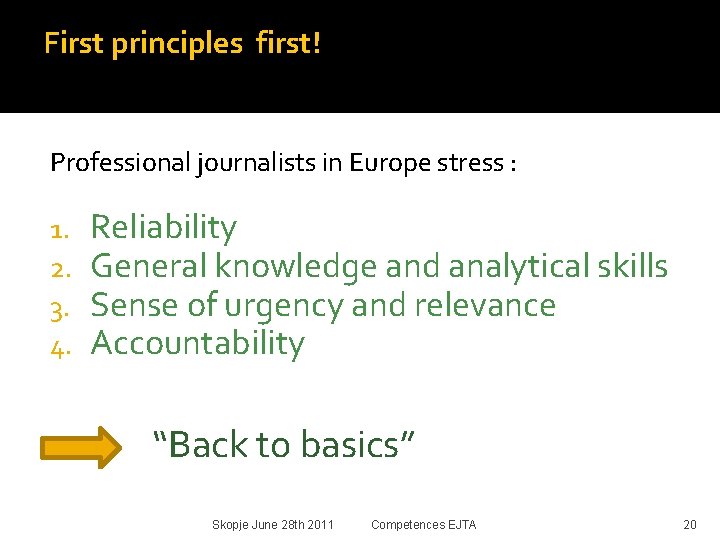
First principles first! Professional journalists in Europe stress : 1. 2. 3. 4. Reliability General knowledge and analytical skills Sense of urgency and relevance Accountability “Back to basics” Skopje June 28 th 2011 Competences EJTA 20
Thank you. Skopje June 28 th 2011 Competences EJTA 21
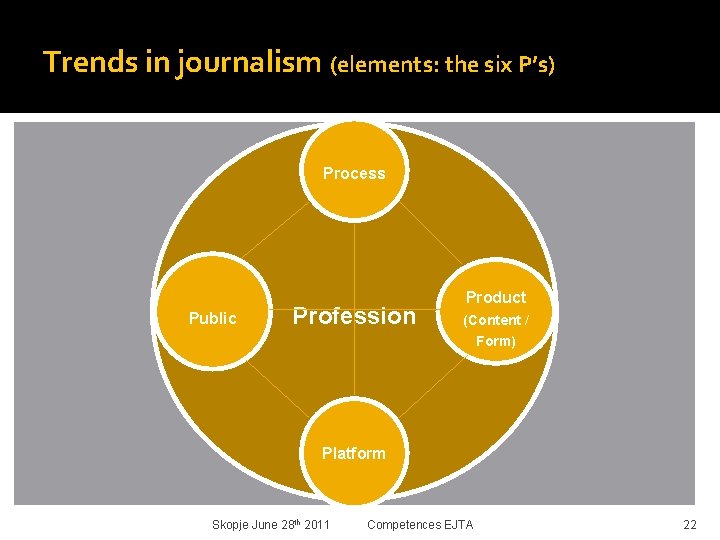
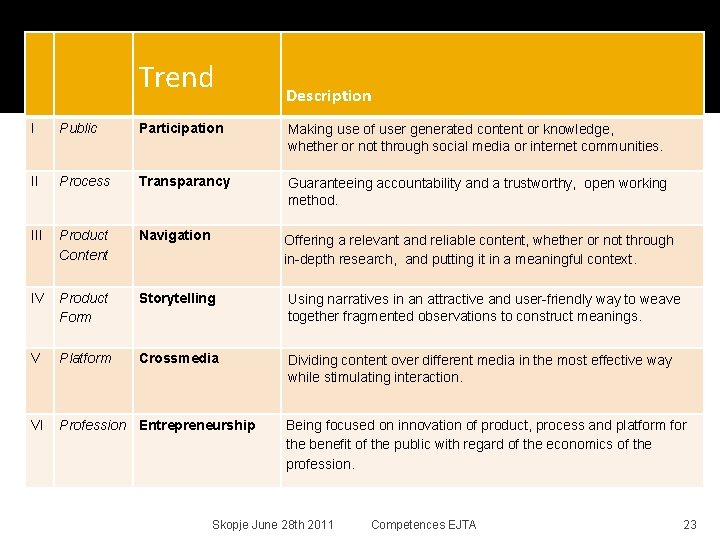
Trends in journalism (elements: the six P’s) Process Public Profession Product (Content / Form) Platform Skopje June 28 th 2011 Competences EJTA 22
Trend Description I Public Participation Making use of user generated content or knowledge, whether or not through social media or internet communities. II Process Transparancy Guaranteeing accountability and a trustworthy, open working method. III Product Content Navigation Offering a relevant and reliable content, whether or not through in-depth research, and putting it in a meaningful context. IV Product Form Storytelling Using narratives in an attractive and user-friendly way to weave together fragmented observations to construct meanings. V Platform Crossmedia Dividing content over different media in the most effective way while stimulating interaction. VI Profession Entrepreneurship Being focused on innovation of product, process and platform for the benefit of the public with regard of the economics of the profession. Skopje June 28 th 2011 Competences EJTA 23
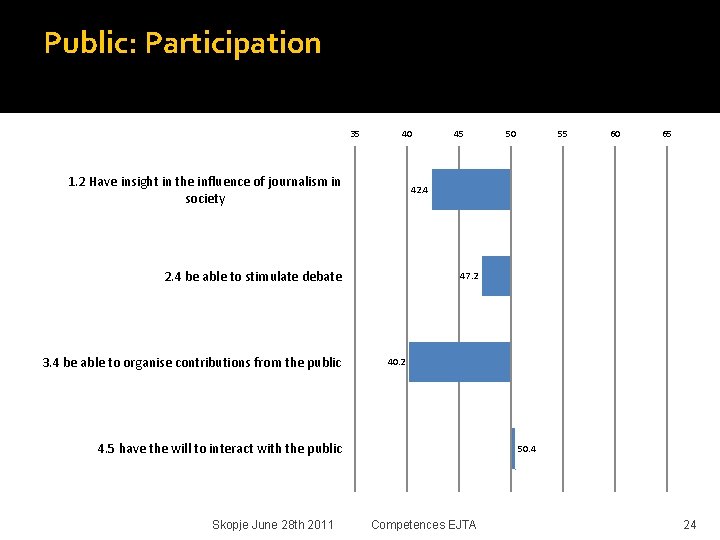
Public: Participation 35 40 1. 2 Have insight in the influence of journalism in society 55 60 65 47. 2 40. 2 4. 5 have the will to interact with the public Skopje June 28 th 2011 50 42. 4 be able to stimulate debate 3. 4 be able to organise contributions from the public 45 50. 4 Competences EJTA 24
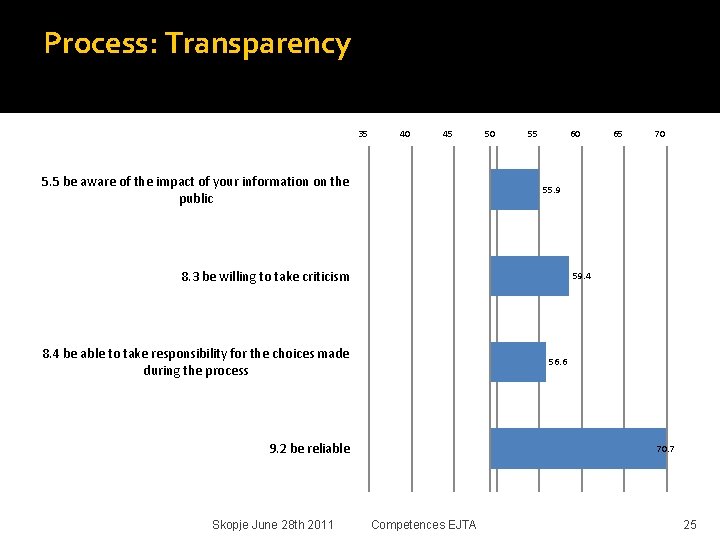
Process: Transparency 35 40 45 5. 5 be aware of the impact of your information on the public 50 55 60 70 55. 9 8. 3 be willing to take criticism 59. 4 8. 4 be able to take responsibility for the choices made during the process 56. 6 9. 2 be reliable Skopje June 28 th 2011 65 70. 7 Competences EJTA 25
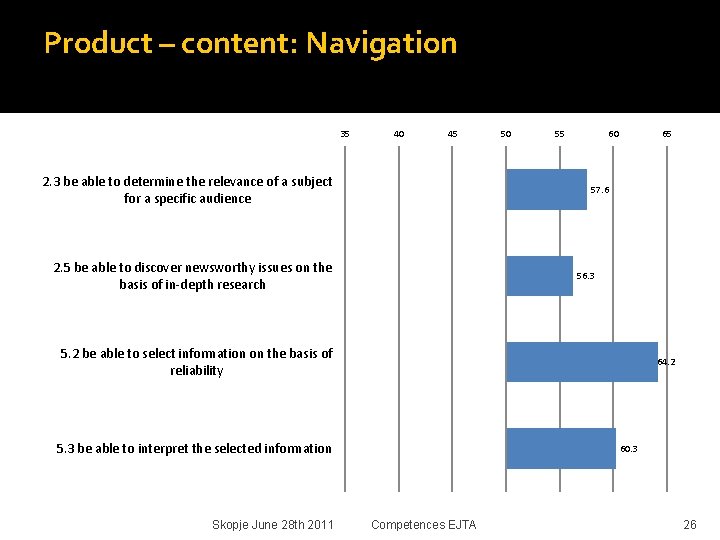
Product – content: Navigation 35 40 45 2. 3 be able to determine the relevance of a subject for a specific audience 50 55 60 65 57. 6 2. 5 be able to discover newsworthy issues on the basis of in-depth research 56. 3 5. 2 be able to select information on the basis of reliability 64. 2 5. 3 be able to interpret the selected information Skopje June 28 th 2011 60. 3 Competences EJTA 26
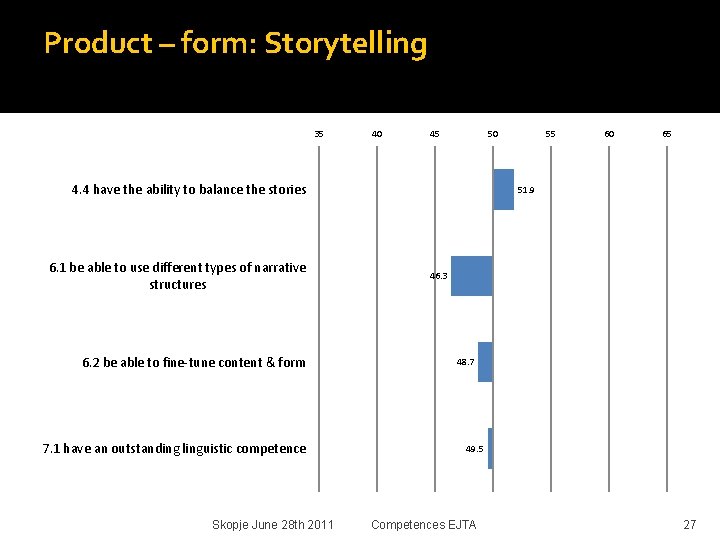
Product – form: Storytelling 35 40 45 50 4. 4 have the ability to balance the stories 6. 1 be able to use different types of narrative structures 6. 2 be able to fine-tune content & form 7. 1 have an outstanding linguistic competence Skopje June 28 th 2011 55 60 65 51. 9 46. 3 48. 7 49. 5 Competences EJTA 27
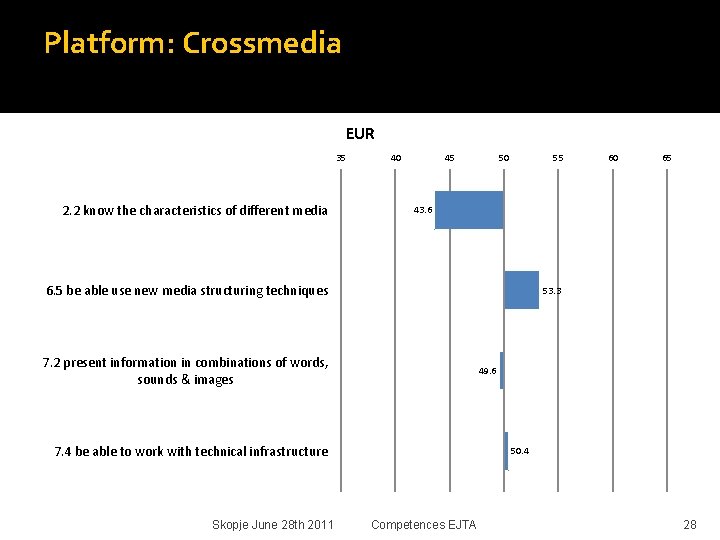
Platform: Crossmedia EUR 35 2. 2 know the characteristics of different media 40 45 50 55 65 43. 6 6. 5 be able use new media structuring techniques 53. 3 7. 2 present information in combinations of words, sounds & images 49. 6 7. 4 be able to work with technical infrastructure Skopje June 28 th 2011 60 50. 4 Competences EJTA 28
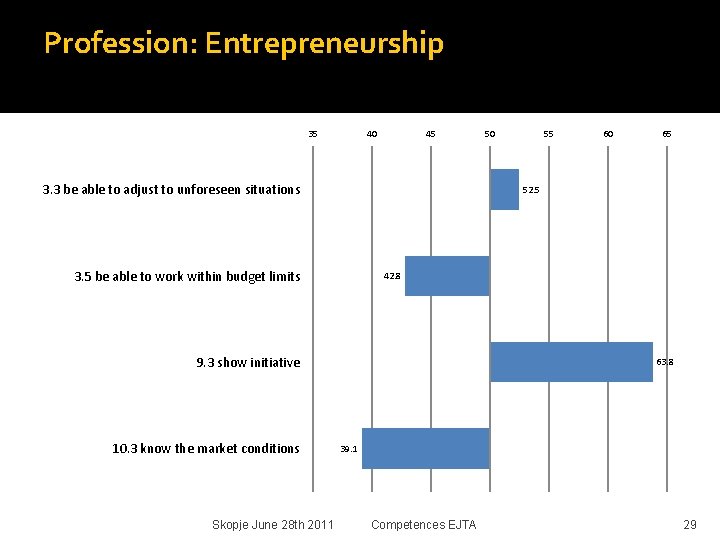
Profession: Entrepreneurship 35 40 45 3. 3 be able to adjust to unforeseen situations 60 65 42. 8 9. 3 show initiative Skopje June 28 th 2011 55 52. 5 3. 5 be able to work within budget limits 10. 3 know the market conditions 50 63. 8 39. 1 Competences EJTA 29
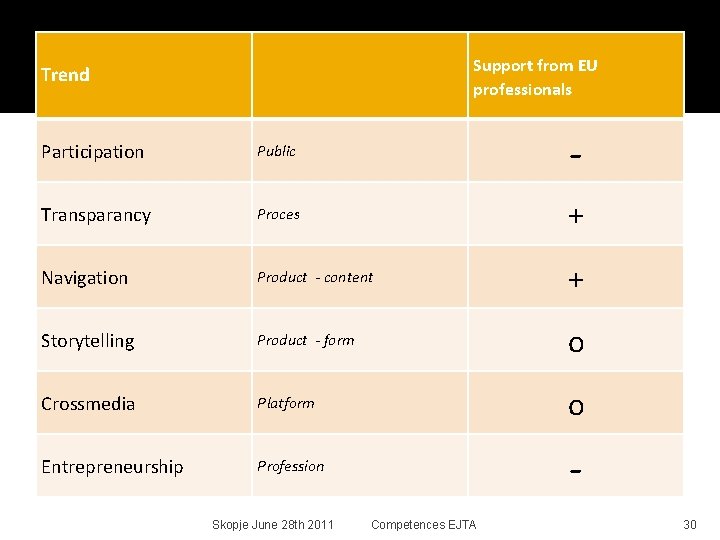
Support from EU professionals Trend Participation Public - Transparancy Proces + Navigation Product - content + Storytelling Product - form o Crossmedia Platform o Entrepreneurship Profession - Skopje June 28 th 2011 Competences EJTA 30
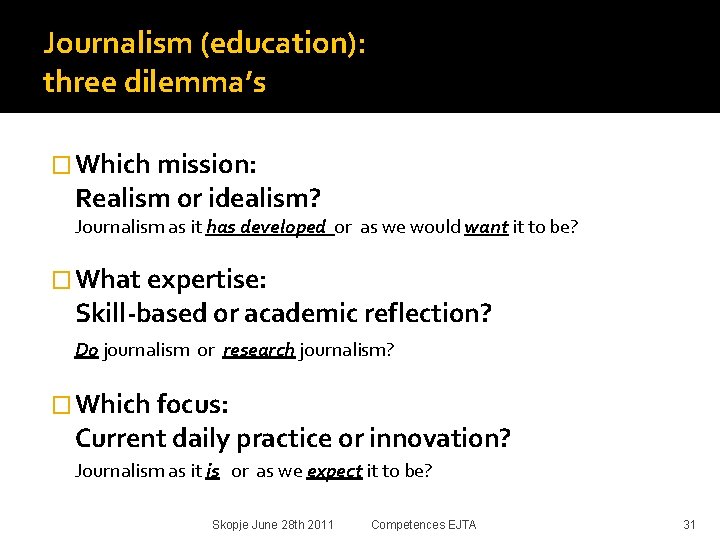
Journalism (education): three dilemma’s � Which mission: Realism or idealism? Journalism as it has developed or as we would want it to be? � What expertise: Skill-based or academic reflection? Do journalism or research journalism? � Which focus: Current daily practice or innovation? Journalism as it is or as we expect it to be? Skopje June 28 th 2011 Competences EJTA 31
Thank you. Skopje June 28 th 2011 Competences EJTA 32