
THE COMMUNITY RESILIENCY MODEL Linda Grabbe Ph D
THE COMMUNITY RESILIENCY MODEL® Linda Grabbe, Ph. D, FNP, PMHNP David Lawson, MD Certified CRM Teachers Building Resilience to Trauma: The Trauma and Community Resiliency Models Book Written by: ELAINE MILLER-KARAS ©TRI 2020
FACTS ABOUT CRM? CRM skills were initially used during environmental disasters CRM skills are appropriate amongst diverse cultural groups CRM content is appropriate across the lifespan and amongst unique groups

Resilient Zone The Resilient Zone- “OK” Zone Activation Recovery Action in the nervous system Activation GOALS: (c) Trauma Institute WIDEN YOUR RESILIENCY ZONE and. Resource GET BACK IN WHEN KNOCKED OUT
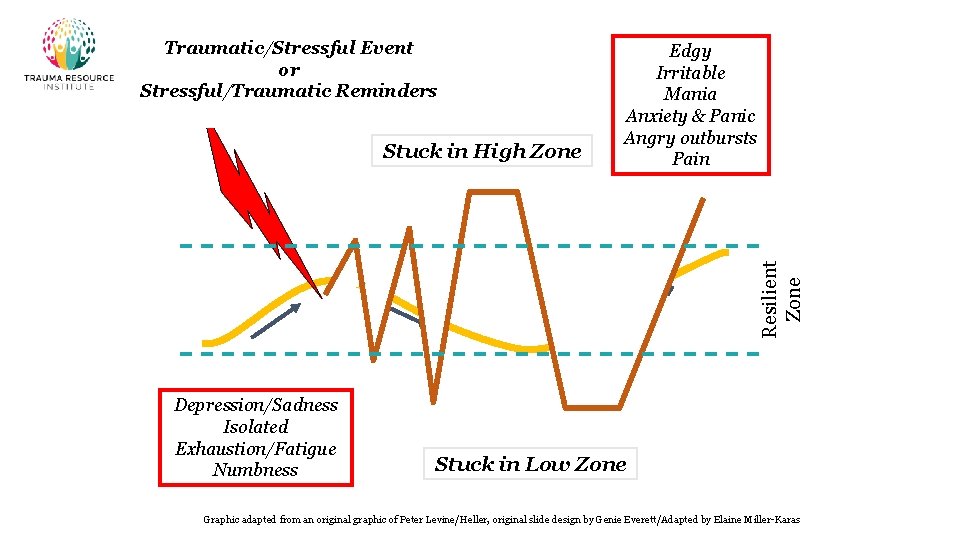
Traumatic/Stressful Event or Stressful/Traumatic Reminders Resilient Zone Stuck in High Zone Edgy Irritable Mania Anxiety & Panic Angry outbursts Pain Depression/Sadness Isolated Exhaustion/Fatigue Numbness Stuck in Low Zone Graphic adapted from an original graphic of Peter Levine/Heller, original slide design by Genie Everett/Adapted by Elaine Miller-Karas
What or who uplifts you? What or who gives you strength? What or who helps you get through hard times? As you think about this source of strength, what do you notice happening in your body?
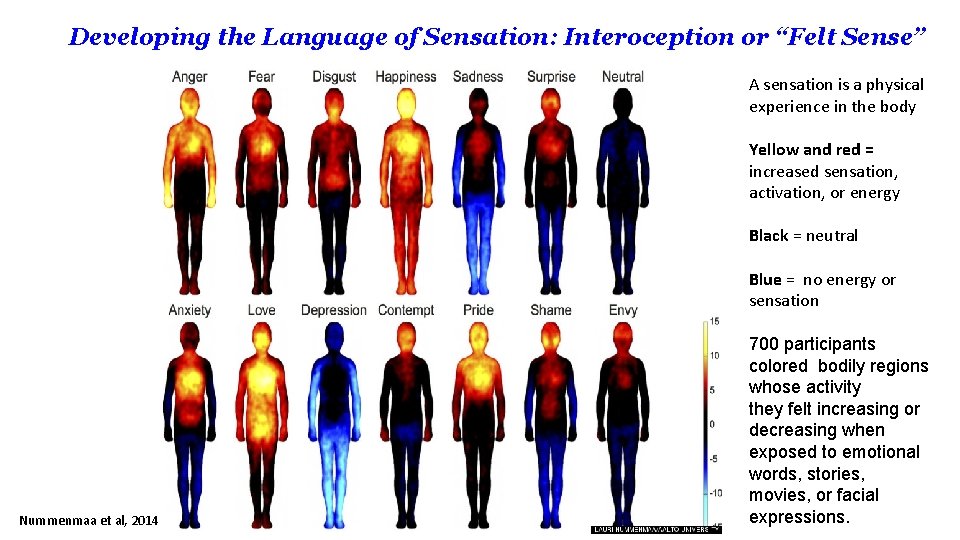
Developing the Language of Sensation: Interoception or “Felt Sense” A sensation is a physical experience in the body Yellow and red = increased sensation, activation, or energy Black = neutral Blue = no energy or sensation Nummenmaa et al, 2014 700 participants colored bodily regions whose activity they felt increasing or decreasing when exposed to emotional words, stories, movies, or facial expressions.
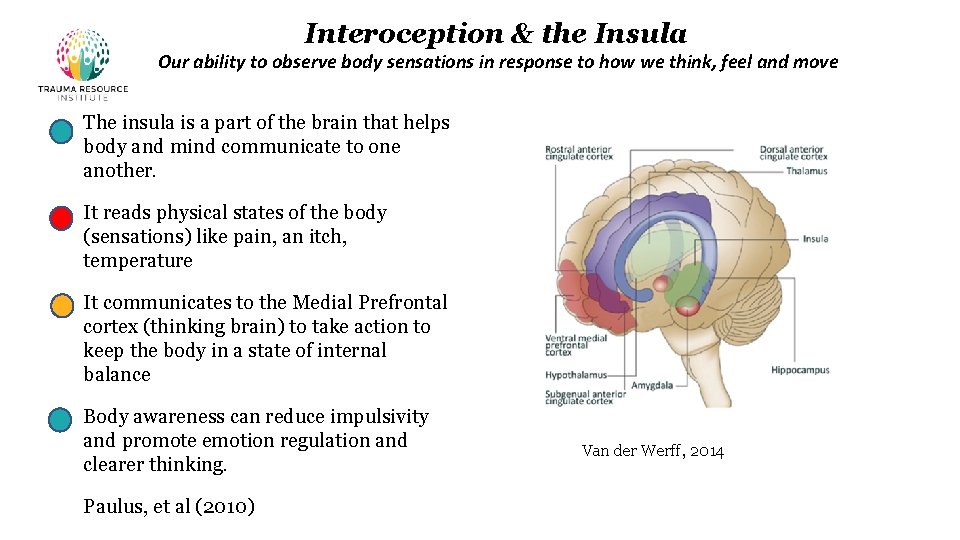
Interoception & the Insula Our ability to observe body sensations in response to how we think, feel and move The insula is a part of the brain that helps body and mind communicate to one another. It reads physical states of the body (sensations) like pain, an itch, temperature It communicates to the Medial Prefrontal cortex (thinking brain) to take action to keep the body in a state of internal balance Body awareness can reduce impulsivity and promote emotion regulation and clearer thinking. Paulus, et al (2010) Van der Werff, 2014

CRM RESEARCH
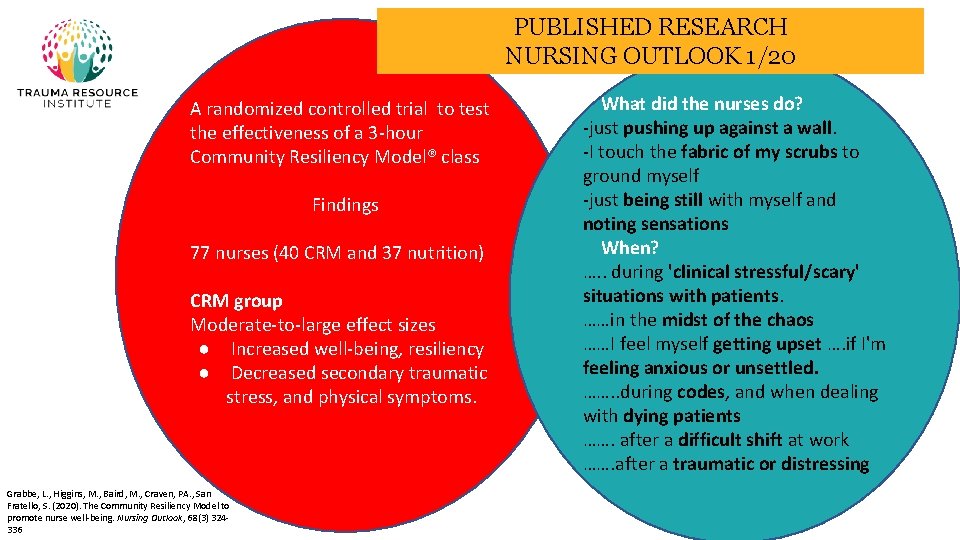
PUBLISHED RESEARCH NURSING OUTLOOK 1/20 A randomized controlled trial to test the effectiveness of a 3 -hour Community Resiliency Model® class Findings 77 nurses (40 CRM and 37 nutrition) CRM group Moderate-to-large effect sizes ● Increased well-being, resiliency ● Decreased secondary traumatic stress, and physical symptoms. Grabbe, L. , Higgins, M. , Baird, M. , Craven, PA. , San Fratello, S. (2020). The Community Resiliency Model to promote nurse well-being. Nursing Outlook, 68(3) 324336 What did the nurses do? -just pushing up against a wall. -I touch the fabric of my scrubs to ground myself -just being still with myself and noting sensations When? …. . during 'clinical stressful/scary' situations with patients. ……in the midst of the chaos ……I feel myself getting upset …. if I'm feeling anxious or unsettled. ……. . during codes, and when dealing with dying patients ……. after a difficult shift at work ……. after a traumatic or distressing
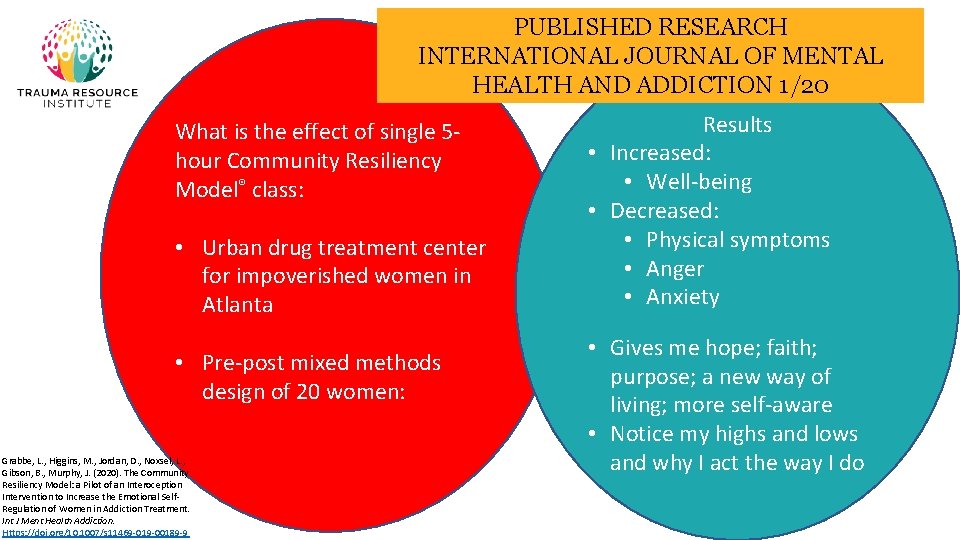
PUBLISHED RESEARCH INTERNATIONAL JOURNAL OF MENTAL HEALTH AND ADDICTION 1/20 What is the effect of single 5 hour Community Resiliency Model® class: • Urban drug treatment center for impoverished women in Atlanta • Pre-post mixed methods design of 20 women: Grabbe, L. , Higgins, M. , Jordan, D. , Noxsel, L. , Gibson, B. , Murphy, J. (2020). The Community Resiliency Model: a Pilot of an Interoception Intervention to Increase the Emotional Self. Regulation of Women in Addiction Treatment. Int J Ment Health Addiction. Https: //doi. org/10. 1007/s 11469 -019 -00189 -9 Results • Increased: • Well-being • Decreased: • Physical symptoms • Anger • Anxiety • Gives me hope; faith; purpose; a new way of living; more self-aware • Notice my highs and lows and why I act the way I do
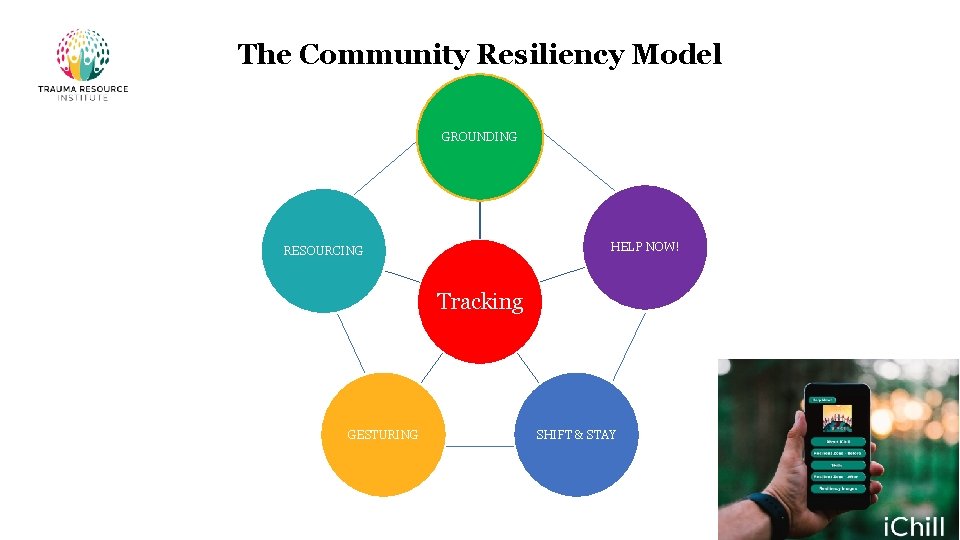
The Community Resiliency Model GROUNDING HELP NOW! RESOURCING Tracking GESTURING SHIFT & STAY
SKILL 1: Tracking (Reading Sensations)
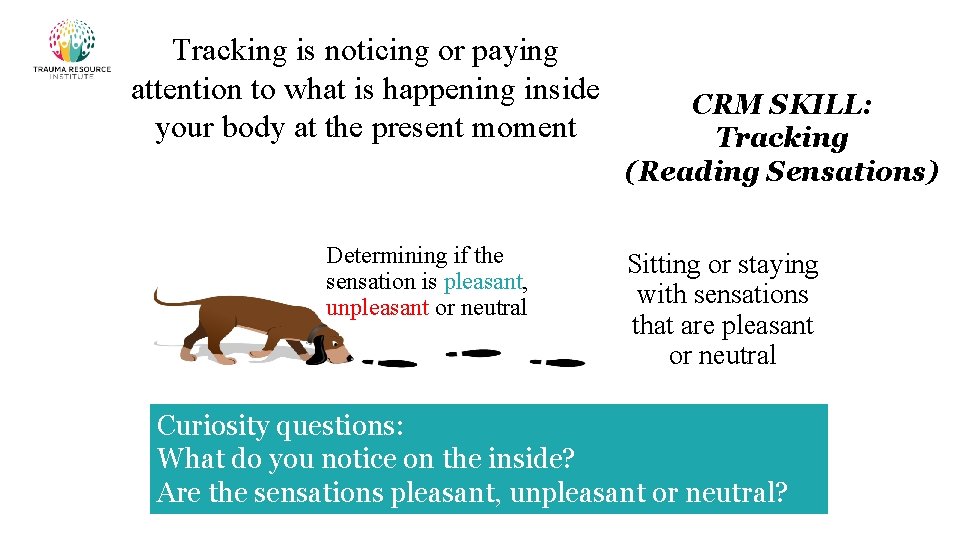
Tracking is noticing or paying attention to what is happening inside your body at the present moment Determining if the sensation is pleasant, unpleasant or neutral CRM SKILL: Tracking (Reading Sensations) Sitting or staying with sensations that are pleasant or neutral Curiosity questions: What do you notice on the inside? Are the sensations pleasant, unpleasant or neutral?
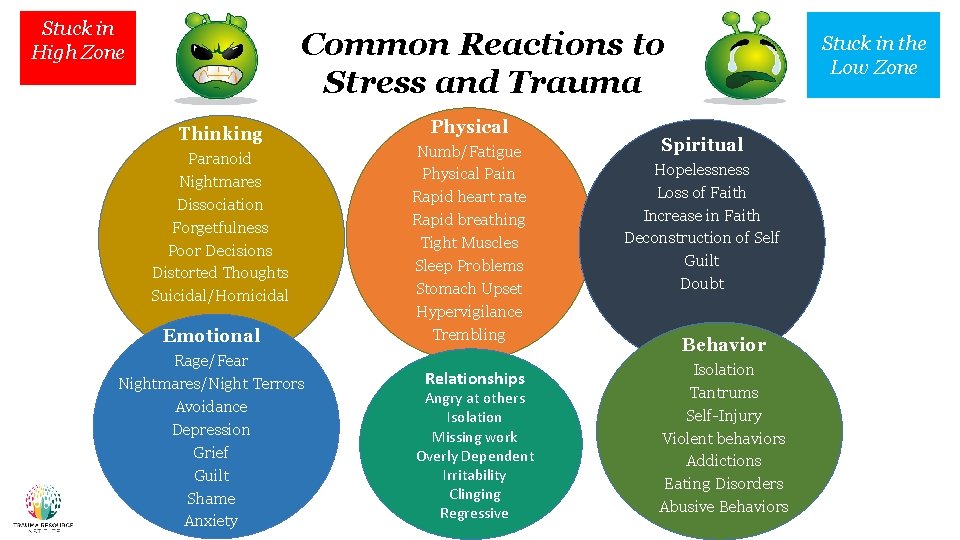
Stuck in High Zone Common Reactions to Stress and Trauma Thinking Paranoid Nightmares Dissociation Forgetfulness Poor Decisions Distorted Thoughts Suicidal/Homicidal Emotional Rage/Fear Nightmares/Night Terrors Avoidance Depression Grief Guilt Shame Anxiety Physical Numb/Fatigue Physical Pain Rapid heart rate Rapid breathing Tight Muscles Sleep Problems Stomach Upset Hypervigilance Trembling Relationships Angry at others Isolation Missing work Overly Dependent Irritability Clinging Regressive Stuck in the Low Zone Spiritual Hopelessness Loss of Faith Increase in Faith Deconstruction of Self Guilt Doubt Behavior Isolation Tantrums Self-Injury Violent behaviors Addictions Eating Disorders Abusive Behaviors
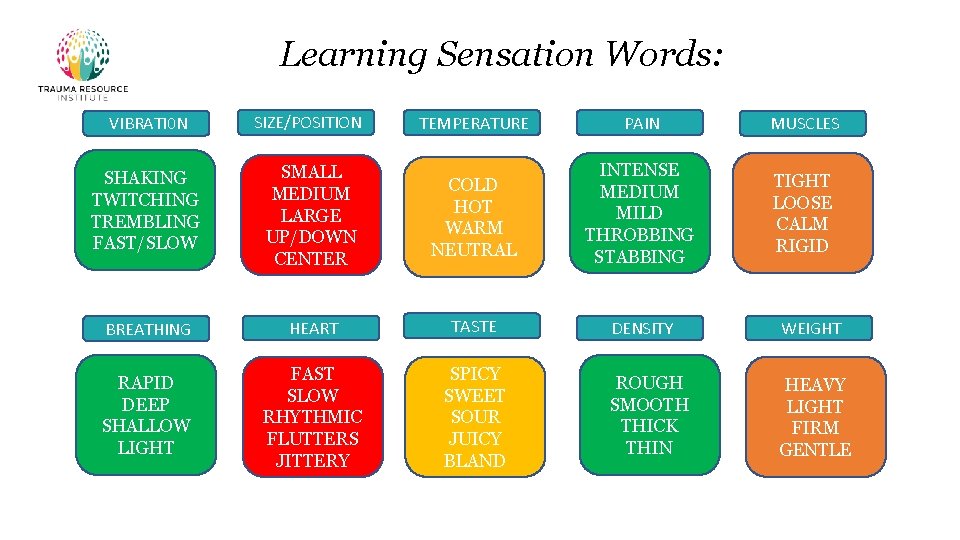
Learning Sensation Words: VIBRATI 0 N SIZE/POSITION TEMPERATURE PAIN MUSCLES SHAKING TWITCHING TREMBLING FAST/SLOW SMALL MEDIUM LARGE UP/DOWN CENTER COLD HOT WARM NEUTRAL INTENSE MEDIUM MILD THROBBING STABBING TIGHT LOOSE CALM RIGID BREATHING HEART TASTE DENSITY WEIGHT RAPID DEEP SHALLOW LIGHT FAST SLOW RHYTHMIC FLUTTERS JITTERY SPICY SWEET SOUR JUICY BLAND ROUGH SMOOTH THICK THIN HEAVY LIGHT FIRM GENTLE
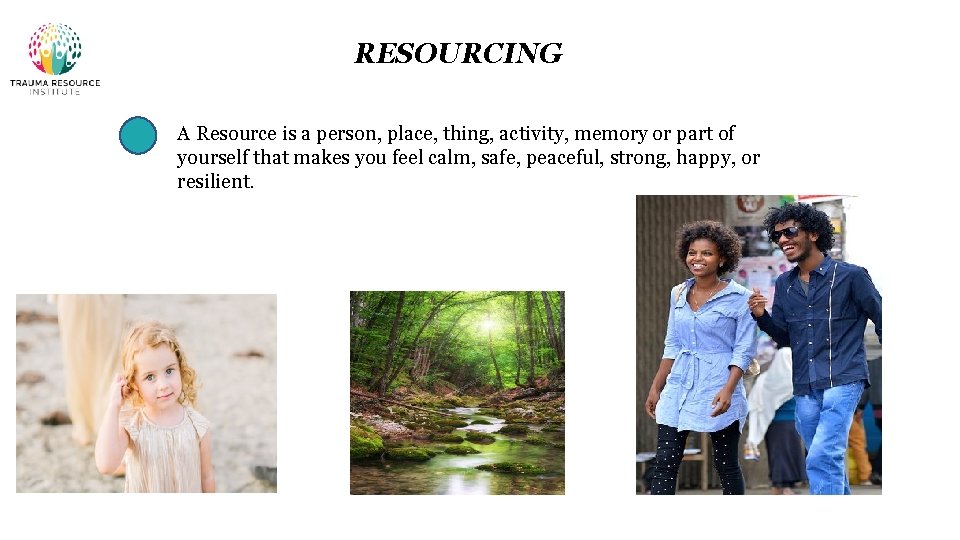
RESOURCING A Resource is a person, place, thing, activity, memory or part of yourself that makes you feel calm, safe, peaceful, strong, happy, or resilient. Resourcing Skill 2
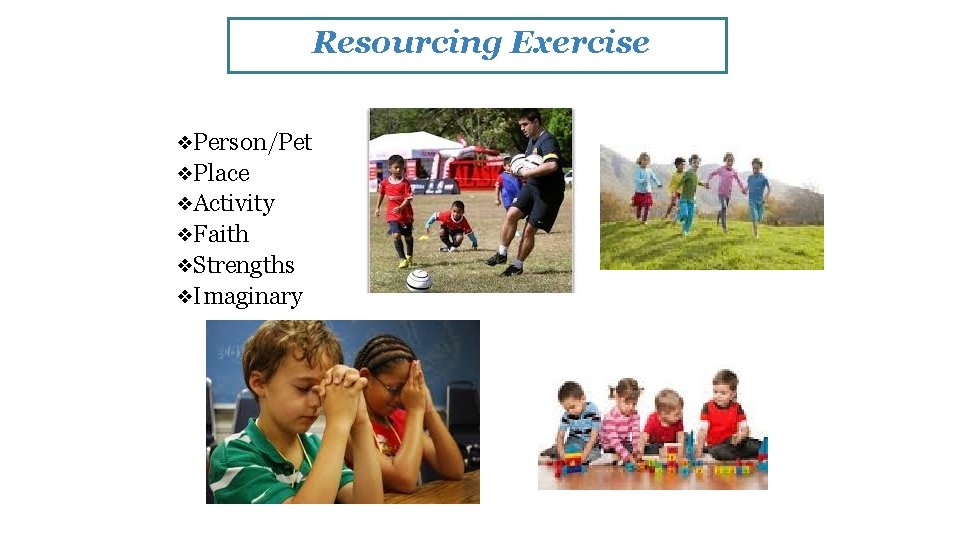
Resourcing Exercise ❖Person/Pet ❖Place ❖Activity ❖Faith ❖Strengths ❖Imaginary
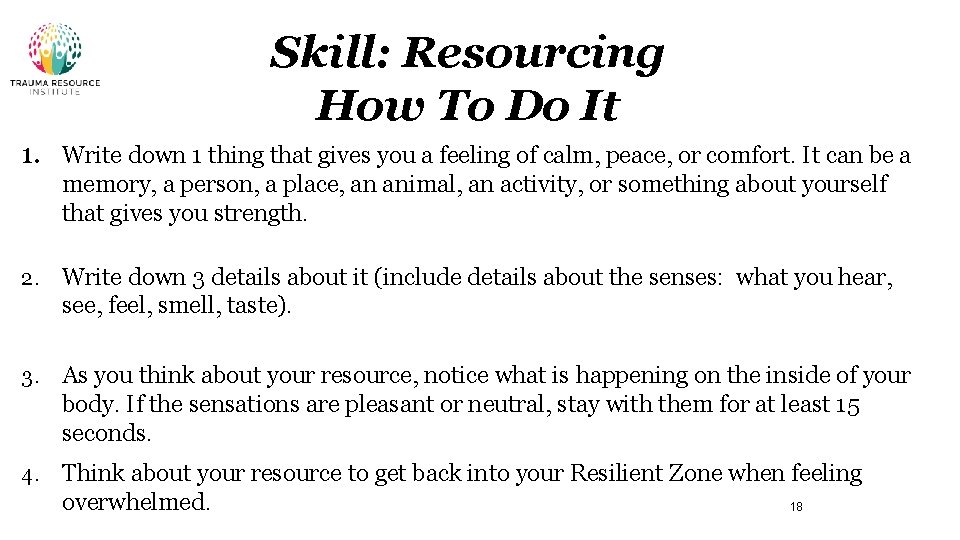
Skill: Resourcing How To Do It 1. Write down 1 thing that gives you a feeling of calm, peace, or comfort. It can be a memory, a person, a place, an animal, an activity, or something about yourself that gives you strength. 2. Write down 3 details about it (include details about the senses: what you hear, see, feel, smell, taste). 3. As you think about your resource, notice what is happening on the inside of your body. If the sensations are pleasant or neutral, stay with them for at least 15 seconds. 4. Think about your resource to get back into your Resilient Zone when feeling overwhelmed. 27 18
Grounding Exercise The direct contact of the body or part of the body with something that provides support in the present moment
Skill 3: Grounding The direct contact of the body or part of the body with something that provides support in the present moment Gravitational security is the foundation upon which we build our interpersonal relationships. When we are grounded, we have a sense of self in relationship to present time and space. We are not worried about the past or the future.
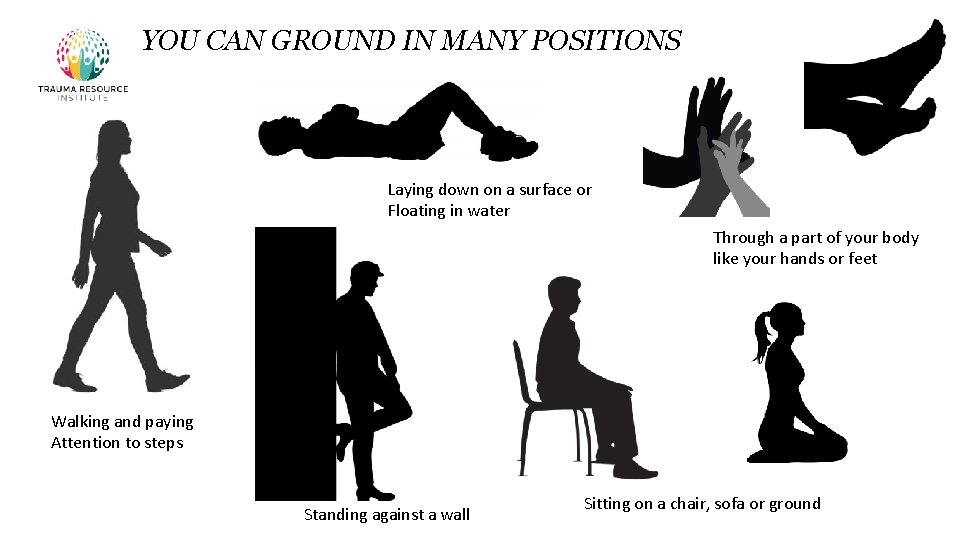
YOU CAN GROUND IN MANY POSITIONS Laying down on a surface or Floating in water Through a part of your body like your hands or feet Walking and paying Attention to steps Standing against a wall Sitting on a chair, sofa or ground
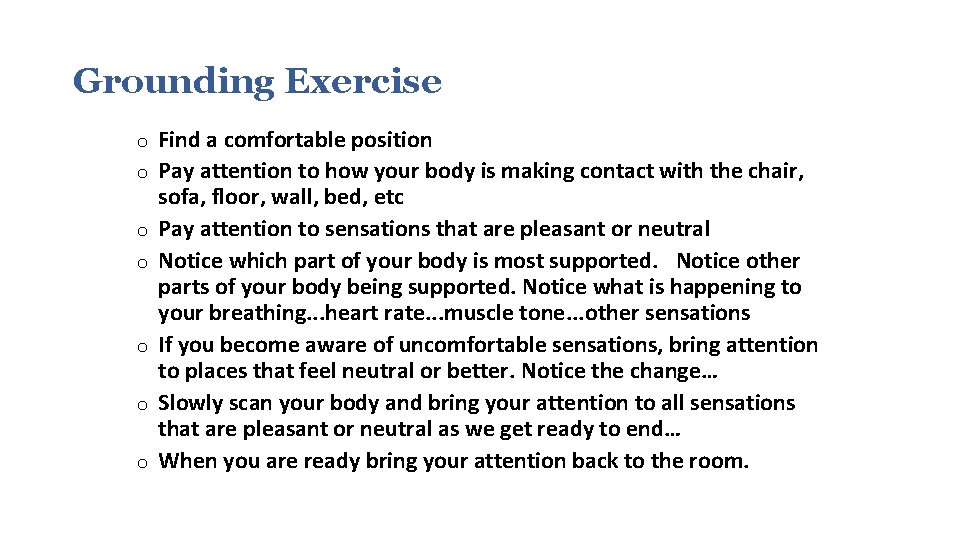
Grounding Exercise o o o o Find a comfortable position Pay attention to how your body is making contact with the chair, sofa, floor, wall, bed, etc Pay attention to sensations that are pleasant or neutral Notice which part of your body is most supported. Notice other parts of your body being supported. Notice what is happening to your breathing. . . heart rate. . . muscle tone. . . other sensations If you become aware of uncomfortable sensations, bring attention to places that feel neutral or better. Notice the change… Slowly scan your body and bring your attention to all sensations that are pleasant or neutral as we get ready to end… When you are ready bring your attention back to the room.
Quick Practices for Quick Results! • What do you do when you need something to stabilize you quickly?
Help Now! Strategies 1. 2. 3. 4. 5. 6. 7. 8. Drink a glass of water or juice or cup of tea. Touch the surface of something in the environment. Look around the room, paying attention to anything that catches your attention. Name six colors you see in the room. Count backwards from 20. Notice how the surfaces of things feel, temperature, sounds Walk or move your arms and pay attention to the movement Push your hands against the wall or down against your bed slowly and notice your muscles pushing. Or, if you can, stand against a wall and push your body against the wall facing forward.

Skill: Grounding The direct contact of the body or part of the body with something that provides support in the present moment
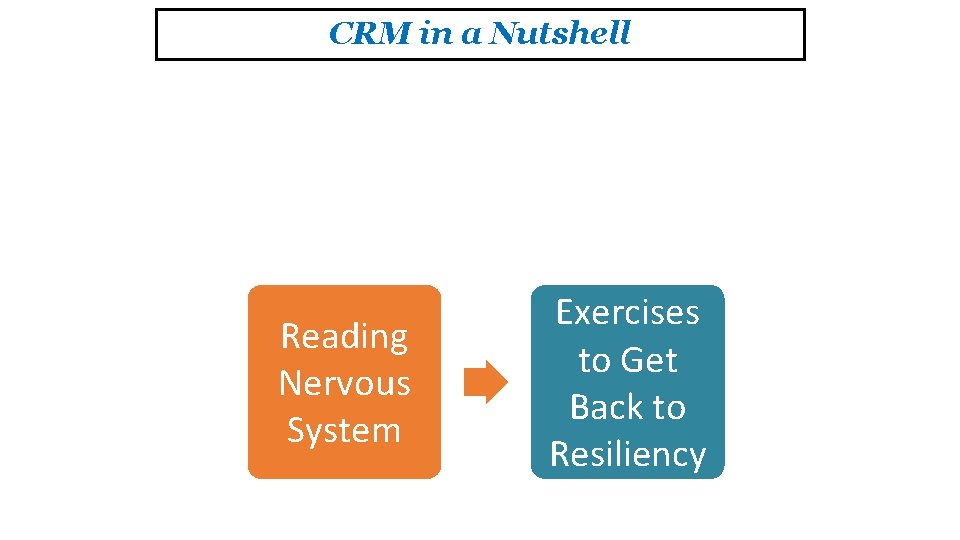
CRM in a Nutshell Reading Nervous System Exercises to Get Back to Resiliency
What we pay attention to grows
A SELF-CARE PLAN 1. What are you doing to widen your Resilient Zone? 2. If you found the CRM skills beneficial, how could you weave this skill into your daily routine? Which technique might be the most helpful? 3. What specifically do you need to do differently to embark on a better self-care plan if you think yours needs improvement?
Going Forward • Thank you for giving us your time and attention • We hope that you see value in these simple exercises • Next: consider incorporating some or all of these exercises into a self-care plan. • Takes 5 minute or less segments of your day. • Remember: These are exercises! The more you do them the easier they become and the more benefit you derive. • More practice makes it more likely that you will remember these exercises when the pressure builds up
- Slides: 29