
The Commissioning Process and Measurement Verification Douglas S

- Slides: 29
The Commissioning Process and Measurement & Verification Douglas S. Lancashire, P. E. , CEM , LEED AP www. osborn-eng. com 1100 Superior Ave. , Suite 300 Cleveland, OH 44114 216 -861 -2020 441 Wolf Ledges Parkway, Suite 300 Akron, OH 44311 330 -535 -3132 990 West Third Avenue Columbus, OH 43212 614 -306 -6374
DEFINING COMMISSIONING “Building Commissioning is the systematic process of ensuring, through documented verification, that all building systems are installed and perform in accordance with the design intent. ”
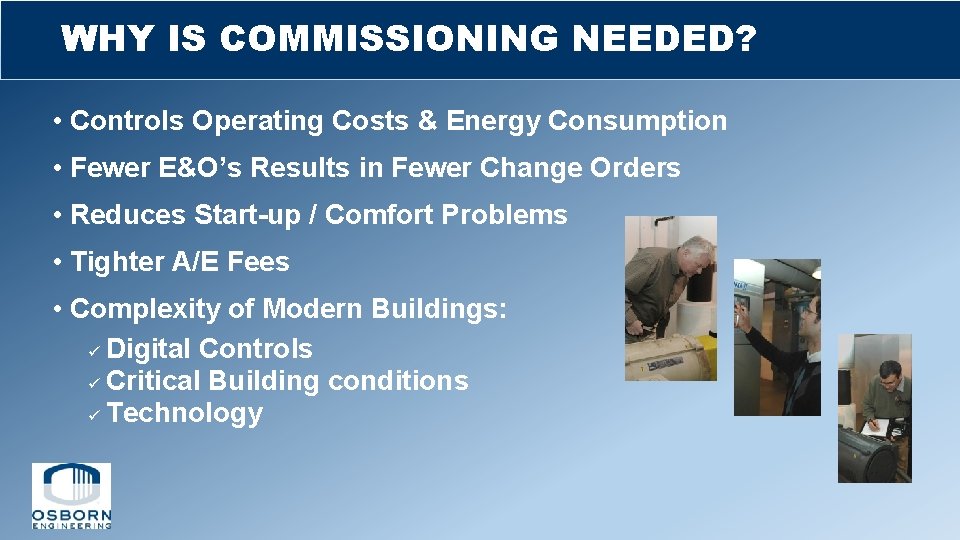
WHY IS COMMISSIONING NEEDED? • Controls Operating Costs & Energy Consumption • Fewer E&O’s Results in Fewer Change Orders • Reduces Start-up / Comfort Problems • Tighter A/E Fees • Complexity of Modern Buildings: ü Digital Controls ü Critical Building conditions ü Technology
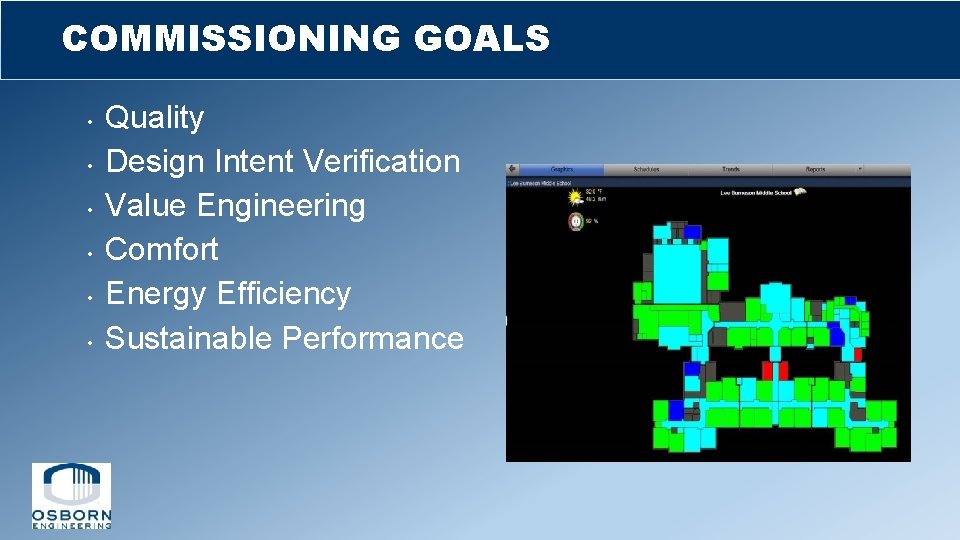
COMMISSIONING GOALS • • • Quality Design Intent Verification Value Engineering Comfort Energy Efficiency Sustainable Performance
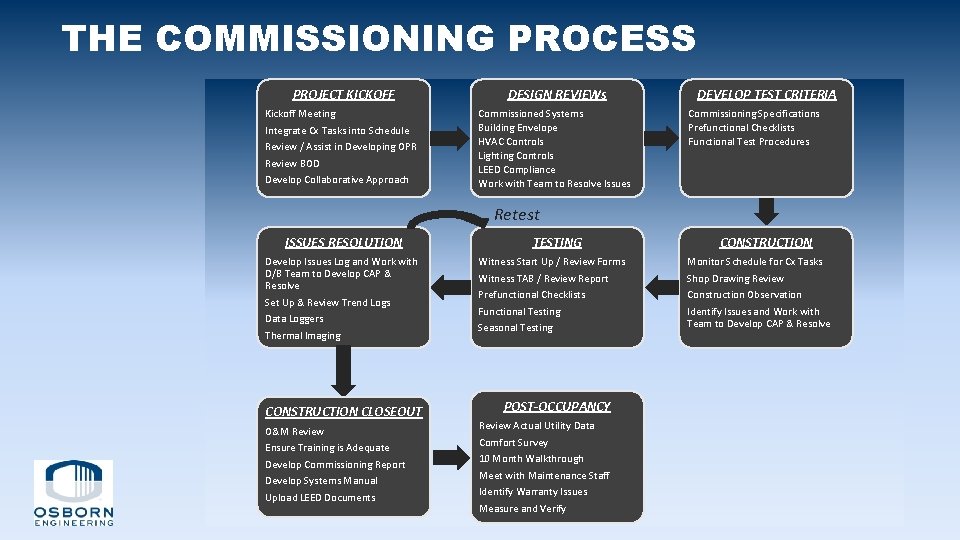
THE COMMISSIONING PROCESS PROJECT KICKOFF DESIGN REVIEWs Kickoff Meeting Integrate Cx Tasks into Schedule Review / Assist in Developing OPR Review BOD Develop Collaborative Approach Commissioned Systems Building Envelope HVAC Controls Lighting Controls LEED Compliance Work with Team to Resolve Issues DEVELOP TEST CRITERIA Commissioning Specifications Prefunctional Checklists Functional Test Procedures Retest ISSUES RESOLUTION Develop Issues Log and Work with D/B Team to Develop CAP & Resolve Set Up & Review Trend Logs Data Loggers Thermal Imaging CONSTRUCTION CLOSEOUT O&M Review Ensure Training is Adequate Develop Commissioning Report Develop Systems Manual Upload LEED Documents TESTING Witness Start Up / Review Forms Witness TAB / Review Report Prefunctional Checklists Functional Testing Seasonal Testing POST-OCCUPANCY Review Actual Utility Data Comfort Survey 10 Month Walkthrough Meet with Maintenance Staff Identify Warranty Issues Measure and Verify CONSTRUCTION Monitor Schedule for Cx Tasks Shop Drawing Review Construction Observation Identify Issues and Work with Team to Develop CAP & Resolve
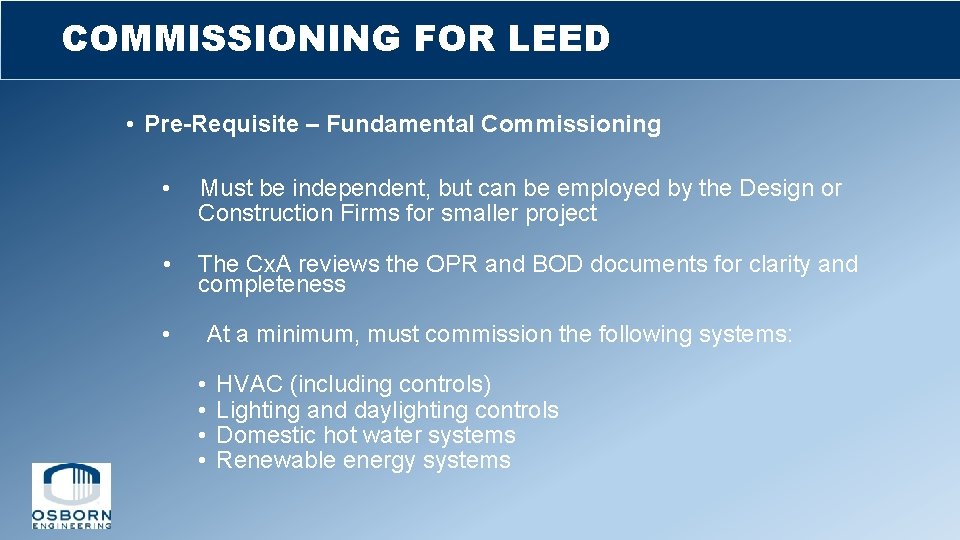
COMMISSIONING FOR LEED • Pre-Requisite – Fundamental Commissioning • Must be independent, but can be employed by the Design or Construction Firms for smaller project • The Cx. A reviews the OPR and BOD documents for clarity and completeness • At a minimum, must commission the following systems: • • HVAC (including controls) Lighting and daylighting controls Domestic hot water systems Renewable energy systems
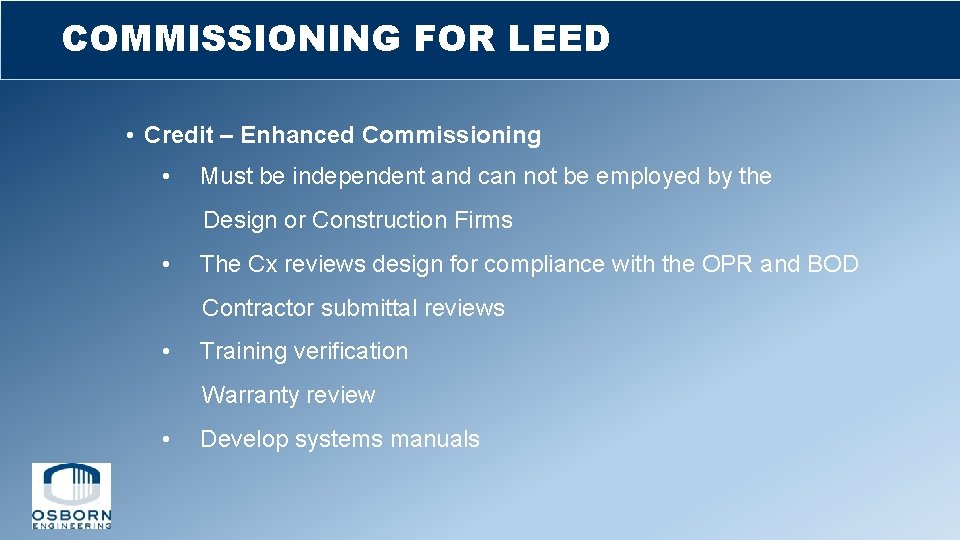
COMMISSIONING FOR LEED • Credit – Enhanced Commissioning • Must be independent and can not be employed by the Design or Construction Firms • The Cx reviews design for compliance with the OPR and BOD Contractor submittal reviews • Training verification Warranty review • Develop systems manuals
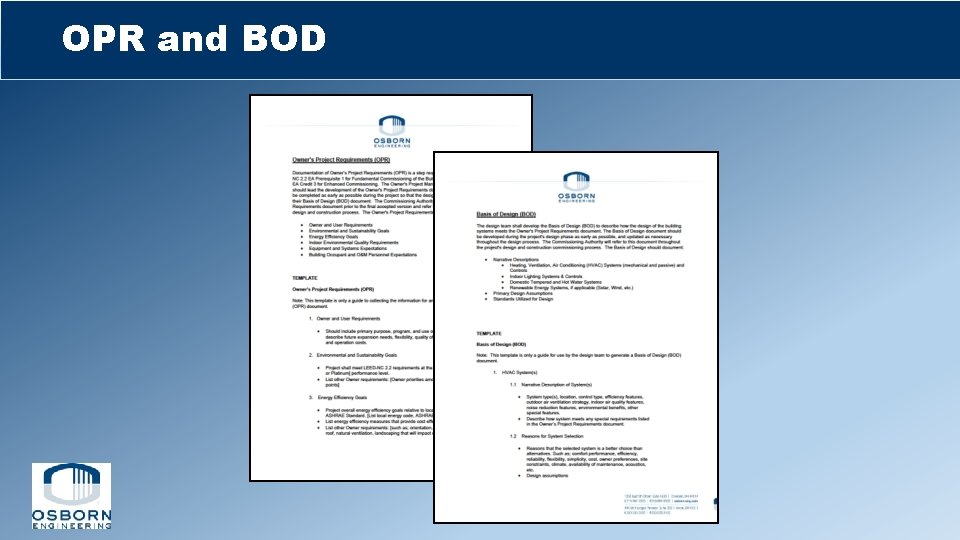
OPR and BOD
OPR and BOD • Owner's Project Requirements (OPR) • Owner and User Requirements • Environmental and Sustainability Goals • Energy Efficiency Goals (Basis of the M&V Plan) • Indoor Environmental Quality Requirements • Equipment and Systems Expectations • Building Occupant and O&M Personnel Expectations
OPR and BOD • Basis of Design (BOD) • System Narrative Descriptions • Primary Design Assumptions • Standards Utilized for Design
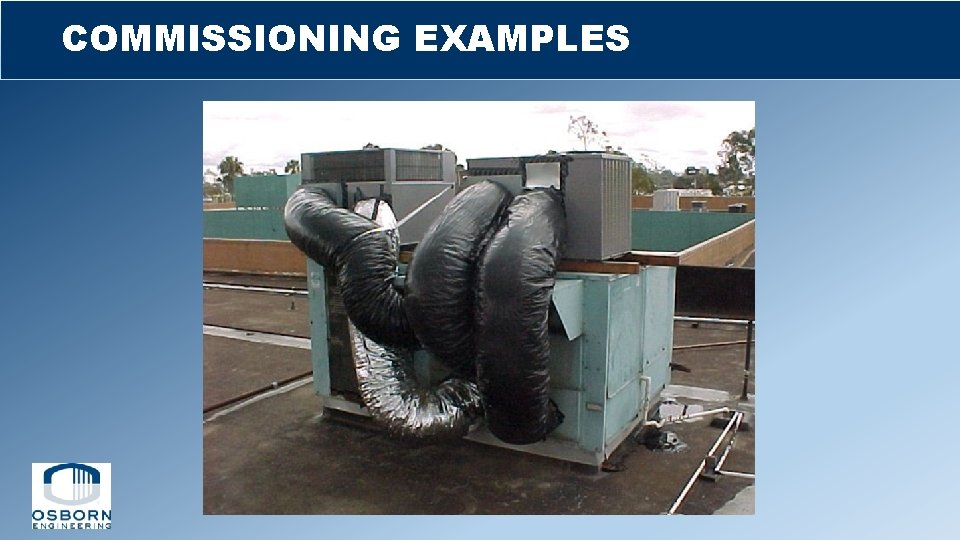
COMMISSIONING EXAMPLES
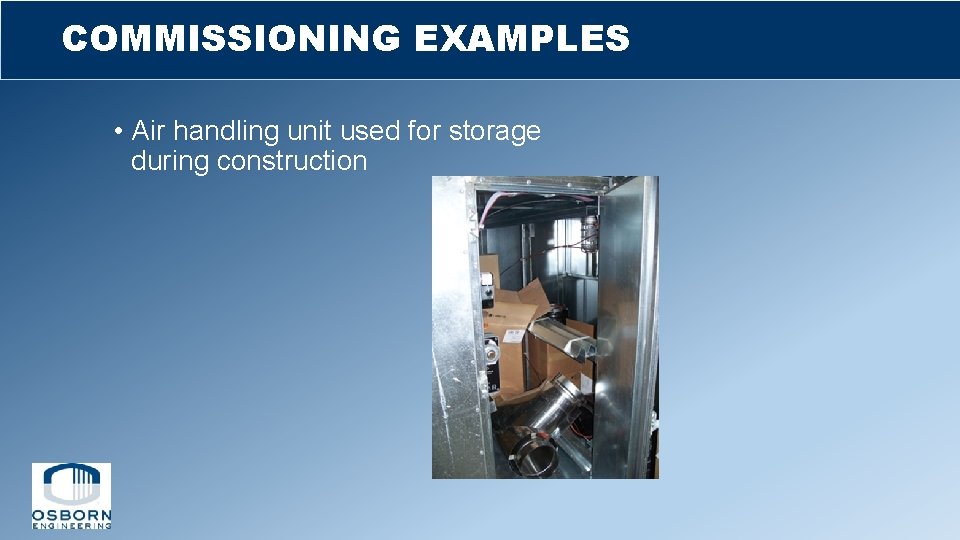
COMMISSIONING EXAMPLES • Air handling unit used for storage during construction
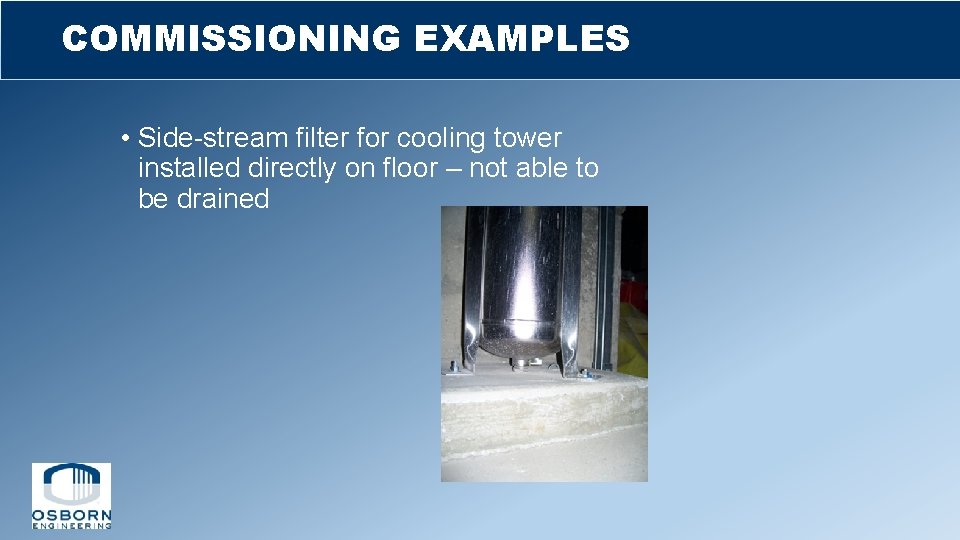
COMMISSIONING EXAMPLES • Side-stream filter for cooling tower installed directly on floor – not able to be drained
COMMISSIONING EXAMPLES • Geothermal well field piping left unprotected
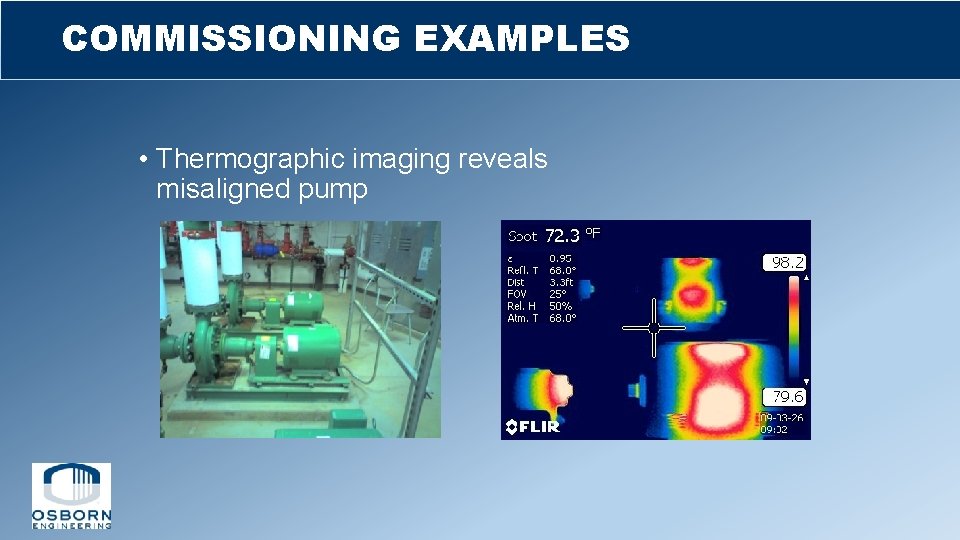
COMMISSIONING EXAMPLES • Thermographic imaging reveals misaligned pump
MEASUREMENT & VERIFICATION
MEASUREMENT & VERIFICATION • Uses and Purposes of M&V: § Confirm energy savings for projects that received energy efficiency grants from government or utility provider § Verify savings as part of an energy performance contract § Continuously monitor performance to achieve energy reduction goal at building or campus level when implementing ECMs § Achieve LEED points through credit EAc 5 Measurement & Verification § Demonstrate savings of new technology before implementing on a larger scale § Verify requirements of the OPR
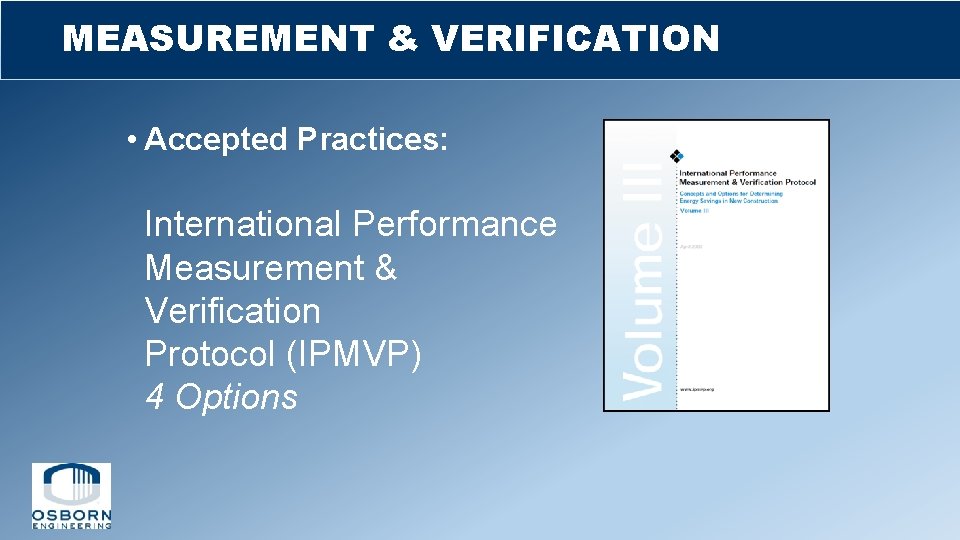
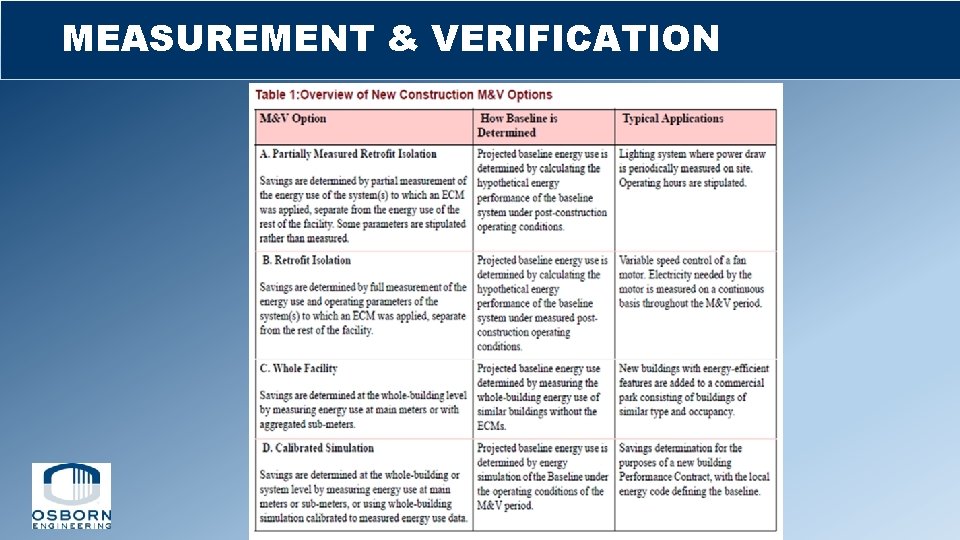
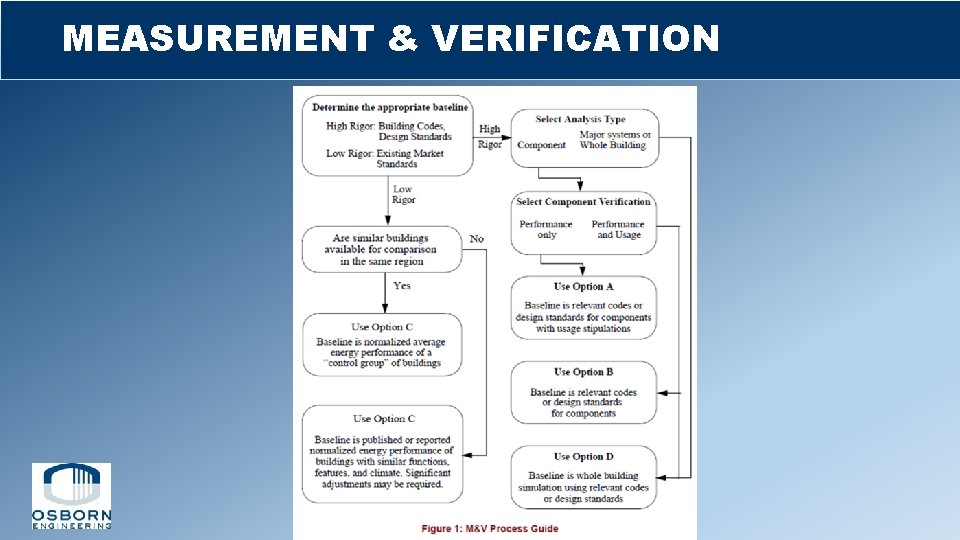
MEASUREMENT & VERIFICATION • Accepted Practices: International Performance Measurement & Verification Protocol (IPMVP) 4 Options
MEASUREMENT & VERIFICATION
MEASUREMENT & VERIFICATION
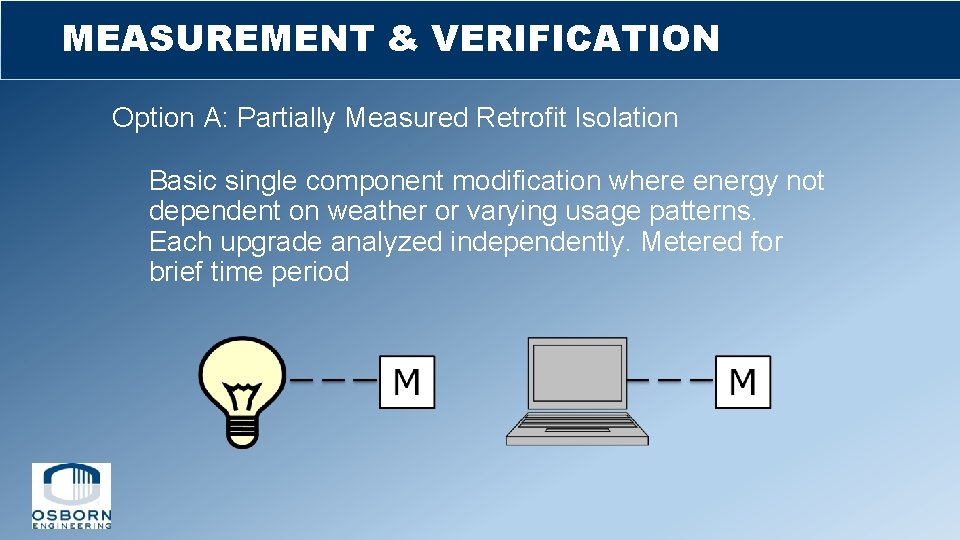
MEASUREMENT & VERIFICATION Option A: Partially Measured Retrofit Isolation Basic single component modification where energy not dependent on weather or varying usage patterns. Each upgrade analyzed independently. Metered for brief time period
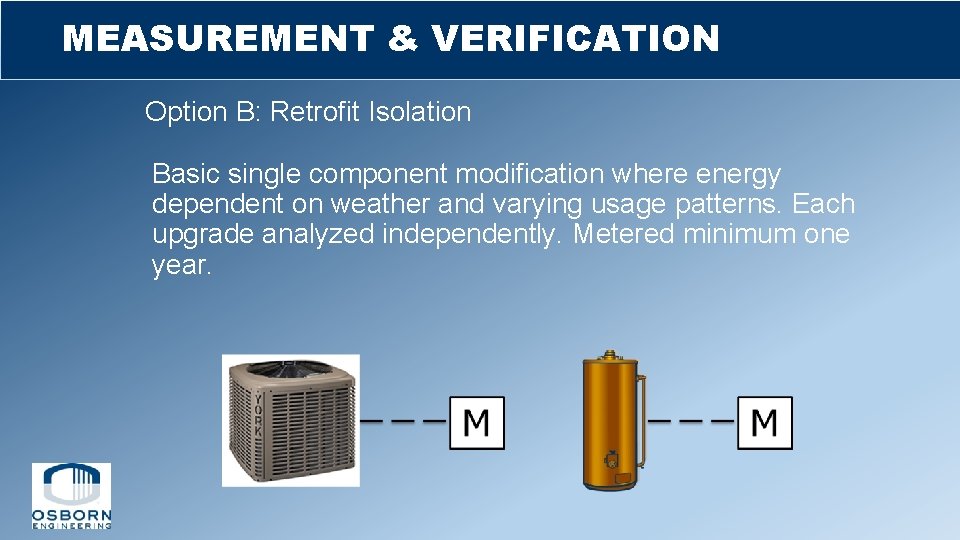
MEASUREMENT & VERIFICATION Option B: Retrofit Isolation Basic single component modification where energy dependent on weather and varying usage patterns. Each upgrade analyzed independently. Metered minimum one year.
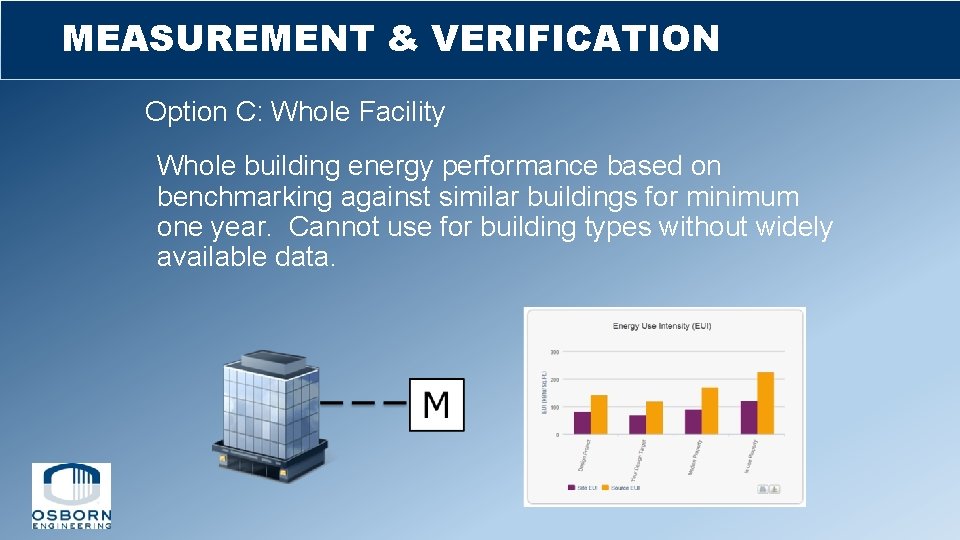
MEASUREMENT & VERIFICATION Option C: Whole Facility Whole building energy performance based on benchmarking against similar buildings for minimum one year. Cannot use for building types without widely available data.
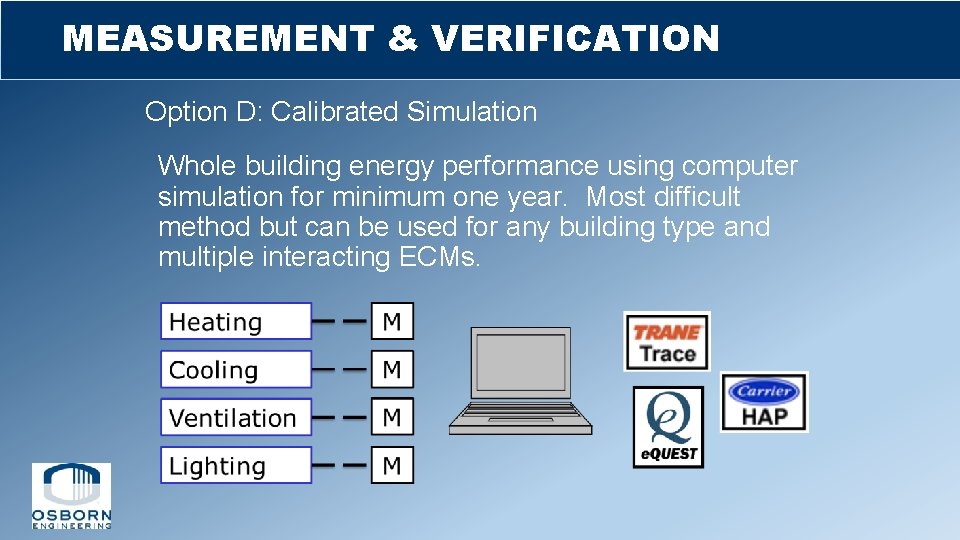
MEASUREMENT & VERIFICATION Option D: Calibrated Simulation Whole building energy performance using computer simulation for minimum one year. Most difficult method but can be used for any building type and multiple interacting ECMs.
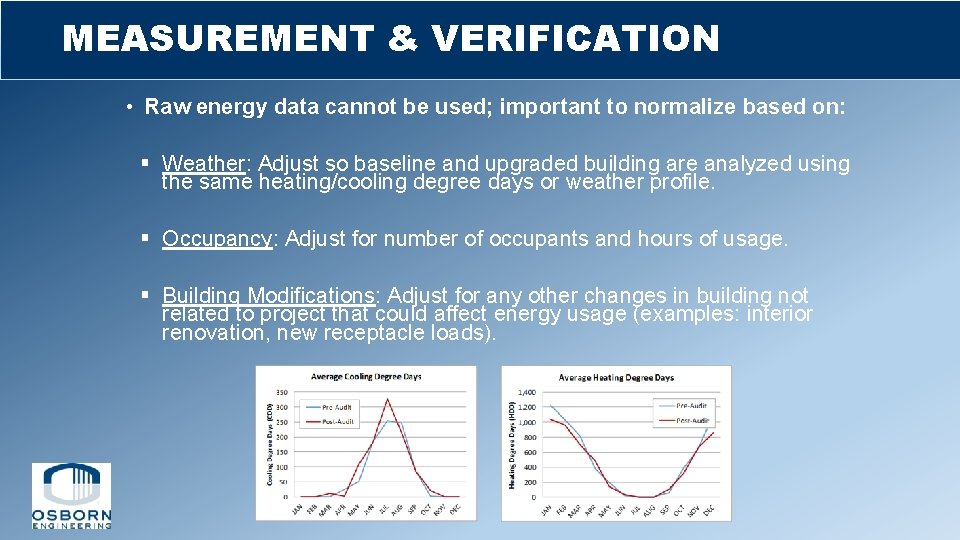
MEASUREMENT & VERIFICATION • Raw energy data cannot be used; important to normalize based on: § Weather: Adjust so baseline and upgraded building are analyzed using the same heating/cooling degree days or weather profile. § Occupancy: Adjust for number of occupants and hours of usage. § Building Modifications: Adjust for any other changes in building not related to project that could affect energy usage (examples: interior renovation, new receptacle loads).
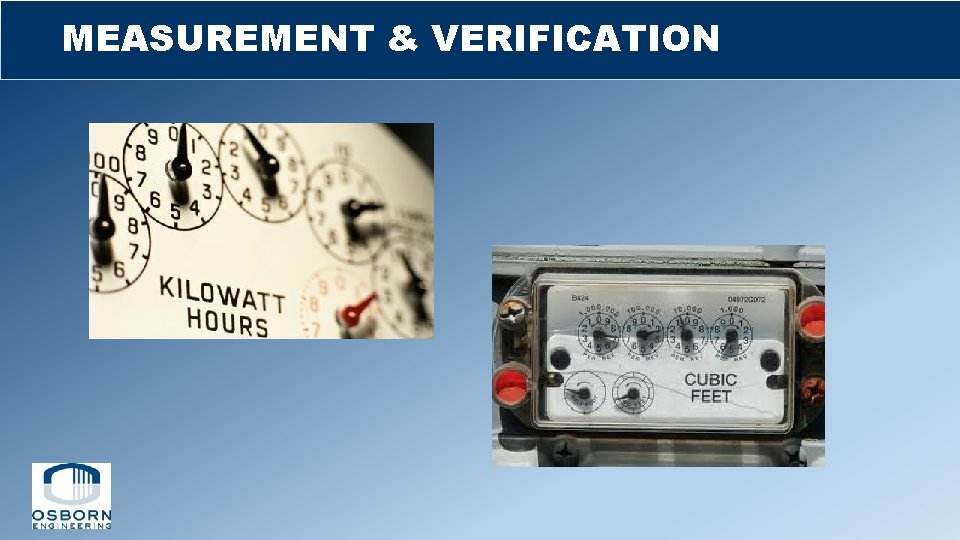
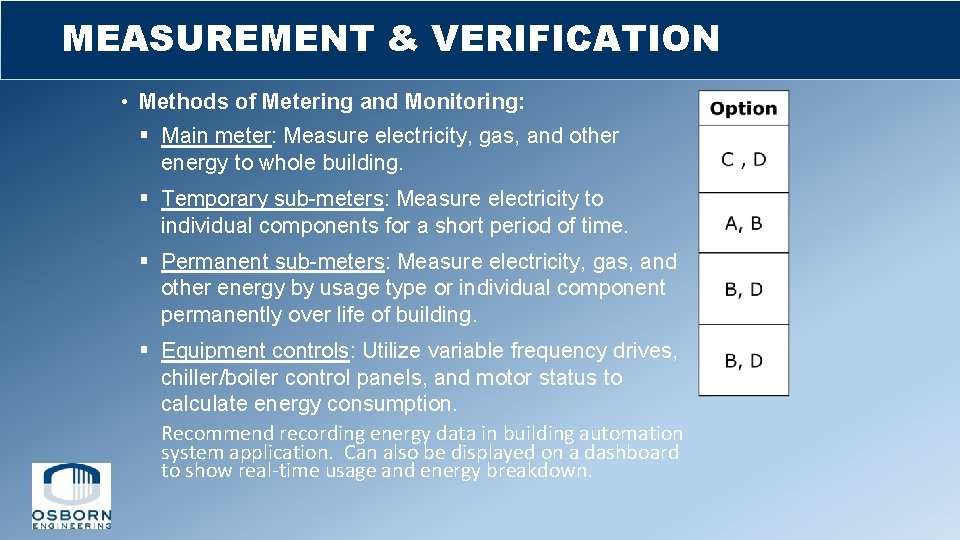
MEASUREMENT & VERIFICATION • Methods of Metering and Monitoring: § Main meter: Measure electricity, gas, and other energy to whole building. § Temporary sub-meters: Measure electricity to individual components for a short period of time. § Permanent sub-meters: Measure electricity, gas, and other energy by usage type or individual component permanently over life of building. § Equipment controls: Utilize variable frequency drives, chiller/boiler control panels, and motor status to calculate energy consumption. Recommend recording energy data in building automation system application. Can also be displayed on a dashboard to show real-time usage and energy breakdown.
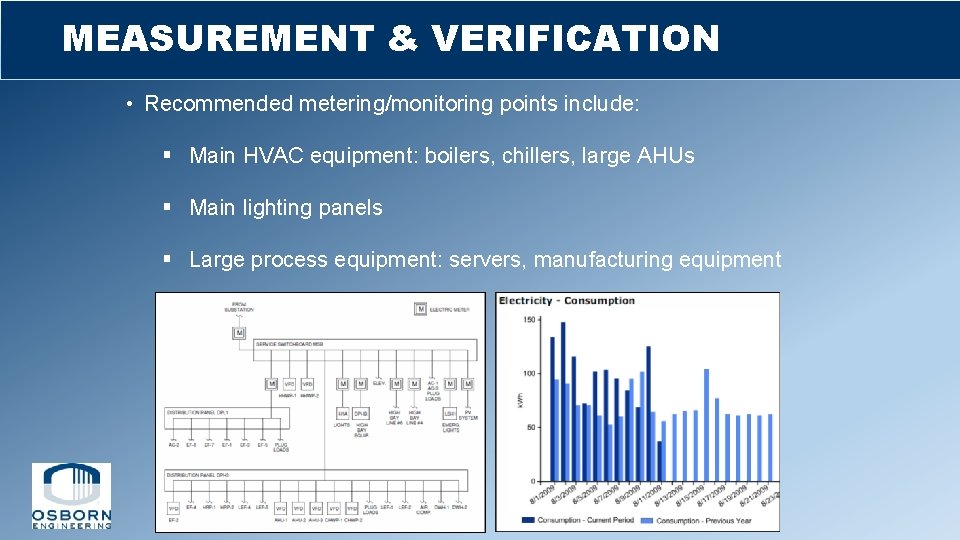
MEASUREMENT & VERIFICATION • Recommended metering/monitoring points include: § Main HVAC equipment: boilers, chillers, large AHUs § Main lighting panels § Large process equipment: servers, manufacturing equipment
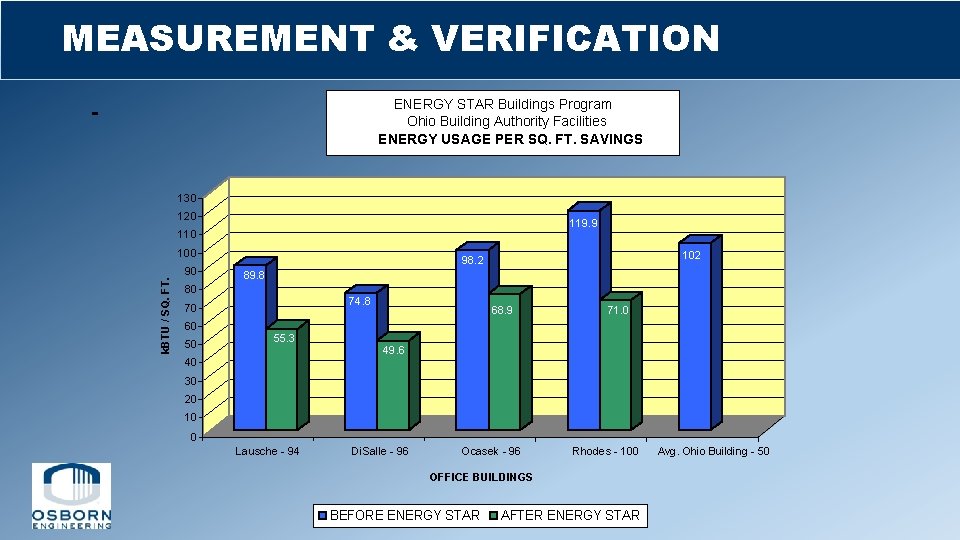
MEASUREMENT & VERIFICATION ENERGY STAR Buildings Program Ohio Building Authority Facilities ENERGY USAGE PER SQ. FT. SAVINGS 130 120 119. 9 110 k. BTU / SQ. FT. 100 90 89. 8 80 74. 8 70 60 50 102 98. 2 68. 9 71. 0 55. 3 49. 6 40 30 20 10 0 Lausche - 94 Di. Salle - 96 Ocasek - 96 Rhodes - 100 OFFICE BUILDINGS BEFORE ENERGY STAR AFTER ENERGY STAR Avg. Ohio Building - 50
THANK YOU Questions?