
The Command Pattern Group 2 Jessie Butler Anthony
The Command Pattern Group 2 Jessie Butler, Anthony Farina, Andrew Jorquera, Niles Rogoff, Andre Urcia
The Command Pattern Definition: The command pattern encapsulates a request as an object, thereby letting us parameterize other objects with different requests, queue or log requests, and support undoable operations. Simpler definition involves 4 aspects: ● ● Command - have a command interface; any new commands you want to add will implement this interface (Ex. light on, light off) Receiver - the object that will be receiving the commands (Ex: the light bulb) Invoker - keeps track of all registered commands for the receiver(s) (Ex. the light switch) Client - decides when and which commands to invoke for the receiver (Ex: person who turns on the light switch) Source: https: //www. geeksforgeeks. org/command-pattern/
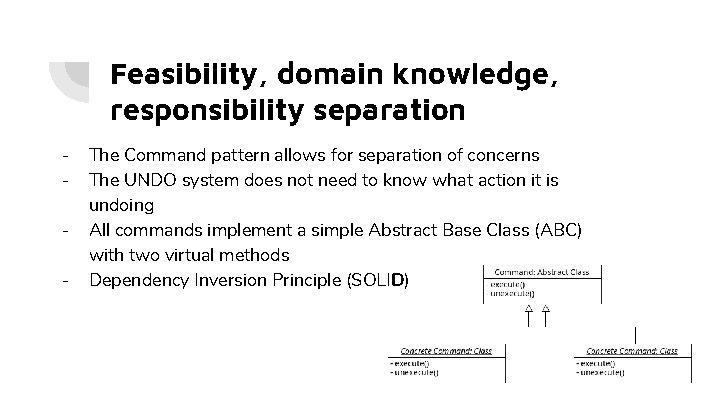
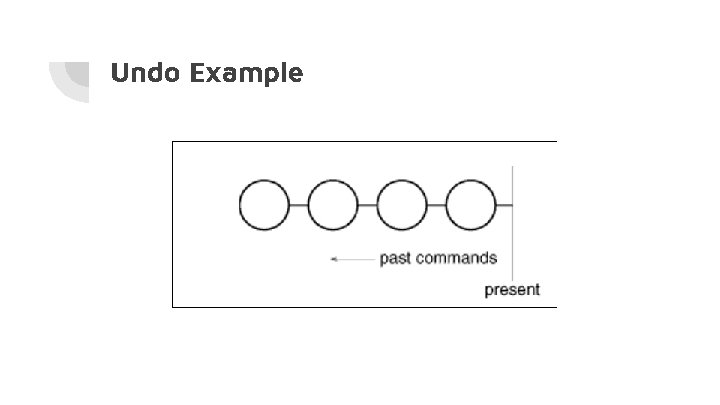
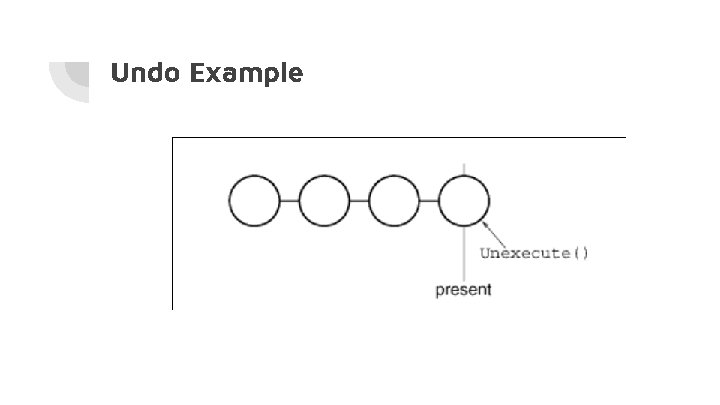
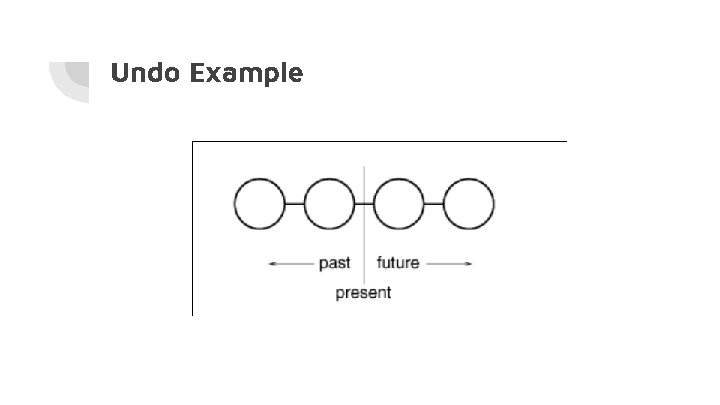
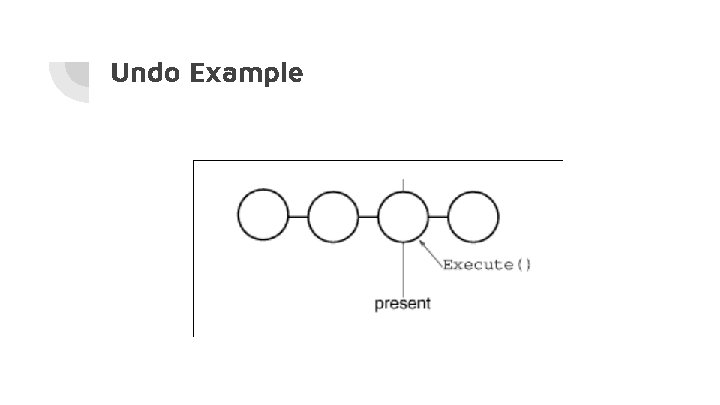
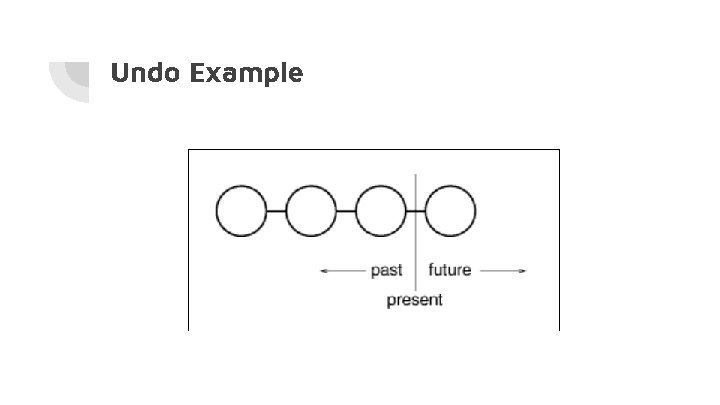
Feasibility, domain knowledge, responsibility separation - The Command pattern allows for separation of concerns The UNDO system does not need to know what action it is undoing All commands implement a simple Abstract Base Class (ABC) with two virtual methods Dependency Inversion Principle (SOLID)
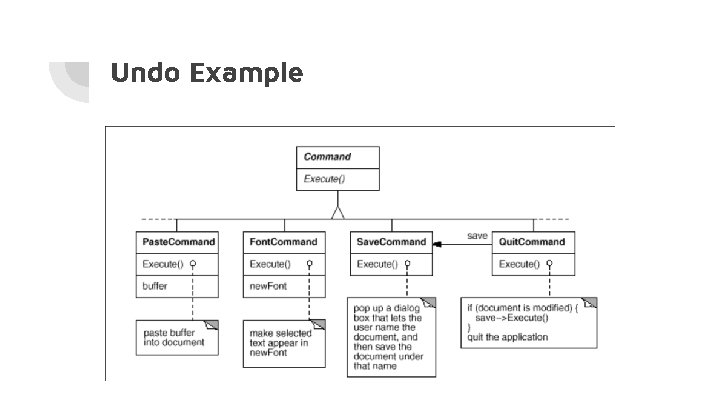
Undo Example
Undo Example
Undo Example
Undo Example
Undo Example
Undo Example
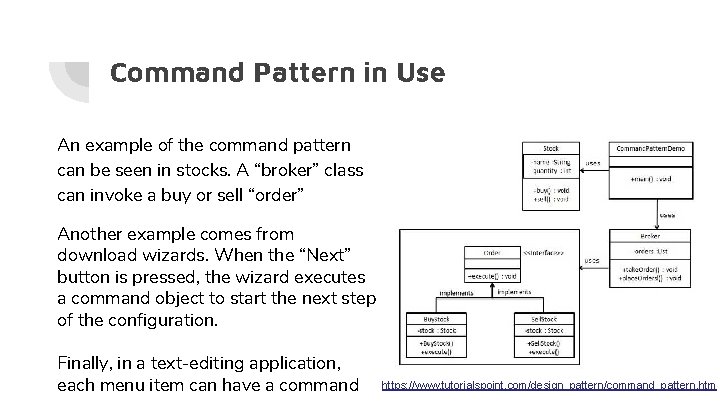
Command Pattern in Use An example of the command pattern can be seen in stocks. A “broker” class can invoke a buy or sell “order” Another example comes from download wizards. When the “Next” button is pressed, the wizard executes a command object to start the next step of the configuration. Finally, in a text-editing application, each menu item can have a command https: //www. tutorialspoint. com/design_pattern/command_pattern. htm
More uses ● Database Transactions ○ unexecute() to roll back transaction ● Multiplayer Games ○ Command implements Serializable -> send to other players to execute ● Thread pools ○ Submit Commands to the thread pool to be run ● Macro Recording ○ Similar to undo log, with replayability
There are three main types of design patterns: Creational, Structural and Behavioral. Despite having lots of structure, the Command pattern is a Behavioral design pattern. Why do you think this is?

Questions?
- Slides: 13