
The Columbian Exchange Slave Trade Triangular Trade and
The Columbian Exchange { Slave Trade, Triangular Trade, and the Commercial Revolution
The expansion of trade and business that transformed European economies during the 16 th and 17 th centuries Ex. Mercantilism with colonies Wealth=power European countries used their colonies to obtain wealth, and therefore, power The Commercial Revolution
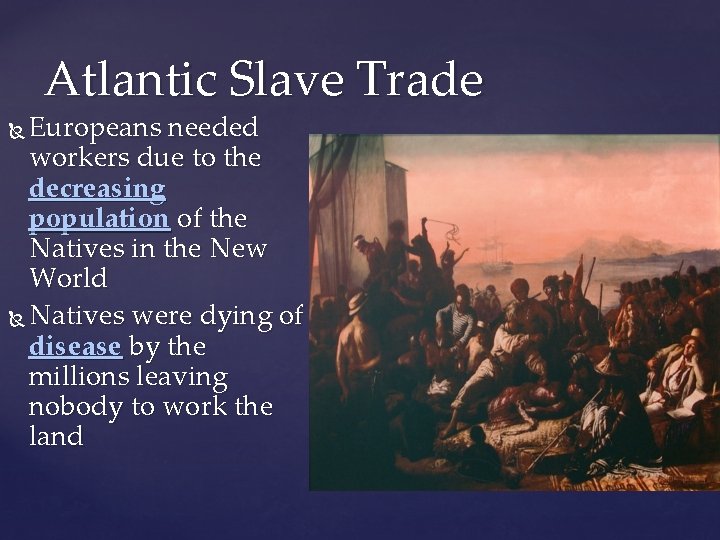
Atlantic Slave Trade Europeans needed workers due to the decreasing population of the Natives in the New World Natives were dying of disease by the millions leaving nobody to work the land
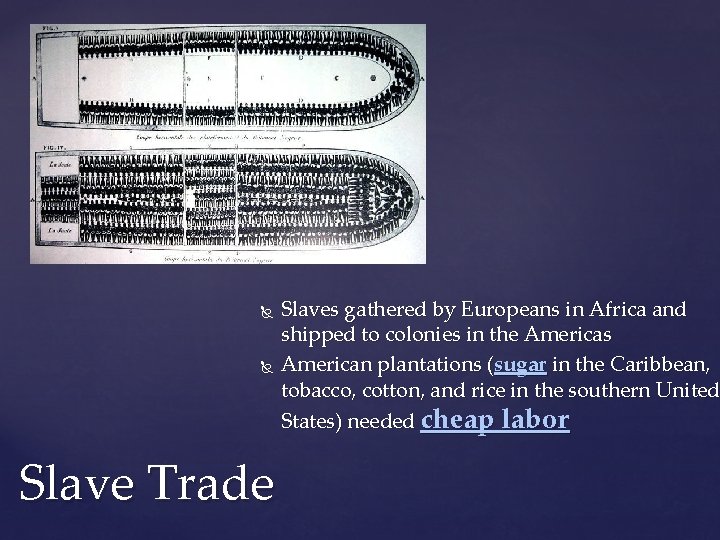
Slave Trade Slaves gathered by Europeans in Africa and shipped to colonies in the Americas American plantations (sugar in the Caribbean, tobacco, cotton, and rice in the southern United States) needed cheap labor
9. 5 million slaves transported to Americas Horrific voyage—The Middle Passage Conditions: Subject to beatings from merchants and disease. The hold filled with smells of blood, sweat, and excrement. (waste) Journey
Many Africans had been exposed to European diseases Many Africans had experience in farming Africans had no familiarity of the land making it hard to escape Reasons for using Africans
Negative African cultures lost generations of their fittest members. African families were torn apart. Guns were traded for slaves. Helped spread war and conflict throughout Africa. Positive Contributed to the economic growth of colonies. Labor Agricultural expertise Contributed to the culture of the Americas. Art Music Food Consequences of Slave Trade
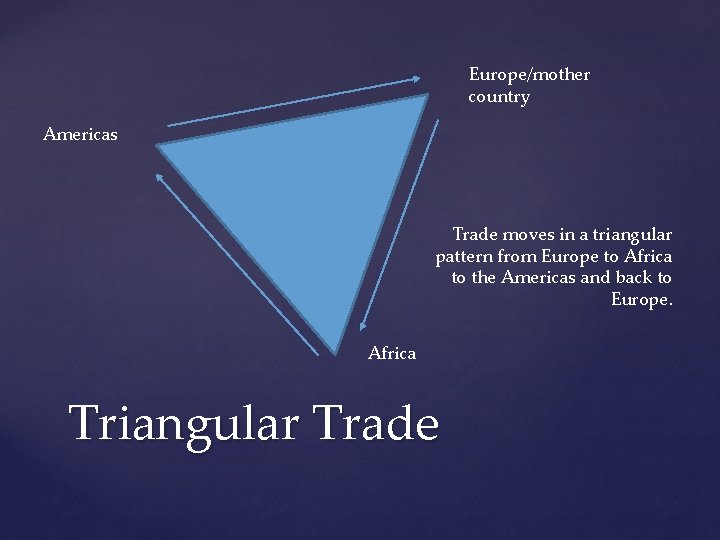
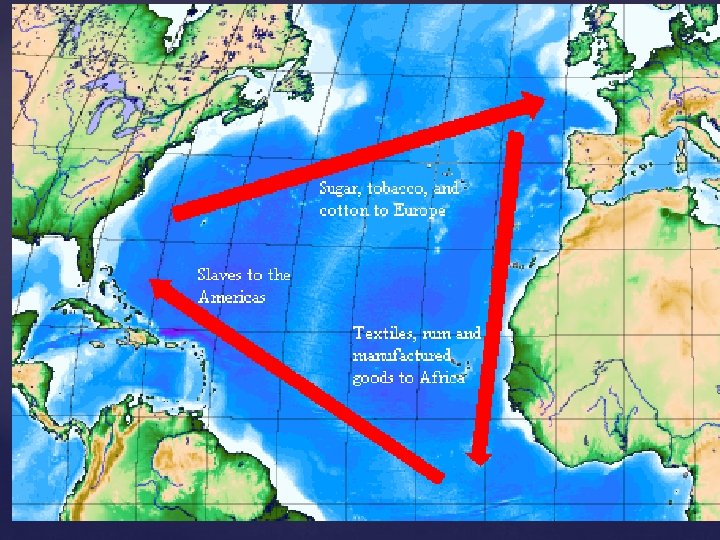
Europe/mother country Americas Trade moves in a triangular pattern from Europe to Africa to the Americas and back to Europe. Africa Triangular Trade
Manufactured goods were taken by Europeans and traded for slaves in Africa The African slaves were then transported to the new world and traded for raw materials (sugar, coffee, tobacco, fur, indigo) The Europeans would then return to the new world with their raw materials Triangular Trade
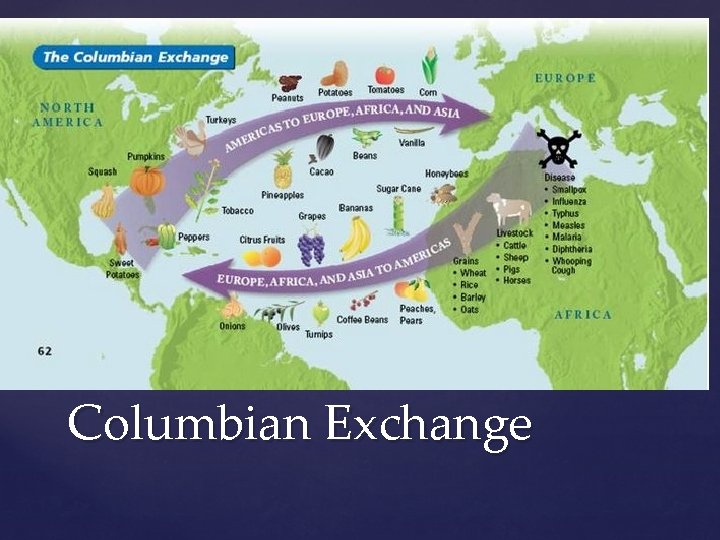
Columbian Exchange
The global transfer of foods, plants, and animals. Things that moved: Animals Plants Diseases New Technologies New peoples Columbian Exchange
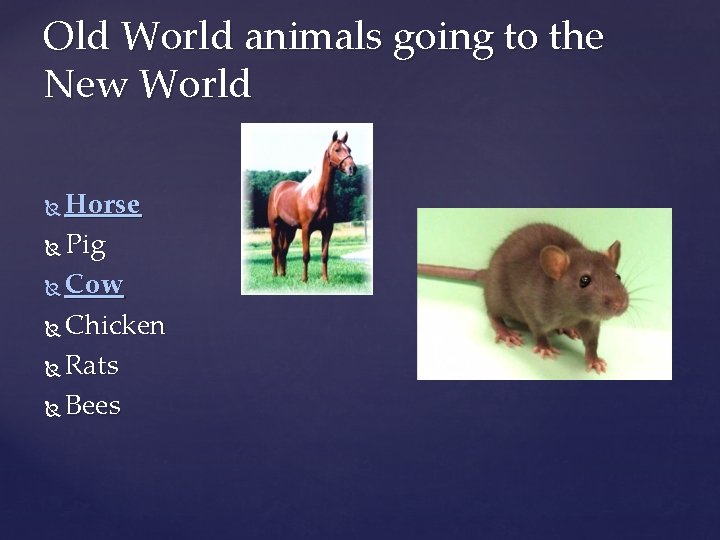
Old World animals going to the New World Horse Pig Cow Chicken Rats Bees
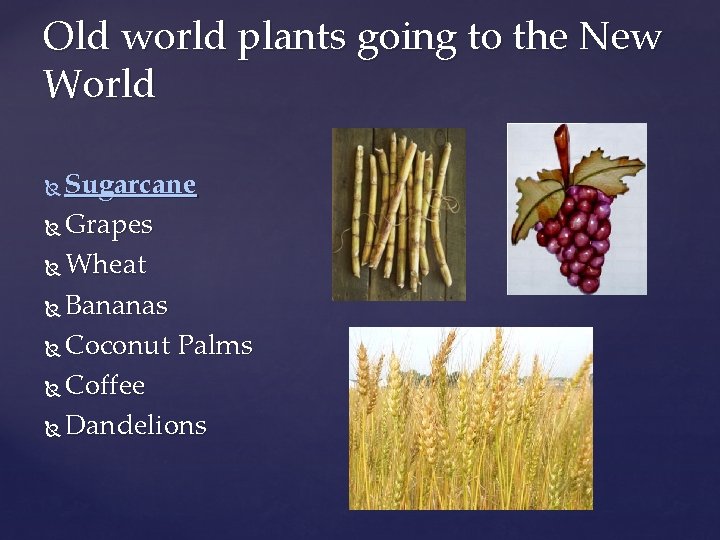
Old world plants going to the New World Sugarcane Grapes Wheat Bananas Coconut Palms Coffee Dandelions
New World plants going to the “Old World” Potato Corn Tomato Tobacco Cacao (Cocoa) Pineapples Pumpkins
“Old World” Diseases Smallpox Measles Diptheria Chicken Pox Bubonic Plague Influenza Cholera Malaria

New Technologies coming to New World Wheel Firearms
- Slides: 17