
The Columbian Exchange Contact between the Old World
The Columbian Exchange Contact between the Old World and the New World (Eastern and Western Hemispheres)
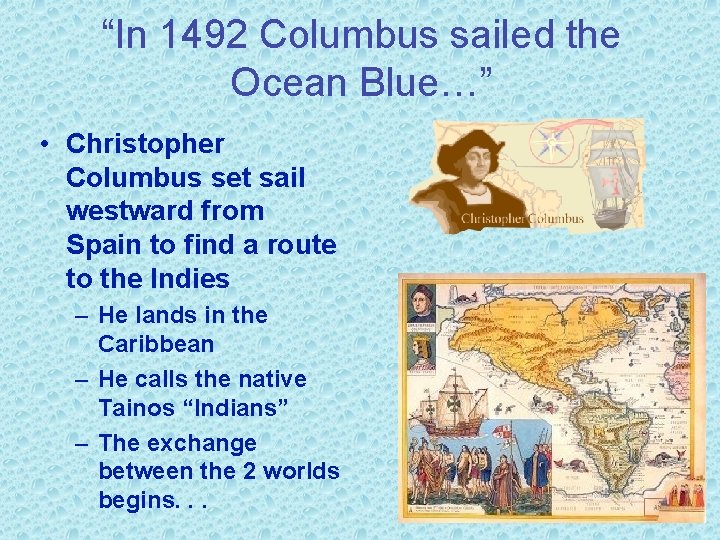
“In 1492 Columbus sailed the Ocean Blue…” • Christopher Columbus set sail westward from Spain to find a route to the Indies – He lands in the Caribbean – He calls the native Tainos “Indians” – The exchange between the 2 worlds begins. . .
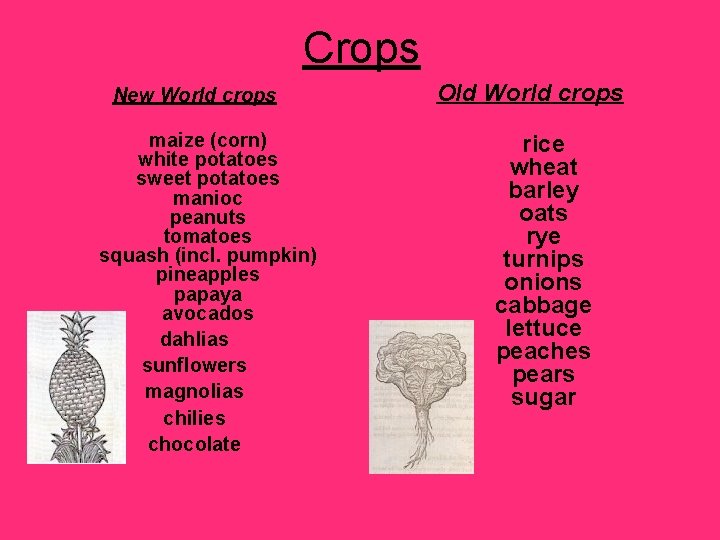
Crops New World crops maize (corn) white potatoes sweet potatoes manioc peanuts tomatoes squash (incl. pumpkin) pineapples papaya avocados dahlias sunflowers magnolias chilies chocolate Old World crops rice wheat barley oats rye turnips onions cabbage lettuce peaches pears sugar
![Domesticated Animals New World animals llamas guinea pigs fowl (a few species) "Allocamelus" [llama],](http://slidetodoc.com/presentation_image_h2/a752938ad02661a71d4a431e49e0d3f7/image-4.jpg "Domesticated Animals New World animals llamas guinea pigs fowl (a few species) \"Allocamelus\" [llama],")
Domesticated Animals New World animals llamas guinea pigs fowl (a few species) "Allocamelus" [llama], in Topsell, The Historie of Foure-Footed Beastes and Serpents and Insects, 1658 Old World animals horses donkeys pigs cattle goats sheep barnyard fowl Horse, in Ruini, Dell'anotomia et dell'infirmità del cavallo, 1598 Library of Congress
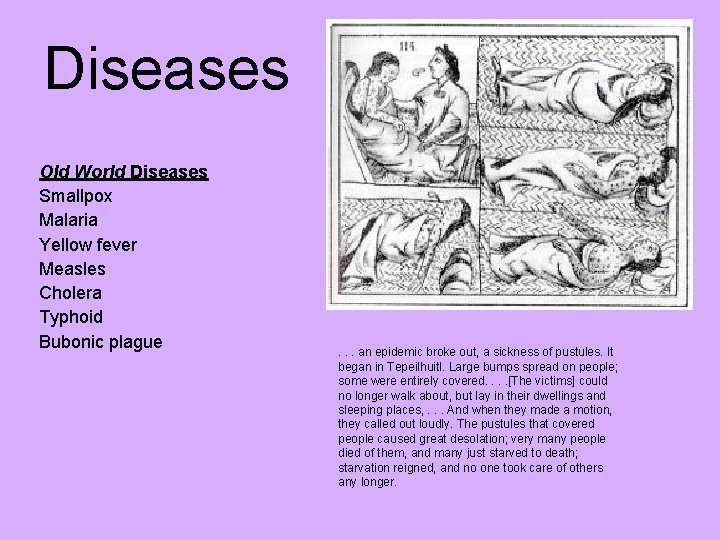
Diseases Old World Diseases Smallpox Malaria Yellow fever Measles Cholera Typhoid Bubonic plague . . . an epidemic broke out, a sickness of pustules. It began in Tepeilhuitl. Large bumps spread on people; some were entirely covered. . [The victims] could no longer walk about, but lay in their dwellings and sleeping places, . . . And when they made a motion, they called out loudly. The pustules that covered people caused great desolation; very many people died of them, and many just starved to death; starvation reigned, and no one took care of others any longer.

Effects of the Columbian Exchange • Loss of life – thousands of native peoples die due to disease • The Atlantic Slave Trade – people from Africa brought to replace the labor of the natives • New Inventions – cuisine, agriculture • Introduction of Christianity and Western Civilization
- Slides: 6