
The Colonies Move Toward Independence The Causes of
- Slides: 17
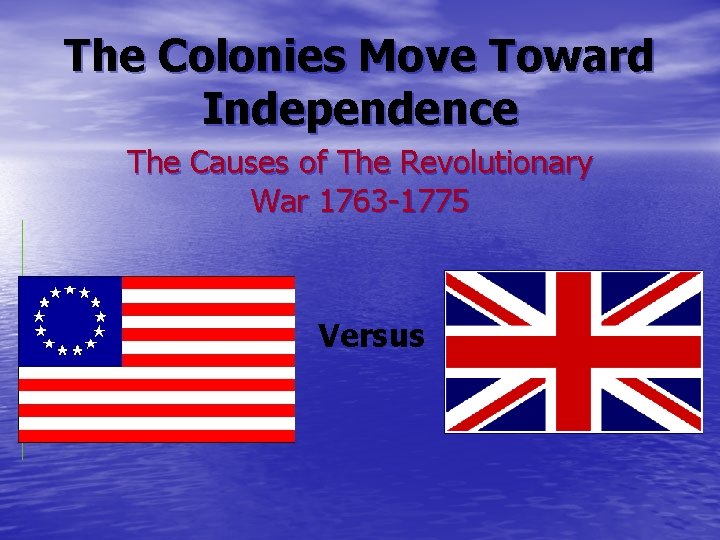
The Colonies Move Toward Independence The Causes of The Revolutionary War 1763 -1775 Versus
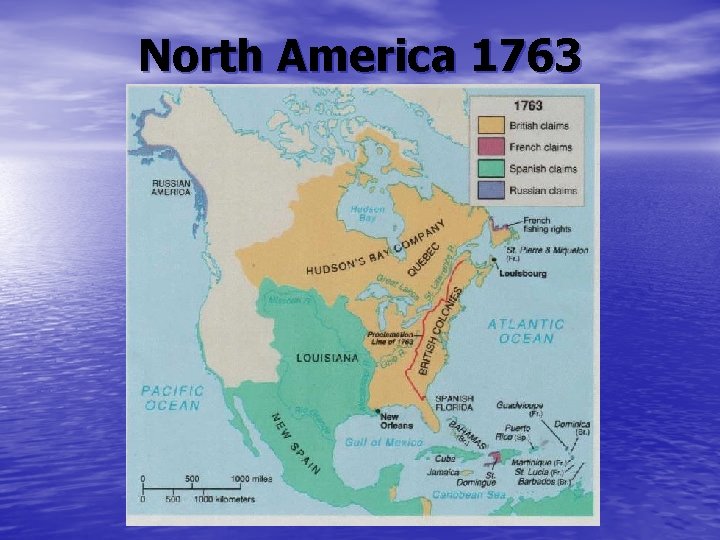
Situation in 1763: • Britain in huge debt from French & Indian War • British believe Americans should help pay costs • “Pontiac’s Conspiracy”: (1763 -1765) – Indian tribes allied with French went on warpath – British send 10, 000 troops to protect Colonies • Proclamation Line (1763): – Prohibited colonists from settling west of Appalachian Mountains – Colonists immediately protest
North America 1763
British Attempt to Raise Money • Sugar Act (1764) – Taxed sugar, coffee, wine imported (shipped into) the colonies – Unlike Navigation Acts, British intended to enforce new laws • *Stamp Act (1765) – Forced colonists to buy a stamp on all printed material: newspapers, legal papers, playing cards, etc. – Angered Americans because it taxed goods made in the colonies, and they were not represented in Parliament – “No Taxation Without Representation!!”
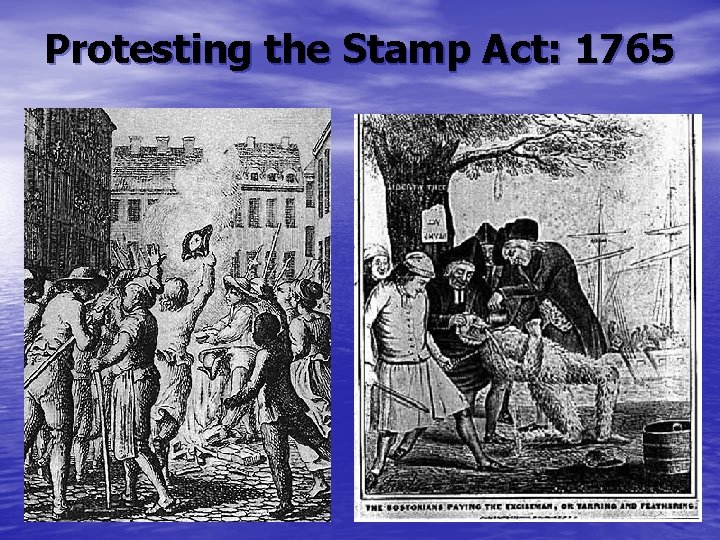
American Reaction • Protests in all 13 Colonies • Secret Society called “Sons of Liberty” formed in New England to terrorize British • Merchants in Boston, NY, and Philadelphia boycott (refuse to buy) British goods • *Stamp Act Congress: 9 colonies sent delegates to NYC to protest – First real cooperation of colonies against British – British sales to colonies fell 15%
Protesting the Stamp Act: 1765
• British repeal (take back) the Stamp Act in 1766, but do not back down • Declaratory Act (1766) – “Declares” that Parliament has all power to make laws for colonies • *Townshend Acts (1767) – Taxed many imported items including glass, paper, paint, and tea – Colonists violating tax laws denied trial by jury – Colonists again boycotted British goods • British sales to America fell 40% • Acts repealed in 1770 except tax on tea
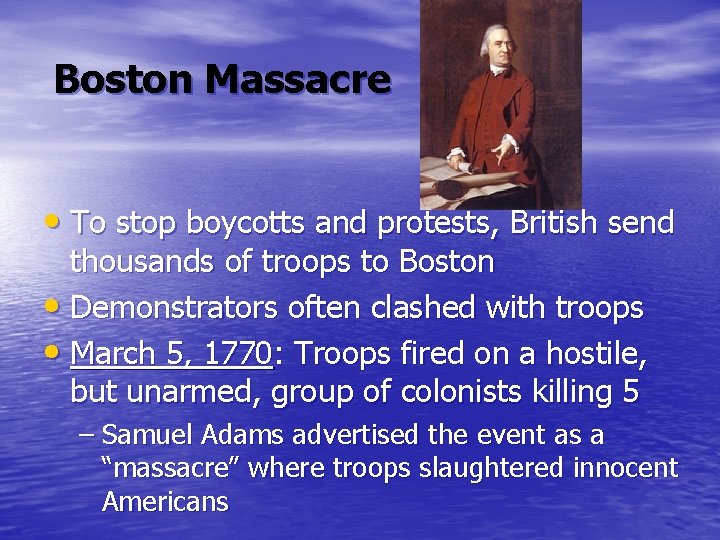
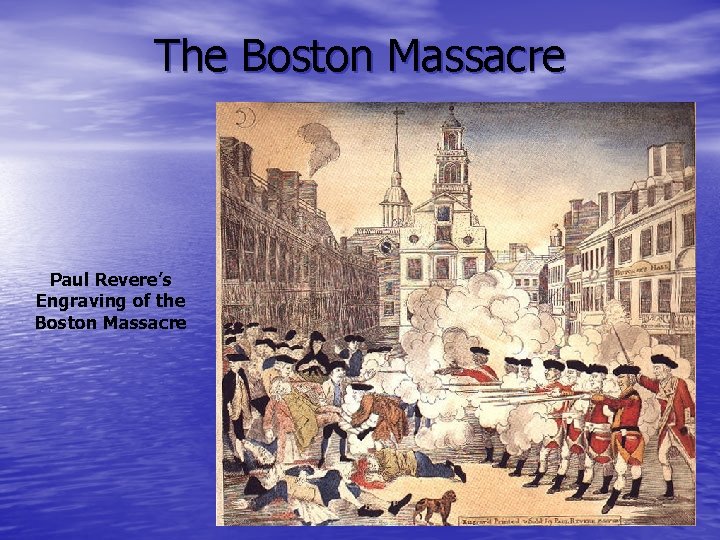
Boston Massacre • To stop boycotts and protests, British send thousands of troops to Boston • Demonstrators often clashed with troops • March 5, 1770: Troops fired on a hostile, but unarmed, group of colonists killing 5 – Samuel Adams advertised the event as a “massacre” where troops slaughtered innocent Americans
The Boston Massacre Paul Revere’s Engraving of the Boston Massacre
Resistance Continues • Committees of Correspondence (1772): – Groups formed in several colonies to share information and consult about violations of rights • Boston Tea Party (1773): – Tea became a symbol of British tyranny – Dec. 1773: Sons of Liberty throw 342 chests of tea into Boston Harbor
“Intolerable Acts” (1774) • Passed to punish Boston for “Tea Party” – Closed Boston Harbor until Boston paid for tea – Quartering Act: Required colonists to house soldiers – Drastically changed self-government in Mass. • These acts solidified colonial support for Massachusetts – Connecticut and RI send supplies to Boston
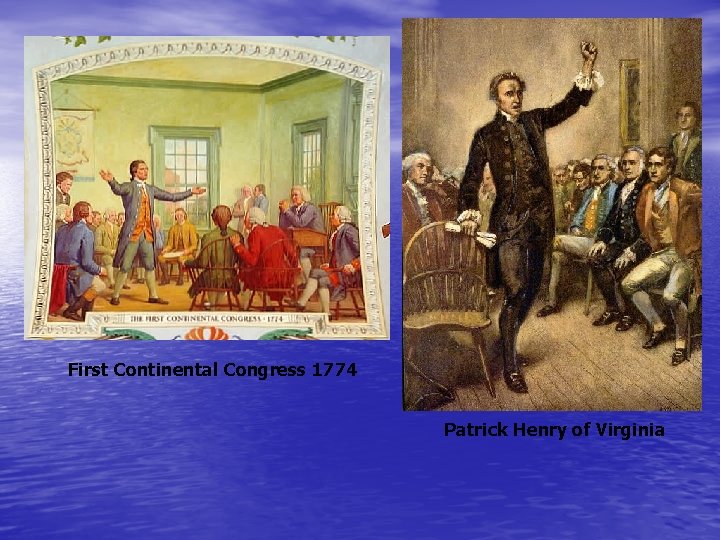
*First Continental Congress (1774) • Delegates of 12 colonies meet in Philadelphia • Write a “Declaration of Rights and Grievances” to King George III • Pass Boycott agreements for all colonies • Patrick Henry of VA gives famous speech: “Give me Liberty or Give me DEATH!!” • *Colonies begin training Militia (civilian armies) and storing military supplies
First Continental Congress 1774 Patrick Henry of Virginia
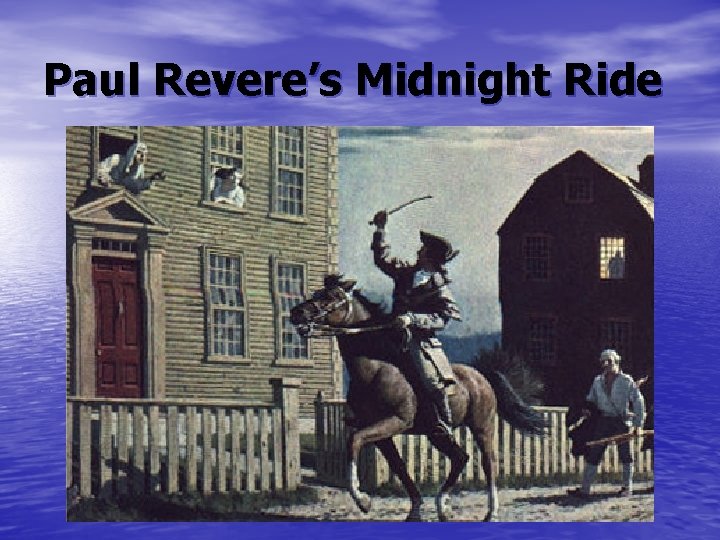
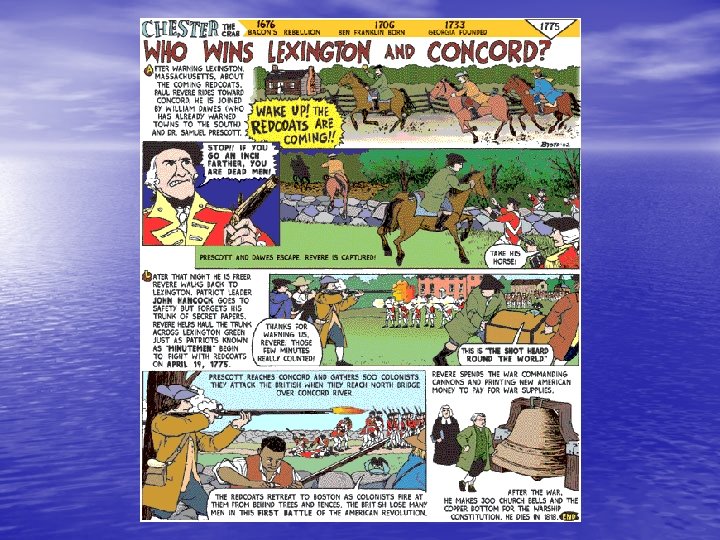
Battles of Lexington and Concord: April, 1775 • First Battles of Revolutionary War • British troops march from Boston to Concord: – To confiscate weapons stored by Patriots – To capture Samuel Adams and John Hancock • Paul Revere and William Dawes ride from Boston to warn Concord
Paul Revere’s Midnight Ride
• Minutemen: Massachusetts Militia (civilian soldiers) ready to fight at minute’s notice – 70 Minutemen met 700 British troops at Lexington; 8 killed – Thousands of Americans then met the British at Concord • British suffered 300 casualties, Americans 100