
The Colonies Before War Characteristics of 18 th
The Colonies Before War
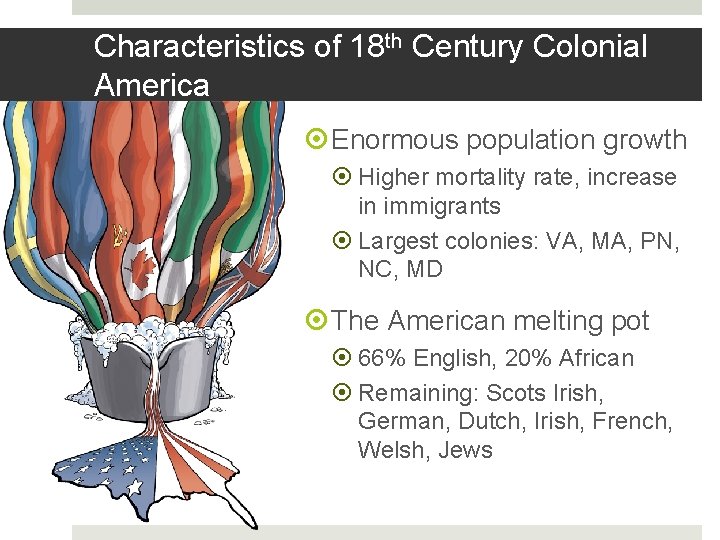
Characteristics of 18 th Century Colonial America Enormous population growth Higher mortality rate, increase in immigrants Largest colonies: VA, MA, PN, NC, MD The American melting pot 66% English, 20% African Remaining: Scots Irish, German, Dutch, Irish, French, Welsh, Jews
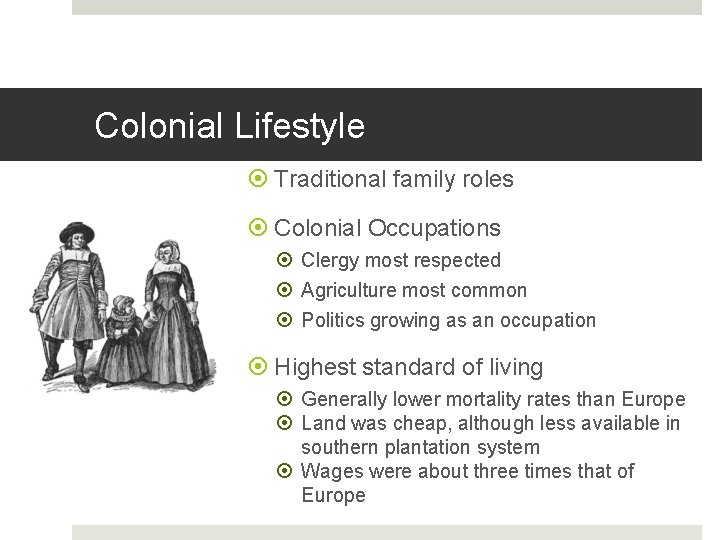
Colonial Lifestyle Traditional family roles Colonial Occupations Clergy most respected Agriculture most common Politics growing as an occupation Highest standard of living Generally lower mortality rates than Europe Land was cheap, although less available in southern plantation system Wages were about three times that of Europe
Class Struggle Structure of Colonial Society Stratification mild compared to Europe Small upper class Most were yeoman farmers Small merchants, laborers Indentured servants and jailbirds Slaves Frontier Few class distinctions Those with upper-class pretensions were resented Attempt to recreate European stratification failed Emerging middle class Democratic traditions protected against complete upper class control
Colonial Economy Land Speculation – Made many investors wealthy Manufacturing Small industries Lumbering most important: shipbuilding Cottage industry Trade High demand for British goods Once British demand for American products peaked Americans sought other markets Transportation Inland transportation poor by road Waterways most important: Population located near rivers
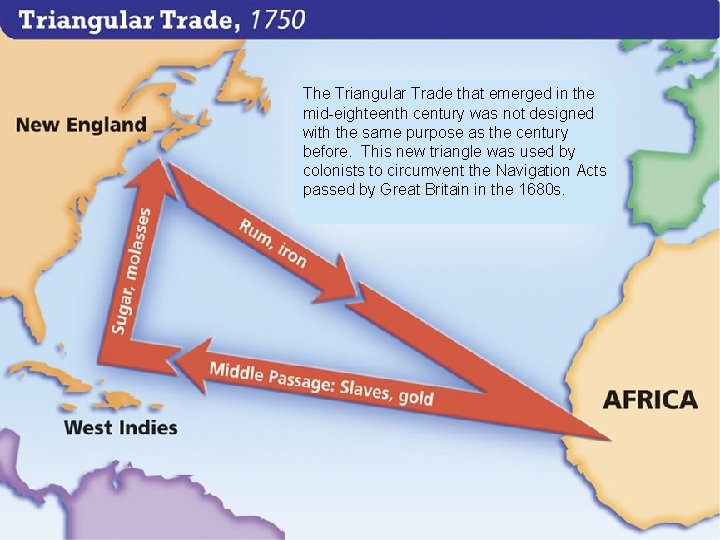
The Triangular Trade that emerged in the mid-eighteenth century was not designed with the same purpose as the century before. This new triangle was used by colonists to circumvent the Navigation Acts passed by Great Britain in the 1680 s.
Colonial Religion Most common religions Anglican Church: Official faith in several colonies Congregational Church Presbyterian Church Quakers Jews Religious toleration Toleration came about in large part due to non-church members. Eventually led to separation of church and state (except for New England)
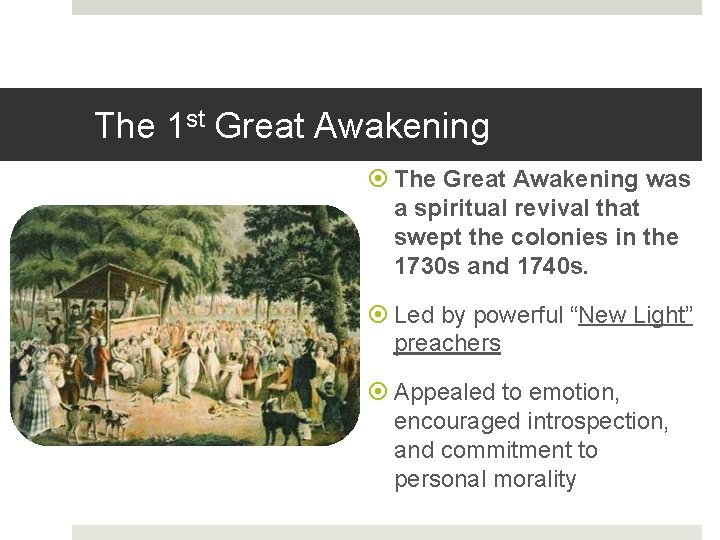
The 1 st Great Awakening The Great Awakening was a spiritual revival that swept the colonies in the 1730 s and 1740 s. Led by powerful “New Light” preachers Appealed to emotion, encouraged introspection, and commitment to personal morality
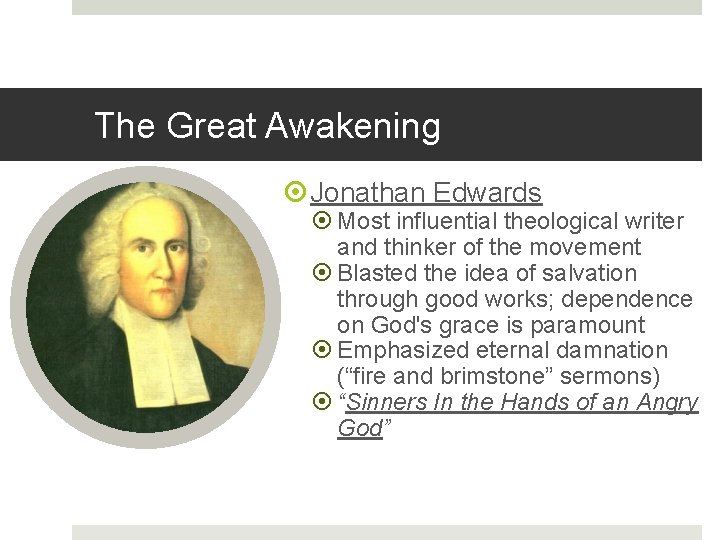
The Great Awakening Jonathan Edwards Most influential theological writer and thinker of the movement Blasted the idea of salvation through good works; dependence on God's grace is paramount Emphasized eternal damnation (“fire and brimstone” sermons) “Sinners In the Hands of an Angry God”
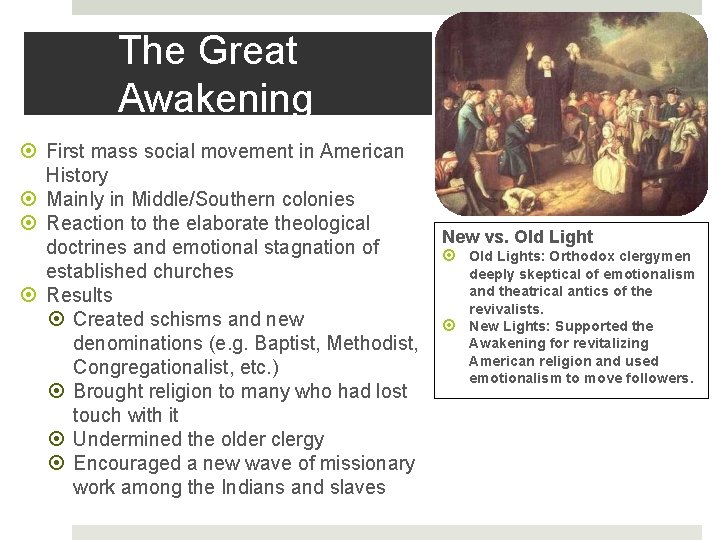
The Great Awakening First mass social movement in American History Mainly in Middle/Southern colonies Reaction to the elaborate theological doctrines and emotional stagnation of established churches Results Created schisms and new denominations (e. g. Baptist, Methodist, Congregationalist, etc. ) Brought religion to many who had lost touch with it Undermined the older clergy Encouraged a new wave of missionary work among the Indians and slaves New vs. Old Lights: Orthodox clergymen deeply skeptical of emotionalism and theatrical antics of the revivalists. New Lights: Supported the Awakening for revitalizing American religion and used emotionalism to move followers.
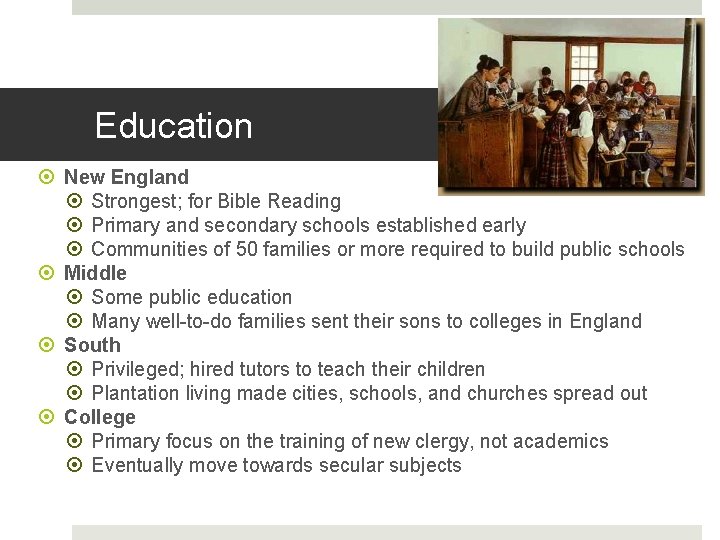
Education New England Strongest; for Bible Reading Primary and secondary schools established early Communities of 50 families or more required to build public schools Middle Some public education Many well-to-do families sent their sons to colleges in England South Privileged; hired tutors to teach their children Plantation living made cities, schools, and churches spread out College Primary focus on the training of new clergy, not academics Eventually move towards secular subjects
The French and Indian War 1754 -1763
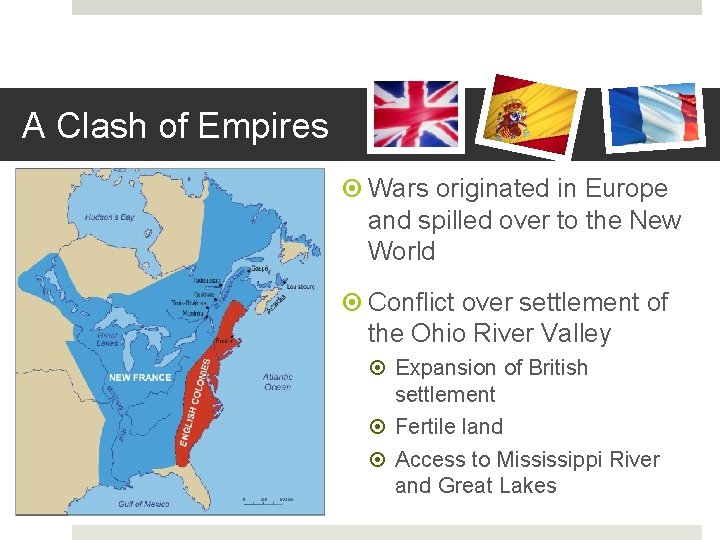
A Clash of Empires Wars originated in Europe and spilled over to the New World Conflict over settlement of the Ohio River Valley Expansion of British settlement Fertile land Access to Mississippi River and Great Lakes
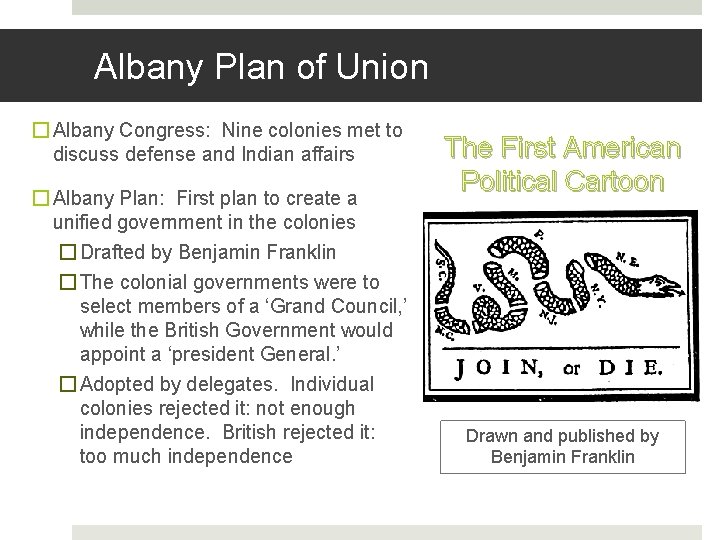
Albany Plan of Union � Albany Congress: Nine colonies met to discuss defense and Indian affairs � Albany Plan: First plan to create a unified government in the colonies � Drafted by Benjamin Franklin � The colonial governments were to select members of a ‘Grand Council, ’ while the British Government would appoint a ‘president General. ’ � Adopted by delegates. Individual colonies rejected it: not enough independence. British rejected it: too much independence The First American Political Cartoon Drawn and published by Benjamin Franklin
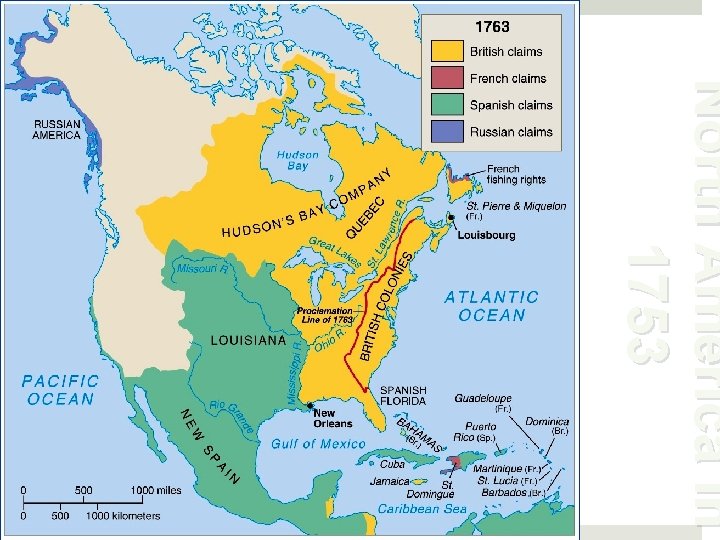
North America in 1753
Effects of the War Britain �It increased her colonial empire in the Americas �It greatly enlarged England’s debt �Britain’s contempt for the ungrateful colonials created bitter feelings Colonies �United them under a common enemy for the first time �It created bitter feelings towards the pompous British that would only intensify �No longer could avoid British taxes
Tensions Along the Frontier: Pontiac’s Rebellion � Chief Pontiac, Ottawa chief, refused to surrender his lands to the British � Led an Indian alliance against whites in the Ohio Valley & Great Lakes region in 1763 � British retaliated with germ warfare: blankets infected with smallpox distributed among the Amerindians (sound familiar? ) � Rebellion subdued in October, 1763
The Paxton Boys �Scots-Irish in E. Penn weary of the colonial assembly’s inattention to their vulnerability to Indian attack �Requests for soldiers, guns, etc. were ignored by the legislators, many of whom were Quakers �A group of Paxton men raided local tribes (even those at peace) �Tribes placed under protection of the gov’t. �Paxton Boys march on Philadelphia; meeting between Paxton leaders and colonial officials set up by Benjamin Franklin
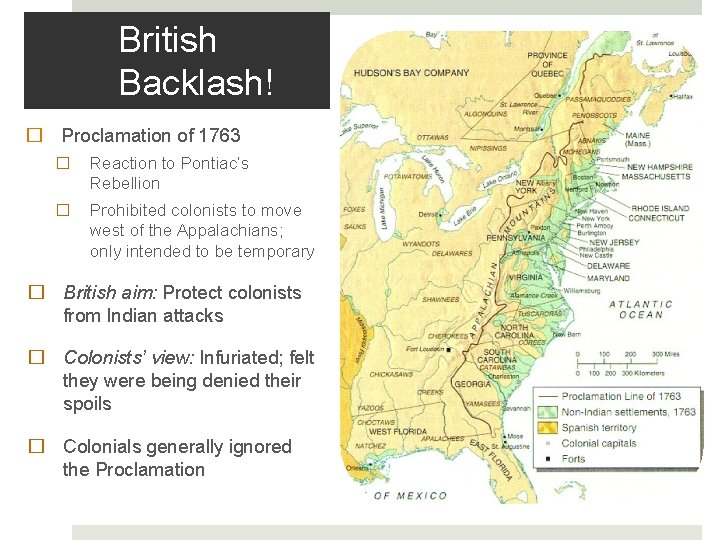
British Backlash! � Proclamation of 1763 � Reaction to Pontiac’s Rebellion � Prohibited colonists to move west of the Appalachians; only intended to be temporary � British aim: Protect colonists from Indian attacks � Colonists’ view: Infuriated; felt they were being denied their spoils � Colonials generally ignored the Proclamation
LEQ Intro Paragraph Practice How should you categorize your when presented with the following essay prompt? : Evaluate the extent to which the Seven Years’ War (French and Indian War), 1754 -1763) marked a turning point in American relations with Great Britain. Analyze what changed and what stayed the same from the period before the war to the period after it. (Historical Thinking Skill: Periodization) Context (3 sentences)- Describe what was happening before AND after the timeframe provided (1754 -1763)? Thesis statement (2)- A. P. – Answer the prompt. The French and Indian War marked a _____ turning point in American relations with Great Britain BECAUSE (BASD) – (Before/After/Similar/Different)
- Slides: 20