
The College Toastmasters Club is offering a 7
The College Toastmasters Club is offering a 7 session Speechcraft program for UNBC and CNC students. Speechcraft is a program designed to teach public speaking skills. During the program, participants practice impromptu speeches, present three formal speeches and engage in a business meeting to practice parliamentary procedure. Toastmaster Club members advise and evaluate participants and provide instruction in speech preparation and speaking techniques. A new program will start Thursday, January 26 th. Location: Time: Dates: Cost: CNC College Residence, 2 nd Floor. (Free shuttle service from UNBC) 12: 05 – 12: 55 (50 minutes) Every Thursday, starting Jan 26 th and finishing Mar 9 $20 which includes the Speechcraft manual No obligation to join Toastmasters $20 fee can be used towards a College Toastmasters membership Limited seats are available. For more information contact: Pete Saar 960 -5135 saarp@unbc. ca
A functional perspective on pain behaviour Kenneth M. Prkachin University of Northern British Columbia
Excerpts from two clinical reports “Throughout the assessment the client did not display any…behaviours such as…facial grimacing…[This] leads the evaluator to believe that the client’s primary reason for self limiting may be due to…fear of re-injury” “During today’s clinical assessment, significant pain magnifying features were observed. Such a presentation is thought to be due to acquired overprotective behaviours”
What is the role of behaviour in the pain system? Sensory model: simple consequence of a discrete sensory system (Descartes, 1649) Unitary model: a form of operant behaviour, modifiable by its consequences (Fordyce, 1978): Multidimensional model: different pain behaviors are organized in different ways and at different levels of the nervous system (Liebeskind & Paul, 1977)
Purpose Describe properties of pain-related behaviours Illustrate some of the questions that can be addressed through the study of pain behaviours Inform the debate on the function of pain behaviours
Forms of pain behaviour
Decomposing the facial expression of pain
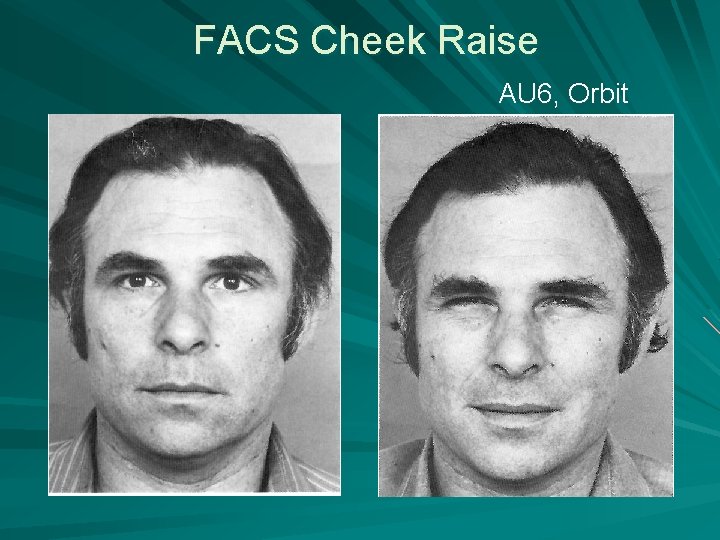
FACS Cheek Raise AU 6, Orbit squeeze 1
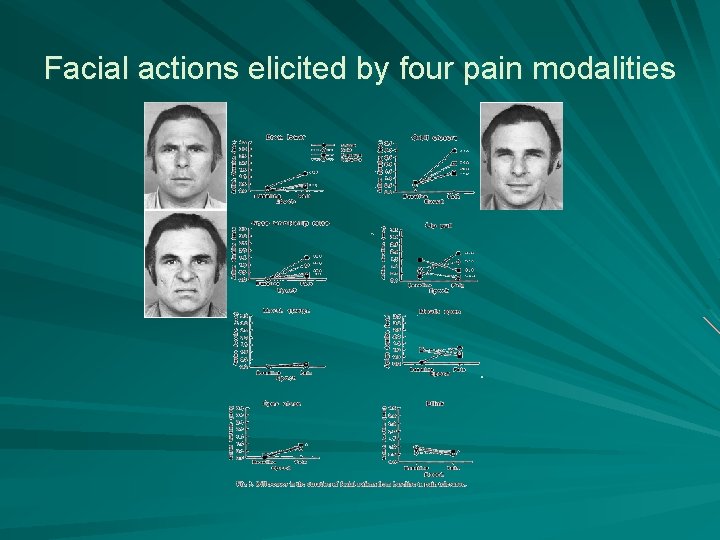
Facial actions elicited by four pain modalities

Pain expression
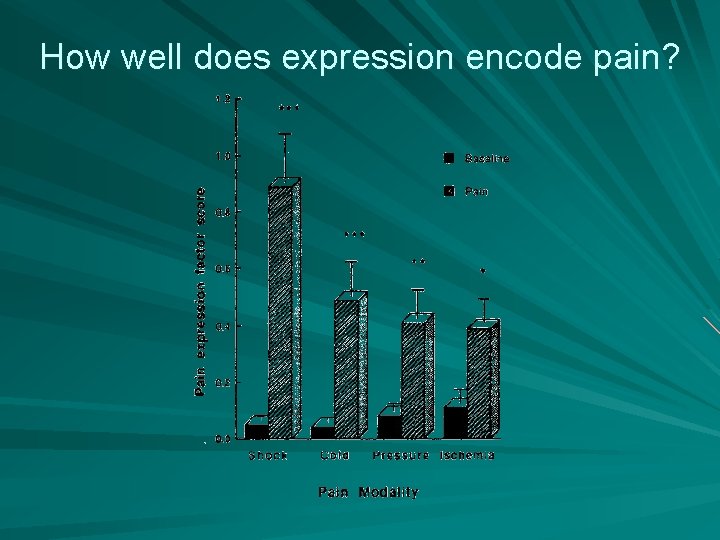
How well does expression encode pain?
How good are people at inferring pain from facial behaviour?
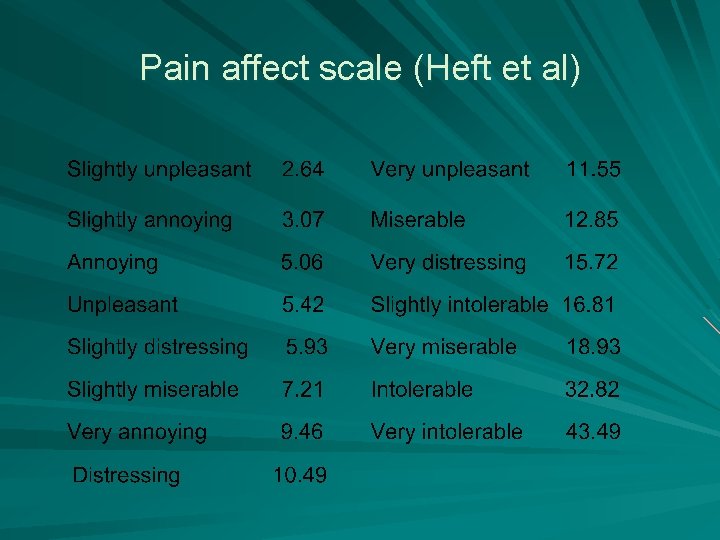
Pain affect scale (Heft et al)
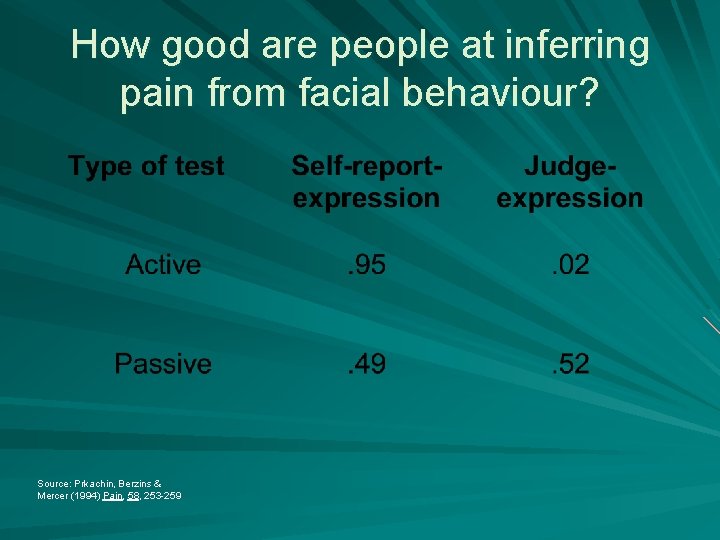
How good are people at inferring pain from facial behaviour? Source: Prkachin, Berzins & Mercer (1994) Pain, 58, 253 -259
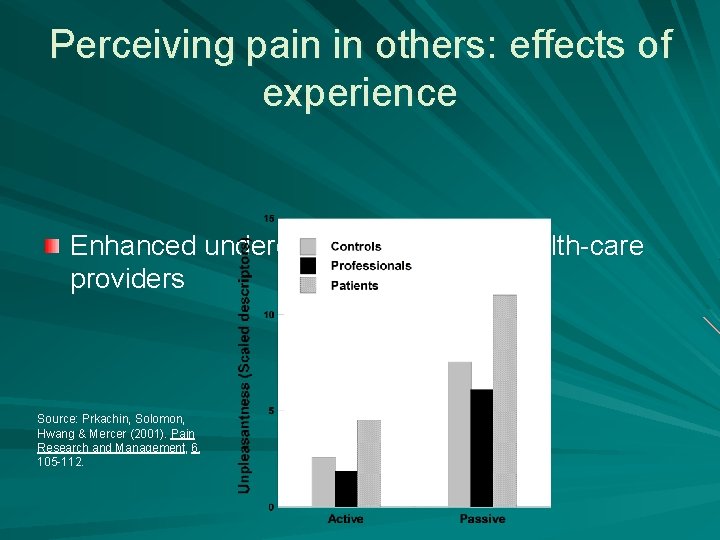
Perceiving pain in others: effects of experience Enhanced underestimation among health-care providers Source: Prkachin, Solomon, Hwang & Mercer (2001). Pain Research and Management, 6, 105 -112.
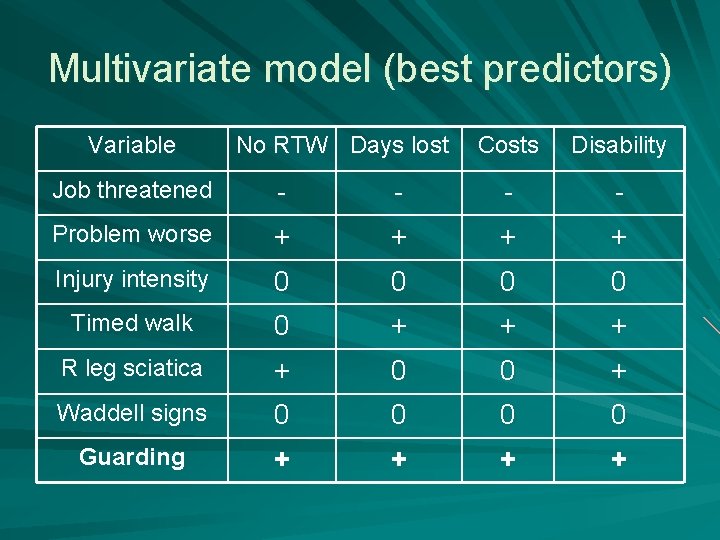
Do pain behaviours predict disability? Multivariate prediction of disability—low back study Goal: identify set of predictors of poor outcomes in first episode, low-back injured workers Comprehensive set of predictors in four domains: physical, psychosocial, occupational, pain behaviour
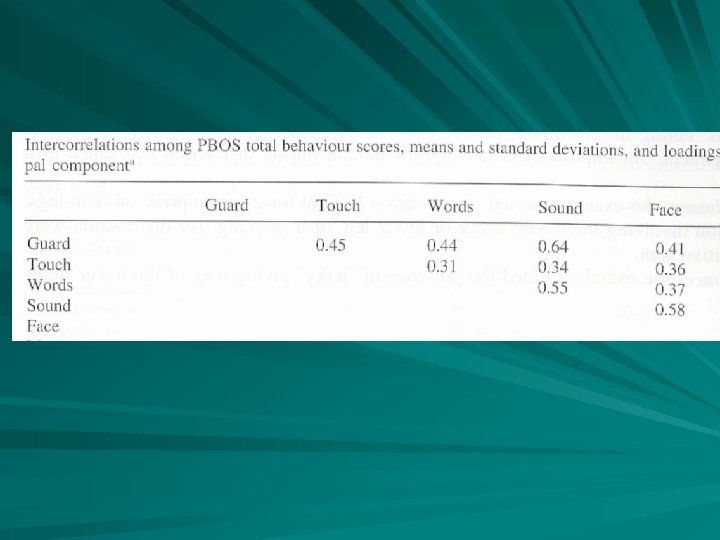
Multivariate prediction of disability —low back study 148 first-episode, subabute low-back pain patients Physical exam, psychological tests, workplace assessment Measurement of pain behaviour in physical exam: guarding, rubbing, words, sounds, facial expression Follow up at 3 months: return-to-work, time lost, rehabilitation costs, self-reported disability
Relationships between pain behaviours and disability outcomes
Measures of disability (Lack of) return to work Days lost Rehabilitation costs Self-report – Quality of life (SF-36) – Von Korff disability measure – Western Ontario-Mc. Master Osteoarthritis index (WOMAC) – Roland-Morris – Pain Disability Index
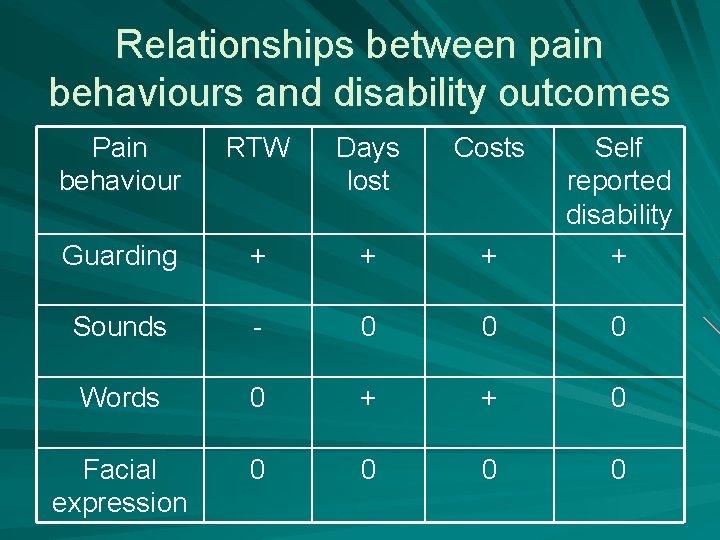
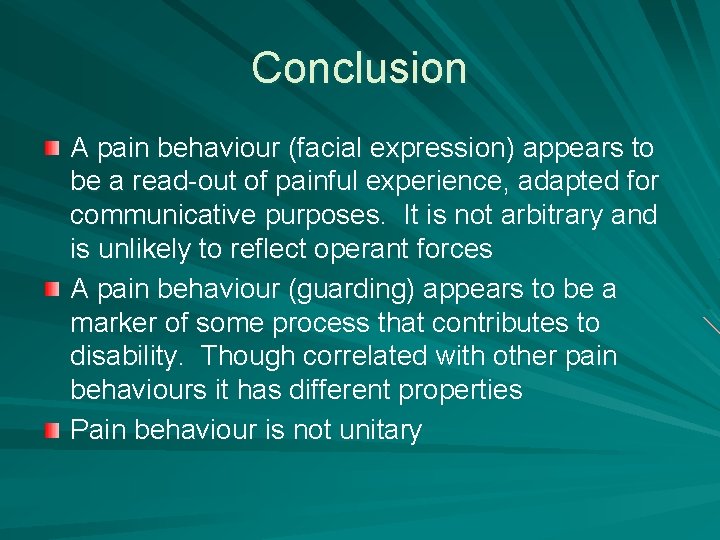
Relationships between pain behaviours and disability outcomes Pain behaviour RTW Days lost Costs Guarding + + + Self reported disability + Sounds - 0 0 0 Words 0 + + 0 Facial expression 0 0
Multivariate model (best predictors) Variable No RTW Days lost Costs Disability Job threatened - - Problem worse + + Injury intensity 0 0 Timed walk 0 + + + R leg sciatica + 0 0 + Waddell signs 0 0 Guarding + +
Conclusion A pain behaviour (facial expression) appears to be a read-out of painful experience, adapted for communicative purposes. It is not arbitrary and is unlikely to reflect operant forces A pain behaviour (guarding) appears to be a marker of some process that contributes to disability. Though correlated with other pain behaviours it has different properties Pain behaviour is not unitary
New directions
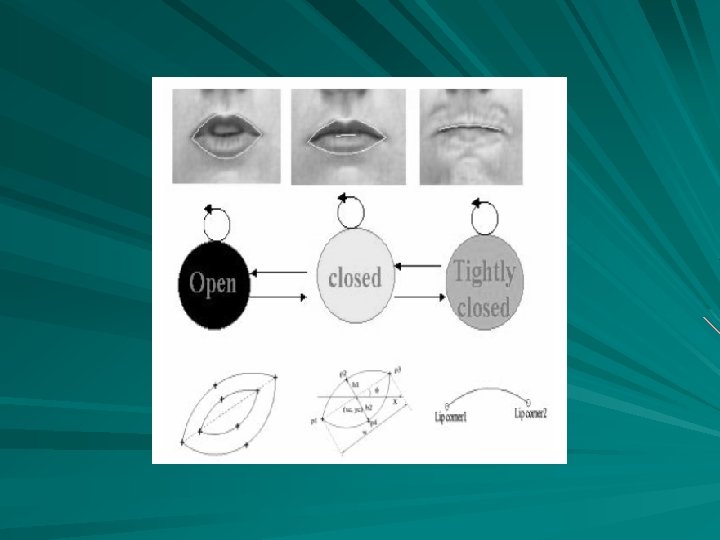
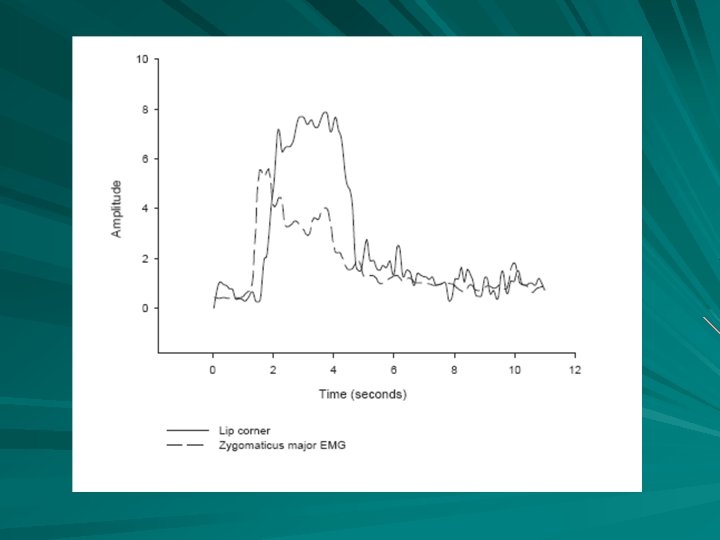
Toward automated analysis
Viewing facial expressions of pain engages cortical areas involved in the direct experience of pain (Botvinick, Jha, Bylsma, Fabian, Solomon & Prkachin, (In press), Neuroimage). Direct experience (thermal pain) Vicarious experience (pain expression) f. MRI
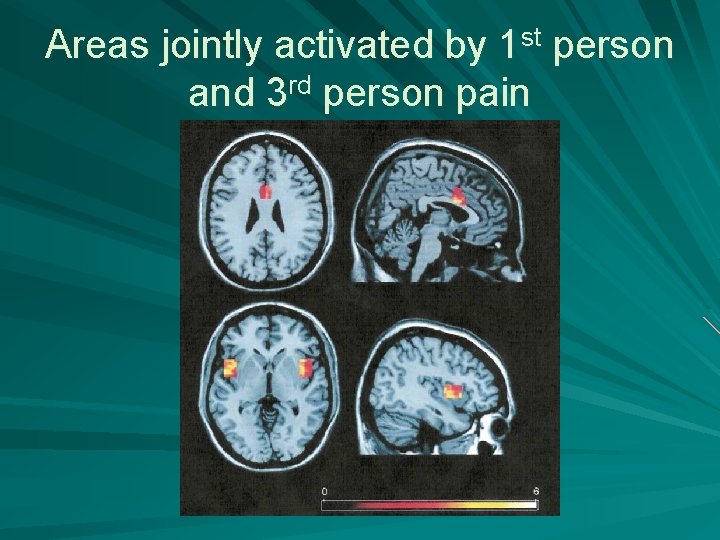
Areas jointly activated by 1 st person and 3 rd person pain
- Slides: 29