
The College of Idaho COLLEGE PREP AND ENGLISH




- Slides: 18
The College of Idaho COLLEGE PREP AND ENGLISH IMMERSION PROGRAM
The American (College) Classroom
Class discussion
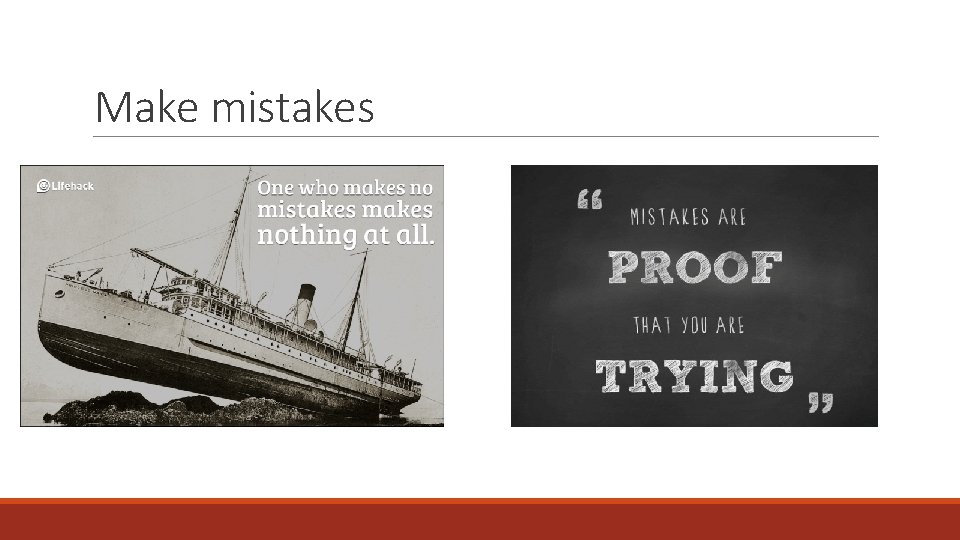
Make mistakes
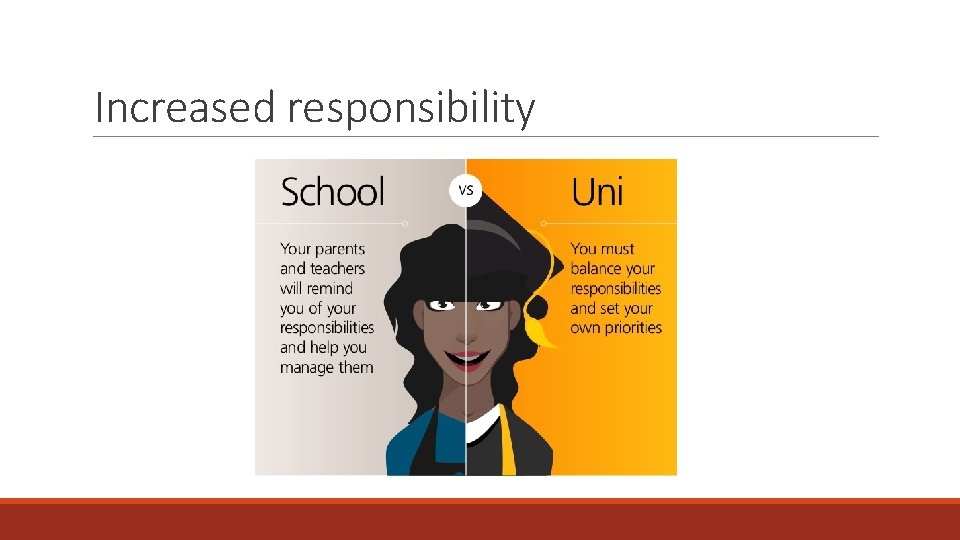
Increased responsibility
TOEFL and ACTFL OPI Overview
TOEFL Exam Structure and Contents There are four sections to the TOEFL Exam ◦ Reading, Listening, Writing, Speaking ◦ Reading section – 3 -4 passages, 12 -14 questions each, 60 -80 minutes in length ◦ Listening section – 4 -6 lectures, 6 questions each & 2 -3 conversations, 5 questions each, 60 -90 minutes in length ◦ Break 10 minutes ◦ Speaking section – 6 tasks: 2 independent and 4 integrated, 20 minutes in length ◦ Writing 1 integrated task, 20 minutes in length and 1 independent task, 30 minutes in length
Reading Section 3 to 4 passages (20 minutes allowed per passage) Focuses on college-level academic content Reading section strategies ◦ Manage the clock and focus ◦ Read question then read text ◦ Summarize each paragraph as you read
Listening Section 4 -6 lectures with 6 questions each; lectures are around 5 minutes in length 2 or 3 conversations with 5 questions each; conversations are around 3 minutes in length Listening Strategies ◦ Staying focused and remembering details ◦ Taking notes (structural notes)
Speaking Section 20 minutes in length 6 questions Format of questions differ – see this excellent infographic Speaking Advice ◦ Practice speaking section over and over to prepare and accustom yourself to the format ◦ Avoid distraction and stay focused ◦ Create outline and focus on it
Writing Section 2 essays; 1 integrated and 1 independent essay question Writing Strategies ◦ Don’t get lost in text ◦ Connect text to lecture material and synthesize ◦ Use variety of sentence structures in your writing
TOEFL Scoring Scores range from 0 -120 Reading and Listening sections are scored by computer Writing and Speaking sections are hand scored by a person Each section is worth 30 points
Writing and Speaking – Hand Scoring These sections are scored by at least two Educational Training Services (ETS) graders who independently score your responses. If their scores differ by more than one point (0 -5 scale), then a third grader arbitrates the grade. Scores are then standardized to the 30 point scale
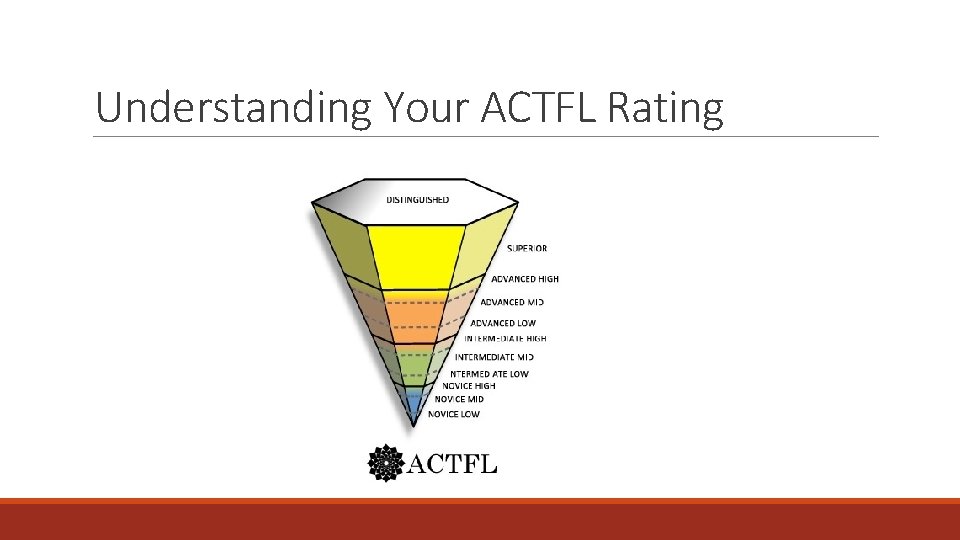
Understanding Your ACTFL Rating
Novice Speaker Novice-level speakers can communicate short messages on highly predictable, everyday topics that affect them directly. They do so primarily through the use of isolated words and phrases that have been encountered, memorized, and recalled. Novice-level speakers may be difficult to understand even by the most sympathetic interlocutors accustomed to non-native speech.
Intermediate Speakers at the Intermediate level are distinguished primarily by their ability to create with the language when talking about familiar topics related to their daily life. They are able to recombine learned material in order to express personal meaning. Intermediate level speakers can ask simple questions and can handle a straightforward survival situation. They produce sentence-level language, ranging from discrete sentences to strings of sentences, typically in present time. Intermediate-level speakers are understood by interlocutors who are accustomed to dealing with non-native learners of the language.
Advanced Speakers at the Advanced level engage in conversation in a clearly participatory manner in order to communicate information on autobiographical topics, as well as topics of community, national, or international interest. The topics are handled concretely by means of narration and description in the major times frames of past, present, and future. These speakers can also deal with a social situation with an unexpected complication. The language of Advanced-level speakers is abundant, the oral paragraph being the measure of Advanced-level length and discourse. Advanced-level speakers have sufficient control of basic structures and generic vocabulary to be understood by native speakers of the language, including those unaccustomed to non-native speech.
Sample speech Samples 1. Listen to the speech sample and discuss with a partner what you level you think the speaker is at (Novice, Intermediate, Advanced)