
THE COLD WAR UNIT 7 SECTIONS 1 3
- Slides: 23
THE COLD WAR UNIT 7 SECTIONS 1, 3, AND 6
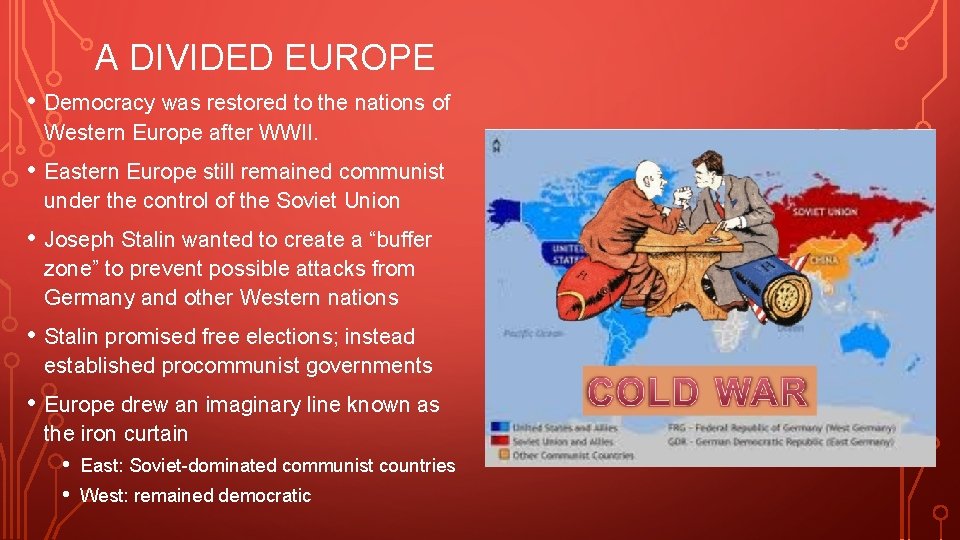
A DIVIDED EUROPE • Democracy was restored to the nations of Western Europe after WWII. • Eastern Europe still remained communist under the control of the Soviet Union • Joseph Stalin wanted to create a “buffer zone” to prevent possible attacks from Germany and other Western nations • Stalin promised free elections; instead established procommunist governments • Europe drew an imaginary line known as the iron curtain • • East: Soviet-dominated communist countries West: remained democratic
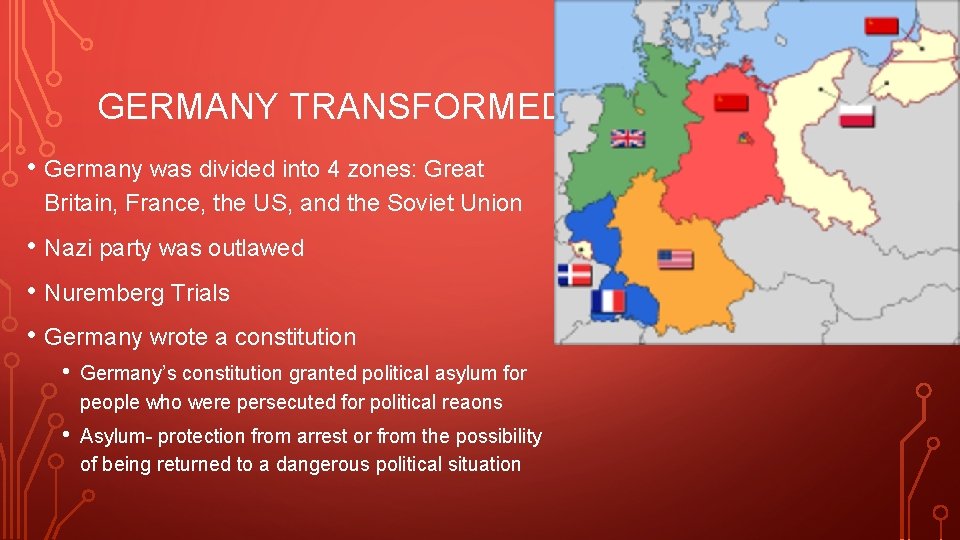
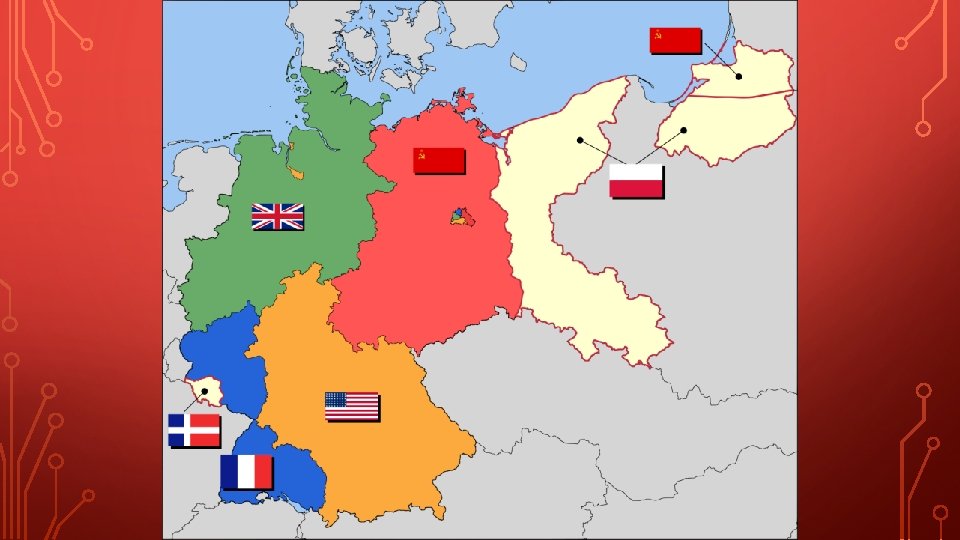
GERMANY TRANSFORMED • Germany was divided into 4 zones: Great Britain, France, the US, and the Soviet Union • Nazi party was outlawed • Nuremberg Trials • Germany wrote a constitution • Germany’s constitution granted political asylum for people who were persecuted for political reaons • Asylum- protection from arrest or from the possibility of being returned to a dangerous political situation
LESSONS FROM THE HOLOCAUST • Germany has a close relationship with Israel • Germany attempted to financially compensate some of the victims of the Holocaust
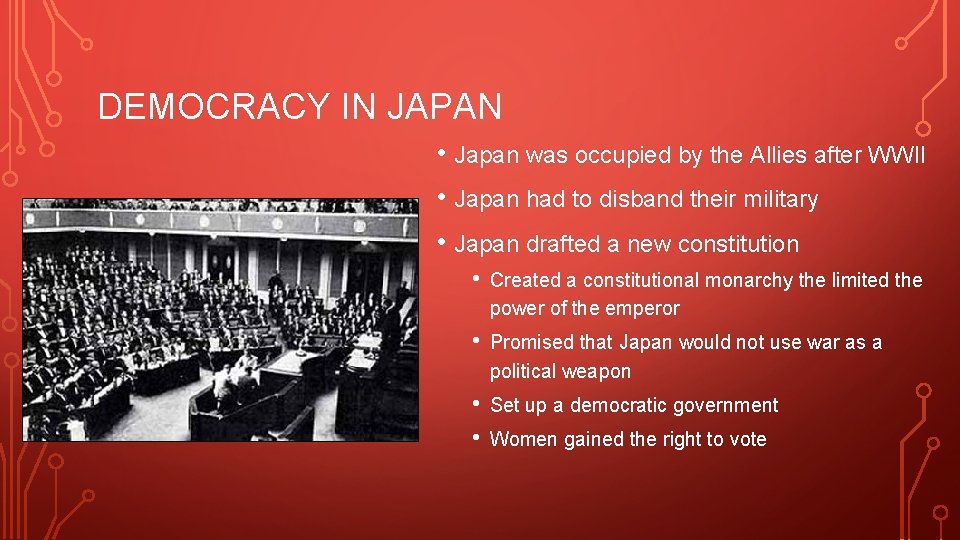
DEMOCRACY IN JAPAN • Japan was occupied by the Allies after WWII • Japan had to disband their military • Japan drafted a new constitution • Created a constitutional monarchy the limited the power of the emperor • Promised that Japan would not use war as a political weapon • • Set up a democratic government Women gained the right to vote
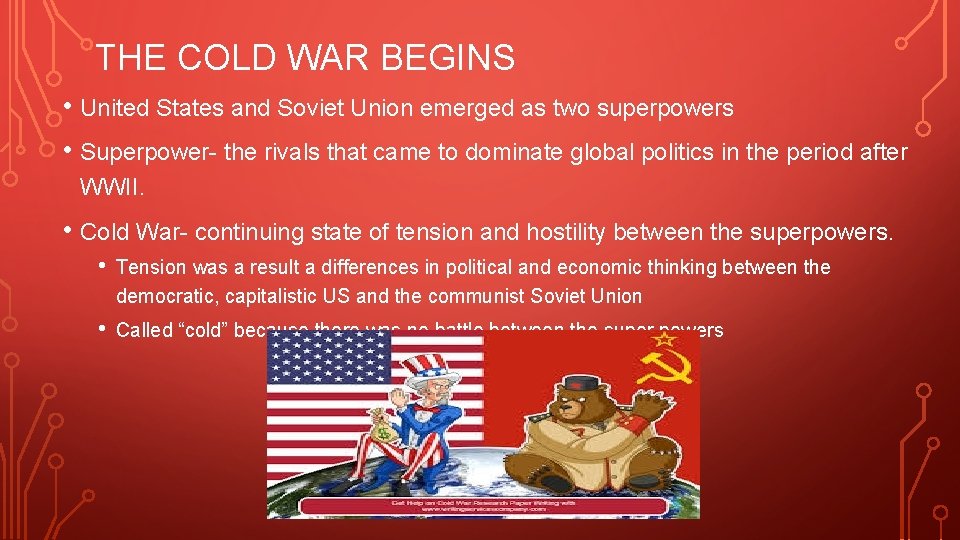
THE COLD WAR BEGINS • United States and Soviet Union emerged as two superpowers • Superpower- the rivals that came to dominate global politics in the period after WWII. • Cold War- continuing state of tension and hostility between the superpowers. • Tension was a result a differences in political and economic thinking between the democratic, capitalistic US and the communist Soviet Union • Called “cold” because there was no battle between the super powers
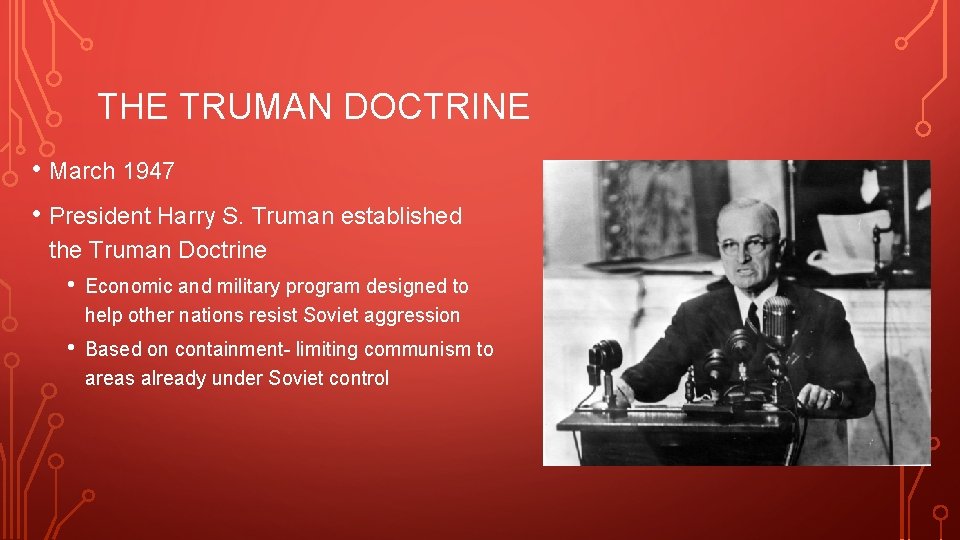
THE TRUMAN DOCTRINE • March 1947 • President Harry S. Truman established the Truman Doctrine • Economic and military program designed to help other nations resist Soviet aggression • Based on containment- limiting communism to areas already under Soviet control
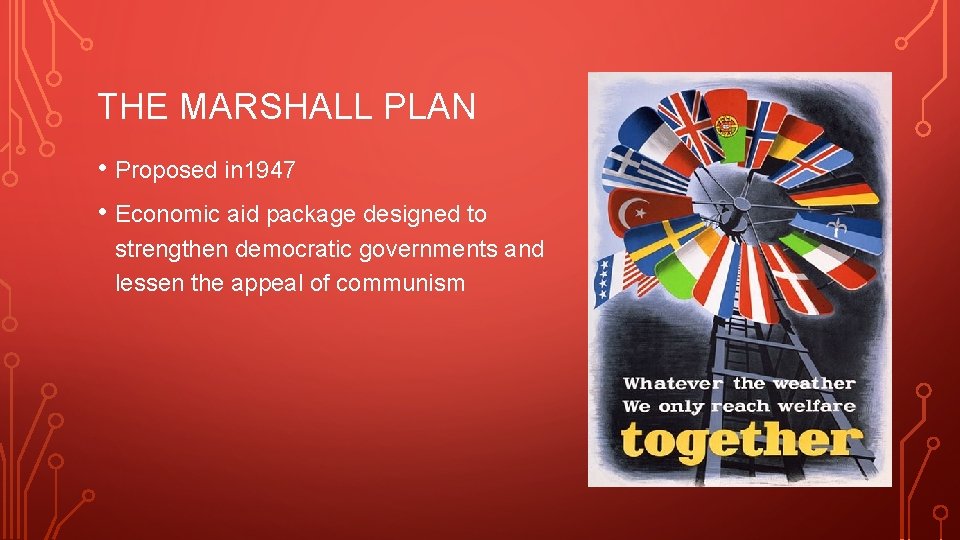
THE MARSHALL PLAN • Proposed in 1947 • Economic aid package designed to strengthen democratic governments and lessen the appeal of communism
CRISIS IN GERMANY • Germany was divided into 4 zones but soon the country was split between democratic powers and communism • Germany became a major focus of Cold War tension • Allies had a plan to rebuild Germany’s economy, Stalin feared that they would lose power in Germany • Berlin Airlift: Stalin closed all land routes to West Berlin; democratic powers couldn’t bring essential goods to West Berlin • Soviet Union decided to build a wall dividing East and West Germany
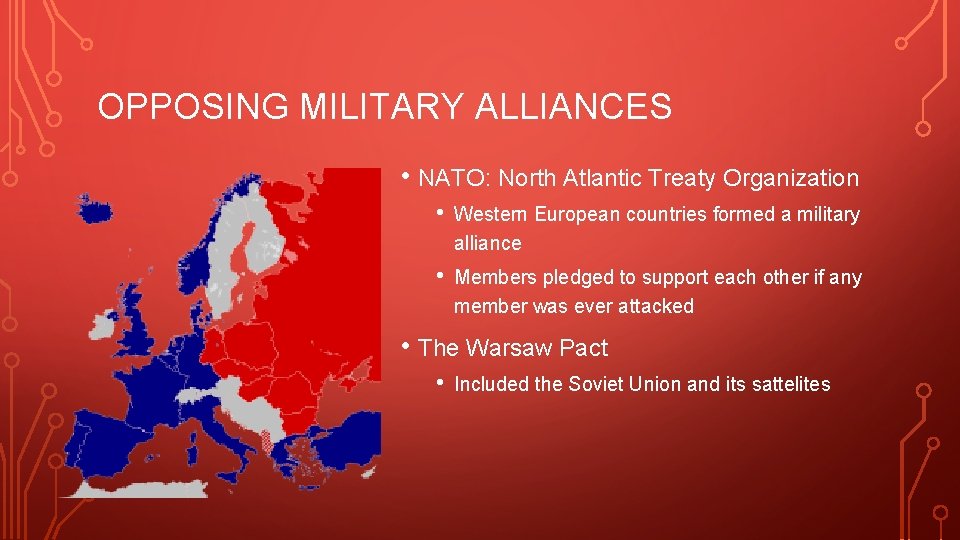
OPPOSING MILITARY ALLIANCES • NATO: North Atlantic Treaty Organization • Western European countries formed a military alliance • Members pledged to support each other if any member was ever attacked • The Warsaw Pact • Included the Soviet Union and its sattelites
THE COLD WAR HEATS UP • East Germany tried to revolt against the Soviet Union; Soviet Union sent in tanks • 1956: Hungarian Revolt- led by Imre Nagy who wanted to end oneparty rule, got rid of Soviet troops, and withdrew from the Warsaw Pact • • Soviet Unions reponse: sent in troops and tanks Thousands died
INVASION OF CZECHOSLOVAKIA • Rebelled against Soviet domination • Led by Alexander Dubcek • • • Wanted liberal reforms and easing of communist controls Government wanted to ease censorship and wanted a new constituition Soviet Union sent in troops
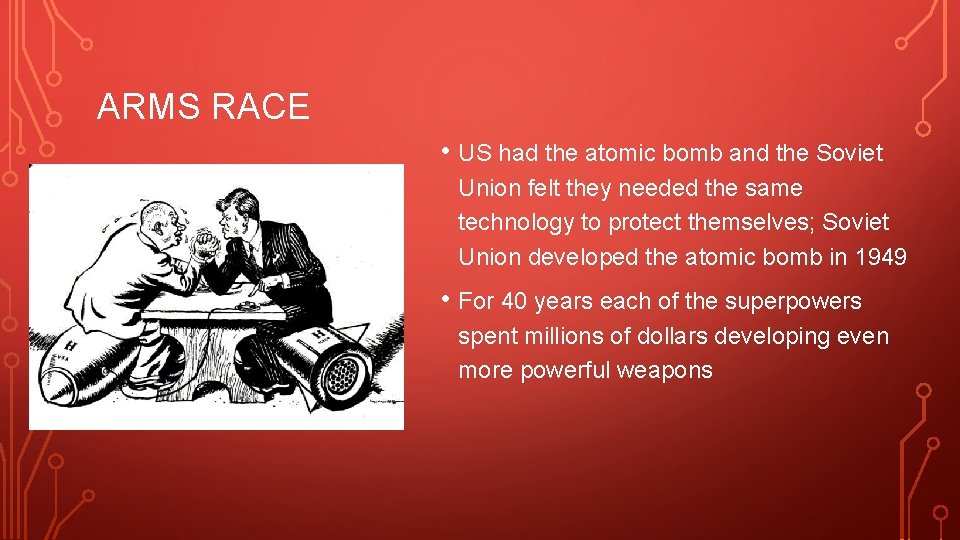
ARMS RACE • US had the atomic bomb and the Soviet Union felt they needed the same technology to protect themselves; Soviet Union developed the atomic bomb in 1949 • For 40 years each of the superpowers spent millions of dollars developing even more powerful weapons
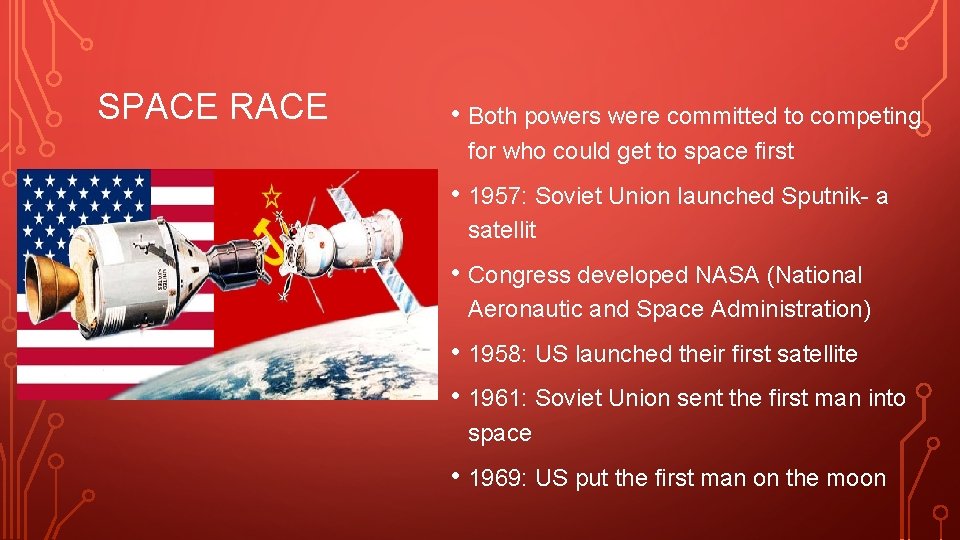
SPACE RACE • Both powers were committed to competing for who could get to space first • 1957: Soviet Union launched Sputnik- a satellit • Congress developed NASA (National Aeronautic and Space Administration) • 1958: US launched their first satellite • 1961: Soviet Union sent the first man into space • 1969: US put the first man on the moon
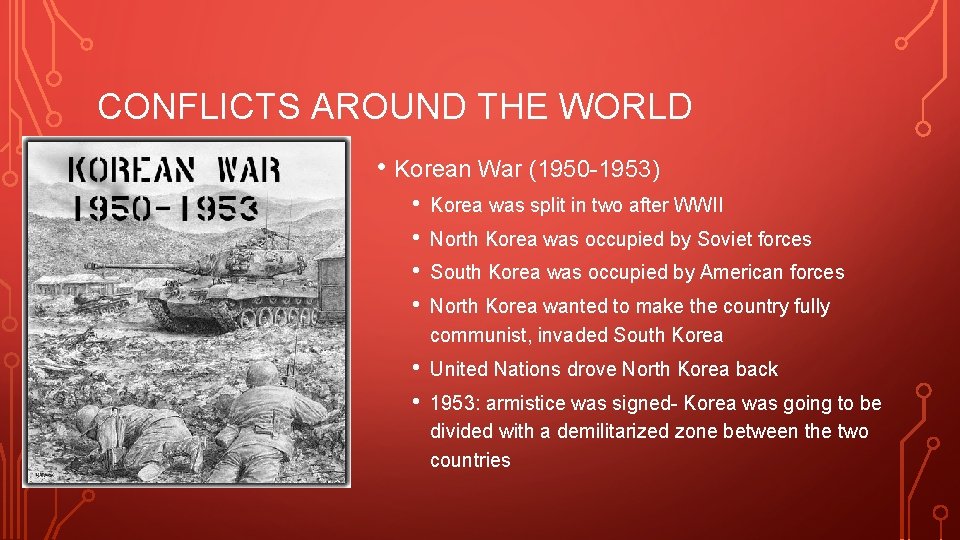
CONFLICTS AROUND THE WORLD • Korean War (1950 -1953) • • Korea was split in two after WWII • • United Nations drove North Korea back North Korea was occupied by Soviet forces South Korea was occupied by American forces North Korea wanted to make the country fully communist, invaded South Korea 1953: armistice was signed- Korea was going to be divided with a demilitarized zone between the two countries
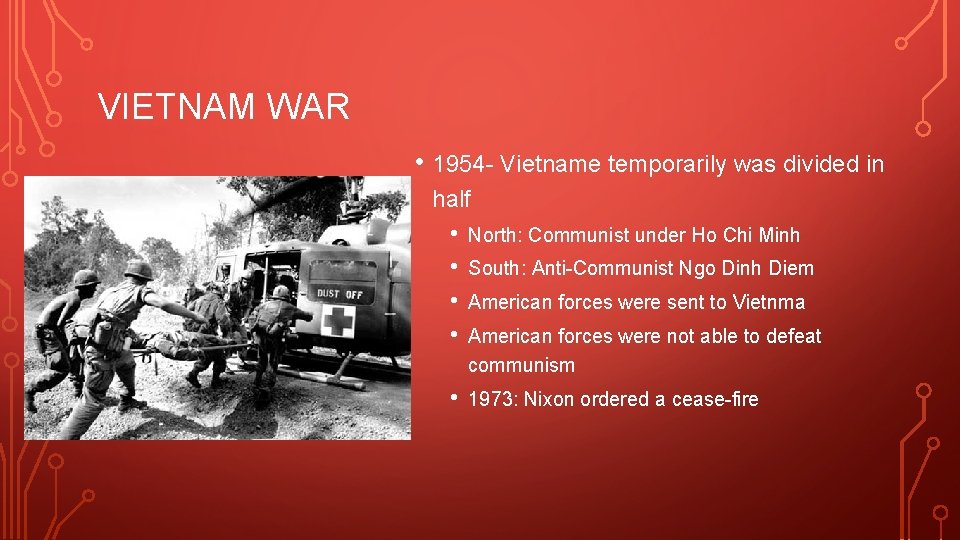
VIETNAM WAR • 1954 - Vietname temporarily was divided in half • • North: Communist under Ho Chi Minh • 1973: Nixon ordered a cease-fire South: Anti-Communist Ngo Dinh Diem American forces were sent to Vietnma American forces were not able to defeat communism
COLD WAR IN THE MIDDLE EAST • Arab States and Israel: • Gamal Abdel Nasser- leader of Egypt • Determined to end Western power in Egypt • Nationalized the Suez Canal • Received support from the Soviet Union • Iran and Iraq: • Two oil producing countries in the Middle East • US and Soviet Union wanted their oil • Iran came under US support • • Went through the Islamic Revolution in 1979 Iraq cam under Soviet support
THE COLD WAR IN AFRICA • Congo: • • • Begian colony Became independent in 1960 Revolts took place, Soviet Union supported the leader against rebels Anti-communist dictator, Mobutu Sese Seko took countrol Received support from the West
THE COLD WAR IN AFRICA • Angola • • • Portuguese colony Independent in 1975 Bloody civil war, rebel forces were supported by the Soviet Union sent equipment Issues continued until 1991
THE COLD WAR IN LATIN AMERICA • Cuba • • Independent from Spain in 1898 Cuba was influenced by the US Fidel Castro overthrew a corrupt leader Became a communist dictator Turned to the Soviet Union for support Castro allowed the Soviet Union to set up nuclear missile sites in Cuba US ordered the blockade of Cuba • Cuban Missile Crisis • • Missiles faced the US Ended when Nikita Khrushchev agreed to remove the missiles
NONALIGNED NATIONS • Nations that chose not to ally with either side in the Cold War • These countries remained neutral
ROLE OF THE UNITED NATIONS • United Nations provided a form for the superpowers to air their differences peacefully • After the Cold War, it send international peacekeeping forces to countries in conflict • Provides health services to where they are needed