
The Cold War U S History Origins of
- Slides: 22
The Cold War U. S. History
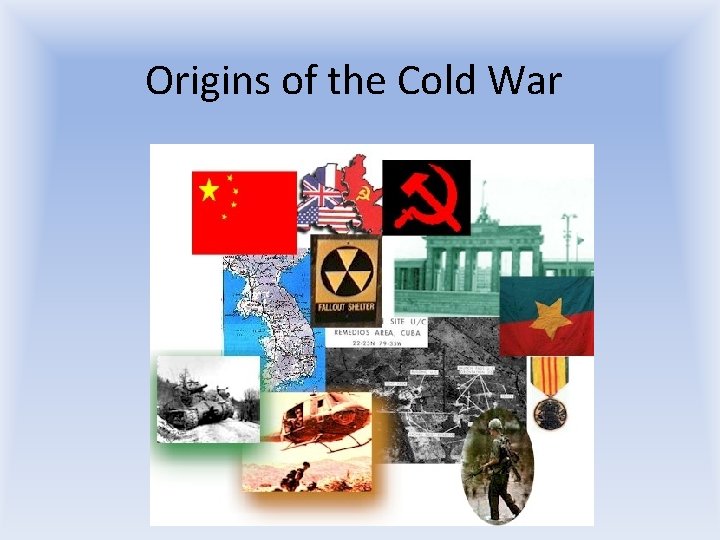
Origins of the Cold War
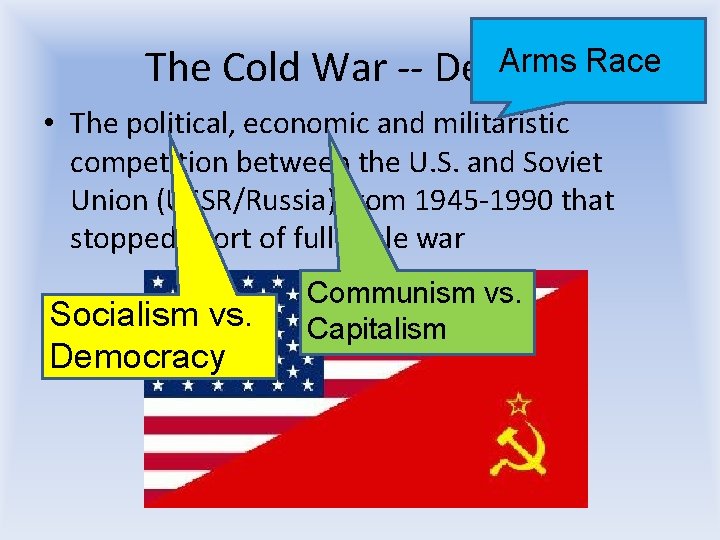
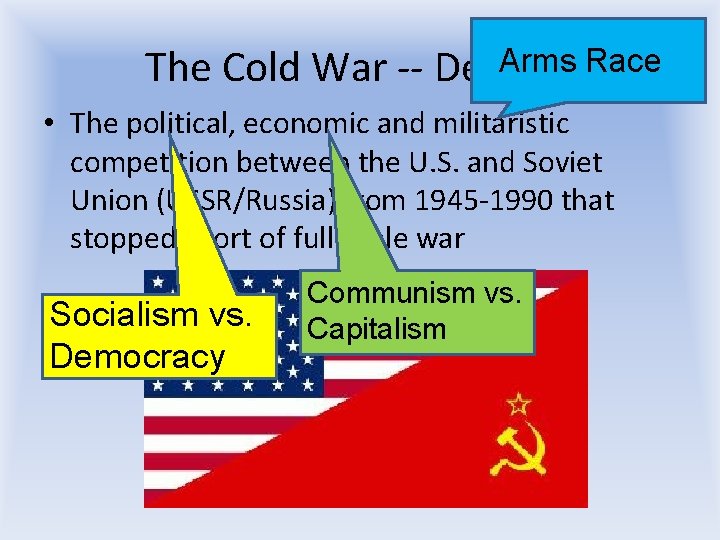
Arms Race The Cold War -- Defined • The political, economic and militaristic competition between the U. S. and Soviet Union (USSR/Russia) from 1945 -1990 that stopped short of full-scale war Socialism vs. Democracy Communism vs. Capitalism
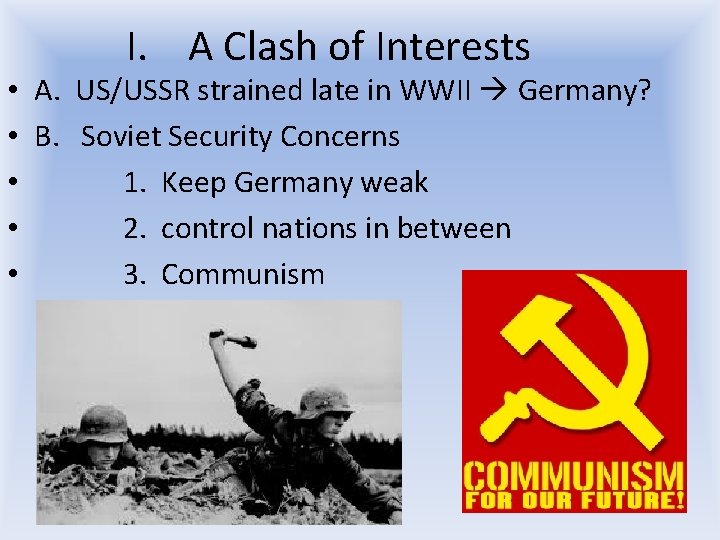
I. A Clash of Interests • A. US/USSR strained late in WWII Germany? • B. Soviet Security Concerns • 1. Keep Germany weak • 2. control nations in between • 3. Communism
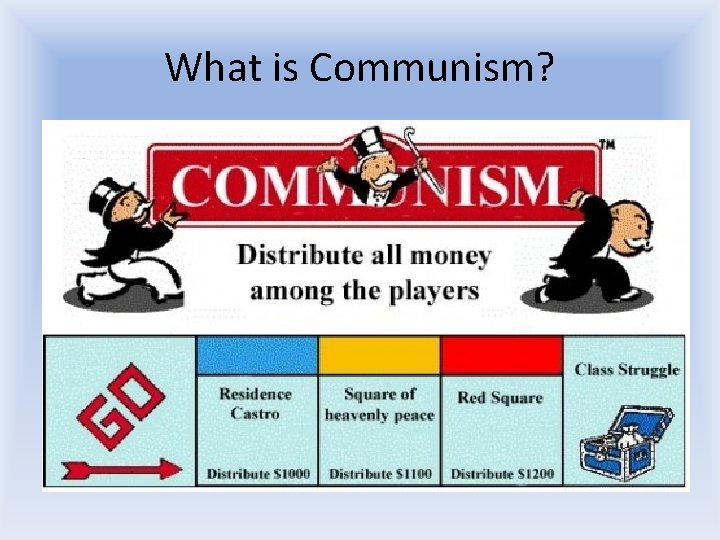
What is Communism?
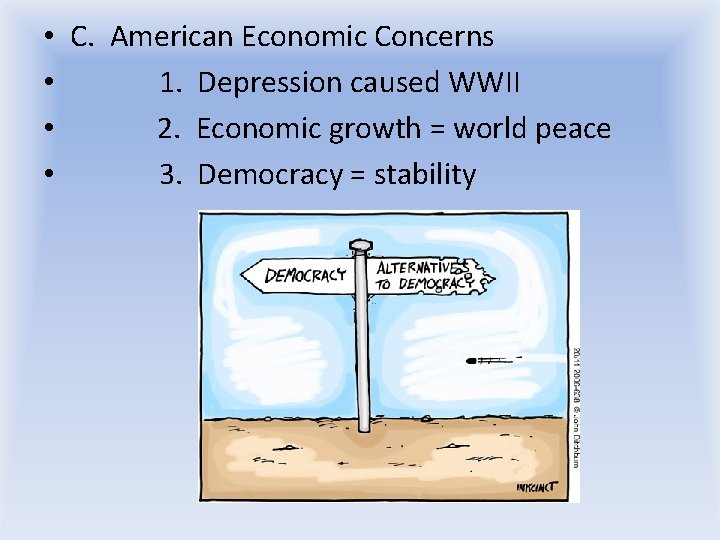
• C. American Economic Concerns • 1. Depression caused WWII • 2. Economic growth = world peace • 3. Democracy = stability
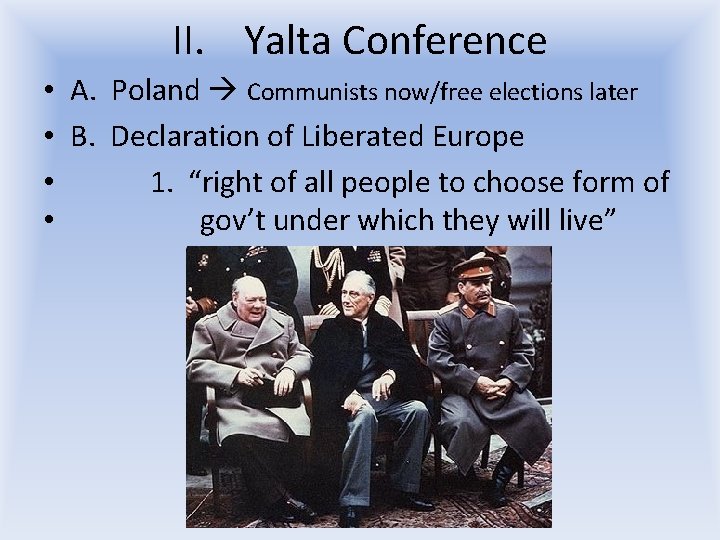
II. Yalta Conference • A. Poland Communists now/free elections later • B. Declaration of Liberated Europe • 1. “right of all people to choose form of • gov’t under which they will live”
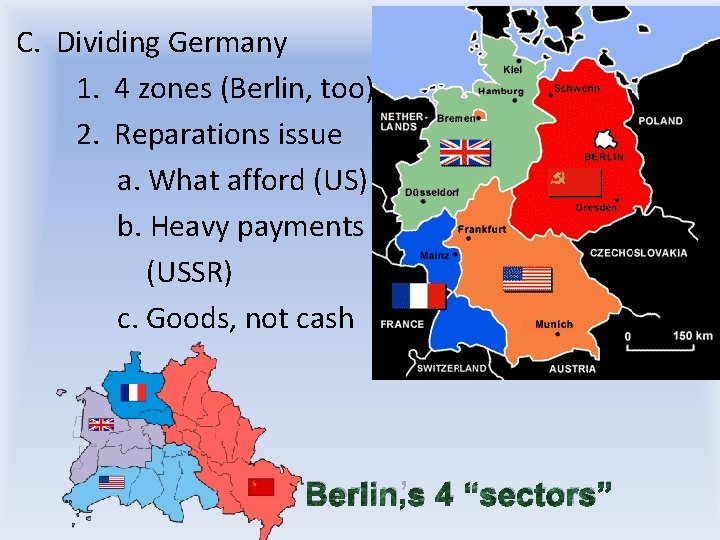
• C. Dividing Germany • 1. 4 zones (Berlin, too) • 2. Reparations issue • a. What afford (US) • b. Heavy payments • (USSR) • c. Goods, not cash Berlin’s 4 “sectors”
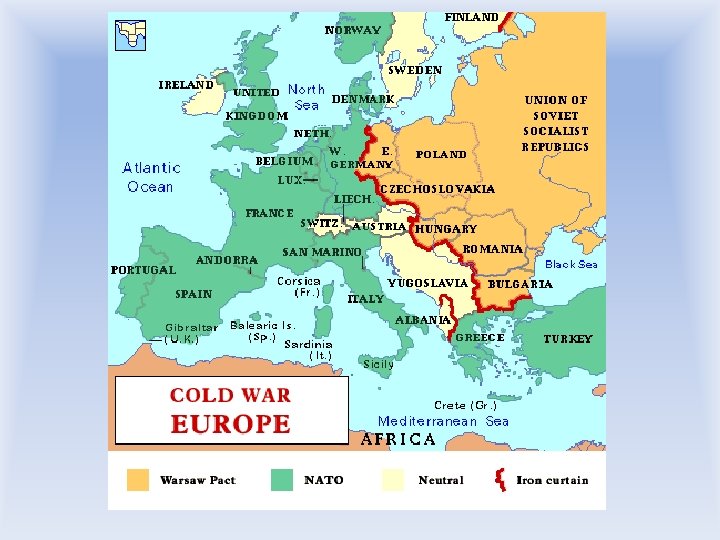
Tensions begin to rise • A. Communist gov’ts installed in E. Europe • 1. Romania: King forced to accept • 2. Czechoslovakia, Romania, Bulgaria, • Austria, Hungary • B. FDR/Churchill not happy • 1. Worry later, beat Japs now
Arms Race The Cold War -- Defined • The political, economic and militaristic competition between the U. S. and Soviet Union (USSR/Russia) from 1945 -1990 that stopped short of full-scale war Socialism vs. Democracy Communism vs. Capitalism
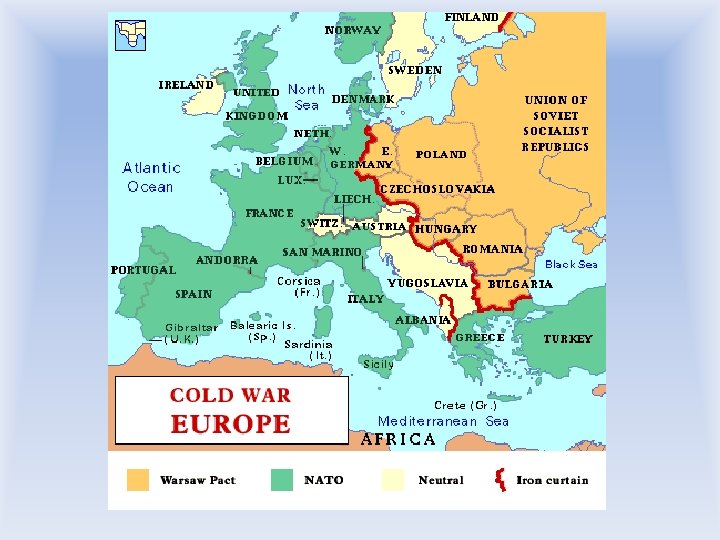
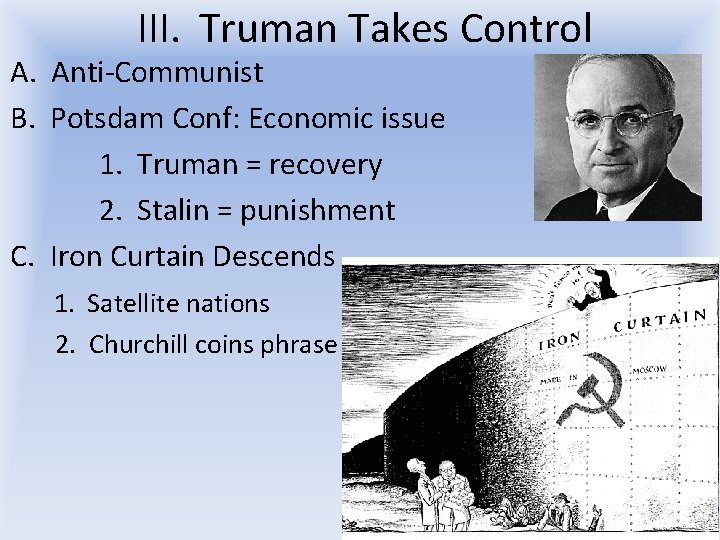
III. Truman Takes Control A. Anti-Communist B. Potsdam Conf: Economic issue 1. Truman = recovery 2. Stalin = punishment C. Iron Curtain Descends 1. Satellite nations 2. Churchill coins phrase
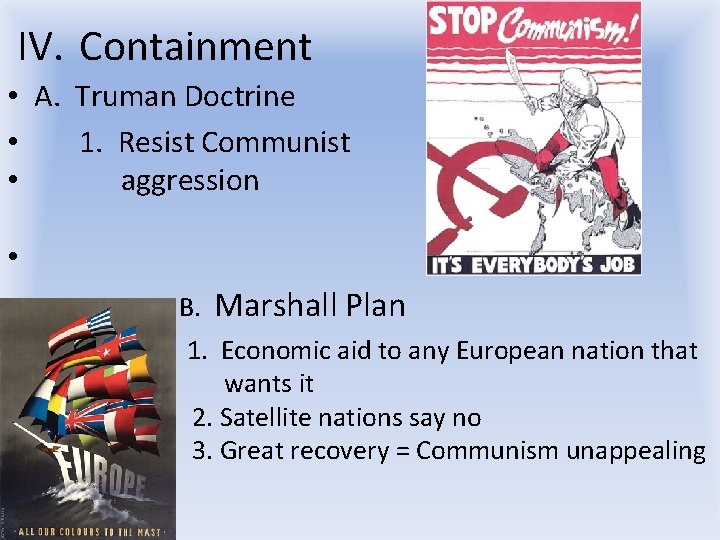
IV. Containment • A. Truman Doctrine • 1. Resist Communist • aggression • Marshall Plan • B. • • 1. Economic aid to any European nation that wants it 2. Satellite nations say no 3. Great recovery = Communism unappealing
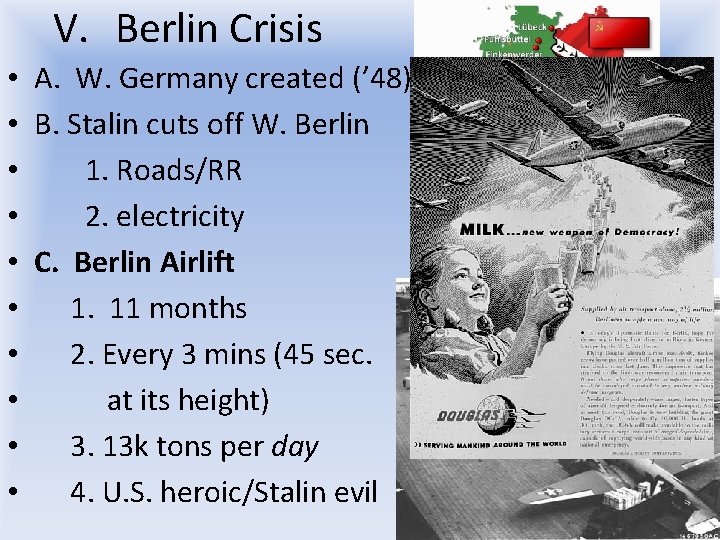
V. Berlin Crisis • A. W. Germany created (’ 48) • B. Stalin cuts off W. Berlin • 1. Roads/RR • 2. electricity • C. Berlin Airlift • 1. 11 months • 2. Every 3 mins (45 sec. • at its height) • 3. 13 k tons per day • 4. U. S. heroic/Stalin evil
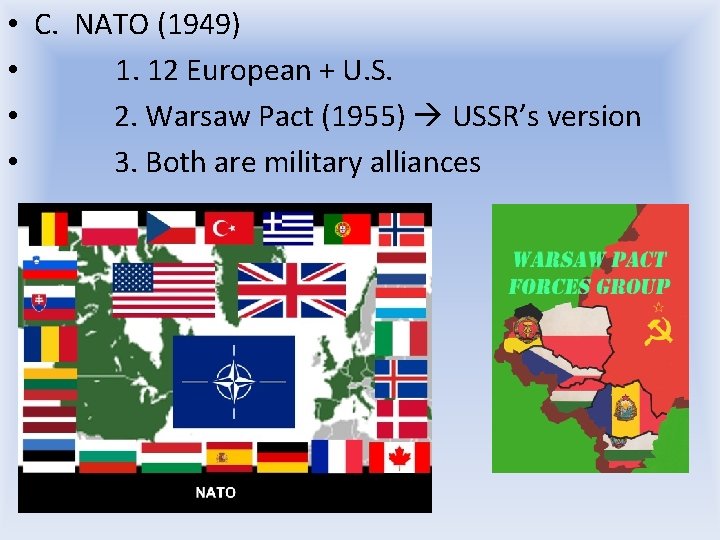
• C. NATO (1949) • 1. 12 European + U. S. • 2. Warsaw Pact (1955) USSR’s version • 3. Both are military alliances
Cold War Spreads to Asia
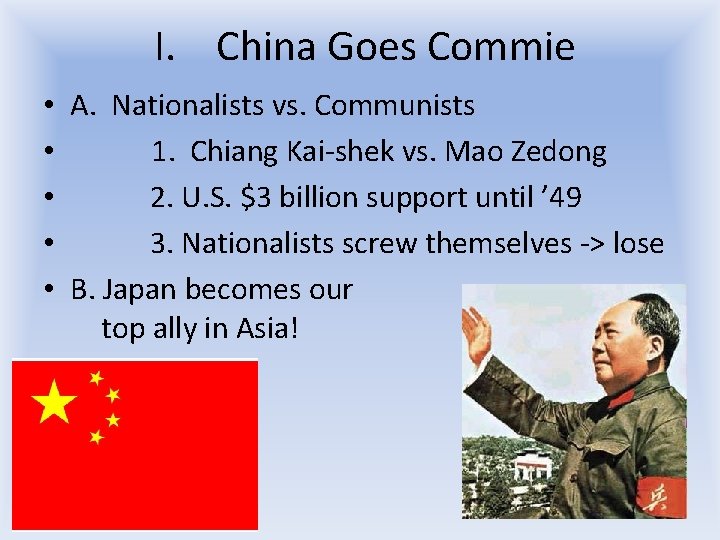
I. China Goes Commie • A. Nationalists vs. Communists • 1. Chiang Kai-shek vs. Mao Zedong • 2. U. S. $3 billion support until ’ 49 • 3. Nationalists screw themselves -> lose • B. Japan becomes our top ally in Asia!
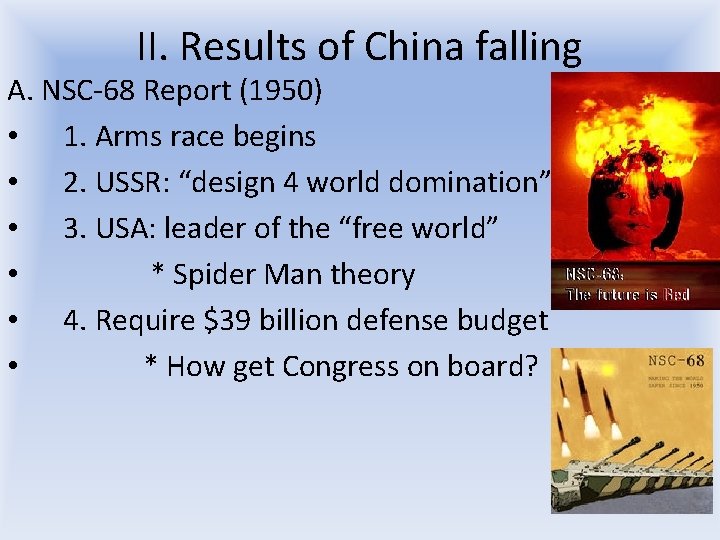
II. Results of China falling A. NSC-68 Report (1950) • 1. Arms race begins • 2. USSR: “design 4 world domination” • 3. USA: leader of the “free world” • * Spider Man theory • 4. Require $39 billion defense budget • * How get Congress on board?
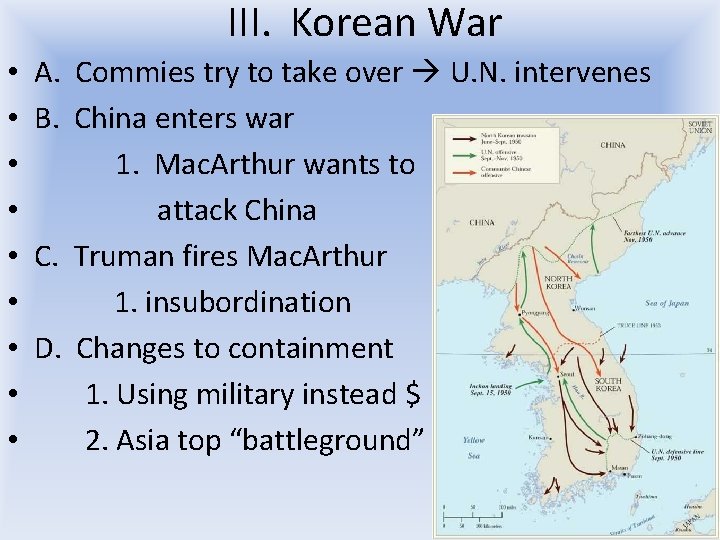
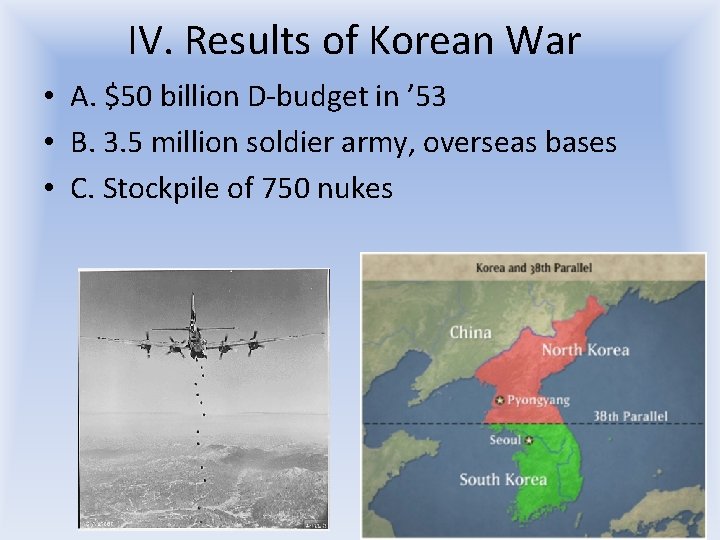
III. Korean War • • • A. Commies try to take over U. N. intervenes B. China enters war 1. Mac. Arthur wants to attack China C. Truman fires Mac. Arthur 1. insubordination D. Changes to containment 1. Using military instead $ 2. Asia top “battleground”
IV. Results of Korean War • A. $50 billion D-budget in ’ 53 • B. 3. 5 million soldier army, overseas bases • C. Stockpile of 750 nukes
Conclusion • Containment strategy had two early evolutions. – Money first (Marshall Plan/Berlin Airlift) – Military usage (Korea forced this. Not by choice) • When China fell, containment focus moved to SE Asia. USSR couldn’t spread in Europe (established nations west of Iron Curtain) • NCS-68: Made U. S. “leader” of containment. Started the Arms Race.