
The Cold War The Red Dot Game Dot

- Slides: 23
The Cold War The Red Dot Game
Dot Game n n n Each person will receive an index card, some have a red dot on them. Your goal is to create the biggest group without a red dot, however, you can NOT look at someone else’s card, you can only ask them questions. If you are a red dot, then your goal is to infiltrate the largest group.
Game Results n Share out!
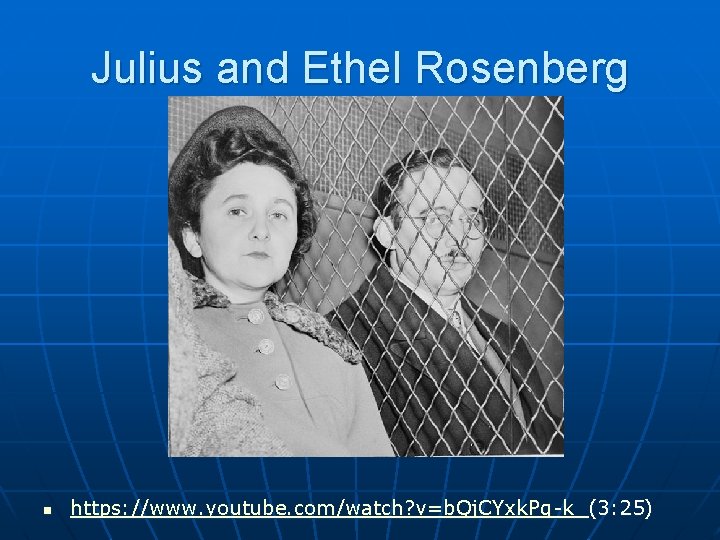
Red Dot=Red Scare n n n Most Americans were not communists! People were accused and punished with little or no evidence (Rosenbergs) Who were the Rosenbergs?
Julius and Ethel Rosenberg n https: //www. youtube. com/watch? v=b. Qj. CYxk. Pq-k (3: 25)
Red Dot=Red Scare n n n American public was encouraged to report suspects to the authorities People who were “blacklisted” were outcasts: Helen Keller, Leonard Bernstein, Burl Ives, Charlie Chaplin, Langston Hughes, Burgess Meredith, Suspicion - who can you trust?
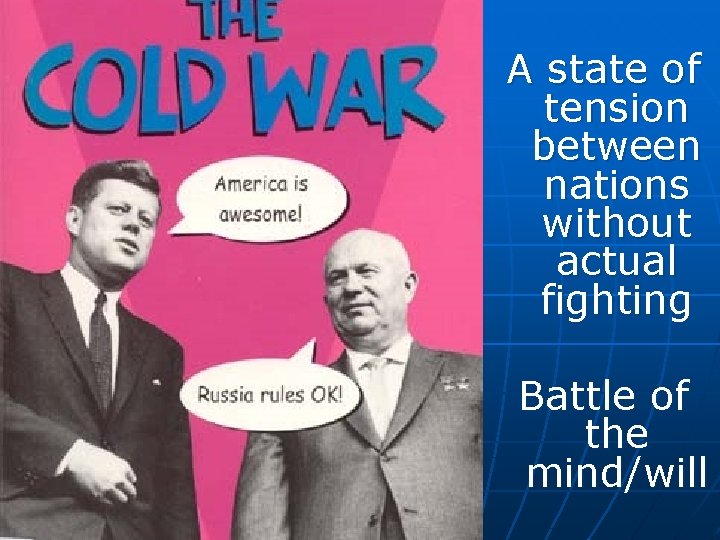
A state of tension between nations without actual fighting Battle of the mind/will
n Thursday Notes
Cold War (1945 -1991) A term that refers to the continuing state of tension and hostility between the United States and the Soviet Union
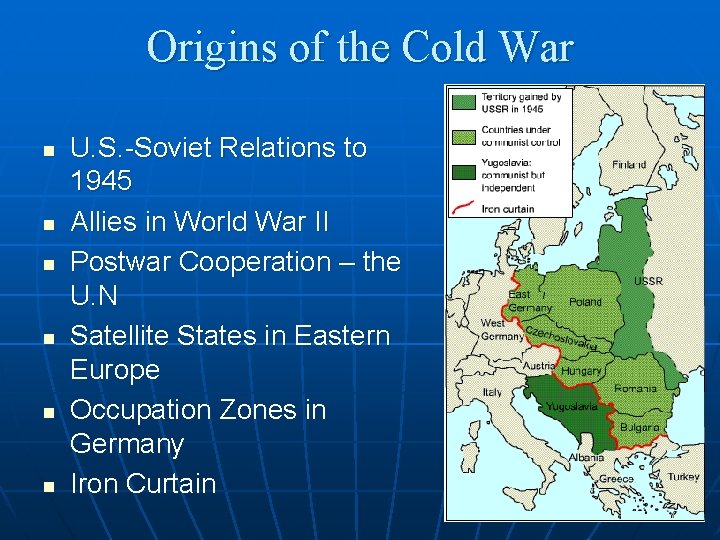
Origins of the Cold War n n n U. S. -Soviet Relations to 1945 Allies in World War II Postwar Cooperation – the U. N Satellite States in Eastern Europe Occupation Zones in Germany Iron Curtain
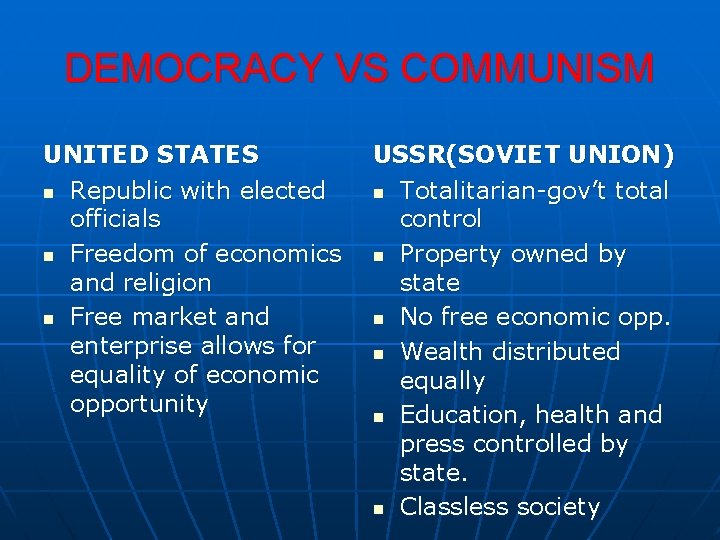
DEMOCRACY VS COMMUNISM UNITED STATES n Republic with elected officials n Freedom of economics and religion n Free market and enterprise allows for equality of economic opportunity USSR(SOVIET UNION) n Totalitarian-gov’t total control n Property owned by state n No free economic opp. n Wealth distributed equally n Education, health and press controlled by state. n Classless society
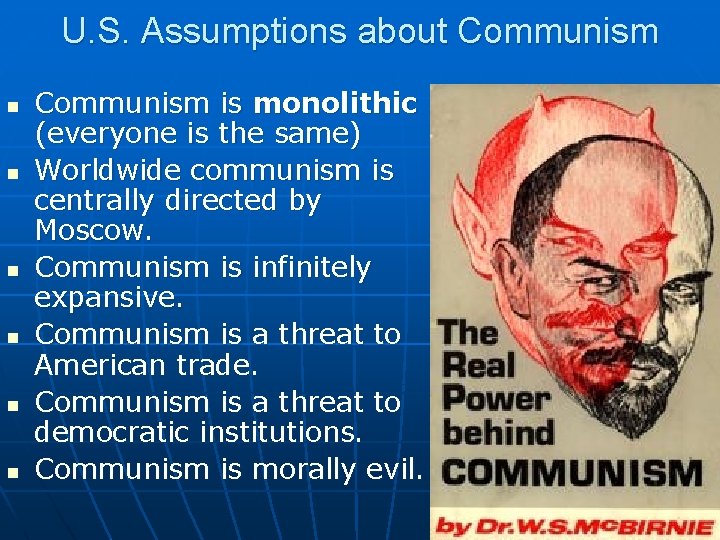
U. S. Assumptions about Communism n n n Communism is monolithic (everyone is the same) Worldwide communism is centrally directed by Moscow. Communism is infinitely expansive. Communism is a threat to American trade. Communism is a threat to democratic institutions. Communism is morally evil.
n n What is Containment? Why would the US want to contain communism?
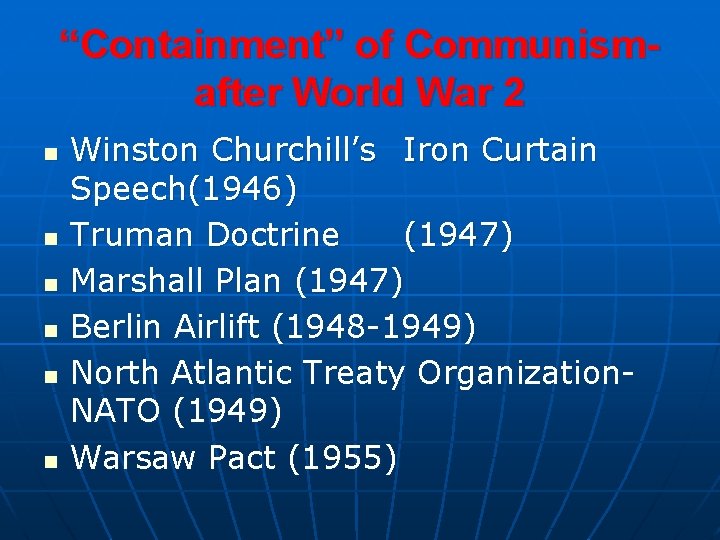
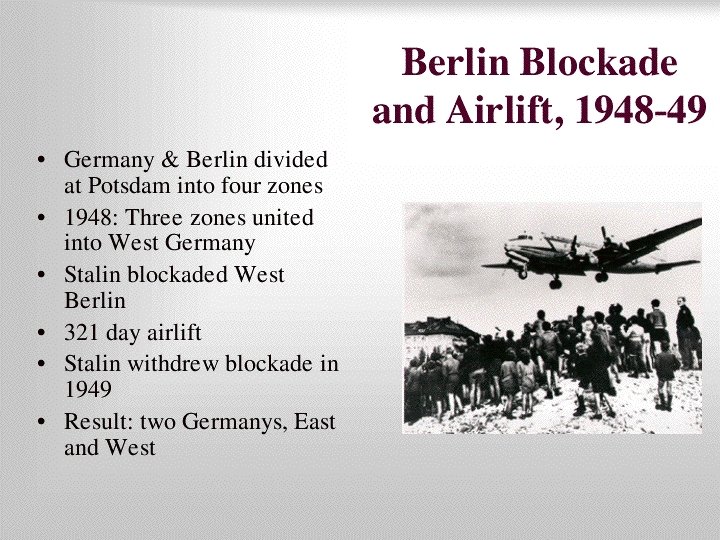
“Containment” of Communismafter World War 2 n n n Winston Churchill’s Iron Curtain Speech(1946) Truman Doctrine (1947) Marshall Plan (1947) Berlin Airlift (1948 -1949) North Atlantic Treaty Organization. NATO (1949) Warsaw Pact (1955)
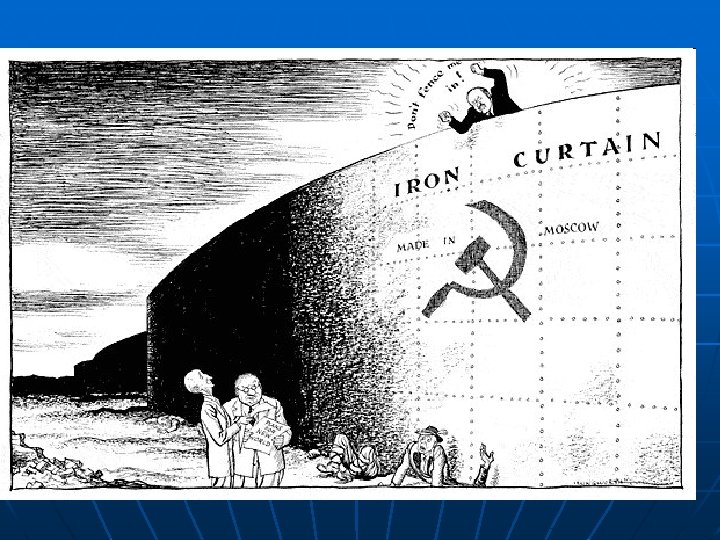
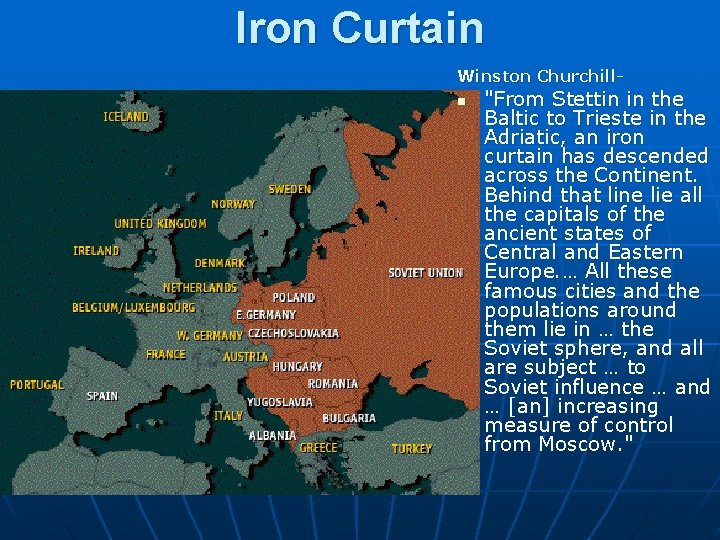
Iron Curtain Winston Churchilln "From Stettin in the Baltic to Trieste in the Adriatic, an iron curtain has descended across the Continent. Behind that line lie all the capitals of the ancient states of Central and Eastern Europe. … All these famous cities and the populations around them lie in … the Soviet sphere, and all are subject … to Soviet influence … and … [an] increasing measure of control from Moscow. "
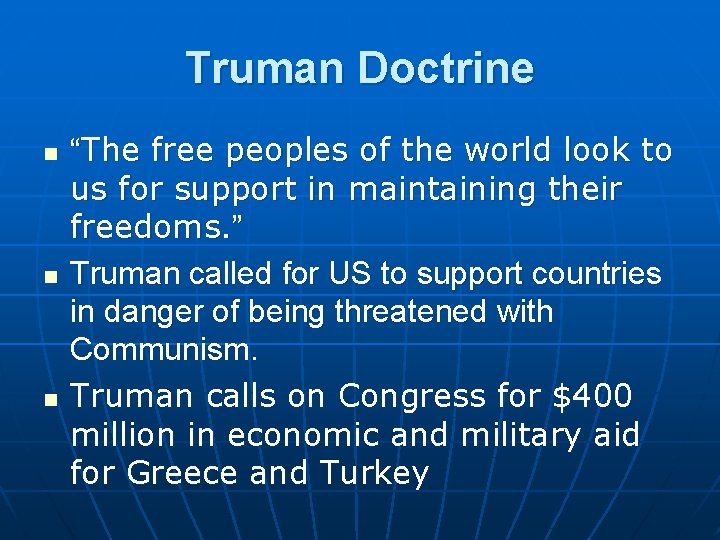
Truman Doctrine n n n “The free peoples of the world look to us for support in maintaining their freedoms. ” Truman called for US to support countries in danger of being threatened with Communism. Truman calls on Congress for $400 million in economic and military aid for Greece and Turkey
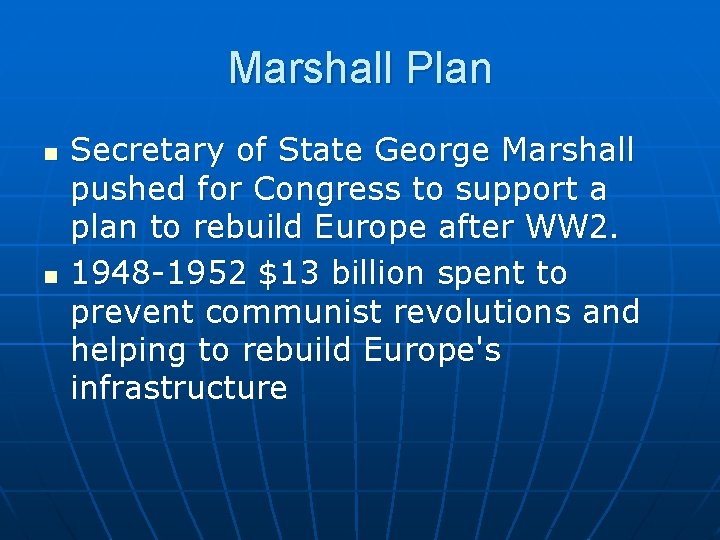
Marshall Plan n n Secretary of State George Marshall pushed for Congress to support a plan to rebuild Europe after WW 2. 1948 -1952 $13 billion spent to prevent communist revolutions and helping to rebuild Europe's infrastructure
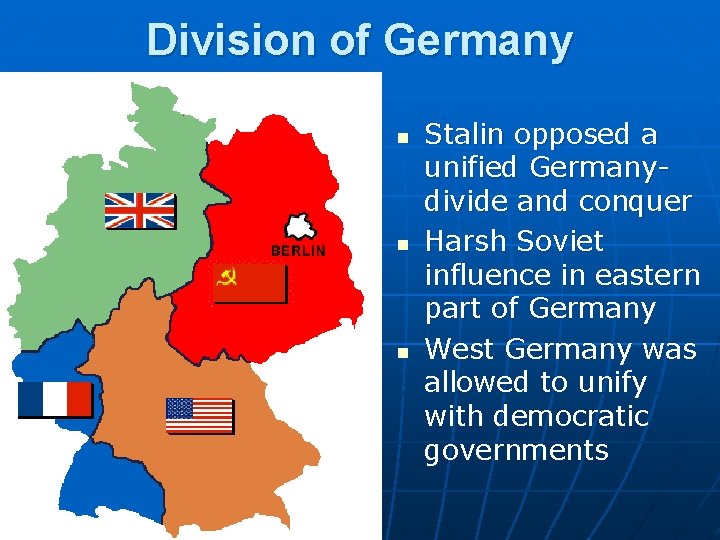
Division of Germany n n n Stalin opposed a unified Germanydivide and conquer Harsh Soviet influence in eastern part of Germany West Germany was allowed to unify with democratic governments
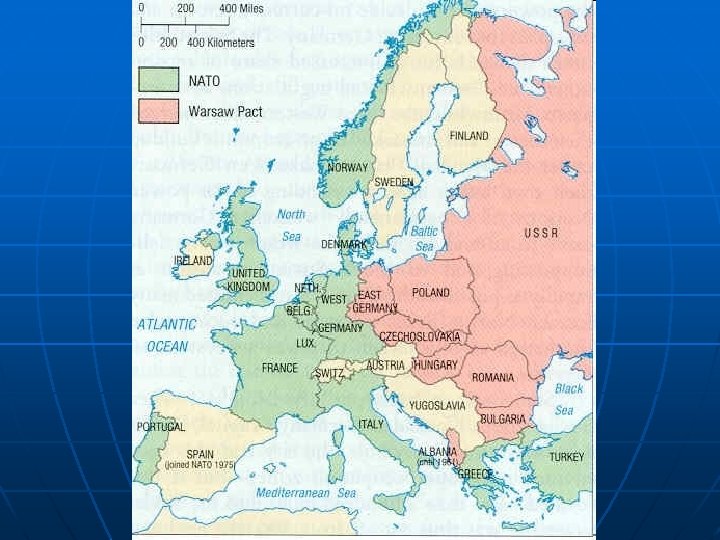
Keeping Peace n n n October 1945 United Nations: member nations agree to bring disputes before the UN. North Atlantic Treaty Organization: 1949, Western nations form an alliance against any Soviet aggression Warsaw Pact: Soviet Union formed its own military alliance, demanded complete loyalty from neighbors
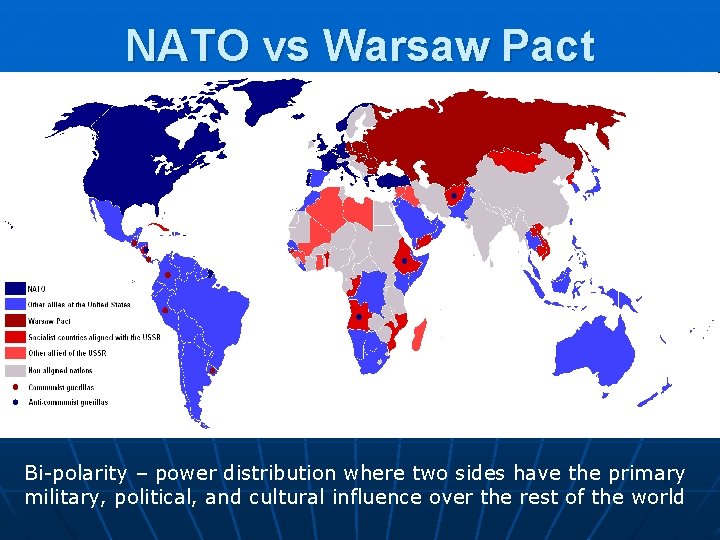
NATO vs Warsaw Pact Bi-polarity – power distribution where two sides have the primary military, political, and cultural influence over the rest of the world