
The Cold War The Diplomatic Game of Global
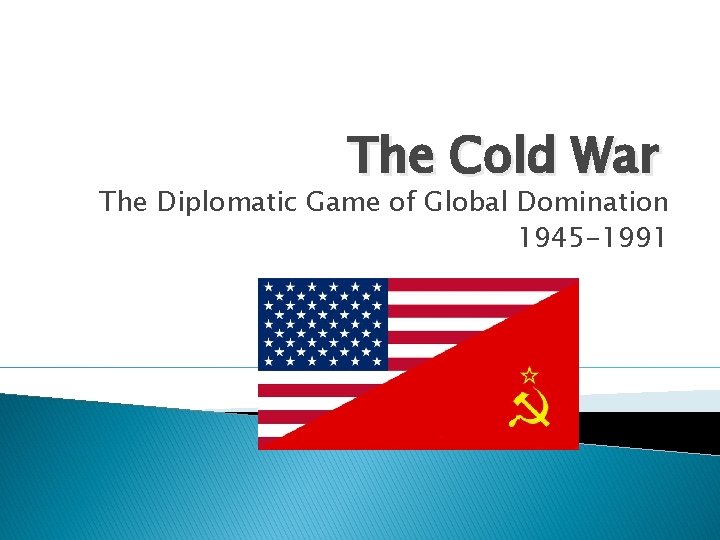
The Cold War The Diplomatic Game of Global Domination 1945 -1991
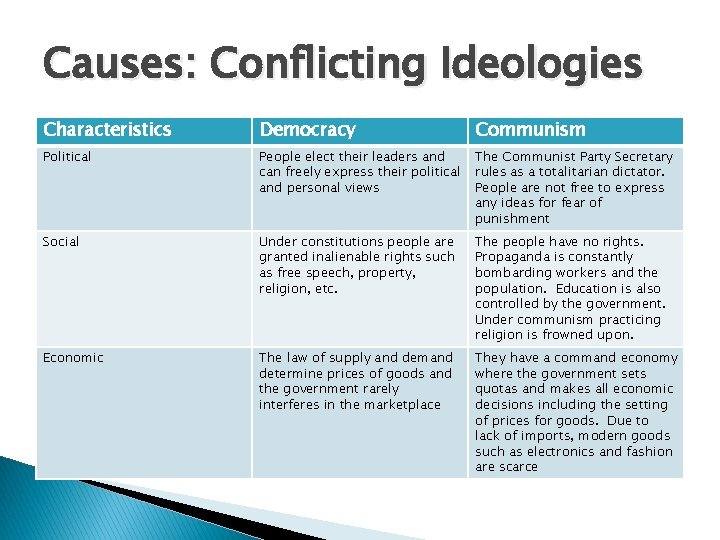
Causes: Conflicting Ideologies Characteristics Democracy Communism Political People elect their leaders and can freely express their political and personal views The Communist Party Secretary rules as a totalitarian dictator. People are not free to express any ideas for fear of punishment Social Under constitutions people are granted inalienable rights such as free speech, property, religion, etc. The people have no rights. Propaganda is constantly bombarding workers and the population. Education is also controlled by the government. Under communism practicing religion is frowned upon. Economic The law of supply and demand determine prices of goods and the government rarely interferes in the marketplace They have a command economy where the government sets quotas and makes all economic decisions including the setting of prices for goods. Due to lack of imports, modern goods such as electronics and fashion are scarce
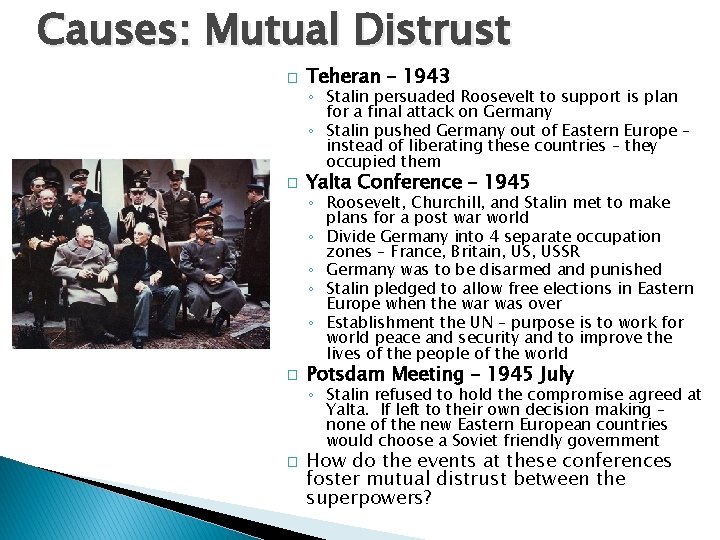
Causes: Mutual Distrust � Teheran – 1943 ◦ Stalin persuaded Roosevelt to support is plan for a final attack on Germany ◦ Stalin pushed Germany out of Eastern Europe – instead of liberating these countries – they occupied them � Yalta Conference – 1945 ◦ Roosevelt, Churchill, and Stalin met to make plans for a post war world ◦ Divide Germany into 4 separate occupation zones – France, Britain, USSR ◦ Germany was to be disarmed and punished ◦ Stalin pledged to allow free elections in Eastern Europe when the war was over ◦ Establishment the UN – purpose is to work for world peace and security and to improve the lives of the people of the world � Potsdam Meeting – 1945 July ◦ Stalin refused to hold the compromise agreed at Yalta. If left to their own decision making – none of the new Eastern European countries would choose a Soviet friendly government � How do the events at these conferences foster mutual distrust between the superpowers?
Different Points of View � U. S. point of view: � Soviet point of view: ◦ Stalin seemed intent on creating "spheres" of influence in Eastern Europe ◦ Broke pledges at Yalta; refused to allow reunification of Germany ◦ Churchhill's "Iron Curtain" speech in 1946 alerted Americans to a future conflict ◦ U. S. wanted democracy spread throughout the world with a strong international organization to maintain global peace ◦ Democracies traditionally hostile towards communism and the USSR � e. g. , Archangel expedition during WWI; nonrecognition by U. S. until 1933 ◦ US & Britain did not open western front in Europe early enough; millions of Soviet soldiers were dying fighting the brunt of Nazi armies alone until mid-1944. ◦ The US and Britain froze Russia out of the atomic bomb project. ◦ US terminated lend-lease to Moscow in May 1945 but gave Britain aid until 1946. ◦ Wanted "buffer zone" for the Soviet western border esp. in Poland
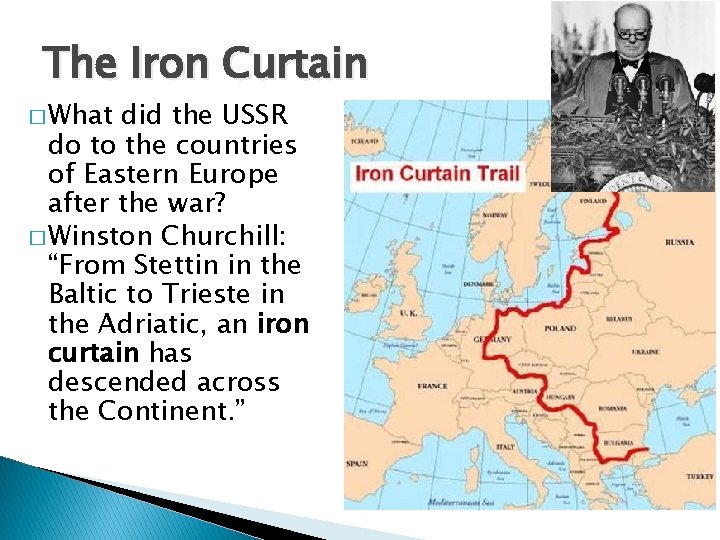
The Iron Curtain � What did the USSR do to the countries of Eastern Europe after the war? � Winston Churchill: “From Stettin in the Baltic to Trieste in the Adriatic, an iron curtain has descended across the Continent. ”
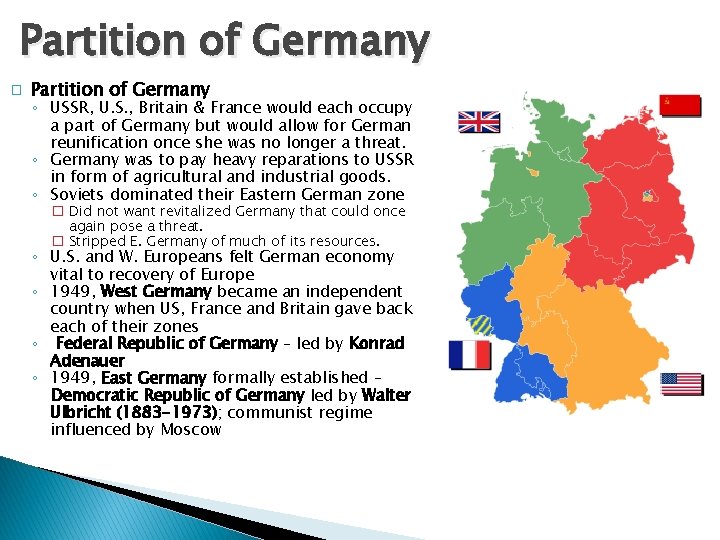
Partition of Germany � Partition of Germany ◦ USSR, U. S. , Britain & France would each occupy a part of Germany but would allow for German reunification once she was no longer a threat. ◦ Germany was to pay heavy reparations to USSR in form of agricultural and industrial goods. ◦ Soviets dominated their Eastern German zone � Did not want revitalized Germany that could once again pose a threat. � Stripped E. Germany of much of its resources. ◦ U. S. and W. Europeans felt German economy vital to recovery of Europe ◦ 1949, West Germany became an independent country when US, France and Britain gave back each of their zones ◦ Federal Republic of Germany – led by Konrad Adenauer ◦ 1949, East Germany formally established – Democratic Republic of Germany led by Walter Ulbricht (1883 -1973); communist regime influenced by Moscow
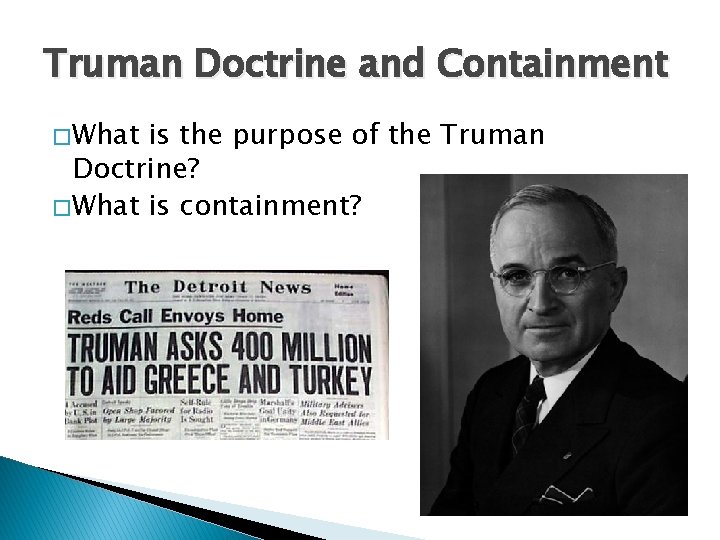
Truman Doctrine and Containment � What is the purpose of the Truman Doctrine? � What is containment?
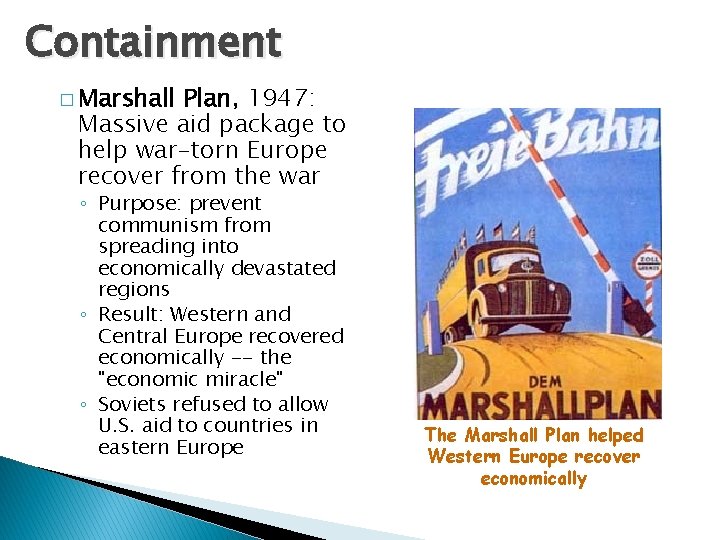
Containment � Marshall Plan, 1947: Massive aid package to help war-torn Europe recover from the war ◦ Purpose: prevent communism from spreading into economically devastated regions ◦ Result: Western and Central Europe recovered economically -- the "economic miracle" ◦ Soviets refused to allow U. S. aid to countries in eastern Europe The Marshall Plan helped Western Europe recover economically
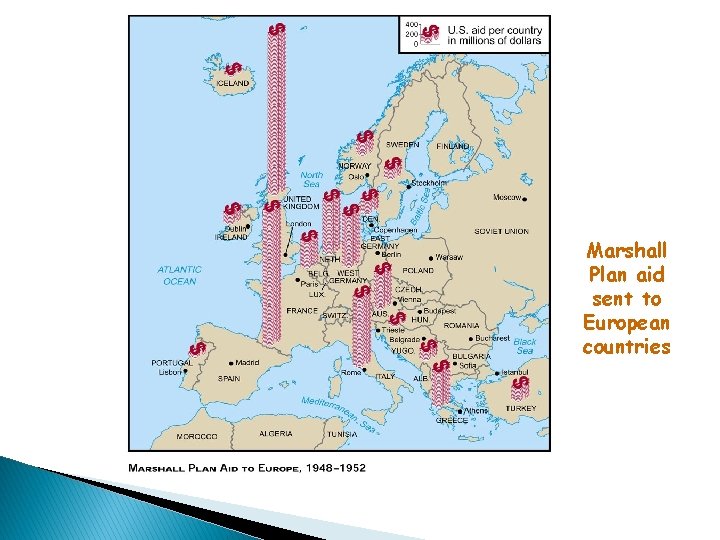
Marshall Plan aid sent to European countries
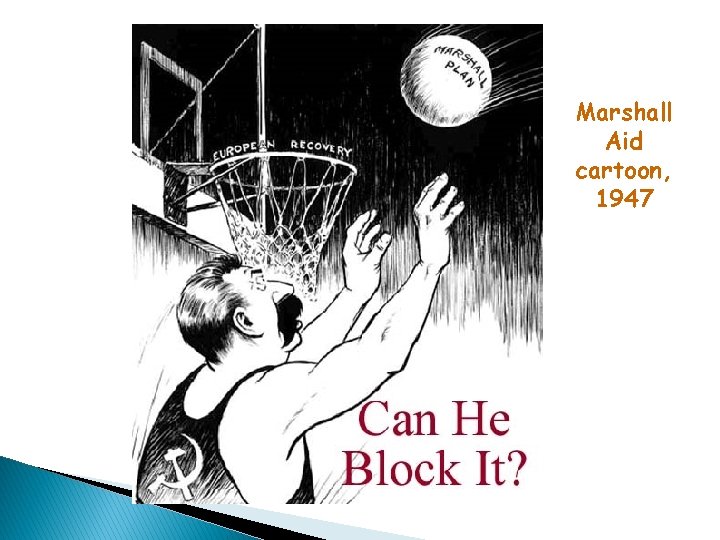
Marshall Aid cartoon, 1947
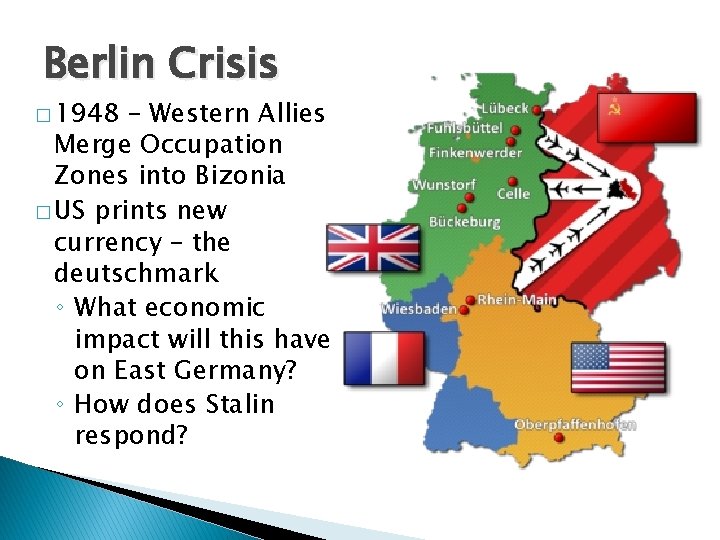
Berlin Crisis � 1948 – Western Allies Merge Occupation Zones into Bizonia � US prints new currency – the deutschmark ◦ What economic impact will this have on East Germany? ◦ How does Stalin respond?
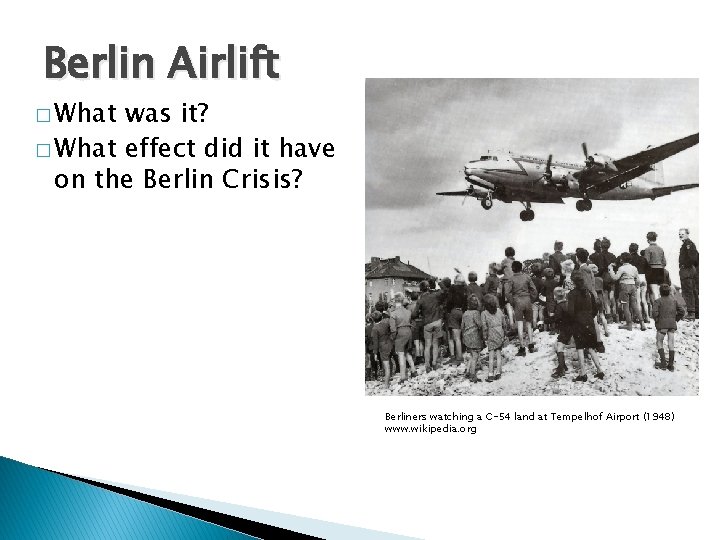
Berlin Airlift � What was it? � What effect did it have on the Berlin Crisis? Berliners watching a C-54 land at Tempelhof Airport (1948) www. wikipedia. org
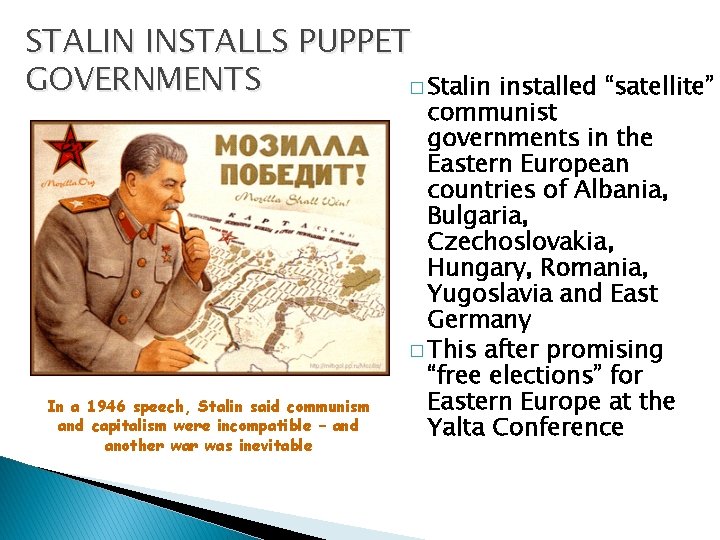
STALIN INSTALLS PUPPET GOVERNMENTS � Stalin installed “satellite” In a 1946 speech, Stalin said communism and capitalism were incompatible – and another was inevitable communist governments in the Eastern European countries of Albania, Bulgaria, Czechoslovakia, Hungary, Romania, Yugoslavia and East Germany � This after promising “free elections” for Eastern Europe at the Yalta Conference
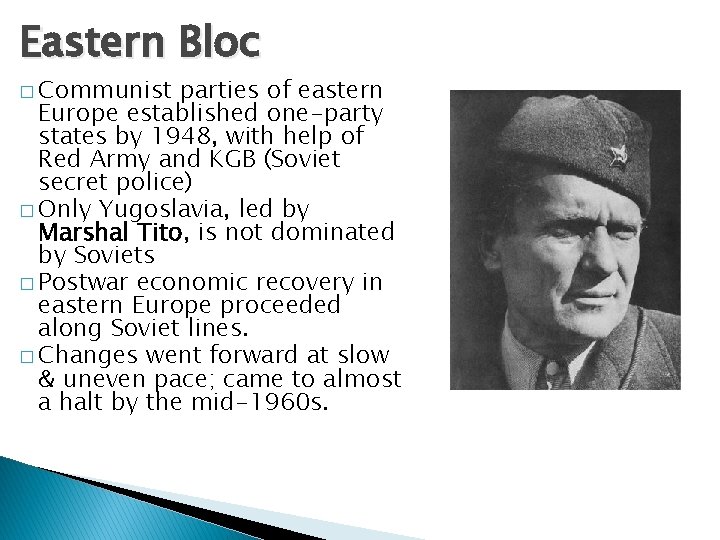
Eastern Bloc � Communist parties of eastern Europe established one-party states by 1948, with help of Red Army and KGB (Soviet secret police) � Only Yugoslavia, led by Marshal Tito, is not dominated by Soviets � Postwar economic recovery in eastern Europe proceeded along Soviet lines. � Changes went forward at slow & uneven pace; came to almost a halt by the mid-1960 s.
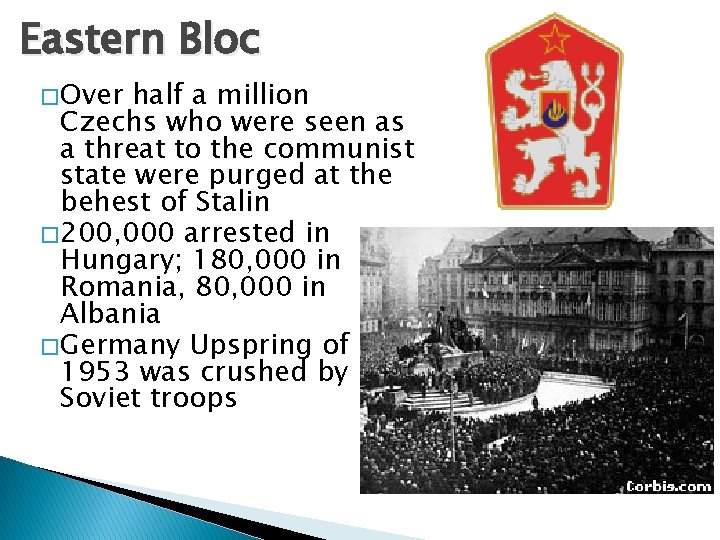
Eastern Bloc � Over half a million Czechs who were seen as a threat to the communist state were purged at the behest of Stalin � 200, 000 arrested in Hungary; 180, 000 in Romania, 80, 000 in Albania � Germany Upspring of 1953 was crushed by Soviet troops
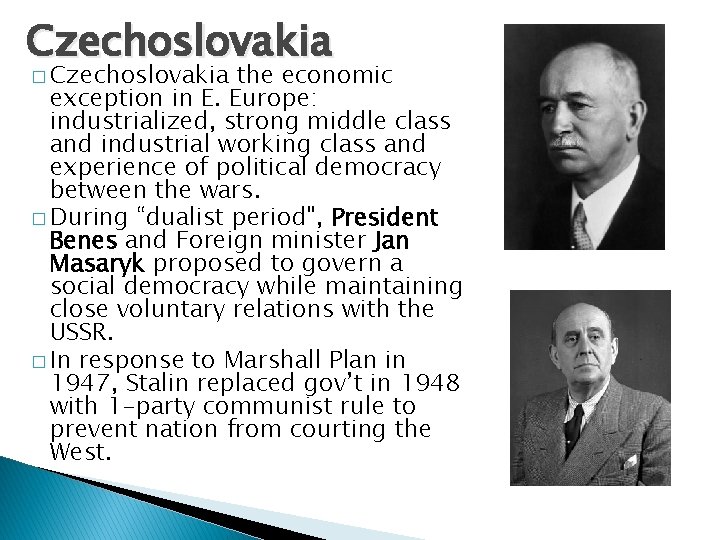
Czechoslovakia � Czechoslovakia the economic exception in E. Europe: industrialized, strong middle class and industrial working class and experience of political democracy between the wars. � During “dualist period", President Benes and Foreign minister Jan Masaryk proposed to govern a social democracy while maintaining close voluntary relations with the USSR. � In response to Marshall Plan in 1947, Stalin replaced gov’t in 1948 with 1 -party communist rule to prevent nation from courting the West.
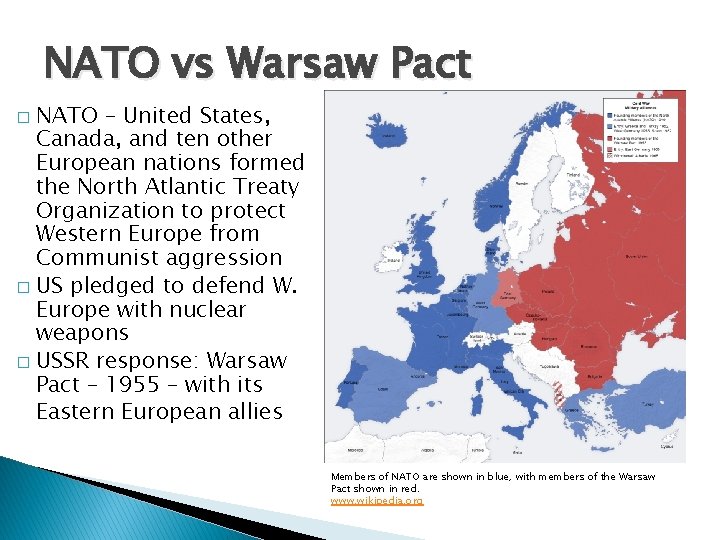
NATO vs Warsaw Pact NATO – United States, Canada, and ten other European nations formed the North Atlantic Treaty Organization to protect Western Europe from Communist aggression � US pledged to defend W. Europe with nuclear weapons � USSR response: Warsaw Pact – 1955 – with its Eastern European allies � Members of NATO are shown in blue, with members of the Warsaw Pact shown in red. www. wikipedia. org
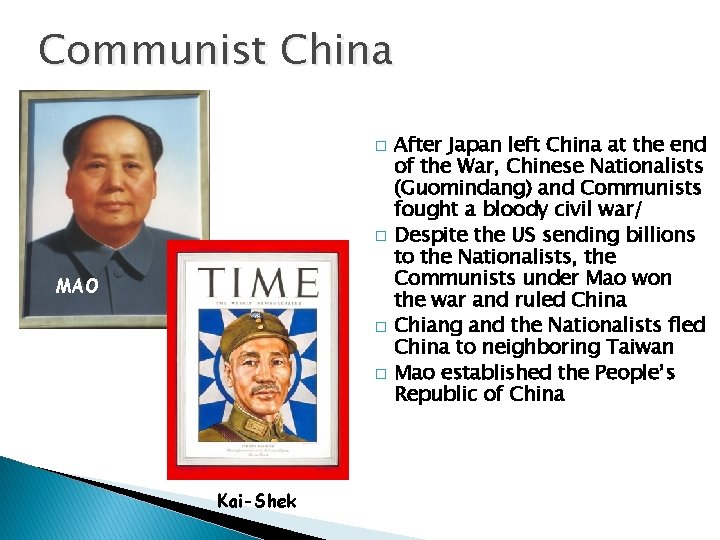
Communist China � � MAO � � Kai-Shek After Japan left China at the end of the War, Chinese Nationalists (Guomindang) and Communists fought a bloody civil war/ Despite the US sending billions to the Nationalists, the Communists under Mao won the war and ruled China Chiang and the Nationalists fled China to neighboring Taiwan Mao established the People’s Republic of China
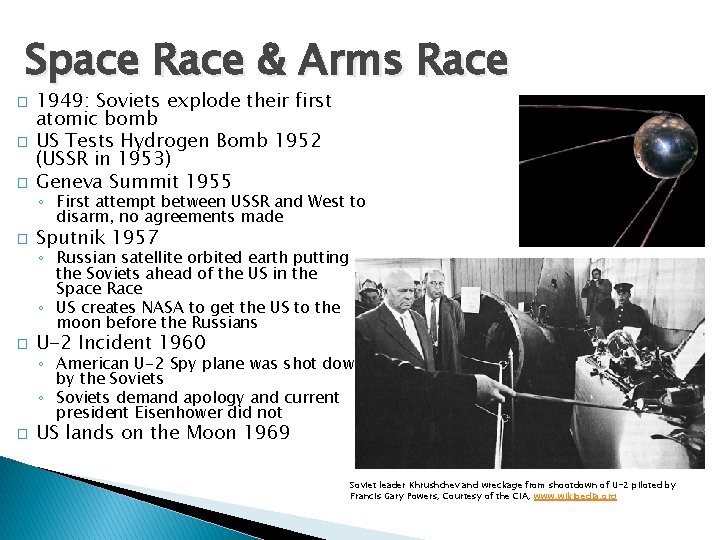
Space Race & Arms Race � � � 1949: Soviets explode their first atomic bomb US Tests Hydrogen Bomb 1952 (USSR in 1953) Geneva Summit 1955 ◦ First attempt between USSR and West to disarm, no agreements made � Sputnik 1957 ◦ Russian satellite orbited earth putting the Soviets ahead of the US in the Space Race ◦ US creates NASA to get the US to the moon before the Russians � U-2 Incident 1960 ◦ American U-2 Spy plane was shot down by the Soviets ◦ Soviets demand apology and current president Eisenhower did not � US lands on the Moon 1969 Soviet leader Khrushchev and wreckage from shootdown of U-2 piloted by Francis Gary Powers, Courtesy of the CIA, www. wikipedia. org
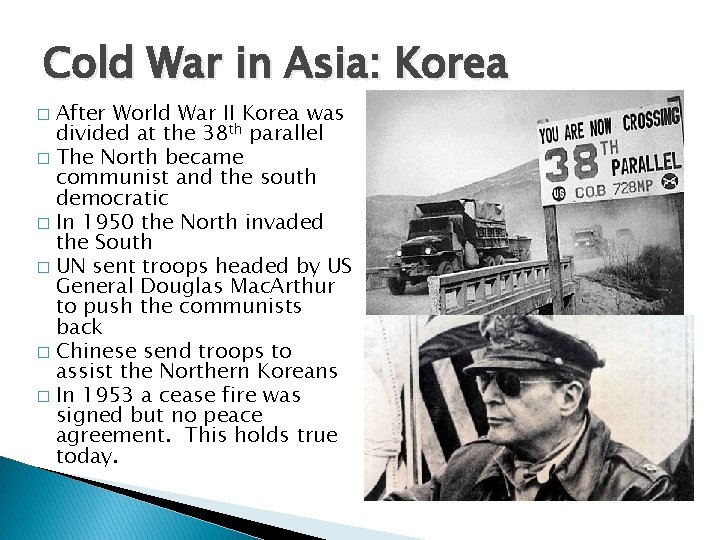
Cold War in Asia: Korea After World War II Korea was divided at the 38 th parallel � The North became communist and the south democratic � In 1950 the North invaded the South � UN sent troops headed by US General Douglas Mac. Arthur to push the communists back � Chinese send troops to assist the Northern Koreans � In 1953 a cease fire was signed but no peace agreement. This holds true today. �
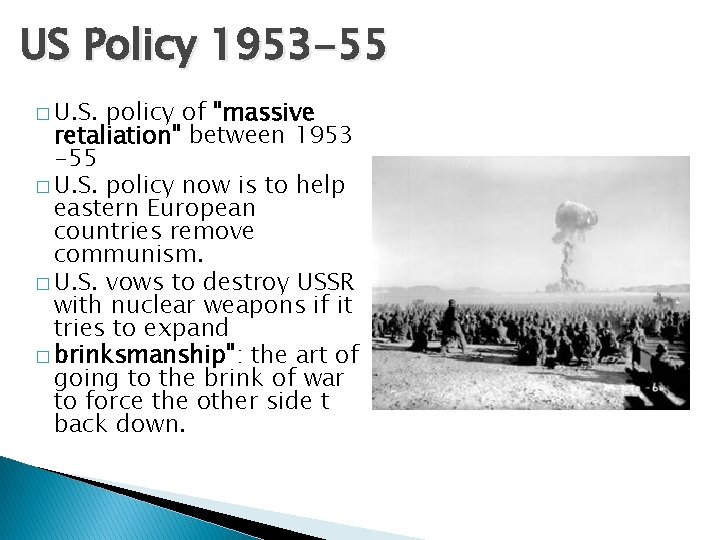
US Policy 1953 -55 � U. S. policy of "massive retaliation" between 1953 -55 � U. S. policy now is to help eastern European countries remove communism. � U. S. vows to destroy USSR with nuclear weapons if it tries to expand � brinksmanship": the art of going to the brink of war to force the other side t back down.
THE UNITED NATIONS � � � The United Nations today has 193 member countries Hopes for world peace were high at the end of the war Unfortunately, the U. N. soon became a forum for competing superpowers to spread their influence over others Why was the UN ultimately ineffective during the Cold War?
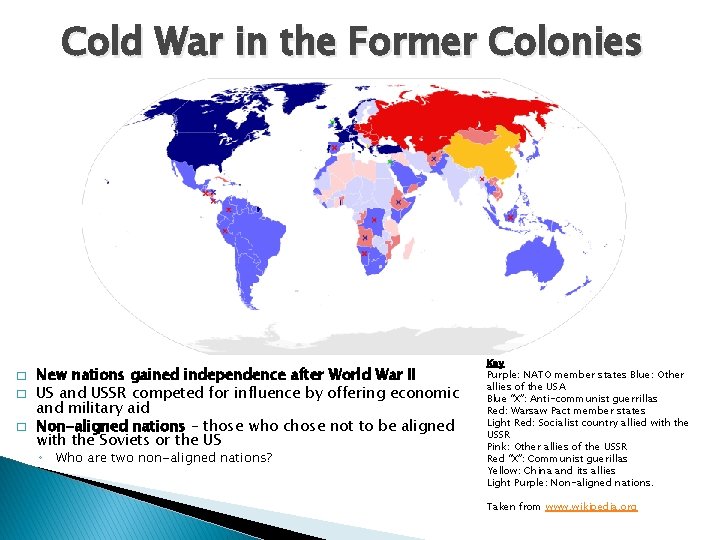
Cold War in the Former Colonies � � � New nations gained independence after World War II US and USSR competed for influence by offering economic and military aid Non-aligned nations – those who chose not to be aligned with the Soviets or the US ◦ Who are two non-aligned nations? Key Purple: NATO member states Blue: Other allies of the USA Blue “X”: Anti-communist guerrillas Red: Warsaw Pact member states Light Red: Socialist country allied with the USSR Pink: Other allies of the USSR Red “X”: Communist guerillas Yellow: China and its allies Light Purple: Non-aligned nations. Taken from www. wikipedia. org
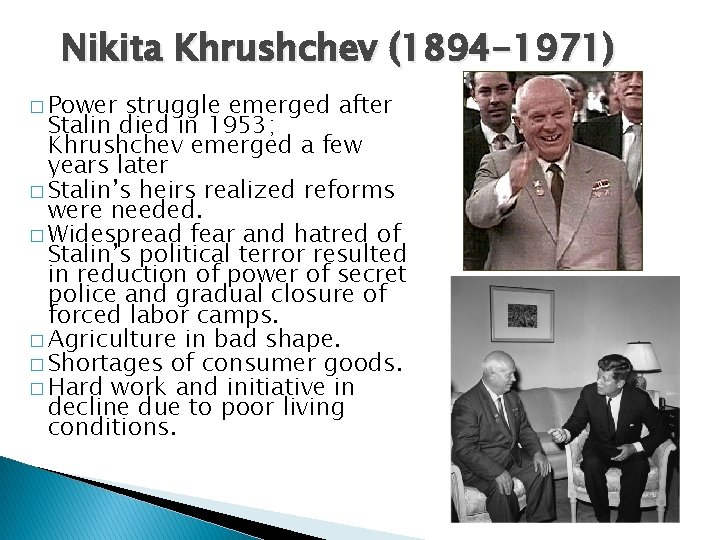
Nikita Khrushchev (1894 -1971) � Power struggle emerged after Stalin died in 1953; Khrushchev emerged a few years later � Stalin’s heirs realized reforms were needed. � Widespread fear and hatred of Stalin’s political terror resulted in reduction of power of secret police and gradual closure of forced labor camps. � Agriculture in bad shape. � Shortages of consumer goods. � Hard work and initiative in decline due to poor living conditions.
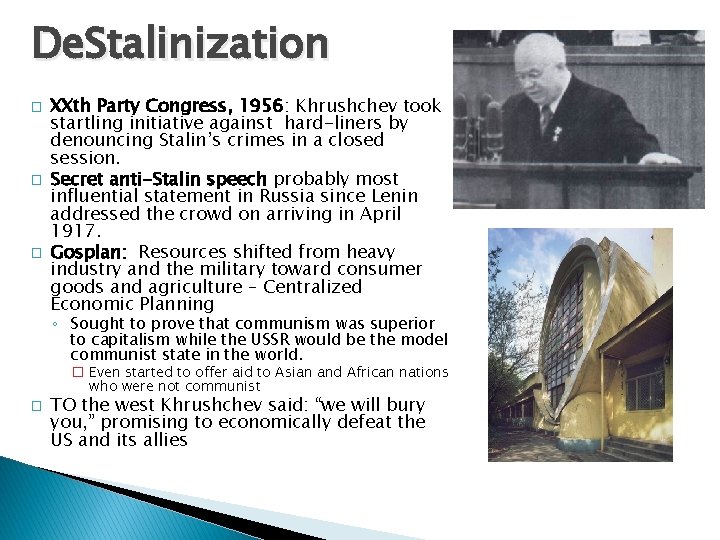
De. Stalinization � � � XXth Party Congress, 1956: Khrushchev took startling initiative against hard-liners by denouncing Stalin’s crimes in a closed session. Secret anti-Stalin speech probably most influential statement in Russia since Lenin addressed the crowd on arriving in April 1917. Gosplan: Resources shifted from heavy industry and the military toward consumer goods and agriculture – Centralized Economic Planning ◦ Sought to prove that communism was superior to capitalism while the USSR would be the model communist state in the world. � Even started to offer aid to Asian and African nations who were not communist � TO the west Khrushchev said: “we will bury you, ” promising to economically defeat the US and its allies
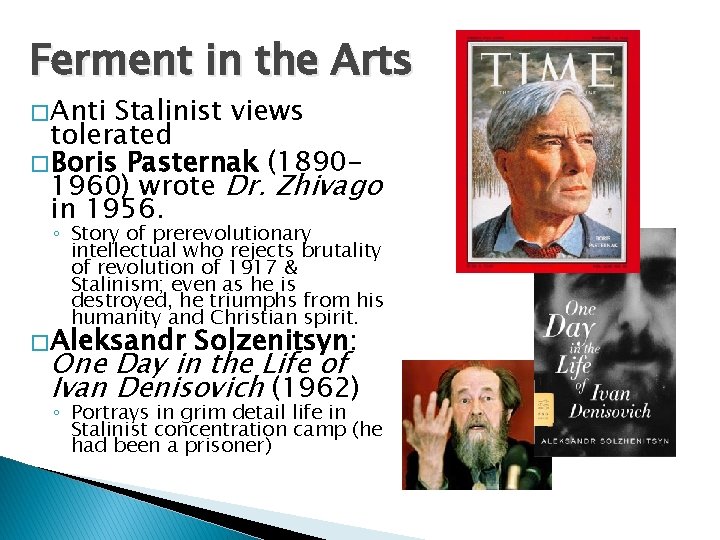
Ferment in the Arts � Anti Stalinist views tolerated � Boris Pasternak (18901960) wrote Dr. Zhivago in 1956. ◦ Story of prerevolutionary intellectual who rejects brutality of revolution of 1917 & Stalinism; even as he is destroyed, he triumphs from his humanity and Christian spirit. � Aleksandr Solzenitsyn: One Day in the Life of Ivan Denisovich (1962) ◦ Portrays in grim detail life in Stalinist concentration camp (he had been a prisoner)
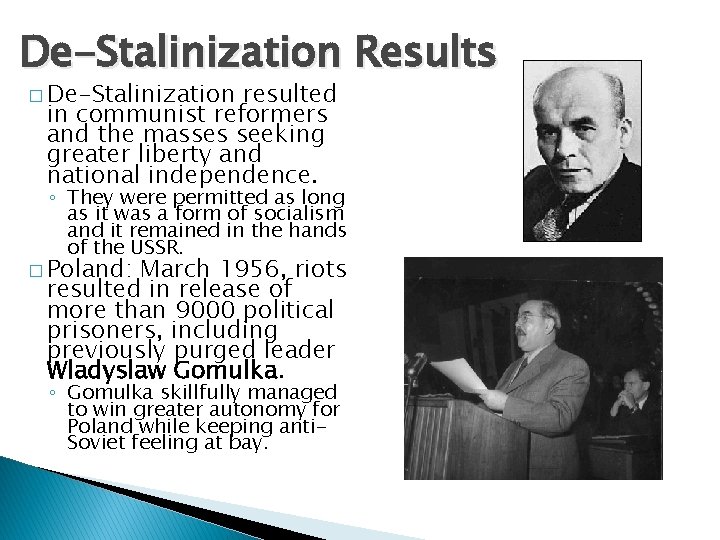
De-Stalinization Results � De-Stalinization resulted in communist reformers and the masses seeking greater liberty and national independence. ◦ They were permitted as long as it was a form of socialism and it remained in the hands of the USSR. � Poland: March 1956, riots resulted in release of more than 9000 political prisoners, including previously purged leader Wladyslaw Gomulka. ◦ Gomulka skillfully managed to win greater autonomy for Poland while keeping anti. Soviet feeling at bay.
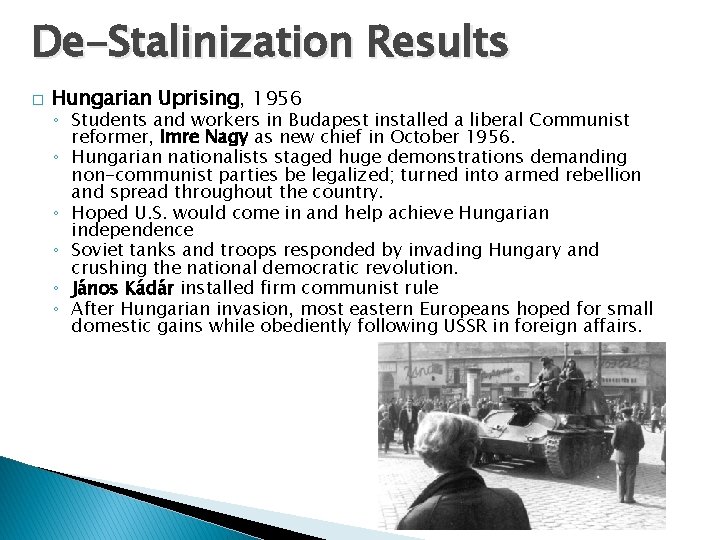
De-Stalinization Results � Hungarian Uprising, 1956 ◦ Students and workers in Budapest installed a liberal Communist reformer, Imre Nagy as new chief in October 1956. ◦ Hungarian nationalists staged huge demonstrations demanding non-communist parties be legalized; turned into armed rebellion and spread throughout the country. ◦ Hoped U. S. would come in and help achieve Hungarian independence ◦ Soviet tanks and troops responded by invading Hungary and crushing the national democratic revolution. ◦ János Kádár installed firm communist rule ◦ After Hungarian invasion, most eastern Europeans hoped for small domestic gains while obediently following USSR in foreign affairs.
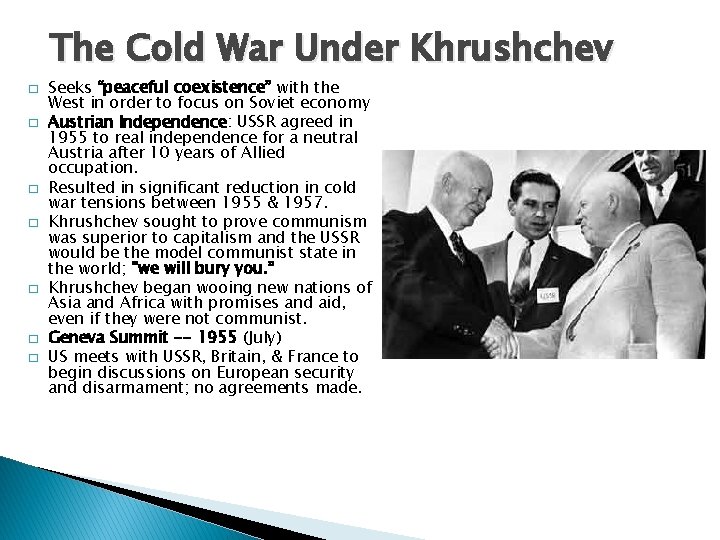
The Cold War Under Khrushchev � � � � Seeks “peaceful coexistence” with the West in order to focus on Soviet economy Austrian Independence: USSR agreed in 1955 to real independence for a neutral Austria after 10 years of Allied occupation. Resulted in significant reduction in cold war tensions between 1955 & 1957. Khrushchev sought to prove communism was superior to capitalism and the USSR would be the model communist state in the world; "we will bury you. ” Khrushchev began wooing new nations of Asia and Africa with promises and aid, even if they were not communist. Geneva Summit -- 1955 (July) US meets with USSR, Britain, & France to begin discussions on European security and disarmament; no agreements made.
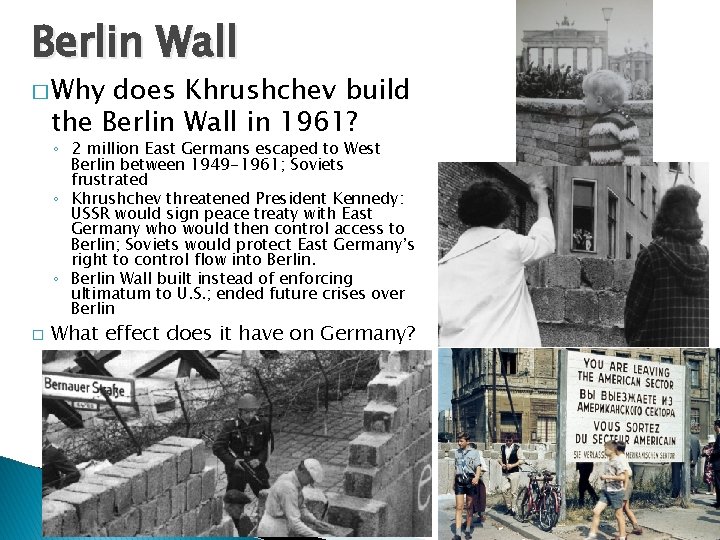
Berlin Wall � Why does Khrushchev build the Berlin Wall in 1961? ◦ 2 million East Germans escaped to West Berlin between 1949 -1961; Soviets frustrated ◦ Khrushchev threatened President Kennedy: USSR would sign peace treaty with East Germany who would then control access to Berlin; Soviets would protect East Germany’s right to control flow into Berlin. ◦ Berlin Wall built instead of enforcing ultimatum to U. S. ; ended future crises over Berlin � What effect does it have on Germany?
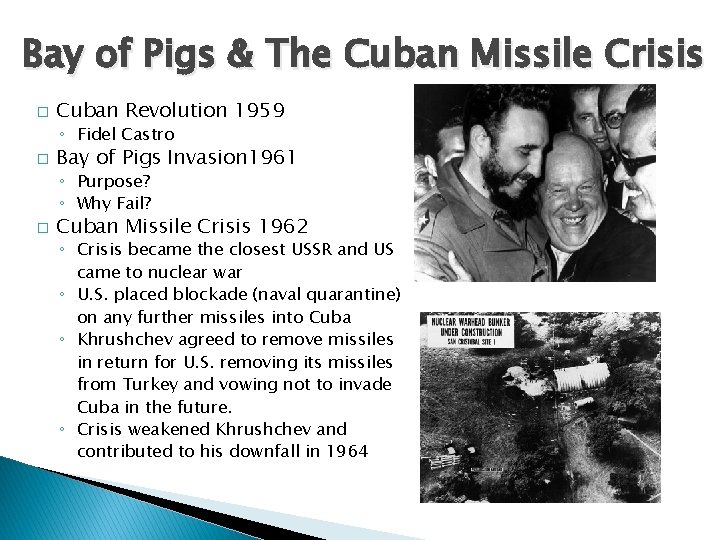
Bay of Pigs & The Cuban Missile Crisis � Cuban Revolution 1959 ◦ Fidel Castro � Bay of Pigs Invasion 1961 ◦ Purpose? ◦ Why Fail? � Cuban Missile Crisis 1962 ◦ Crisis became the closest USSR and US came to nuclear war ◦ U. S. placed blockade (naval quarantine) on any further missiles into Cuba ◦ Khrushchev agreed to remove missiles in return for U. S. removing its missiles from Turkey and vowing not to invade Cuba in the future. ◦ Crisis weakened Khrushchev and contributed to his downfall in 1964
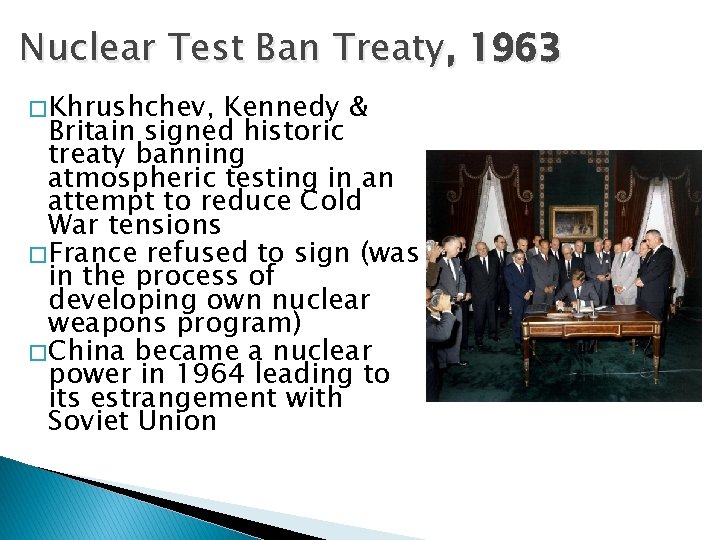
Nuclear Test Ban Treaty, 1963 � Khrushchev, Kennedy & Britain signed historic treaty banning atmospheric testing in an attempt to reduce Cold War tensions � France refused to sign (was in the process of developing own nuclear weapons program) � China became a nuclear power in 1964 leading to its estrangement with Soviet Union
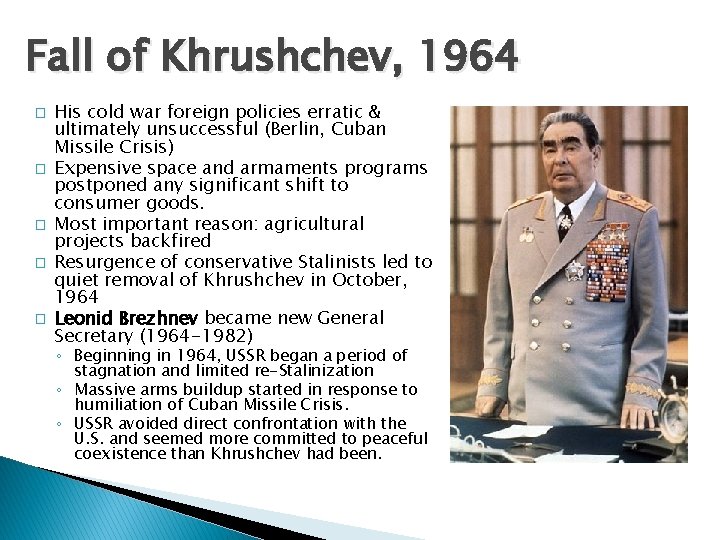
Fall of Khrushchev, 1964 � � � His cold war foreign policies erratic & ultimately unsuccessful (Berlin, Cuban Missile Crisis) Expensive space and armaments programs postponed any significant shift to consumer goods. Most important reason: agricultural projects backfired Resurgence of conservative Stalinists led to quiet removal of Khrushchev in October, 1964 Leonid Brezhnev became new General Secretary (1964 -1982) ◦ Beginning in 1964, USSR began a period of stagnation and limited re-Stalinization ◦ Massive arms buildup started in response to humiliation of Cuban Missile Crisis. ◦ USSR avoided direct confrontation with the U. S. and seemed more committed to peaceful coexistence than Khrushchev had been.
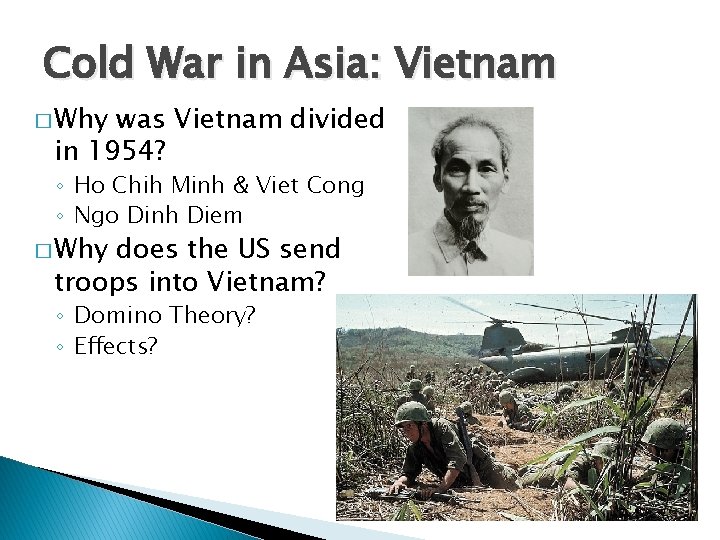
Cold War in Asia: Vietnam � Why was Vietnam divided in 1954? ◦ Ho Chih Minh & Viet Cong ◦ Ngo Dinh Diem � Why does the US send troops into Vietnam? ◦ Domino Theory? ◦ Effects?
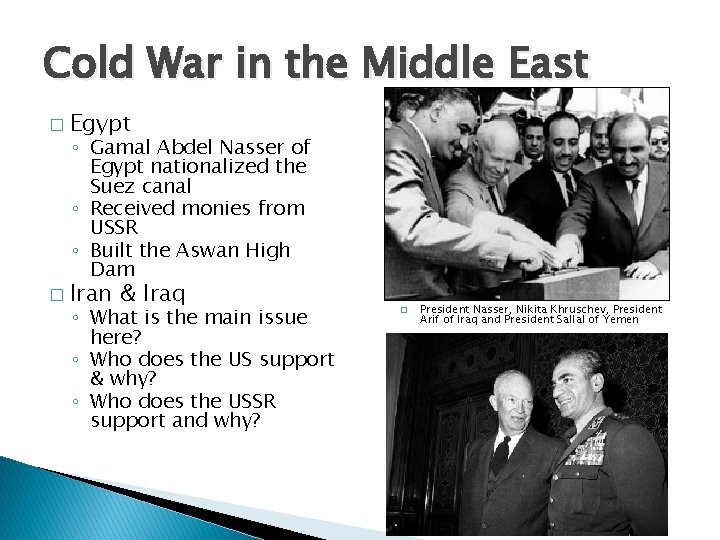
Cold War in the Middle East � Egypt ◦ Gamal Abdel Nasser of Egypt nationalized the Suez canal ◦ Received monies from USSR ◦ Built the Aswan High Dam � Iran & Iraq ◦ What is the main issue here? ◦ Who does the US support & why? ◦ Who does the USSR support and why? � President Nasser, Nikita Khruschev, President Arif of Iraq and President Sallal of Yemen
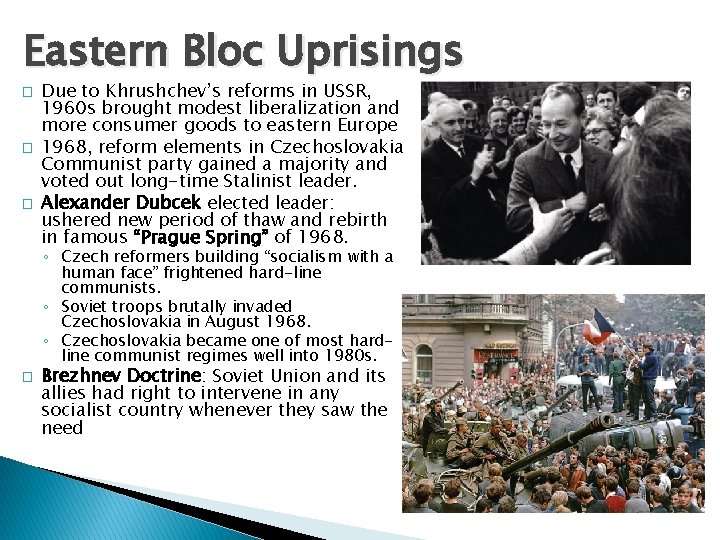
Eastern Bloc Uprisings � � � Due to Khrushchev’s reforms in USSR, 1960 s brought modest liberalization and more consumer goods to eastern Europe 1968, reform elements in Czechoslovakia Communist party gained a majority and voted out long-time Stalinist leader. Alexander Dubcek elected leader: ushered new period of thaw and rebirth in famous “Prague Spring” of 1968. ◦ Czech reformers building “socialism with a human face” frightened hard-line communists. ◦ Soviet troops brutally invaded Czechoslovakia in August 1968. ◦ Czechoslovakia became one of most hardline communist regimes well into 1980 s. � Brezhnev Doctrine: Soviet Union and its allies had right to intervene in any socialist country whenever they saw the need
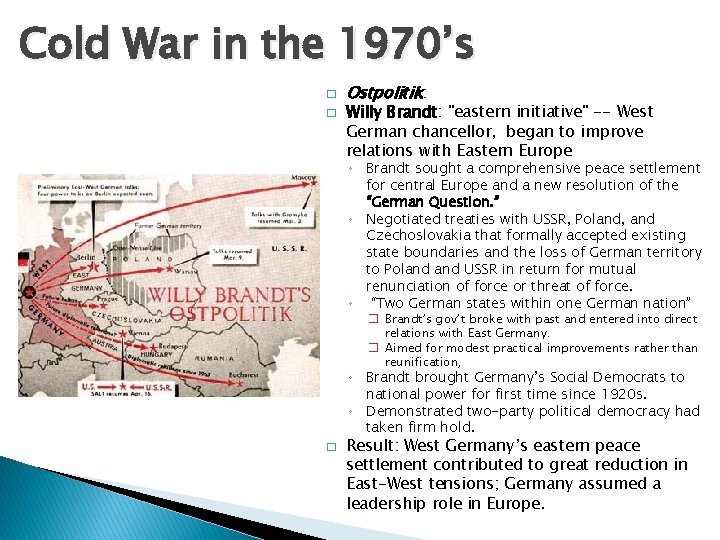
Cold War in the 1970’s � � Ostpolitik: Willy Brandt: "eastern initiative" -- West German chancellor, began to improve relations with Eastern Europe ◦ Brandt sought a comprehensive peace settlement for central Europe and a new resolution of the “German Question. ” ◦ Negotiated treaties with USSR, Poland, and Czechoslovakia that formally accepted existing state boundaries and the loss of German territory to Poland USSR in return for mutual renunciation of force or threat of force. ◦ “Two German states within one German nation” � Brandt’s gov’t broke with past and entered into direct relations with East Germany. � Aimed for modest practical improvements rather than reunification, ◦ Brandt brought Germany’s Social Democrats to national power for first time since 1920 s. ◦ Demonstrated two-party political democracy had taken firm hold. � Result: West Germany’s eastern peace settlement contributed to great reduction in East-West tensions; Germany assumed a leadership role in Europe.
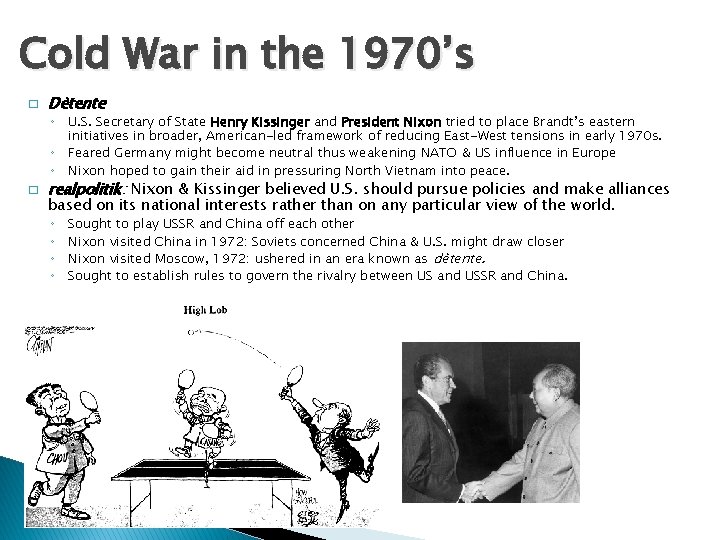
Cold War in the 1970’s � Dètente ◦ U. S. Secretary of State Henry Kissinger and President Nixon tried to place Brandt’s eastern initiatives in broader, American-led framework of reducing East-West tensions in early 1970 s. ◦ Feared Germany might become neutral thus weakening NATO & US influence in Europe ◦ Nixon hoped to gain their aid in pressuring North Vietnam into peace. � realpolitik: Nixon & Kissinger believed U. S. should pursue policies and make alliances based on its national interests rather than on any particular view of the world. ◦ ◦ Sought to play USSR and China off each other Nixon visited China in 1972: Soviets concerned China & U. S. might draw closer Nixon visited Moscow, 1972: ushered in an era known as dètente. Sought to establish rules to govern the rivalry between US and USSR and China.
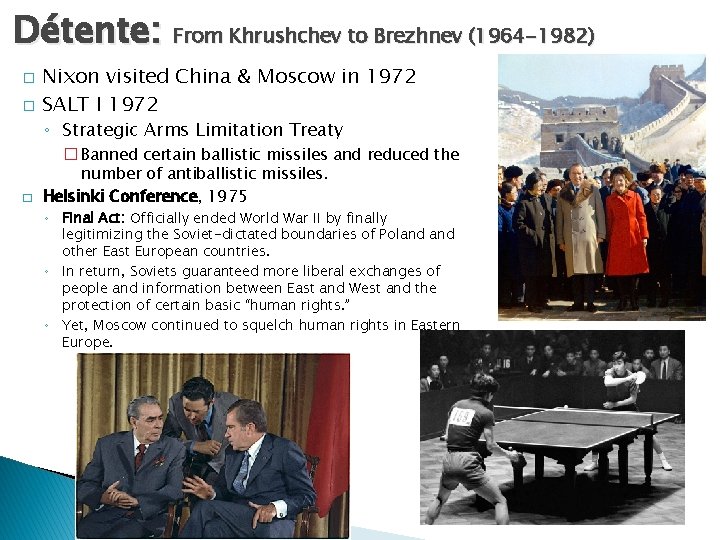
Détente: From Khrushchev to Brezhnev (1964 -1982) � � Nixon visited China & Moscow in 1972 SALT I 1972 ◦ Strategic Arms Limitation Treaty � � Banned certain ballistic missiles and reduced the number of antiballistic missiles. Helsinki Conference, 1975 ◦ Final Act: Officially ended World War II by finally legitimizing the Soviet-dictated boundaries of Poland other East European countries. ◦ In return, Soviets guaranteed more liberal exchanges of people and information between East and West and the protection of certain basic “human rights. ” ◦ Yet, Moscow continued to squelch human rights in Eastern Europe.
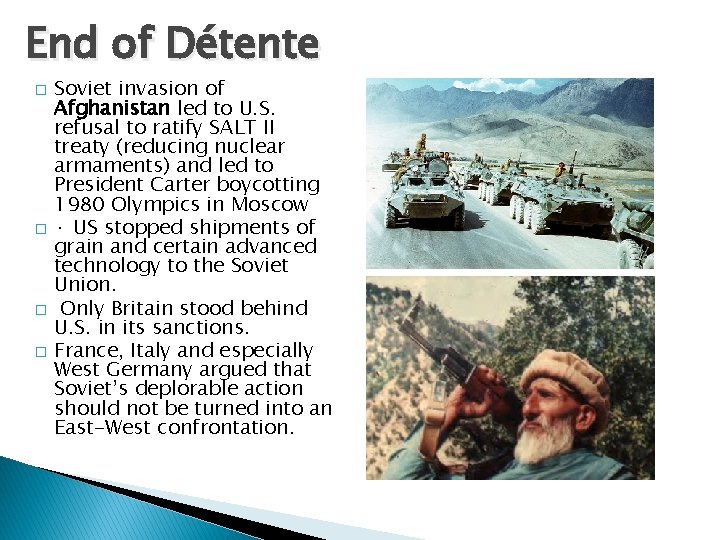
End of Détente � � Soviet invasion of Afghanistan led to U. S. refusal to ratify SALT II treaty (reducing nuclear armaments) and led to President Carter boycotting 1980 Olympics in Moscow · US stopped shipments of grain and certain advanced technology to the Soviet Union. Only Britain stood behind U. S. in its sanctions. France, Italy and especially West Germany argued that Soviet’s deplorable action should not be turned into an East-West confrontation.
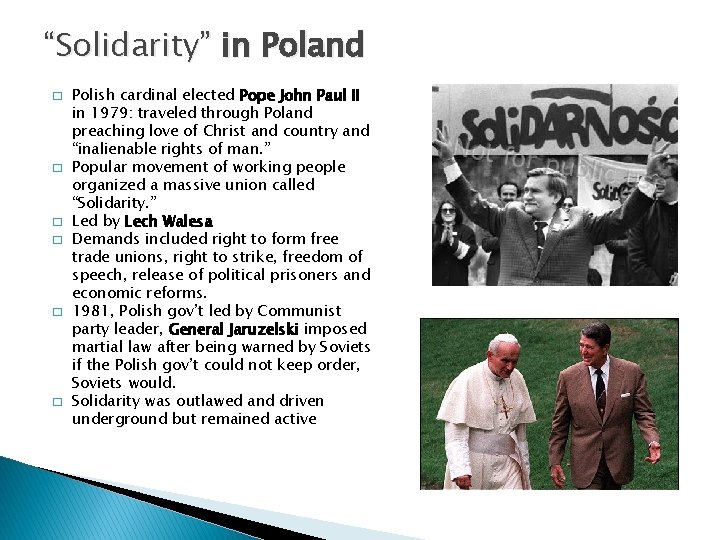
“Solidarity” in Poland � � � Polish cardinal elected Pope John Paul II in 1979: traveled through Poland preaching love of Christ and country and “inalienable rights of man. ” Popular movement of working people organized a massive union called “Solidarity. ” Led by Lech Walesa Demands included right to form free trade unions, right to strike, freedom of speech, release of political prisoners and economic reforms. 1981, Polish gov’t led by Communist party leader, General Jaruzelski imposed martial law after being warned by Soviets if the Polish gov’t could not keep order, Soviets would. Solidarity was outlawed and driven underground but remained active
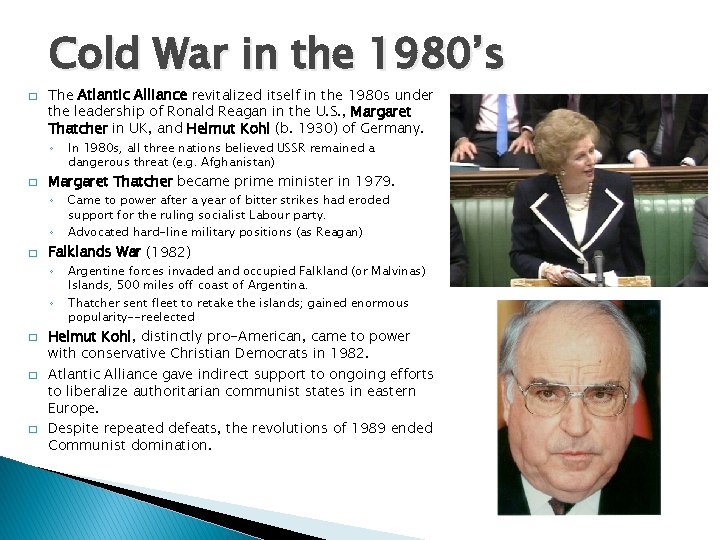
Cold War in the 1980’s � The Atlantic Alliance revitalized itself in the 1980 s under the leadership of Ronald Reagan in the U. S. , Margaret Thatcher in UK, and Helmut Kohl (b. 1930) of Germany. ◦ � Margaret Thatcher became prime minister in 1979. ◦ ◦ � � Came to power after a year of bitter strikes had eroded support for the ruling socialist Labour party. Advocated hard-line military positions (as Reagan) Falklands War (1982) ◦ � In 1980 s, all three nations believed USSR remained a dangerous threat (e. g. Afghanistan) Argentine forces invaded and occupied Falkland (or Malvinas) Islands, 500 miles off coast of Argentina. Thatcher sent fleet to retake the islands; gained enormous popularity--reelected Helmut Kohl, distinctly pro-American, came to power with conservative Christian Democrats in 1982. Atlantic Alliance gave indirect support to ongoing efforts to liberalize authoritarian communist states in eastern Europe. Despite repeated defeats, the revolutions of 1989 ended Communist domination.
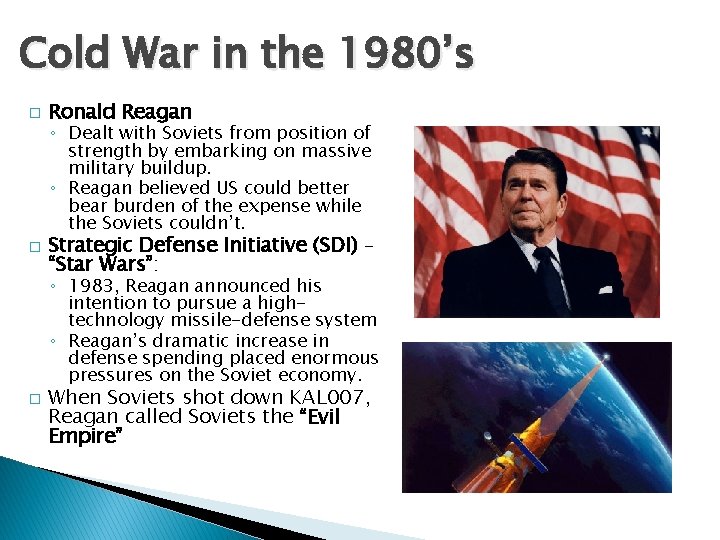
Cold War in the 1980’s � � Ronald Reagan ◦ Dealt with Soviets from position of strength by embarking on massive military buildup. ◦ Reagan believed US could better bear burden of the expense while the Soviets couldn’t. Strategic Defense Initiative (SDI) – “Star Wars”: ◦ 1983, Reagan announced his intention to pursue a hightechnology missile-defense system ◦ Reagan’s dramatic increase in defense spending placed enormous pressures on the Soviet economy. � When Soviets shot down KAL 007, Reagan called Soviets the “Evil Empire”
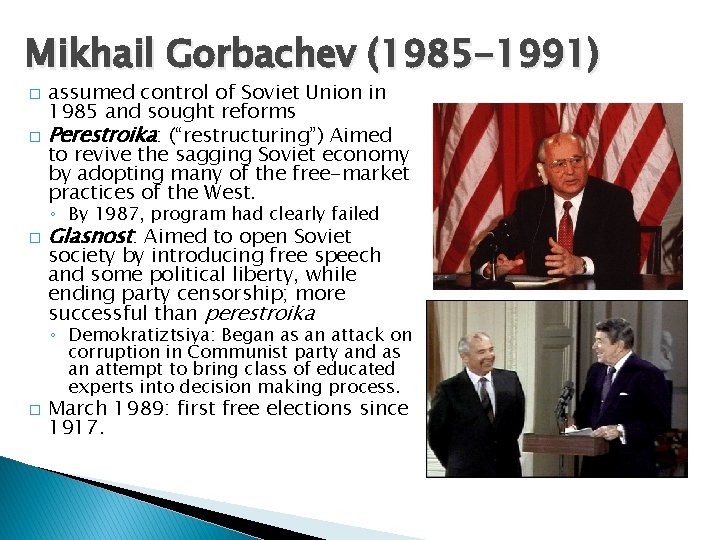
Mikhail Gorbachev (1985 -1991) � � assumed control of Soviet Union in 1985 and sought reforms Perestroika: (“restructuring”) Aimed to revive the sagging Soviet economy by adopting many of the free-market practices of the West. ◦ By 1987, program had clearly failed � Glasnost: Aimed to open Soviet society by introducing free speech and some political liberty, while ending party censorship; more successful than perestroika ◦ Demokratiztsiya: Began as an attack on corruption in Communist party and as an attempt to bring class of educated experts into decision making process. � March 1989: first free elections since 1917.
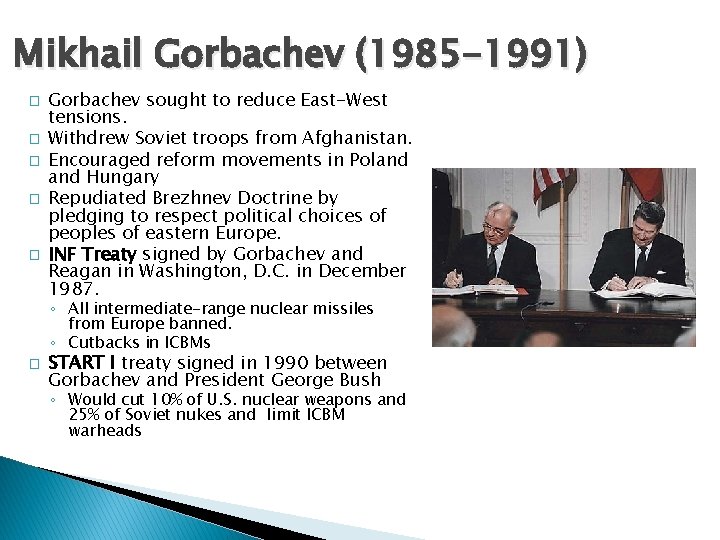
Mikhail Gorbachev (1985 -1991) � � � Gorbachev sought to reduce East-West tensions. Withdrew Soviet troops from Afghanistan. Encouraged reform movements in Poland Hungary Repudiated Brezhnev Doctrine by pledging to respect political choices of peoples of eastern Europe. INF Treaty signed by Gorbachev and Reagan in Washington, D. C. in December 1987. ◦ All intermediate-range nuclear missiles from Europe banned. ◦ Cutbacks in ICBMs � START I treaty signed in 1990 between Gorbachev and President George Bush ◦ Would cut 10% of U. S. nuclear weapons and 25% of Soviet nukes and limit ICBM warheads
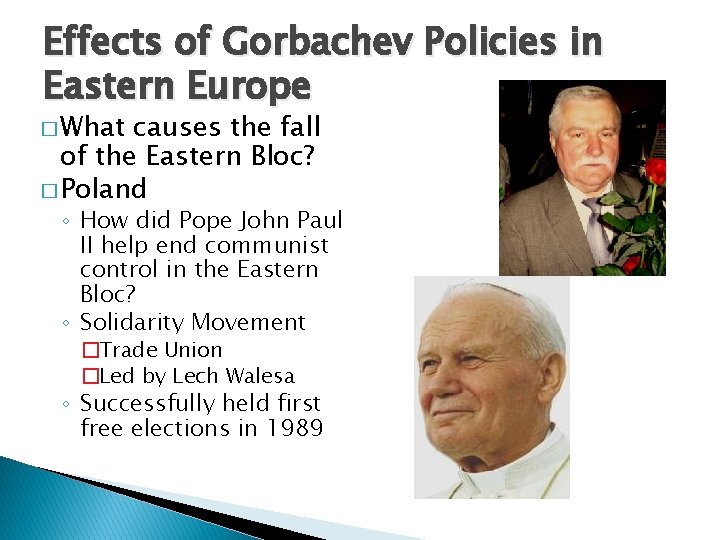
Effects of Gorbachev Policies in Eastern Europe � What causes the fall of the Eastern Bloc? � Poland ◦ How did Pope John Paul II help end communist control in the Eastern Bloc? ◦ Solidarity Movement �Trade Union �Led by Lech Walesa ◦ Successfully held first free elections in 1989
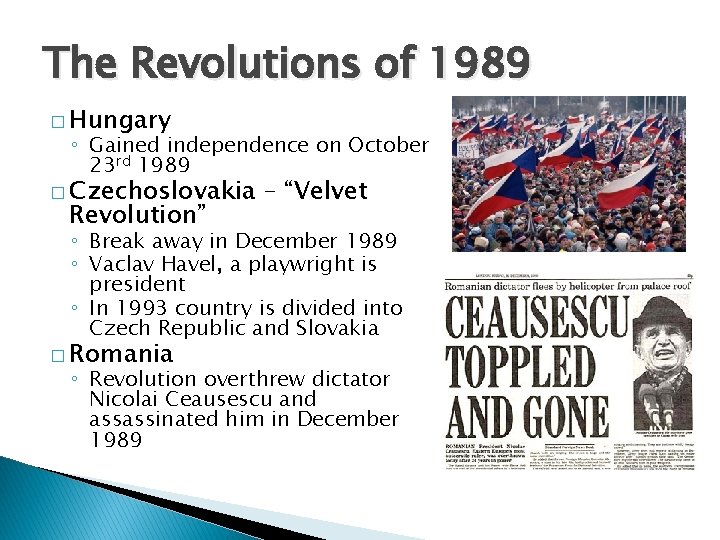
The Revolutions of 1989 � Hungary ◦ Gained independence on October 23 rd 1989 � Czechoslovakia Revolution” – “Velvet ◦ Break away in December 1989 ◦ Vaclav Havel, a playwright is president ◦ In 1993 country is divided into Czech Republic and Slovakia � Romania ◦ Revolution overthrew dictator Nicolai Ceausescu and assassinated him in December 1989
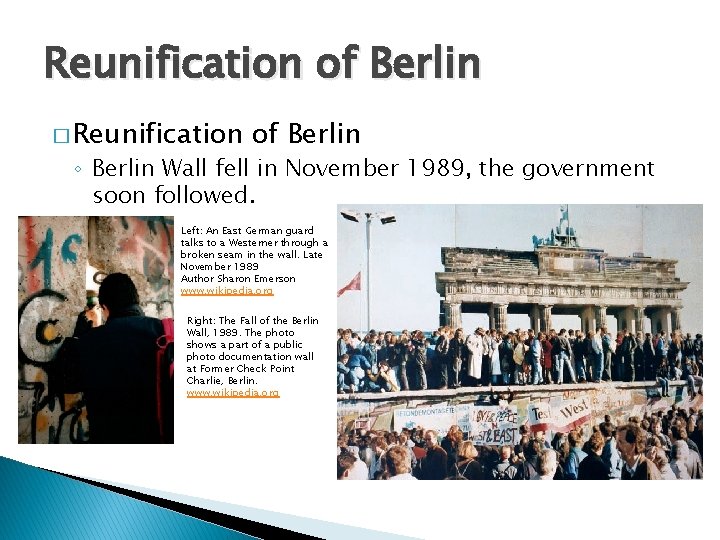
Reunification of Berlin � Reunification of Berlin ◦ Berlin Wall fell in November 1989, the government soon followed. Left: An East German guard talks to a Westerner through a broken seam in the wall. Late November 1989 Author Sharon Emerson www. wikipedia. org Right: The Fall of the Berlin Wall, 1989. The photo shows a part of a public photo documentation wall at Former Check Point Charlie, Berlin. www. wikipedia. org
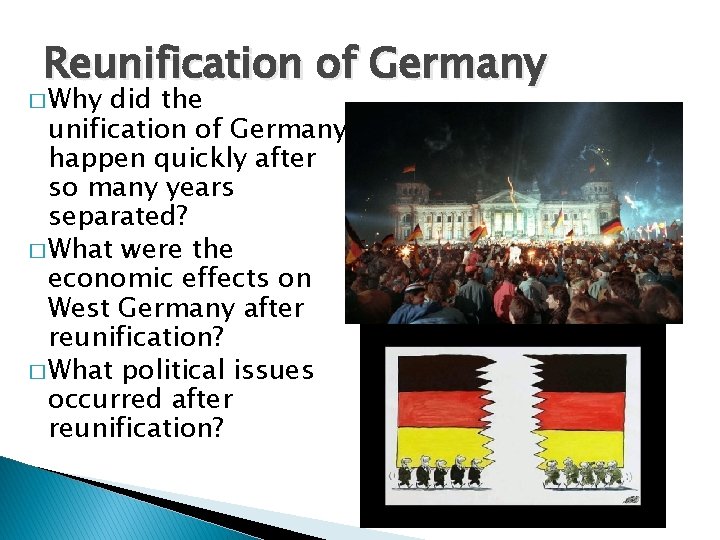
Reunification of Germany � Why did the unification of Germany happen quickly after so many years separated? � What were the economic effects on West Germany after reunification? � What political issues occurred after reunification?
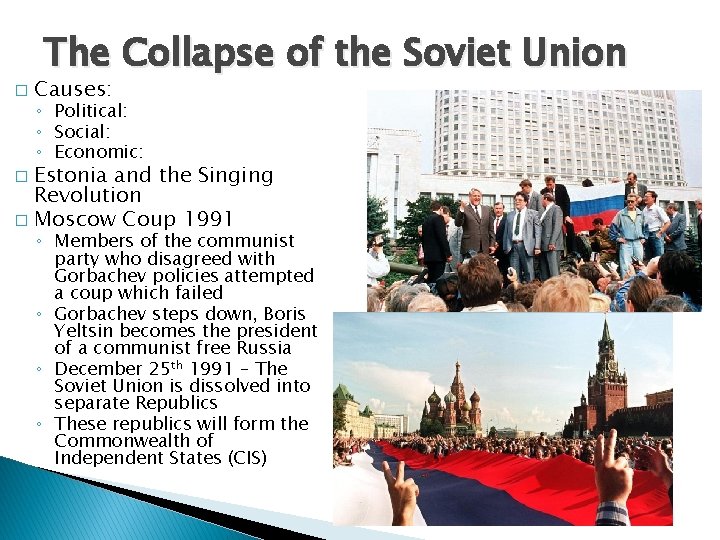
� The Collapse of the Soviet Union Causes: ◦ Political: ◦ Social: ◦ Economic: Estonia and the Singing Revolution � Moscow Coup 1991 � ◦ Members of the communist party who disagreed with Gorbachev policies attempted a coup which failed ◦ Gorbachev steps down, Boris Yeltsin becomes the president of a communist free Russia ◦ December 25 th 1991 – The Soviet Union is dissolved into separate Republics ◦ These republics will form the Commonwealth of Independent States (CIS)
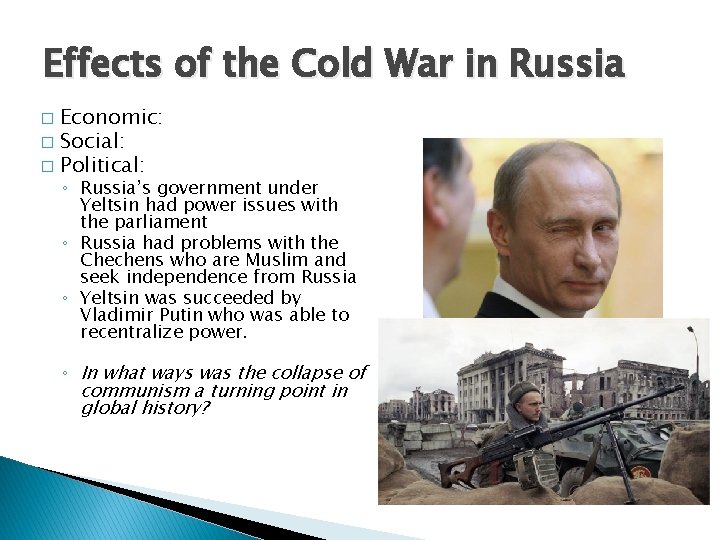
Effects of the Cold War in Russia Economic: � Social: � Political: � ◦ Russia’s government under Yeltsin had power issues with the parliament ◦ Russia had problems with the Chechens who are Muslim and seek independence from Russia ◦ Yeltsin was succeeded by Vladimir Putin who was able to recentralize power. ◦ In what ways was the collapse of communism a turning point in global history?
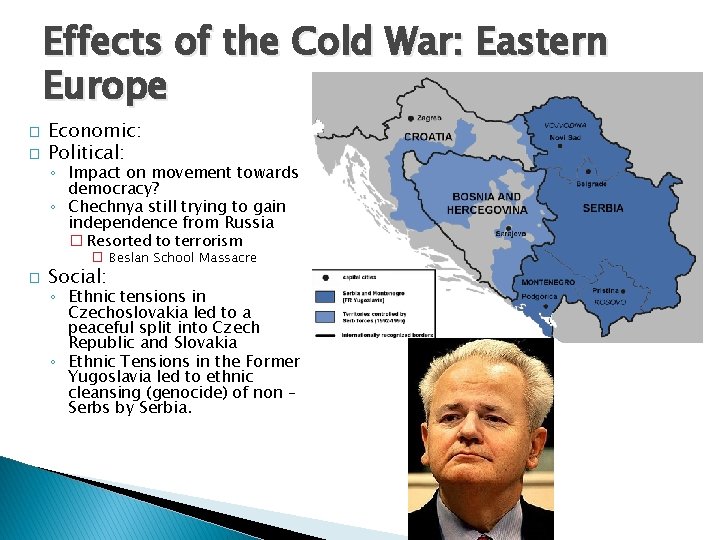
Effects of the Cold War: Eastern Europe � � Economic: Political: ◦ Impact on movement towards democracy? ◦ Chechnya still trying to gain independence from Russia � Resorted to terrorism � Beslan School Massacre � Social: ◦ Ethnic tensions in Czechoslovakia led to a peaceful split into Czech Republic and Slovakia ◦ Ethnic Tensions in the Former Yugoslavia led to ethnic cleansing (genocide) of non – Serbs by Serbia.
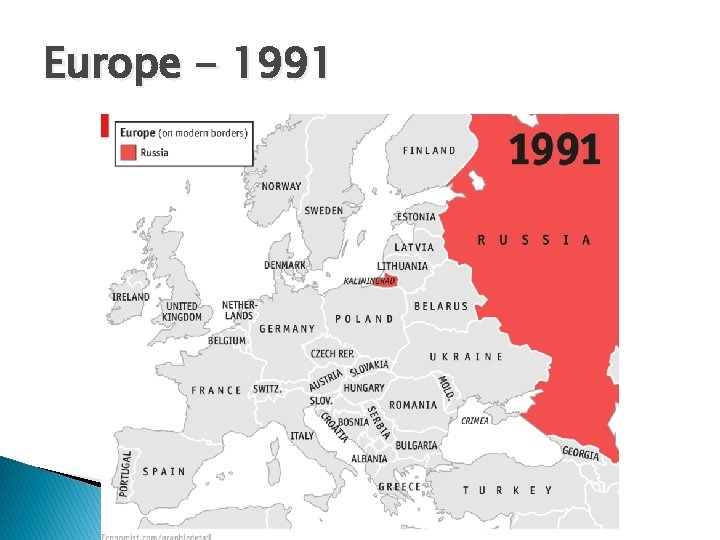
Europe - 1991
- Slides: 53