
The Cold War How Can a War be
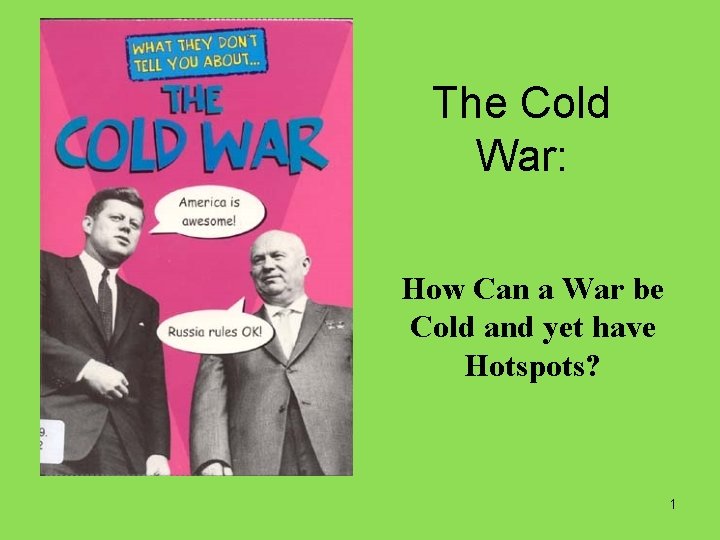
The Cold War: How Can a War be Cold and yet have Hotspots? 1
Day 1: Standards/Objectives SS 5 H 7 The student will discuss the origins and consequences of the Cold War. • Explain how the United States sought to stop the spread of communism through the Berlin airlift, the Korean War, and the North Atlantic Treaty Organization. 2
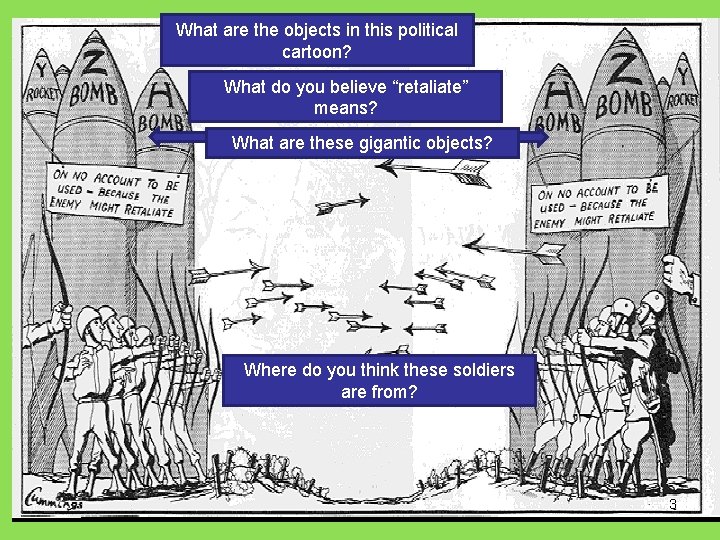
What are the objects in this political cartoon? What do you believe “retaliate” means? What are these gigantic objects? Where do you think these soldiers are from? 3
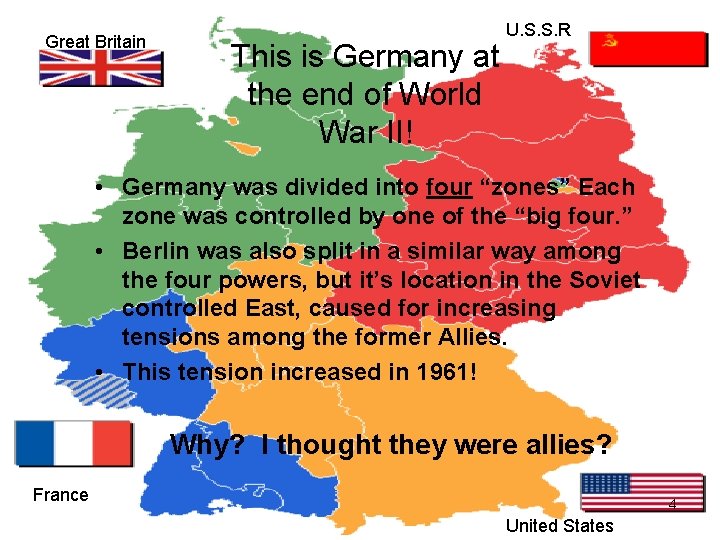
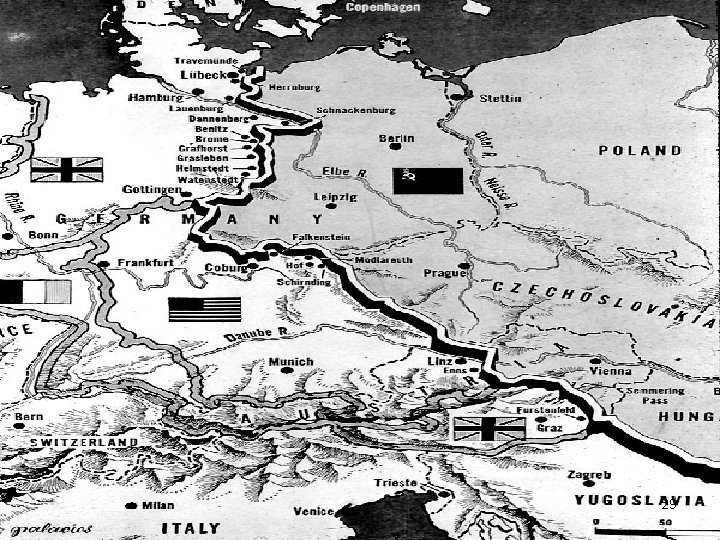
Great Britain This is Germany at the end of World War II! U. S. S. R • Germany was divided into four “zones” Each zone was controlled by one of the “big four. ” • Berlin was also split in a similar way among the four powers, but it’s location in the Soviet controlled East, caused for increasing tensions among the former Allies. • This tension increased in 1961! Why? I thought they were allies? France 4 United States
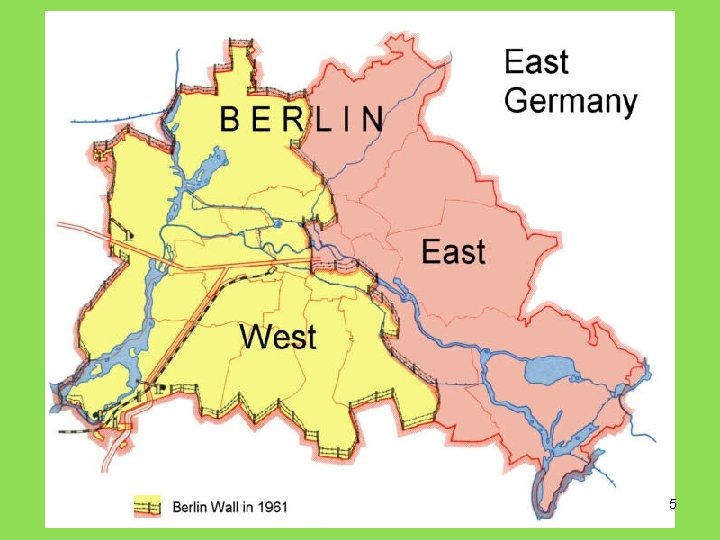
5
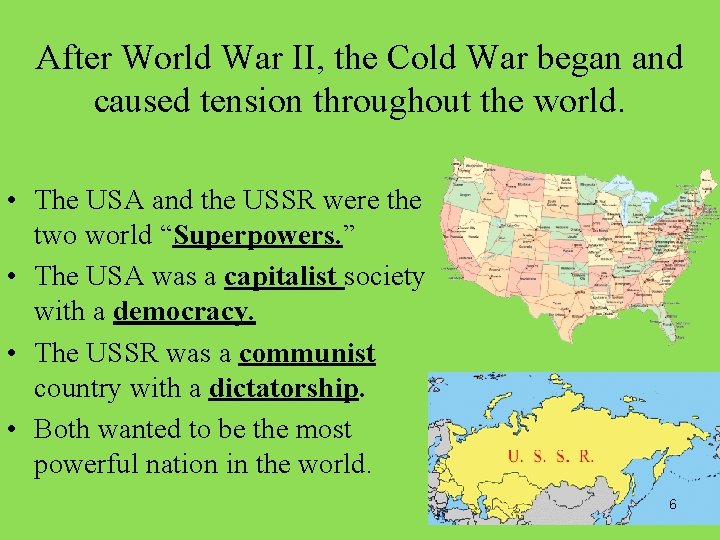
After World War II, the Cold War began and caused tension throughout the world. • The USA and the USSR were the two world “Superpowers. ” • The USA was a capitalist society with a democracy. • The USSR was a communist country with a dictatorship. • Both wanted to be the most powerful nation in the world. 6
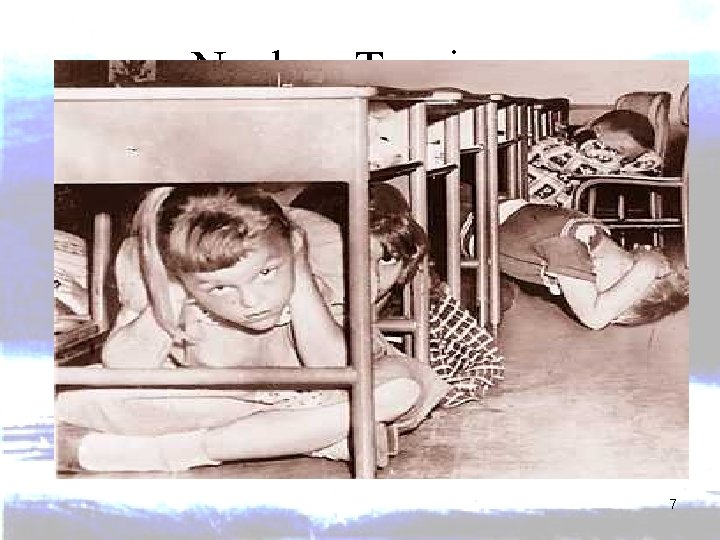
Nuclear Tensions • The USA had exploded the A-bombs on Hiroshima and Nagasaki at the end of World War II. • The USSR was also developing atomic weapons/bombs. Developed own bomb in 1949 • The USA and the USSR were in competition with each other to have the best, most powerful weapons in the world – this was called an Arms Race. 7
After World War II, the world changed! • - Many countries became communistic: Czechoslovakia (1948) Poland (1947) Hungary (1947) China (1949) Cuba (1959) North Korea (1945) 8
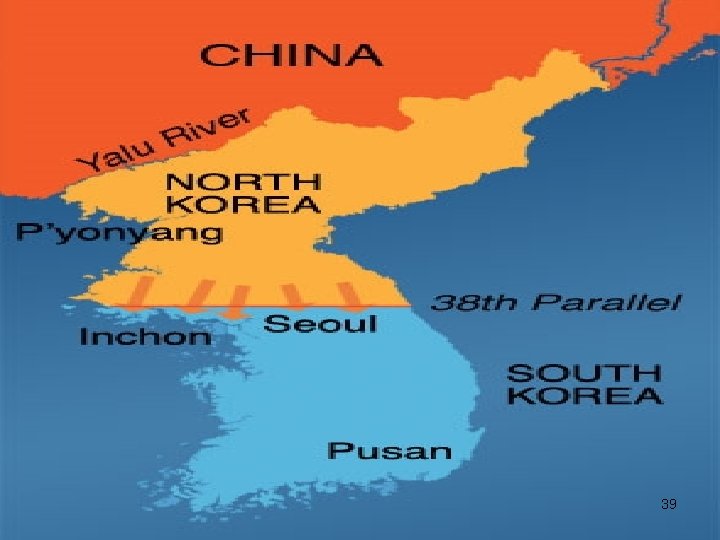
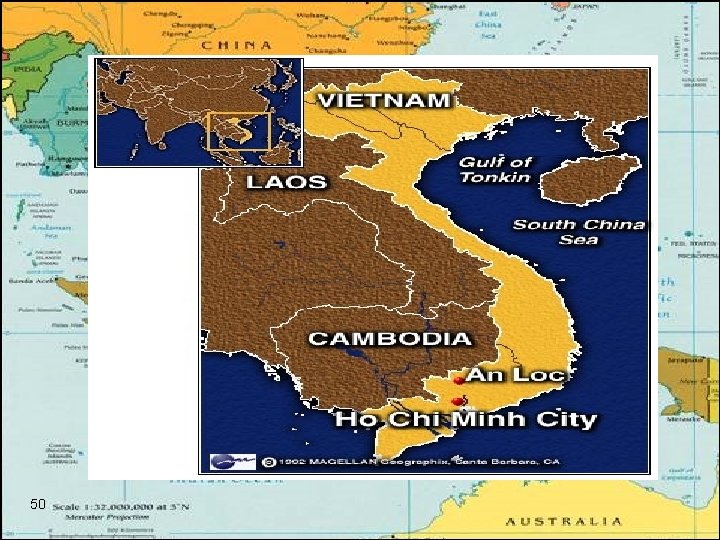
Countries become Communist… • Korea becomes divided into two nations • South Korea: democratic • North Korea: communist, Mao Zedong becomes a dictator • China becomes communistic: The People’s Republic of China in 1949 • 1954 Vietnam becomes divided • North Vietnam becomes communist • South Vietnam becomes democratic 9
The Domino Effect • The USSR had a lot of power over the new communist countries (especially those in Europe). • The USA was worried the U. S. S. R. or Soviet Union was becoming more powerful. • The USA did not want communism to spread any further – they were worried about the domino effect (one country becomes communist, then another etc) 10
This caused the world to become divided. • At the end of World War II both countries wanted their government system and beliefs to spread • The United States wanted people to vote and for democracy to spread • The Soviet Union or U. S. S. R. wanted communism to spread. • This tension/conflict between the two countries was noticeable. 11
What were the goals of theses two countries? United States • Containment: Do not let communism spread • Assist countries to be democratic • Wanted open trade policy U. S. S. R. • Spread communism around the world • Control all communist countries around the world • Control trade of communist countries 12
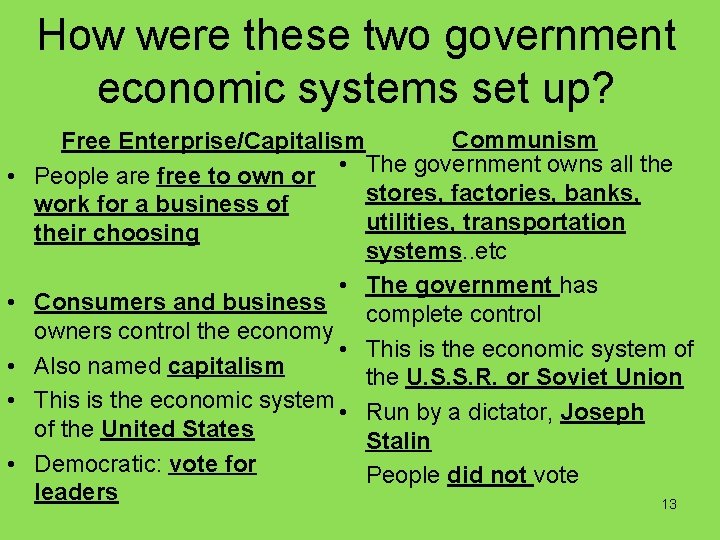
How were these two government economic systems set up? • • • Communism Free Enterprise/Capitalism People are free to own or • The government owns all the stores, factories, banks, work for a business of utilities, transportation their choosing systems. . etc • The government has Consumers and business complete control owners control the economy • This is the economic system of Also named capitalism the U. S. S. R. or Soviet Union This is the economic system • Run by a dictator, Joseph of the United States Stalin Democratic: vote for People did not vote leaders 13
Cold War? • The tension and rivalry between the USA and the USSR was described as the “Cold War” (1945 -1990). • There was never a real war between the two sides between 1945 and 1990, but they were often very close to war (Hotspots). • Both sides got involved in other conflicts in the world to spread communism or stop communism. 14
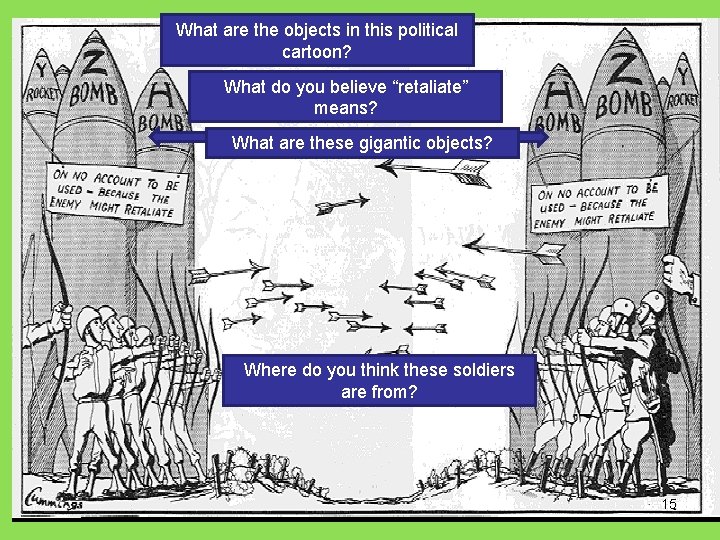
What are the objects in this political cartoon? What do you believe “retaliate” means? What are these gigantic objects? Where do you think these soldiers are from? 15
Day 2: Standards/Objectives SS 5 H 7 The student will discuss the origins and consequences of the Cold War. • Explain how the United States sought to stop the spread of communism through the Berlin airlift, the Korean War, and the North Atlantic Treaty Organization. 16
Lightning Round…. • What is a “superpower? • What type of government system does the United States have? • What type of government system does the Soviet Union have? • Describe why the allies began to have tensions between them. 17
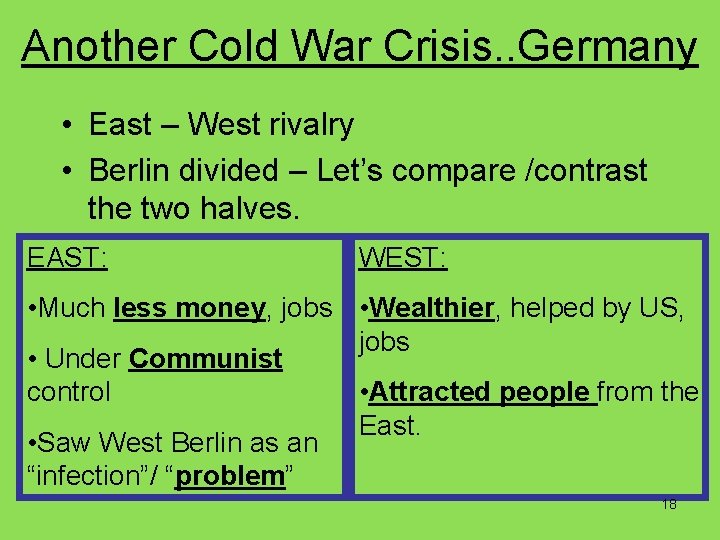
Another Cold War Crisis. . Germany • East – West rivalry • Berlin divided – Let’s compare /contrast the two halves. EAST: WEST: • Much less money, jobs • Wealthier, helped by US, jobs • Under Communist control • Attracted people from the East. • Saw West Berlin as an “infection”/ “problem” 18
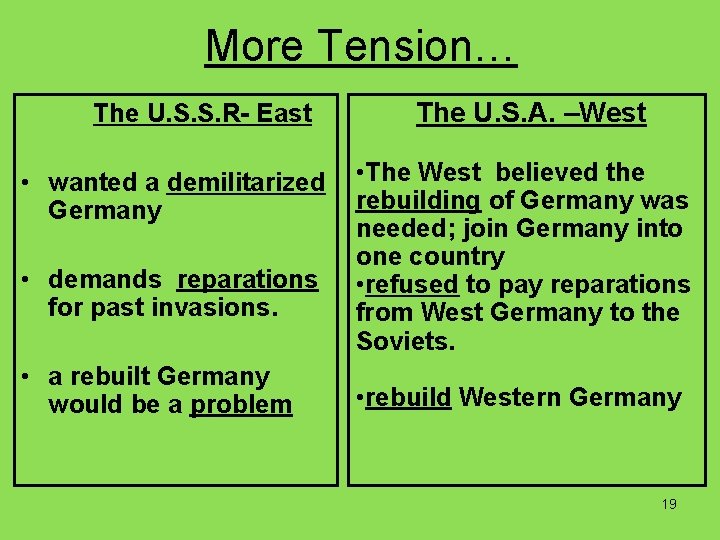
More Tension… The U. S. S. R- East • wanted a demilitarized Germany • demands reparations for past invasions. • a rebuilt Germany would be a problem The U. S. A. –West • The West believed the rebuilding of Germany was needed; join Germany into one country • refused to pay reparations from West Germany to the Soviets. • rebuild Western Germany 19
How did the United States respond to the U. S. S. R? • President Truman promised to help any country that the U. S. S. R. wanted to turn into communist • This policy was called the Truman Doctrine or policy of containment • Soviet Union began putting restrictions on traffic to Berlin from Western Zones (March 30, 1948) 20
• US personnel traveling through the Soviet had to present evidence of identity • Shipments from Berlin to Western zones had to be cleared through Soviet check points • All baggage had to be inspected at Soviet check points • The US protested, but the Soviets did not listen • Spring of 1948, more restrictions were put into place • Soviets explained them as “technical difficulties” such as repairs to railways. . etc 21
• Western zones restricted exports to Soviet zone that were crucial to their economy • Two days, June 24, 1948, all land water traffic to and from Berlin was stopped- this fully began the Berlin Blockade • Tensions and a war of words continued between the US and the Soviets- a fully blow war was inevitable. • The two million people in Berlin could starve! 22
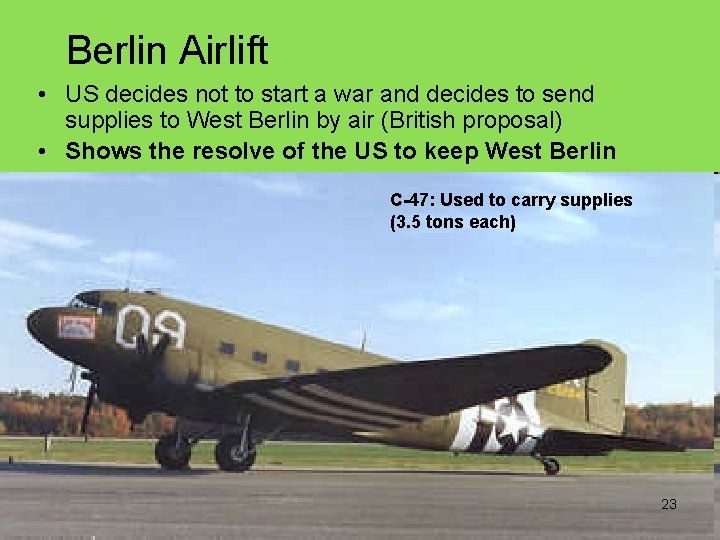
Berlin Airlift • US decides not to start a war and decides to send supplies to West Berlin by air (British proposal) • Shows the resolve of the US to keep West Berlin C-47: Used to carry supplies (3. 5 tons each) 23
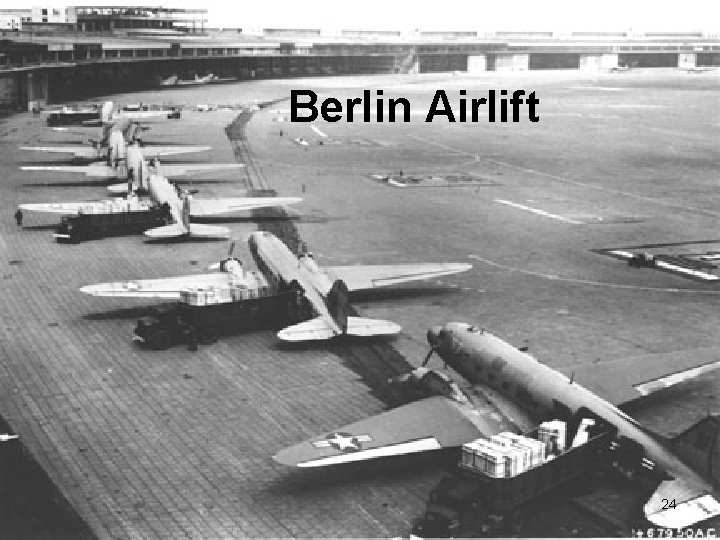
Berlin Airlift 24
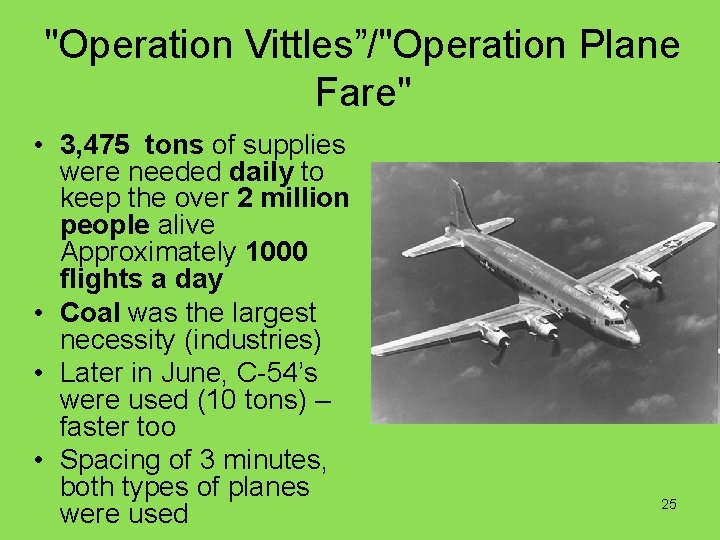
"Operation Vittles”/"Operation Plane Fare" • 3, 475 tons of supplies were needed daily to keep the over 2 million people alive Approximately 1000 flights a day • Coal was the largest necessity (industries) • Later in June, C-54’s were used (10 tons) – faster too • Spacing of 3 minutes, both types of planes were used 25
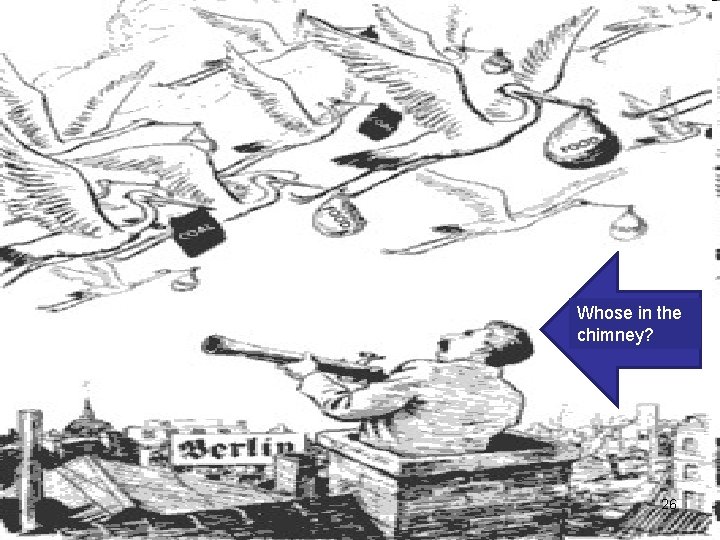
Whose in the chimney? 26
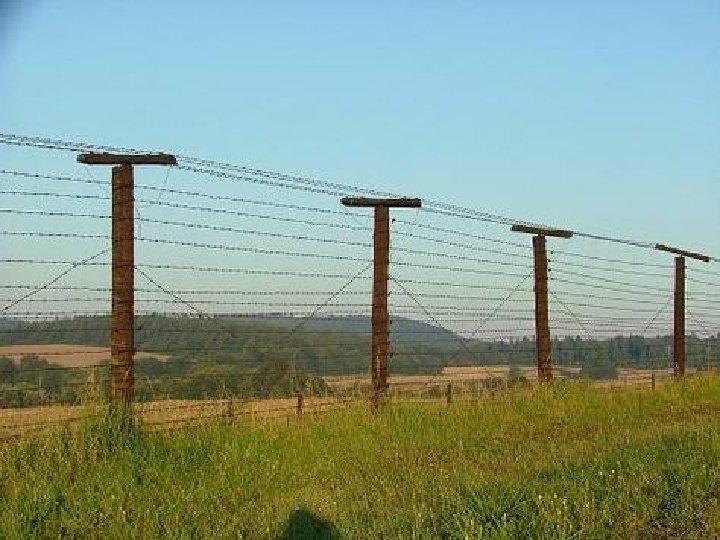
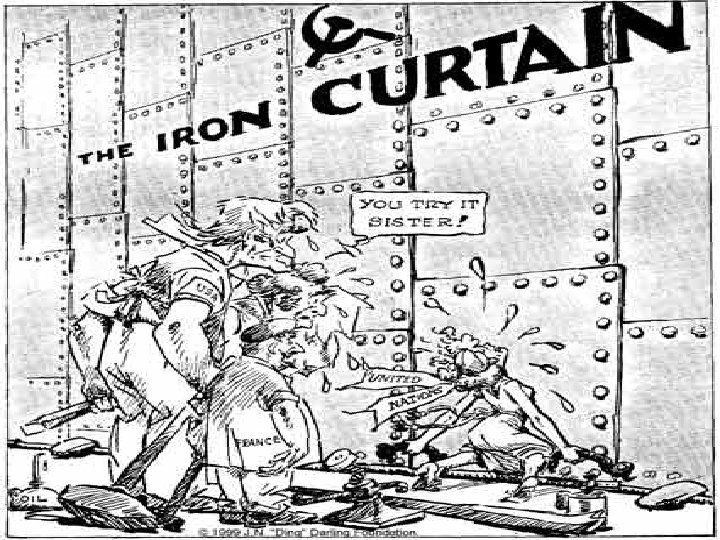
What other factors led to difficulty between these two countries? • NATO: North Atlantic Treaty Organization (1949) Democratic countries of Europe and the United States formed to support democracy; also called the Western Bloc • Warsaw Pact: The countries under Russian control at the end of the war agree to Russian control; also called the “Iron Curtain” 27
28
29
30
Why was Joseph Mc. Carthy important? • Meanwhile back in the United States Americans became more afraid because of the tension between the United States and the Soviet Union. • This was evident when a man named Joseph Mc. Carthy came to power in the United States as a senator. • He claimed that communists were everywhere in the United States and that they were trying to change the American way of life. He said that Americans needed to watch out for communist spies. This time in our history was known as the Red Scare or Mc. Carthyism 31
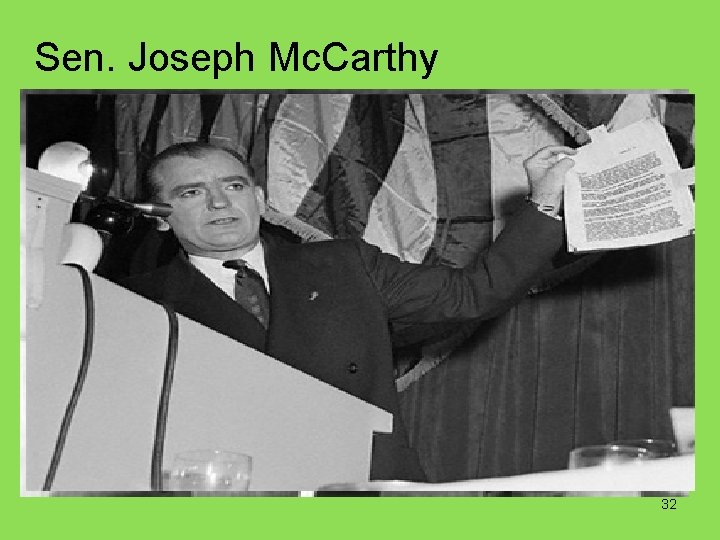
Sen. Joseph Mc. Carthy • Rose to power in 1950 when he said he had a list of "members of the Communist Party and members of a spy ring" employed in the state department. ” • Never able to prove his list • said, “The State Department is infested with communists. I have here in my hand a list of 205—a list of names that were made known to the Senator as being members of the Communist Party and who nevertheless are still working and shaping policy in the State Department. “ • Became known as Mc. Carthyism: lasting roughly from 1950 to 1956; Time when fear of communist and their influence on American as well as fear of espionage by Soviet agents 32
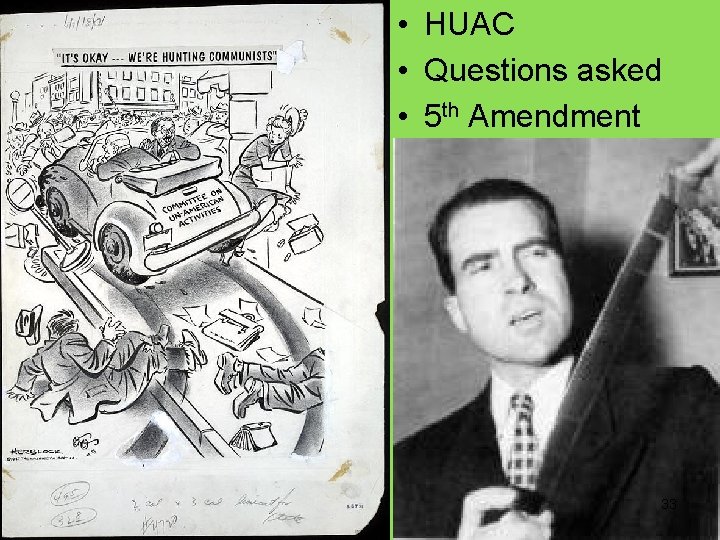
• HUAC • Questions asked • 5 th Amendment 33
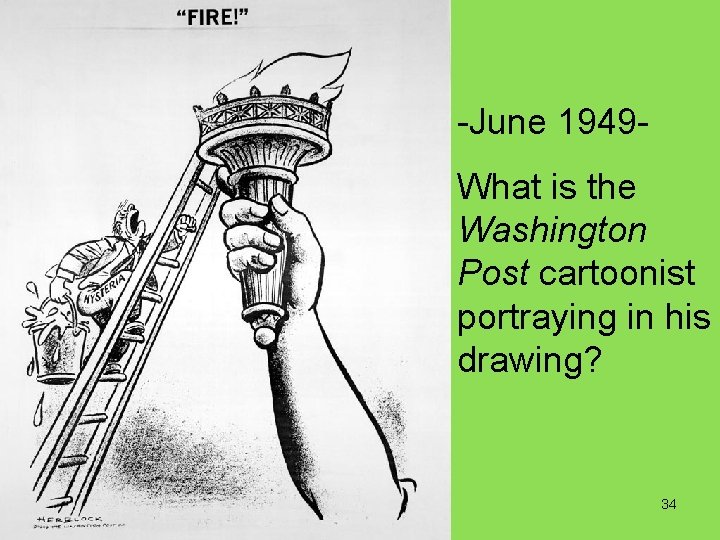
-June 1949 What is the Washington Post cartoonist portraying in his drawing? 34
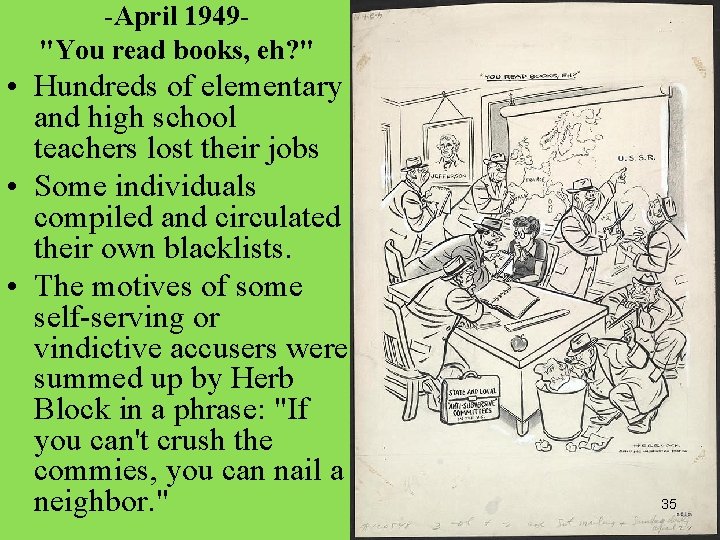
-April 1949"You read books, eh? " • Hundreds of elementary and high school teachers lost their jobs • Some individuals compiled and circulated their own blacklists. • The motives of some self-serving or vindictive accusers were summed up by Herb Block in a phrase: "If you can't crush the commies, you can nail a neighbor. " 35
Day 3: Standards/Objectives SS 5 H 7 The student will discuss the origins and consequences of the Cold War. • Explain how the United States sought to stop the spread of communism through the Berlin airlift, the Korean War, and the North Atlantic Treaty Organization. 36
Lightning Round…. • What caused the Allies to institute the Berlin Airlift? • Describe why the allies began to have tensions between them that led to the Berlin Airlift. 37
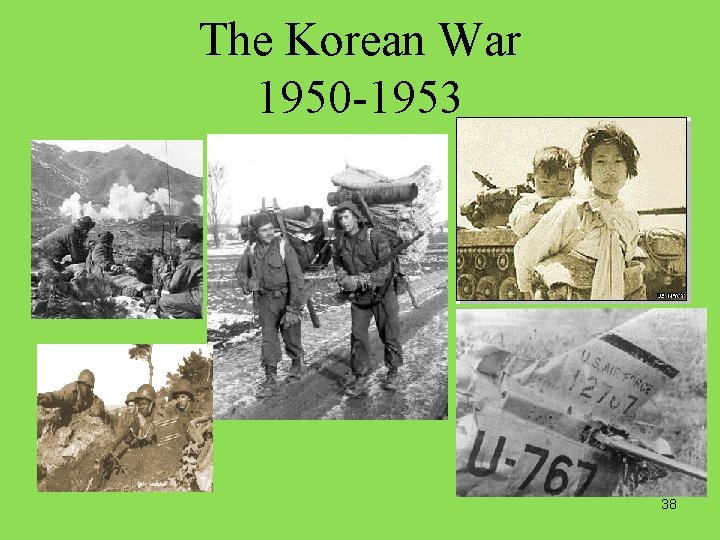
The Korean War 1950 -1953 38
39
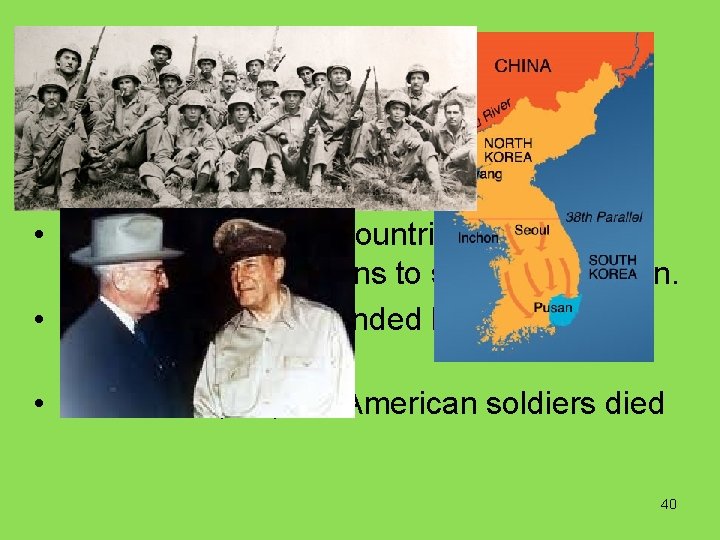
What happens in Korea? • June 1950: North Korea invades South Korea • The U. S. and other countries sent troops through United Nations to stop the invasion. • Troops were commanded by Douglas Mac. Arthur • Violent war; 36, 500 American soldiers died 40
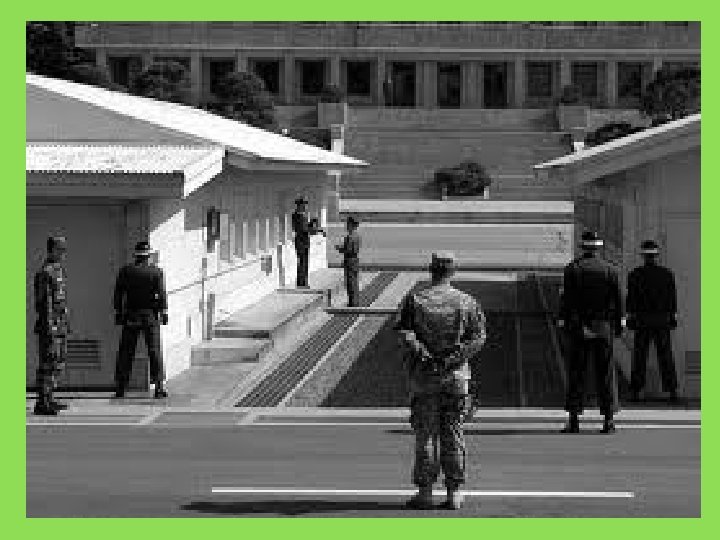
How does this end? • 1953 a truce is signed • Both side agree to stop fighting • An imaginary line is drawn separating the fighting called the 38 th parallel • Today this is still an armed area with soldiers from both sides armed and prepared to fight 41
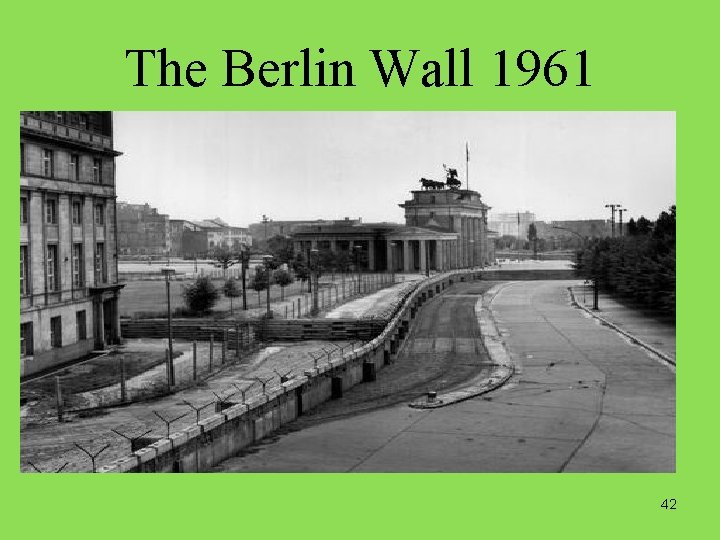
The Berlin Wall 1961 42
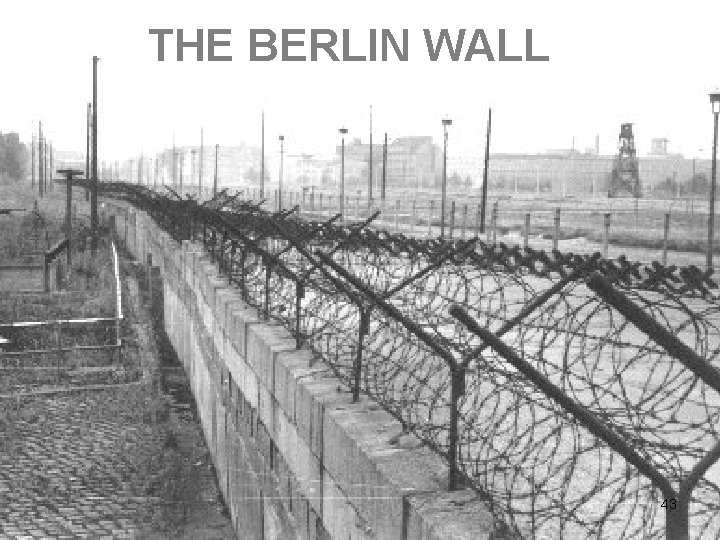
THE BERLIN WALL 43
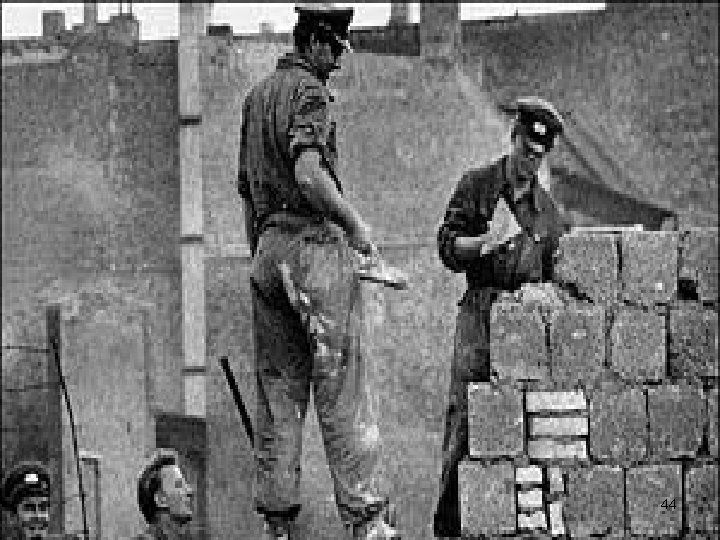
Why did the U. S. S. R. build the Berlin Wall? • • The city of Berlin is still divided! East Berlin: Soviet control West Berlin: Allies control Thousands of people fleeing from Eastern Germany and Berlin to West Berlin and West Germany • In August 1961; the Soviets built the wall http: //www. youtube. com/watch? v=A 9 m. Wgq. YBZos 44
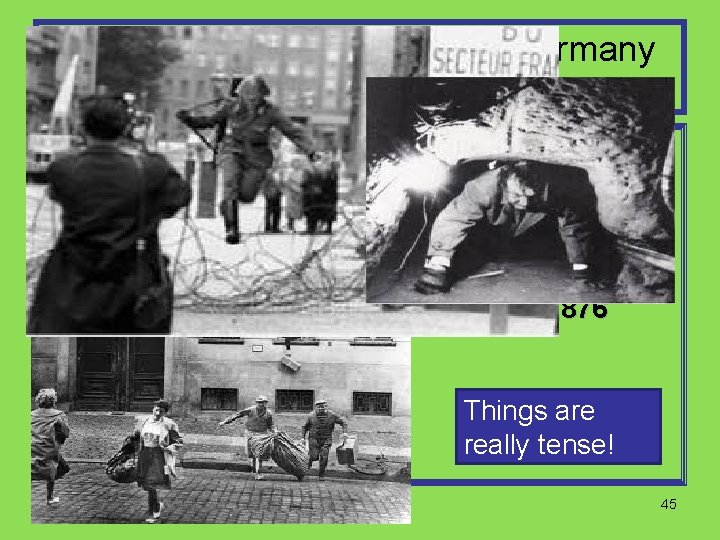
People Escaping from East Germany or East Berlin to West 1949 -129, 245 1951 - 165, 648 1953 - 331, 390 1955 - 252, 870 1957 - 261, 622 1959 - 143, 917 1961 - 207, 026 1962 - 21, 356 1963 - 42, 632 1964 - 41, 876 Things are really tense! 45
Day 4: Standards/Objectives • SS 5 H 8 The student will describe the importance of key people, events, and developments between 1950 -1975. • a. Discuss the importance of the Cuban Missile Crisis and the Vietnam War. 46
Lightning Round…. • What caused the Korean War? • Describe why the allies began to have tensions between them that led to the Berlin Airlift. ow the United States became involved in the Korean War. 47
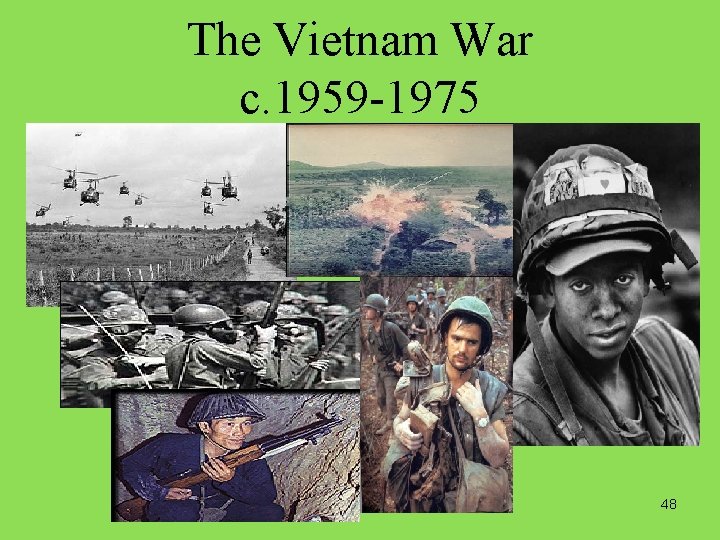
The Vietnam War c. 1959 -1975 48
• North Vietnam: Communist • Southern Vietnam: Democratic • North supported by: China, the Soviet Union • South primarily the United States, United Nations • lasted for twenty years, something the US never expected when it joined in the fight. • US lost the war • the US lost prestige in the eyes of the world 49
50
51
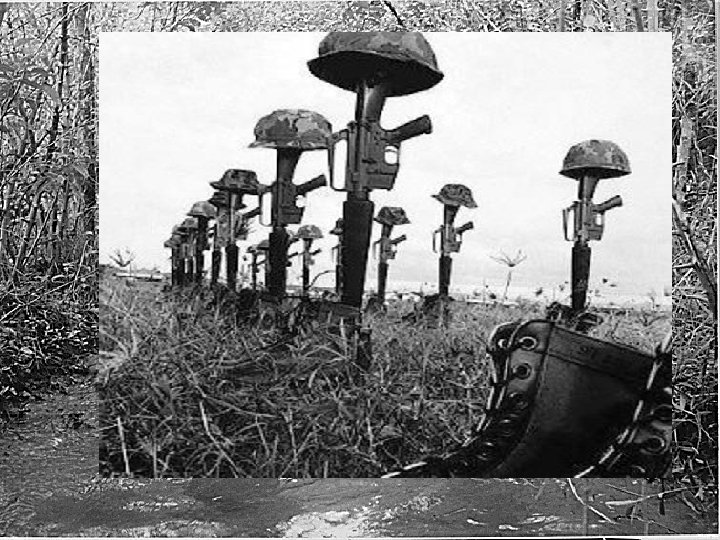
Significance of the War • • • Over $200 billion spent 60, 000 U. S. dead 3 million dead in Indo-China Destroyed Vietnam, Laos, Cambodia Ruined U. S. credibility Ruined trust of U. S. public 52
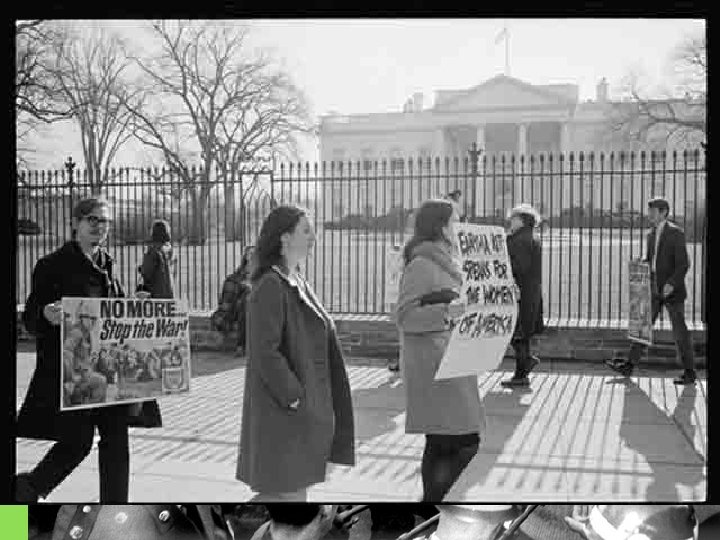
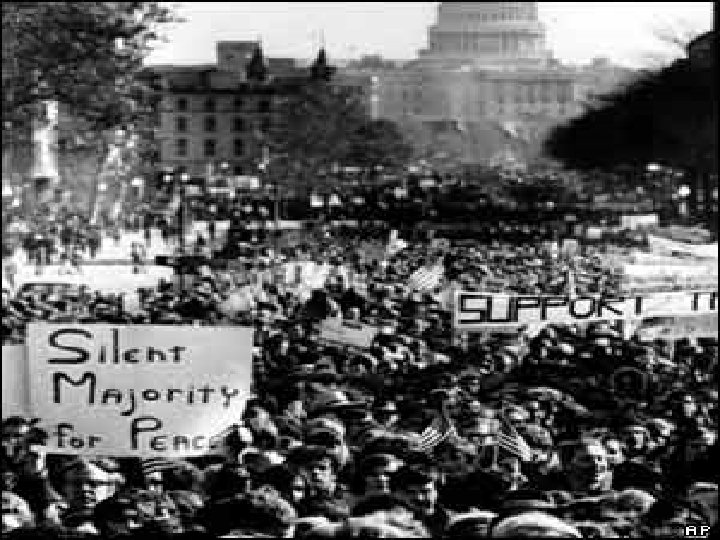
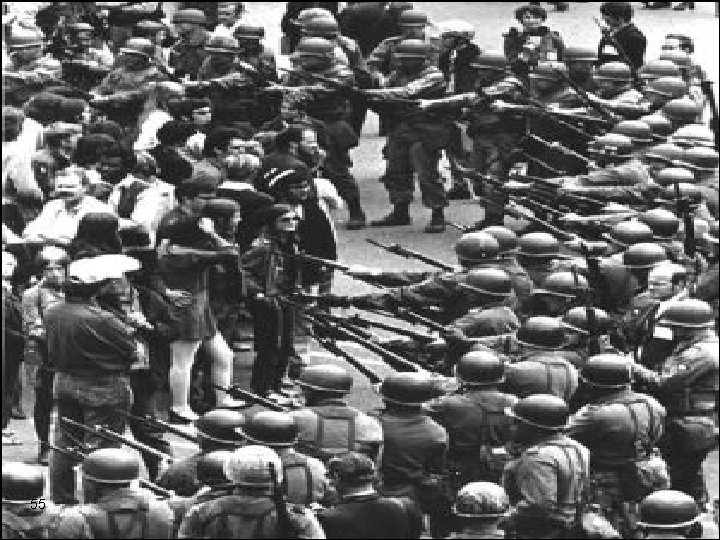
Anti-War Movement • “Teach-Ins” • Occupations • Chicano War Moratorium • Vietnam Veterans Against the War • CALCAV: Clergy and Laity Concerned about Vietnam 53
54
55
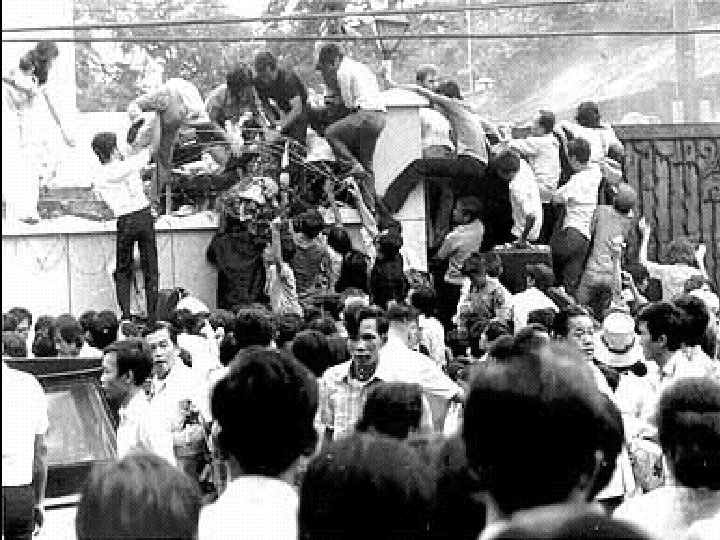
End of War • Peace Treaty in 1973 • Last Americans out of Embassy in 1975 • Kissinger won a Nobel Peace Prize • Vietnamese counterpart refused it 56
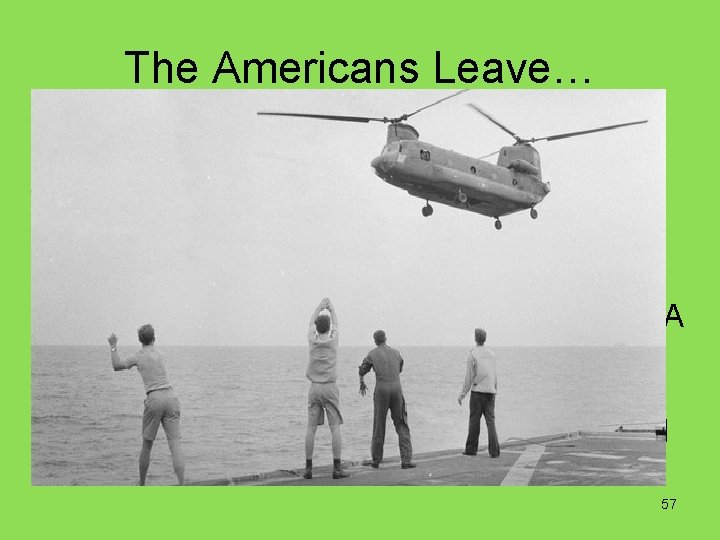
The Americans Leave… • For Americans, the lasting image of the end of the Vietnam War came from the nightly news. On April 29, 1975, television showed the evacuation of Saigon as U. S. Marine helicopters swooped down to the U. S. Embassy and the roof of a nearby CIA safe house to rescue the last 1, 000 Americans in the city and some 6, 000 Vietnamese and their families who worked for them. http: //www. youtube. com/watch? v=3 Aiy. FF 9 q. Ols 57
Day 5: Standards/Objectives • SS 5 H 8 The student will describe the importance of key people, events, and developments between 1950 -1975. • a. Discuss the importance of the Cuban Missile Crisis and the Vietnam War. • Identify Joseph Mc. Carthy and Nikita Khrushchev. 58
Lightning Round…. • What caused the Vietnam War? • Describe how the United States became involved in the Vietnam War. • Who won the Vietnam War? 59
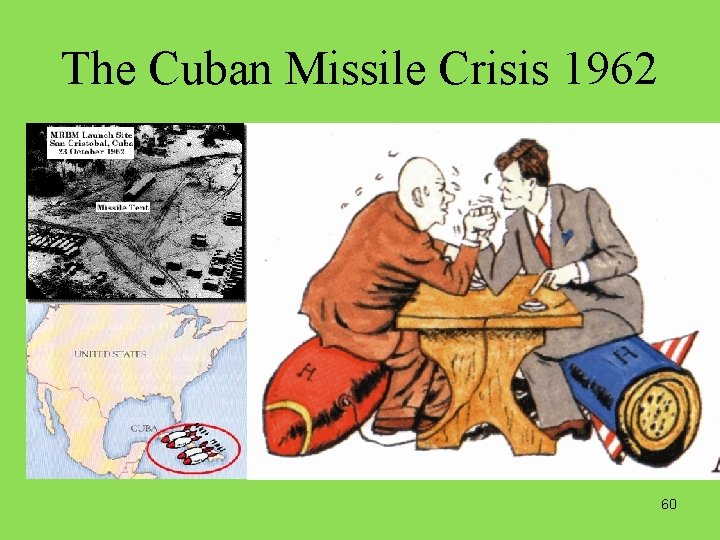
The Cuban Missile Crisis 1962 60
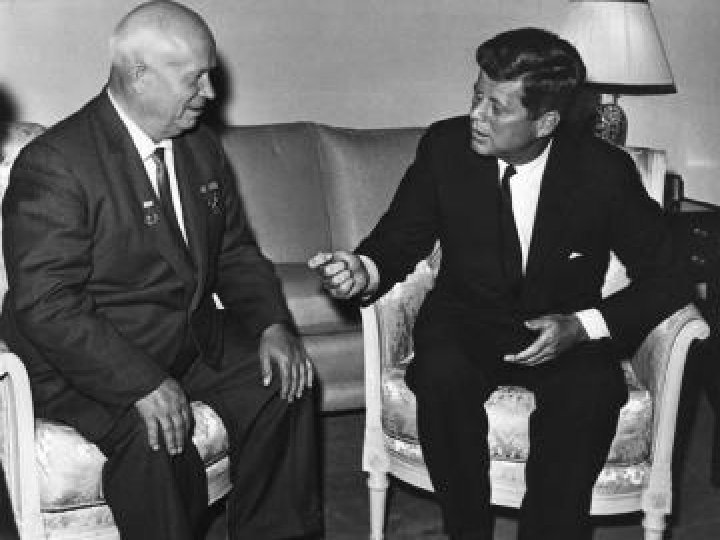
Tensions continue… • Nikita Khrushchev , leader of the Soviet Union, September 7, 1953 -October 14, 1964 • Leader of Cuba: Fidel Castro, Communist dictator • John F. Kennedy, president of the United States • The Cuban Missile Crisis began when the United States discovered that the USSR was trying to put Nuclear Missiles in 61 Cuba.
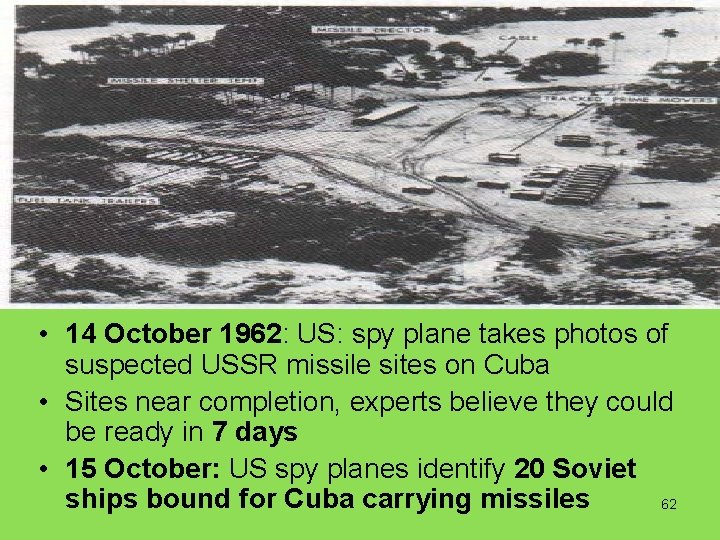
What happened during the October Crisis? • 14 October 1962: US: spy plane takes photos of suspected USSR missile sites on Cuba • Sites near completion, experts believe they could be ready in 7 days • 15 October: US spy planes identify 20 Soviet ships bound for Cuba carrying missiles 62
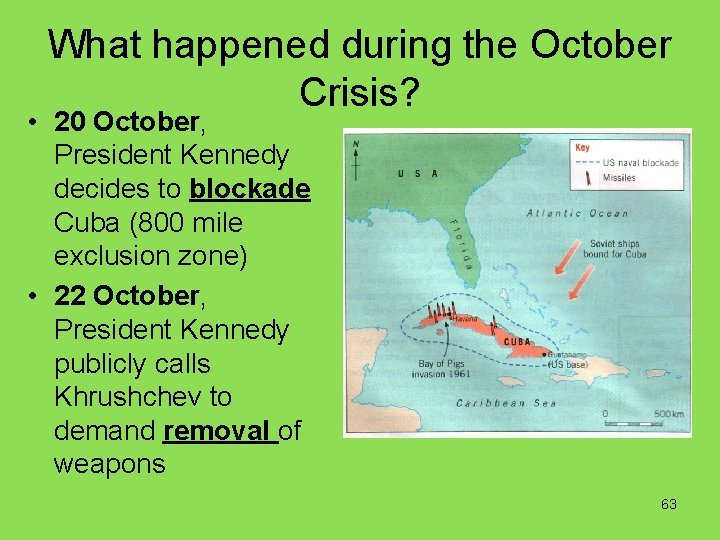
What happened during the October Crisis? • 20 October, President Kennedy decides to blockade Cuba (800 mile exclusion zone) • 22 October, President Kennedy publicly calls Khrushchev to demand removal of weapons 63
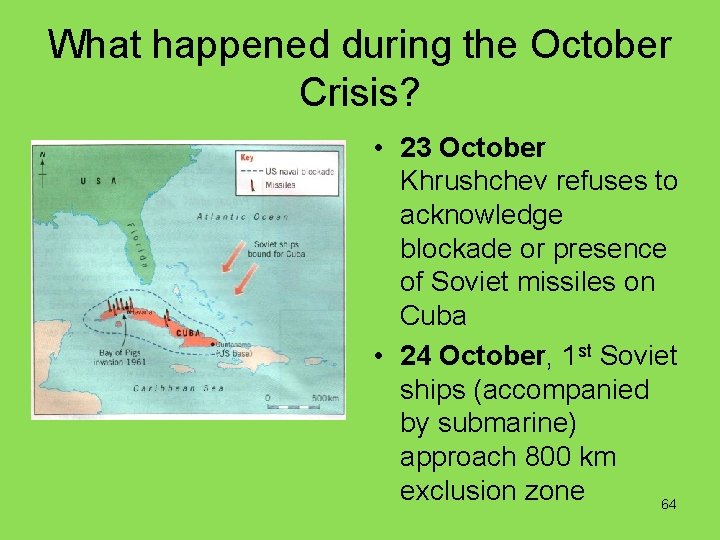
What happened during the October Crisis? • 23 October Khrushchev refuses to acknowledge blockade or presence of Soviet missiles on Cuba • 24 October, 1 st Soviet ships (accompanied by submarine) approach 800 km exclusion zone 64
What happened during the October Crisis? • 24 October, 10: 32 am, Soviet ships stop and turn round • 25 October, aerial photos show continued construction of missile sites • 26 October, Kennedy receives another letter offering to negotiate over missiles in Cuba with removal of blockade and US invasion threat • 27 October, Kennedy receives second letter calling for withdrawal of US missiles in Turkey too 65
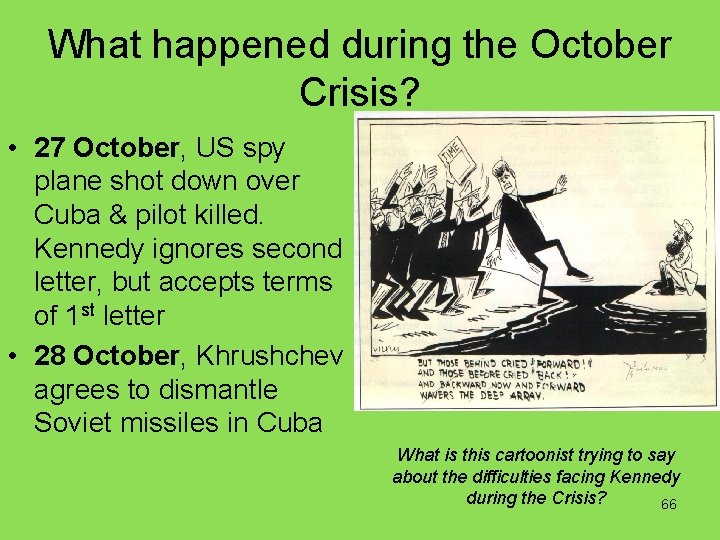
What happened during the October Crisis? • 27 October, US spy plane shot down over Cuba & pilot killed. Kennedy ignores second letter, but accepts terms of 1 st letter • 28 October, Khrushchev agrees to dismantle Soviet missiles in Cuba What is this cartoonist trying to say about the difficulties facing Kennedy during the Crisis? 66
What was the outcome of the crisis? • Cuba remained communist and is still heavily armed (without nuclear missiles) • Permanent hotline between White House & Kremlin set up (Soviet government) • Supported theory of containment & co-existence because alternatives unimaginable • Realized the result was nuclear war 67
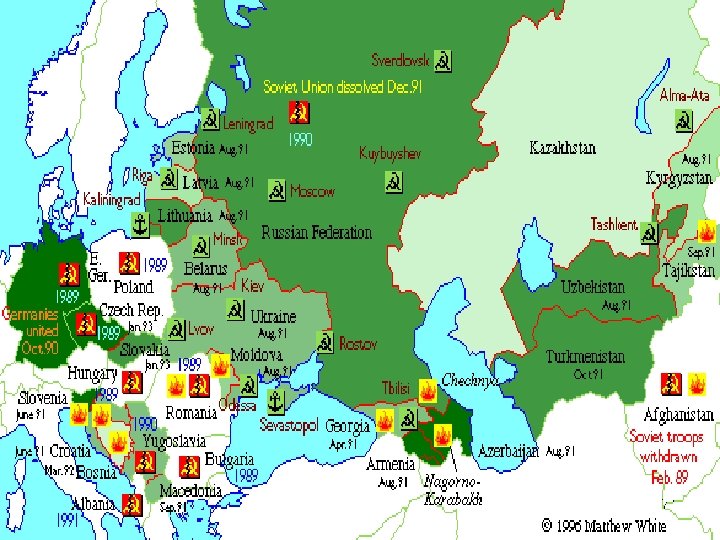
The Cold War Ends SS 5 H 9 The student will trace important developments in America since 1975. a. Describe U. S. involvement in world events; include efforts to bring peace to the Middle East, the collapse of the Soviet Union, the Persian Gulf War, and the War on Terrorism in response to September 11, 2001. 68
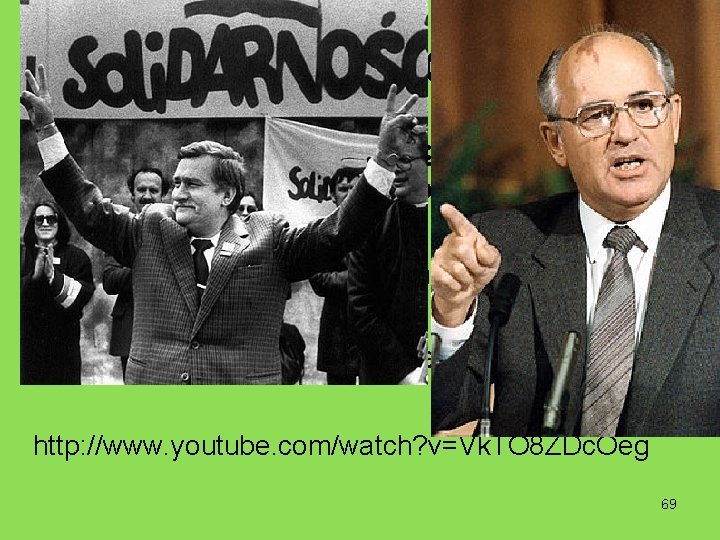
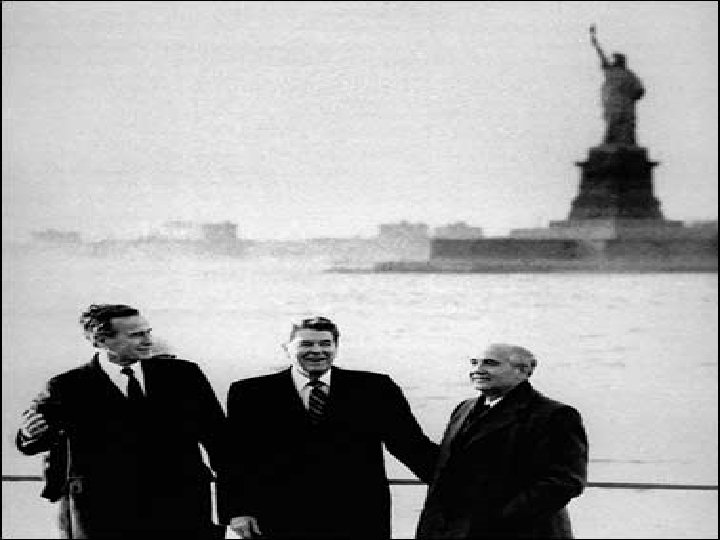
The End of the Cold War • President Mikhail Gorbachev, leader, Soviet Union in 1985, reformer • Revolution in Poland the fall of the Berlin Wall signals the end of the Cold War. • Changes Soviet Union, Renamed Russia http: //www. youtube. com/watch? v=Vk. TO 8 ZDc. Oeg 69
70
71
Citations • www. kgv. edu. hk/. . . Cold_War/ , (slides 1 -11) • www. worldofteaching. com/powerpoints/hi story/coldwar. ppt , (slides 1 -3) 72
- Slides: 72