
The Cold War For Students of European History
- Slides: 43
The Cold War For Students of European History
Political Theories and the Beginning of the Cold War
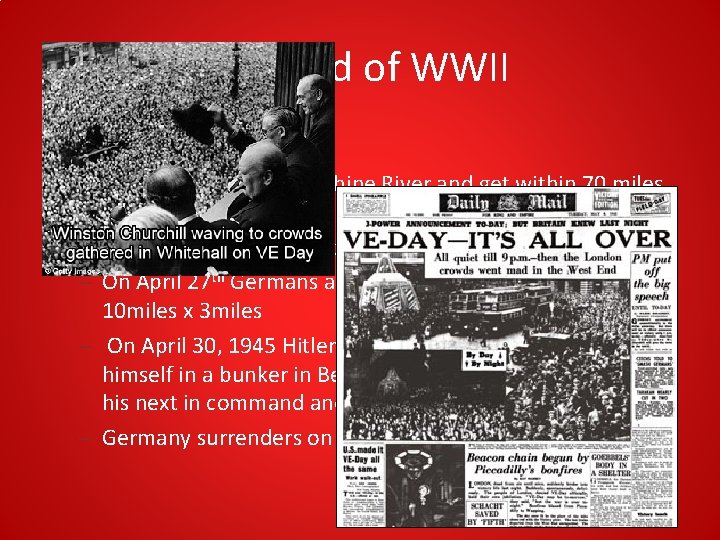
The End of WWII • V-E Day – Allied forces cross the Rhine River and get within 70 miles of Berlin – Soviet forces push into the outskirts of Berlin – On April 27 th Germans are surrounded in Berlin in an area 10 miles x 3 miles – On April 30, 1945 Hitler poisons his mistress and shoots himself in a bunker in Berlin. His body is carried outside by his next in command burned – Germany surrenders on May 7 th
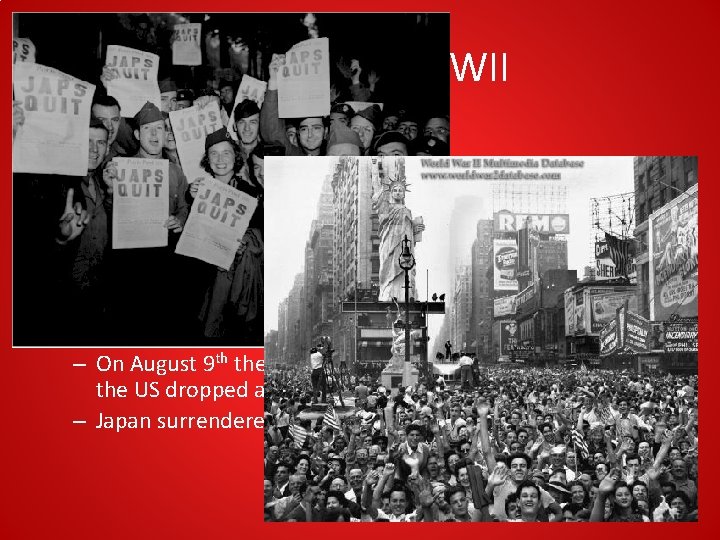
The End of WWII • V-J Day – Americans demanded an unconditional surrender for Japan – Japan was willing to surrender if their emperor could remain in power – On August 6, 1945 the Enola Gay dropped “Little Boy” on Hiroshima. – On August 9 th the Soviet Union declared war on Japan AND the US dropped another atomic bomb on Nagasaki – Japan surrendered August 15 th, 1945
Rising Tensions- Yalta and Potsdam Conferences • Poland – Should Poland have their original non-communist government back or keep the communist government that the Soviets put into place during the war? • Declaration of Liberated Europe – Which form of government should the countries of Europe be influenced to form as they rebuild? • Germany – Should Germany be forced to pay war reparations even though the country is broken and destroyed?
WW 2 Peace Conferences • Yalta and Potsdam • Yalta (February, 1945) – Divide Germany into 4 zones – Bring Nazi war criminals to trial – Allow the freed nations of Europe to hold democratic elections (Declaration of Liberated Europe) – Set up a commission to look into war reparations – Russia would join the war in the Pacific and help the US
WW 2 Peace Conferences • Relations worsened in between the two conferences • Roosevelt died, Truman did not have Roosevelt's natural charisma • Stalin invited Poland's non-communist leaders for a visit and then arrested them • America developed the atomic weapon (meaning they did not need Russia’s help in the Pacific anymore)
WW 2 Peace Conferences • Potsdam (July, 1945) – Agreements made in the first conference stuck – War reparations- Russia was allowed to take whatever they wanted from their zone and 10% of all industrial equipment from the other zones. Wording- Text Excerpts Remember: Hiroshima was bombed August 6 th so these agreements were made before the world knew the US had the bomb
United Nations “There shall be established a Council composed of the Foreign Ministers of the United Kingdom, the Union of Soviet Socialist Republics, China, France, and the United States. ” • Founded 1945 to replace League of Nations • Security Council – Allies get permanent seats • • • United States Great Britain Soviet Union France China
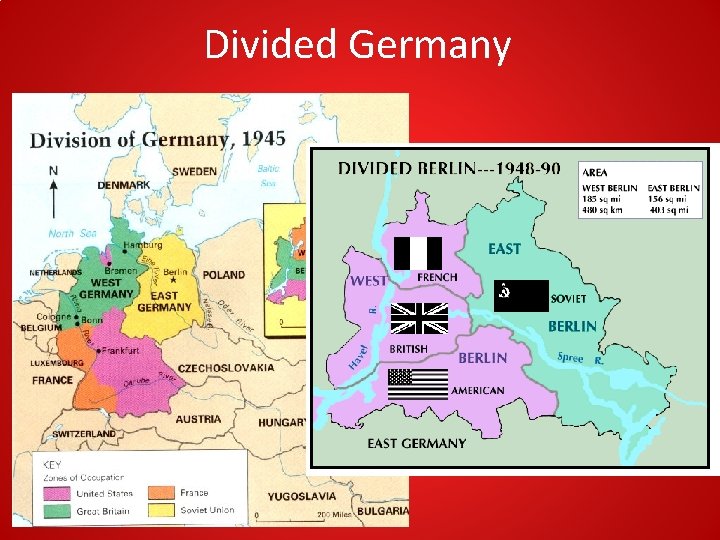
Divided Germany
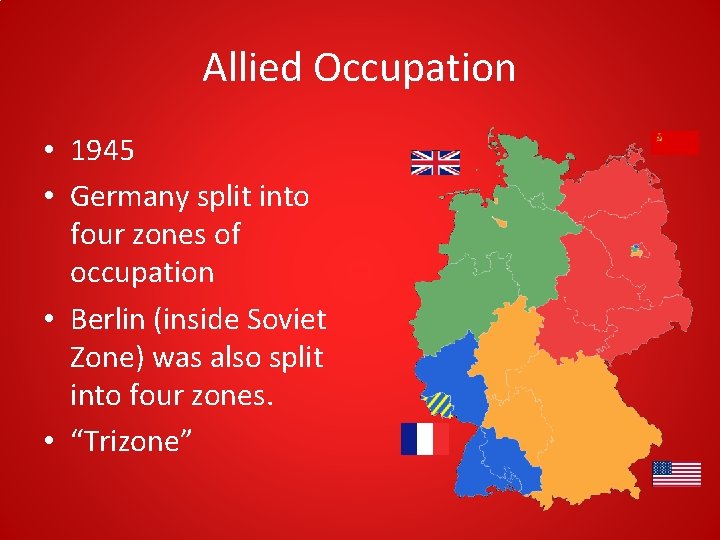
Allied Occupation • 1945 • Germany split into four zones of occupation • Berlin (inside Soviet Zone) was also split into four zones. • “Trizone”
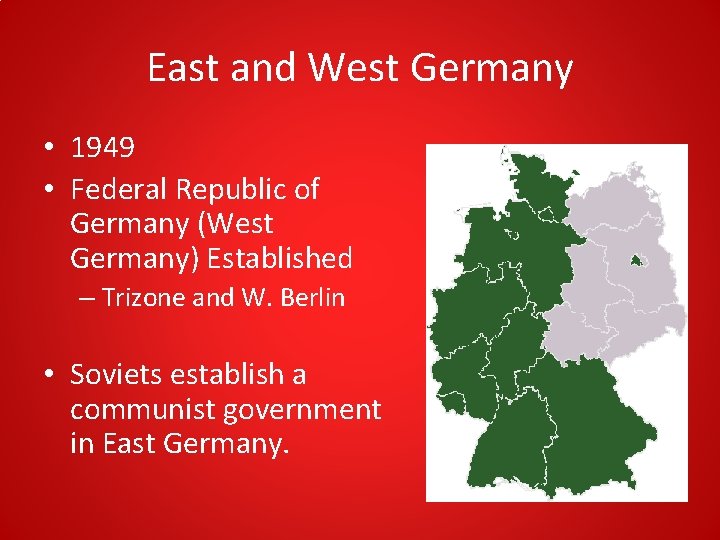
East and West Germany • 1949 • Federal Republic of Germany (West Germany) Established – Trizone and W. Berlin • Soviets establish a communist government in East Germany.
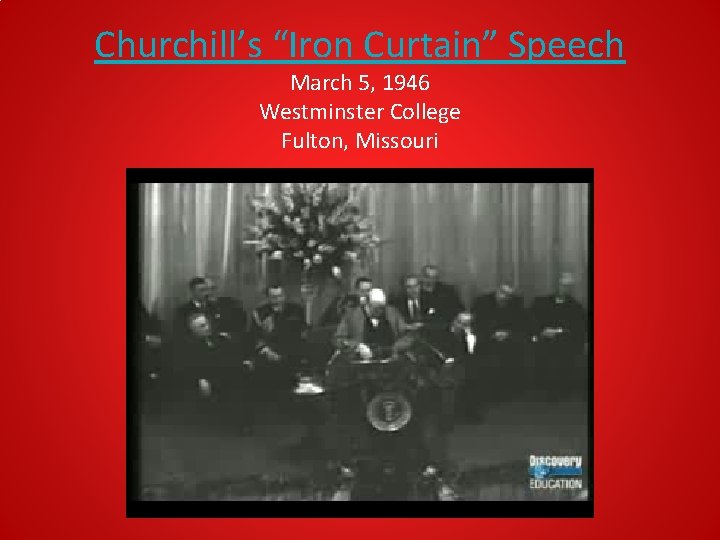
Churchill’s “Iron Curtain” Speech March 5, 1946 Westminster College Fulton, Missouri
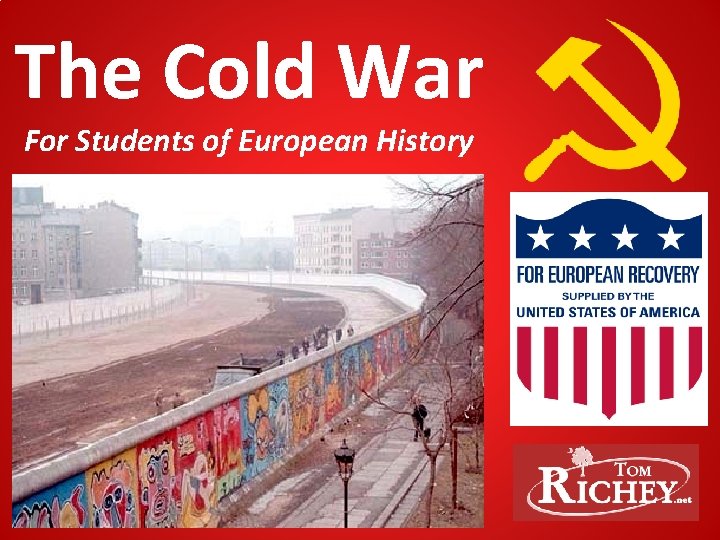
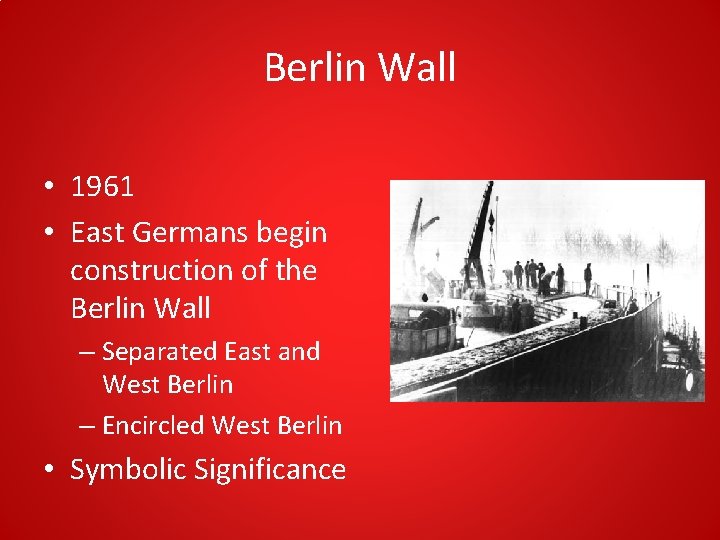
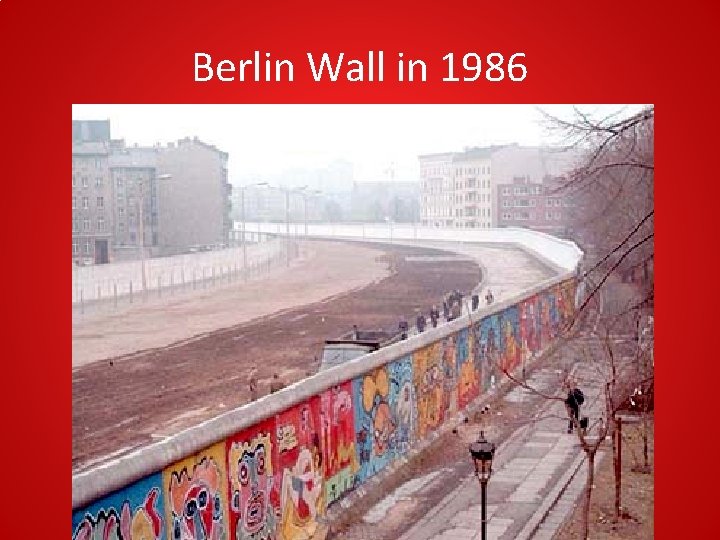
Berlin Wall • 1961 • East Germans begin construction of the Berlin Wall – Separated East and West Berlin – Encircled West Berlin • Symbolic Significance
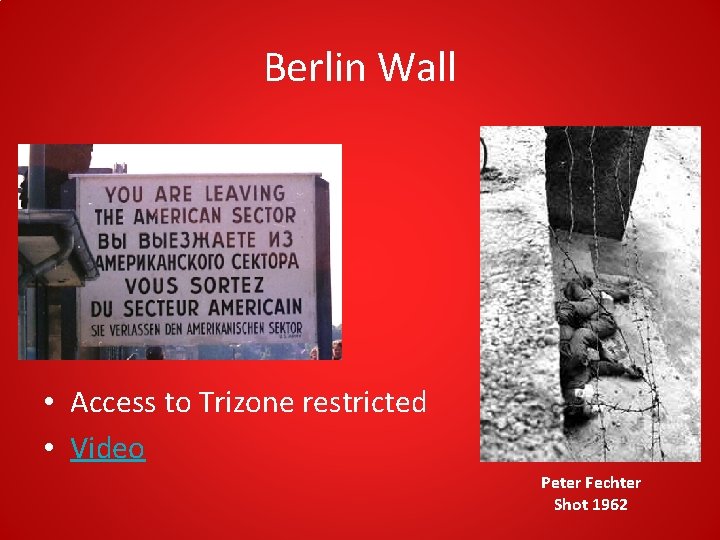
Berlin Wall • Access to Trizone restricted • Video Peter Fechter Shot 1962
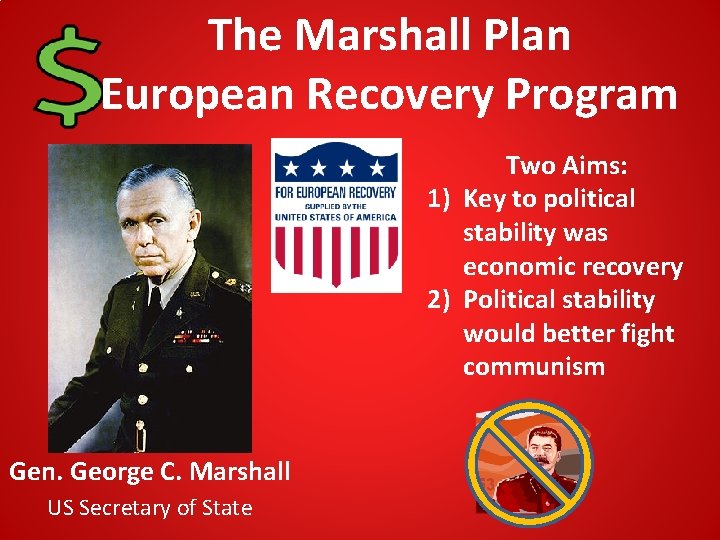
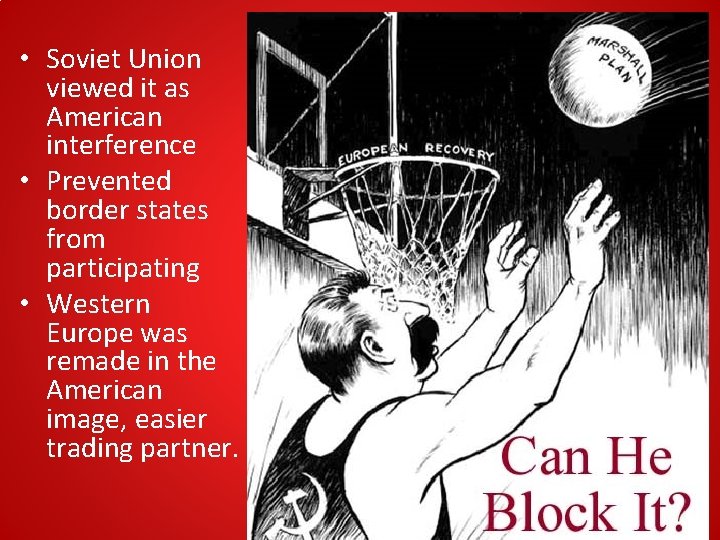
The Marshall Plan European Recovery Program Two Aims: 1) Key to political stability was economic recovery 2) Political stability would better fight communism Gen. George C. Marshall US Secretary of State
• Soviet Union viewed it as American interference • Prevented border states from participating • Western Europe was remade in the American image, easier trading partner.
Return of the Alliance System
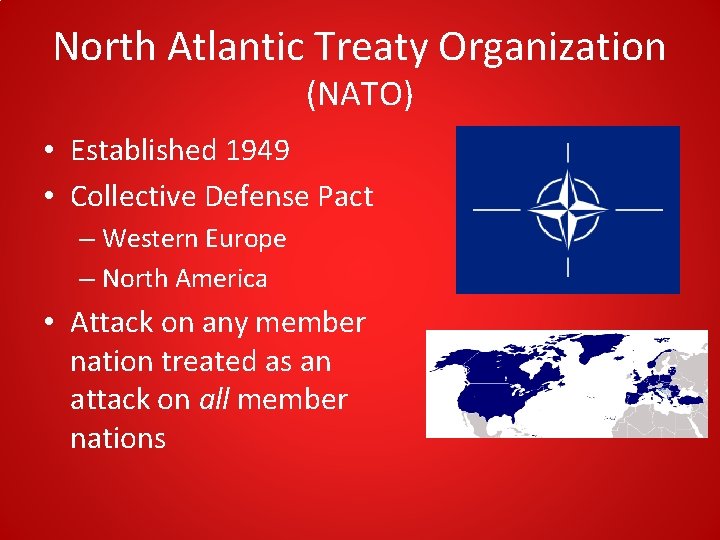
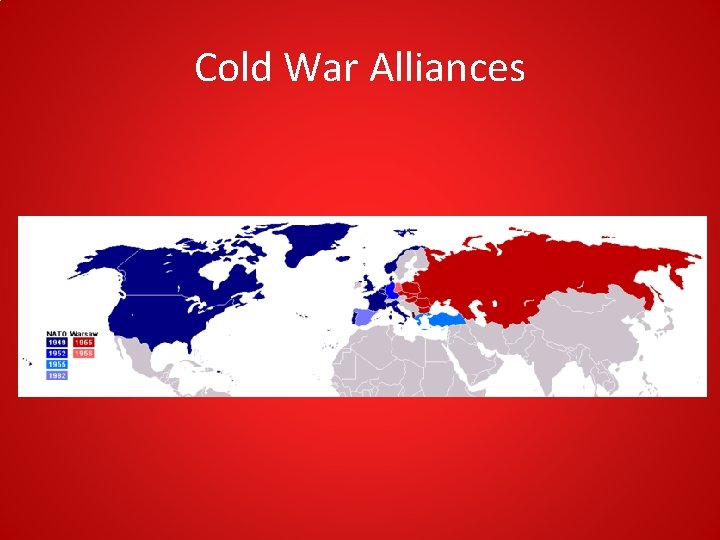
North Atlantic Treaty Organization (NATO) • Established 1949 • Collective Defense Pact – Western Europe – North America • Attack on any member nation treated as an attack on all member nations
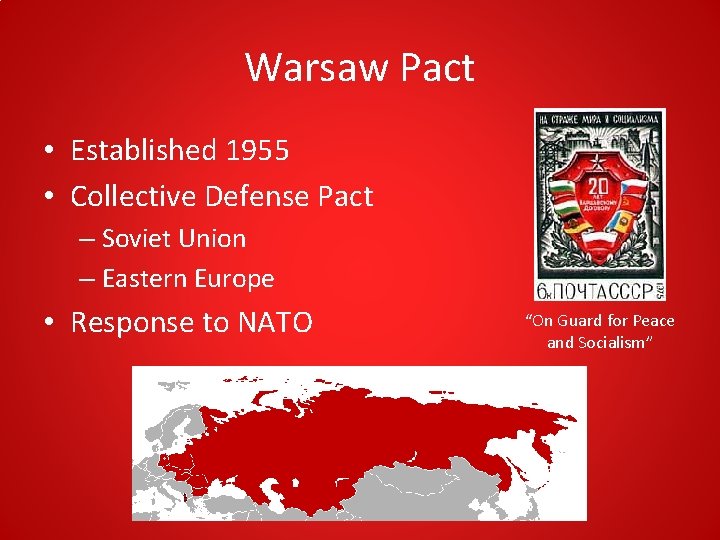
Warsaw Pact • Established 1955 • Collective Defense Pact – Soviet Union – Eastern Europe • Response to NATO “On Guard for Peace and Socialism”
Cold War Alliances
Weapons Technologies
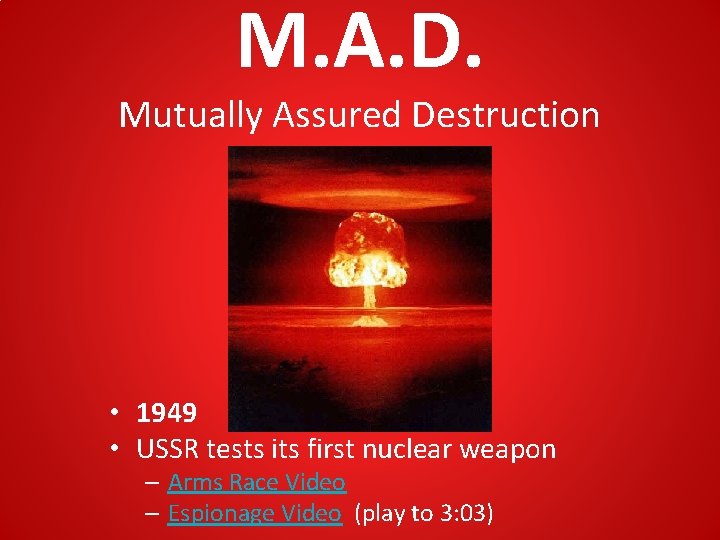
M. A. D. Mutually Assured Destruction • 1949 • USSR tests its first nuclear weapon – Arms Race Video – Espionage Video (play to 3: 03)
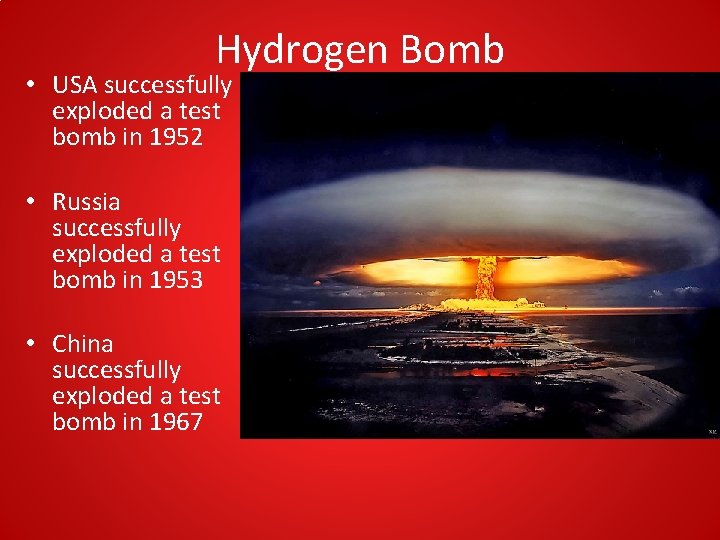
Hydrogen Bomb • USA successfully exploded a test bomb in 1952 • Russia successfully exploded a test bomb in 1953 • China successfully exploded a test bomb in 1967
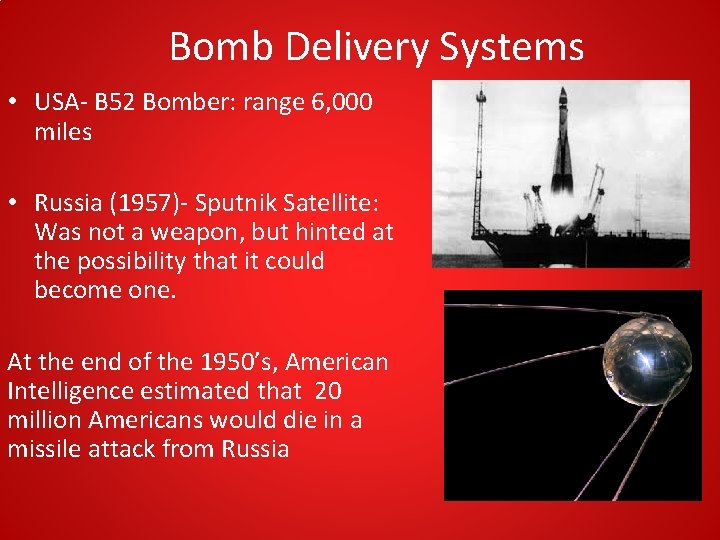
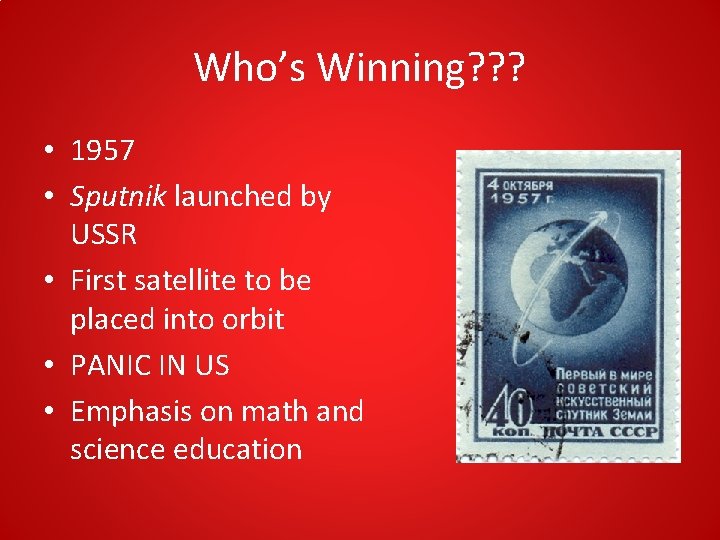
Bomb Delivery Systems • USA- B 52 Bomber: range 6, 000 miles • Russia (1957)- Sputnik Satellite: Was not a weapon, but hinted at the possibility that it could become one. At the end of the 1950’s, American Intelligence estimated that 20 million Americans would die in a missile attack from Russia
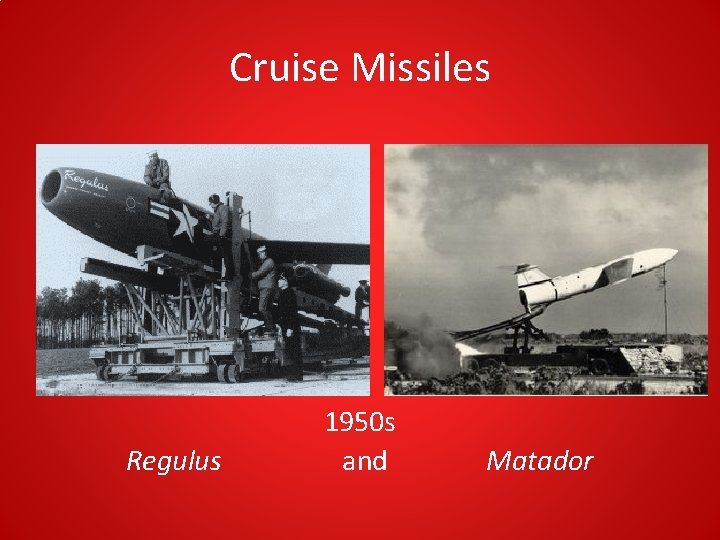
Cruise Missiles Regulus 1950 s and Matador
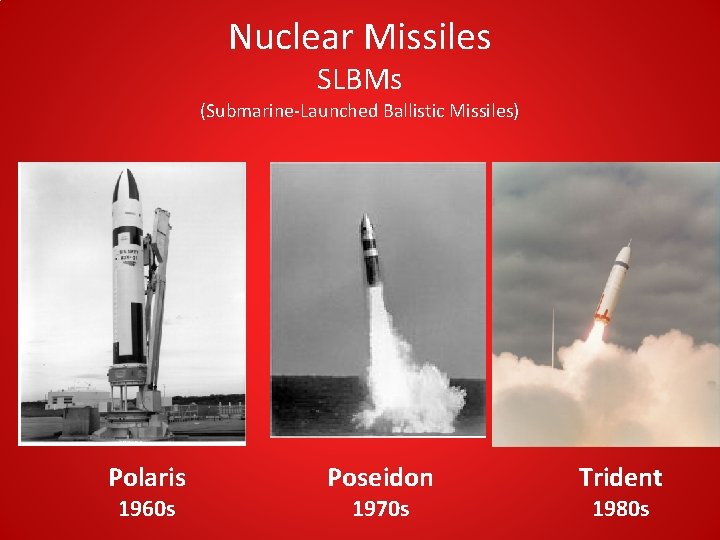
Nuclear Missiles SLBMs (Submarine-Launched Ballistic Missiles) Polaris 1960 s Poseidon 1970 s Trident 1980 s
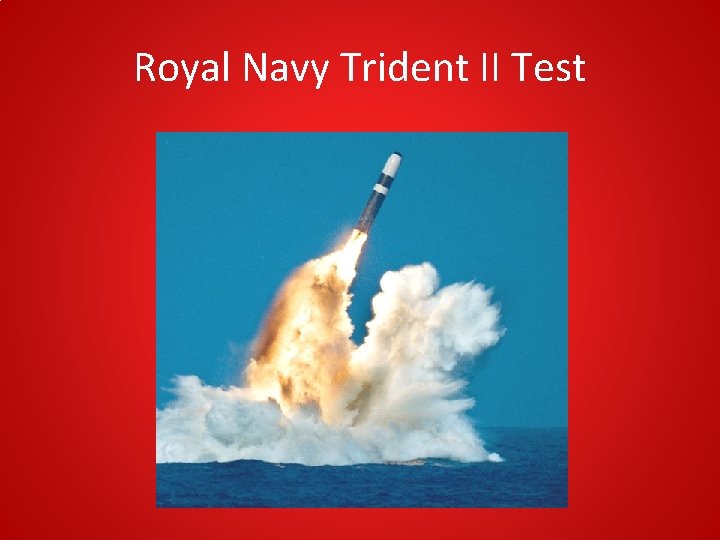
Royal Navy Trident II Test
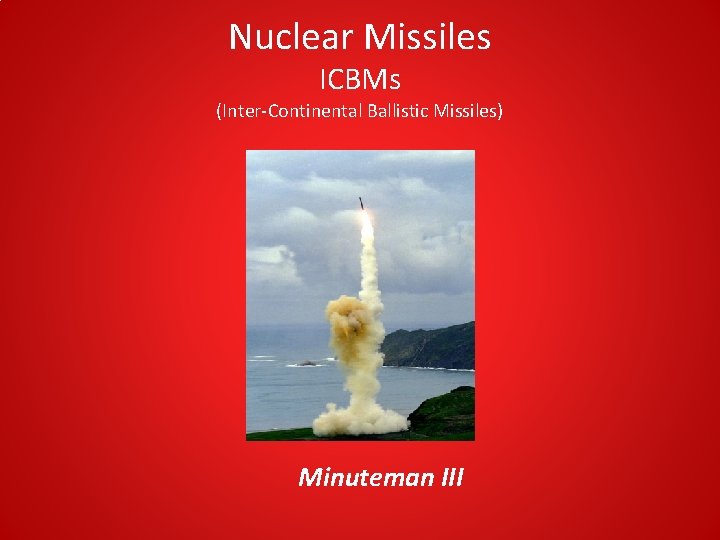
Nuclear Missiles ICBMs (Inter-Continental Ballistic Missiles) Minuteman III
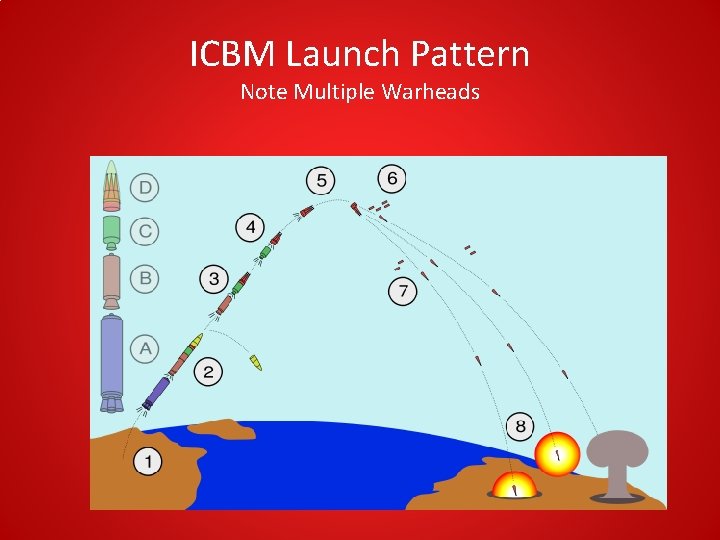
ICBM Launch Pattern Note Multiple Warheads
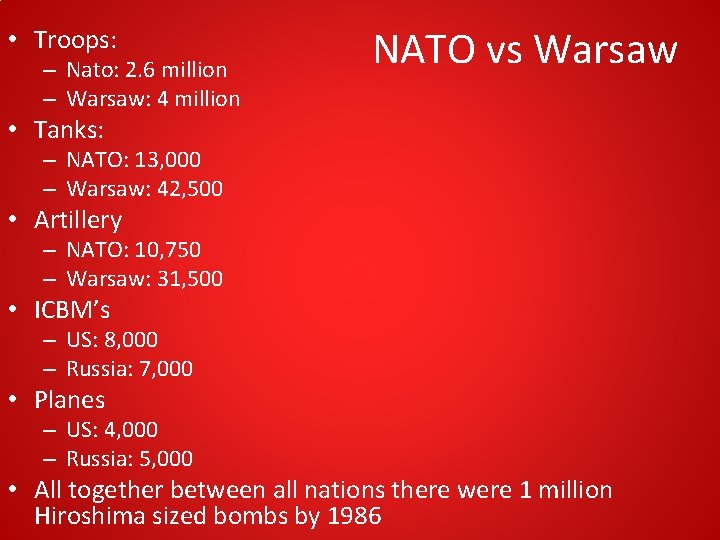
• Troops: – Nato: 2. 6 million – Warsaw: 4 million NATO vs Warsaw • Tanks: – NATO: 13, 000 – Warsaw: 42, 500 • Artillery – NATO: 10, 750 – Warsaw: 31, 500 • ICBM’s – US: 8, 000 – Russia: 7, 000 • Planes – US: 4, 000 – Russia: 5, 000 • All together between all nations there were 1 million Hiroshima sized bombs by 1986
MAD • Video
Who’s Winning? ? ? • 1957 • Sputnik launched by USSR • First satellite to be placed into orbit • PANIC IN US • Emphasis on math and science education
Berlin Wall in 1986
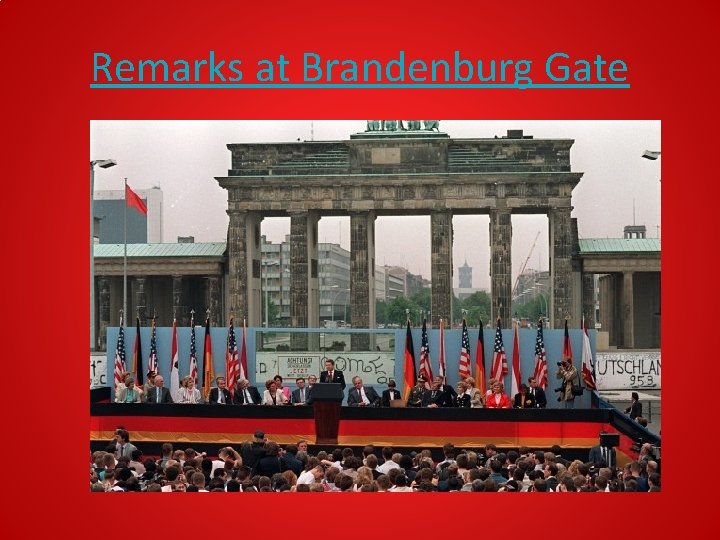
Remarks at Brandenburg Gate
Failure of the Planned Economy • Soviet benefits: low rents, cheap staple food items, free health care/day care, very little unemployment • Soviet Drawbacks – Collectivization unproductive – Command economy cannot produce enough consumer goods • Long lines, few luxury items – Central planning unaware of local problems – Lifetime security = little worker motivation
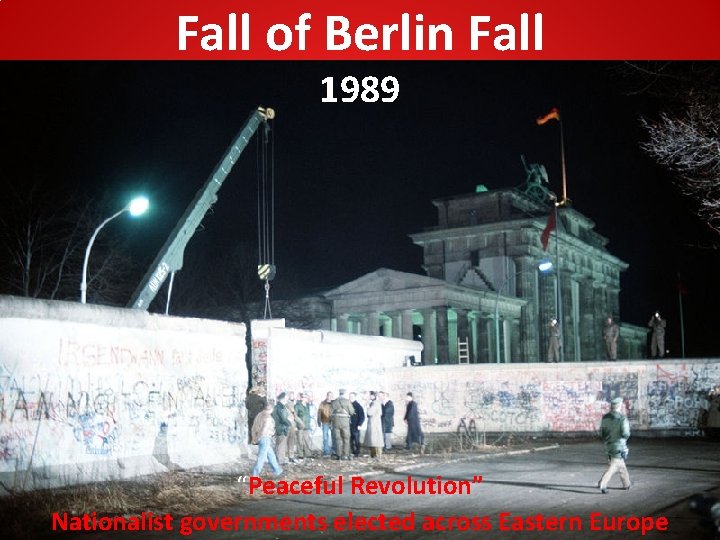
Fall of Berlin Fall 1989 “Peaceful Revolution” Nationalist governments elected across Eastern Europe
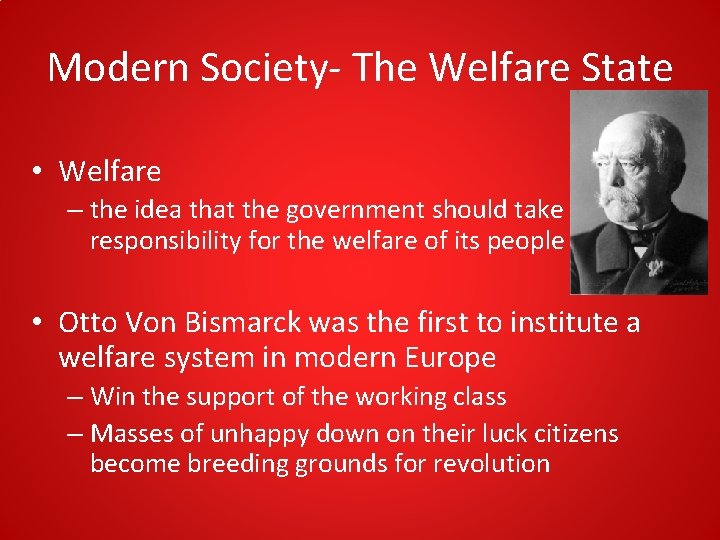
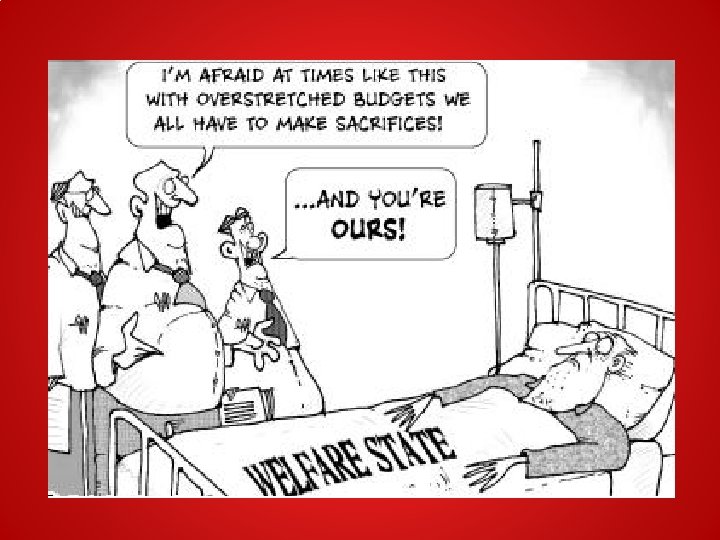
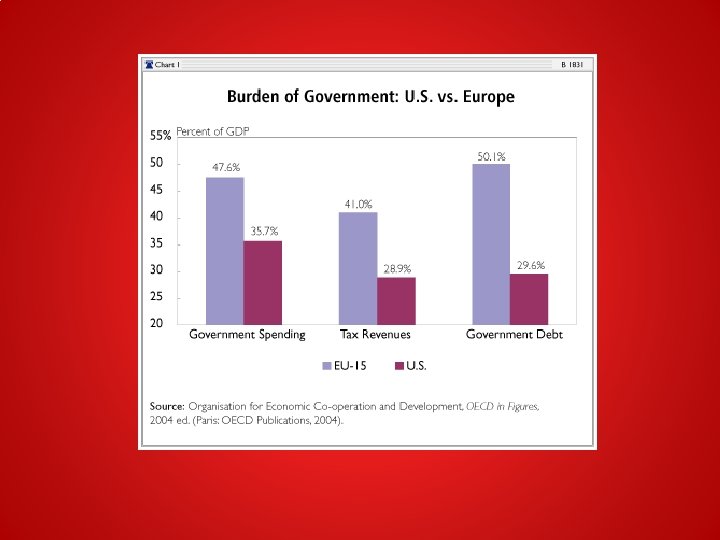
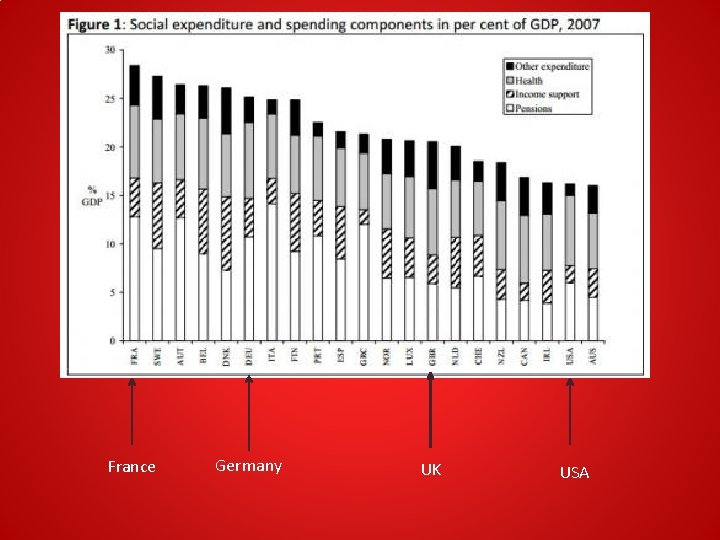
Modern Society- The Welfare State • Welfare – the idea that the government should take responsibility for the welfare of its people • Otto Von Bismarck was the first to institute a welfare system in modern Europe – Win the support of the working class – Masses of unhappy down on their luck citizens become breeding grounds for revolution
Modern Society- The Welfare State • There was no welfare in the rest of Europe before 1900. • Britain was the next country to institute welfare 1. Boer War- British War (1899 -1901) citizens were not medically fit to fight. Threat to national defense 2. Sickness- The industrial output of the nation was suffering 3. Social Investigations- poverty was the cause of unemployment, poor health, poor productivity. Drinking and gambling were found to by symptoms not causes. 4. Pressure from political parties that promised reforms to the working classes.
Planned Welfare State William Beveridge (1942) There were 5 Giants that blocked progress: 1. Want 2. Disease 3. Squalor 4. Ignorance 5. Idleness He came up with an “insurance” system to fight these: • All workers, all employers and the state would pay in • This would allow for free health care, old age pensions, sickness, and disability, child allowances
France Germany UK USA