
The Cold War Causes Ideologies belief systems of
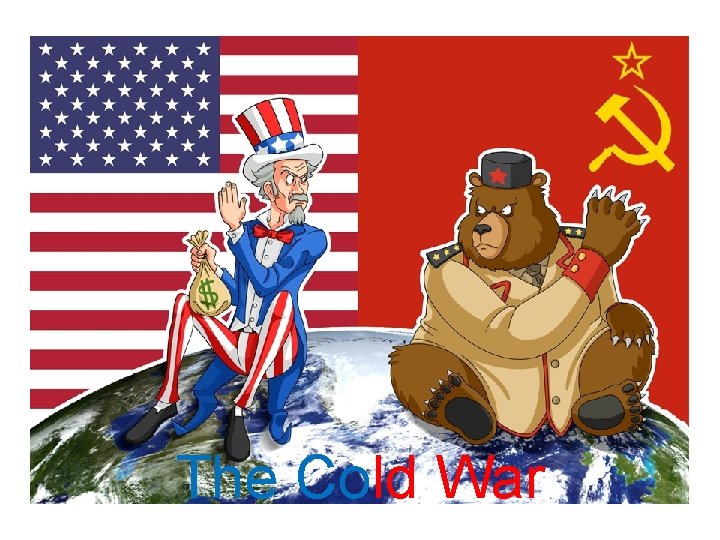
The Cold War
Causes Ideologies • belief systems of the two superpowers and their allies were opposite to each other: democracy and capitalism in comparison to central planning and communist dictatorship • as a consequence these two ideologies competed with each other • every activity is connected to proving one system is superior to the over
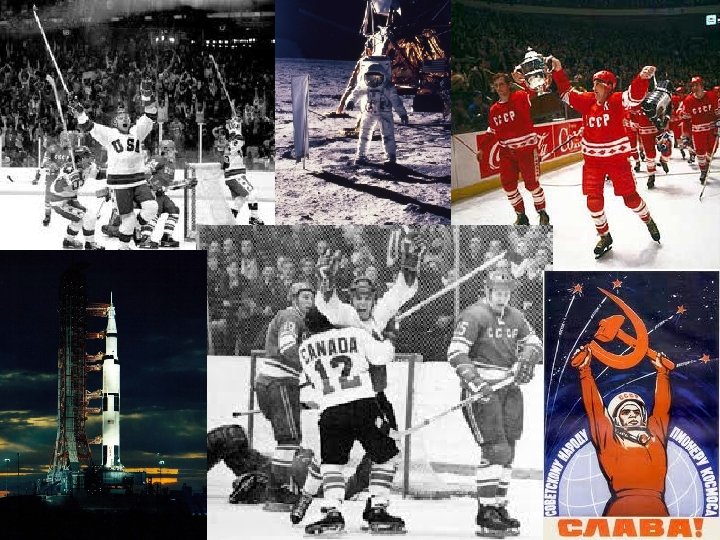
Nationalism • intertwined with every activity, each side is extremely proud of their ideology and feel it is superior to their enemies • patriotic speeches in favour of the ideology that wins the competition of the day e. g. sporting events, literature competitions, wars, the space race
Imperialism • the control by one dominate nation over weaker nations • Soviet Union was dominating factor in Eastern Europe • dictatorship of communism allowed for total control in their sphere of influence • same goes for Western Europe under American influence, although control not as obvious
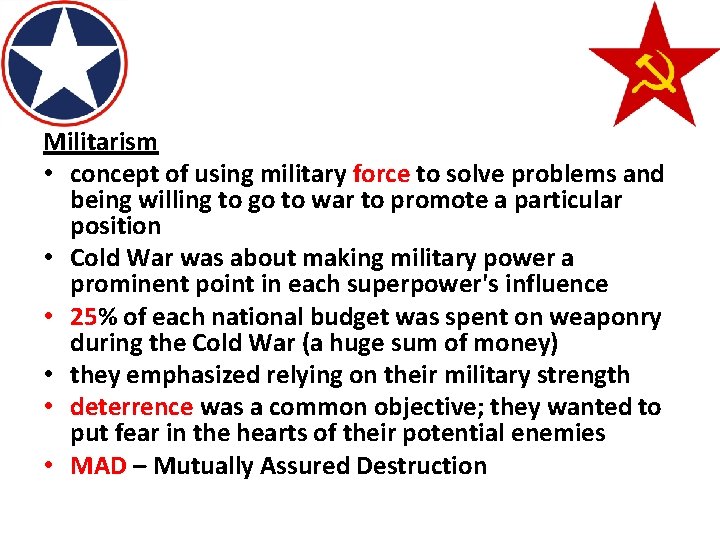
Militarism • concept of using military force to solve problems and being willing to go to war to promote a particular position • Cold War was about making military power a prominent point in each superpower's influence • 25% of each national budget was spent on weaponry during the Cold War (a huge sum of money) • they emphasized relying on their military strength • deterrence was a common objective; they wanted to put fear in the hearts of their potential enemies • MAD – Mutually Assured Destruction
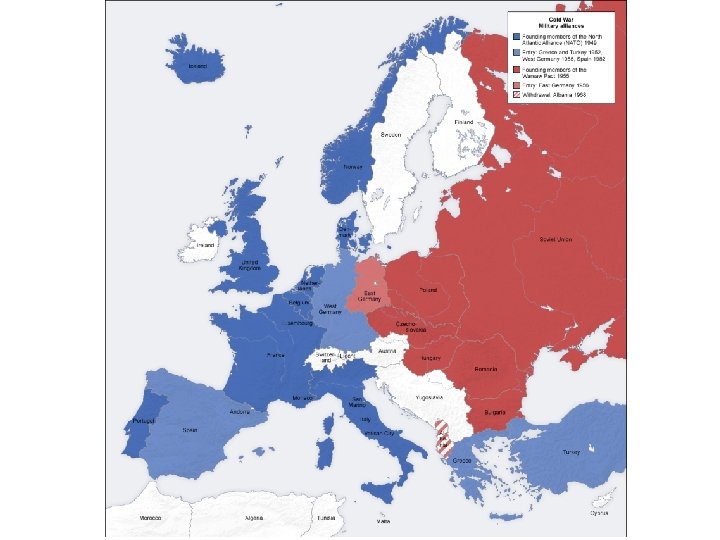
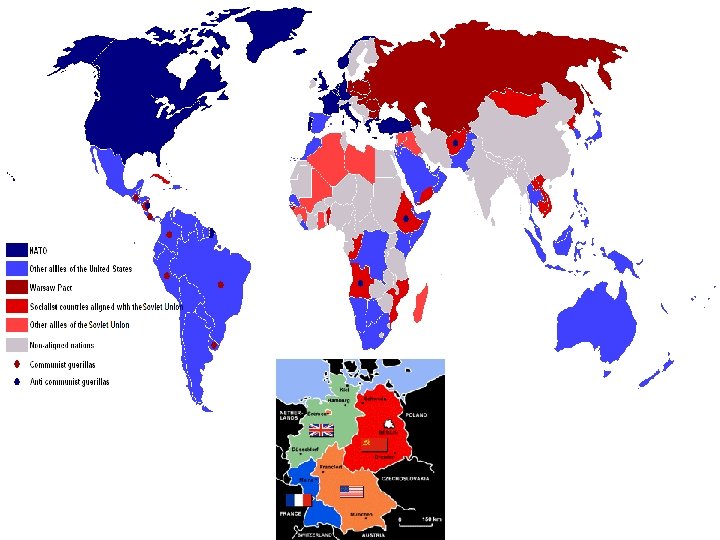
Alliances • Soviets created an alliance to promote and protect themselves which committed them to support communism and to resist the American sphere of influence during the Cold War (Warsaw Pact) • the Americans surrounded the Soviet Union with their own alliances in an attempt to contain the Soviet sphere i. e. prevent them from expanding (NATO, NORAD, SEATO, CENTO) • this alliance systems were a two edged sword which protected them, but also committed them to this struggle
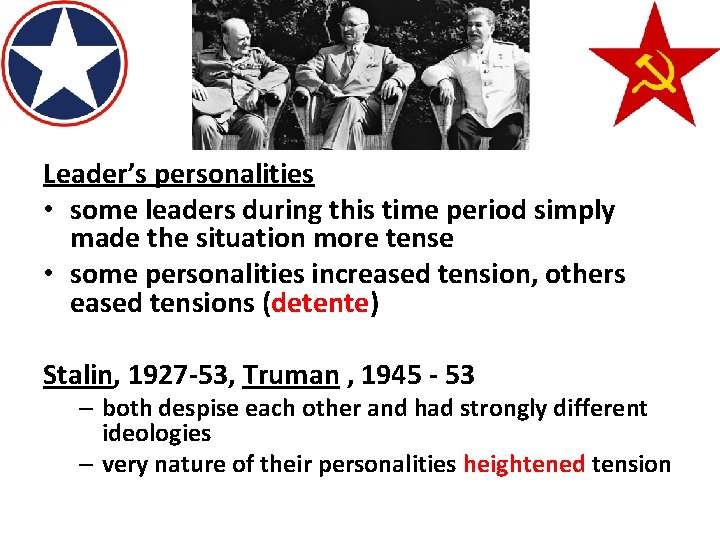
Leader’s personalities • some leaders during this time period simply made the situation more tense • some personalities increased tension, others eased tensions (detente) Stalin, 1927 -53, Truman , 1945 - 53 – both despise each other and had strongly different ideologies – very nature of their personalities heightened tension
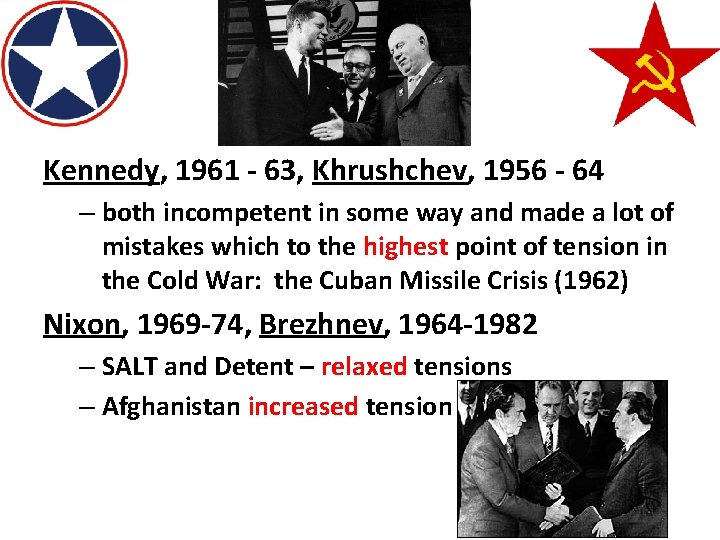
Kennedy, 1961 - 63, Khrushchev, 1956 - 64 – both incompetent in some way and made a lot of mistakes which to the highest point of tension in the Cold War: the Cuban Missile Crisis (1962) Nixon, 1969 -74, Brezhnev, 1964 -1982 – SALT and Detent – relaxed tensions – Afghanistan increased tension
Reagan, 1981 - 89 – hated and despised communism which ended up intensifying the Cold War – own desire was to increase the number of American weapons to further deter the Soviet Union – called the Soviet Union an "evil empire"
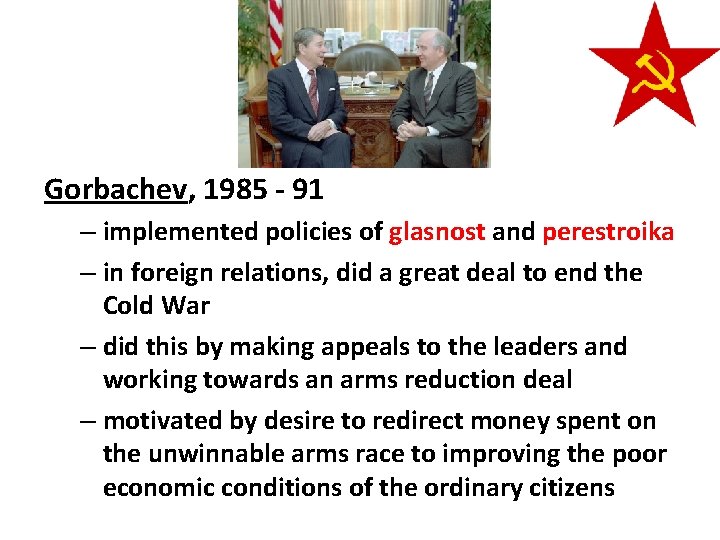
Gorbachev, 1985 - 91 – implemented policies of glasnost and perestroika – in foreign relations, did a great deal to end the Cold War – did this by making appeals to the leaders and working towards an arms reduction deal – motivated by desire to redirect money spent on the unwinnable arms race to improving the poor economic conditions of the ordinary citizens
- Slides: 14