
The Cold War Begins Chapter 12 Section 1
The Cold War Begins Chapter 12 Section 1
Lecture Focus Question n. How did U. S. leaders respond to the threat of Soviet expansion in Europe?
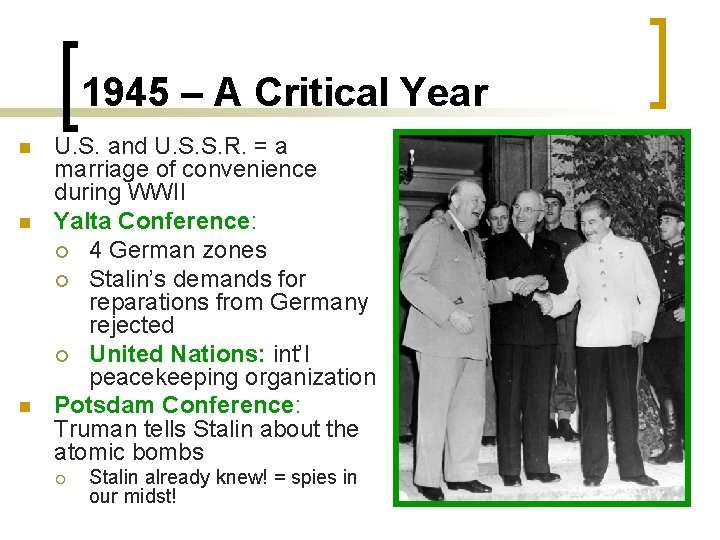
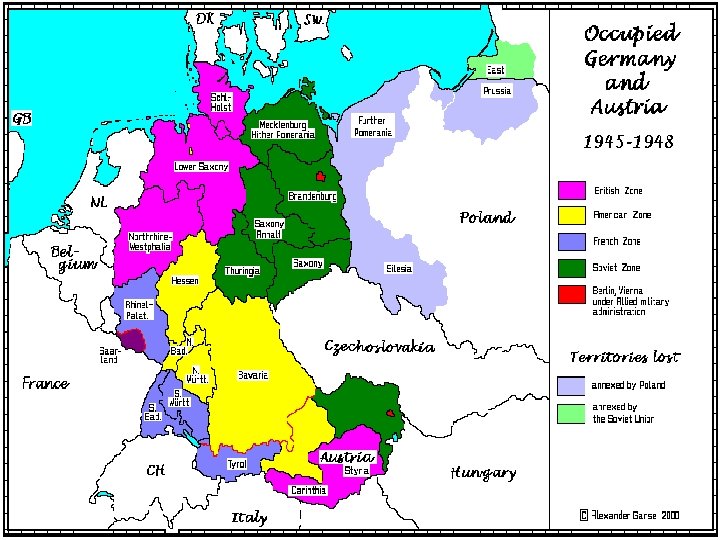
1945 – A Critical Year n n n U. S. and U. S. S. R. = a marriage of convenience during WWII Yalta Conference: ¡ 4 German zones ¡ Stalin’s demands for reparations from Germany rejected ¡ United Nations: int’l peacekeeping organization Potsdam Conference: Truman tells Stalin about the atomic bombs ¡ Stalin already knew! = spies in our midst!
Conflicting Postwar Goals n American View ¡ ¡ n Democracy and economic opportunity for all! Would serve U. S. interests by providing markets for its products Soviet View ¡ ¡ Spread communism Satellite nations: countries subject to Soviet domination (buffer zone against attacks)
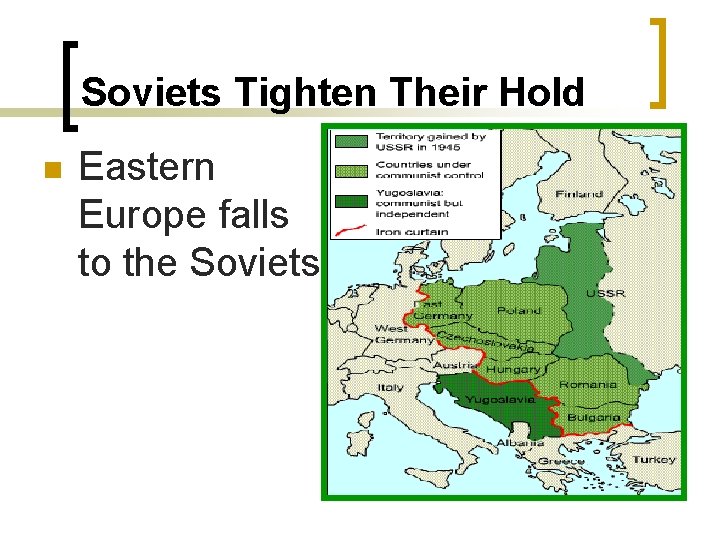
Soviets Tighten Their Hold n Eastern Europe falls to the Soviets
The Iron Curtain n War of words ensued between Stalin and Churchill Iron curtain: term coined by Churchill to describe the political division between Communist and non-Communist life Cold War: competition between U. S. and U. S. S. R. for power and influence in the world ¡ Characterized by political and economic conflicts and military tensions
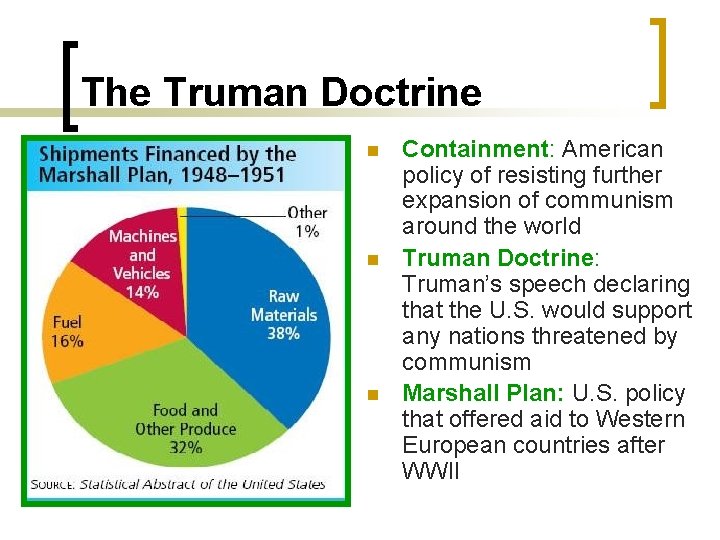
The Truman Doctrine n n n Containment: American policy of resisting further expansion of communism around the world Truman Doctrine: Truman’s speech declaring that the U. S. would support any nations threatened by communism Marshall Plan: U. S. policy that offered aid to Western European countries after WWII
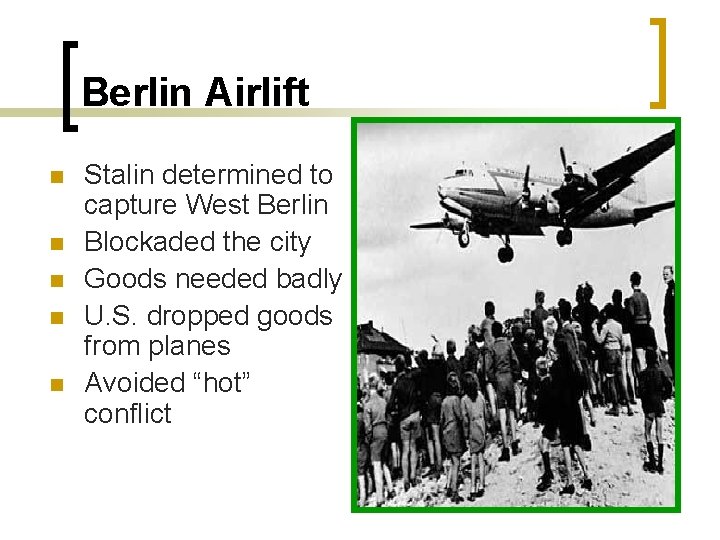
Berlin Airlift n n n Stalin determined to capture West Berlin Blockaded the city Goods needed badly U. S. dropped goods from planes Avoided “hot” conflict
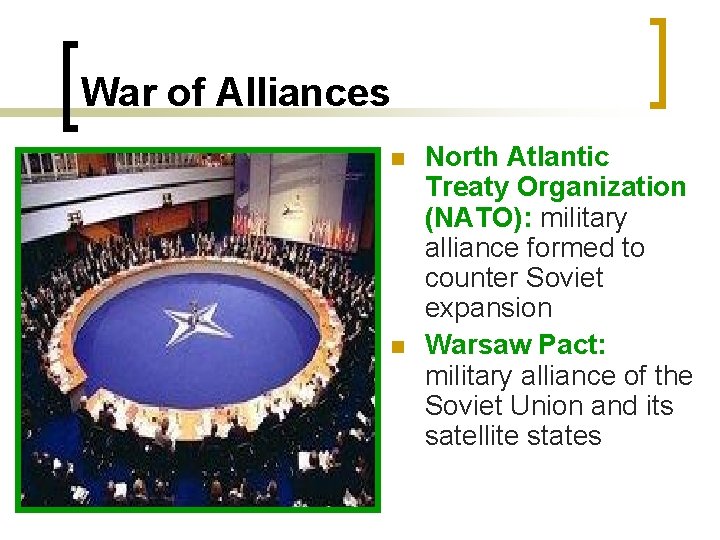
War of Alliances n n North Atlantic Treaty Organization (NATO): military alliance formed to counter Soviet expansion Warsaw Pact: military alliance of the Soviet Union and its satellite states
![The Cold War [1945 -1991]: An Ideological Struggle Soviet & Eastern Bloc Nations [“Iron](http://slidetodoc.com/presentation_image_h2/017b68637b2fd7610728ae81f0170b2a/image-11.jpg "The Cold War [1945 -1991]: An Ideological Struggle Soviet & Eastern Bloc Nations [“Iron")
The Cold War [1945 -1991]: An Ideological Struggle Soviet & Eastern Bloc Nations [“Iron Curtain”] GOAL spread worldwide Communism METHODOLOGIES: US & the Western Democracies GOAL “Containment” of Communism & the eventual collapse of the Communist world. [George Kennan] 1. Espionage [KGB vs. CIA] 2. Arms Race [nuclear escalation] 3. Ideological Competition for the minds and hearts of Third World peoples [Communist govt. & command economy vs. democratic govt. & capitalist economy] “proxy wars” 4. Bi-Polarization of Europe [NATO vs. Warsaw Pact]
Lecture Focus Question n. How did U. S. leaders respond to the threat of Soviet expansion in Europe?
- Slides: 12