
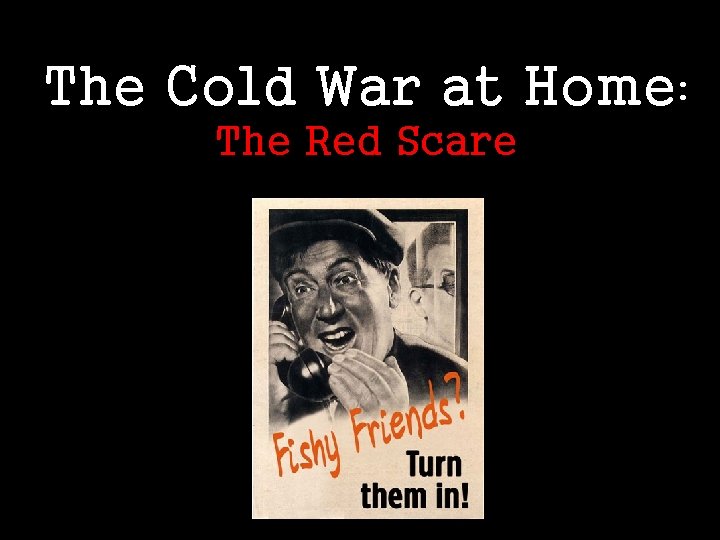
The Cold War at Home The Red Scare

- Slides: 23
The Cold War at Home: The Red Scare
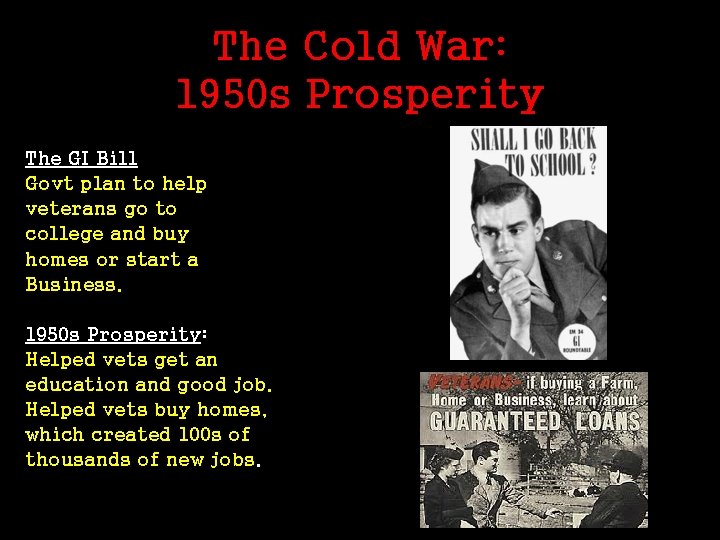
The Cold War: 1950 s Prosperity The GI Bill Govt plan to help veterans go to college and buy homes or start a Business. 1950 s Prosperity: Helped vets get an education and good job. Helped vets buy homes, which created 100 s of thousands of new jobs.
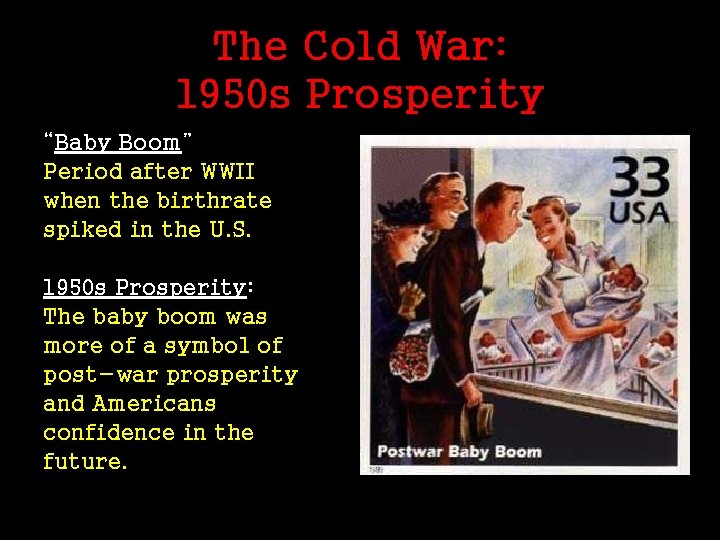
The Cold War: 1950 s Prosperity “Baby Boom” Period after WWII when the birthrate spiked in the U. S. 1950 s Prosperity: The baby boom was more of a symbol of post-war prosperity and Americans confidence in the future.
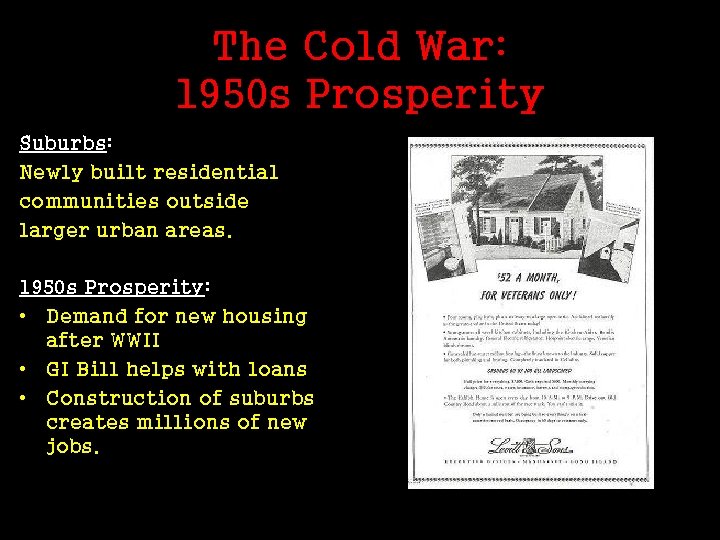
The Cold War: 1950 s Prosperity Suburbs: Newly built residential communities outside larger urban areas. 1950 s Prosperity: • Demand for new housing after WWII • GI Bill helps with loans • Construction of suburbs creates millions of new jobs.
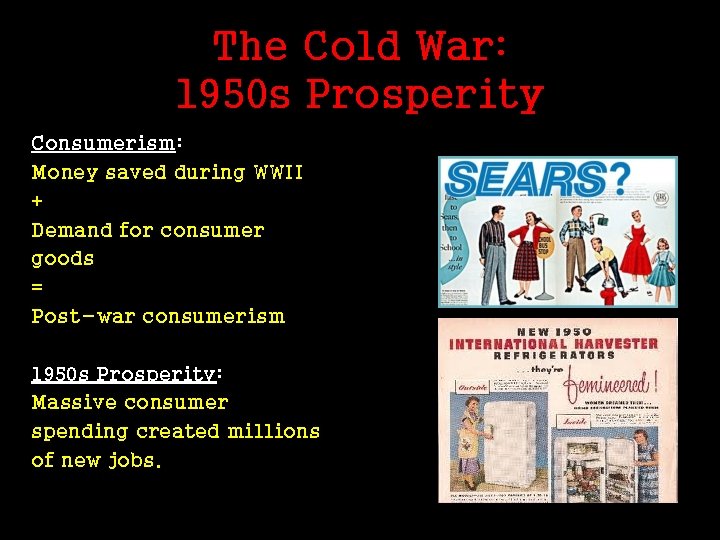
The Cold War: 1950 s Prosperity Consumerism: Money saved during WWII + Demand for consumer goods = Post-war consumerism 1950 s Prosperity: Massive consumer spending created millions of new jobs.
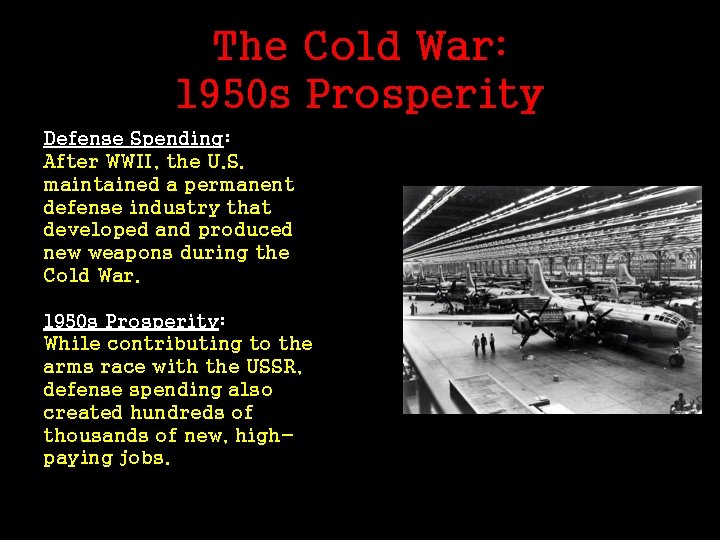
The Cold War: 1950 s Prosperity Defense Spending: After WWII, the U. S. maintained a permanent defense industry that developed and produced new weapons during the Cold War. 1950 s Prosperity: While contributing to the arms race with the USSR, defense spending also created hundreds of thousands of new, highpaying jobs.
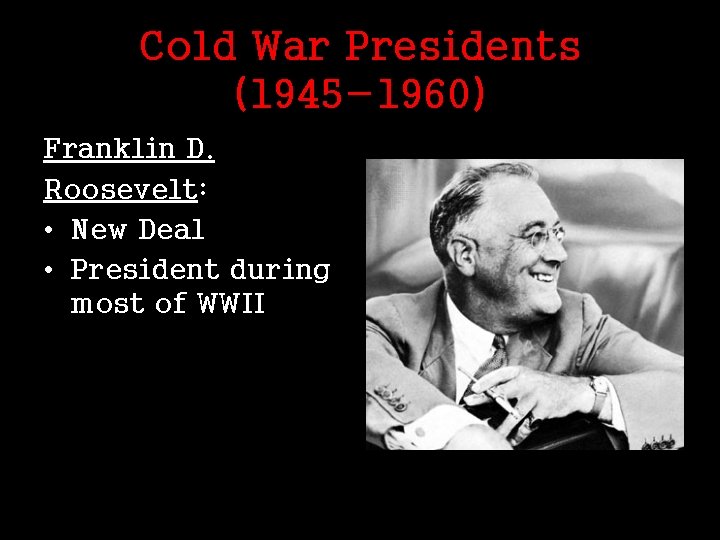
Cold War Presidents (1945 -1960) Franklin D. Roosevelt: • New Deal • President during most of WWII
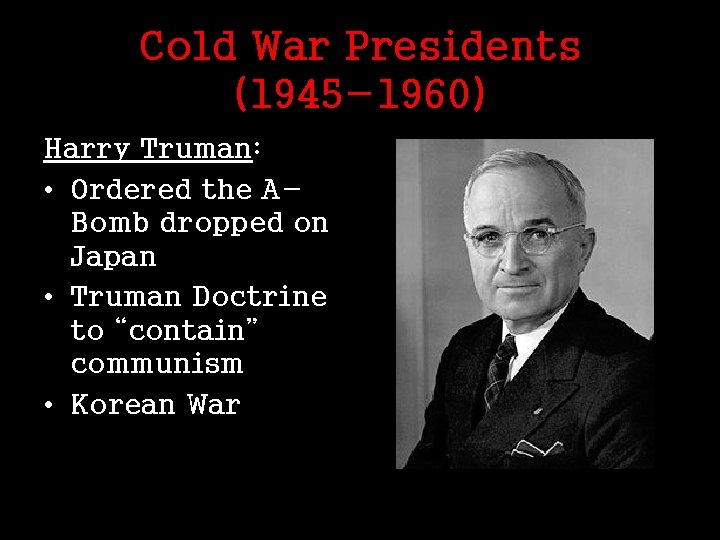
Cold War Presidents (1945 -1960) Harry Truman: • Ordered the ABomb dropped on Japan • Truman Doctrine to “contain” communism • Korean War
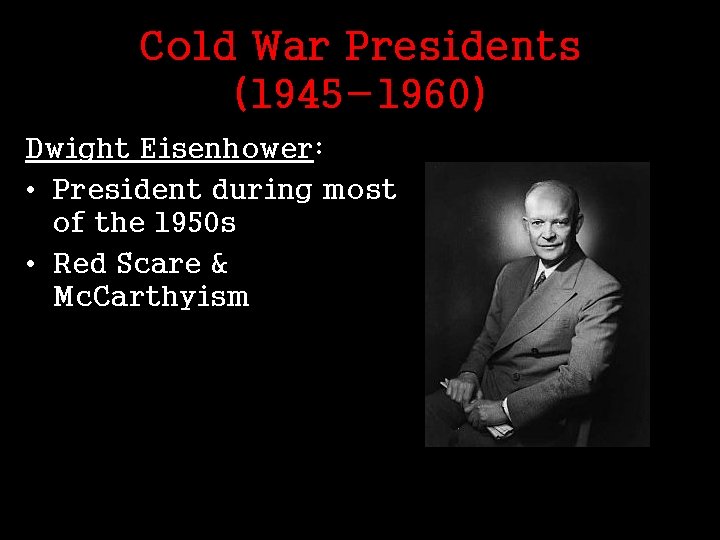
Cold War Presidents (1945 -1960) Dwight Eisenhower: • President during most of the 1950 s • Red Scare & Mc. Carthyism
The Red Scare
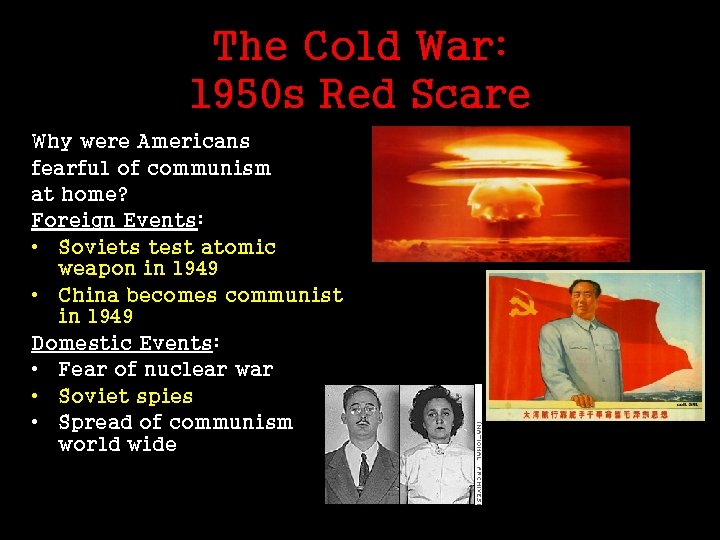
The Cold War: 1950 s Red Scare Why were Americans fearful of communism at home? Foreign Events: • Soviets test atomic weapon in 1949 • China becomes communist in 1949 Domestic Events: • Fear of nuclear war • Soviet spies • Spread of communism world wide
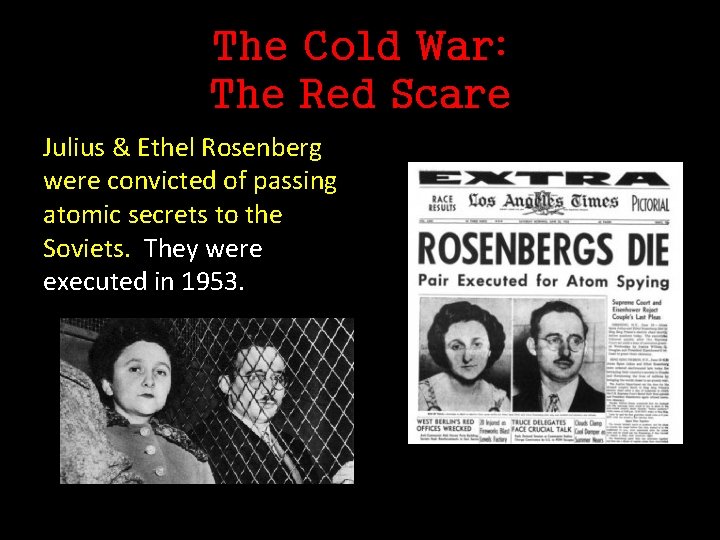
The Cold War: The Red Scare Julius & Ethel Rosenberg were convicted of passing atomic secrets to the Soviets. They were executed in 1953.
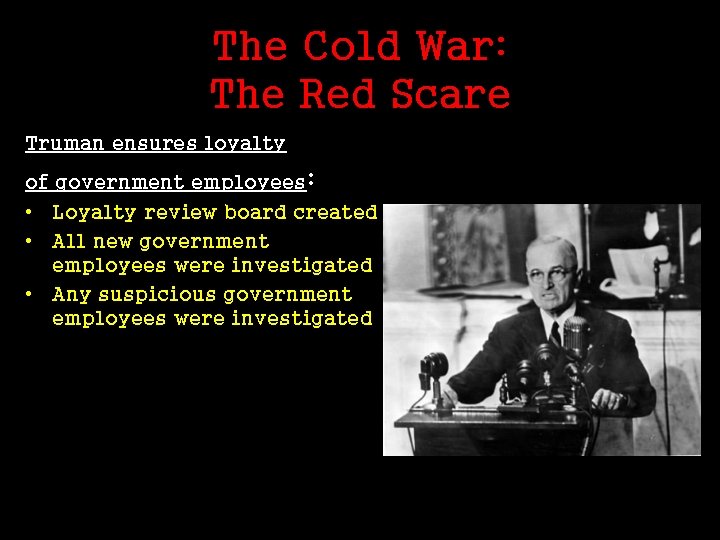
The Cold War: The Red Scare Truman ensures loyalty of government employees: • Loyalty review board created • All new government employees were investigated • Any suspicious government employees were investigated
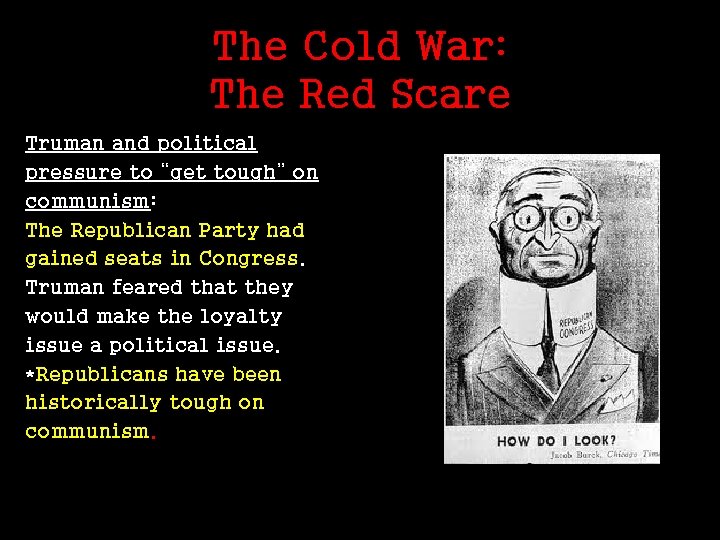
The Cold War: The Red Scare Truman and political pressure to “get tough” on communism: The Republican Party had gained seats in Congress. Truman feared that they would make the loyalty issue a political issue. *Republicans have been historically tough on communism.
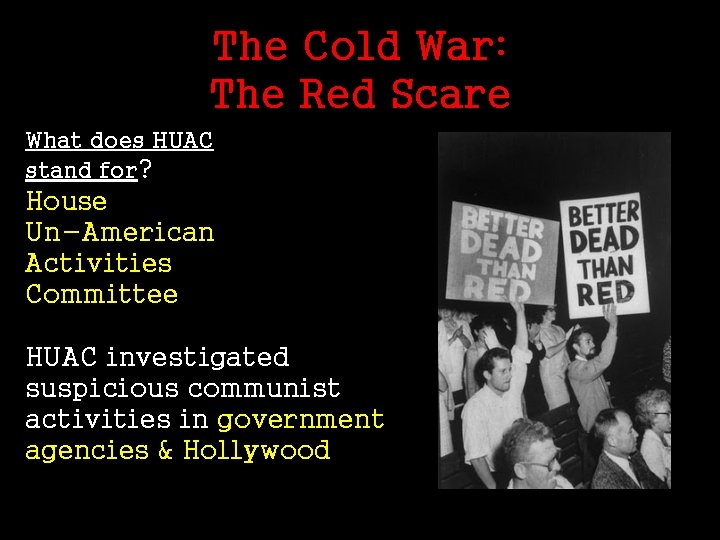
The Cold War: The Red Scare What does HUAC stand for? House Un-American Activities Committee HUAC investigated suspicious communist activities in government agencies & Hollywood
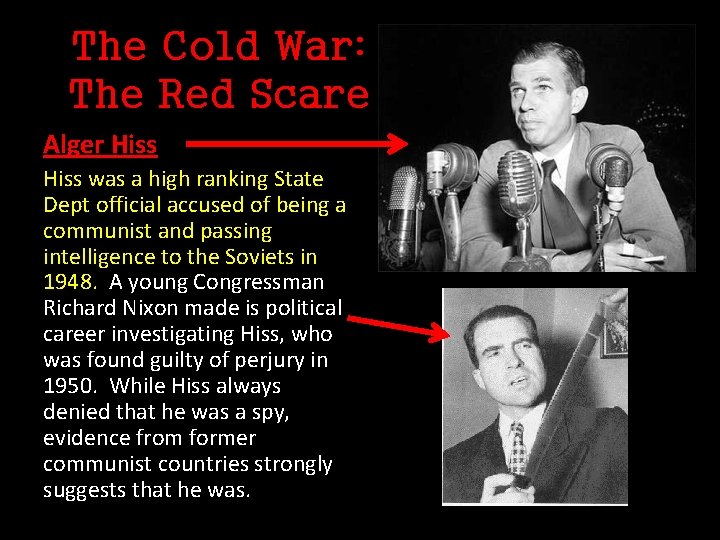
The Cold War: The Red Scare Alger Hiss was a high ranking State Dept official accused of being a communist and passing intelligence to the Soviets in 1948. A young Congressman Richard Nixon made is political career investigating Hiss, who was found guilty of perjury in 1950. While Hiss always denied that he was a spy, evidence from former communist countries strongly suggests that he was.
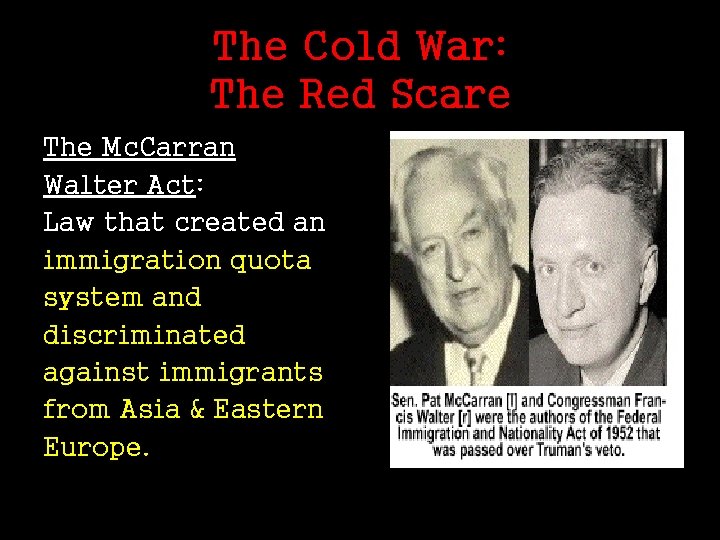
The Cold War: The Red Scare The Mc. Carran Walter Act: Law that created an immigration quota system and discriminated against immigrants from Asia & Eastern Europe.
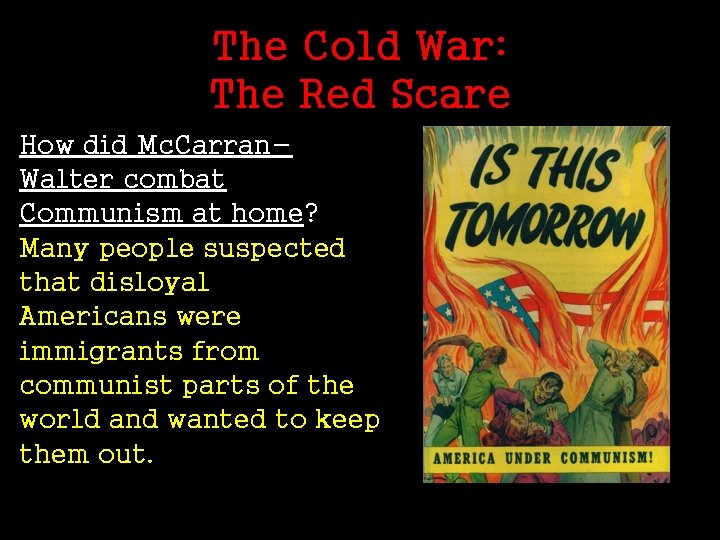
The Cold War: The Red Scare How did Mc. Carran. Walter combat Communism at home? Many people suspected that disloyal Americans were immigrants from communist parts of the world and wanted to keep them out.
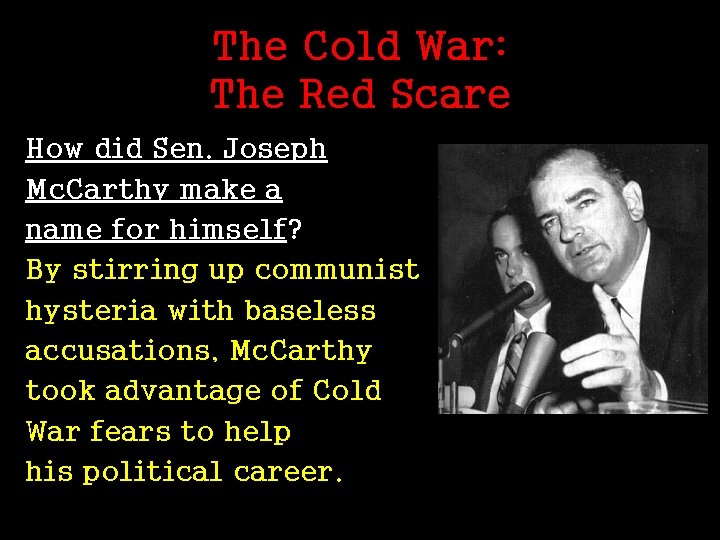
The Cold War: The Red Scare How did Sen. Joseph Mc. Carthy make a name for himself? By stirring up communist hysteria with baseless accusations, Mc. Carthy took advantage of Cold War fears to help his political career.
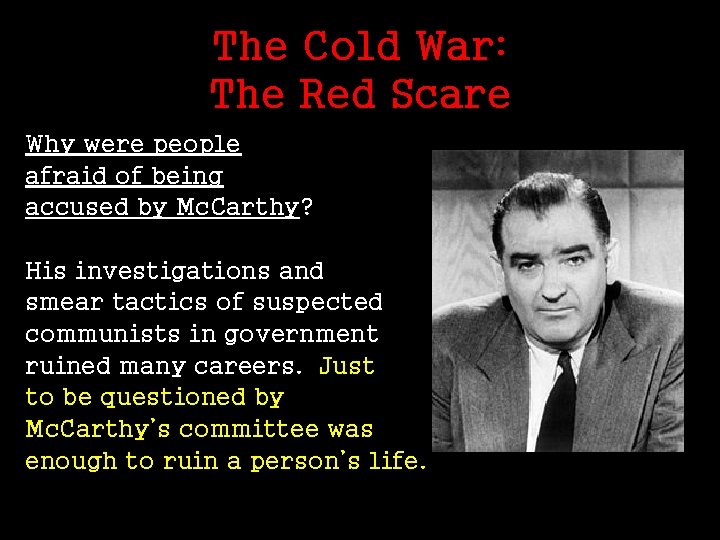
The Cold War: The Red Scare Why were people afraid of being accused by Mc. Carthy? His investigations and smear tactics of suspected communists in government ruined many careers. Just to be questioned by Mc. Carthy’s committee was enough to ruin a person’s life.
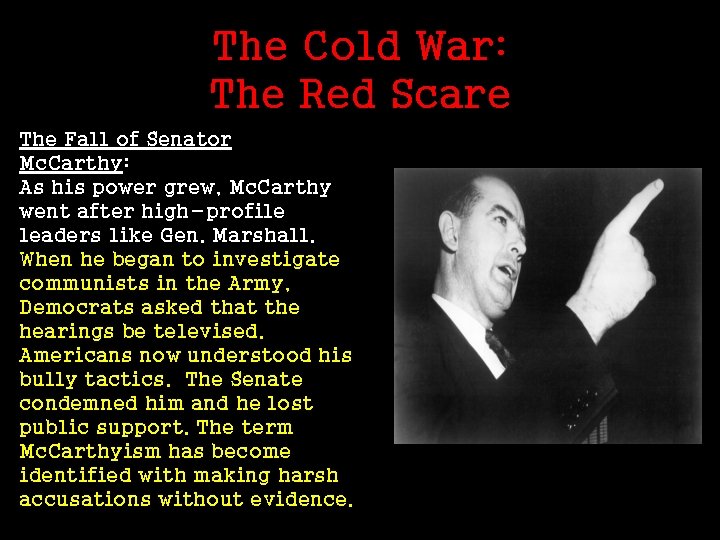
The Cold War: The Red Scare The Fall of Senator Mc. Carthy: As his power grew, Mc. Carthy went after high-profile leaders like Gen. Marshall. When he began to investigate communists in the Army, Democrats asked that the hearings be televised. Americans now understood his bully tactics. The Senate condemned him and he lost public support. The term Mc. Carthyism has become identified with making harsh accusations without evidence.
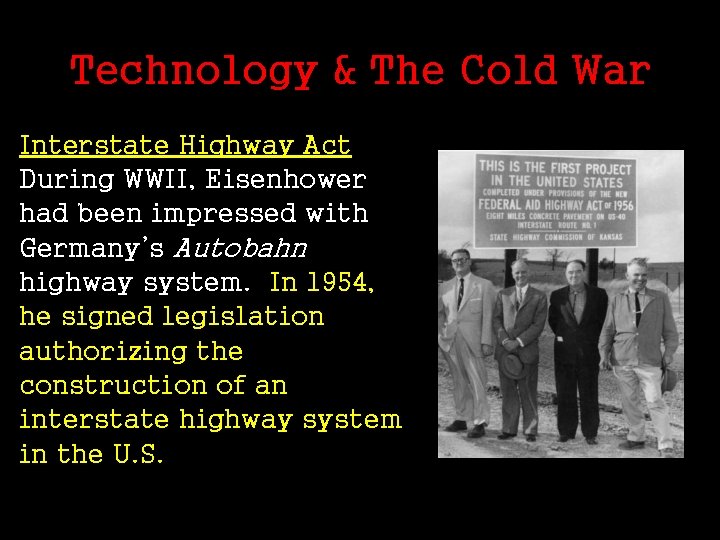
Technology & The Cold War Interstate Highway Act During WWII, Eisenhower had been impressed with Germany’s Autobahn highway system. In 1954, he signed legislation authorizing the construction of an interstate highway system in the U. S.
Technology & The Cold War The Interstate Highway system would have the following benefits: • contribute to post-war prosperity by providing jobs for thousands • make it easier for commercial goods to be transported across the country • if necessary, help during a military crisis