
The Cold War and Vietnam The New Generation
- Slides: 19
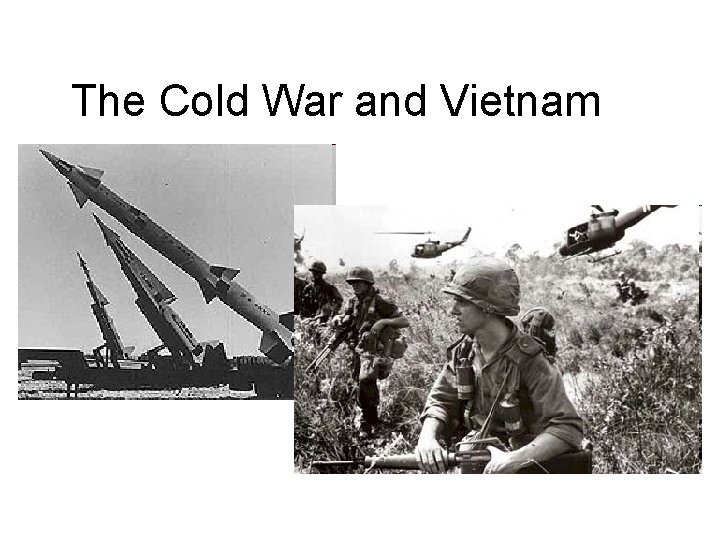
The Cold War and Vietnam
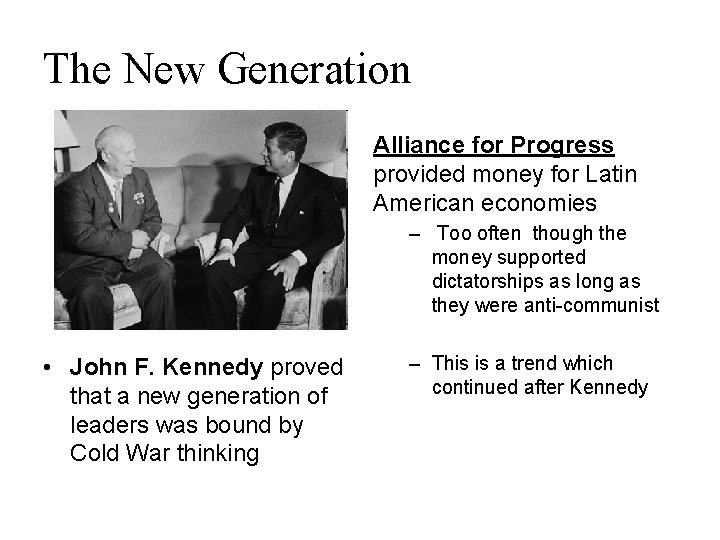
The New Generation Alliance for Progress provided money for Latin American economies – Too often though the money supported dictatorships as long as they were anti-communist • John F. Kennedy proved that a new generation of leaders was bound by Cold War thinking – This is a trend which continued after Kennedy
Cuba!! Bay of Pigs Invasion, 1961 An unsuccessful action by a CIA-trained force of Cuban exiles to invade southern Cuba, with support and encouragement from the US government, in an attempt to overthrow the Communist Cuban government of Fidel Castro Cuban Missile Crisis, 1962 Cuban and Soviet governments began to build bases in Cuba for a number of nuclear missiles with the ability to strike most of the continental United States. • Eventually JFK and Khrushchev reached an agreement to end crisis – Cuba dismantled missiles – US promised never to invade Cuba
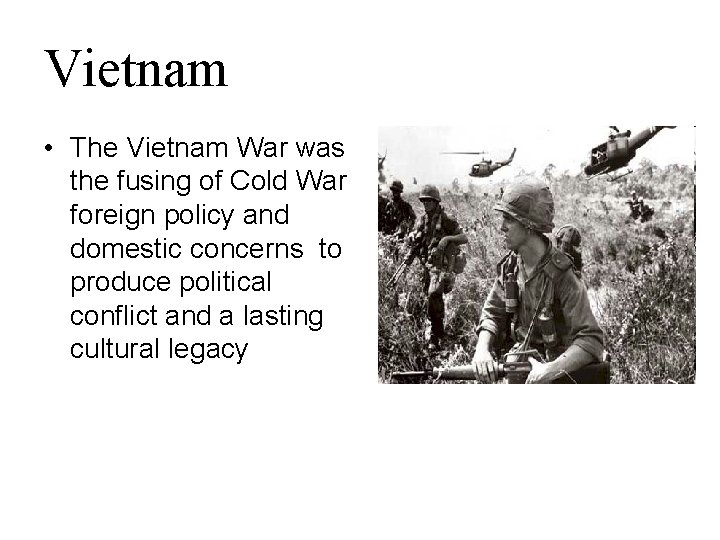
Vietnam • The Vietnam War was the fusing of Cold War foreign policy and domestic concerns to produce political conflict and a lasting cultural legacy
Background: Vietnam War • Vietnam wins independence from France in 1954 led by communist rebels • Elections to unify the country were scheduled in 1956 but were never held. • The United Nations splits the country in two: – North Vietnam controlled by Ho Chi Minh, who is communist – South Vietnam led by Ngo Dinh Diem and supported by the US
U. S Involvement Expands • Presidents Eisenhower (1950 s) and Kennedy (19611963) send military advisers to South Vietnam. • President Diem (S. Vietnam) was assassinated in 1963 with CIA assistance – U. S. committed itself to policy of containment. • South Vietnam is left without strong leadership – The US has become dissatisfied with his political agenda
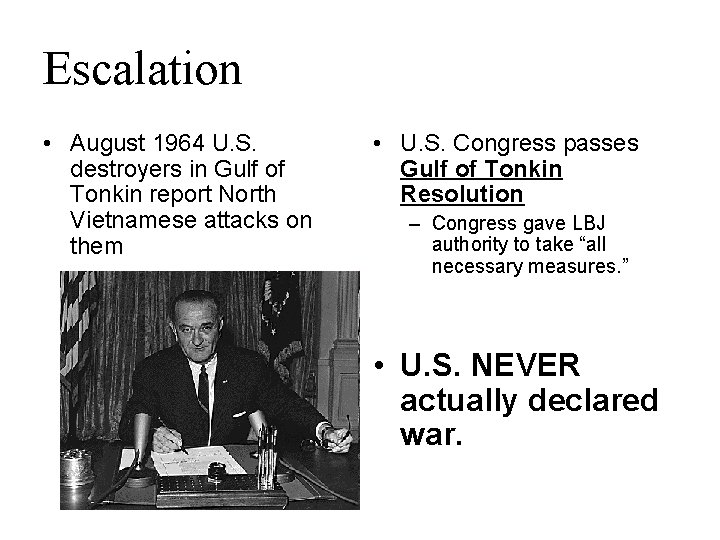
Escalation • August 1964 U. S. destroyers in Gulf of Tonkin report North Vietnamese attacks on them • U. S. Congress passes Gulf of Tonkin Resolution – Congress gave LBJ authority to take “all necessary measures. ” • U. S. NEVER actually declared war.
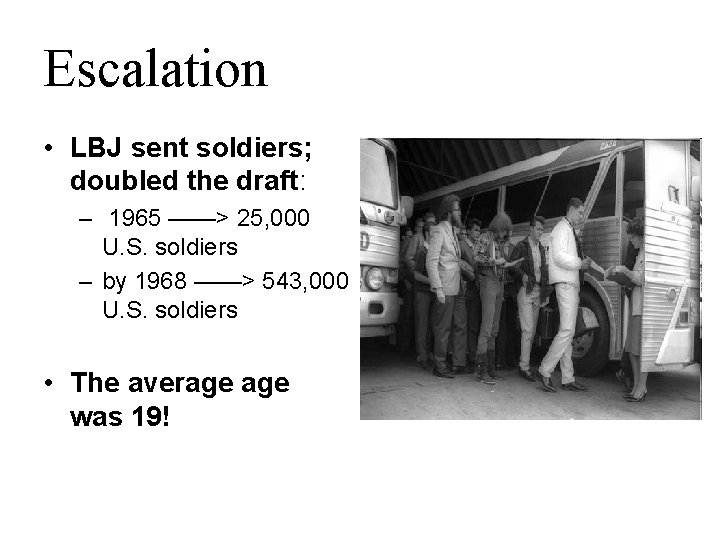
Escalation • LBJ sent soldiers; doubled the draft: – 1965 ——> 25, 000 U. S. soldiers – by 1968 ——> 543, 000 U. S. soldiers • The average was 19!
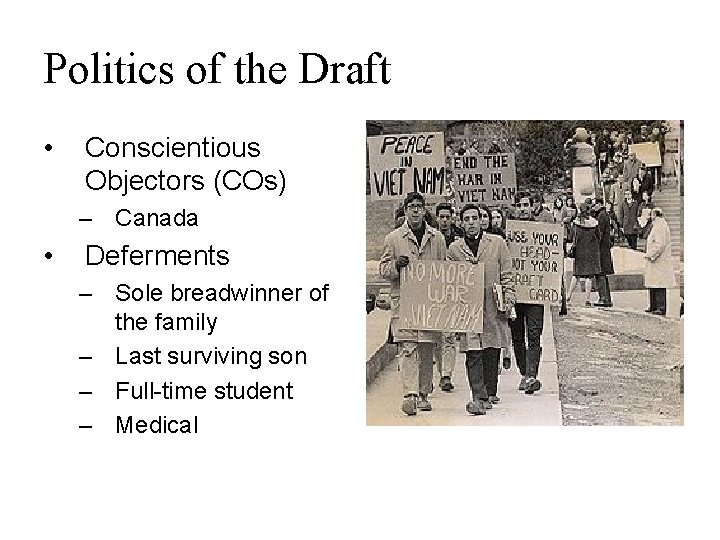
Politics of the Draft • Conscientious Objectors (COs) – Canada • Deferments – Sole breadwinner of the family – Last surviving son – Full-time student – Medical
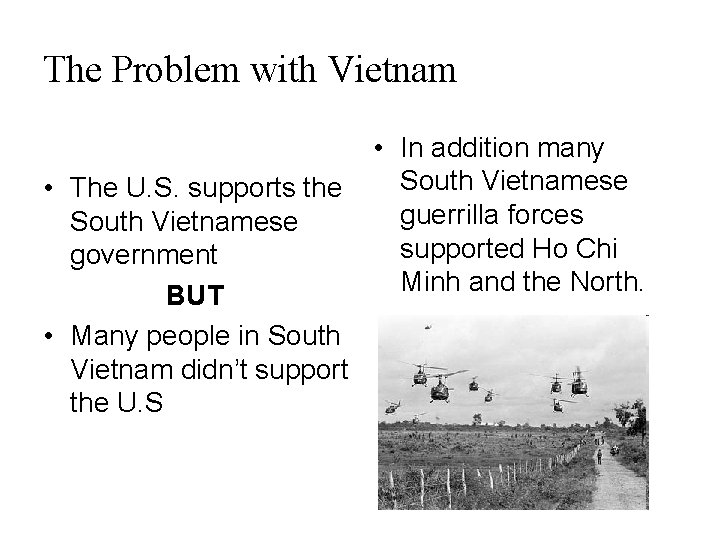
The Problem with Vietnam • The U. S. supports the South Vietnamese government BUT • Many people in South Vietnam didn’t support the U. S • In addition many South Vietnamese guerrilla forces supported Ho Chi Minh and the North.
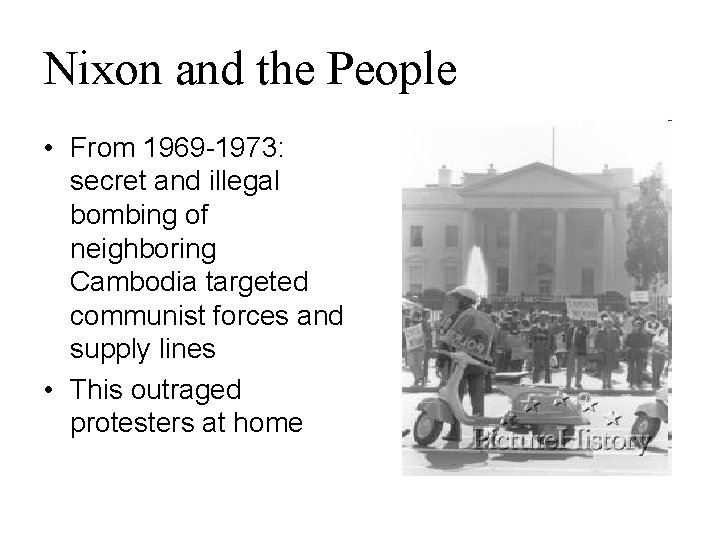
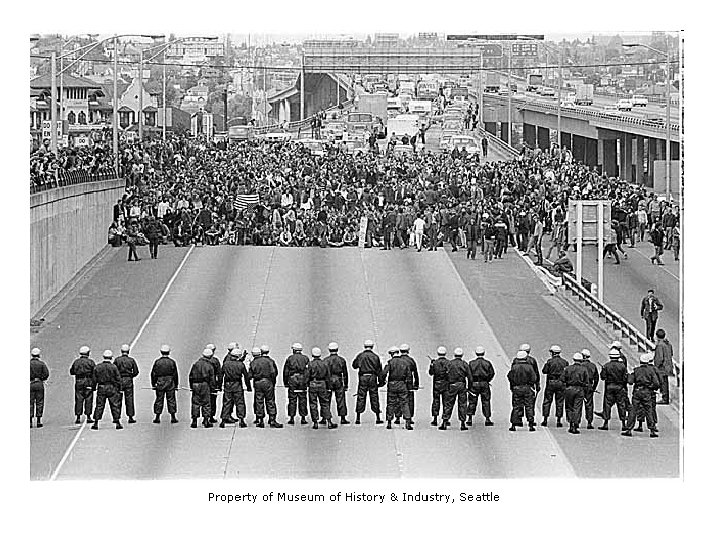
Nixon and the People • From 1969 -1973: secret and illegal bombing of neighboring Cambodia targeted communist forces and supply lines • This outraged protesters at home
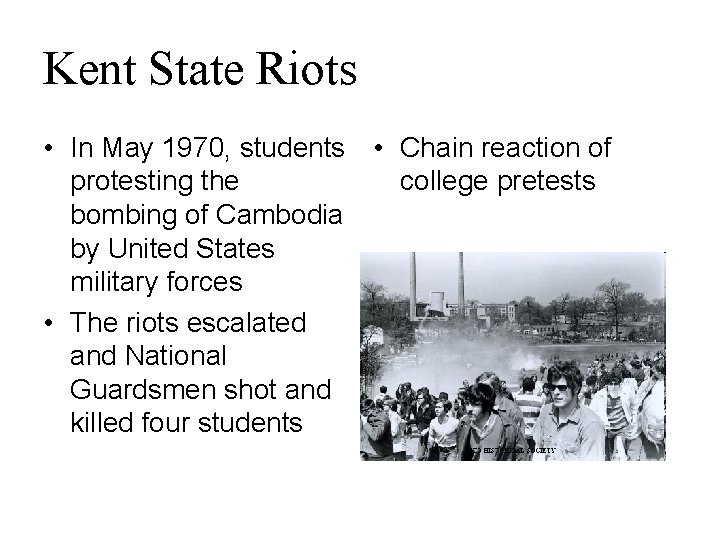
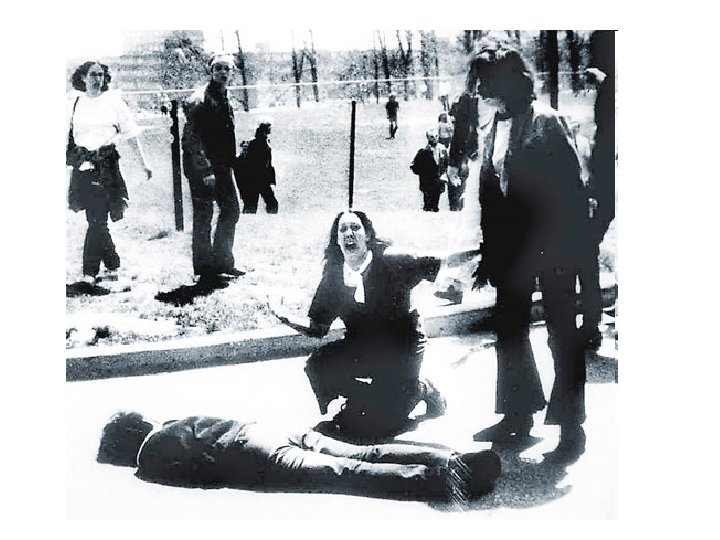
Kent State Riots • In May 1970, students • Chain reaction of protesting the college pretests bombing of Cambodia by United States military forces • The riots escalated and National Guardsmen shot and killed four students
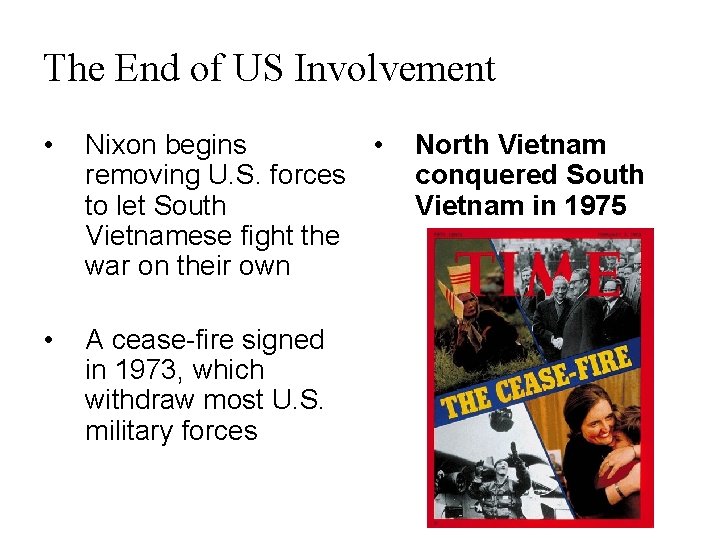
The End of US Involvement • Nixon begins • removing U. S. forces to let South Vietnamese fight the war on their own • A cease-fire signed in 1973, which withdraw most U. S. military forces North Vietnam conquered South Vietnam in 1975
Vietnam changed us…. • Voting age was changed from 21 to 18 (26 th amd) – Old enough to fight, old enough to vote • War Powers Act of 1973 – President can send U. S. armed forces into action abroad only by authorization of Congress • Suspicion of government intentions • No draft since Vietnam • “Support the troops”
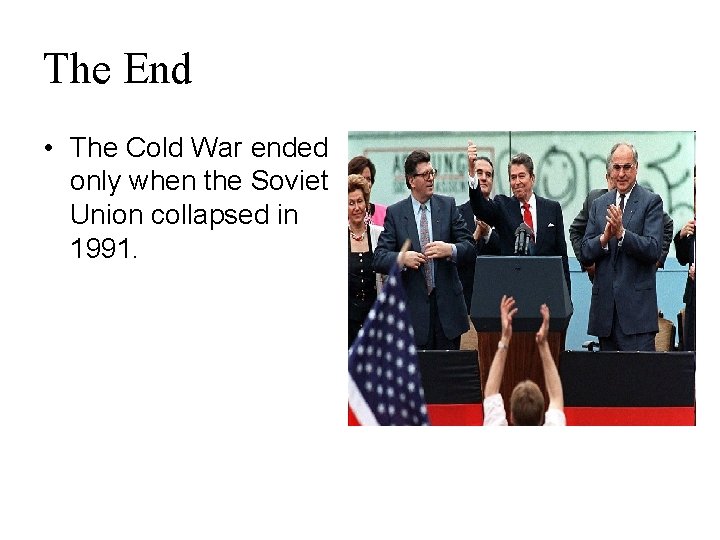
The End • The Cold War ended only when the Soviet Union collapsed in 1991.
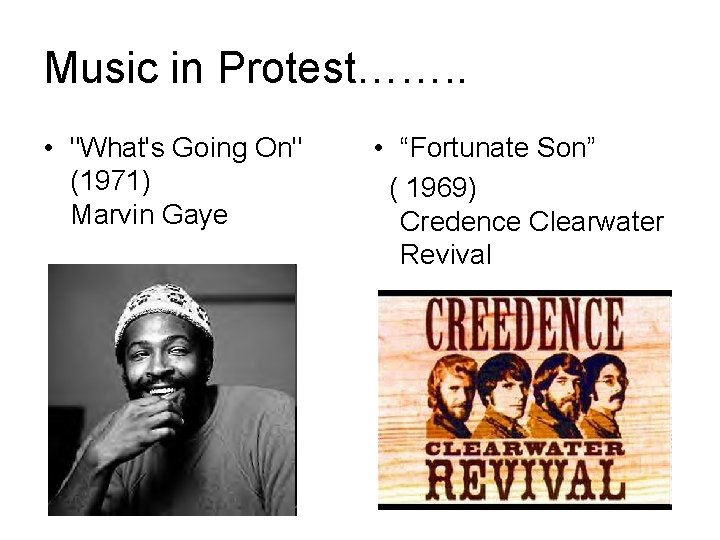
Music in Protest……. . • "What's Going On" (1971) Marvin Gaye • “Fortunate Son” ( 1969) Credence Clearwater Revival