
The Cold War 1945 A History of 1991
- Slides: 37
The Cold War: 1945 A History of 1991 Western Society Chapter 21 Pg # 98785 -832
WWII Victory in Europe and the Pacific Chapter 14, Section 5 Pg# 484 -487
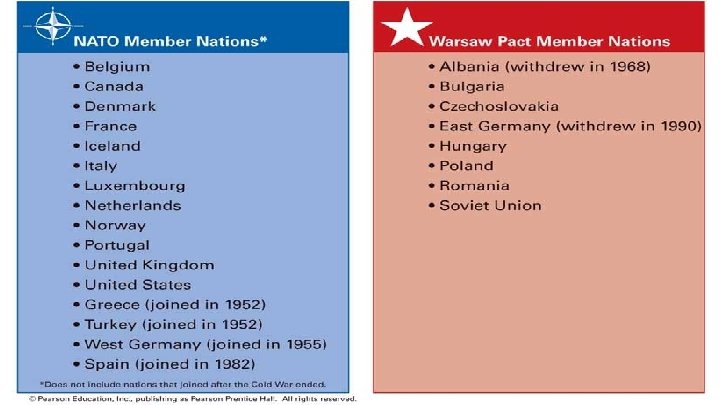
Vocabulary 1. 2. 3. 4. 5. 6. Nuremberg United Nations (UN) Cold War Truman Doctrine Marshall Plan North Atlantic Treaty Organization (NATO) 7. Warsaw Pact
Focus Question What issues arose in the aftermath of World War II and how did new tensions develop?
Chapter 15, Section 1 The Cold War Unfolds Pg# 502 -510
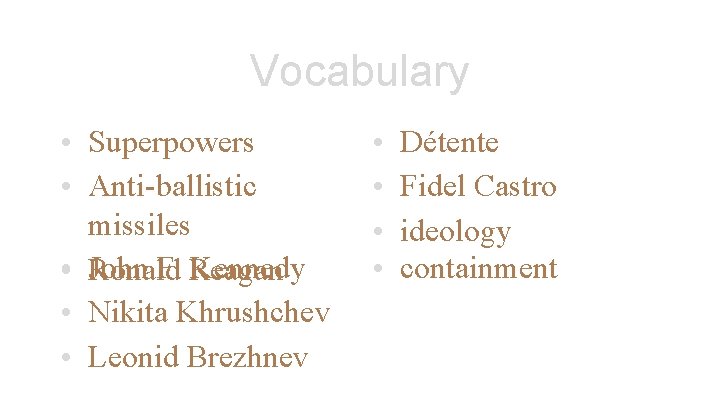
Vocabulary • Superpowers • Anti-ballistic missiles • John F. Reagan Kennedy Ronald • Nikita Khrushchev • Leonid Brezhnev • • Détente Fidel Castro ideology containment
Focus Question What were the military and Political consequences of the Cold War In the Soviet Union, Europe, and the United States
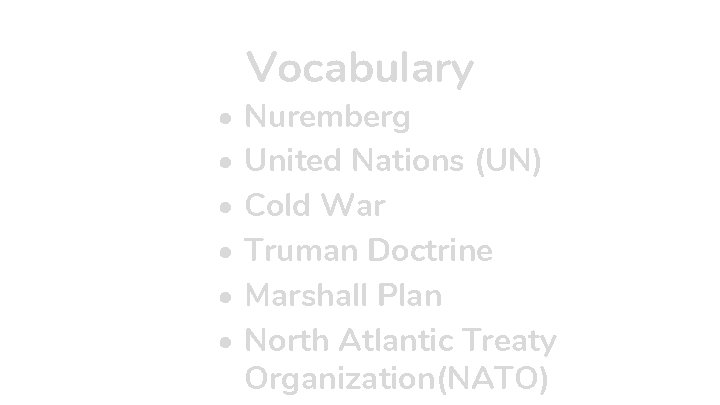
• • • Vocabulary Nuremberg United Nations (UN) Cold War Truman Doctrine Marshall Plan North Atlantic Treaty Organization(NATO)
Focus Question What issues arose in the aftermath of World War II and how did new tensions develop?
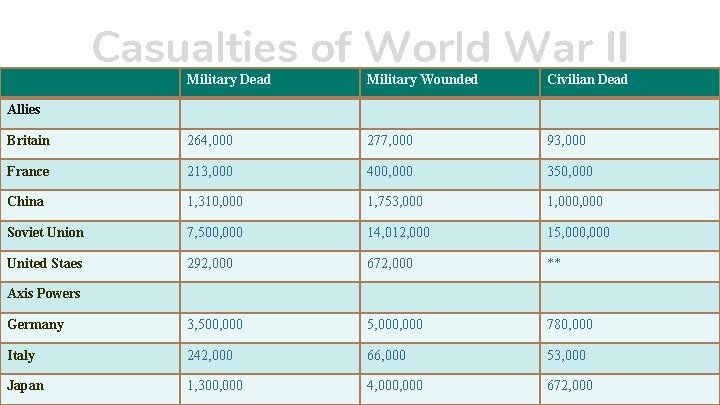
Casualties of World War II Military Dead Military Wounded Civilian Dead Britain 264, 000 277, 000 93, 000 France 213, 000 400, 000 350, 000 China 1, 310, 000 1, 753, 000 1, 000 Soviet Union 7, 500, 000 14, 012, 000 15, 000 United Staes 292, 000 672, 000 ** Germany 3, 500, 000 5, 000 780, 000 Italy 242, 000 66, 000 53, 000 Japan 1, 300, 000 4, 000 672, 000 Allies Axis Powers
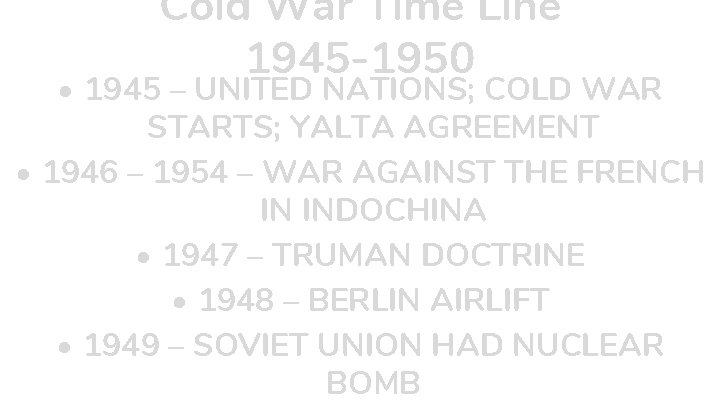
Cold War Time Line 1945 -1950 • 1945 – UNITED NATIONS; COLD WAR STARTS; YALTA AGREEMENT • 1946 – 1954 – WAR AGAINST THE FRENCH IN INDOCHINA • 1947 – TRUMAN DOCTRINE • 1948 – BERLIN AIRLIFT • 1949 – SOVIET UNION HAD NUCLEAR BOMB
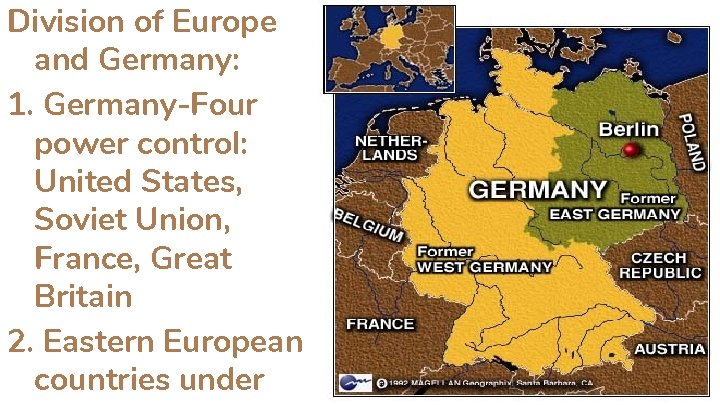
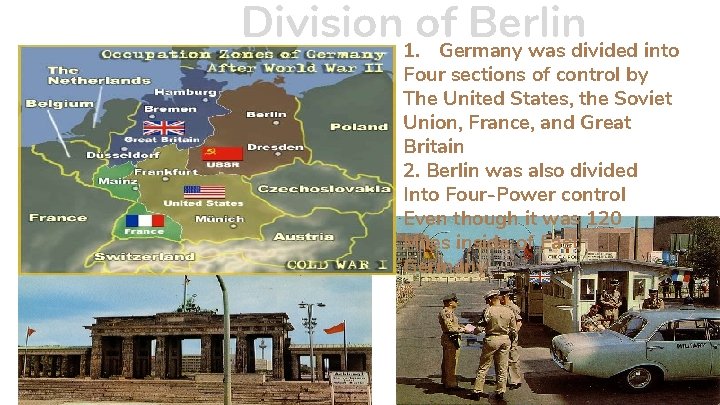
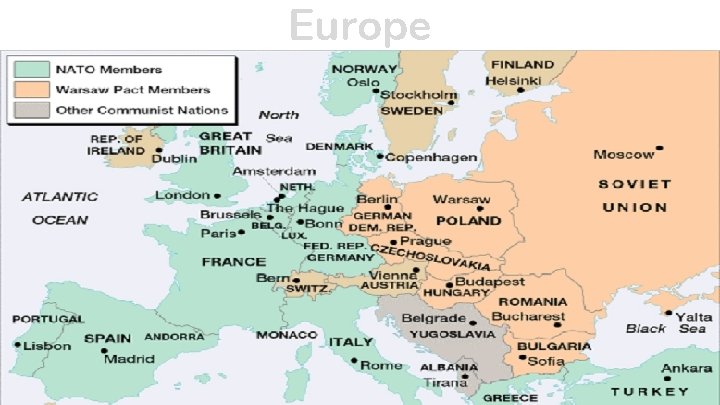
Division of Europe and Germany: 1. Germany-Four power control: United States, Soviet Union, France, Great Britain 2. Eastern European countries under
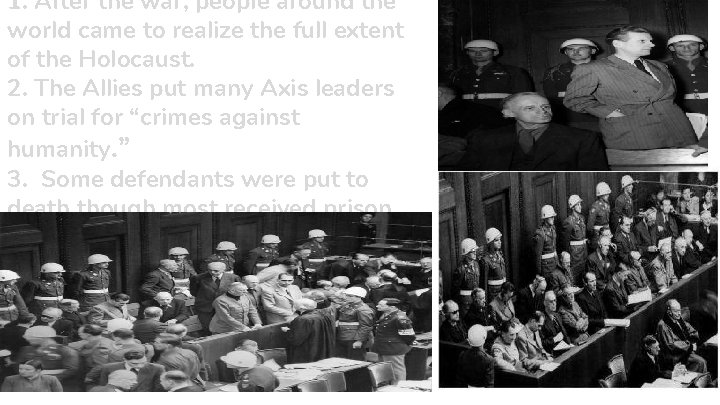
1. After the war, people around the world came to realize the full extent of the Holocaust. 2. The Allies put many Axis leaders on trial for “crimes against humanity. ” 3. Some defendants were put to death though most received prison sentences.
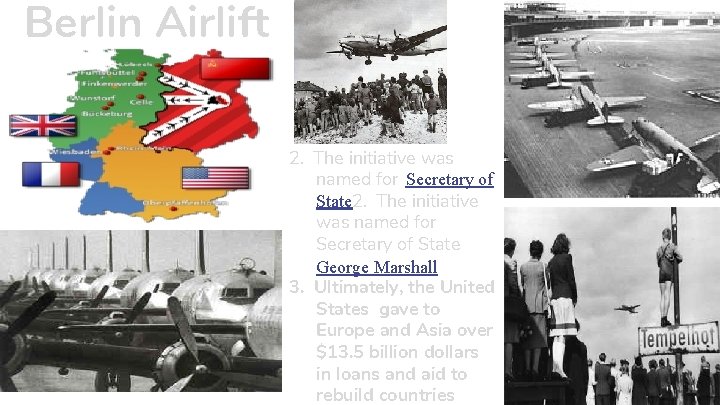
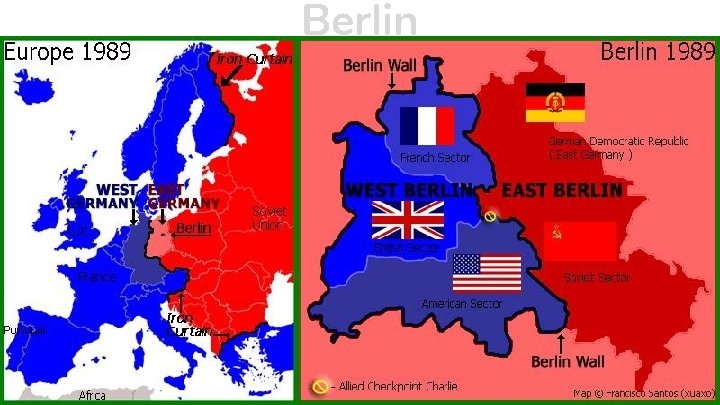
Division 1. of. Germany Berlin was divided into Four sections of control by The United States, the Soviet Union, France, and Great Britain 2. Berlin was also divided Into Four-Power control Even though it was 120 Miles inside of East Germany
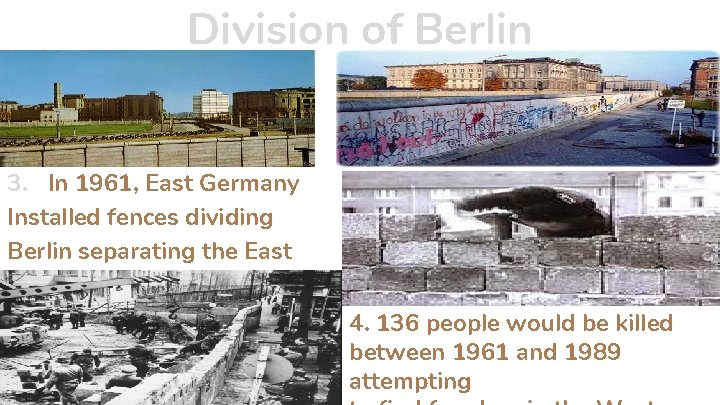
Division of Berlin 3. In 1961, East Germany Installed fences dividing Berlin separating the East And West 4. 136 people would be killed between 1961 and 1989 attempting
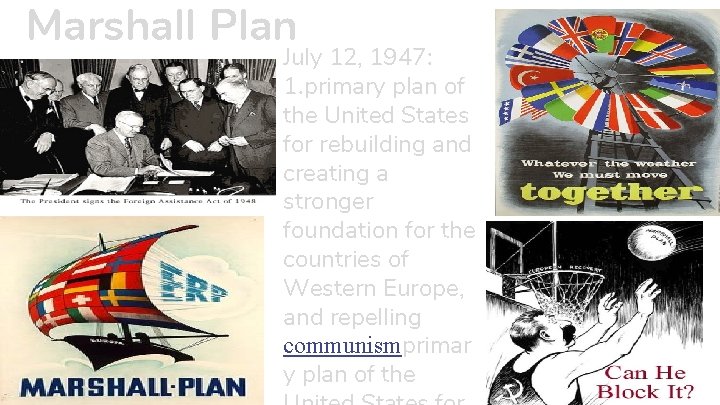
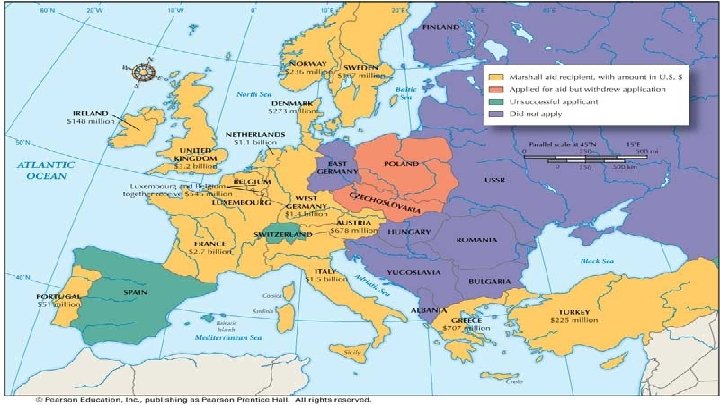
Marshall Plan July 12, 1947: 1. primary plan of the United States for rebuilding and creating a stronger foundation for the countries of Western Europe, and repelling communismprimar y plan of the
Berlin Airlift 2. The initiative was named for Secretary of State George Marshall 3. Ultimately, the United States gave to Europe and Asia over $13. 5 billion dollars in loans and aid to rebuild countries
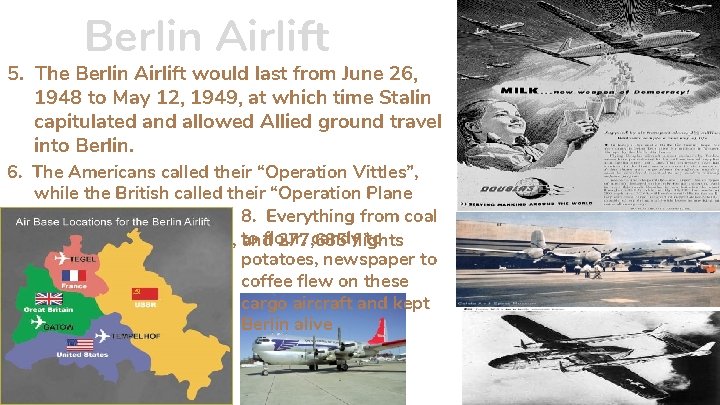
Berlin Airlift 5. The Berlin Airlift would last from June 26, 1948 to May 12, 1949, at which time Stalin capitulated and allowed Allied ground travel into Berlin. 6. The Americans called their “Operation Vittles”, while the British called their “Operation Plane Fare”. 8. Everything from coal flour, candyflights to 7. 2. 3 million tons of cargo, to and 277, 685 potatoes, newspaper to coffee flew on these cargo aircraft and kept Berlin alive
Europe
Berlin
Japanese Economic Recovery After World War II 1945 • • Japan occupied by Allies Emperor stripped of power Many cities destroyed Japan prohibited from building up military • Japanese economy devastated • Education reserved for elite • Foreign sources of raw materials for manufacturing greatly reduced By 1975 • Japan becomes ally and trading partner with USA • Democracy established • Cities rebuilt • Japan protected by American “Nuclear Umbrella”, leaving it more money to invest in economy • Japan develops high quality exports and technology; invests in foreign ventures • Education made available to all people a
Chapter 15, Section 2 Pg# 512 -520 The Industrialized Democracies
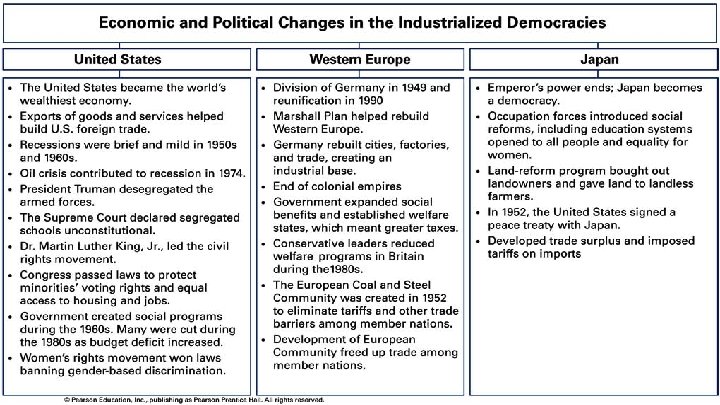
Focus Question How did the United States, Western Europe, and Japan achieve prosperity and strengthen democracy during the Cold War Years?
Vocabulary • • • Recession • Welfare state Segregation • European Community Discrimination Martin Luther King • Gross domestic product (GDP) Konrad Adenauer
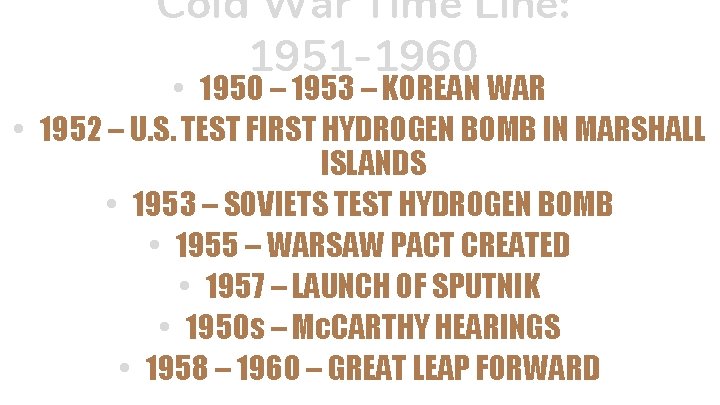
Cold War Time Line: 1951 -1960 • 1950 – 1953 – KOREAN WAR • 1952 – U. S. TEST FIRST HYDROGEN BOMB IN MARSHALL ISLANDS • 1953 – SOVIETS TEST HYDROGEN BOMB • 1955 – WARSAW PACT CREATED • 1957 – LAUNCH OF SPUTNIK • 1950 s – Mc. CARTHY HEARINGS • 1958 – 1960 – GREAT LEAP FORWARD
Chapter 15, Section 3 Pg# 521 -527 Communism Spreads in East Asia
Focus Question What did the Communist Victory mean for China and The rest of East Asia?
Vocabulary • • Collectivization Great Leap Forward Cultural Revolution 38 th Parallel • • Kim Il Sung Syngman Rhee Pusan Perimeter Demilitarized zone
Chapter 15, Section 4 Pg# 528 -533 War in Southeast Asia
Focus Question • What were the causes and effects of war in Southeast Asia, and what was the American role in this region?
Vocabulary • • Guerrillas Ho Chi Minh Dienbienphu Domino theory • • Viet Cong Tet Offensive Khmer Rouge Pol Pot
Chapter 15, Section 5 Pg# 536 -542 The End of the Cold War
Focus Question • What were the causes and effects of the end of the Cold War?
Vocabulary • Mujahedin • Mikhail Gorbachev • Glasnost • perestroika • Lech Walesa • Solidarity • Vaclav Havel • Nicolae Ceausescu