
The Coin Experiment Beginning today we will be
The Coin Experiment • Beginning today we will be putting the Scientific Method into action by conducting a small experiment as we go through the 7 different steps. • The experiment will be very simple. We will attempt to determine how many drops of water can be placed on the face of a penny without the water spilling over the edges.
Scientists use experiments to test a hypothesis or answer a question
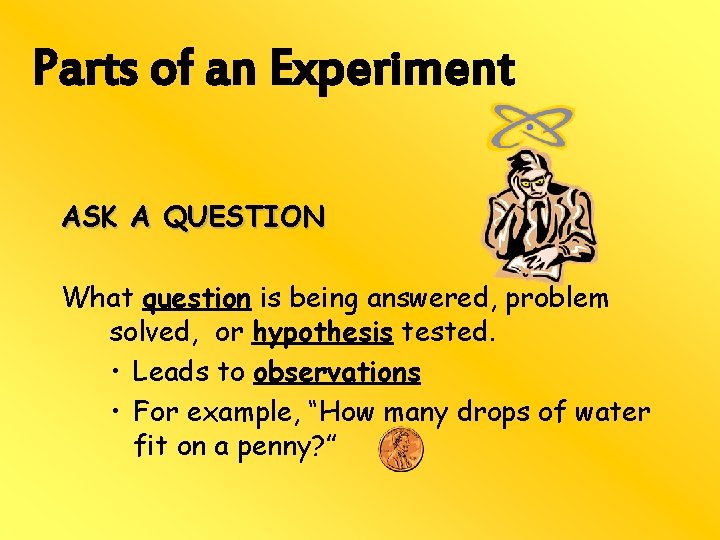
Parts of an Experiment ASK A QUESTION What question is being answered, problem solved, or hypothesis tested. • Leads to observations • For example, “How many drops of water fit on a penny? ”
Parts of an Experiment Form a Hypothesis An educated guess about the results. • Based on observations & can be tested!!! • Always support your idea with a reason! (I think that…because…) • What is your hypothesis about the number of water drops that can fit on a penny? Write yours down! • Make a prediction with an if-then statement – Example: ____________
Parts of an Experiment Materials: Items used during the experiment. What would we need for the penny experiment? Write yours down…
Parts of an Experiment Procedures: Procedures Steps followed during experiment. – – – Write in a numbered list Should be detailed enough that anyone can follow exactly what you did. How many times you are going to do the experiment? It should be written here!
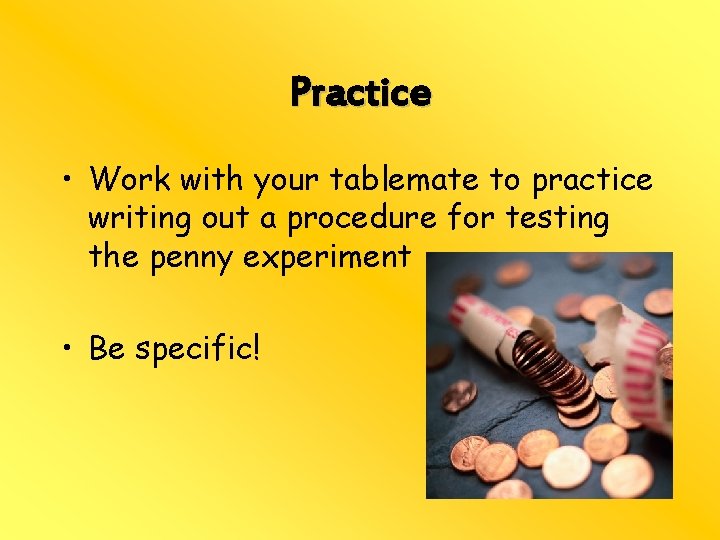
Practice • Work with your tablemate to practice writing out a procedure for testing the penny experiment • Be specific!
Parts of an Experiment Collecting Data: All the information gathered while performing the experiment.
Parts of an Experiment Analyze the Results & Draw Conclusions: Analyze your data to determine the final outcome of the experiment What do you NOW believe as a result of the experiment or observations? • Restate your hypothesis (or at least relate your findings to it) • Support your claim with at least 2 pieces of data and graphs • Use good explanatory language
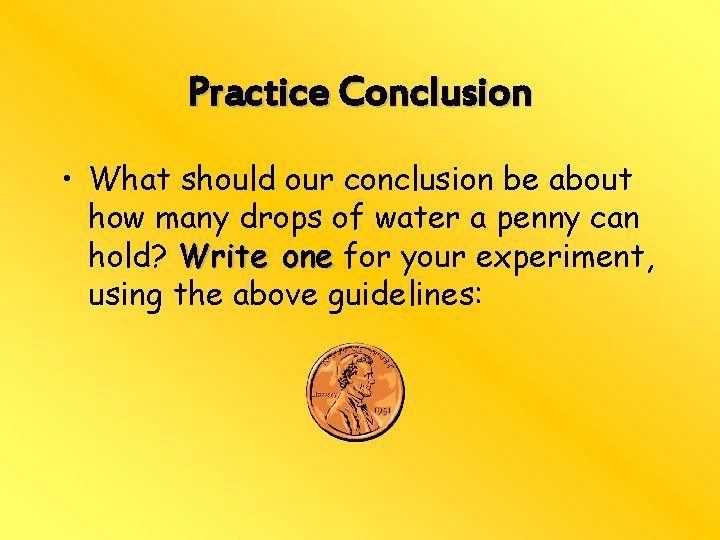
Practice Conclusion • What should our conclusion be about how many drops of water a penny can hold? Write one for your experiment, using the above guidelines:
Parts of an Experiment Share your results: Publish your findings so that others may benefit from your work.
There are two groups in a controlled experiment: 1) Control Group: Group the part of the experiment that is left alone or “natural”. Used to compare back to.
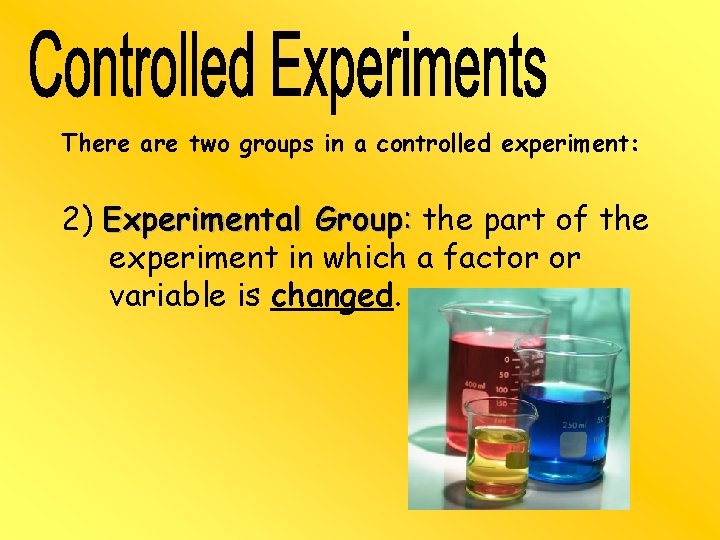
There are two groups in a controlled experiment: 2) Experimental Group: the part of the experiment in which a factor or variable is changed.
• Variables are parts of an experiment
Control (constant variables): factors in an experiment that are NOT changed.
Independent (manipulated) Variable: factors in an experiment that are changed • Good experiments have only ONE manipulated variable.
Dependent (responding) Variable: Variable the factor that you are measuring
An explanation that ties together many hypotheses and observations Example: Theory of Evolution
A summary of many experimental results and observations that tells how things work True and Universal Example: Law of Gravity, Newton’s Laws

Classroom Website • Here is the link to our class website http: //newpointsciencesuperstars. weebly. com index. html
- Slides: 21