
THE COGNITIVE REVOLUTIO N A HISTORICAL PERSPECTIVE Asheley
- Slides: 21
THE COGNITIVE REVOLUTIO N: A HISTORICAL PERSPECTIVE Asheley Landrum and Amy Louise Schwarz
Behaviorism
Behaviorism Premise Psychology as an objective science Mental events ≠ observable events
Behaviorism Premise Psychology as an objective science Mental events ≠ observable events Outcome Perception = Discrimination Memory = Learning Language = Verbal Behavior Intelligence = What intelligence tests test
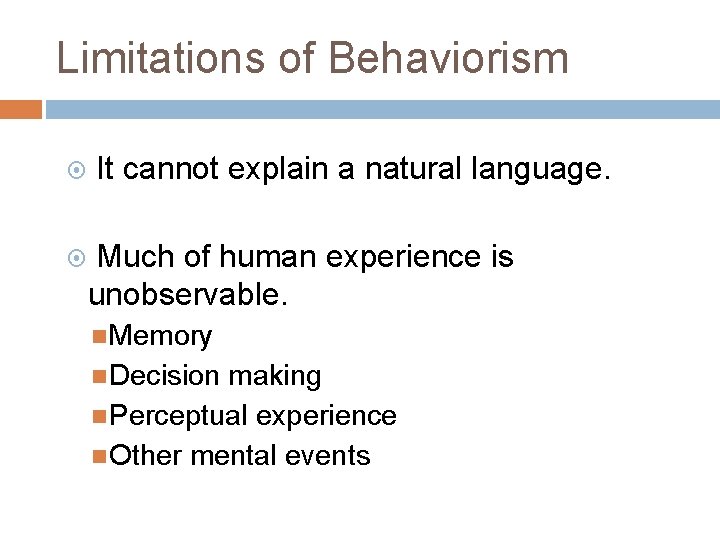
Limitations of Behaviorism It cannot explain a natural language. Much of human experience is unobservable. Memory Decision making Perceptual experience Other mental events
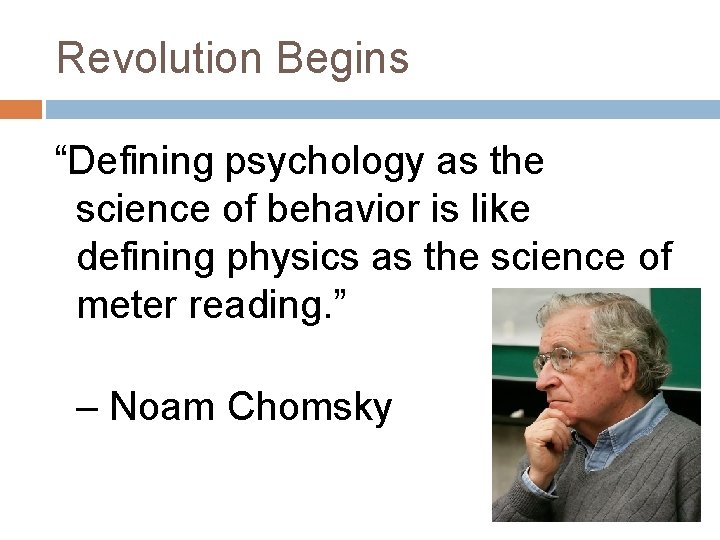
Revolution Begins “Defining psychology as the science of behavior is like defining physics as the science of meter reading. ” – Noam Chomsky
Cognitive Revolution
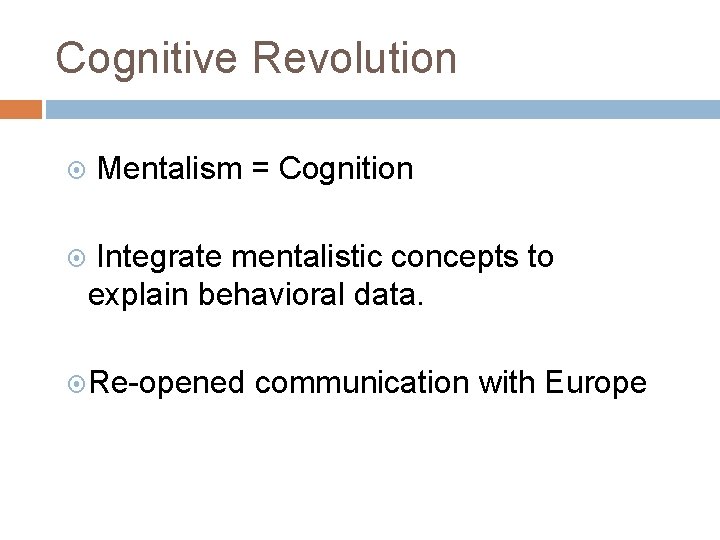
Cognitive Revolution Mentalism = Cognition Integrate mentalistic concepts to explain behavioral data. Re-opened communication with Europe
1956 - Critical Year: Information Processing (Newell & Simon) Began Development of Artificial Intelligence Studies about Thinking Notions of Cognitive Strategies Magic # 7, plus or minus 2 Signal Detection Theory applied to Perception
9/11/56: Moment of Conception Interdisciplinary Approach AI Math Computer Science Language Neuropsychology
9/11/56: Moment of Conception Key Papers “Logic Machine” (Newell & Simon) Testing Neuropsychological Theory of Cell Assembly (Rochester at IBM) Statistical analysis of gaps in relation to syntax (Yngve) Mathematics of Grammar – transformational grammar (Chomsky) Speed of Perceptual Recognition (Szikakli)
Alfred P. Sloan Foundation Created Neuroscience Created a program: cognitive science Miller argued: Interdisciplinary field Report created for the Foundation Scholars from several fields came together Unwilling to comment on each other’s disciplines So, just summarized their own fields Foundation provided grants to promote communication between disciplines.
Discussion Questions
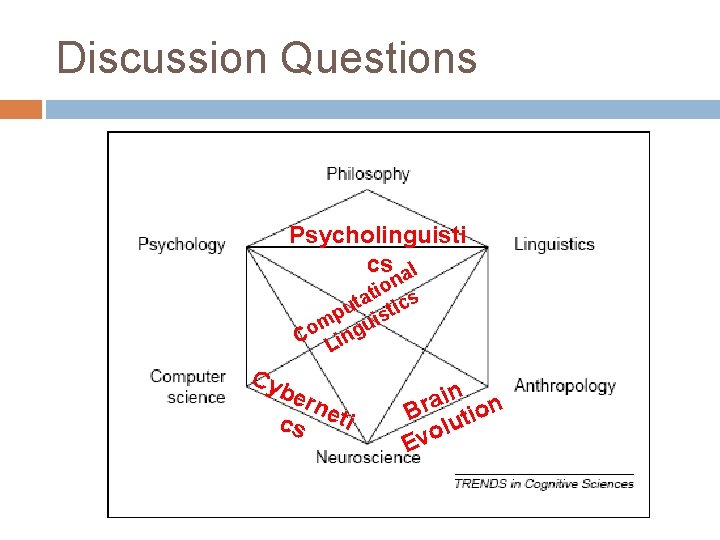
Discussion Questions Psycholinguisti cs al on i t ta tics u p is m u Co Ling Cy ber net i cs in n a r B utio ol v E
Discussion Questions Miller only labeled four of the connections between fields. What interdisciplinary fields link the remaining nodes? What field belongs at the center of the figure?
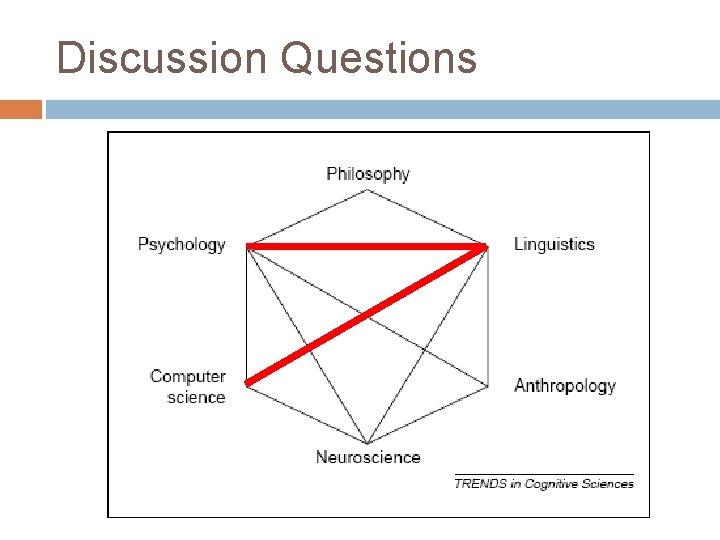
Discussion Questions
Discussion Questions Miller contends the central three are: Psychology, Linguistics, and Computer Science What is your opinion?
Cognitive Science vs Cognitive Sciences What are the benefits of thinking of it as a unified science? What are the detriments? Should people from different disciplines comment regularly on each other’s work?
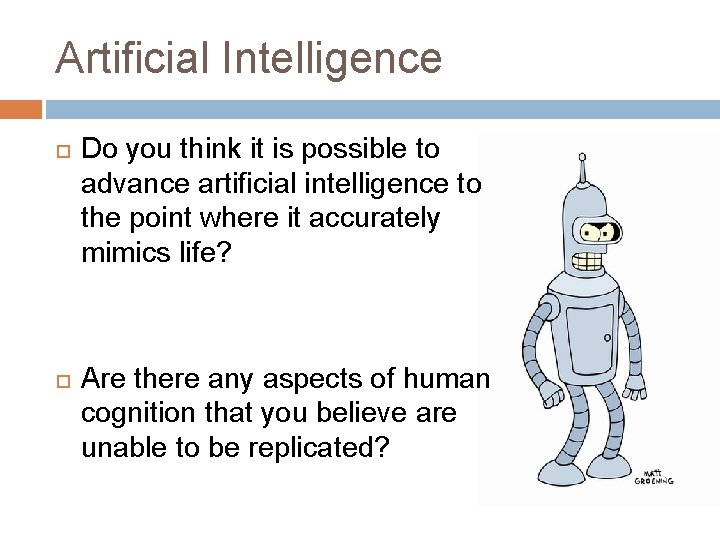
Artificial Intelligence Do you think it is possible to advance artificial intelligence to the point where it accurately mimics life? Are there any aspects of human cognition that you believe are unable to be replicated?
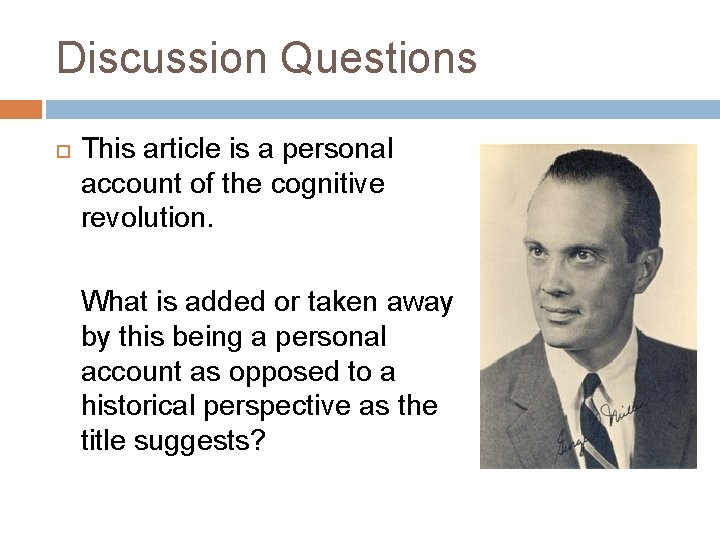
Discussion Questions This article is a personal account of the cognitive revolution. What is added or taken away by this being a personal account as opposed to a historical perspective as the title suggests?
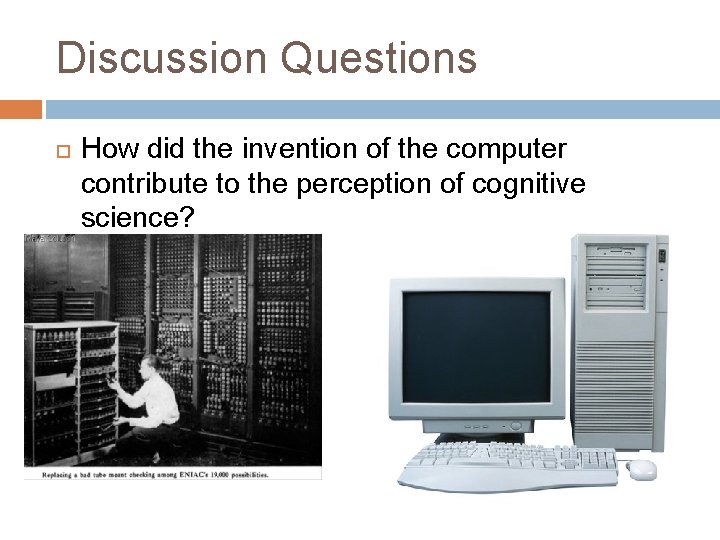
Discussion Questions How did the invention of the computer contribute to the perception of cognitive science?