
The Cognitive Neuroscience of Memory and its Relevance




- Slides: 119
The Cognitive Neuroscience of Memory and its Relevance to Meme Research Morris Moscovitch U of T Rotman Research Institute and Department of Psychology Baycrest Centre for Geriatric Care University of Toronto Memory, Social Networks, and Language: Probing the Meme Hypothesis II May 15 -17 Victoria College, University of Toronto
Collaborators • • • Gordon Winocur – Rotman Research Inst. , Trent U. Lynn Nadel – U of Arizona Carlo Umiltà – U of Padova Cheryl Grady - Rotman Research Inst. Brian Levine - Rotman Research Inst. Morris Freedman – Rotman Research Inst. Mary Pat Mc. Andrews - Toronto Western Sandra Black – Sunnybrook Fuqiang Gao – Sunnybrook Marilyne Ziegler- University of Toronto Baycrest Psychologists – Baycrest Psychology
Collaborators • Robyn Westmacott – Hospital for Sick Children • Shayna Rosenbaum – York University and Rotman Research Inst. • Asaf Gilboa – Haifa University • Donna Addis – Harvard University • Lillian Park – Rotman Research Institute • Signy Sheldon – University of Toronto
Meme – A unit of cultural information that can be transmitted and replicated, but also altered in the process.
Memory would seem to be crucial to meme formation and transmission. But what kind of memory? And what kind of memory processes?
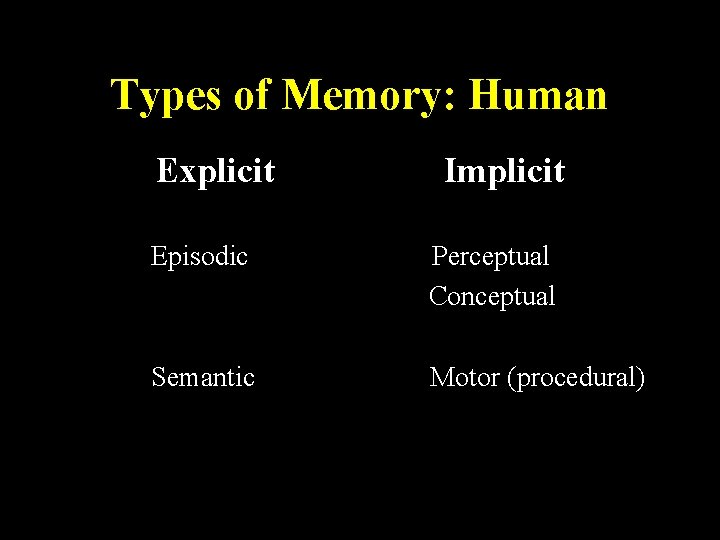
Types of Memory: Human Explicit Implicit Episodic Perceptual Conceptual Semantic Motor (procedural)
Dissociation between Episodic and Semantic Memory: Comparison of Two Patients
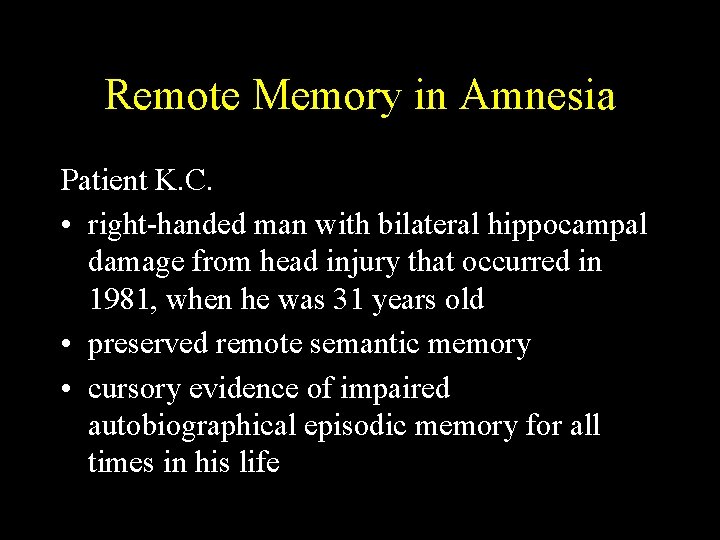
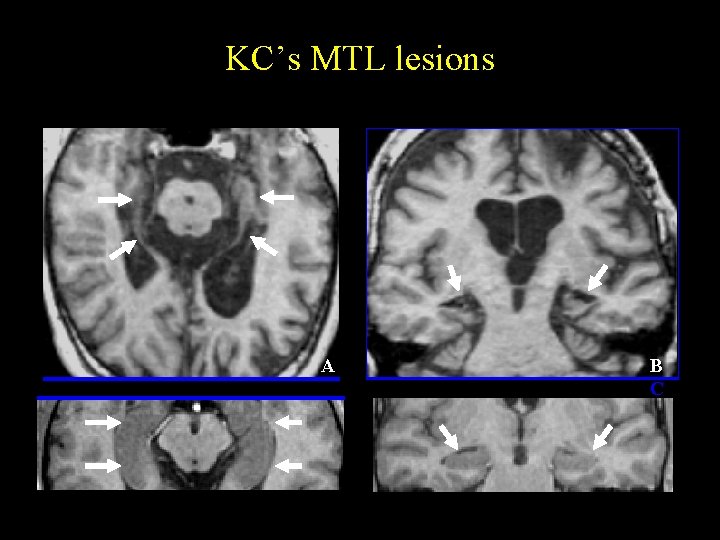
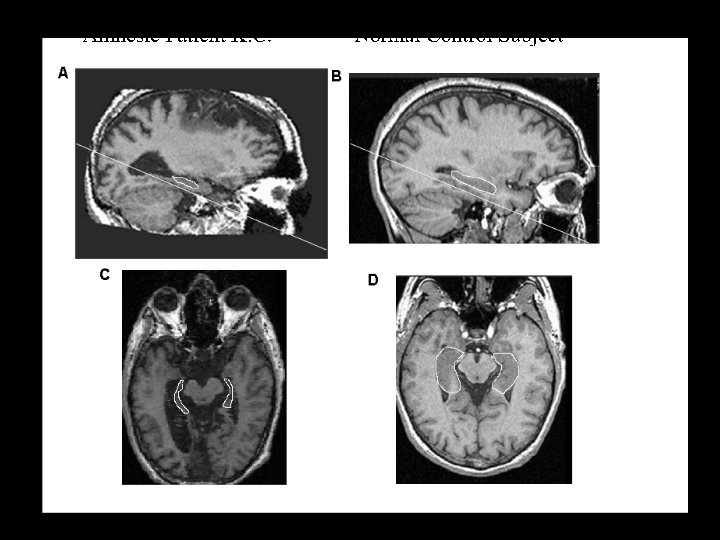
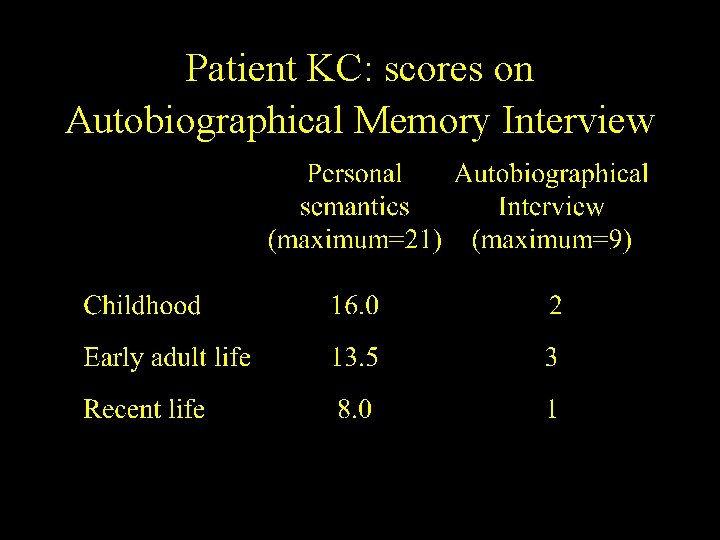
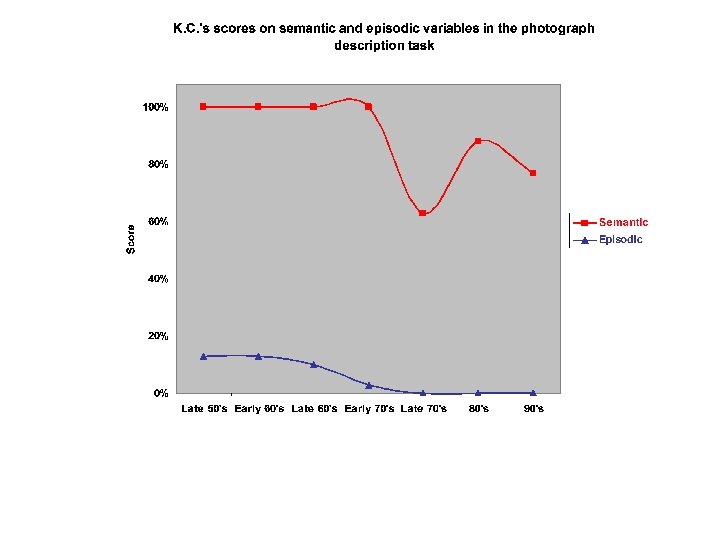
Remote Memory in Amnesia Patient K. C. • right-handed man with bilateral hippocampal damage from head injury that occurred in 1981, when he was 31 years old • preserved remote semantic memory • cursory evidence of impaired autobiographical episodic memory for all times in his life
KC’s MTL lesions A B C
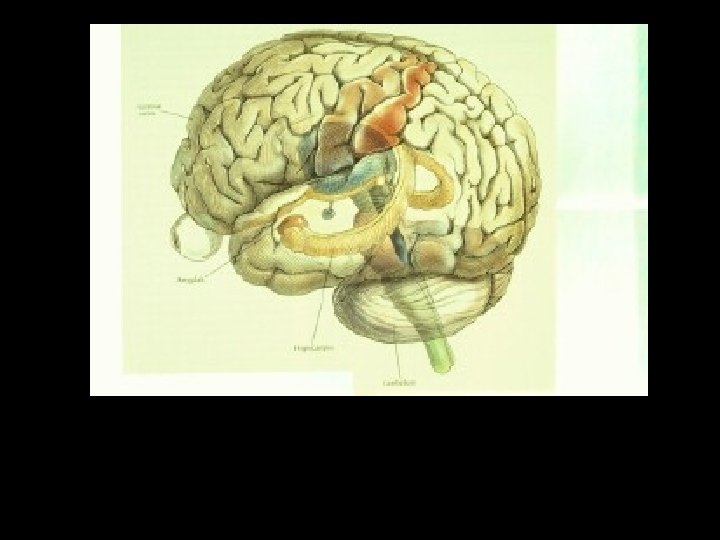
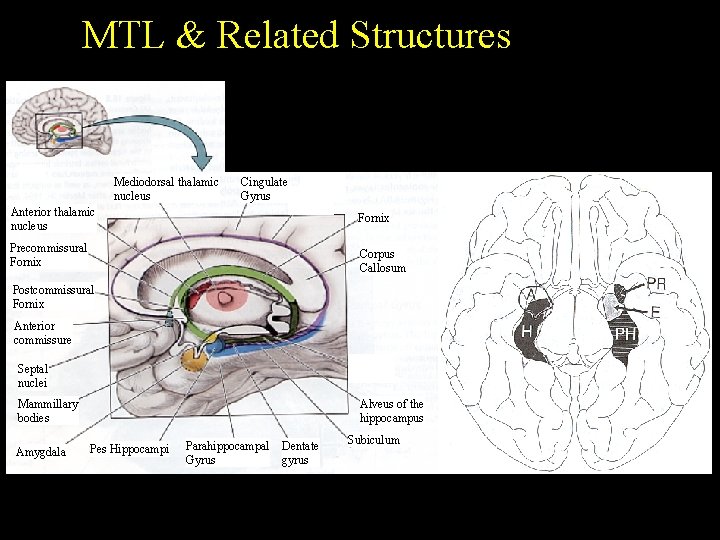
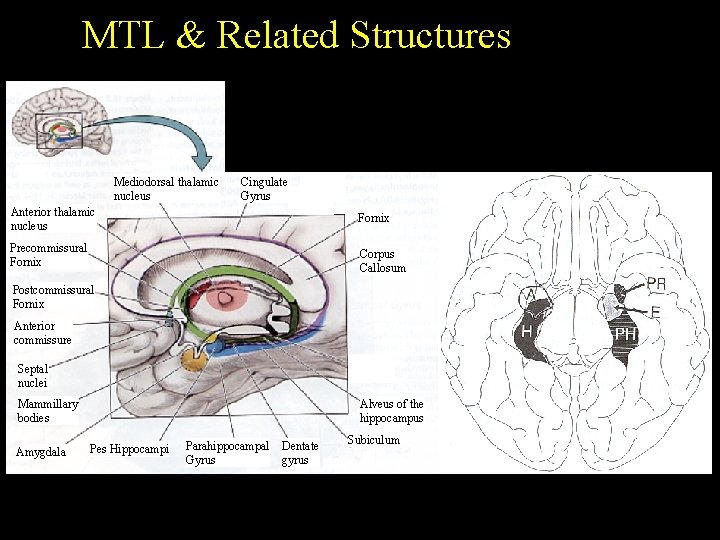
MTL & Related Structures Mediodorsal thalamic nucleus Cingulate Gyrus Anterior thalamic nucleus Fornix Precommissural Fornix Corpus Callosum Postcommissural Fornix Anterior commissure Septal nuclei Mammillary bodies Amygdala Alveus of the hippocampus Pes Hippocampi Parahippocampal Gyrus Dentate gyrus Subiculum
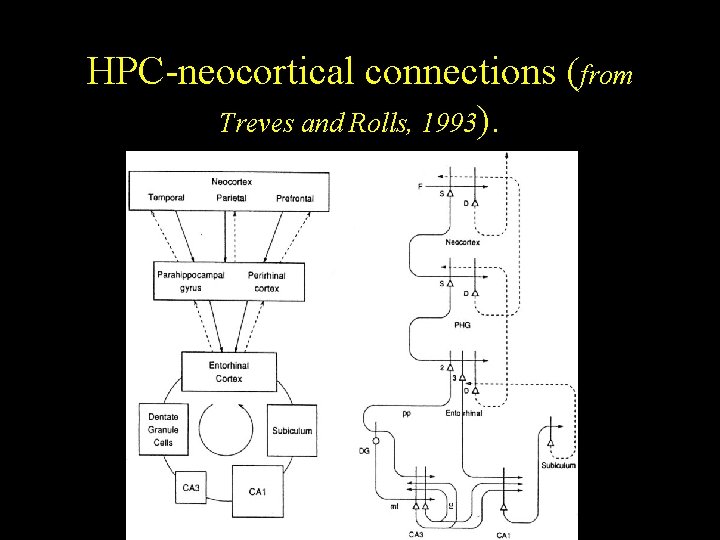
HPC-neocortical connections (from Treves and Rolls, 1993).
Patient KC: scores on Autobiographical Memory Interview
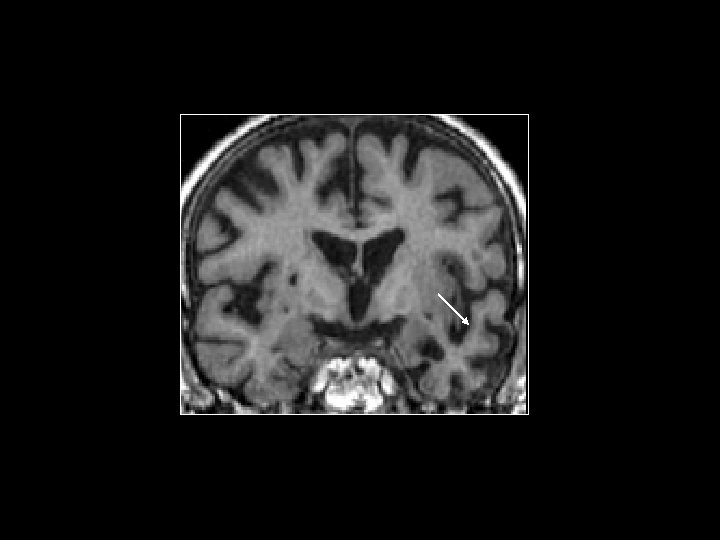
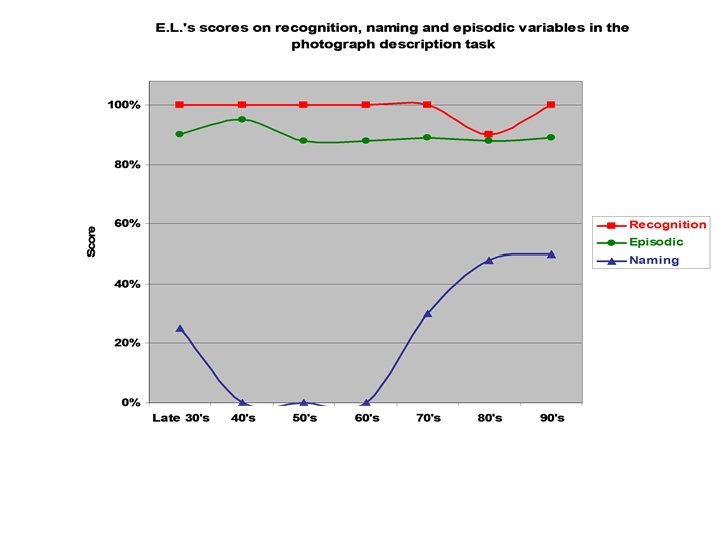
Semantic Dementia Patient E. L. 65 year-old man, originally from England who worked as a graphic artist at the CBC.
Video of EL being interviewed by Morris Freedman and Morris Moscovitch
Robyn Westmacott Shayna Rosenbaum Sandra Black Morris Freedman Peter Gao Stefan Kohler Larry Leach Sandra Priselac Jill Rich Shayna Rosenbaum Kathy Stokes Westmacott et al. , Neurocase, 2001; Cog. Neuropsychol. , 2002, 2004; Neuropsychologia, 2004; Rosenbaum et al, Neuropsychologia, 2005.
Asaf Gilboa with Shayna Rosenbaum and Amir Poreh and Gordon Winocur Poreh, et al, Neuropsychologia, 2006; Gilboa et al, Hippocampus, 2006.
MTL & Related Structures Mediodorsal thalamic nucleus Cingulate Gyrus Anterior thalamic nucleus Fornix Precommissural Fornix Corpus Callosum Postcommissural Fornix Anterior commissure Septal nuclei Mammillary bodies Amygdala Alveus of the hippocampus Pes Hippocampi Parahippocampal Gyrus Dentate gyrus Subiculum
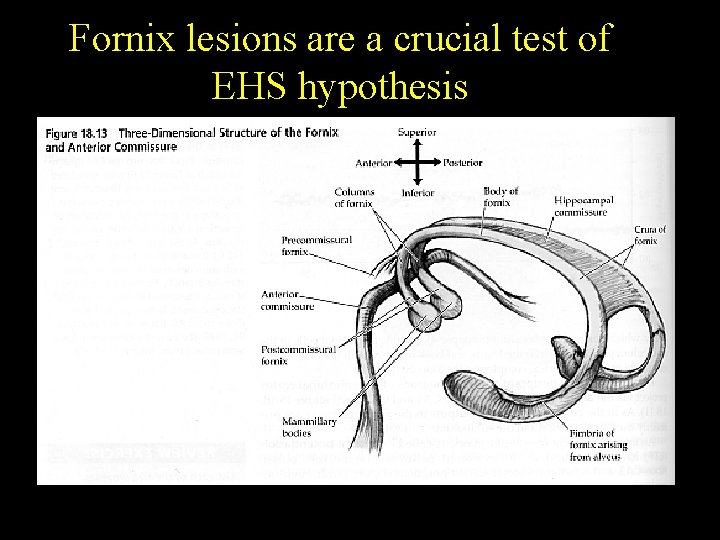
Fornix lesions are a crucial test of EHS hypothesis
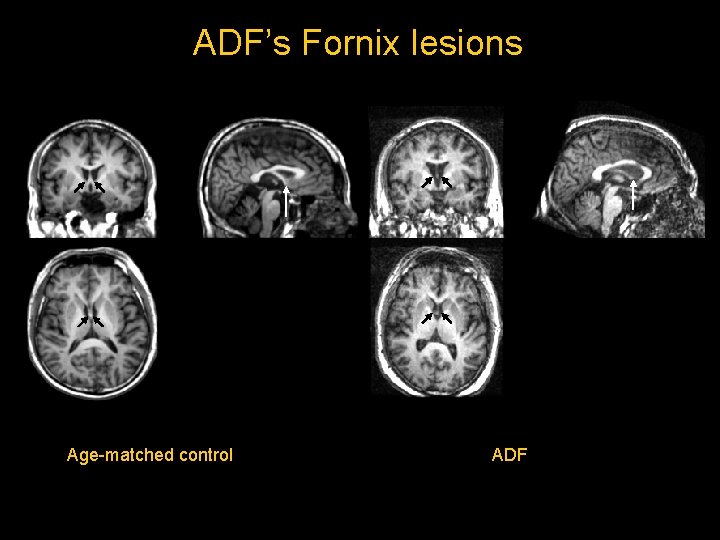
Patients with fornix lesion • Fornix lesions prevent major hippocampal output while leaving the hippocampus, the rest of MTL, and neocortex intact. • According to our hypothesis that the hippocampus is necessary for recollection, autobiographical memories, whether recent or remote, should be impaired in people with fornix lesions.
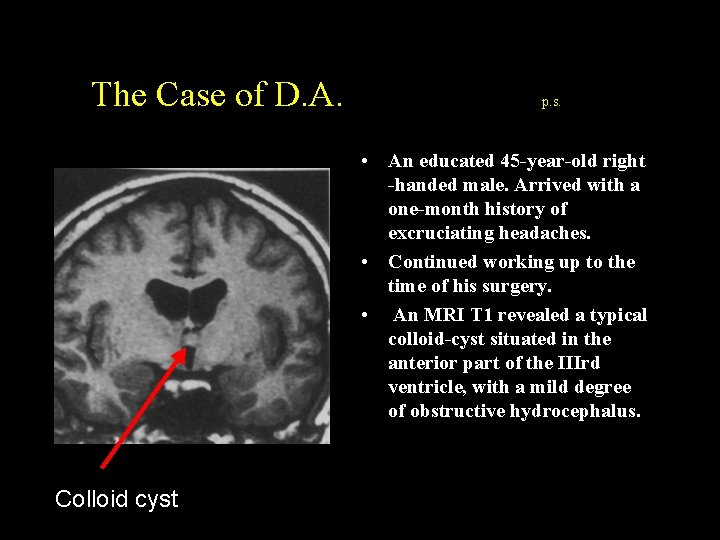
The Case of D. A. p. s. • An educated 45 -year-old right -handed male. Arrived with a one-month history of excruciating headaches. • Continued working up to the time of his surgery. • An MRI T 1 revealed a typical colloid-cyst situated in the anterior part of the IIIrd ventricle, with a mild degree of obstructive hydrocephalus. Colloid cyst
ADF’s Fornix lesions Age-matched control ADF
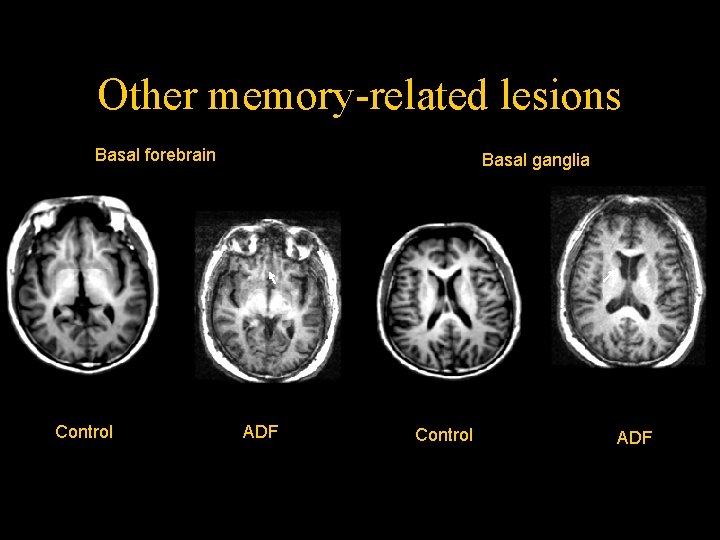
Other memory-related lesions Basal forebrain Control Basal ganglia ADF Control ADF
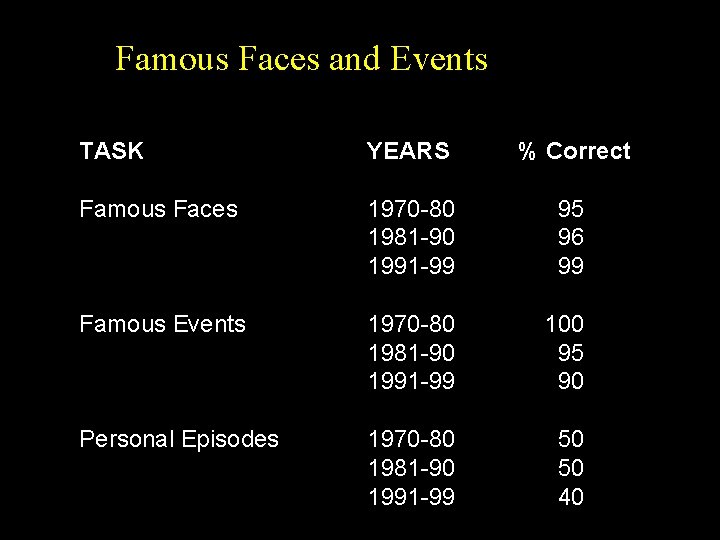
Famous Faces and Events TASK YEARS % Correct Famous Faces 1970 -80 1981 -90 1991 -99 95 96 99 Famous Events 1970 -80 1981 -90 1991 -99 100 95 90 Personal Episodes 1970 -80 1981 -90 1991 -99 50 50 40
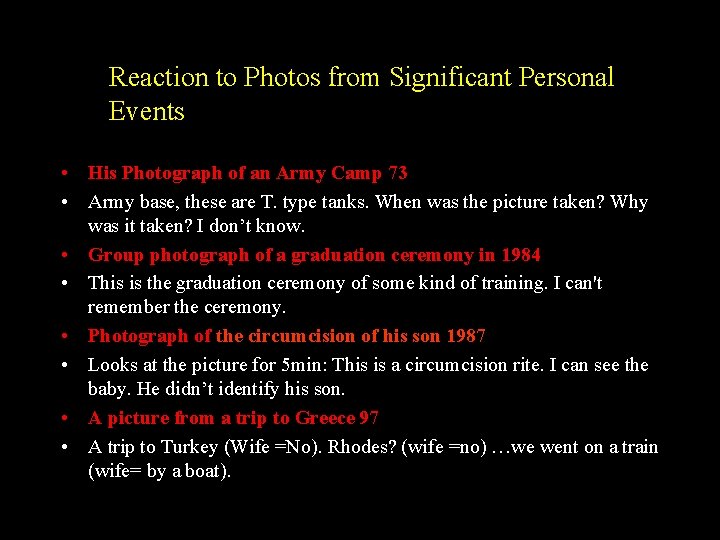
Reaction to Photos from Significant Personal Events • His Photograph of an Army Camp 73 • Army base, these are T. type tanks. When was the picture taken? Why was it taken? I don’t know. • Group photograph of a graduation ceremony in 1984 • This is the graduation ceremony of some kind of training. I can't remember the ceremony. • Photograph of the circumcision of his son 1987 • Looks at the picture for 5 min: This is a circumcision rite. I can see the baby. He didn’t identify his son. • A picture from a trip to Greece 97 • A trip to Turkey (Wife =No). Rhodes? (wife =no) …we went on a train (wife= by a boat).
Summary of Studies of Patients with Hippocampal Complex Lesions • Autobiographical Memory: Extensive RA, sometimes even without a temporal gradient
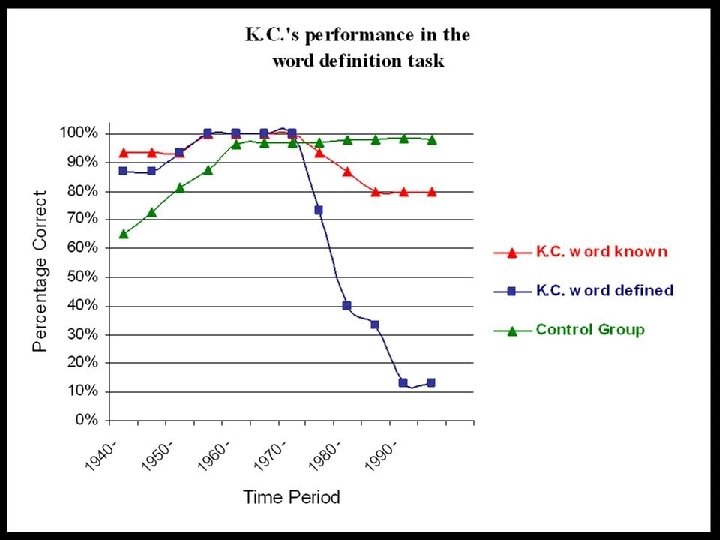
Summary of Studies of Patients with Hippocampal Complex Lesions • Autobiographical Memory: Extensive RA, sometimes even without a temporal gradient • Semantic Memory: Limited RA, most often with a temporal gradient
Two Components of Episodic Memory (Tulving, 1985) • Recollection: Re-experiencing or reliving a past event in the mind; mental time travel. Characterized by recovering and recreating the context in which a stimulus or event occurred. • Familiarity: A stimulus is recognized or experienced as old, but little or no information is associated about the context in which it was encountered. Resembles semantic memory
Two Components of Episodic Memory (Tulving, 1985) • Recollection: re-experiencing or reliving a past event in the mind; mental time travel. Characterized by recovering and recreating the context in which a stimulus or event occurred. • Familiarity: A stimulus is recognized or experienced as old, but little or no information is associated about the context in which it was encountered. Resembles semantic memory.
Why should recollection be associated with the hippocampus?
Carlo Umiltà & Gordon Winocur A component process of memory based on modules and central systems Moscovitch and Umiltà (1990, 1991); Moscovitch and Winocur (1992); Moscovitch (1992)
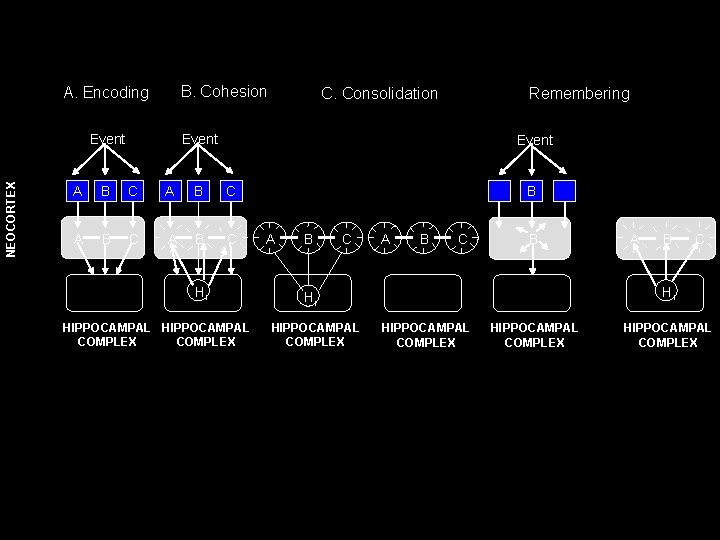
B. Cohesion A. Encoding NEOCORTEX Event C. Consolidation Remembering Event A B C Hi HIPPOCAMPAL COMPLEX B A B C B B C Hi Hi HIPPOCAMPAL COMPLEX A HIPPOCAMPAL COMPLEX
The hippocampus is essential for encoding, retaining, and recovering experiences (i. e. recollection).
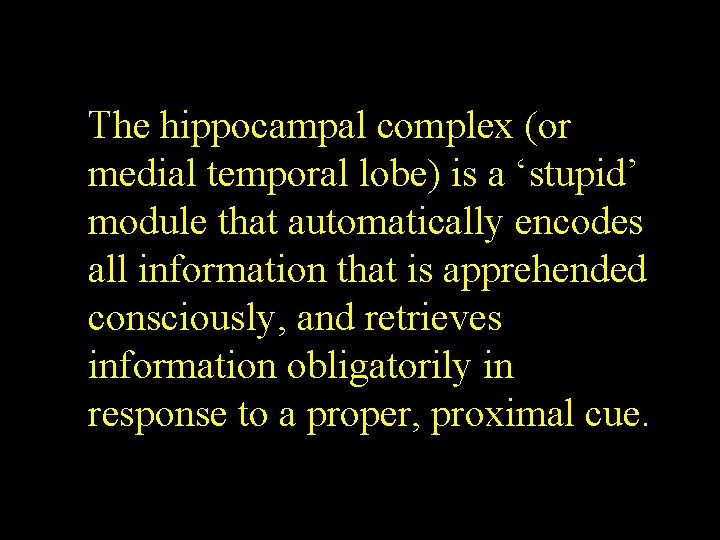
The hippocampal complex (or medial temporal lobe) is a ‘stupid’ module that automatically encodes all information that is apprehended consciously, and retrieves information obligatorily in response to a proper, proximal cue.
Strategic Memory Processes: The Frontal Lobe as a Working-with-Memory Structure (Moscovitch & Winocur, 1992, 2002: Moscovitch, 1992)
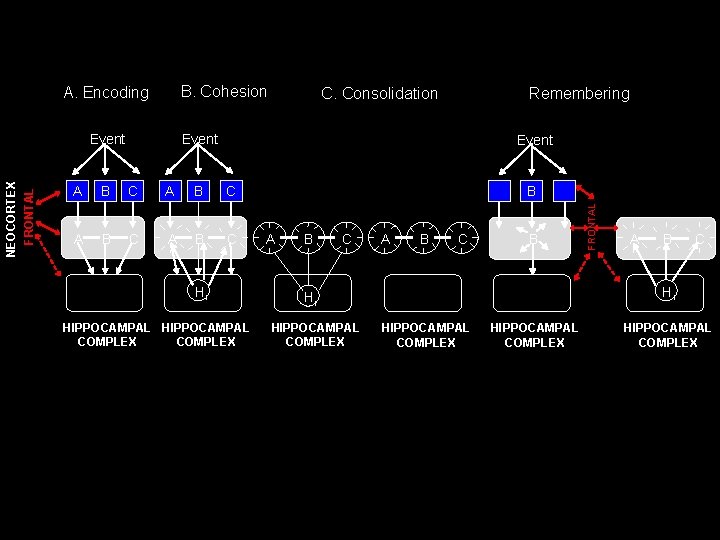
B. Cohesion NEOCORTEX FRONTAL Event C. Consolidation Remembering Event A B C Hi HIPPOCAMPAL COMPLEX B A B C Hi Hi HIPPOCAMPAL COMPLEX FRONTAL A. Encoding HIPPOCAMPAL COMPLEX
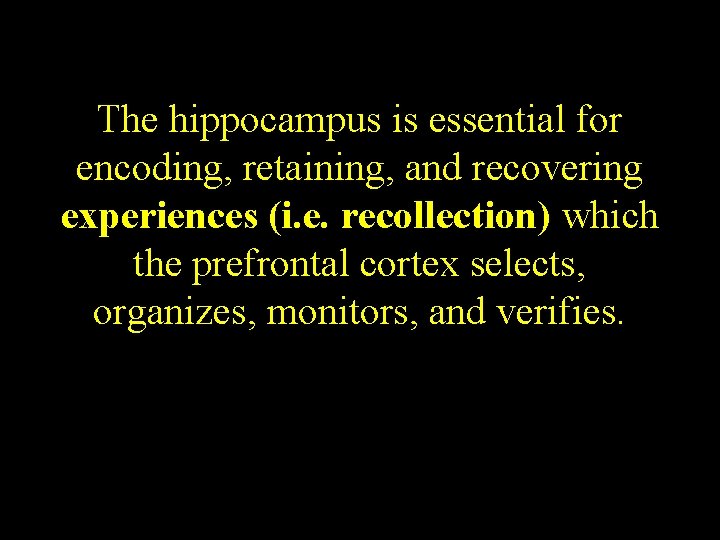
The hippocampus is essential for encoding, retaining, and recovering experiences (i. e. recollection) which the prefrontal cortex selects, organizes, monitors, and verifies.
Retrieval from the Hippocampus is also ‘stupid’ (automatic and unorganized), needing the prefrontal cortex to make retrieval ‘intelligent’ (goaldirected).
Summary • Memories are not stored as whole representations of events, but as elements of the event which need to be reconstructed into a coherent narrative. Storage is random. • Memories are represented as beads in a jar which need the prefrontal cortex to string into a necklace. • Narratives are better suited than single items for investigations of reconstructive memory.
Memory is reconstructive: Bartlett, Remembering (1932) “The first notion to get rid of is that memory is primarily reduplicative, or reproductive…re-excitement of individual traces did not look to be in the least what was happening. . . remembering appears to be far more decisively an affair of construction than one of mere reproduction. ” pp 204 -205.
Implications • Recollection: Detailed re-experiencing of a past event always will depend on the hippocampus, no matter when the event occurred. • Automaticity: A proper cue will reactivate “hippocampal” memories automatically and influence performance even on non-episodic tasks. • Random Storage: Allows for recombination of elements needed for construction of scenarios in many domains, from reconstructing the past, imagining the future, and solving problems.
Implications • Recollection: Detailed re-experiencing of a past event always will depend on the hippocampus, no matter when the event occurred. • Automaticity: A proper cue will reactivate “hippocampal” memories automatically and influence performance even on non-episodic tasks. • Random Storage: Allows for recombination of elements needed for construction of scenarios in many domains, from reconstructing the past, imagining the future, and solving problems.
Implications • Recollection: Detailed re-experiencing of a past event always will depend on the hippocampus, no matter when the event occurred. • Automaticity: A proper cue will reactivate “hippocampal” memories automatically and influence performance even on non-episodic tasks. • Random Storage: Allows for recombination of elements needed for construction of scenarios in many domains, from reconstructing the past, imagining the future, and solving problems.
Implications • Recollection: Detailed re-experiencing of a past event always will depend on the hippocampus, no matter when the event occurred. • Automaticity: A proper cue will reactivate “hippocampal” memories automatically and influence performance even on non-episodic tasks. • Random Storage: Allows for recombination of elements needed for construction of scenarios in many domains, from reconstructing the past, imagining the future, and solving problems.
Asaf Gilboa Cheryl Grady Gordon Winocur Morris Moscovitch Gilboa et al. , Cerebral Cortex, 2004.
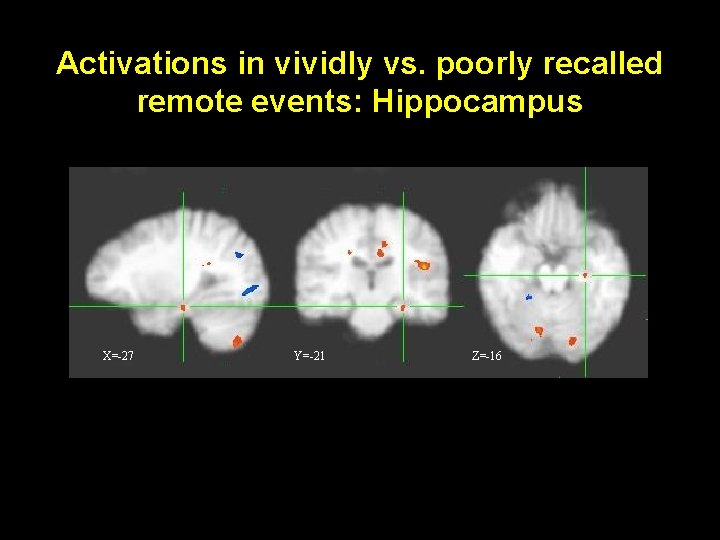
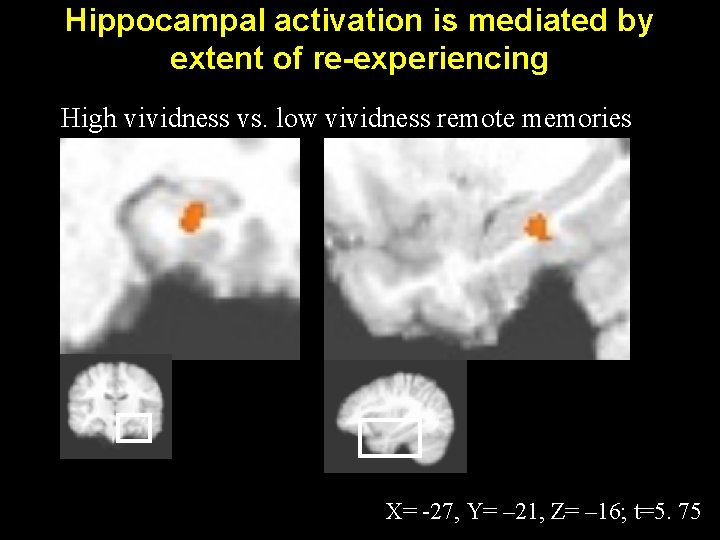
Remote Autobiographical Memory In normal people, the hippocampus should be much more activated for vivid memories (recollection) than for those that are not (familiarity) no matter how long ago the memory occurred.
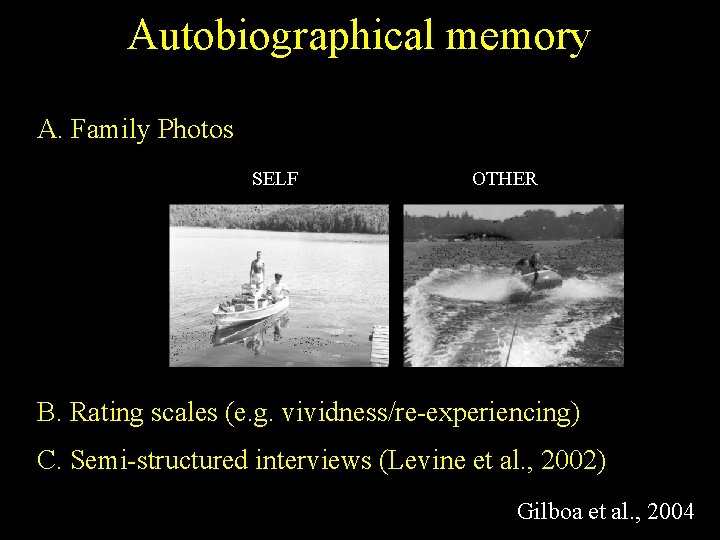
Autobiographical memory A. Family Photos SELF OTHER B. Rating scales (e. g. vividness/re-experiencing) C. Semi-structured interviews (Levine et al. , 2002) Gilboa et al. , 2004
Experiment • Measure brain activity with f. MRI (1. 5 T) • Three to four time periods – – childhood teen/ early adult middle years recent • Photos matched for content as much as possible
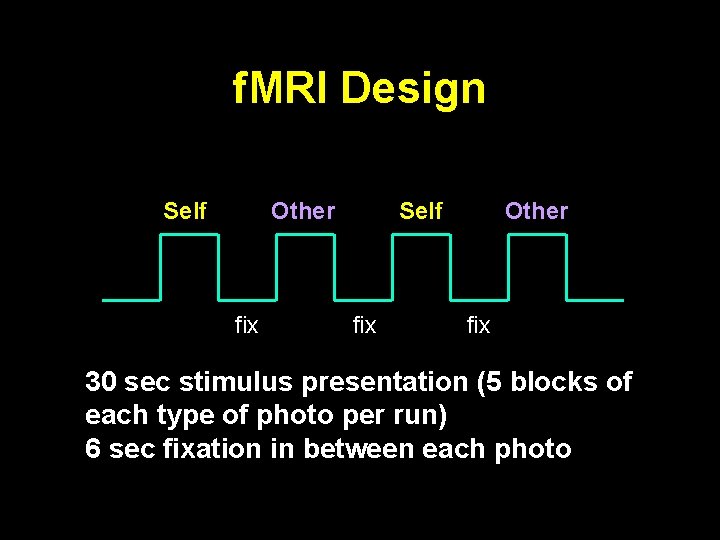
f. MRI Design Self Other fix Self fix Other fix 30 sec stimulus presentation (5 blocks of each type of photo per run) 6 sec fixation in between each photo
Activations in vividly vs. poorly recalled remote events: Hippocampus X=-27 Y=-21 Z=-16
Hippocampal activation is mediated by extent of re-experiencing High vividness vs. low vividness remote memories X= -27, Y= – 21, Z= – 16; t=5. 75
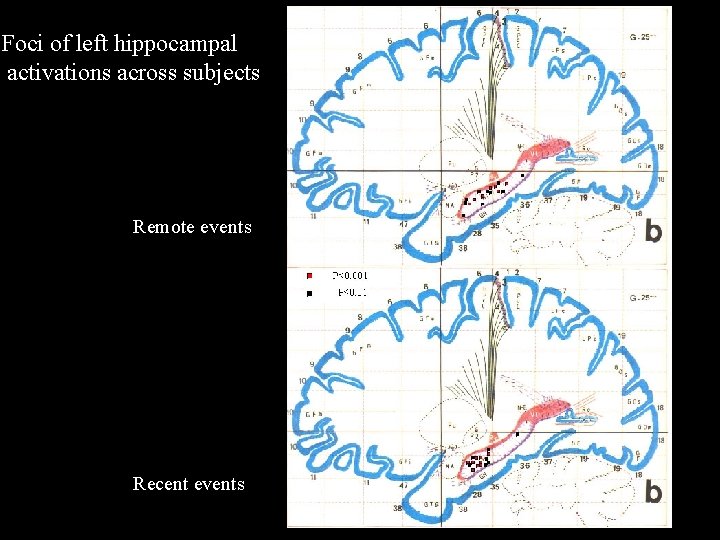
Foci of left hippocampal activations across subjects Remote events Recent events
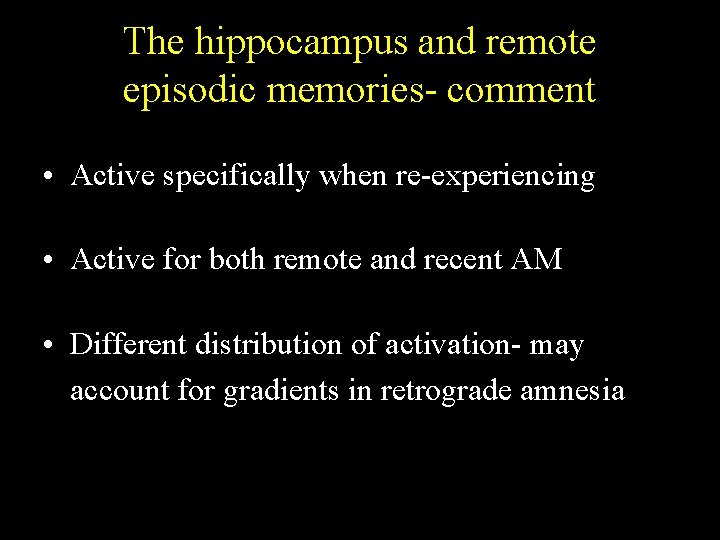
The hippocampus and remote episodic memories- comment • Active specifically when re-experiencing • Active for both remote and recent AM • Different distribution of activation- may account for gradients in retrograde amnesia
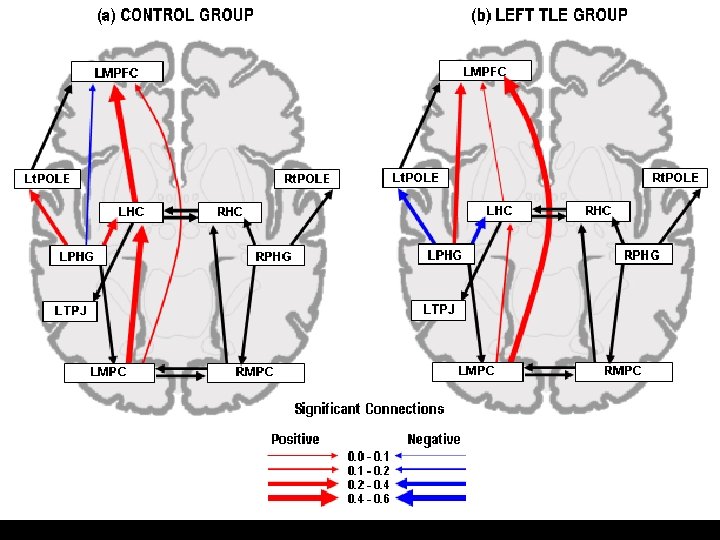
Autobiographical Memory Network Donna Addis Mary Pat Mc. Andrews Randy Mc. Intosh Morris Moscovitch Hippocampus, 2007
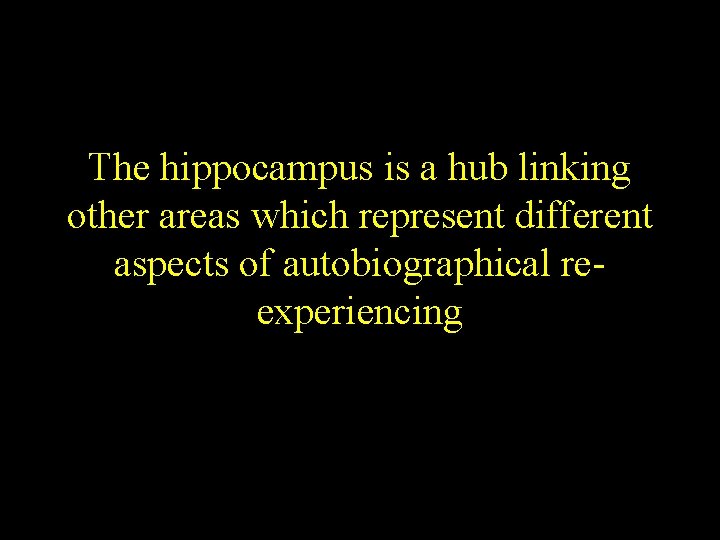
The hippocampus is a hub linking other areas which represent different aspects of autobiographical reexperiencing
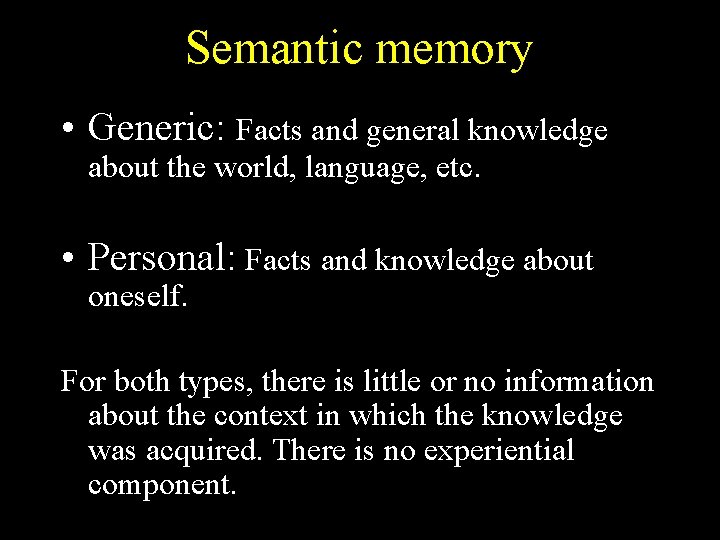
Semantic memory • Generic: Facts and general knowledge about the world, language, etc. • Personal: Facts and knowledge about oneself. For both types, there is little or no information about the context in which the knowledge was acquired. There is no experiential component.
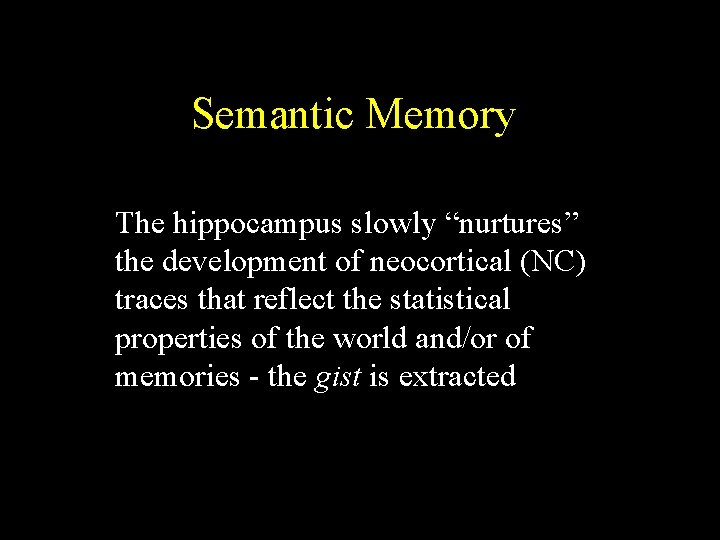
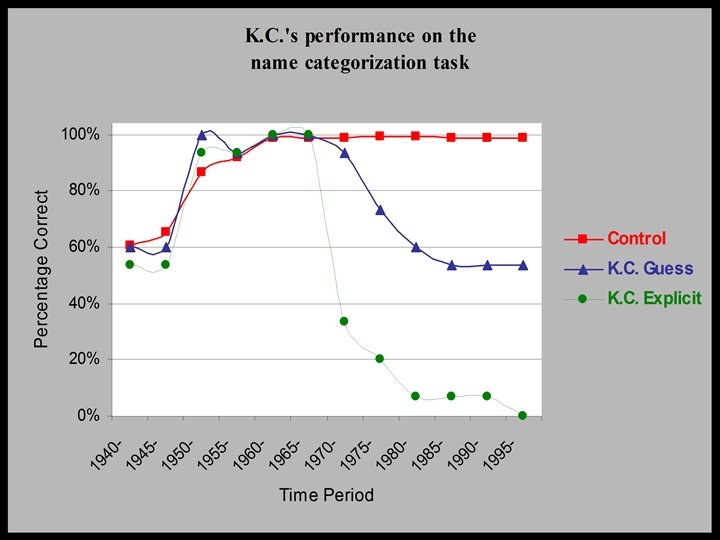
Semantic Memory The hippocampus slowly “nurtures” the development of neocortical (NC) traces that reflect the statistical properties of the world and/or of memories - the gist is extracted
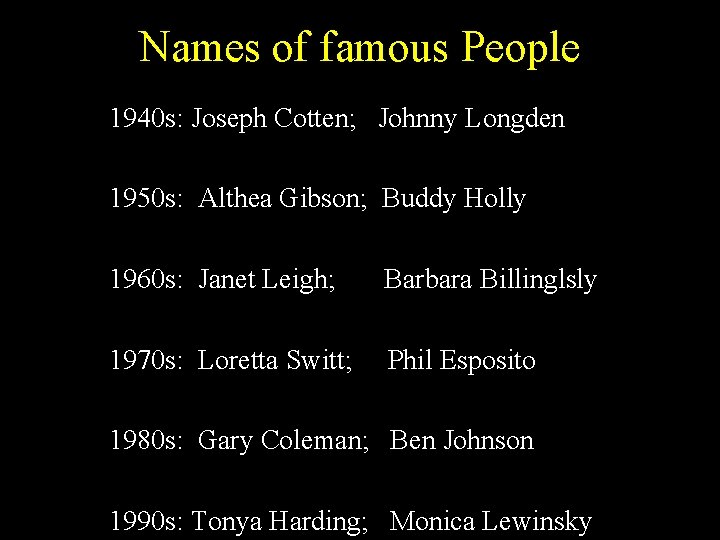
Names of famous People 1940 s: Joseph Cotten; Johnny Longden 1950 s: Althea Gibson; Buddy Holly 1960 s: Janet Leigh; Barbara Billinglsly 1970 s: Loretta Switt; Phil Esposito 1980 s: Gary Coleman; Ben Johnson 1990 s: Tonya Harding; Monica Lewinsky
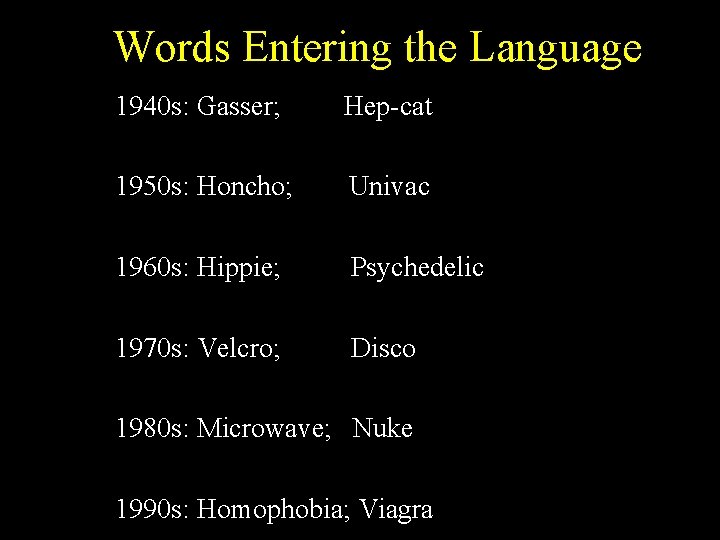
Words Entering the Language 1940 s: Gasser; Hep-cat 1950 s: Honcho; Univac 1960 s: Hippie; Psychedelic 1970 s: Velcro; Disco 1980 s: Microwave; Nuke 1990 s: Homophobia; Viagra
The hippocampus contributes, but is not necessary, for the retention and recovery of semantic memory and of items which are merely familiar.
What accounts for both temporal gradients? • For the first 5 -10 years, memories retain their experiential qualities which contribute to recovery of semantic memory.
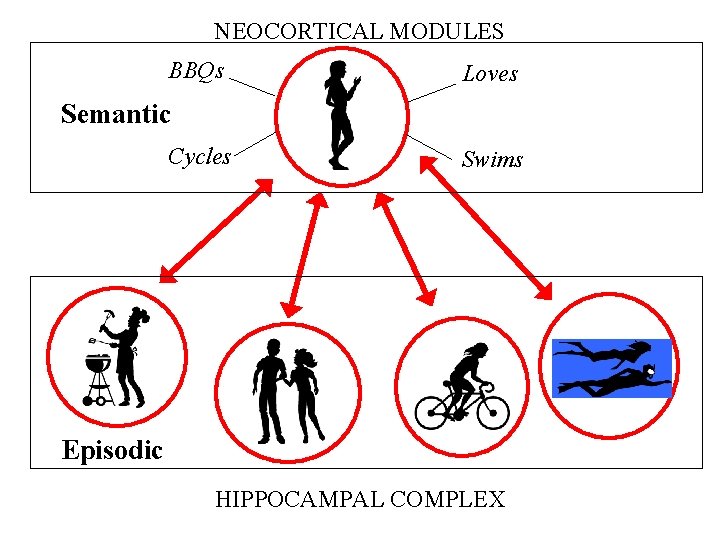
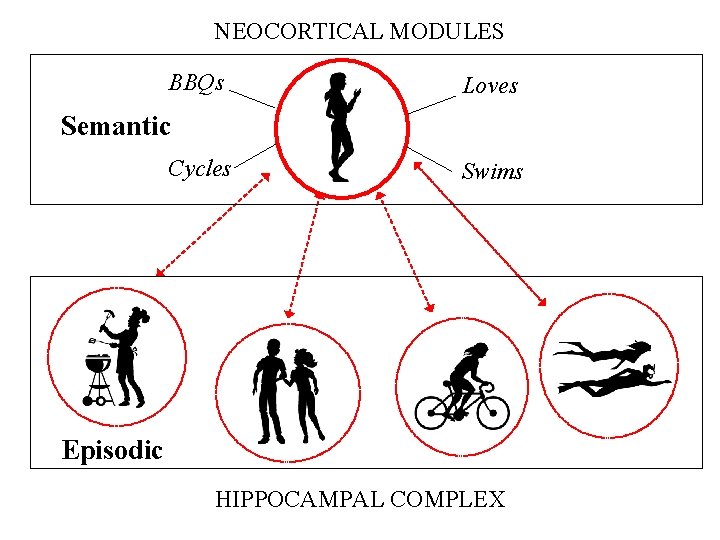
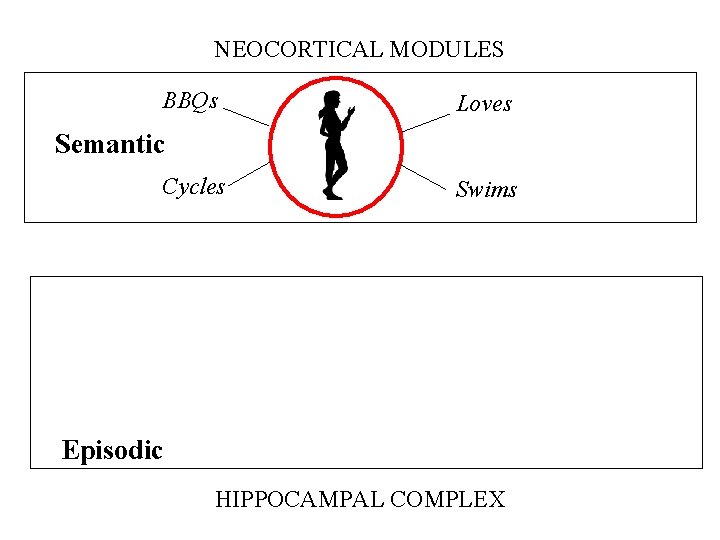
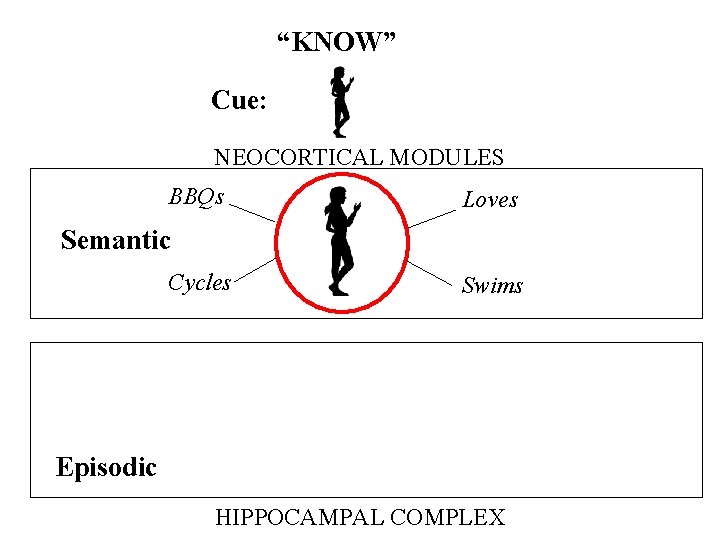
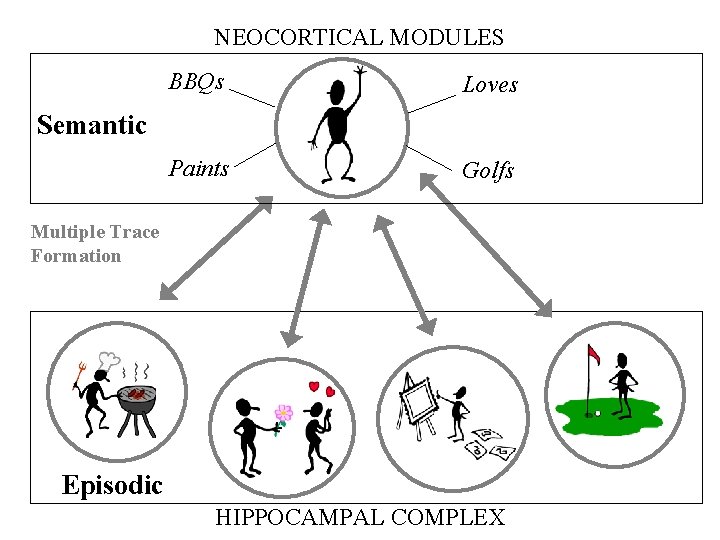
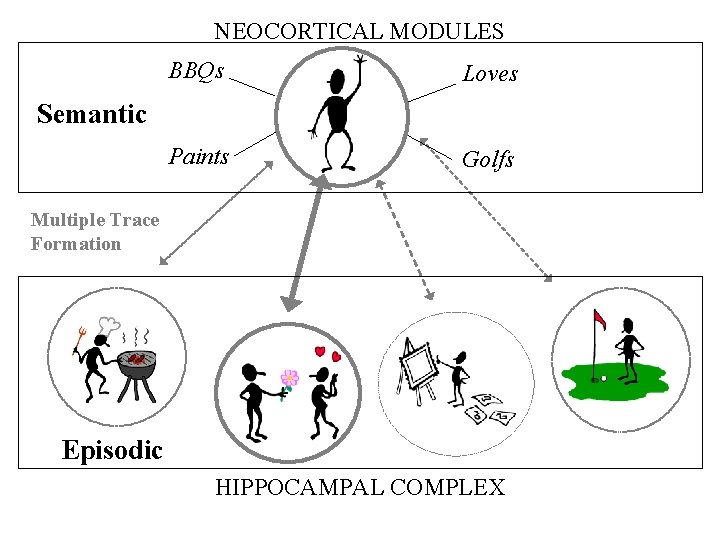
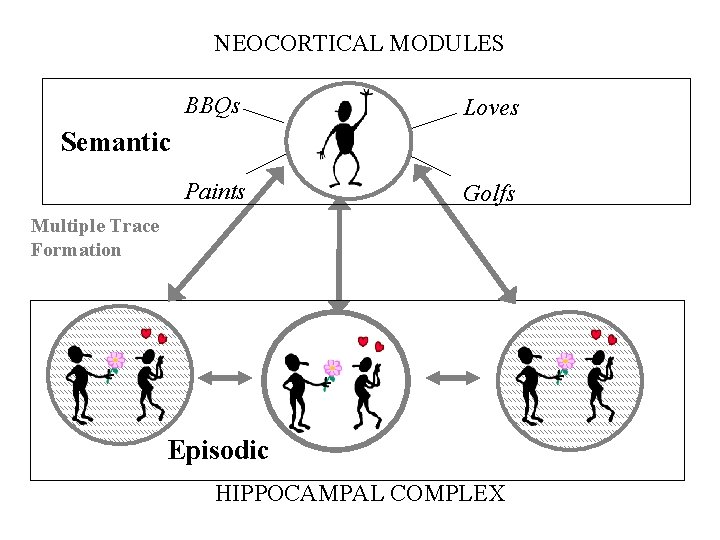
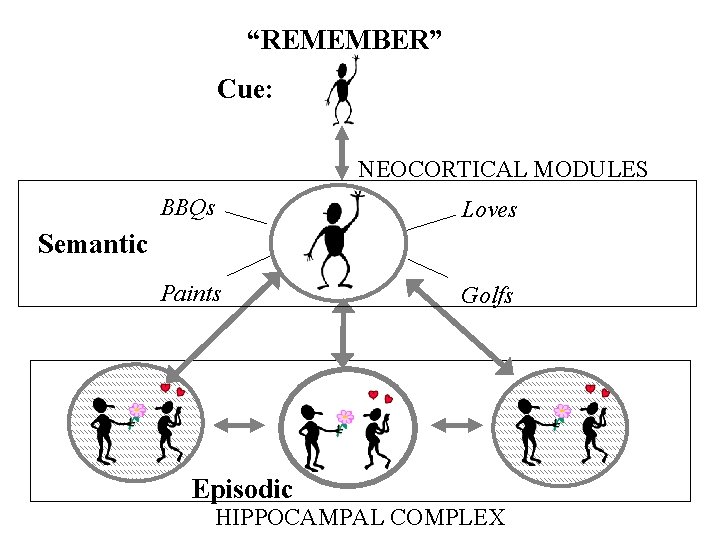
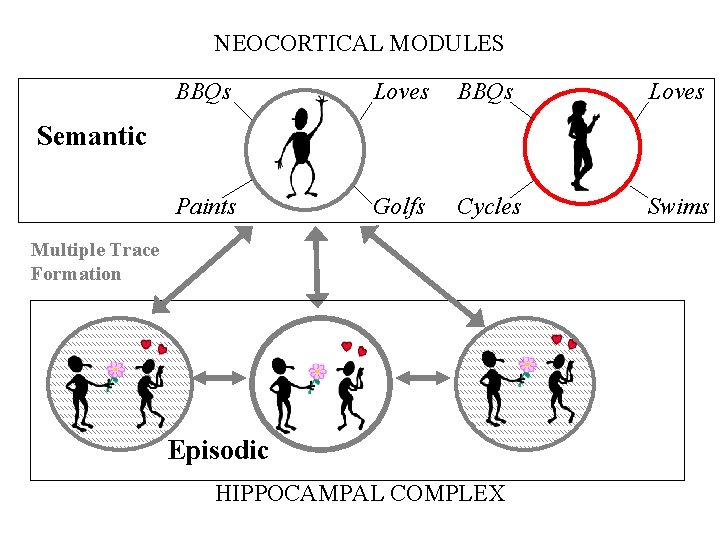
Multiple Trace Theory (Nadel & Moscovitch, Current Opinion in Neurobiology, 1997; Moscovitch et al, Journal of Anatomy, 2005)
NEOCORTICAL MODULES BBQs Loves Semantic Cycles Swims Episodic HIPPOCAMPAL COMPLEX
NEOCORTICAL MODULES BBQs Loves Semantic Cycles Swims Episodic HIPPOCAMPAL COMPLEX
NEOCORTICAL MODULES BBQs Loves Semantic Cycles Swims Episodic HIPPOCAMPAL COMPLEX
“KNOW” Cue: NEOCORTICAL MODULES BBQs Loves Semantic Cycles Swims Episodic HIPPOCAMPAL COMPLEX
NEOCORTICAL MODULES BBQs Loves Paints Golfs Semantic Multiple Trace Formation Episodic HIPPOCAMPAL COMPLEX
NEOCORTICAL MODULES BBQs Loves Paints Golfs Semantic Multiple Trace Formation Episodic HIPPOCAMPAL COMPLEX
NEOCORTICAL MODULES BBQs Loves Paints Golfs Semantic Multiple Trace Formation Episodic HIPPOCAMPAL COMPLEX
“REMEMBER” Cue: NEOCORTICAL MODULES BBQs Loves Paints Golfs Semantic Episodic HIPPOCAMPAL COMPLEX
NEOCORTICAL MODULES BBQs Loves Paints Golfs Cycles Swims Semantic Multiple Trace Formation Episodic HIPPOCAMPAL COMPLEX
Implications • Recollection: Detailed re-experiencing of a past event always will depend on the hippocampus, no matter when the event occurred. • Automaticity: A proper cue will reactivate “hippocampal” memories automatically and influence performance even on non-episodic tasks. • Random Storage: Allows for recombination of elements needed for construction of scenarios in many domains, from reconstructing the past, imagining the future, and solving problems.
Robyn Westmacott Lillian Park Signy Sheldon Mary Pat Mc. Andrews Remember/Know (Reexperiencing/Familiarity) Judgements of Famous People Westmacott & Moscovitch, Memory & Cognition, 2003; . Westmacott et al, Neuropsychologia, 2004
Procedure Norms were derived by having participants rate about 300 names of famous people on familiarity, facts known about them, emotionality, and personal significance. 50 famous names were selected, half of which were associated with high R responses and half with low R (K) responses in the general population. The R and K items were matched for familiarity and facts known about them.
Procedure Participants Reaction times to read the names and make fame judgments about them were recorded. After the tasks were completed, each subject rated the names on the extent to which they evoked a personal memory.
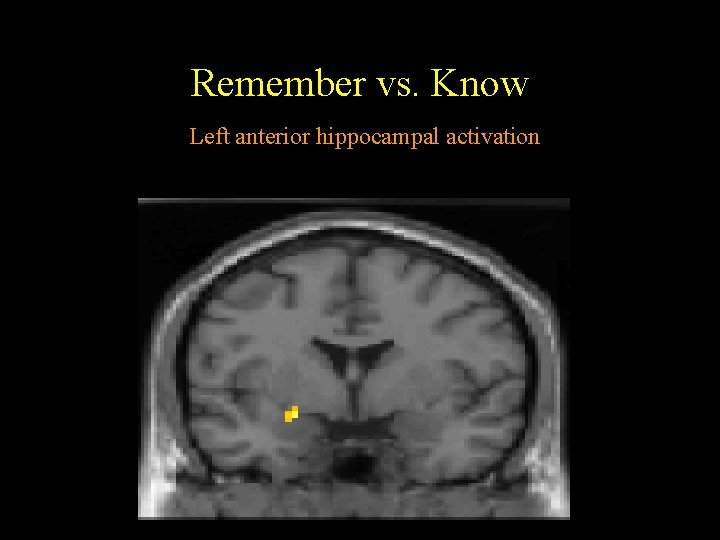
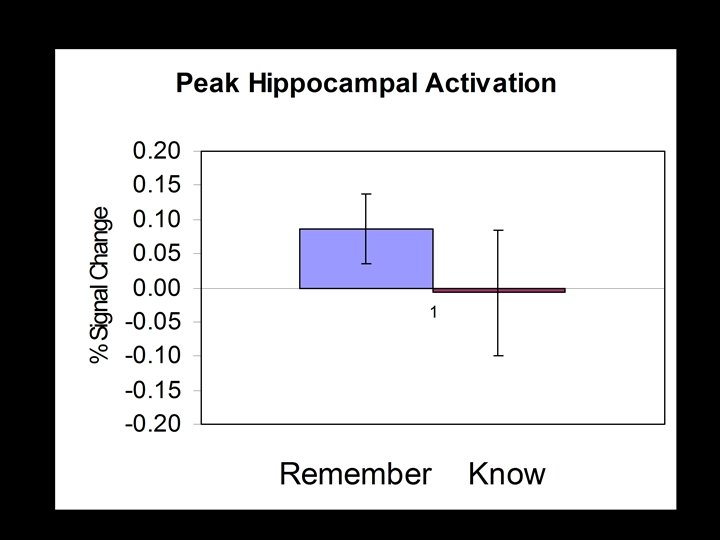
Remember vs. Know Left anterior hippocampal activation
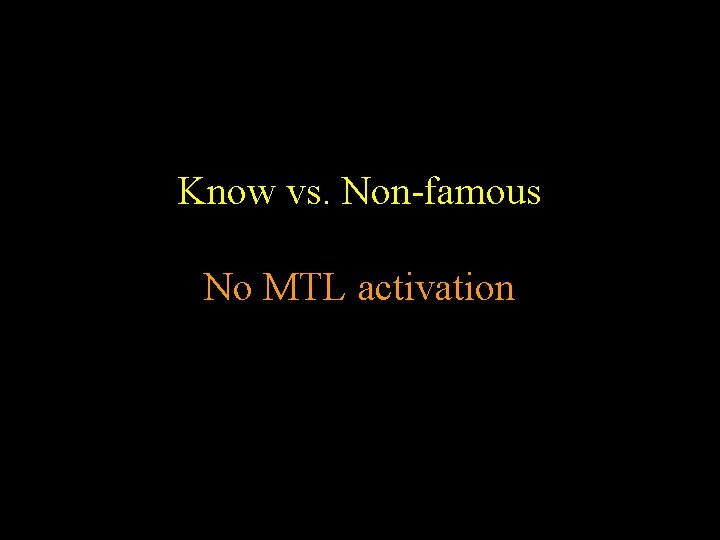
Know vs. Non-famous No MTL activation
Conclusion Recollection influences semantic judgment and reading times. The influence of recollection on semantics is mediated by the hippocampus.
Conclusions 1. The Hippocampus is needed for storage and retrieval of rich, autobiographical memories as long as they exist. Such memories are NOT transferred to neocortex. The hippocampus plays the same role for remote memories as it does for recent memories.
Conclusions 2. The HP Complex contributes to the Neocortical strengthening and development of semantic memories of words, concepts, events, people and space - and even the gist of autobiographical memories.
Conclusions 3. Semantic memories may retain an autobiographical component which remains HP dependent.
Implications • Recollection: Detailed re-experiencing of a past event always will depend on the hippocampus, no matter when the event occurred. • Automaticity: A proper cue will reactivate “hippocampal” memories automatically and influence performance even on non-episodic tasks. • Random Storage: Allows for recombination of elements needed for construction of scenarios in many domains, from reconstructing the past, imagining the future, and solving problems.
Recollection in the Service of Problem Solving Signy Sheldon Aida Ramos Morris Moscovitch
Why do we need this detailed autobiographical memory? • Planning for the future • Imagination • Problem solving
Episodic Memory • Captures co-occurring, often unrelated elements of a consciously experienced event in a single memory trace. Therefore, the memory trace is informationally rich. Ideal for crossdomain pattern matching and completion. • Extended episodes are not stored as single representations, but as separate units and need to be reconstructed into a coherent narrative. Underlies flexibility.
Current Study • Episodic memory may be important when solving problems that are low frequency and not well-defined. • Such problems are frequent in social settings.
The Role of EM in Social Problem Solving • Do episodic memories contribute to social problem solving? • Specifically, does impaired episodic memory lead to impaired ability to solve problems in which the solutions must be reconstructed from past personal experience?
Means-End Problem Solving (MEPS; Spivak & Platt, 1975) • Measure of real-life problem solving, typically used in clinical setting. • Requires one to orient self and conceptualize means of moving towards a goal. • Consists of 10 vignettes that are of a personal nature; each describes an initial problem followed by an end state. The participant is to fill in the steps taken to get from the starting position to the end state/goal.
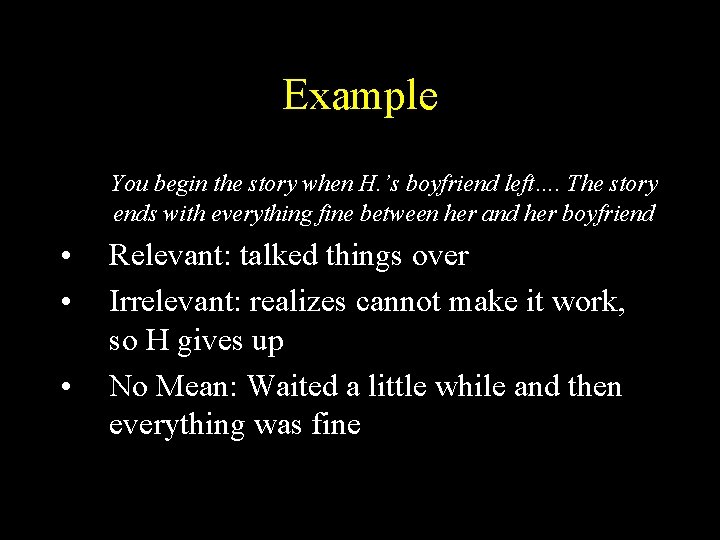
MEPS example H. loved her boyfriend very much, but they had many arguments. One day he left her. H. wanted things to be better. The story ends with everything being fine between her and her boyfriend. You begin the story when H. ’s boyfriend left.
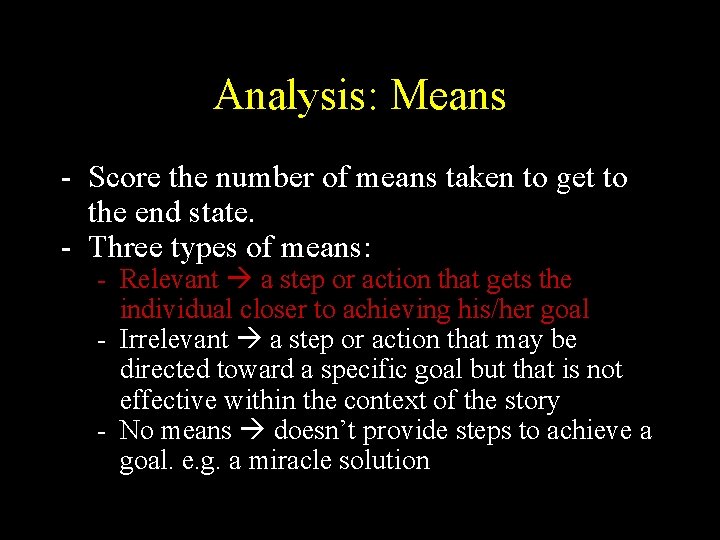
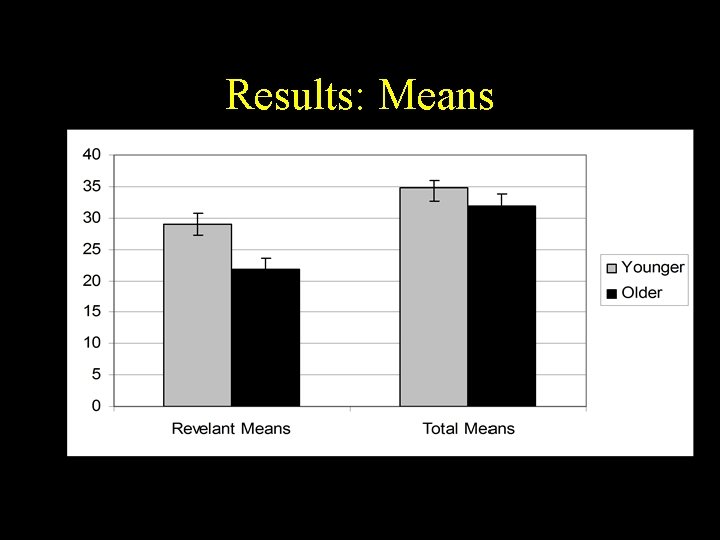
Analysis: Means - Score the number of means taken to get to the end state. - Three types of means: - Relevant a step or action that gets the individual closer to achieving his/her goal - Irrelevant a step or action that may be directed toward a specific goal but that is not effective within the context of the story - No means doesn’t provide steps to achieve a goal. e. g. a miracle solution
Example You begin the story when H. ’s boyfriend left…. The story ends with everything fine between her and her boyfriend • • • Relevant: talked things over Irrelevant: realizes cannot make it work, so H gives up No Mean: Waited a little while and then everything was fine
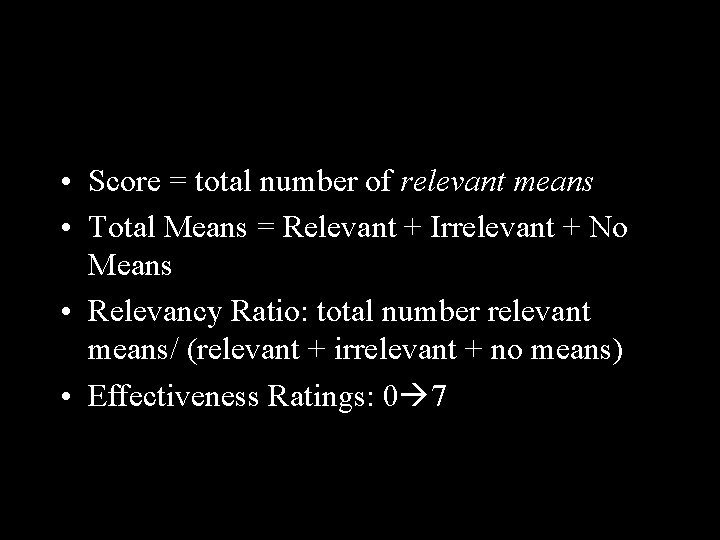
• Score = total number of relevant means • Total Means = Relevant + Irrelevant + No Means • Relevancy Ratio: total number relevant means/ (relevant + irrelevant + no means) • Effectiveness Ratings: 0 7
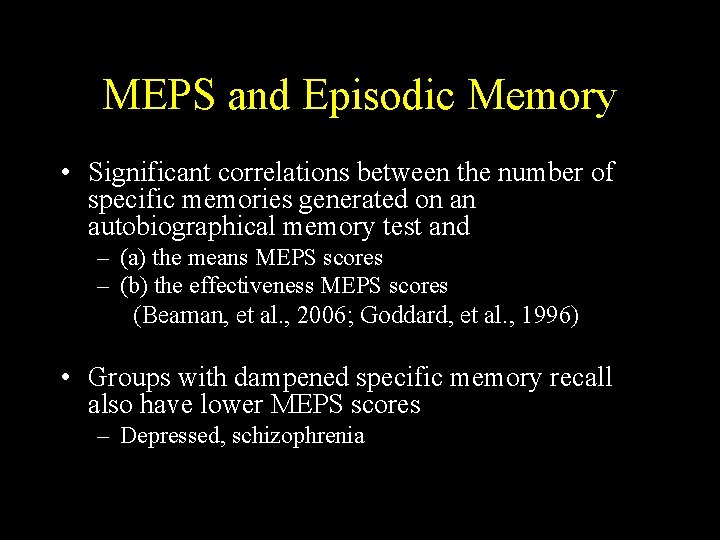
MEPS and Episodic Memory • Significant correlations between the number of specific memories generated on an autobiographical memory test and – (a) the means MEPS scores – (b) the effectiveness MEPS scores (Beaman, et al. , 2006; Goddard, et al. , 1996) • Groups with dampened specific memory recall also have lower MEPS scores – Depressed, schizophrenia
Current Study: Participants • 12 Younger adults: mean age = 23. 0 • 12 Older adults: mean age = 76. 8 • So far, 4 Patients with medial temporal lobe lesions
Method • Full MEPS protocol: 10 stories • **After completed, asked: – Have you experienced an event like this? – Vividness of recall – What information did you use to complete the story?
Results: Means * *
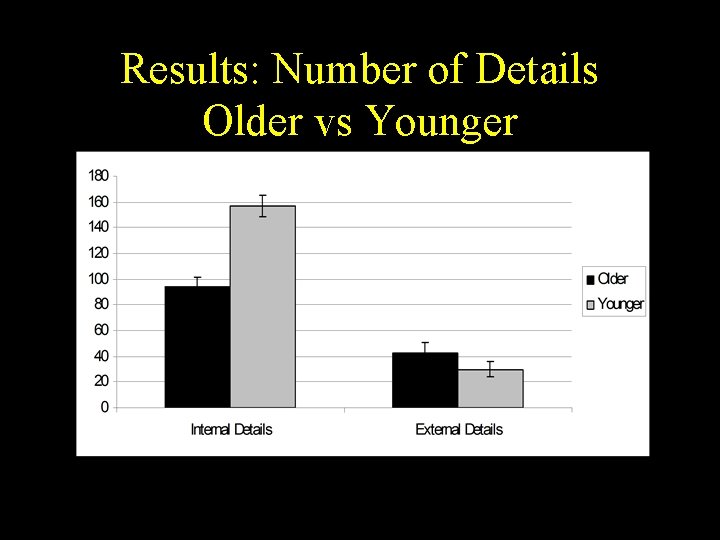
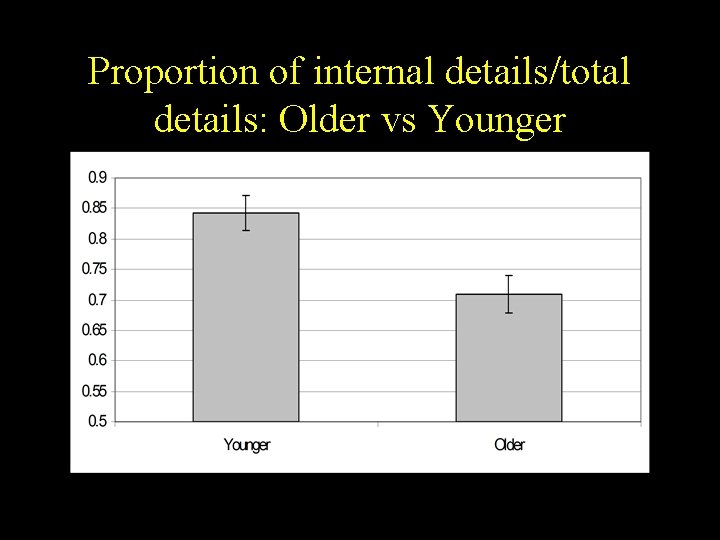
Analysis: Details • To account for the richness of detail, we adapted the Autobiographical Interview of Levine et al (2002). • segmented into distinct details (i. e. , chunks of information) • Internal Details: – Reflects episodic autobiographical memory – “H then went to her friends house, down the street, to talk about her problem” • External Details: – including semantic details, extended events and repetitions – “H always hates it when she fights with her boyfriend”
Results: Number of Details Older vs Younger *
Proportion of internal details/total details: Older vs Younger *
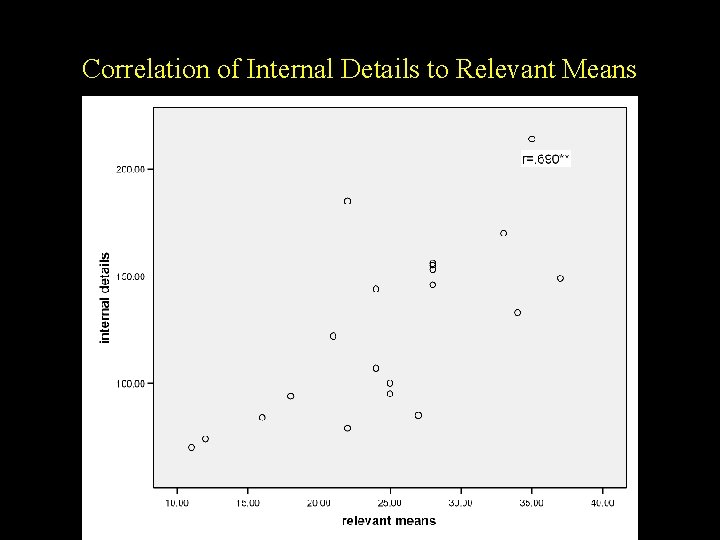
Correlation of Internal Details to Relevant Means
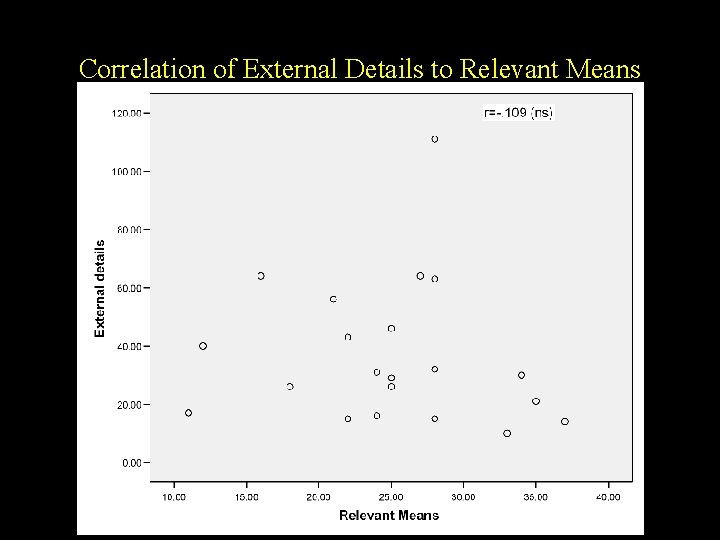
Correlation of External Details to Relevant Means
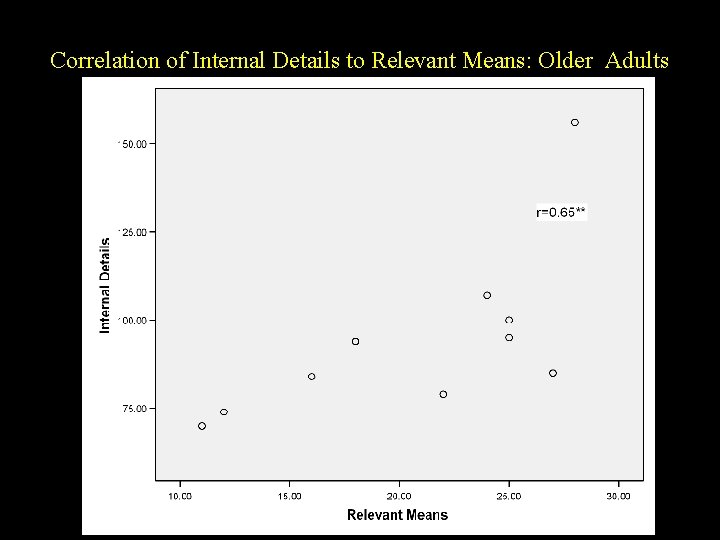
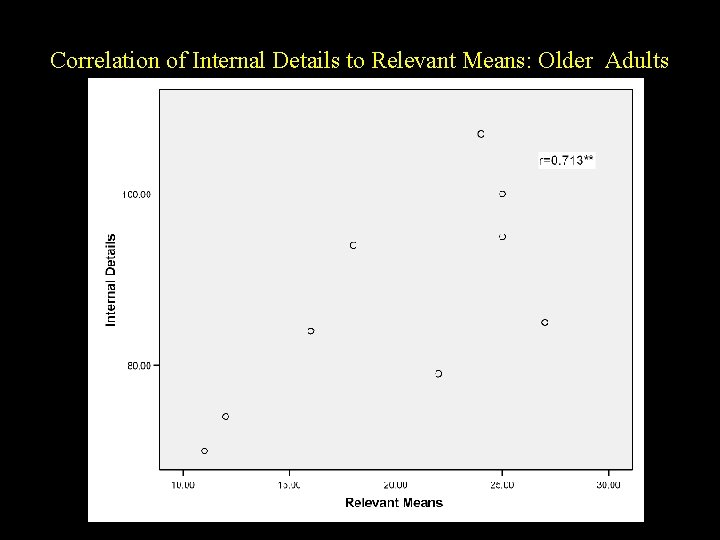
Correlation of Internal Details to Relevant Means: Older Adults
Correlation of Internal Details to Relevant Means: Older Adults
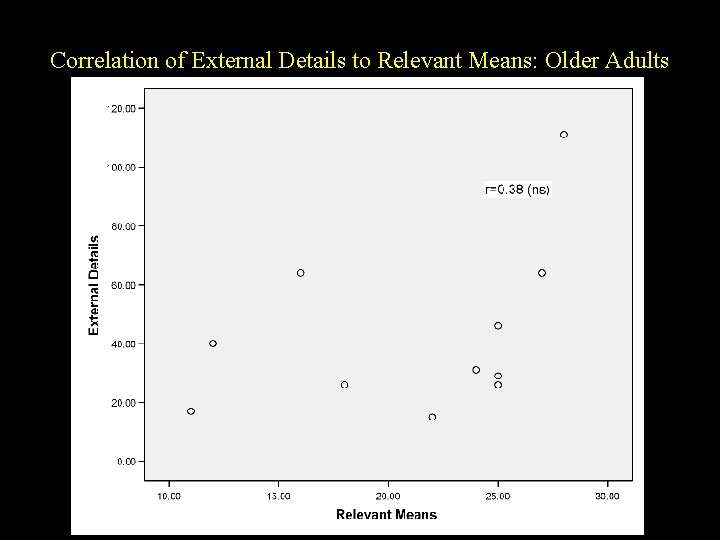
Correlation of External Details to Relevant Means: Older Adults
Correlation of External Details to Relevant Means: Older Adults
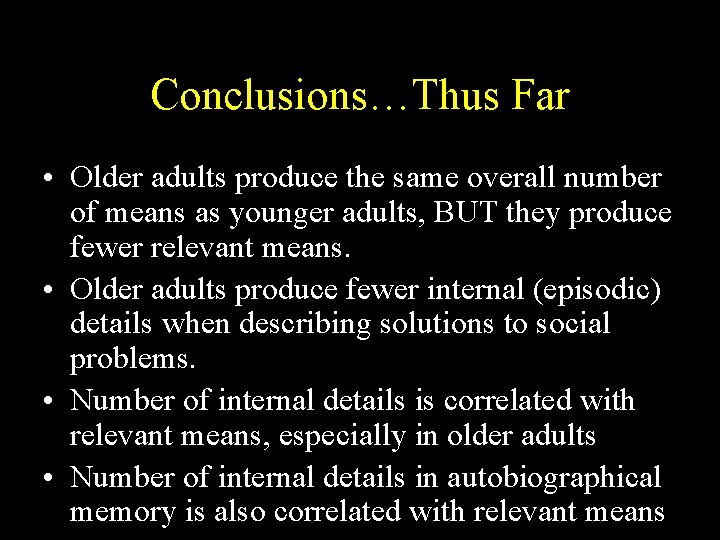
Conclusions…Thus Far • Older adults produce the same overall number of means as younger adults, BUT they produce fewer relevant means. • Older adults produce fewer internal (episodic) details when describing solutions to social problems. • Number of internal details is correlated with relevant means, especially in older adults • Number of internal details in autobiographical memory is also correlated with relevant means
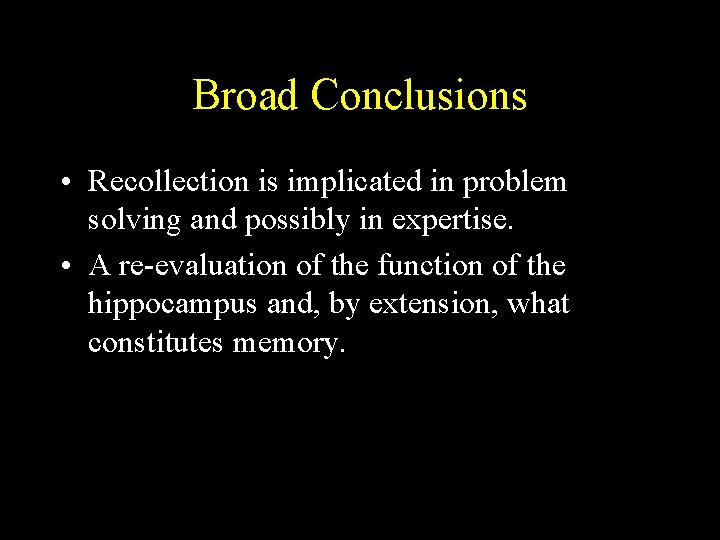
Broad Conclusions • Recollection is implicated in problem solving and possibly in expertise. • A re-evaluation of the function of the hippocampus and, by extension, what constitutes memory.
What about the creative imagination?
Memory is reconstructive: Bartlett, Remembering (1932) “The first notion to get rid of is that memory is primarily reduplicative, or reproductive…re-excitement of individual traces did not look to be in the least what was happening. . . remembering appears to be far more decisively an affair of construction than one of mere reproduction. ” pp 204 -205.
“Don’t make love to a novelist because you’ll find a description of your body in the next book” From an interview with a French-Canadian novelist on CBC.
Thank you U of T