
The coastal and marine ecosystems An overview Learning


- Slides: 43
The coastal and marine ecosystems: An overview
Learning Objectives: At the end of this session, the PCTs will be able to: 1. Understand appreciate the importance of coastal and marine ecosystems to food, economic and environmental security 2. Identify and appreciate the various threats to these ecosystems by human activities associated with development and population growth The coastal and marine ecosystems: An overview
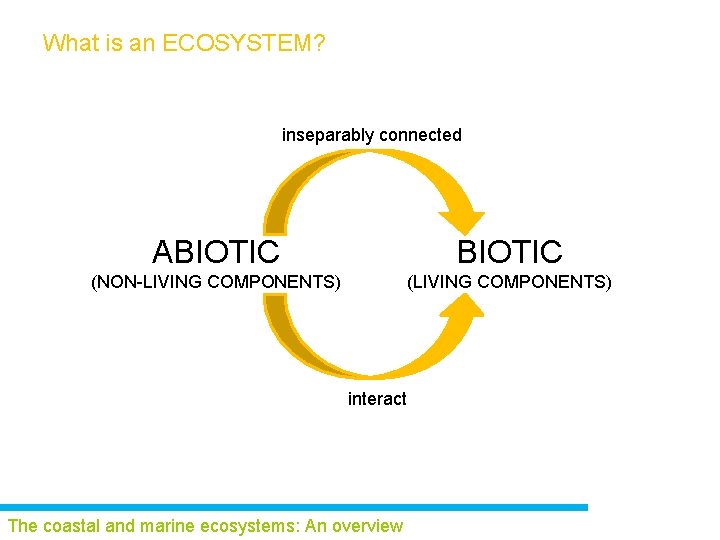
What is an ECOSYSTEM? inseparably connected ABIOTIC (NON-LIVING COMPONENTS) (LIVING COMPONENTS) interact The coastal and marine ecosystems: An overview
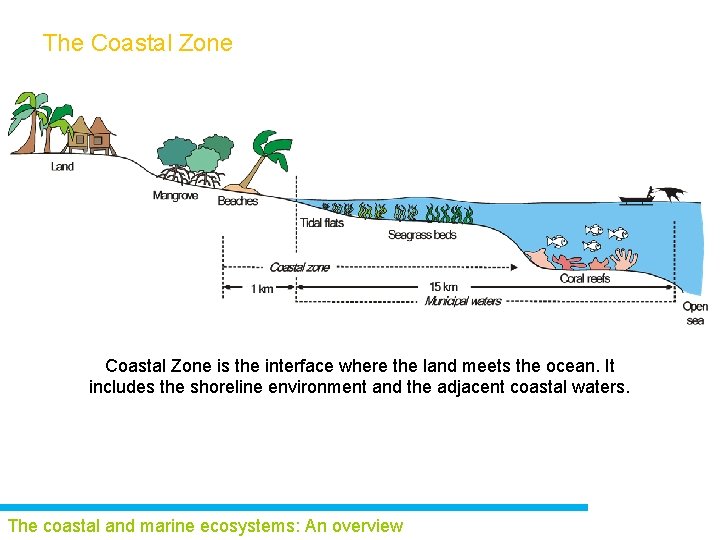
The Coastal Zone is the interface where the land meets the ocean. It includes the shoreline environment and the adjacent coastal waters. The coastal and marine ecosystems: An overview
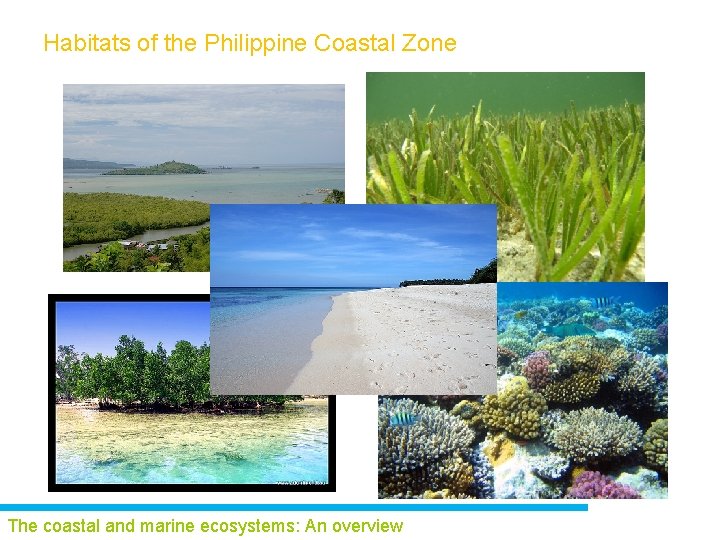
The Coastal Zone A Philippine Coastal Zone has the following major ecosystems along its shallow coastlines: § coral reefs § seagrass beds § coastal wetlands including mangroves § estuaries and lagoons The coastal and marine ecosystems: An overview
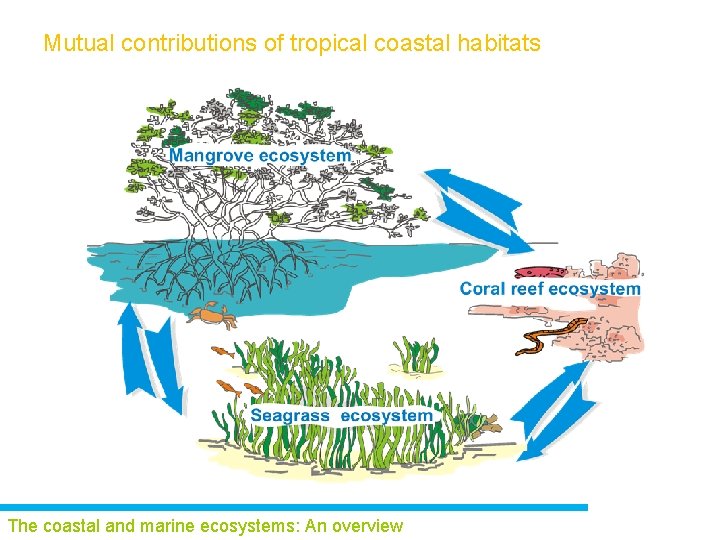
Mutual contributions of tropical coastal habitats The coastal and marine ecosystems: An overview
Typical life cycle of coral reef fish species and interconnectivity of habitats The coastal and marine ecosystems: An overview
Habitats of the Philippine Coastal Zone The coastal and marine ecosystems: An overview
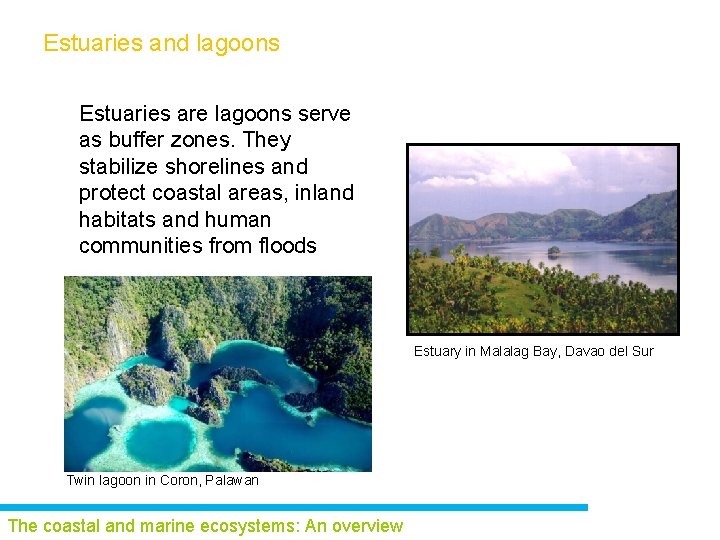
Estuaries and lagoons Estuaries are lagoons serve as buffer zones. They stabilize shorelines and protect coastal areas, inland habitats and human communities from floods Estuary in Malalag Bay, Davao del Sur Twin lagoon in Coron, Palawan The coastal and marine ecosystems: An overview
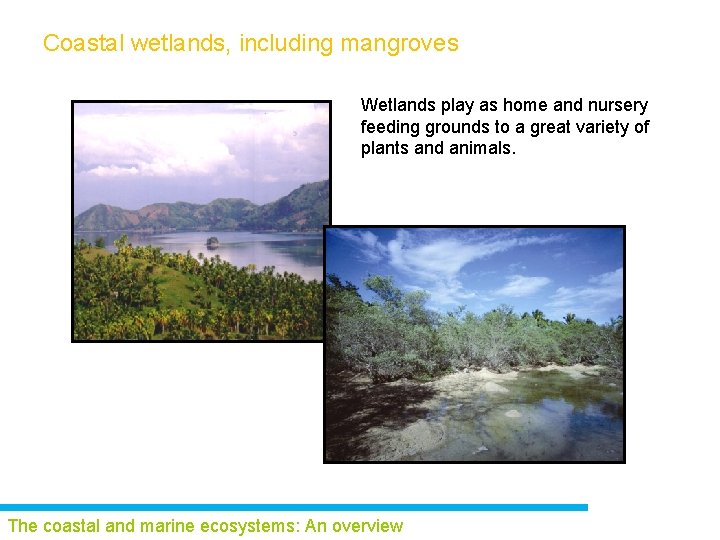
Coastal wetlands, including mangroves Wetlands play as home and nursery feeding grounds to a great variety of plants and animals. The coastal and marine ecosystems: An overview
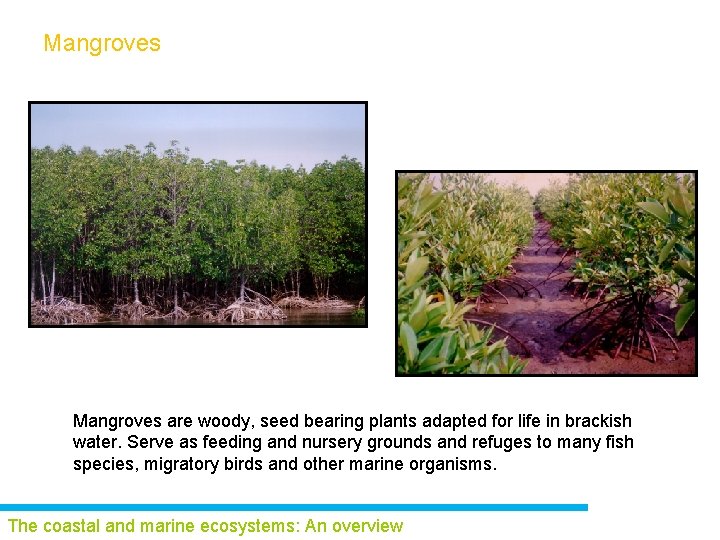
Mangroves are woody, seed bearing plants adapted for life in brackish water. Serve as feeding and nursery grounds and refuges to many fish species, migratory birds and other marine organisms. The coastal and marine ecosystems: An overview
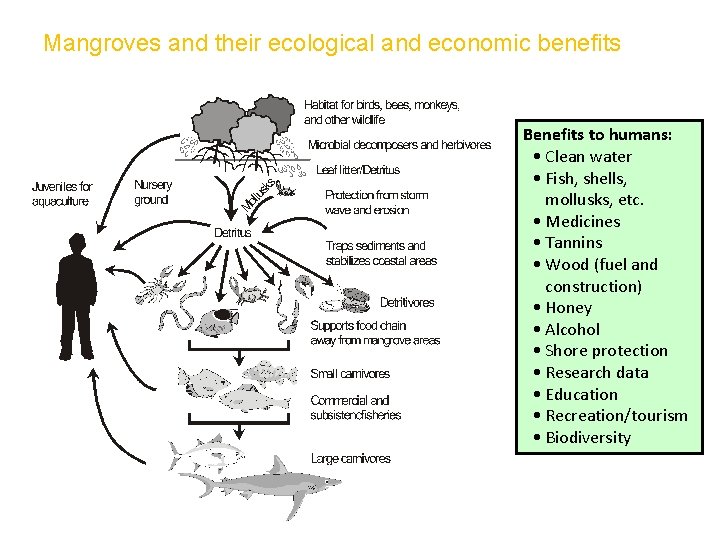
Mangroves and their ecological and economic benefits Benefits to humans: • Clean water • Fish, shells, mollusks, etc. • Medicines • Tannins • Wood (fuel and construction) • Honey • Alcohol • Shore protection • Research data • Education • Recreation/tourism • Biodiversity
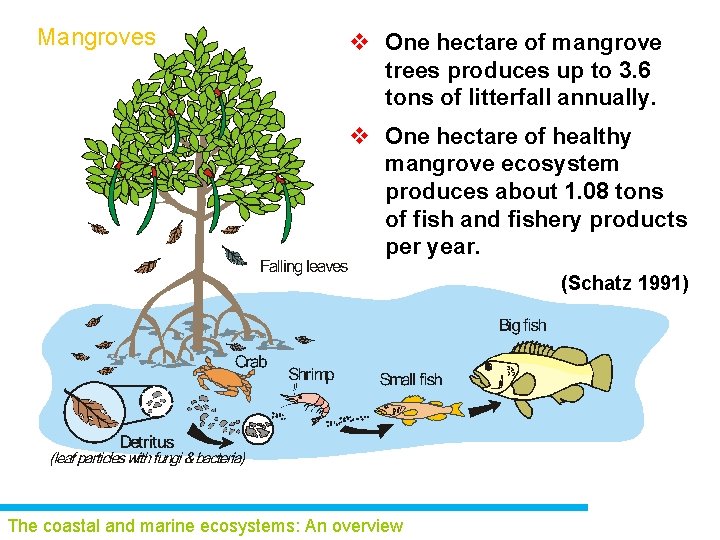
Mangroves v One hectare of mangrove trees produces up to 3. 6 tons of litterfall annually. v One hectare of healthy mangrove ecosystem produces about 1. 08 tons of fish and fishery products per year. (Schatz 1991) The coastal and marine ecosystems: An overview
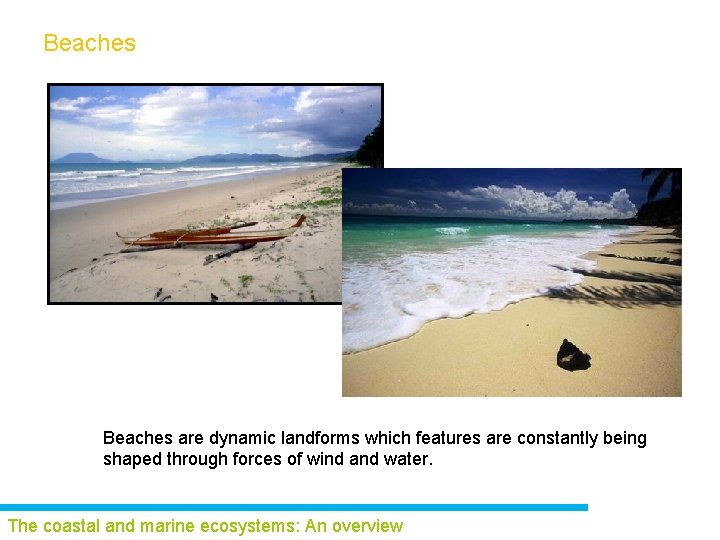
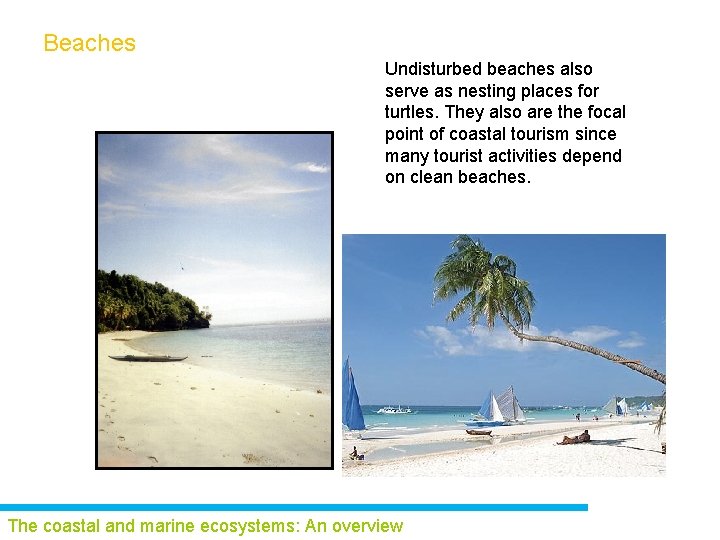
Beaches are dynamic landforms which features are constantly being shaped through forces of wind and water. The coastal and marine ecosystems: An overview
Beaches Undisturbed beaches also serve as nesting places for turtles. They also are the focal point of coastal tourism since many tourist activities depend on clean beaches. The coastal and marine ecosystems: An overview
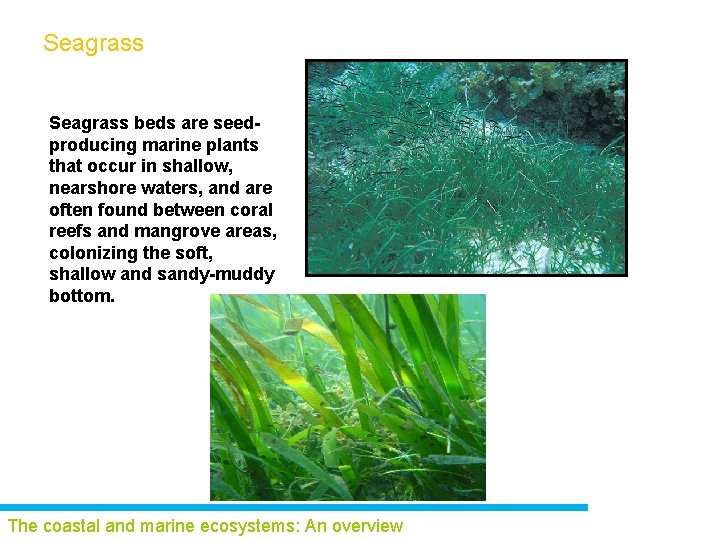
Seagrass beds are seedproducing marine plants that occur in shallow, nearshore waters, and are often found between coral reefs and mangrove areas, colonizing the soft, shallow and sandy-muddy bottom. The coastal and marine ecosystems: An overview
Seagrass and its ecological and economic benefits § Holds the substrate § Seagrass beds harbor a rich assemblage of marine organisms that all contribute to the important role of seagrasses in the marine ecosystem § Seagrass beds support at least: – 172 species of fish – 46 species of invertebrate – 51 species of seaweeds – 45 species of algal epiphytes – 1 species of sea turtle – 1 species of Dugong The coastal and marine ecosystems: An overview
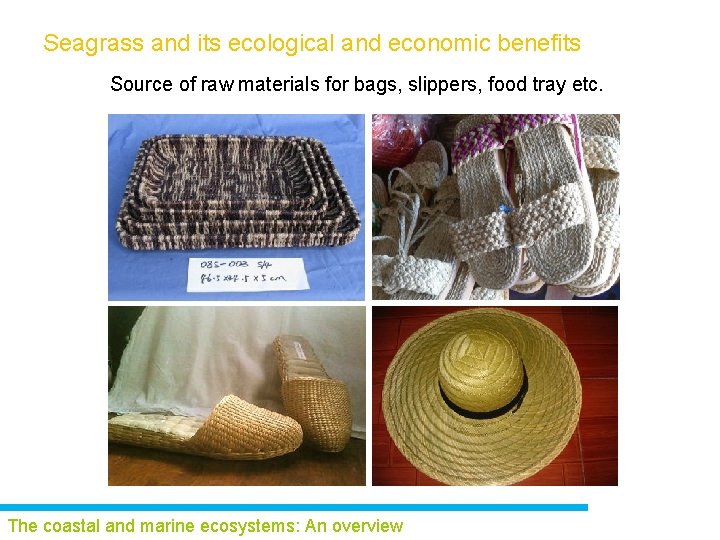
Seagrass and its ecological and economic benefits Source of raw materials for bags, slippers, food tray etc. The coastal and marine ecosystems: An overview
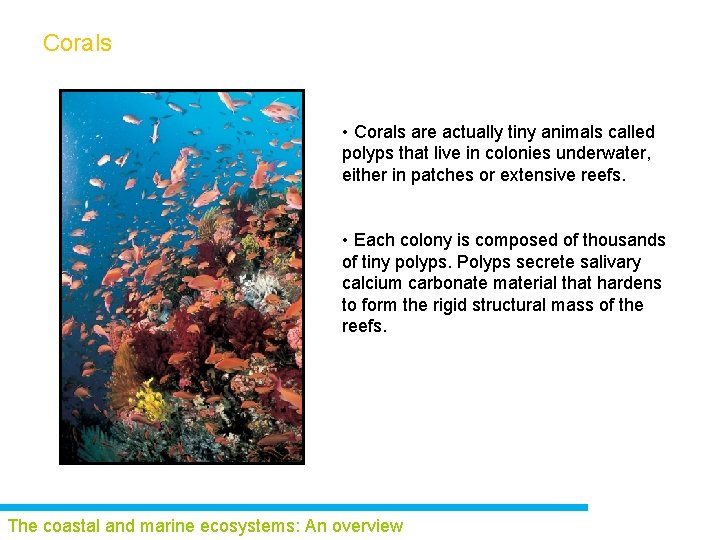
Corals • Corals are actually tiny animals called polyps that live in colonies underwater, either in patches or extensive reefs. • Each colony is composed of thousands of tiny polyps. Polyps secrete salivary calcium carbonate material that hardens to form the rigid structural mass of the reefs. The coastal and marine ecosystems: An overview
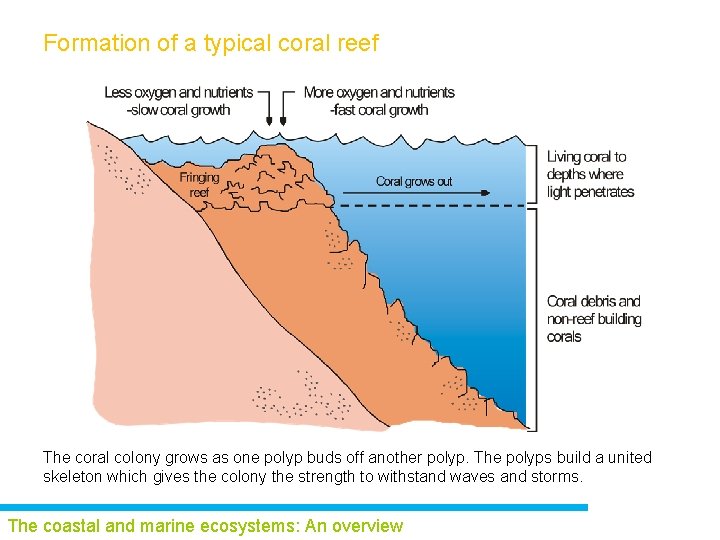
Formation of a typical coral reef The coral colony grows as one polyp buds off another polyp. The polyps build a united skeleton which gives the colony the strength to withstand waves and storms. The coastal and marine ecosystems: An overview
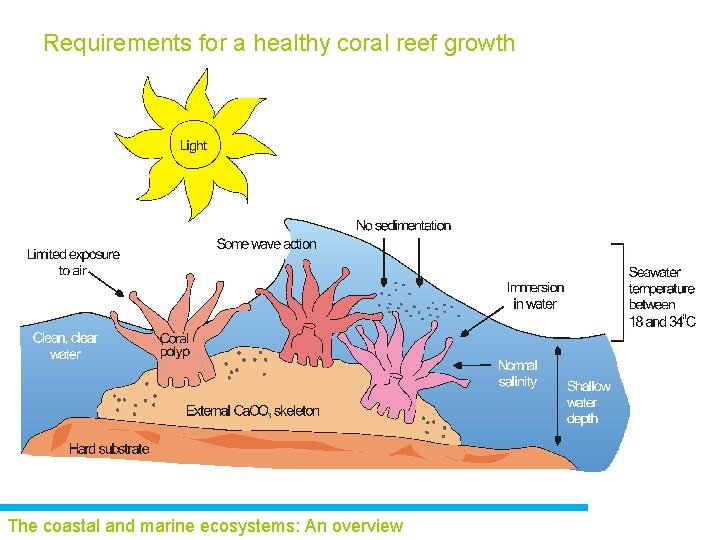
Requirements for a healthy coral reef growth The coastal and marine ecosystems: An overview
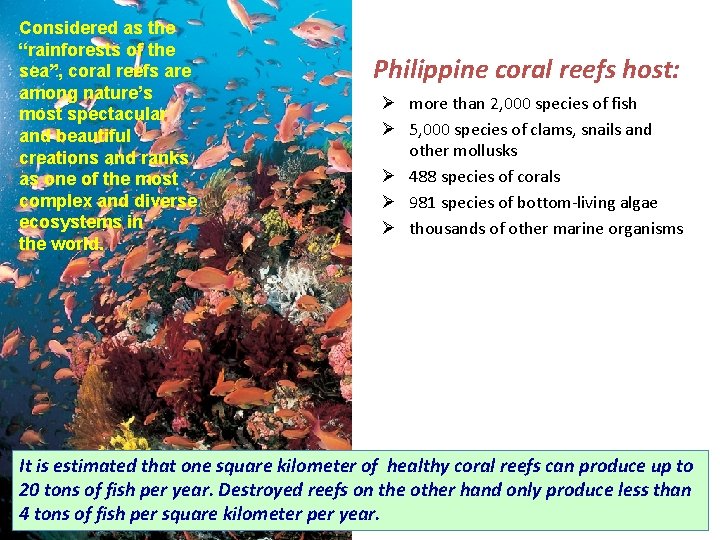
Considered as the “rainforests of the sea”, coral reefs are among nature’s most spectacular and beautiful creations and ranks as one of the most complex and diverse ecosystems in the world. Philippine coral reefs host: Ø more than 2, 000 species of fish Ø 5, 000 species of clams, snails and other mollusks Ø 488 species of corals Ø 981 species of bottom-living algae Ø thousands of other marine organisms It is estimated that one square kilometer of healthy coral reefs can produce up to 20 tons of fish per year. Destroyed reefs on the other hand only produce less than 4 tons of fish per square kilometer per year.
The Philippine coastal zone: An endangered environment, issues and problems The Philippine coastal zone: An endangered environment, issues & problems
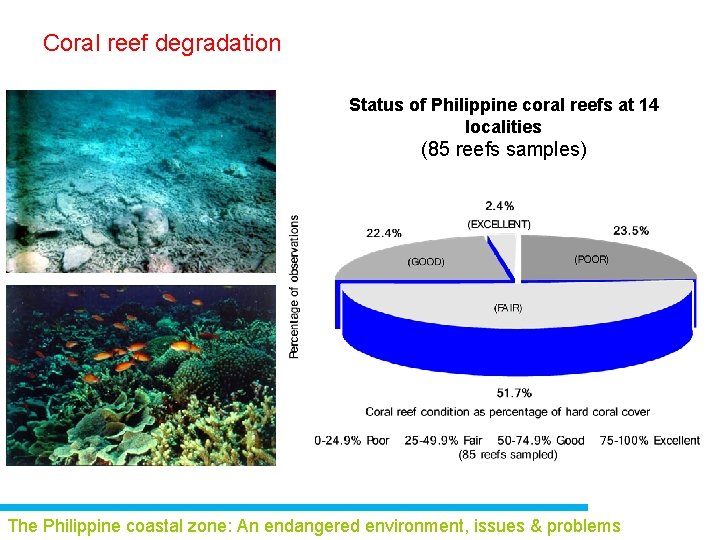
Coral reef degradation Status of Philippine coral reefs at 14 localities (85 reefs samples) The Philippine coastal zone: An endangered environment, issues & problems
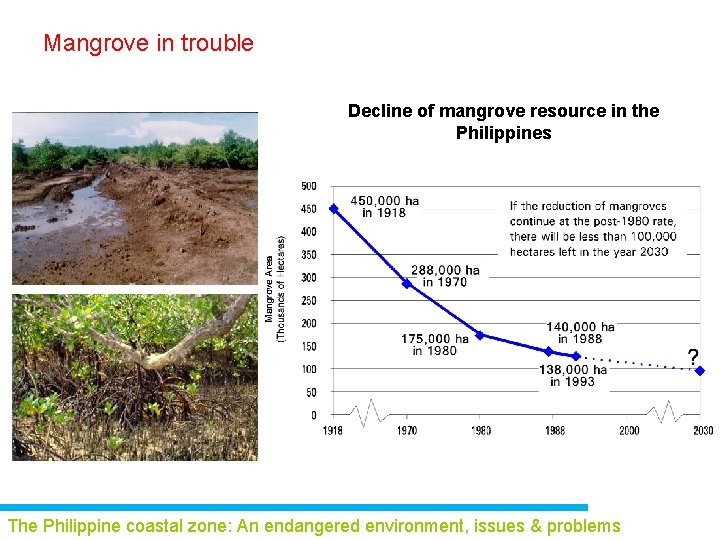
Mangrove in trouble Decline of mangrove resource in the Philippines The Philippine coastal zone: An endangered environment, issues & problems
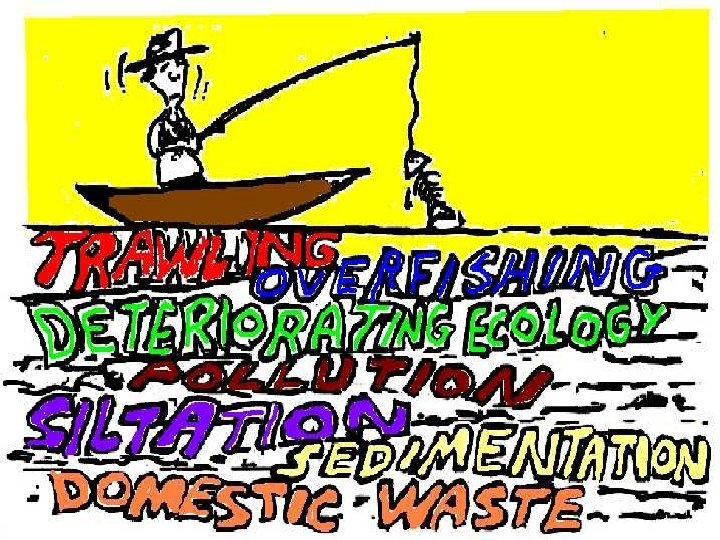
Loss of seagrass beds are attributed to the following: Ø Land use activities such as encroachment in the habitat through reclamation and improper shoreline development including the construction of structures that impede natural water movement Ø Use of destructive fishing gears that scour and scrape the seagrass beds Ø Sedimentation and siltation from upland areas Ø Introduction of water borne pollutants from domestic and industrial wastes The Philippine coastal zone: An endangered environment, issues & problems
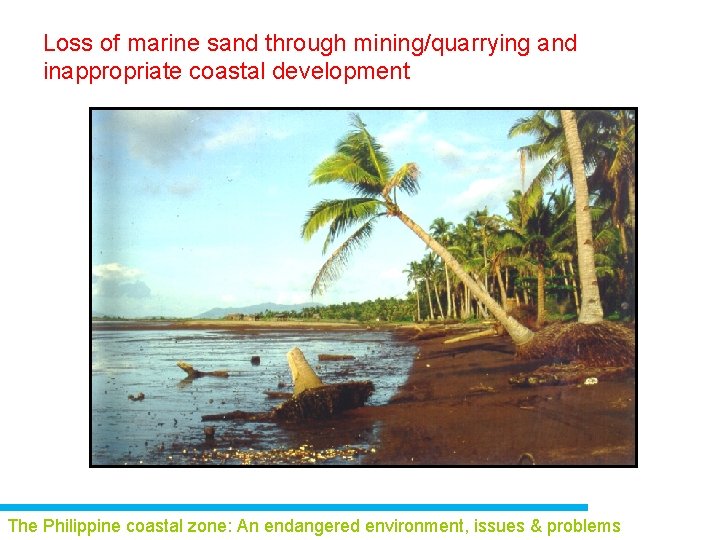
Loss of marine sand through mining/quarrying and inappropriate coastal development The Philippine coastal zone: An endangered environment, issues & problems
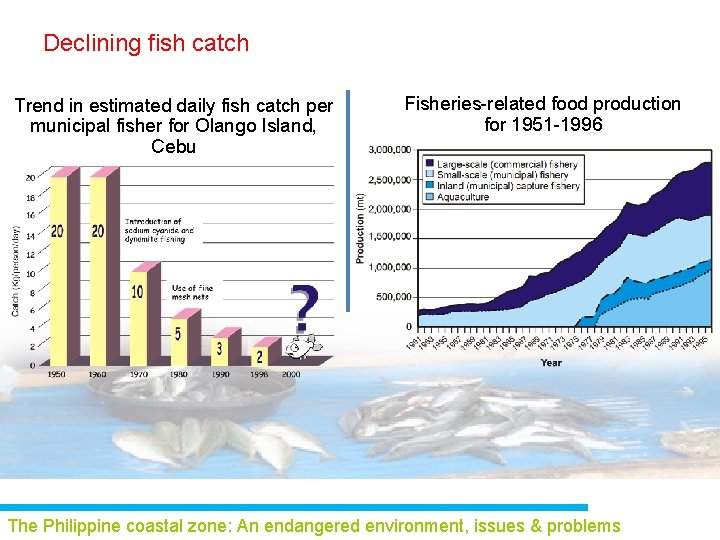
Declining fish catch Trend in estimated daily fish catch per municipal fisher for Olango Island, Cebu Fisheries-related food production for 1951 -1996 The Philippine coastal zone: An endangered environment, issues & problems
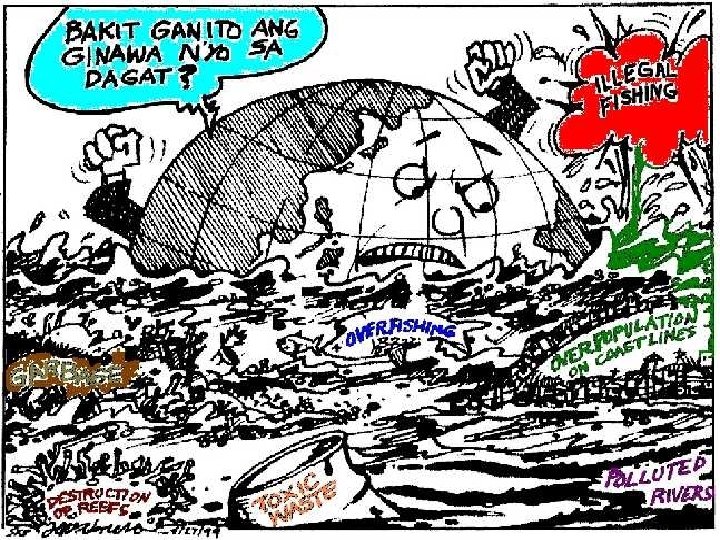
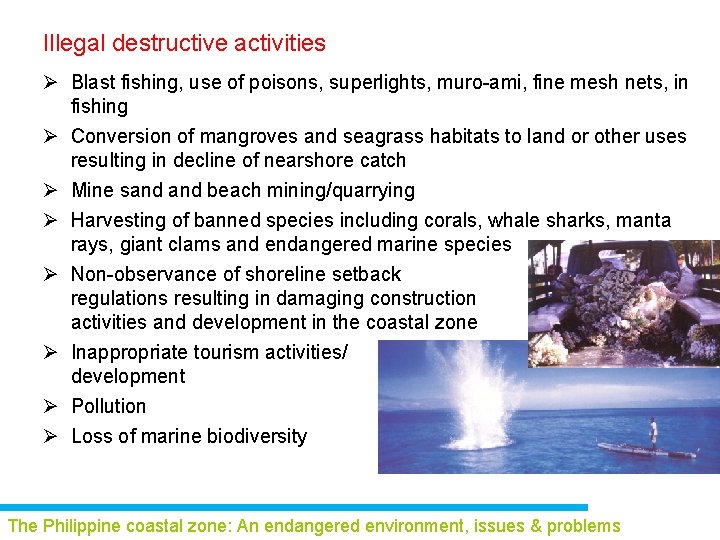
Illegal destructive activities Ø Blast fishing, use of poisons, superlights, muro-ami, fine mesh nets, in fishing Ø Conversion of mangroves and seagrass habitats to land or other uses resulting in decline of nearshore catch Ø Mine sand beach mining/quarrying Ø Harvesting of banned species including corals, whale sharks, manta rays, giant clams and endangered marine species Ø Non-observance of shoreline setback regulations resulting in damaging construction activities and development in the coastal zone Ø Inappropriate tourism activities/ development Ø Pollution Ø Loss of marine biodiversity The Philippine coastal zone: An endangered environment, issues & problems
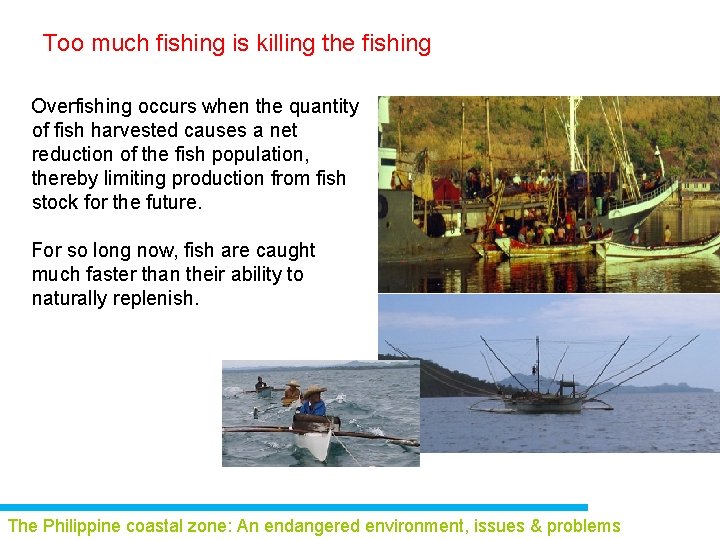
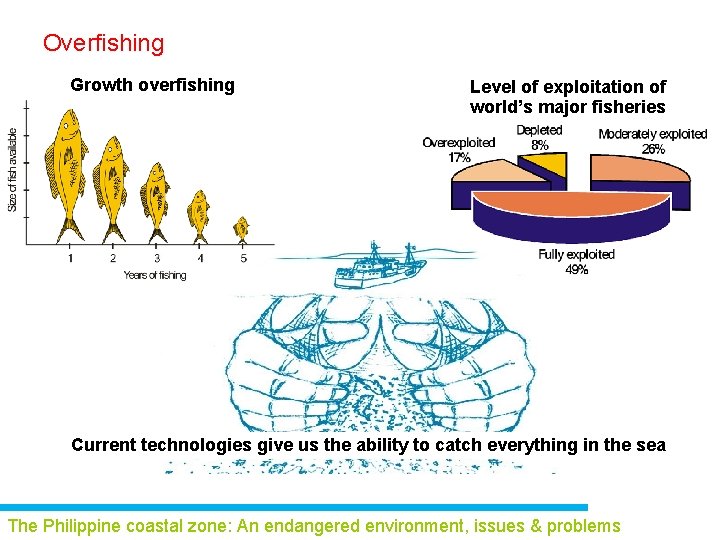
Too much fishing is killing the fishing Overfishing occurs when the quantity of fish harvested causes a net reduction of the fish population, thereby limiting production from fish stock for the future. For so long now, fish are caught much faster than their ability to naturally replenish. The Philippine coastal zone: An endangered environment, issues & problems
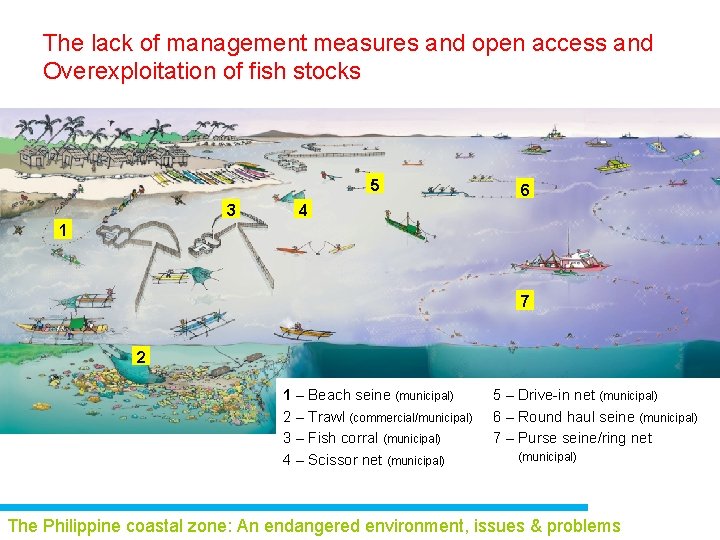
The lack of management measures and open access and Overexploitation of fish stocks 5 3 6 4 1 7 2 1 – Beach seine (municipal) 2 – Trawl (commercial/municipal) 3 – Fish corral (municipal) 4 – Scissor net (municipal) 5 – Drive-in net (municipal) 6 – Round haul seine (municipal) 7 – Purse seine/ring net (municipal) The Philippine coastal zone: An endangered environment, issues & problems
Overfishing Growth overfishing Level of exploitation of world’s major fisheries Current technologies give us the ability to catch everything in the sea The Philippine coastal zone: An endangered environment, issues & problems
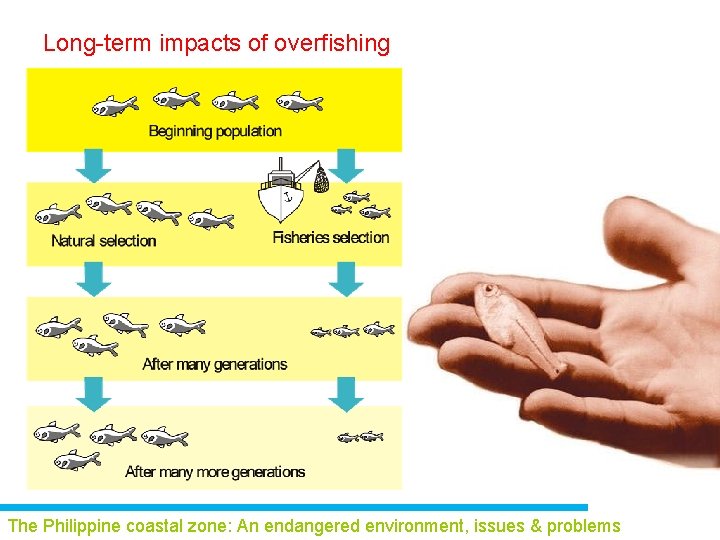
Long-term impacts of overfishing The Philippine coastal zone: An endangered environment, issues & problems
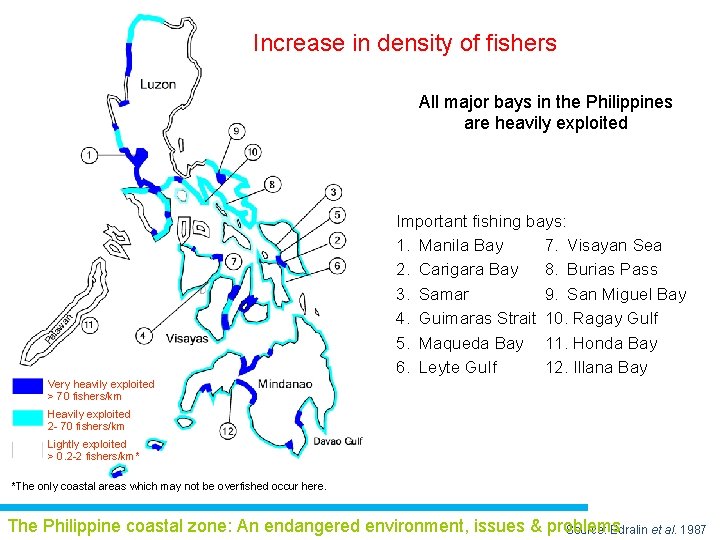
Increase in density of fishers All major bays in the Philippines are heavily exploited Important fishing bays: 1. Manila Bay 7. Visayan Sea 2. Carigara Bay 8. Burias Pass 3. Samar 9. San Miguel Bay 4. Guimaras Strait 10. Ragay Gulf 5. Maqueda Bay 11. Honda Bay 6. Leyte Gulf 12. Illana Bay Very heavily exploited > 70 fishers/km Heavily exploited 2 - 70 fishers/km Lightly exploited > 0. 2 -2 fishers/km* *The only coastal areas which may not be overfished occur here. The Philippine coastal zone: An endangered environment, issues & problems Source: Edralin et al. 1987
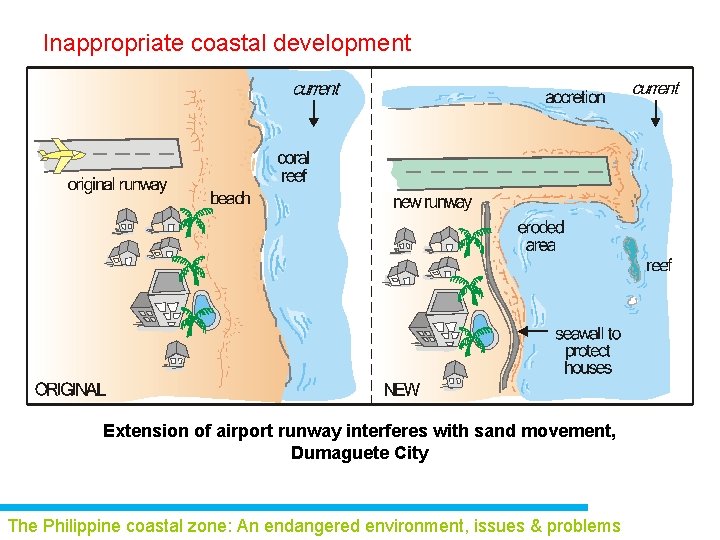
Inappropriate coastal development Extension of airport runway interferes with sand movement, Dumaguete City The Philippine coastal zone: An endangered environment, issues & problems
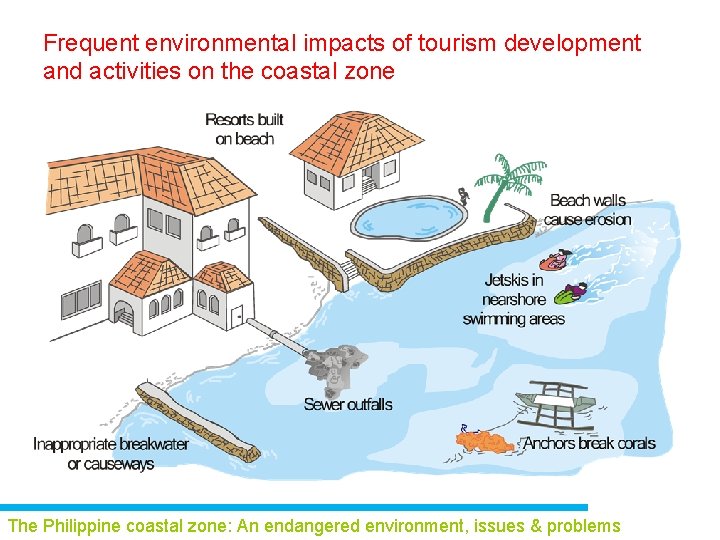
Frequent environmental impacts of tourism development and activities on the coastal zone The Philippine coastal zone: An endangered environment, issues & problems
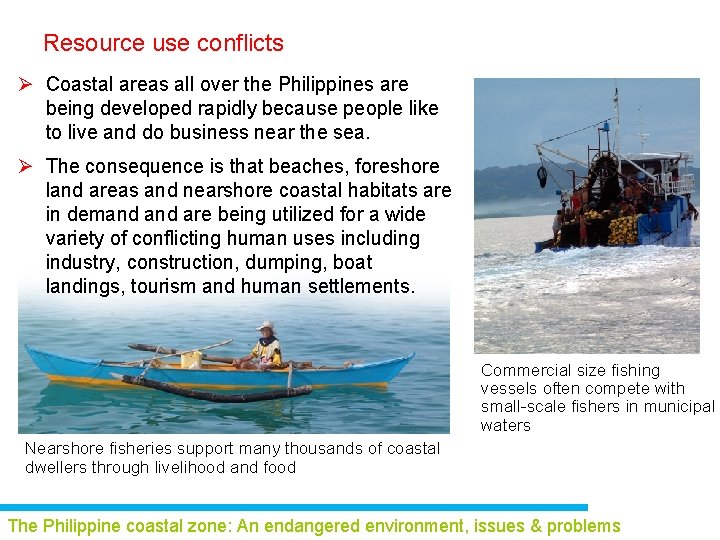
Resource use conflicts Ø Coastal areas all over the Philippines are being developed rapidly because people like to live and do business near the sea. Ø The consequence is that beaches, foreshore land areas and nearshore coastal habitats are in demand are being utilized for a wide variety of conflicting human uses including industry, construction, dumping, boat landings, tourism and human settlements. Commercial size fishing vessels often compete with small-scale fishers in municipal waters Nearshore fisheries support many thousands of coastal dwellers through livelihood and food The Philippine coastal zone: An endangered environment, issues & problems
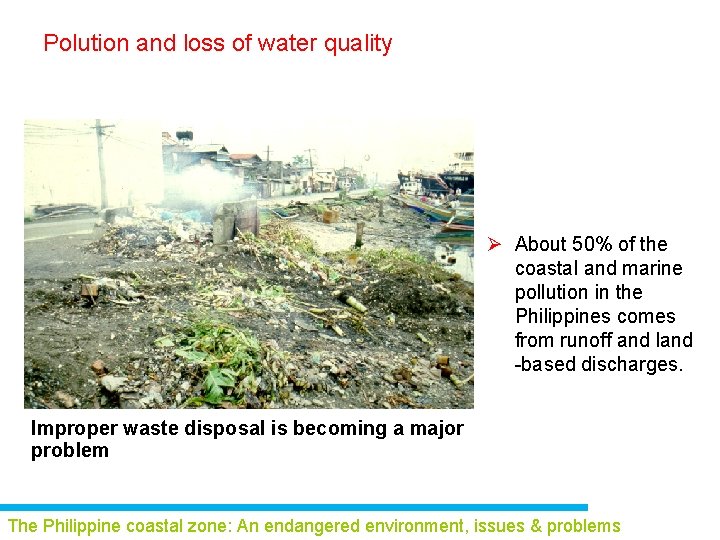
Polution and loss of water quality Ø About 50% of the coastal and marine pollution in the Philippines comes from runoff and land -based discharges. Improper waste disposal is becoming a major problem The Philippine coastal zone: An endangered environment, issues & problems
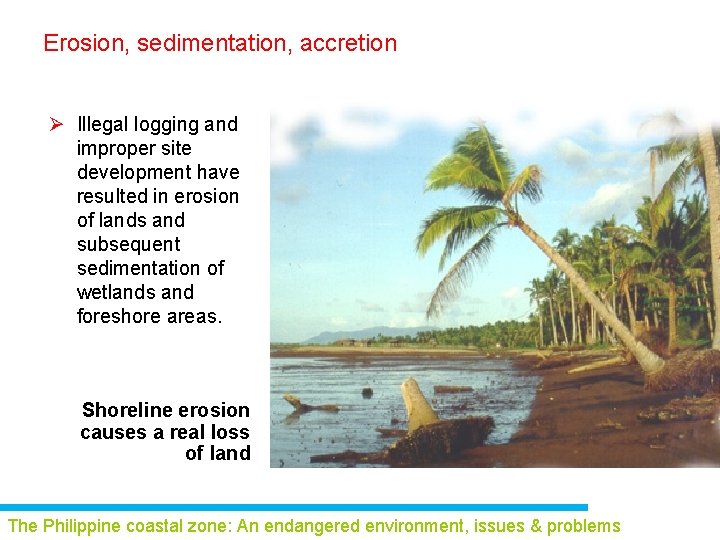
Erosion, sedimentation, accretion Ø Illegal logging and improper site development have resulted in erosion of lands and subsequent sedimentation of wetlands and foreshore areas. Shoreline erosion causes a real loss of land The Philippine coastal zone: An endangered environment, issues & problems
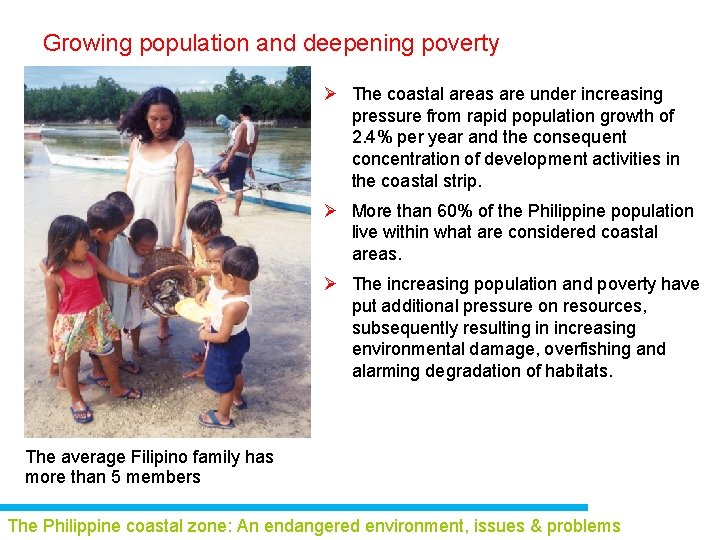
Growing population and deepening poverty Ø The coastal areas are under increasing pressure from rapid population growth of 2. 4% per year and the consequent concentration of development activities in the coastal strip. Ø More than 60% of the Philippine population live within what are considered coastal areas. Ø The increasing population and poverty have put additional pressure on resources, subsequently resulting in increasing environmental damage, overfishing and alarming degradation of habitats. The average Filipino family has more than 5 members The Philippine coastal zone: An endangered environment, issues & problems