
The Classroom Management Plan Rules Protocols and Preventing
- Slides: 13
The Classroom Management Plan Rules, Protocols, and Preventing Misbehavior Dr. Allen Guidry – ECU HIED
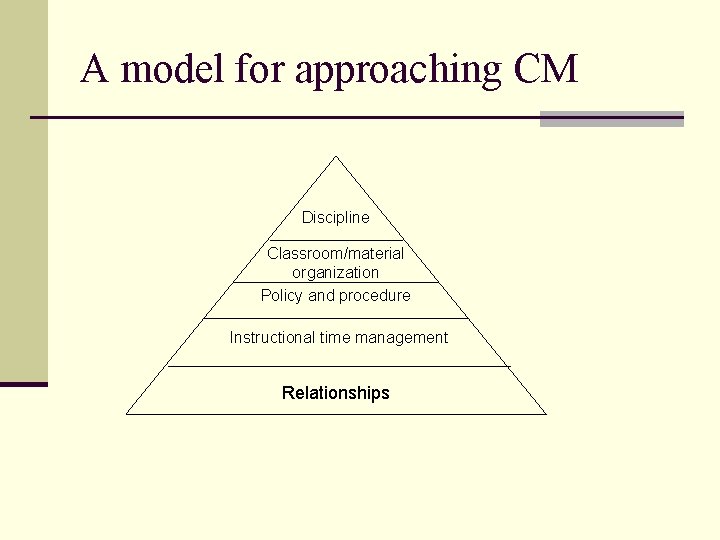
A model for approaching CM Discipline Classroom/material organization Policy and procedure Instructional time management Relationships
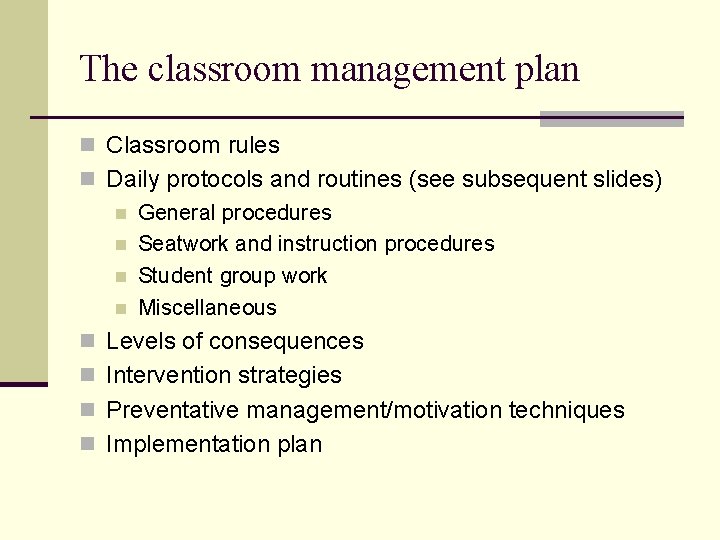
The classroom management plan n Classroom rules n Daily protocols and routines (see subsequent slides) n General procedures n Seatwork and instruction procedures n Student group work n Miscellaneous n Levels of consequences n Intervention strategies n Preventative management/motivation techniques n Implementation plan
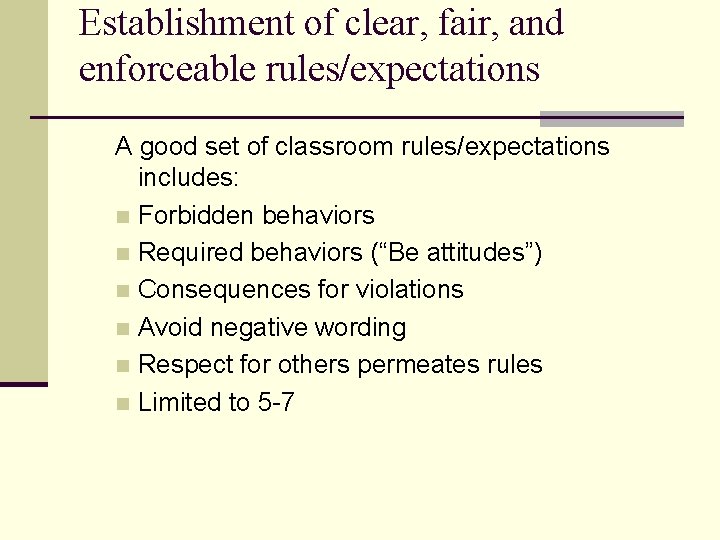
Establishment of clear, fair, and enforceable rules/expectations A good set of classroom rules/expectations includes: n Forbidden behaviors n Required behaviors (“Be attitudes”) n Consequences for violations n Avoid negative wording n Respect for others permeates rules n Limited to 5 -7
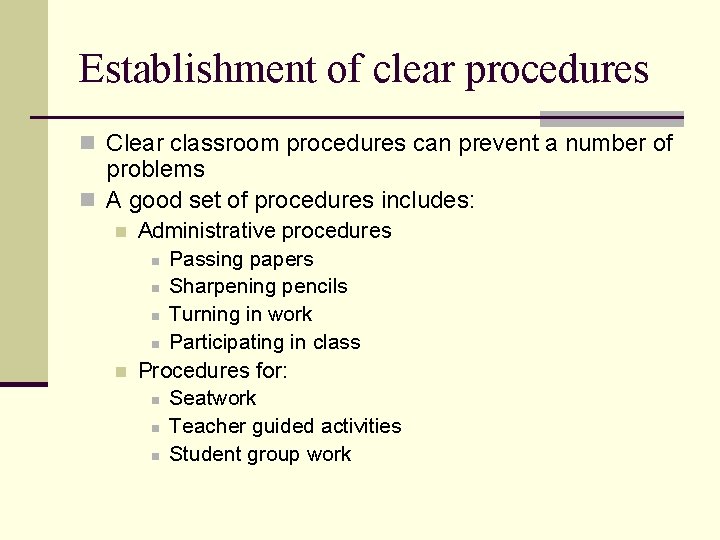
Establishment of clear procedures n Clear classroom procedures can prevent a number of problems n A good set of procedures includes: n n Administrative procedures n Passing papers n Sharpening pencils n Turning in work n Participating in class Procedures for: n Seatwork n Teacher guided activities n Student group work
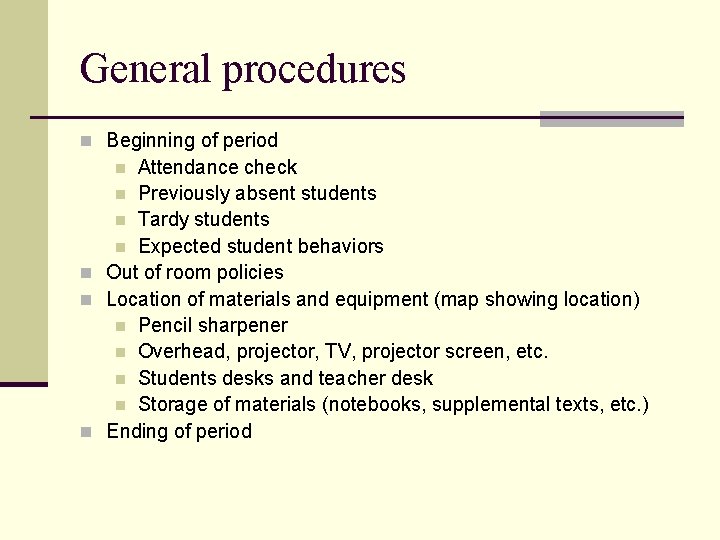
General procedures n Beginning of period Attendance check n Previously absent students n Tardy students n Expected student behaviors n Out of room policies n Location of materials and equipment (map showing location) n Pencil sharpener n Overhead, projector, TV, projector screen, etc. n Students desks and teacher desk n Storage of materials (notebooks, supplemental texts, etc. ) n Ending of period n
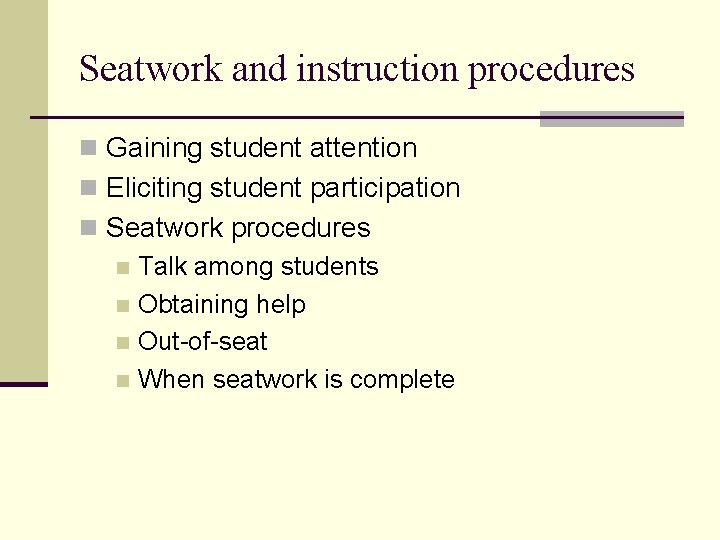
Seatwork and instruction procedures n Gaining student attention n Eliciting student participation n Seatwork procedures n Talk among students n Obtaining help n Out-of-seat n When seatwork is complete
Student group work n Use of materials and supplies n Assignment of students to groups n Student participation and behavior
Miscellaneous n Behavior during interruptions n Fire and disaster drills n Split lunch period n Lockers
Management of instructional time n Classroom management begins with a well- planned, engaging lesson n High time on task requires three elements: n Preventing misbehavior n n Managing movement n n Withitness and overlapping of activities (teaching and handling admin matters) Momentum and smoothness in lesson Maintaining group focus n Group alerting and encouraging accountability
Management of instructional time (cont. ) n Most problems occur when (1) there is a “lull” in the lesson and (2) when transitions occur n How will you prevent slowpokes from slowing down your lesson tempo as they transition? n How will you prevent transition problems in the following key transition periods of each lesson? n n n Beginning of period Transition from input segment of lesson to assignment End-of-period
Kounin’s principles of group management (preventative) n Preventing misbehavior n Withitness n Overlapping n Managing movement n Momentum n Smoothness n Maintaining group focus n Group alerting n Encouraging accountability n Higher participation formats
Common problems (momentum and smoothness) n Dangle – topics left to do or talk about something else n Flip-flop – coming back to topic left from dangle n Thrust – intrusion on activity with some (often irrelevant) information n Stimulus bound – teacher distracted from outside stimulus and attention drawn from lesson