
The Classification System An Interactive Power Point Presentation











- Slides: 36
The Classification System An Interactive Power. Point Presentation by Stacey Podolsky
The Classification System Why do scientists classify? – All living organisms have characteristics which distinguish them from nonliving objects – Scientists organize living things into groups so that organisms are easier to study
There Are Seven Levels of Classification 1. Kingdom 2. Phylum 3. Class 4. Order 5. Family 6. Genus 7. Species
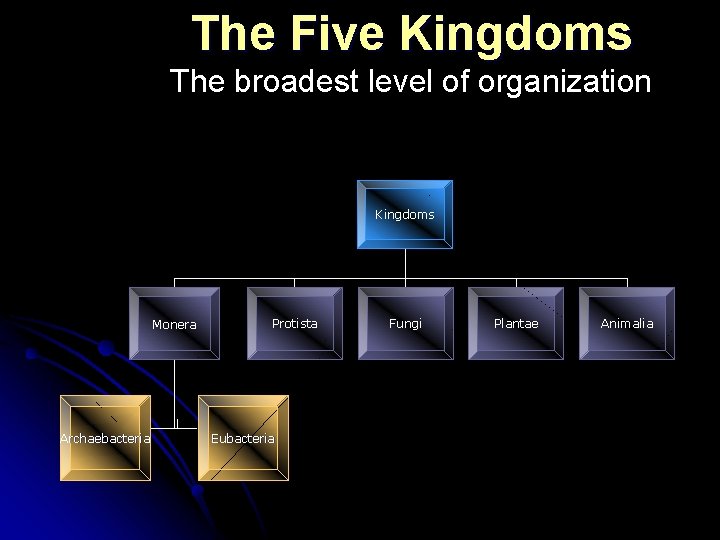
The Five Kingdoms The broadest level of organization Kingdoms Monera Archaebacteria Protista Eubacteria Fungi Plantae Animalia
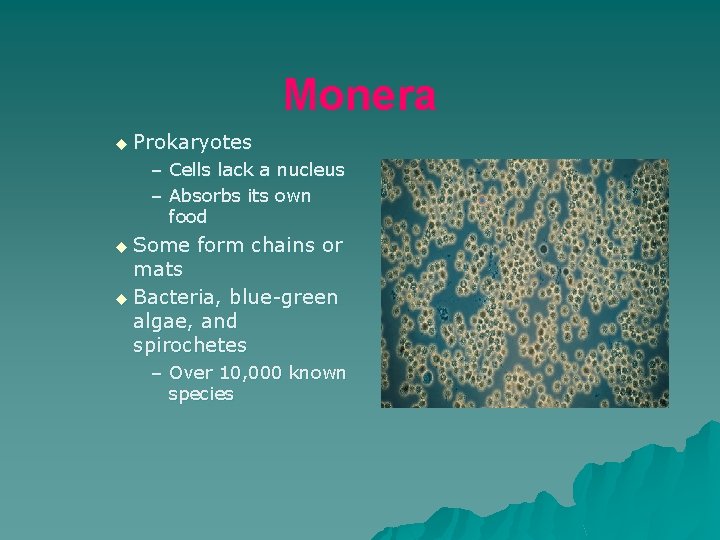
Monera u Prokaryotes – Cells lack a nucleus – Absorbs its own food u Some form chains or mats u Bacteria, blue-green algae, and spirochetes – Over 10, 000 known species
Monera • Eubacteria and Archaebacteria – A growing number of researchers now divide this kingdom into 2 separate kingdoms • Eubacteria – “The true bacteria” – Autotrophic and heterotrophic – Can cause: strep throat, used to produce yogurt, vitamins, etc. • Archaebacteria – Autotrophic and heterotrophic – Live in: hot springs, on the ocean floor, salty water, your intestines
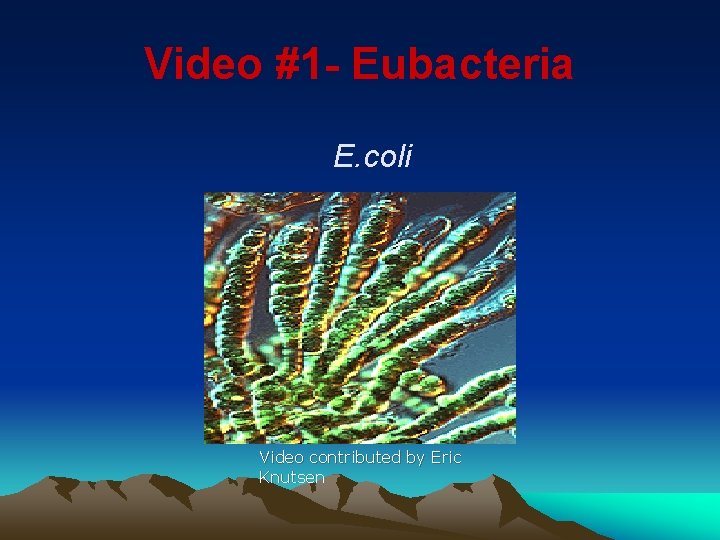
Video #1 - Eubacteria E. coli Video contributed by Eric Knutsen
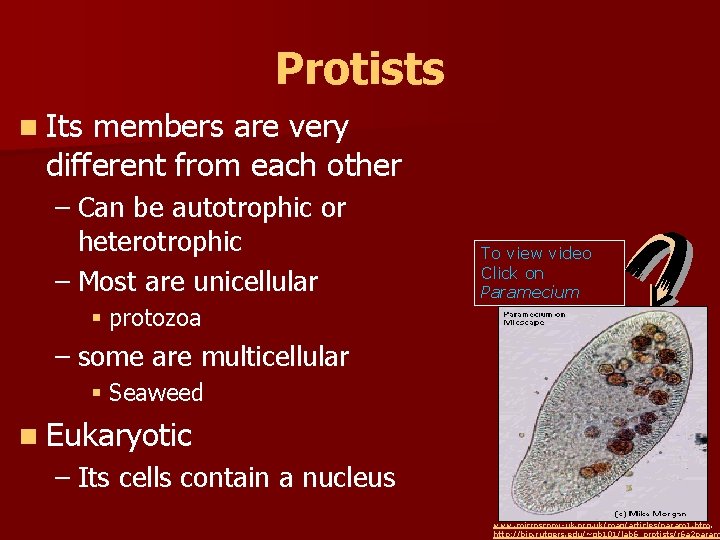
Protists n Its members are very different from each other – Can be autotrophic or heterotrophic – Most are unicellular To view video Click on Paramecium § protozoa – some are multicellular § Seaweed n Eukaryotic – Its cells contain a nucleus www. microscopy-uk. org. uk/mag/articles/param 1. htm. http: //bio. rutgers. edu/~gb 101/lab 6_protists/r 6 a 2 param
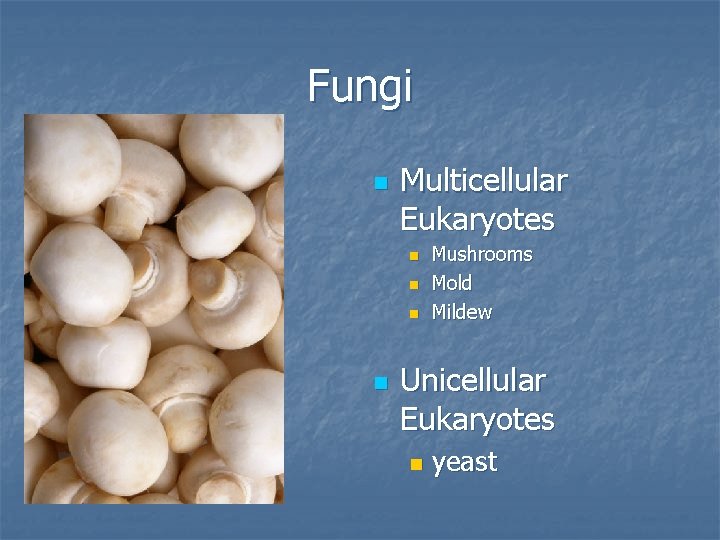
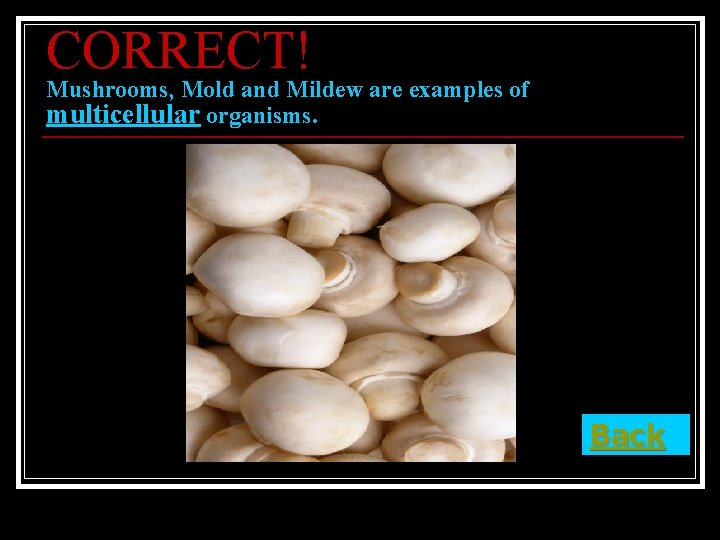
Fungi n Multicellular Eukaryotes n n Mushrooms Mold Mildew Unicellular Eukaryotes n yeast
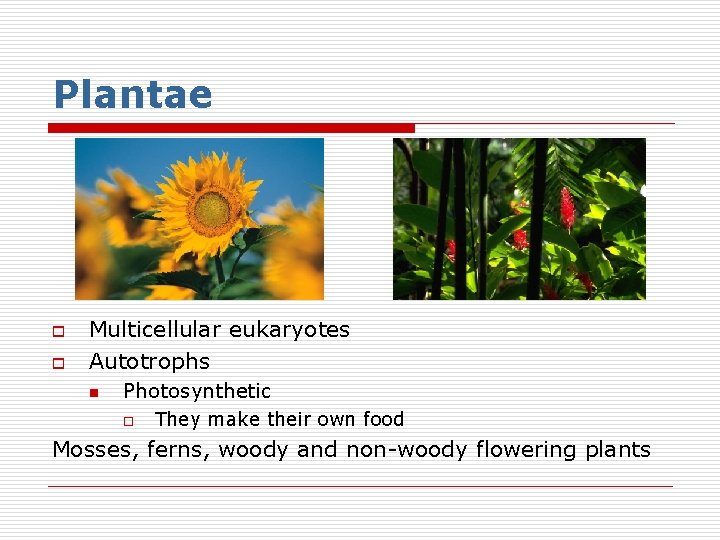
Plantae o o Multicellular eukaryotes Autotrophs n Photosynthetic o They make their own food Mosses, ferns, woody and non-woody flowering plants
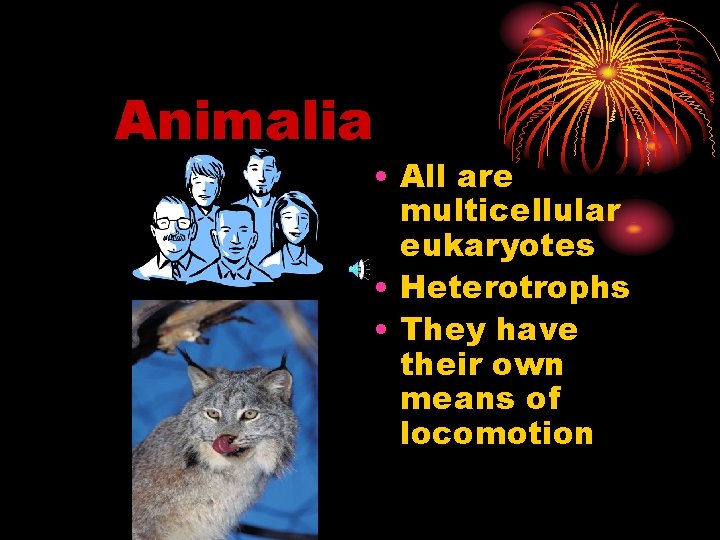
Animalia • All are multicellular eukaryotes • Heterotrophs • They have their own means of locomotion
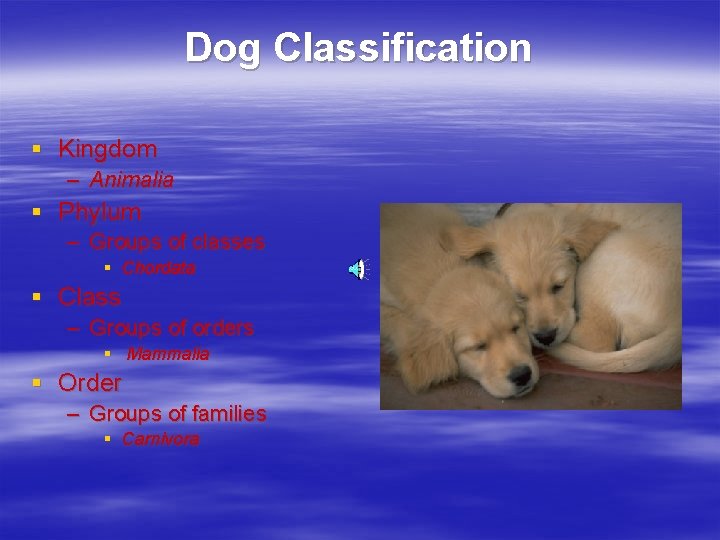
Dog Classification § Kingdom – Animalia § Phylum – Groups of classes § Chordata § Class – Groups of orders § Mammalia § Order – Groups of families § Carnivora
Dog Classification cont. § Family – Groups of species § Canidae § Genus – Groups of closely related species § Canis § Species – Groups of related organisms § Familiaris
Interactive Quiz Click on the correct answers. 1. There are Four Five levels of classification. Six Seven Eight
Interactive Quiz cont. 2. is the broadest level of classification. Kingdom Phylum Class Species
Interactive Quiz cont. 3. Scientists now separate the Monera kingdom into to Archaebacteria and Eubacteria. True or False
Interactive Quiz cont. 4. Mold and Mildew are unicellular examples of Fungi. True or False
Interactive Quiz cont. 5. All organisms in the Animalia kingdom are _____ eukaryotic organisms. • multicellular • unicellular • photocellular
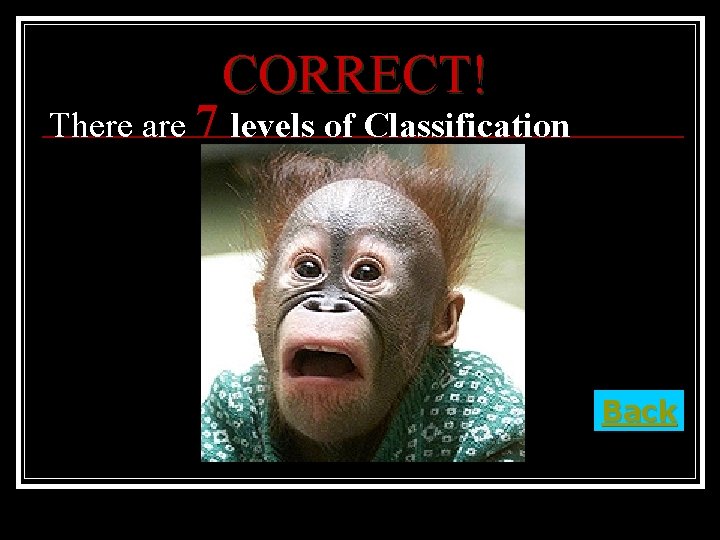
CORRECT! There are 7 levels of Classification Back
CORRECT! Kingdom is the broadest level of organization. Back
CORRECT! Mushrooms, Mold and Mildew are examples of multicellular organisms. Back
CORRECT! All organisms in the ANIMALIA kingdom are multicellular eukaryotic organisms. Back www. justgive. org/Images/ways/sugarbear. . jpg www. justgive. org/Images/ways/
CORRECT! Eubacteria and Archaebacteria A growing number of researchers now divide the MONERA kingdom into 2 separate kingdoms Back
Incorrect! Try again Hint
Incorrect! Try again Hint
Incorrect! Try again Hint
Incorrect! Try again Hint
Incorrect! Try again Hint
Incorrect! Try again Hint
Classification levels Kingdom- the broadest of all levels Phylum- groups of classes Class- groups of orders Order- groups of families Family- groups of species Genus- groups of closely related species Species- groups of related organisms Back
Classification levels Kingdom- the broadest of all levels Phylum- groups of classes Class- groups of orders Order- groups of families Family- groups of species Genus- groups of closely related species Species- groups of related organisms Back
Monera Kingdom l l l Eubacteria and Archaebacteria l A growing number of researchers now divide this kingdom into 2 separate kingdoms Eubacteria l “The true bacteria” l Can cause: strep throat, used to produce yogurt, vitamins, etc. Archaebacteria l Live in: hot springs, on the ocean floor, salty water, your intestines Back
FUNGI n Multicellular Eukaryotes (More than one cell) n Mushrooms n Mold n Mildew n Unicellular Eukaryotes (One celled organisms) n yeast Back
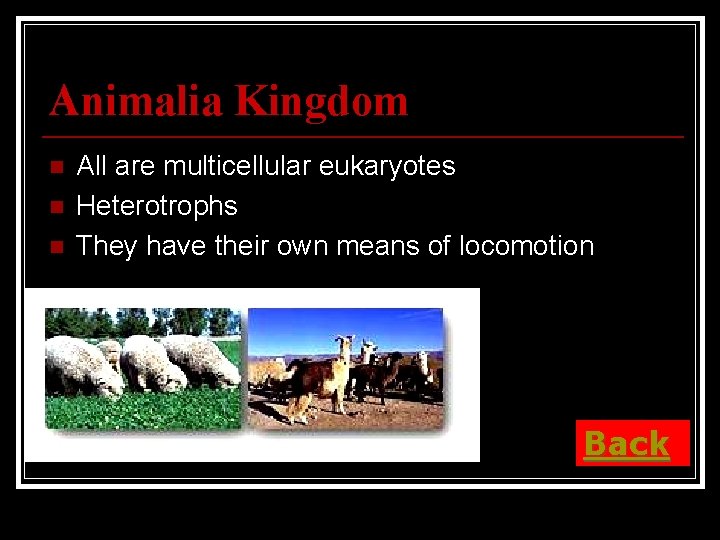
Animalia Kingdom n n n All are multicellular eukaryotes Heterotrophs They have their own means of locomotion Back
Congratulations! www. personal. psu. edu/faculty/r/trl 125/links. html You are now an expert on the Classification System.
THE END