
The Classification of Living Things Classification The grouping

- Slides: 33
The Classification of Living Things
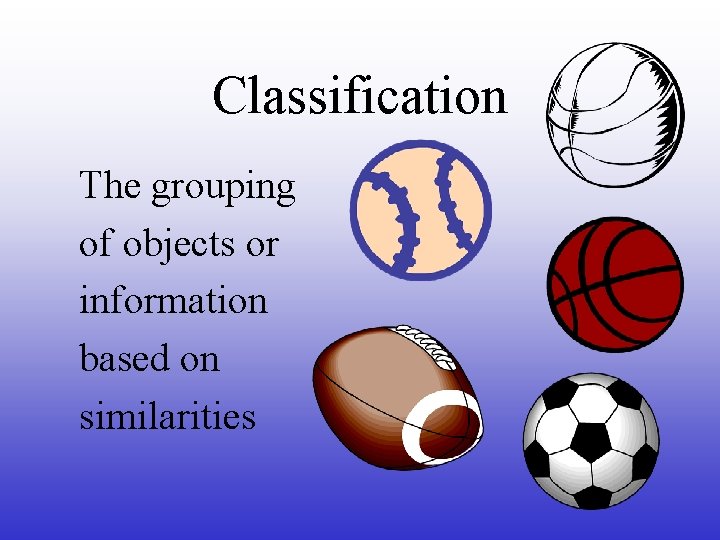
Classification The grouping of objects or information based on similarities
Give some examples of classification systems you use in your daily life.
Organizing Life • To study the diversity of life, biologists use a classification system to name organisms and group them in a logical manner. – Facilitates communication – Promotes research • Taxonomy is the discipline that classifies organisms and gives each a universally acceptable name.
Why do we need a system for naming and ordering? • 1. 5 million species identified so far • An estimated 2 -100 million are not yet identified • Different countries and different regions in the same country use different names for organisms
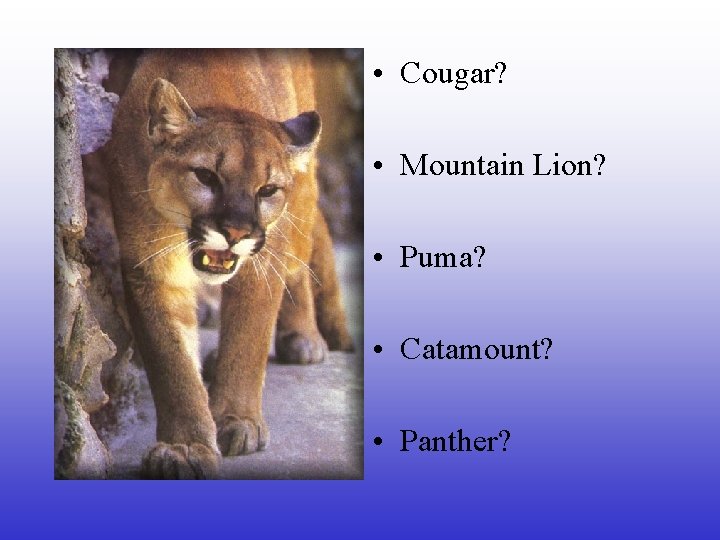
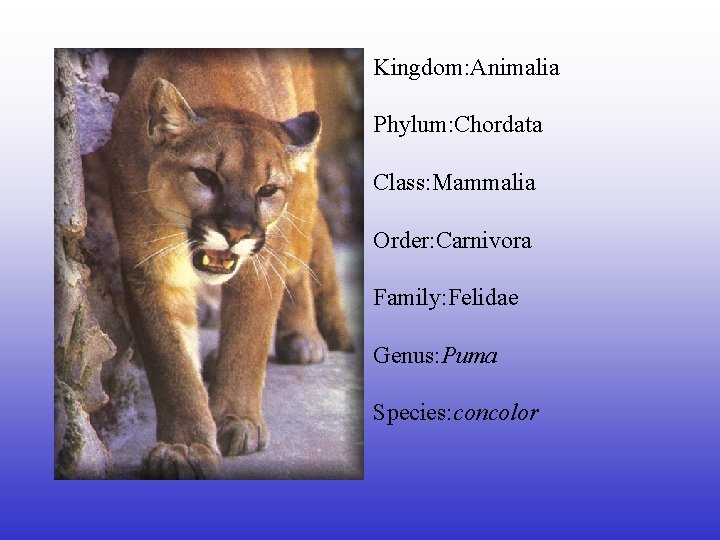
• Cougar? • Mountain Lion? • Puma? • Catamount? • Panther?
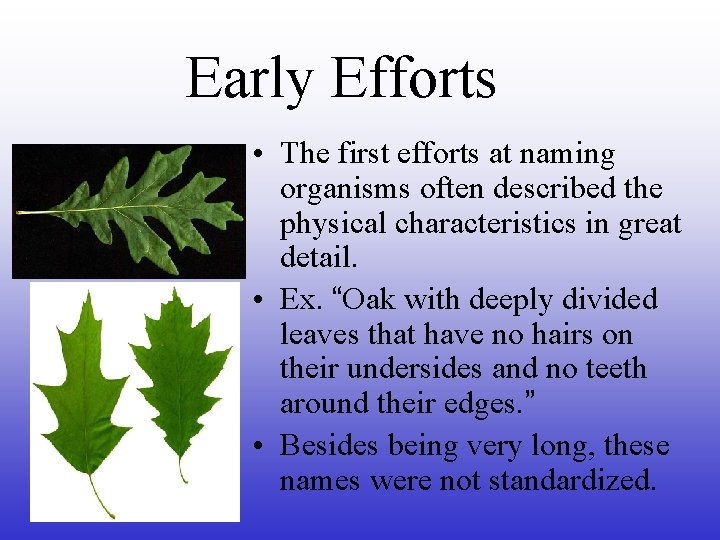
Early Efforts • The first efforts at naming organisms often described the physical characteristics in great detail. • Ex. “Oak with deeply divided leaves that have no hairs on their undersides and no teeth around their edges. ” • Besides being very long, these names were not standardized.
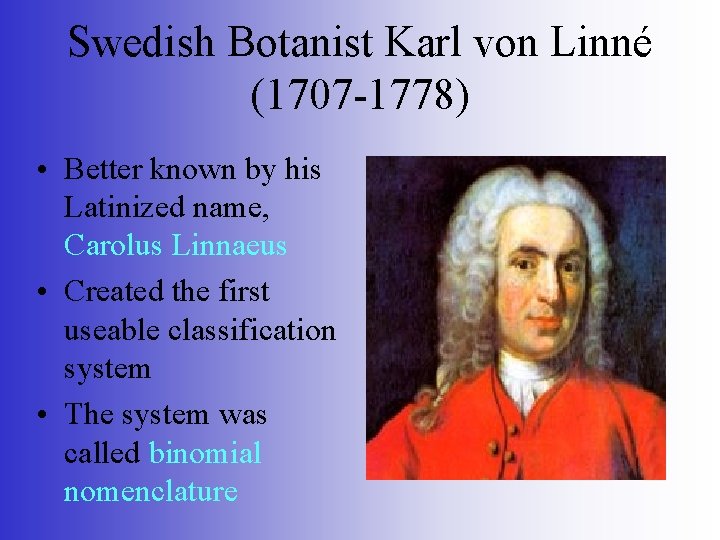
Swedish Botanist Karl von Linné (1707 -1778) • Better known by his Latinized name, Carolus Linnaeus • Created the first useable classification system • The system was called binomial nomenclature
More on Linnaeus’ System • Hierarchical with seven different levels • Groups called taxa (taxon) • Kingdom, Phylum, Class, Order, Family, Genus, Species • Linnaeus only had two kingdoms
Kingdom: Animalia Phylum: Chordata Class: Mammalia Order: Carnivora Family: Felidae Genus: Puma Species: concolor
Binomial Nomenclature • Each species is assigned a two-part scientific name. • a genus, or group name, • and species, a unique descriptive word about the organism
Writing Scientific Names • • Names are always in Latin. First word (genus) is always capitalized. Second word (species) is never capitalized. Both words must be underlined or written in italics. • Ex. Homo sapiens
Modern Taxonomy • Biologists who study taxonomy are called taxonomists • Based and unified on evolutionary theory • Evolutionary history of a species is called phylogeny
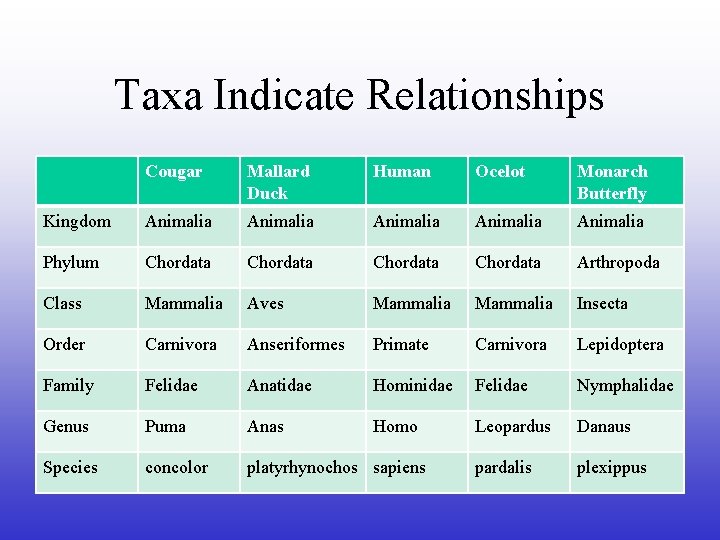
Taxa Indicate Relationships Cougar Mallard Duck Human Ocelot Monarch Butterfly Kingdom Animalia Animalia Phylum Chordata Arthropoda Class Mammalia Aves Mammalia Insecta Order Carnivora Anseriformes Primate Carnivora Lepidoptera Family Felidae Anatidae Hominidae Felidae Nymphalidae Genus Puma Anas Homo Leopardus Danaus Species concolor platyrhynochos sapiens pardalis plexippus
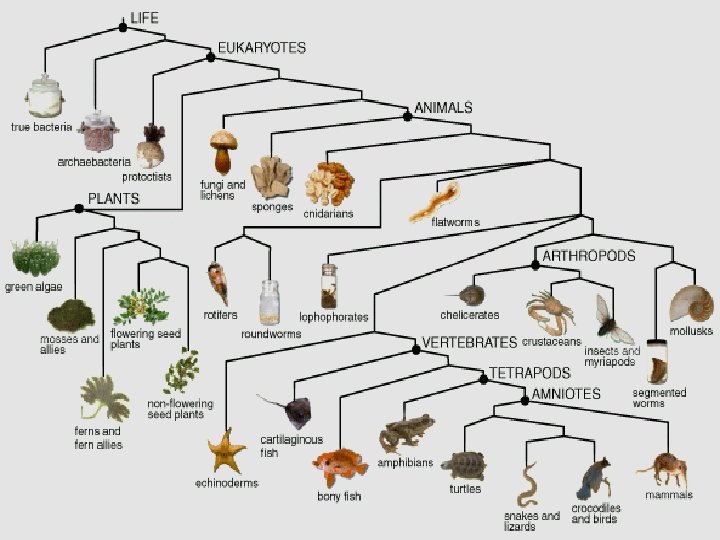
Cladograms • Shows evolutionary relationships among a group of organisms • Based on shared characteristics • Identifies and considers characteristics that are evolutionary innovations (Ex. legs, wings, gills, etc. ) • Characteristics that appear in recent parts of the lineage but not in its older members are called derived characters.
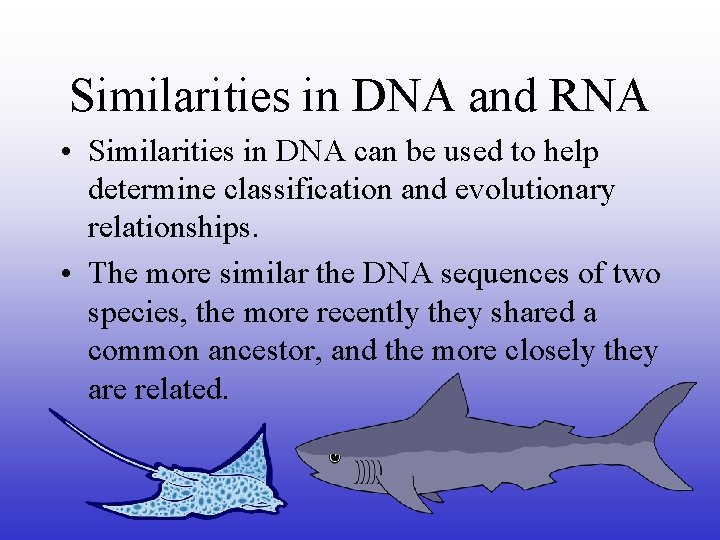
Similarities in DNA and RNA • Similarities in DNA can be used to help determine classification and evolutionary relationships. • The more similar the DNA sequences of two species, the more recently they shared a common ancestor, and the more closely they are related.
Molecular Clocks • Uses DNA comparisons to estimate the length of time that two species have been evolving independently. • Relies on neutral mutations, which accumulate in the DNA at set rates • DNA is compared to determine how similar or dissimilar it is. • There are many different molecular clocks.
Still changing!!! • The system of classification is not complete. • Organisms are often moved from group to group based on new findings.
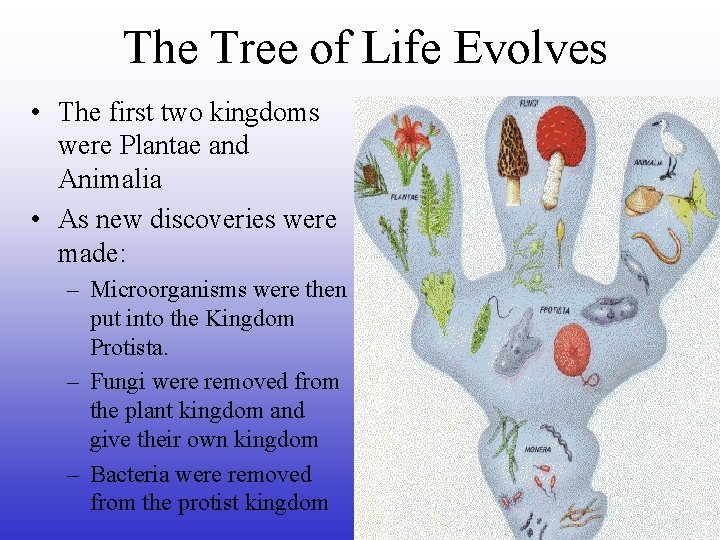
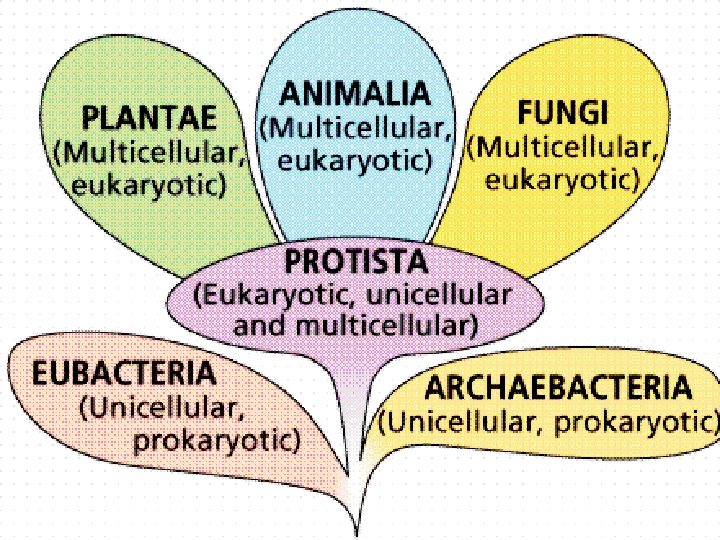
The Tree of Life Evolves • The first two kingdoms were Plantae and Animalia • As new discoveries were made: – Microorganisms were then put into the Kingdom Protista. – Fungi were removed from the plant kingdom and give their own kingdom – Bacteria were removed from the protist kingdom
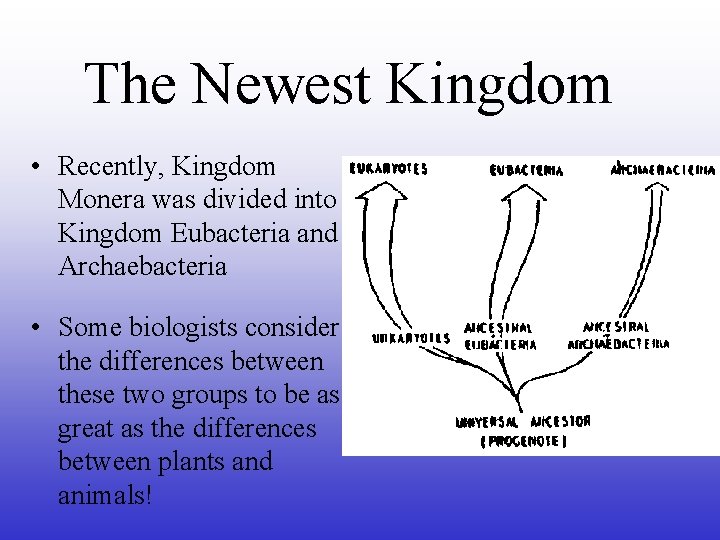
The Newest Kingdom • Recently, Kingdom Monera was divided into Kingdom Eubacteria and Archaebacteria • Some biologists consider the differences between these two groups to be as great as the differences between plants and animals!
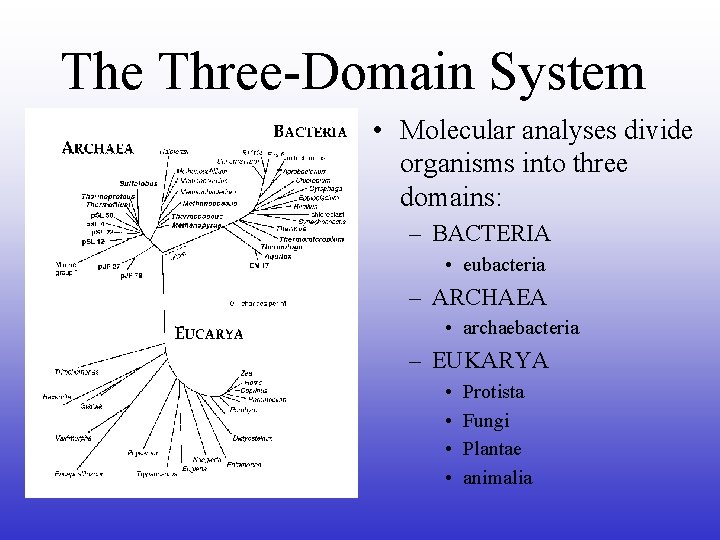
The Three-Domain System • Molecular analyses divide organisms into three domains: – BACTERIA • eubacteria – ARCHAEA • archaebacteria – EUKARYA • • Protista Fungi Plantae animalia
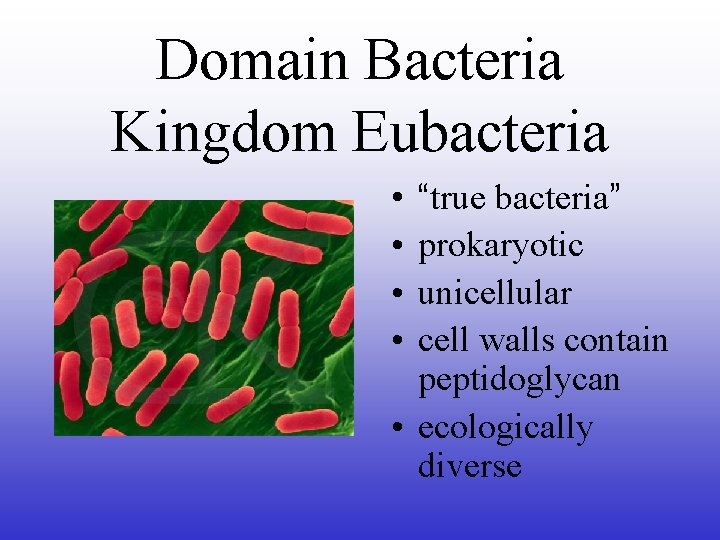
Domain Bacteria Kingdom Eubacteria • • “true bacteria” prokaryotic unicellular cell walls contain peptidoglycan • ecologically diverse
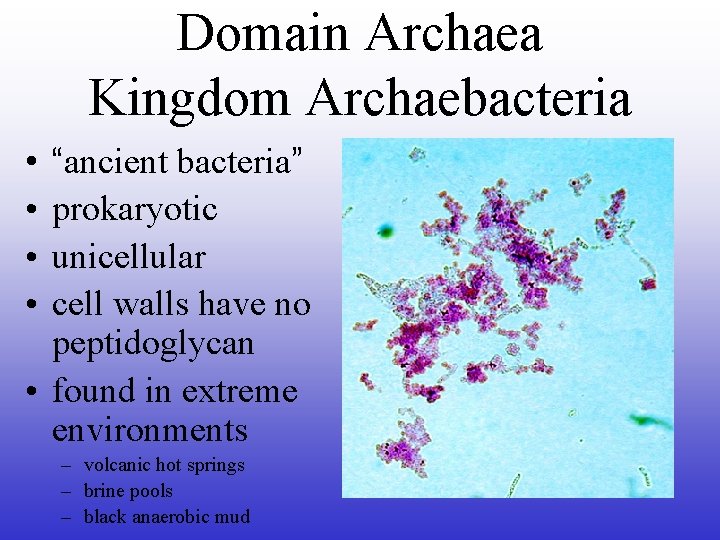
Domain Archaea Kingdom Archaebacteria • • “ancient bacteria” prokaryotic unicellular cell walls have no peptidoglycan • found in extreme environments – volcanic hot springs – brine pools – black anaerobic mud
What do the two domains of bacteria have in common? What makes them different?
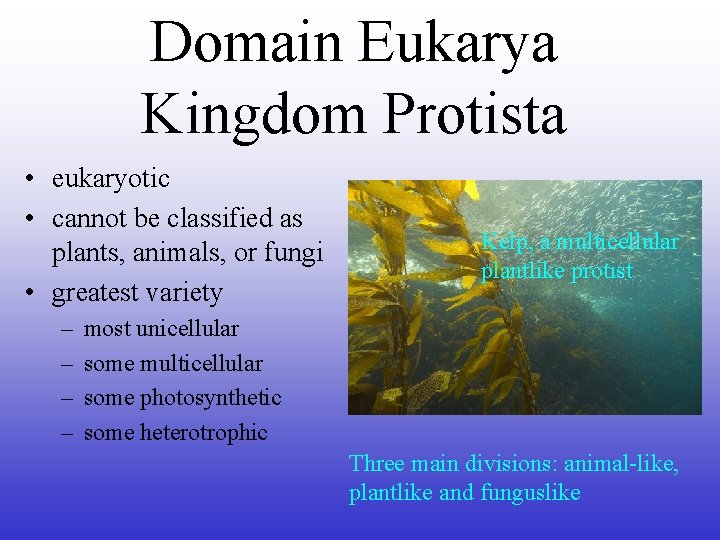
Domain Eukarya Kingdom Protista • eukaryotic • cannot be classified as plants, animals, or fungi • greatest variety – – Kelp, a multicellular plantlike protist most unicellular some multicellular some photosynthetic some heterotrophic Three main divisions: animal-like, plantlike and funguslike
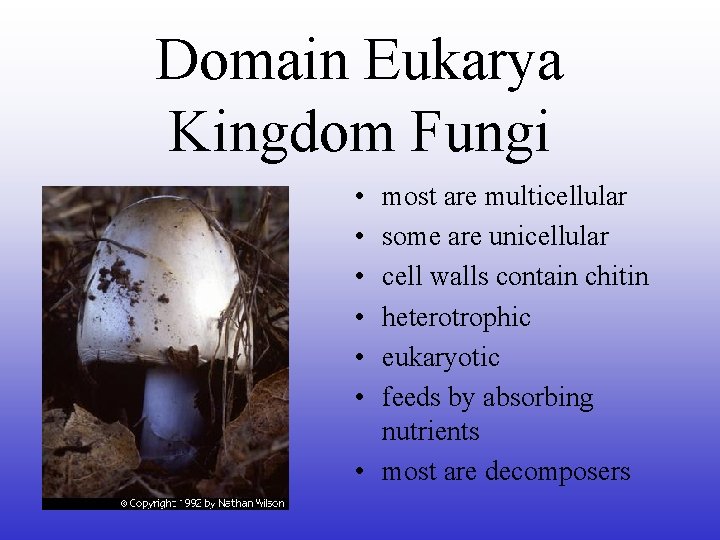
Domain Eukarya Kingdom Fungi • • • most are multicellular some are unicellular cell walls contain chitin heterotrophic eukaryotic feeds by absorbing nutrients • most are decomposers
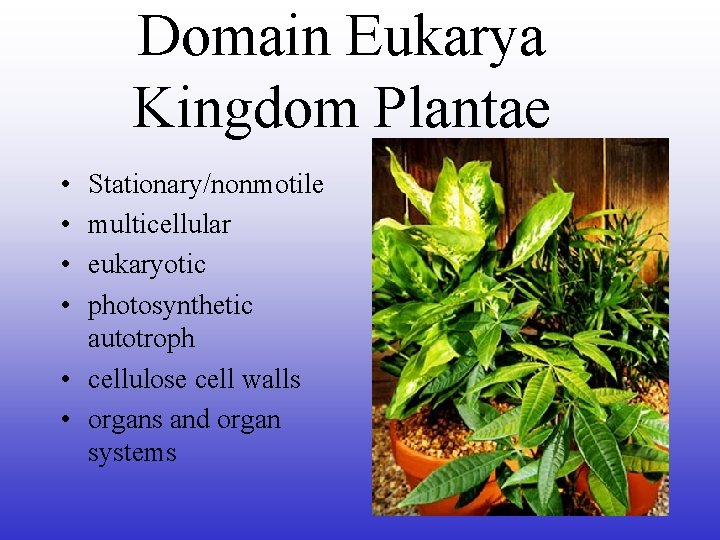
Domain Eukarya Kingdom Plantae • • Stationary/nonmotile multicellular eukaryotic photosynthetic autotroph • cellulose cell walls • organs and organ systems
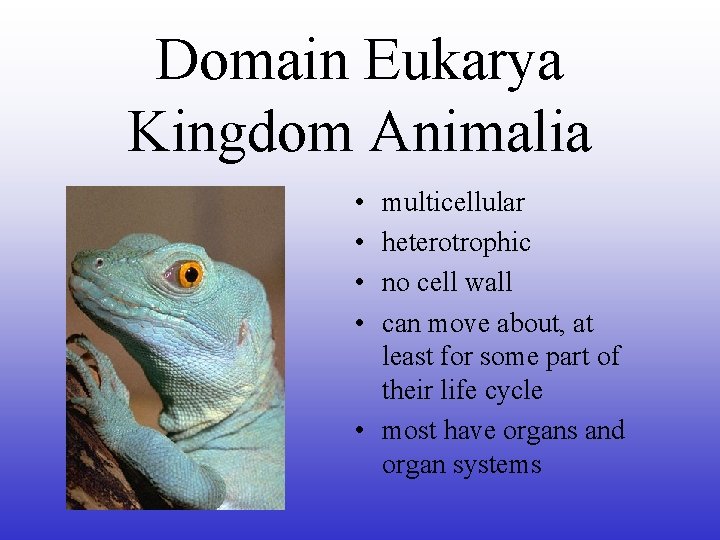
Domain Eukarya Kingdom Animalia • • multicellular heterotrophic no cell wall can move about, at least for some part of their life cycle • most have organs and organ systems
Current Taxa • • Kingdom Phylum Class Order Family Genus Species Memory Device: King Phillip Came Over For Great Steak
Your Taxonomy • • Kingdom Animalia Phylum Chordata Class Mammalia Order Primate Family Hominidae Genus Homo Species Sapiens Subspecies Sapiens Memory Device: All Cold Men Prefer Hot Soup
Did you know? “Sapiens” is Latin for “wise one!”