
The Classification of Living Organisms The Five Kingdoms


- Slides: 16
The Classification of Living Organisms The Five Kingdoms
The Five Kingdom Classification of Living Organisms It is generally agreed that all organisms belong to one of five Kingdoms. All the members of any one Kingdom may look extremely different from one another but all share certain significant features in common which set them apart from the members of any other Kingdom
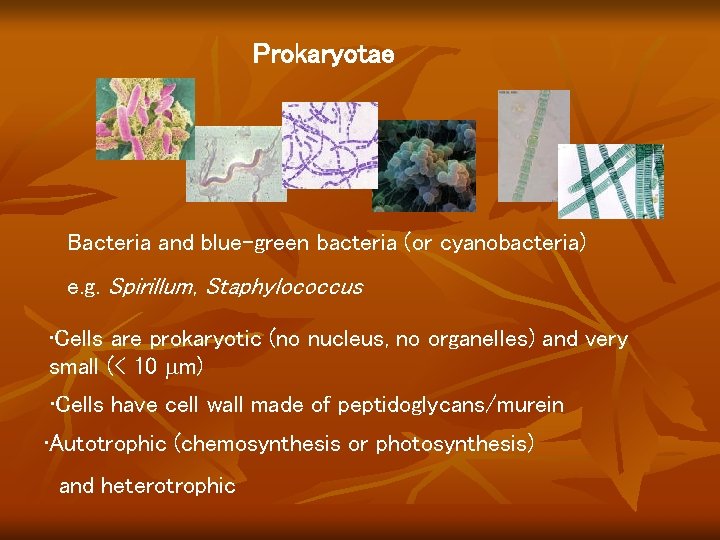
Prokaryotae Bacteria and blue-green bacteria (or cyanobacteria) e. g. Spirillum, Staphylococcus • Cells are prokaryotic (no nucleus, no organelles) and very small (< 10 mm) • Cells have cell wall made of peptidoglycans/murein • Autotrophic (chemosynthesis or photosynthesis) and heterotrophic
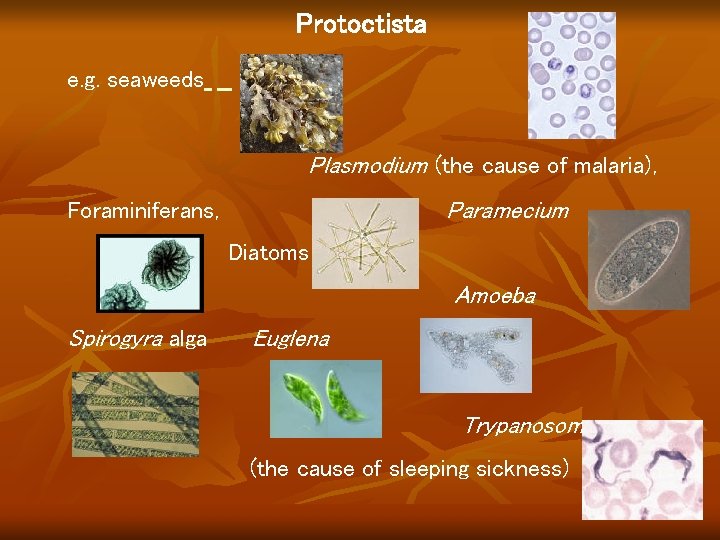
Protoctista e. g. seaweeds Plasmodium (the cause of malaria), Paramecium Foraminiferans, Diatoms Amoeba Spirogyra alga Euglena Trypanosoma (the cause of sleeping sickness)
• Eukaryotic; unicellular and multicellular • Autotrophic (e. g. seaweeds) and heterotrophic (e. g. Plasmodium) • Cells of some have cellulose walls (e. g. seaweeds) whilst cells of other do not (e. g. Plasmodium) • Organisms are classed here if they • do not fit into any other Kingdom
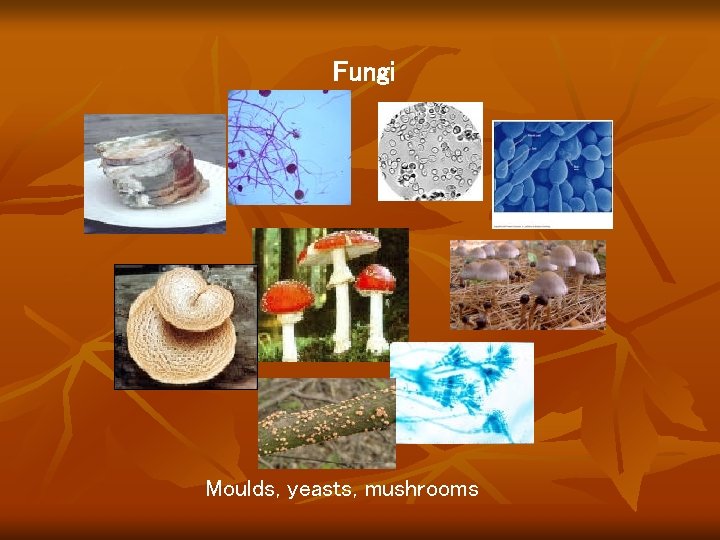
Fungi Moulds, yeasts, mushrooms
• Eukaryotic • Heterotrophic • Cells have walls made of chitin (a type of glucose-based polymer with attached amino acids, so different to cellulose) • Some unicellular (e. g. yeasts) but usually body is a multicellular (but often no separate cells, so more accurately multinucleate)) mass (mycelium) of thread-like filaments (hyphae) • Reproduce by forming resistant spores
Plantae Mosses, ferns, flowering plants
• Eukaryotic • Multicellular • Complex body structures; specialised cells, tissues, organs • Autotrophic (photosynthesis) • Cells have wall made of cellulose • Have a complex life cycle with a sexually reproducing adult stage and an asexually reproducing adult stage
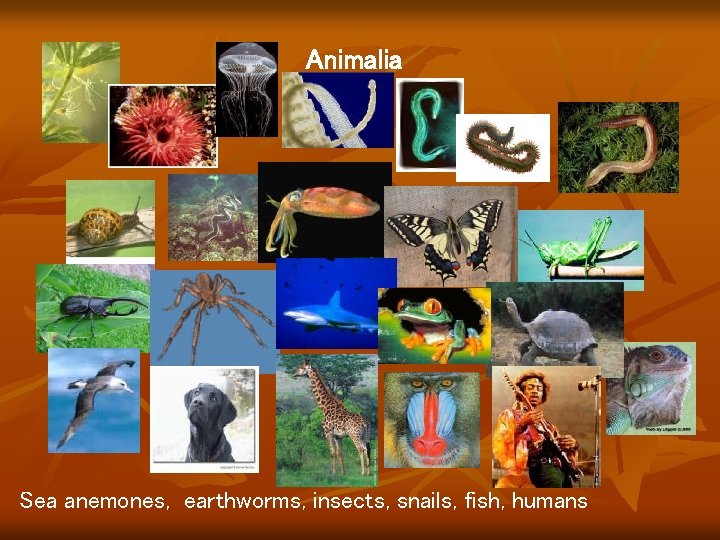
Animalia Sea anemones, earthworms, insects, snails, fish, humans
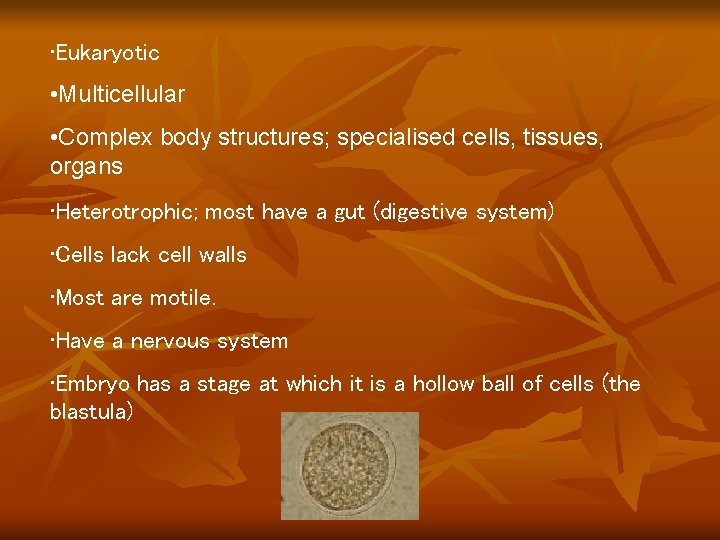
• Eukaryotic • Multicellular • Complex body structures; specialised cells, tissues, organs • Heterotrophic; most have a gut (digestive system) • Cells lack cell walls • Most are motile. • Have a nervous system • Embryo has a stage at which it is a hollow ball of cells (the blastula)
Five Kingdoms Prokaryotae Protoctista Fungi Plantae Animalia
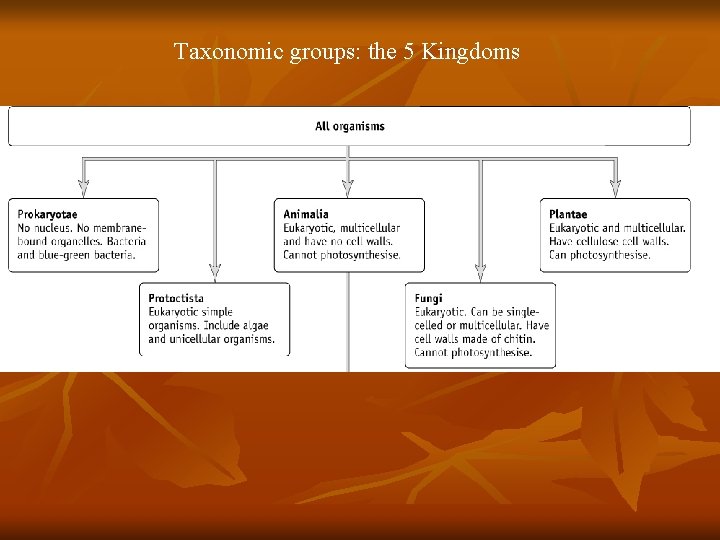
n n n All necessary information is in Fig 5. 15 on page 13. Or Fig 5. 15 can be accessed and printed from the SNAB website (mediabank) It’s down to you!
Taxonomic groups: the 5 Kingdoms
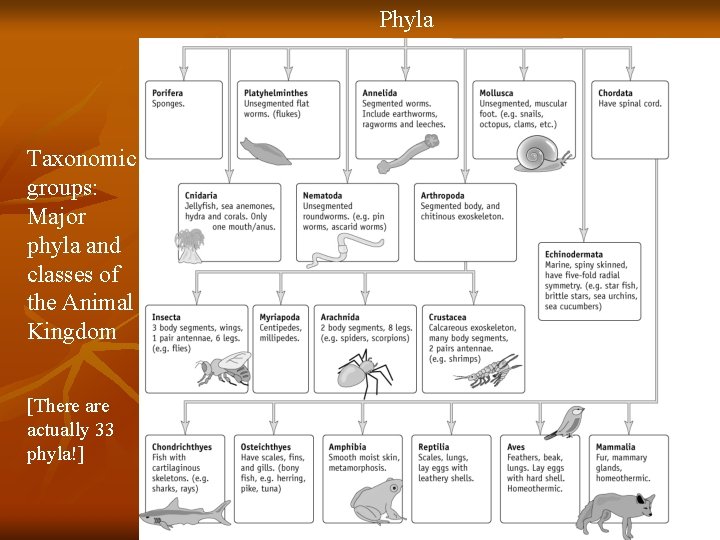
Phyla Taxonomic groups: Major phyla and classes of the Animal Kingdom [There actually 33 phyla!] Classes
All the animal phyla n http: //www. glaucus. org. uk/other. htm