
The Classification for Early Onset Scoliosis CEOS Identifies
- Slides: 18
The Classification for Early Onset Scoliosis (C-EOS) Identifies Patients at Higher Risk for Complications at 5 Years of Follow Up Howard Y Park BA; Hiroko Matsumoto MA; Tricia St. Hilaire BS; Jeff B Pawelek BS; John M Flynn; David L Skaggs; Behrooz Akbarnia, MD, David P Roye MD, Michael G Vitale MD MPH Ana Lucia Professor of Orthopaedic Surgery Columbia University Medical Center Co Director, Division of Pediatric Orthopaedic Surgery Chief, Pediatric Spine and Scoliosis Service Medical Director, MSCH Initiative to Make Care Better Children’s Hospital of New York
-Disclosures. Michael G. Vitale, MD MPH Disclosure: I DO have a financial relationship with a commercial interest. Royalties: Biomet Consultant: Stryker, CWSDSG, Biomet Research Support: CWSDRF, SRS, POSNA Travel Support: CWSDSG, Fox. PSDSG Other: CWSDSG - BOD POSNA - BOD Study in part Funded by a Grant from the CWSDSG (aka CSF)
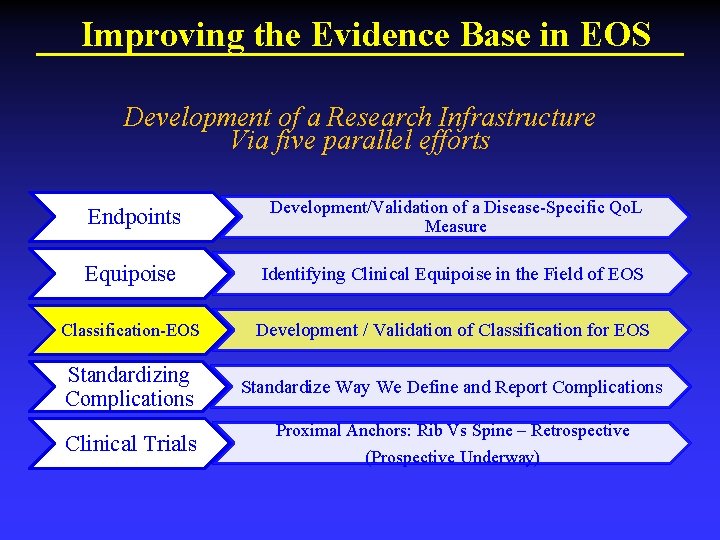
Improving the Evidence Base in EOS Development of a Research Infrastructure Via five parallel efforts Endpoints Development/Validation of a Disease-Specific Qo. L Measure Equipoise Identifying Clinical Equipoise in the Field of EOS Classification-EOS Development / Validation of Classification for EOS Standardizing Complications Standardize Way We Define and Report Complications Clinical Trials Proximal Anchors: Rib Vs Spine – Retrospective (Prospective Underway)
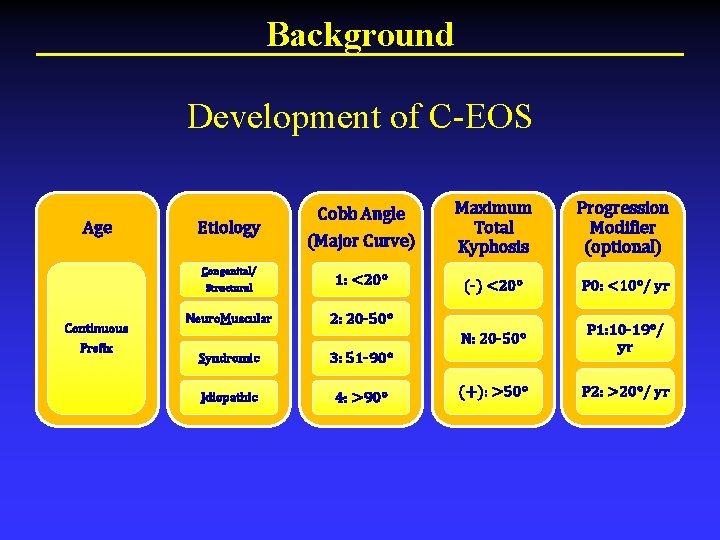
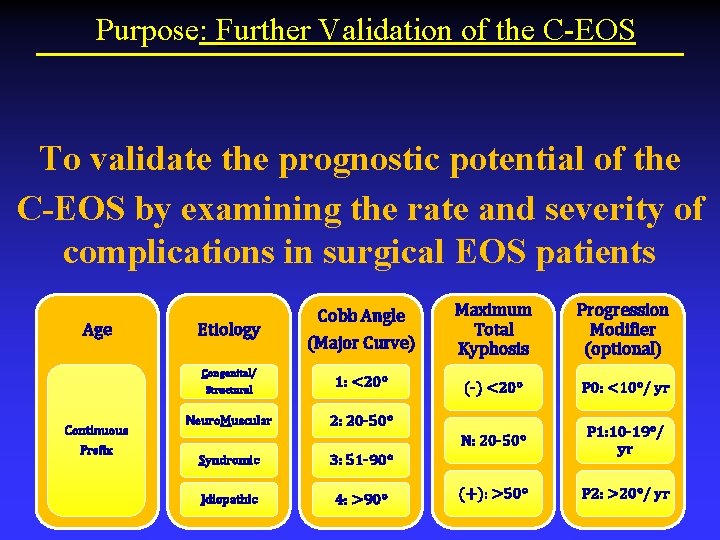
Background Development of C-EOS Age Continuous Prefix (Major Curve) Maximum Total Kyphosis Progression Modifier (optional) Congenital/ Structural 1: <20° (-) <20° P 0: <10°/ yr Neuro. Muscular 2: 20 -50° N: 20 -50° P 1: 10 -19°/ yr (+): >50° P 2: >20°/ yr Etiology Cobb Angle Syndromic 3: 51 -90° Idiopathic 4: >90°
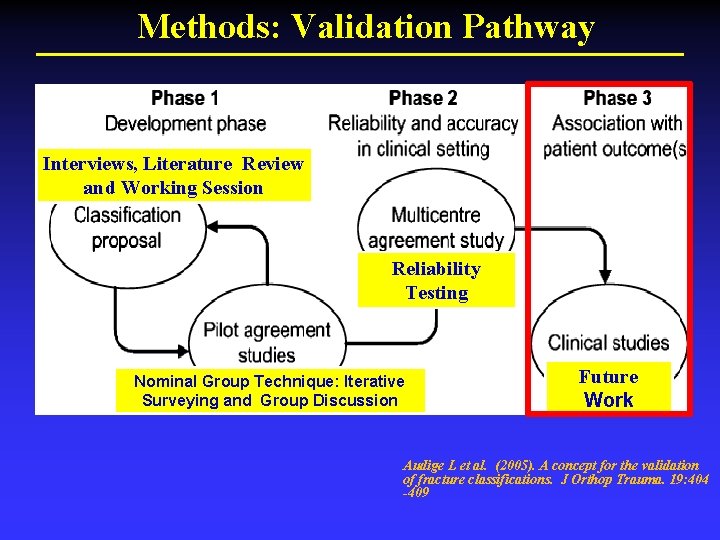
Methods: Validation Pathway Interviews, Literature Review and Working Session Reliability Testing Nominal Group Technique: Iterative Surveying and Group Discussion Future Work Audige L et al. (2005). A concept for the validation of fracture classifications. J Orthop Trauma. 19: 404 -409
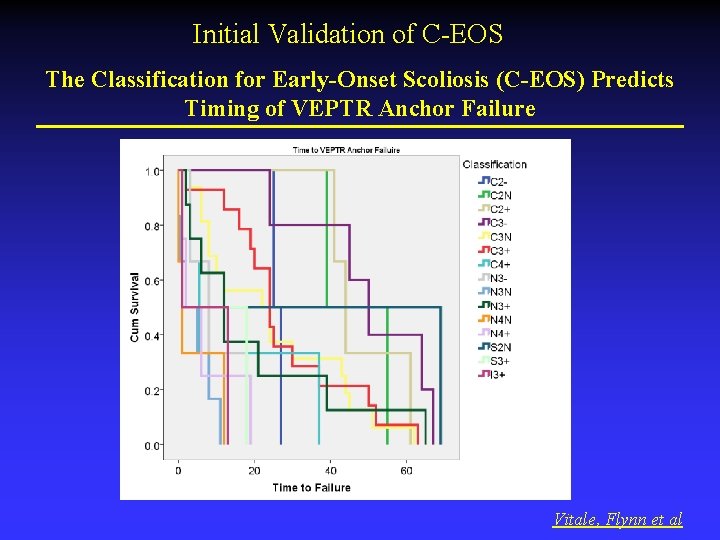
Initial Validation of C-EOS The Classification for Early-Onset Scoliosis (C-EOS) Predicts Timing of VEPTR Anchor Failure Vitale, Flynn et al
Purpose: Further Validation of the C-EOS To validate the prognostic potential of the C-EOS by examining the rate and severity of complications in surgical EOS patients Age Continuous Prefix (Major Curve) Maximum Total Kyphosis Progression Modifier (optional) Congenital/ Structural 1: <20° (-) <20° P 0: <10°/ yr Neuro. Muscular 2: 20 -50° N: 20 -50° P 1: 10 -19°/ yr (+): >50° P 2: >20°/ yr Etiology Cobb Angle Syndromic 3: 51 -90° Idiopathic 4: >90°
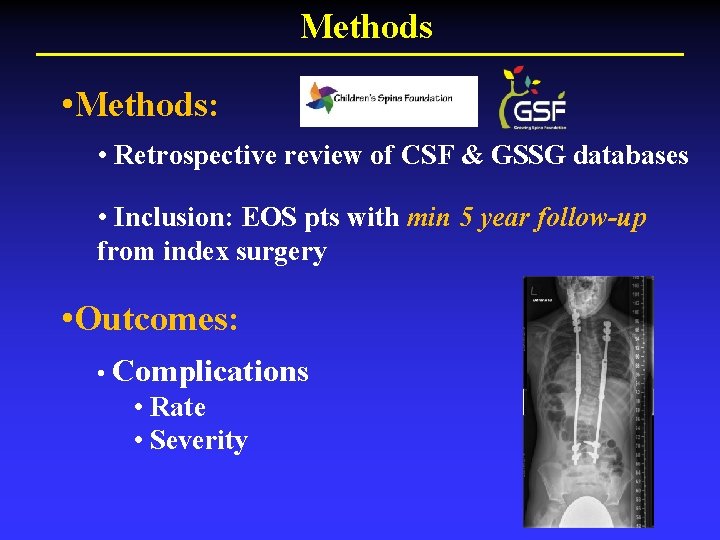
Methods • Methods: • Retrospective review of CSF & GSSG databases • Inclusion: EOS pts with min 5 year follow-up from index surgery • Outcomes: • Complications • Rate • Severity
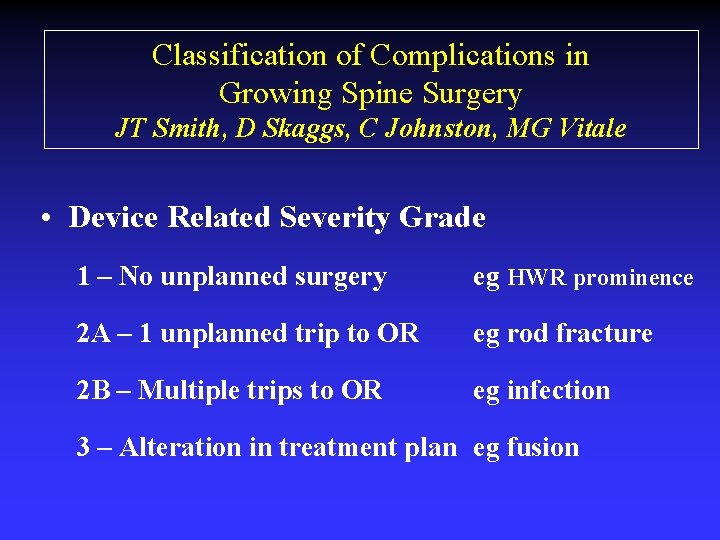
Classification of Complications in Growing Spine Surgery JT Smith, D Skaggs, C Johnston, MG Vitale • Device Related Severity Grade 1 – No unplanned surgery eg HWR prominence 2 A – 1 unplanned trip to OR eg rod fracture 2 B – Multiple trips to OR eg infection 3 – Alteration in treatment plan eg fusion
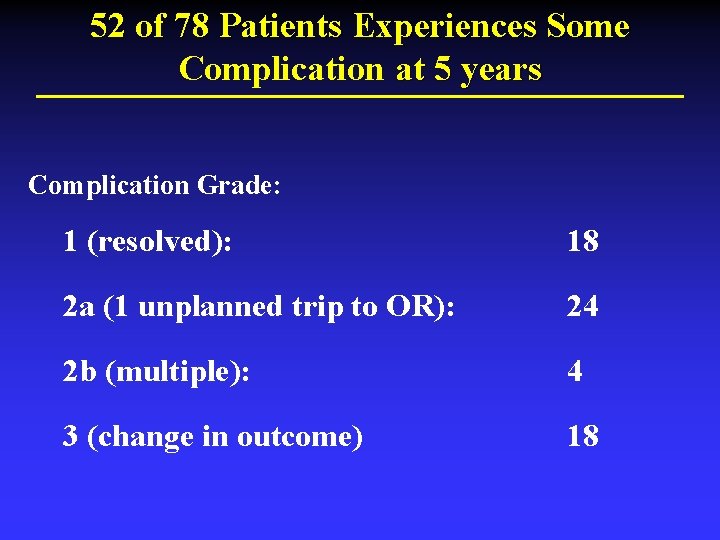
52 of 78 Patients Experiences Some Complication at 5 years Complication Grade: 1 (resolved): 18 2 a (1 unplanned trip to OR): 24 2 b (multiple): 4 3 (change in outcome) 18
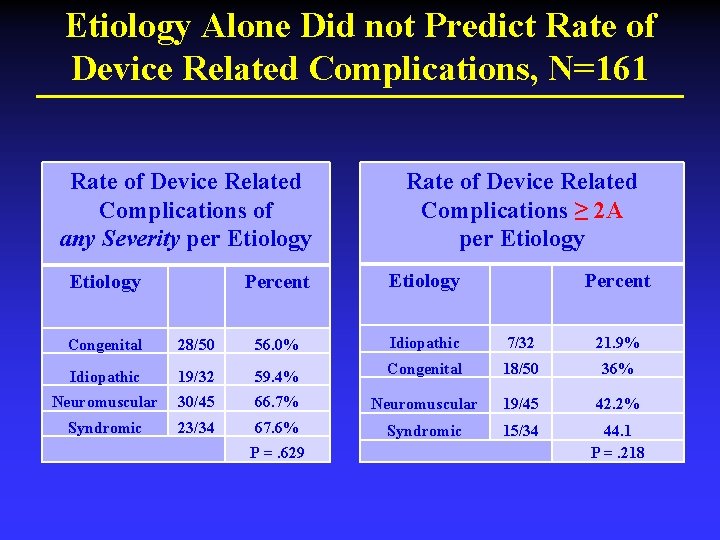
Etiology Alone Did not Predict Rate of Device Related Complications, N=161 Rate of Device Related Complications of any Severity per Etiology Rate of Device Related Complications ≥ 2 A per Etiology Percent Idiopathic 7/32 21. 9% Congenital 18/50 36% Congenital 28/50 56. 0% Idiopathic 19/32 59. 4% Neuromuscular 30/45 66. 7% Neuromuscular 19/45 42. 2% Syndromic 23/34 67. 6% Syndromic 15/34 44. 1 P =. 218 P =. 629
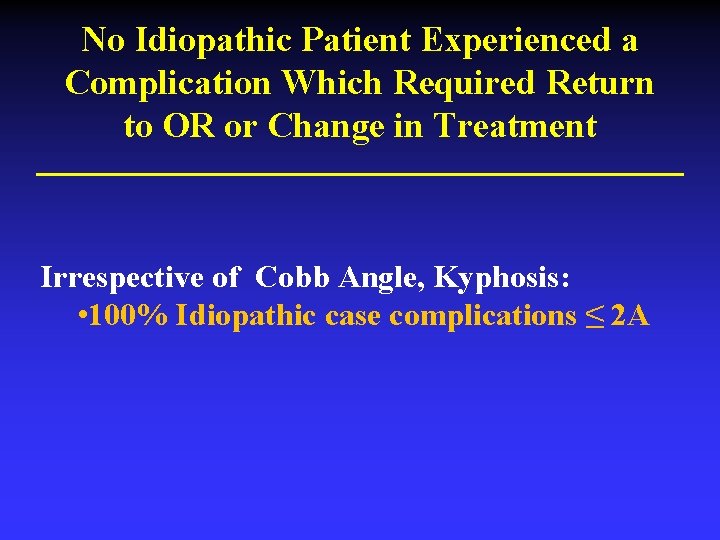
No Idiopathic Patient Experienced a Complication Which Required Return to OR or Change in Treatment Irrespective of Cobb Angle, Kyphosis: • 100% Idiopathic case complications ≤ 2 A
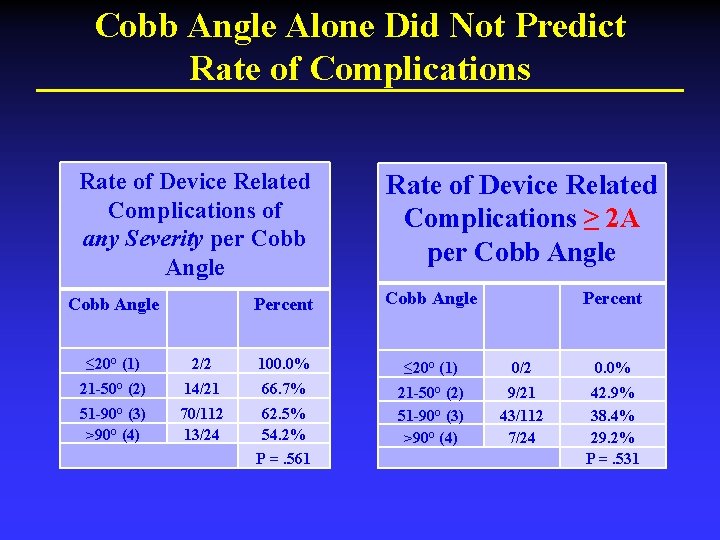
Cobb Angle Alone Did Not Predict Rate of Complications Rate of Device Related Complications of any Severity per Cobb Angle Rate of Device Related Complications ≥ 2 A per Cobb Angle Percent ≤ 20° (1) 2/2 100. 0% ≤ 20° (1) 0/2 0. 0% 21 -50° (2) 14/21 66. 7% 51 -90° (3) >90° (4) 70/112 13/24 62. 5% 54. 2% 21 -50° (2) 51 -90° (3) >90° (4) 9/21 43/112 7/24 42. 9% 38. 4% 29. 2% P =. 531 P =. 561
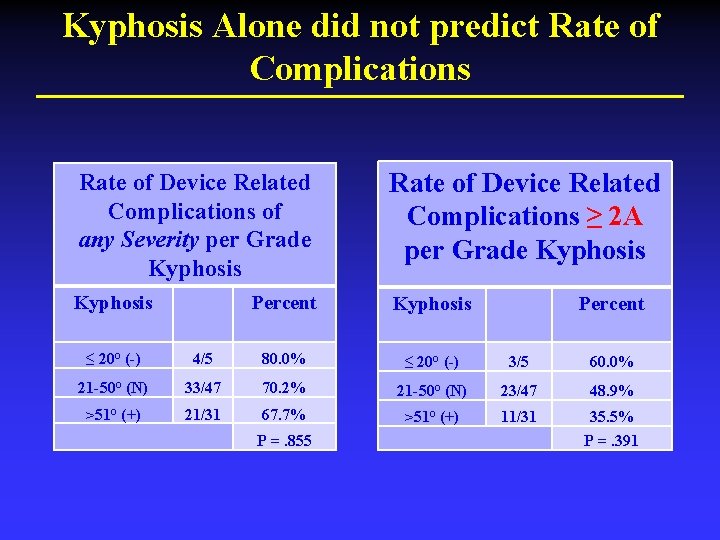
Kyphosis Alone did not predict Rate of Complications Rate of Device Related Complications of any Severity per Grade Kyphosis Rate of Device Related Complications ≥ 2 A per Grade Kyphosis Percent ≤ 20° (-) 4/5 80. 0% ≤ 20° (-) 3/5 60. 0% 21 -50° (N) 33/47 70. 2% 21 -50° (N) 23/47 48. 9% >51° (+) 21/31 67. 7% >51° (+) 11/31 35. 5% P =. 391 P =. 855
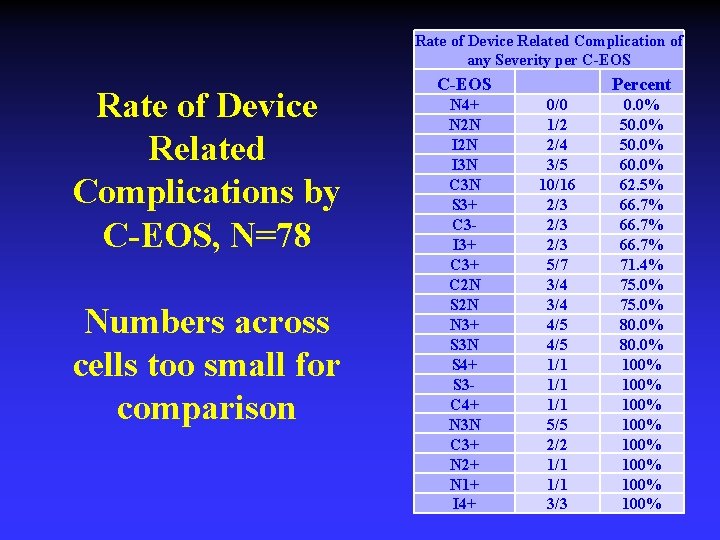
Rate of Device Related Complication of any Severity per C-EOS Rate of Device Related Complications by C-EOS, N=78 Numbers across cells too small for comparison C-EOS N 4+ N 2 N I 3 N C 3 N S 3+ C 3 I 3+ C 2 N S 2 N N 3+ S 3 N S 4+ S 3 C 4+ N 3 N C 3+ N 2+ N 1+ I 4+ Percent 0/0 1/2 2/4 3/5 10/16 2/3 2/3 5/7 3/4 4/5 1/1 1/1 5/5 2/2 1/1 3/3 0. 0% 50. 0% 62. 5% 66. 7% 71. 4% 75. 0% 80. 0% 100% 100%
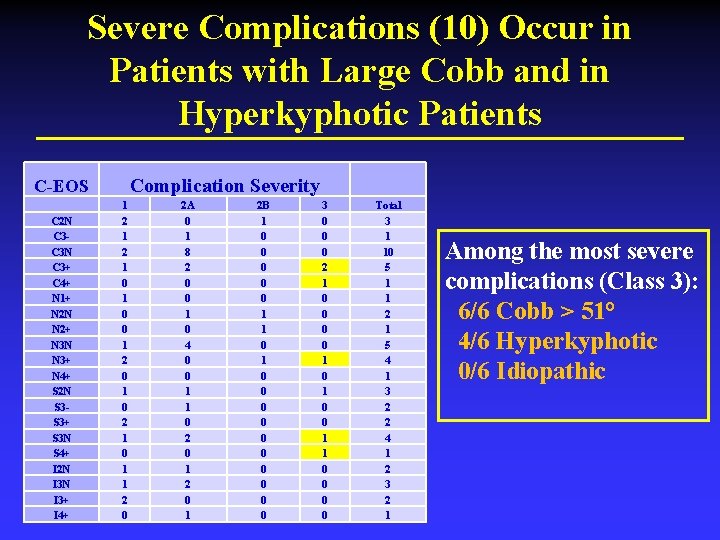
Severe Complications (10) Occur in Patients with Large Cobb and in Hyperkyphotic Patients Complication Severity C-EOS C 2 N C 3 C 3 N C 3+ C 4+ N 1+ N 2 N N 2+ N 3 N N 3+ N 4+ S 2 N S 3 S 3+ S 3 N S 4+ I 2 N I 3+ I 4+ 1 2 1 0 0 1 2 0 1 0 2 1 0 1 1 2 0 2 A 0 1 8 2 0 0 1 0 4 0 0 1 1 0 2 0 1 2 B 1 0 0 0 1 1 0 0 0 3 0 0 0 2 1 0 0 1 1 0 0 Total 3 1 10 5 1 1 2 1 5 4 1 3 2 2 4 1 2 3 2 1 Among the most severe complications (Class 3): 6/6 Cobb > 51° 4/6 Hyperkyphotic 0/6 Idiopathic
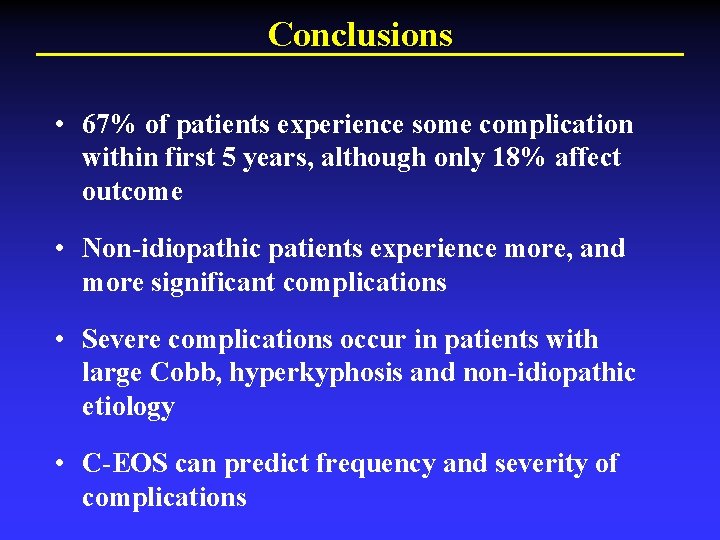
Conclusions • 67% of patients experience some complication within first 5 years, although only 18% affect outcome • Non-idiopathic patients experience more, and more significant complications • Severe complications occur in patients with large Cobb, hyperkyphosis and non-idiopathic etiology • C-EOS can predict frequency and severity of complications
Thank You