
The Classical Civilizations 600 BCE 600 CE Overview
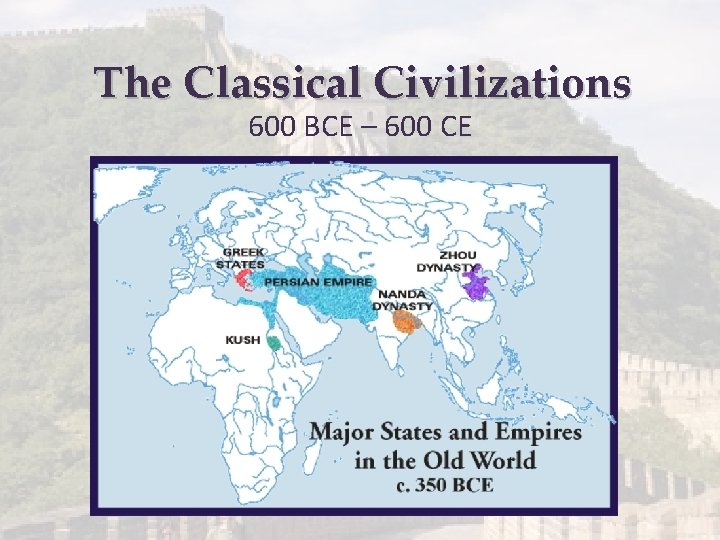
The Classical Civilizations 600 BCE – 600 CE
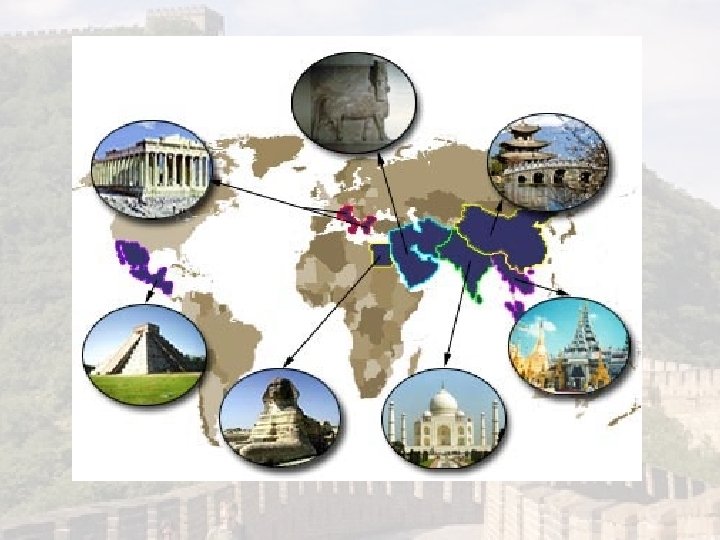

Overview • The period of 600 BCE – 600 CE is commonly called the “Classical Period” • Civilizations emerged all over the world which become the foundations of our modern world – Europe/North Africa = – Middle East = – South Asia= – East Asia= – Mesoamerica= Greeks/Romans Persia Mauryan/Gupta/Kushan Han Dynasty Mayans
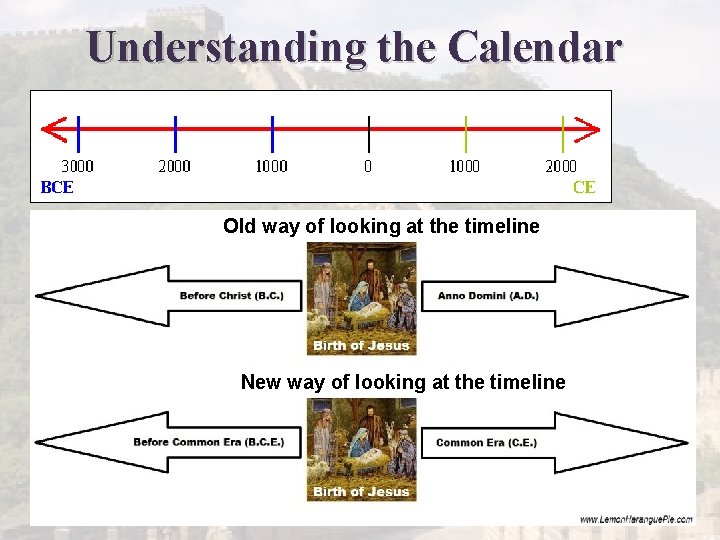
Understanding the Calendar Old way of looking at the timeline New way of looking at the timeline
Rally Robin Time! • Ensure that you and your shoulder partner understand the timeline.
Overview • Each civilization was different, but four major patterns emerged among them: 1. 2. 3. 4. Complex governments develop Trade networks are established Social structures develop creating inequality Belief systems and cultural traditions are organized
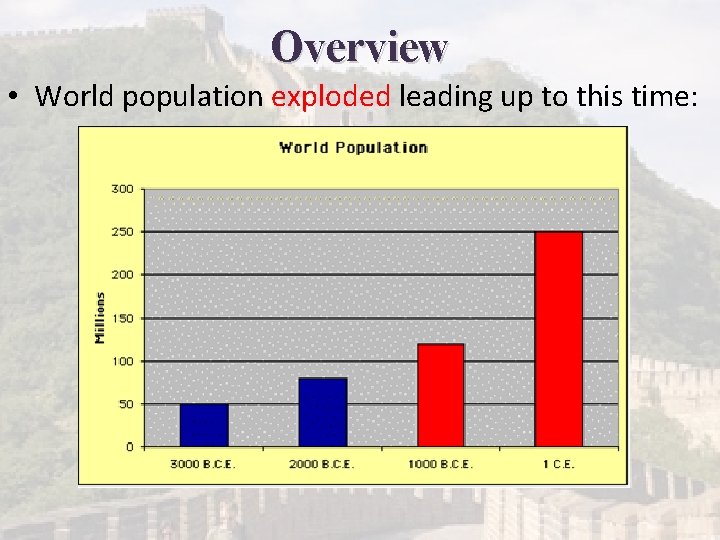
Overview • World population exploded leading up to this time:
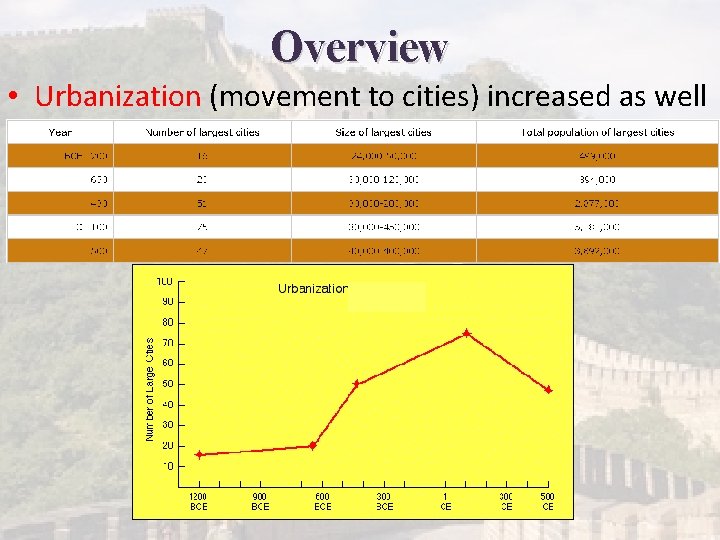
Overview • Urbanization (movement to cities) increased as well
• Person with lighter hair goes first. • Discuss with your shoulder partner the 4 patterns of advanced civilizations – Take each in turn and try to give an example of that same pattern today – for example, what kind of trade patterns can you identify today? – Be ready to share at random!
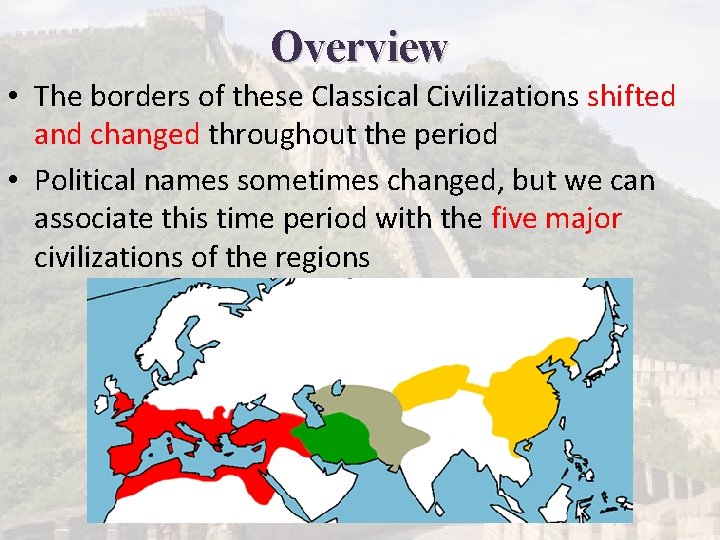
Overview • The borders of these Classical Civilizations shifted and changed throughout the period • Political names sometimes changed, but we can associate this time period with the five major civilizations of the regions
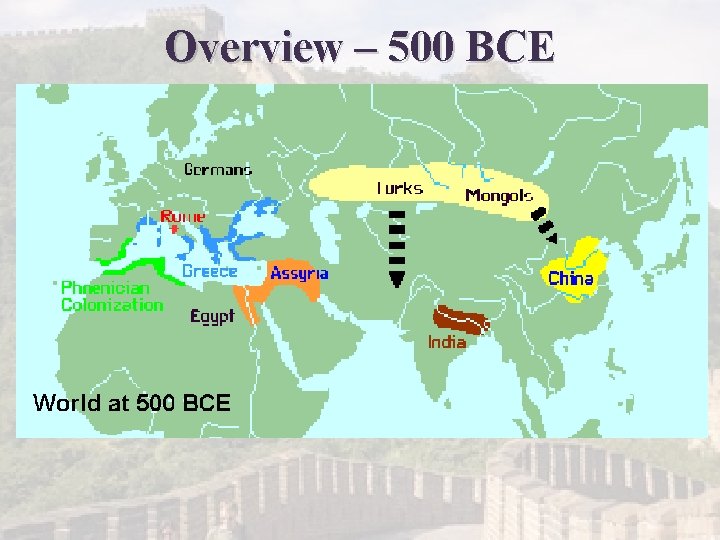
Overview – 500 BCE

Overview – 350 BCE
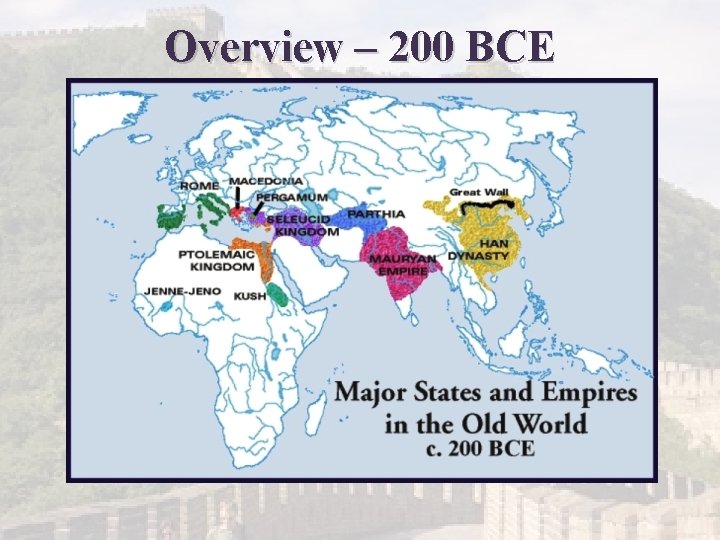
Overview – 200 BCE
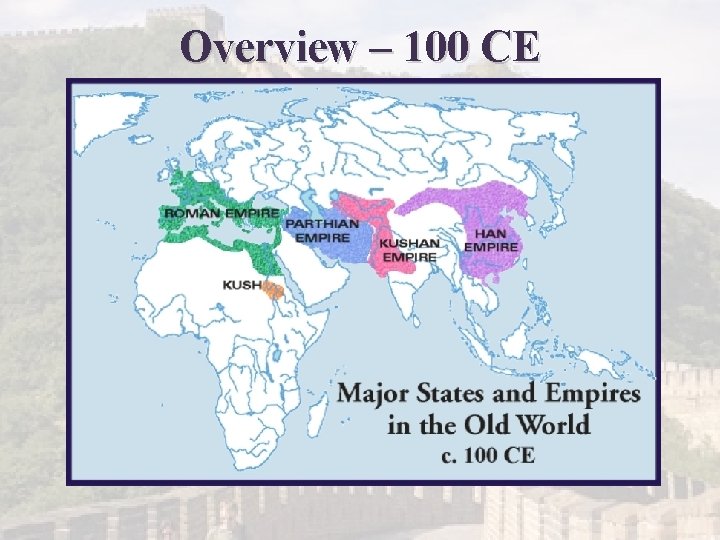
Overview – 100 CE
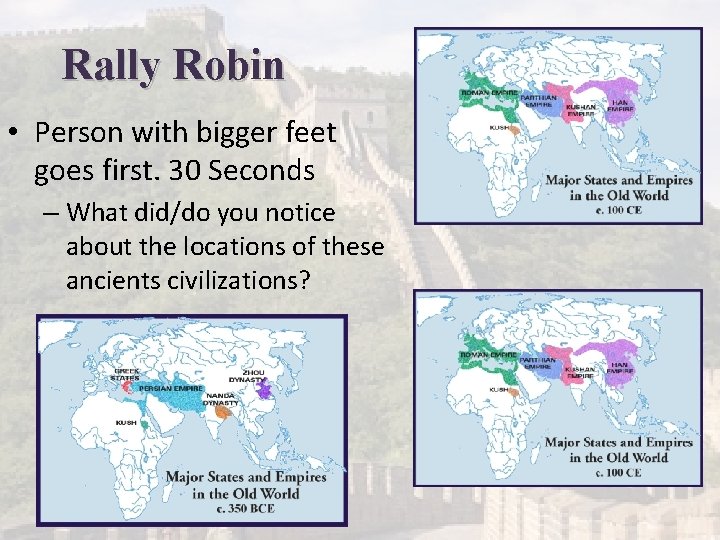
Rally Robin • Person with bigger feet goes first. 30 Seconds – What did/do you notice about the locations of these ancients civilizations?
Classical China • During this period three Chinese Dynasties emerged to control the region of East Asia 1. Zhou Dynasty 2. Qin Dynasty 3. Han Dynasty • These dynasties emphasized Confucian beliefs and established Civil Service Exams to place the best educated into their governments • Slowly built the Great Wall of China to deter attacks from the region of Mongolia
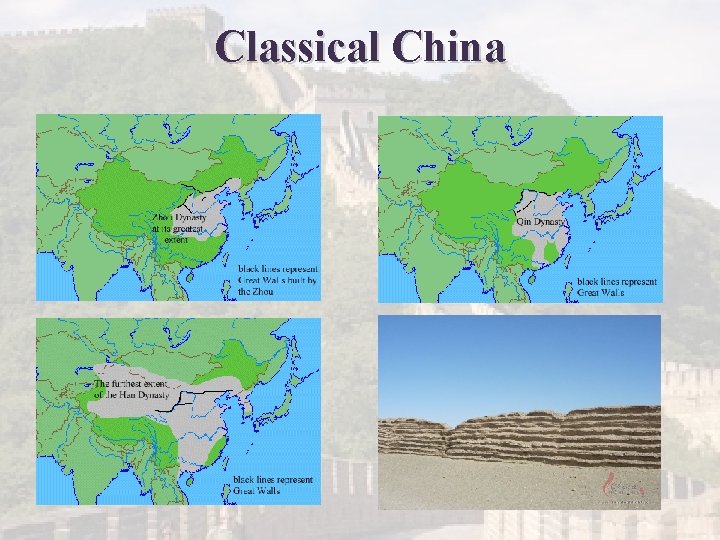
Classical China
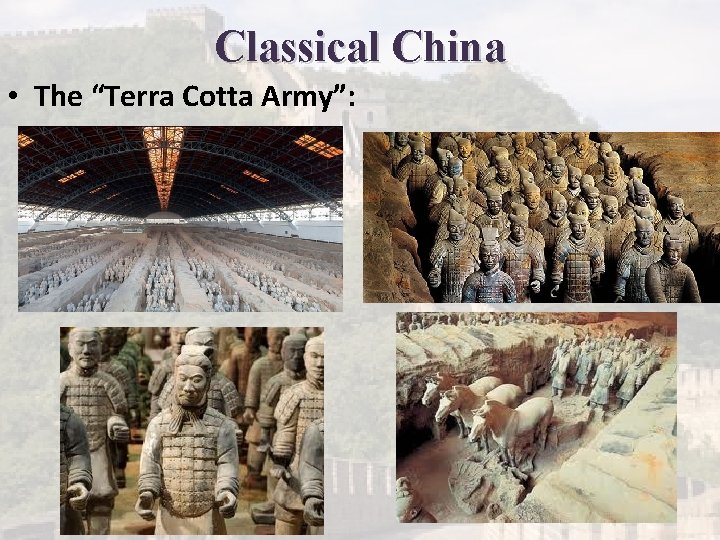
Classical China • The “Terra Cotta Army”:
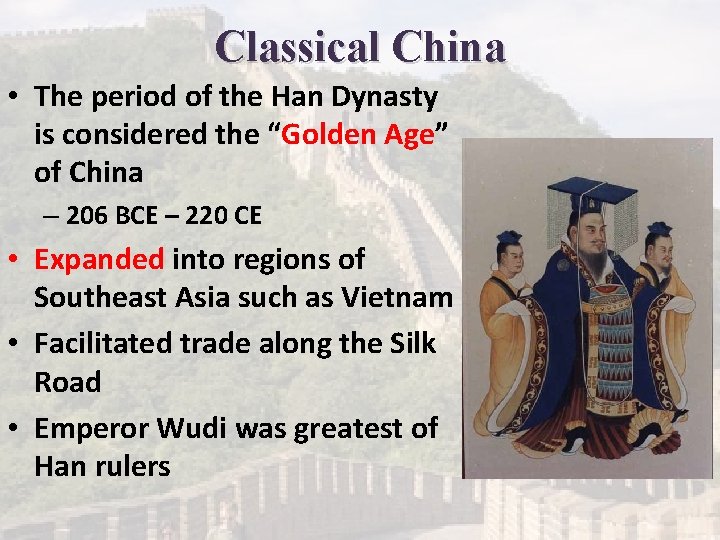
Classical China • The period of the Han Dynasty is considered the “Golden Age” of China – 206 BCE – 220 CE • Expanded into regions of Southeast Asia such as Vietnam • Facilitated trade along the Silk Road • Emperor Wudi was greatest of Han rulers
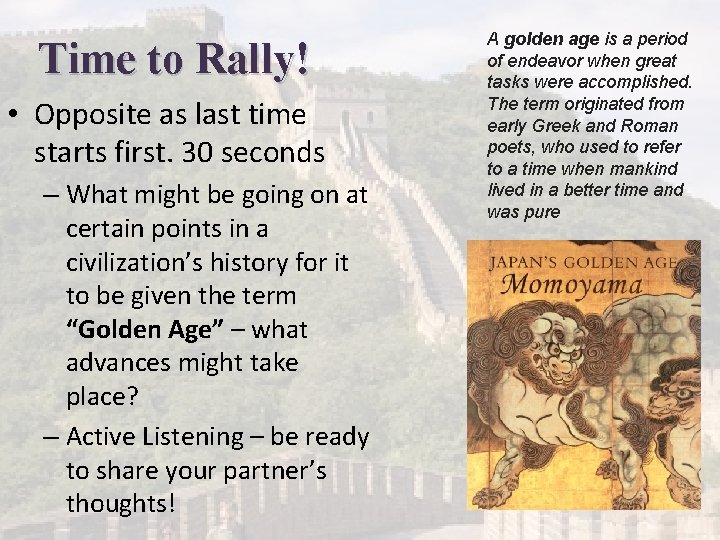
Time to Rally! • Opposite as last time starts first. 30 seconds – What might be going on at certain points in a civilization’s history for it to be given the term “Golden Age” – what advances might take place? – Active Listening – be ready to share your partner’s thoughts! A golden age is a period of endeavor when great tasks were accomplished. The term originated from early Greek and Roman poets, who used to refer to a time when mankind lived in a better time and was pure
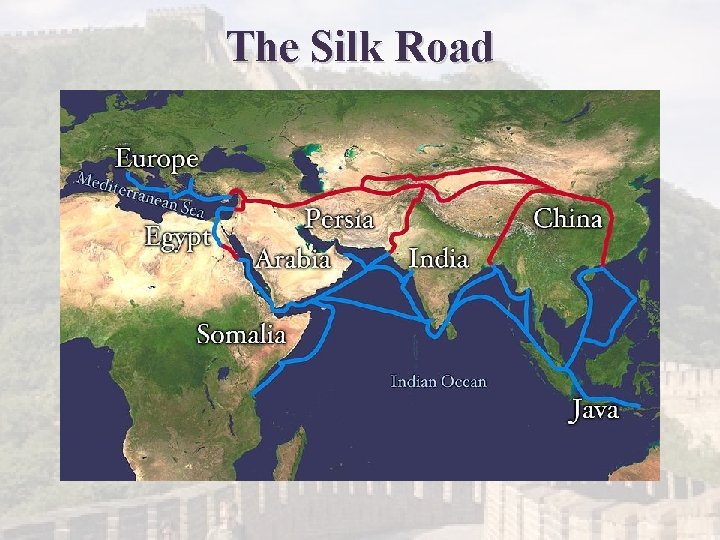
The Silk Road
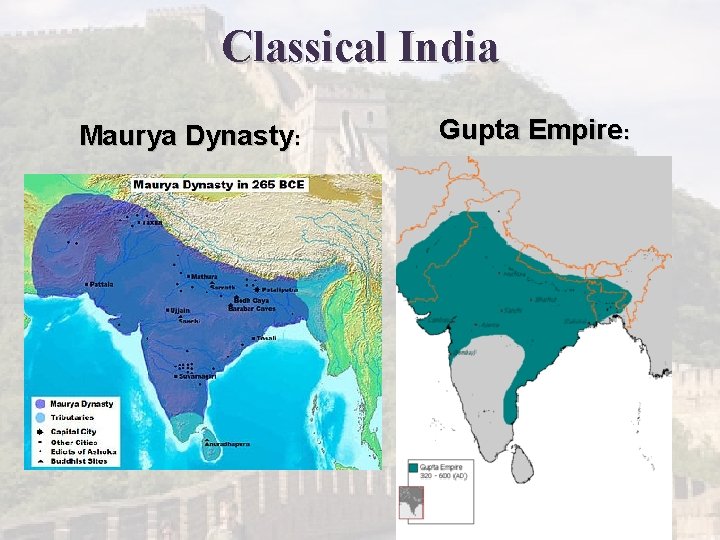
Classical India Maurya Dynasty: Gupta Empire:
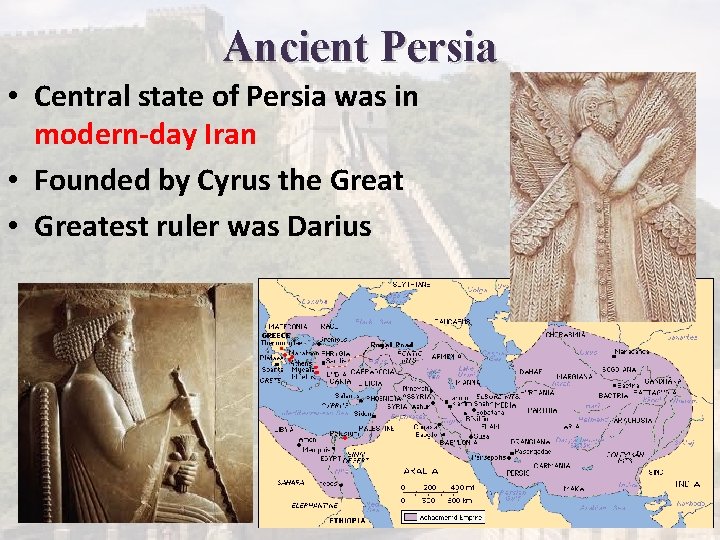
Ancient Persia • Central state of Persia was in modern-day Iran • Founded by Cyrus the Great • Greatest ruler was Darius
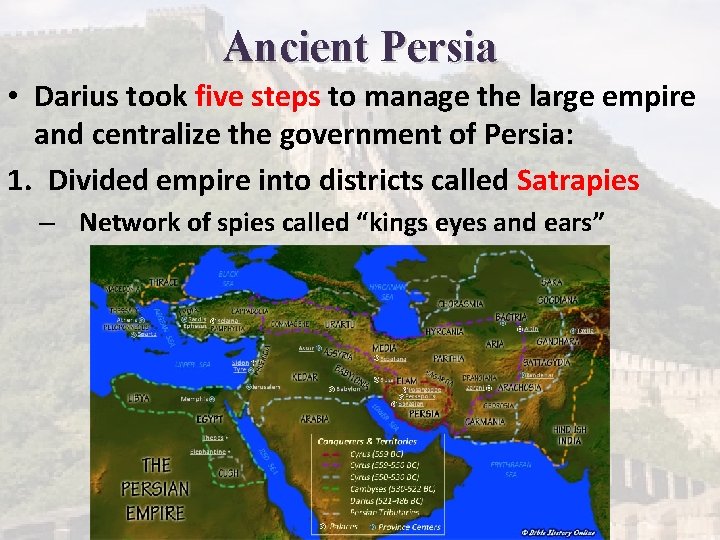
Ancient Persia • Darius took five steps to manage the large empire and centralize the government of Persia: 1. Divided empire into districts called Satrapies – Network of spies called “kings eyes and ears”
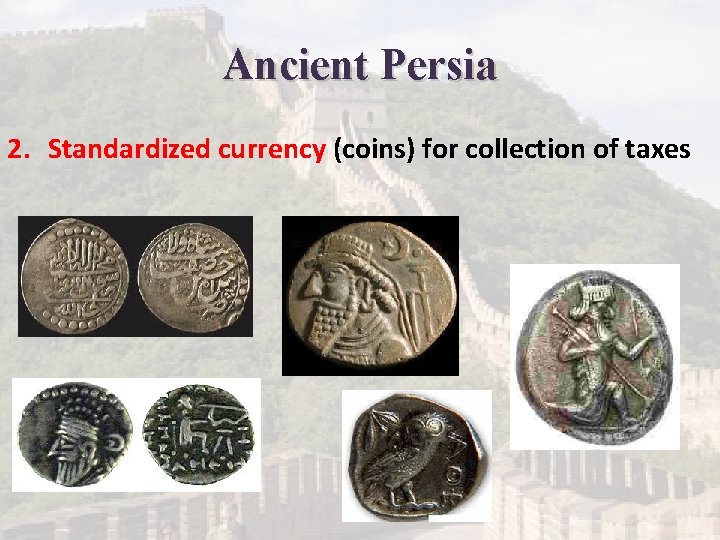
Ancient Persia 2. Standardized currency (coins) for collection of taxes
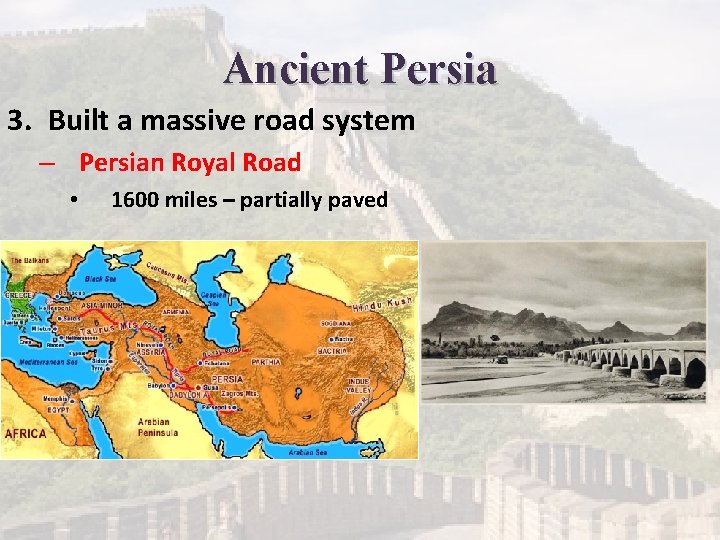
Ancient Persia 3. Built a massive road system – Persian Royal Road • 1600 miles – partially paved
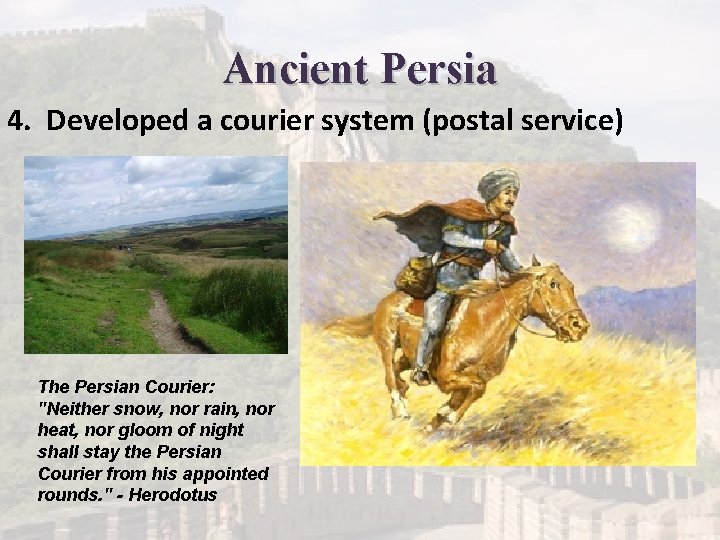
Ancient Persia 4. Developed a courier system (postal service) The Persian Courier: "Neither snow, nor rain, nor heat, nor gloom of night shall stay the Persian Courier from his appointed rounds. " - Herodotus
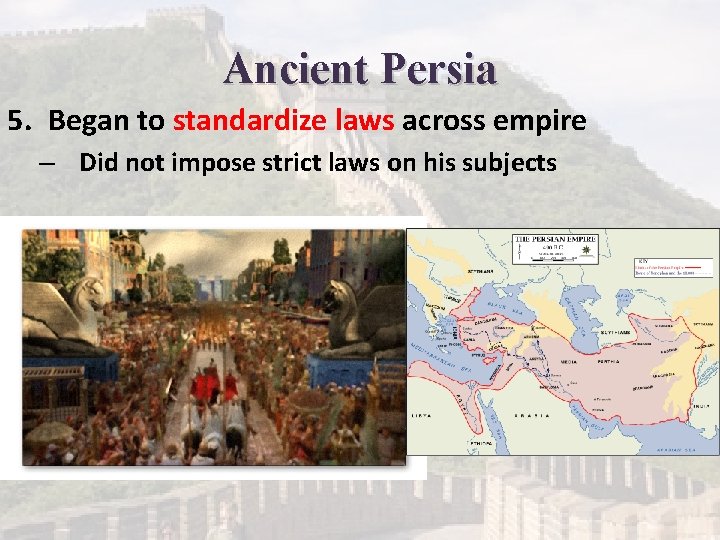
Ancient Persia 5. Began to standardize laws across empire – Did not impose strict laws on his subjects
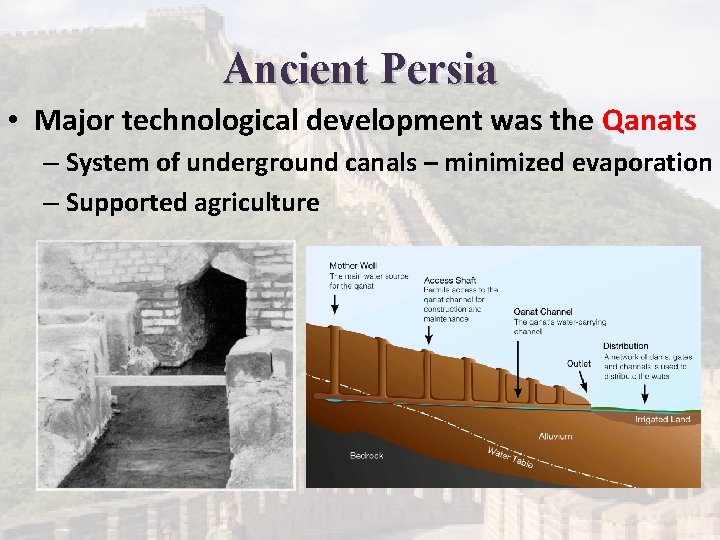
Ancient Persia • Major technological development was the Qanats – System of underground canals – minimized evaporation – Supported agriculture
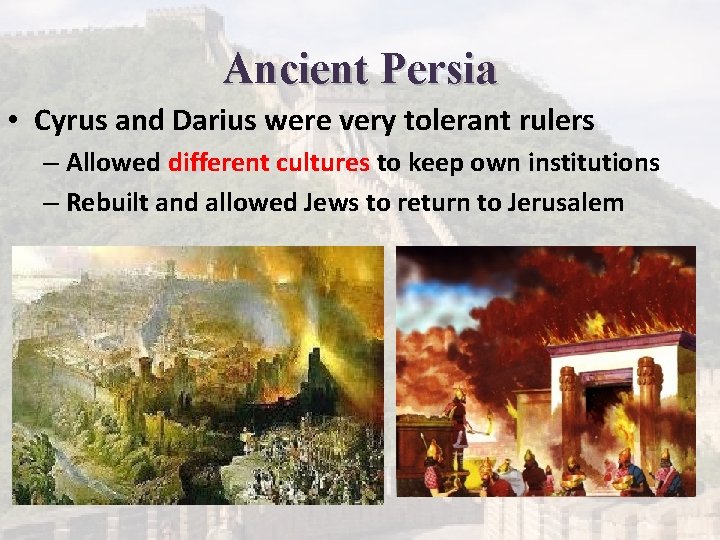
Ancient Persia • Cyrus and Darius were very tolerant rulers – Allowed different cultures to keep own institutions – Rebuilt and allowed Jews to return to Jerusalem
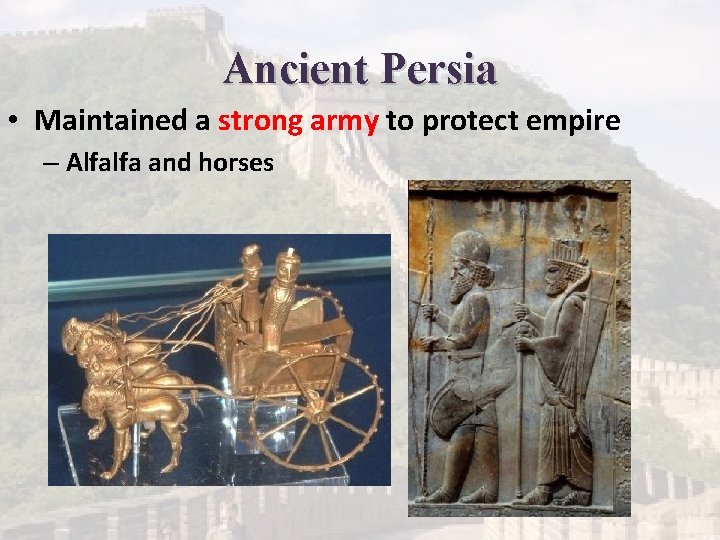
Ancient Persia • Maintained a strong army to protect empire – Alfalfa and horses
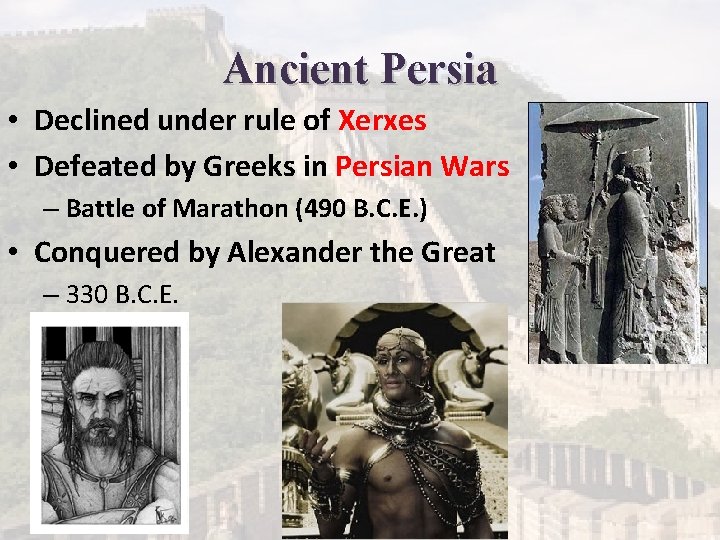
Ancient Persia • Declined under rule of Xerxes • Defeated by Greeks in Persian Wars – Battle of Marathon (490 B. C. E. ) • Conquered by Alexander the Great – 330 B. C. E.
Hey Sally, Let’s Rally • Look back with your partner and compare the advances of Ancient Persia with our modern society. Take each in turn and ask the question, “is this something we have today? ” and describe. – You have two minutes – Be prepared to share your thoughts at random
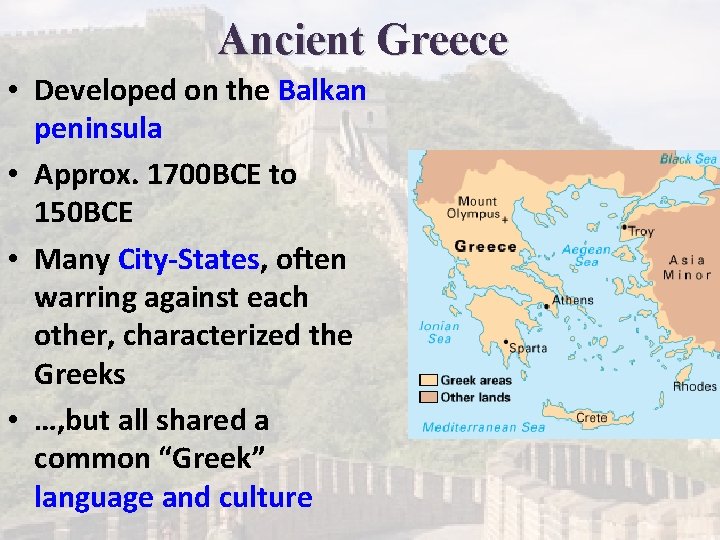
Ancient Greece • Developed on the Balkan peninsula • Approx. 1700 BCE to 150 BCE • Many City-States, often warring against each other, characterized the Greeks • …, but all shared a common “Greek” language and culture
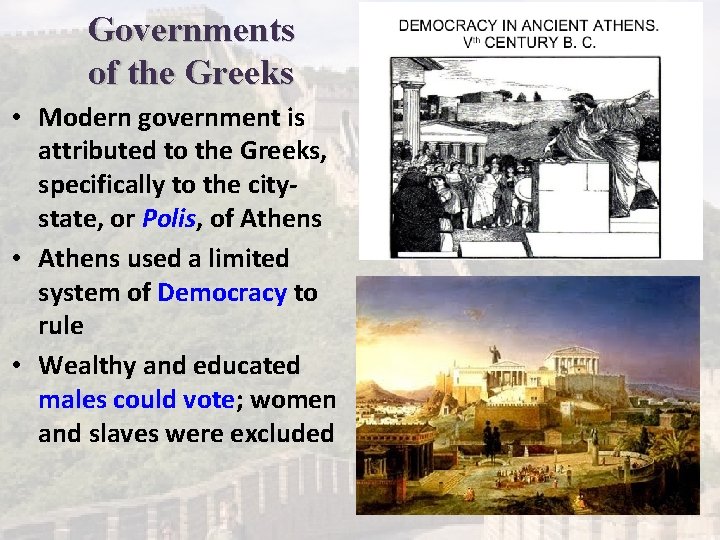
Governments of the Greeks • Modern government is attributed to the Greeks, specifically to the citystate, or Polis, of Athens • Athens used a limited system of Democracy to rule • Wealthy and educated males could vote; women and slaves were excluded
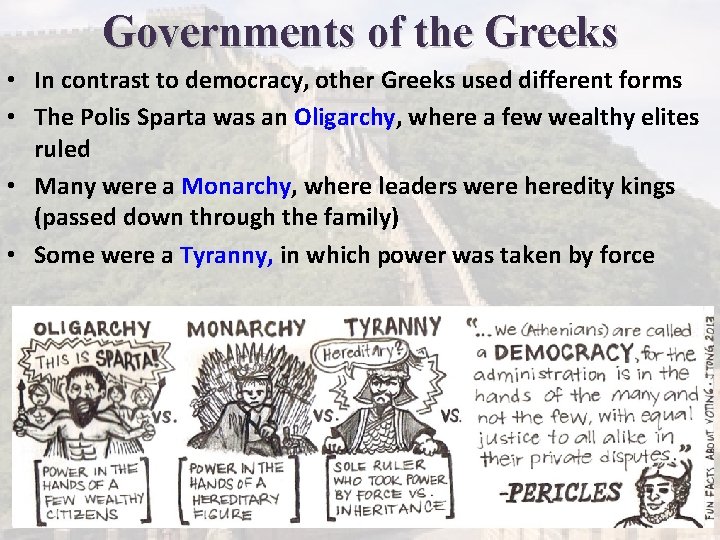
Governments of the Greeks • In contrast to democracy, other Greeks used different forms • The Polis Sparta was an Oligarchy, where a few wealthy elites ruled • Many were a Monarchy, where leaders were heredity kings (passed down through the family) • Some were a Tyranny, in which power was taken by force
Time to Rally in the Valley – Rally Coach! Coach • Person with the more colorful outfit goes first – Take a minute to review the forms of government. Now, with your partner, summarize each of the forms of governments just studied: Democracy, Oligarchy, Monarchy, and Tyranny. As your Partner describes each (without looking at their notes) you will be making sure they are getting it correct (coaching them!). Each will summarize and each will coach.
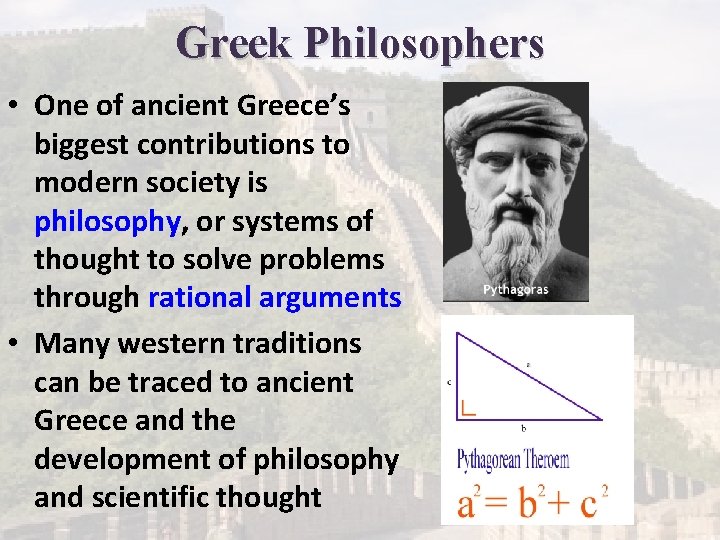
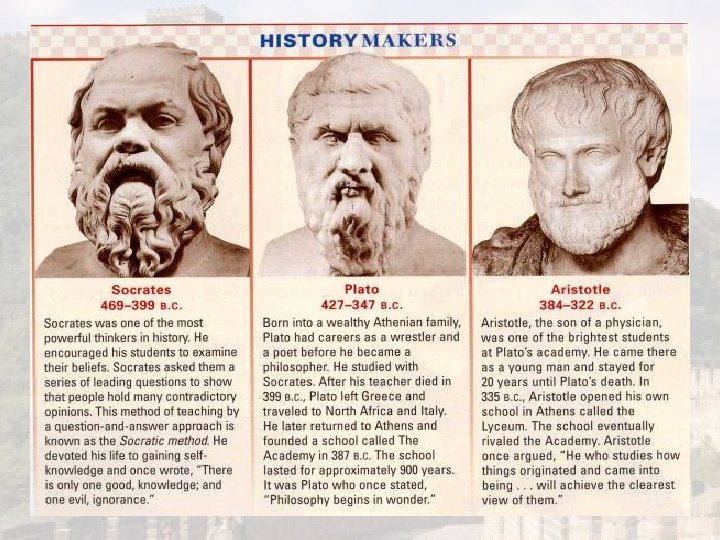
Greek Philosophers • One of ancient Greece’s biggest contributions to modern society is philosophy, or systems of thought to solve problems through rational arguments • Many western traditions can be traced to ancient Greece and the development of philosophy and scientific thought
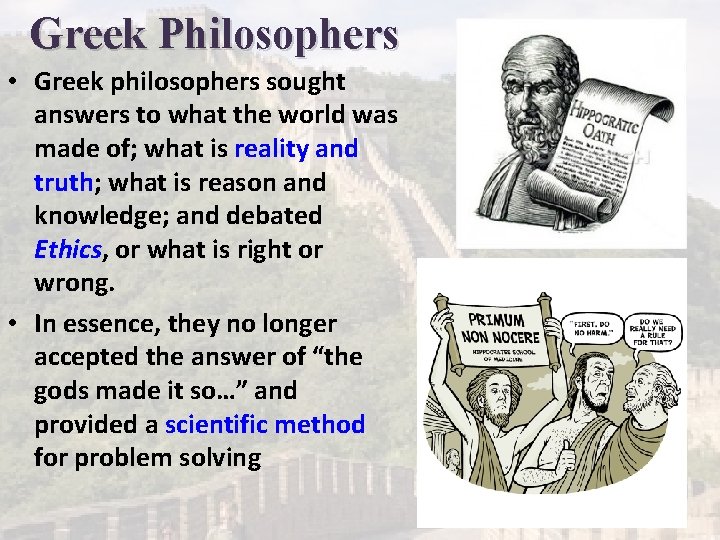
Greek Philosophers • Greek philosophers sought answers to what the world was made of; what is reality and truth; what is reason and knowledge; and debated Ethics, or what is right or wrong. • In essence, they no longer accepted the answer of “the gods made it so…” and provided a scientific method for problem solving
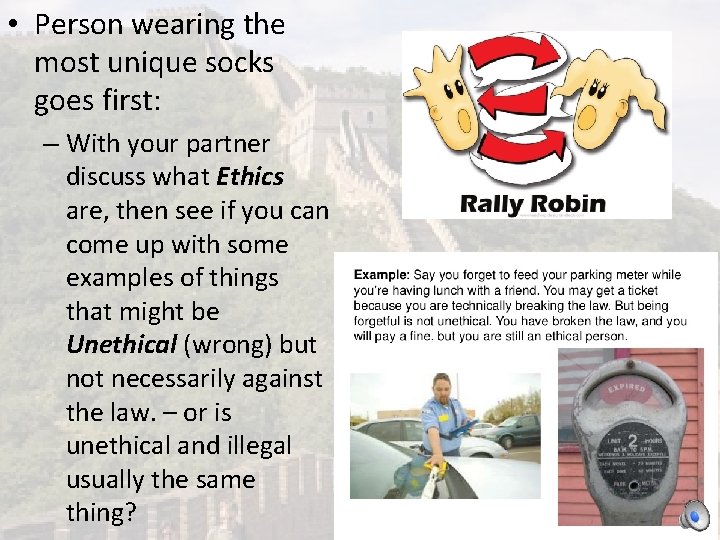
• Person wearing the most unique socks goes first: – With your partner discuss what Ethics are, then see if you can come up with some examples of things that might be Unethical (wrong) but not necessarily against the law. – or is unethical and illegal usually the same thing?
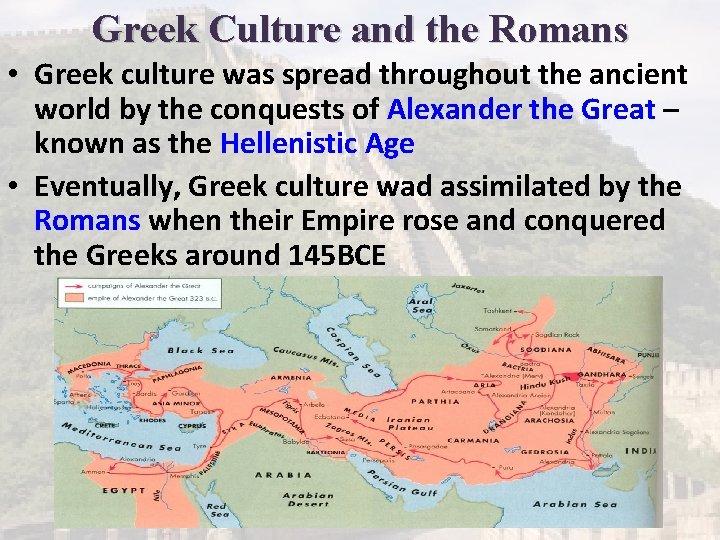
Greek Culture and the Romans • Greek culture was spread throughout the ancient world by the conquests of Alexander the Great – known as the Hellenistic Age • Eventually, Greek culture wad assimilated by the Romans when their Empire rose and conquered the Greeks around 145 BCE
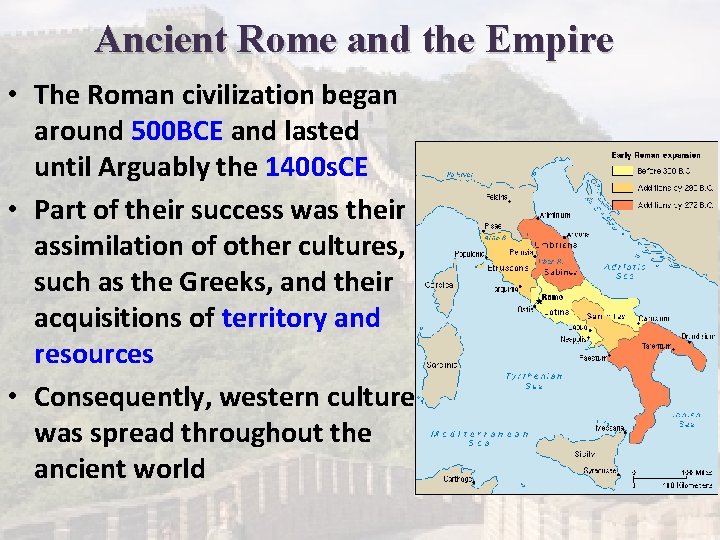
Ancient Rome and the Empire • The Roman civilization began around 500 BCE and lasted until Arguably the 1400 s. CE • Part of their success was their assimilation of other cultures, such as the Greeks, and their acquisitions of territory and resources • Consequently, western culture was spread throughout the ancient world
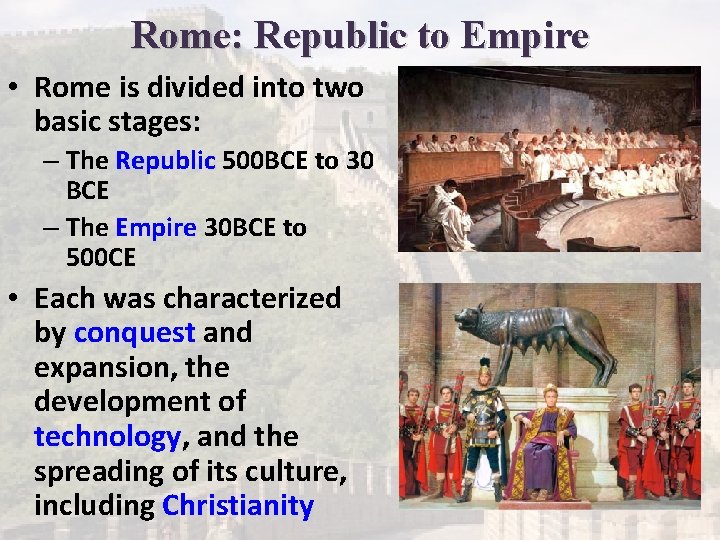
Rome: Republic to Empire • Rome is divided into two basic stages: – The Republic 500 BCE to 30 BCE – The Empire 30 BCE to 500 CE • Each was characterized by conquest and expansion, the development of technology, and the spreading of its culture, including Christianity
Rome(s) Republic • First example of this form of government • Senate had control • People could vote • Expanded their territory • Well trained military • Advanced technology • Accumulated wealth • Pagan Religions (gods) • Corruption of senate and power seeking • Civil Wars Empire • Succeeded the Republic • Dictatorial (one person) control • Periods of relative peace (Pax Romana) • Hereditary and/or violent succession of leaders • Became too expansive • Adopted Christianity (God) • Becomes plagued by excesses and outside invaders • Eventually Falls
Rally with your Pally • Person who is taller starts: – Look back at the Republic/Empire Comparison, then name two positives and negatives for each. – Based on this, which period do you think would have been better to live in? Why – Active listening required – be ready to share your partners thoughts.
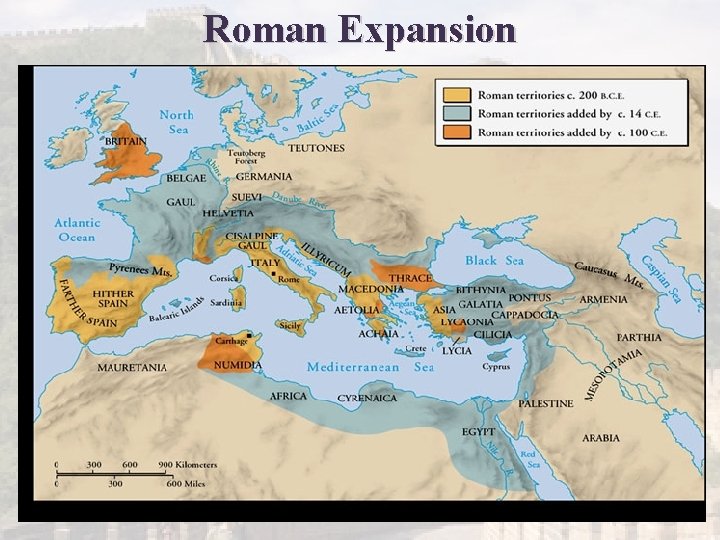
Roman Expansion
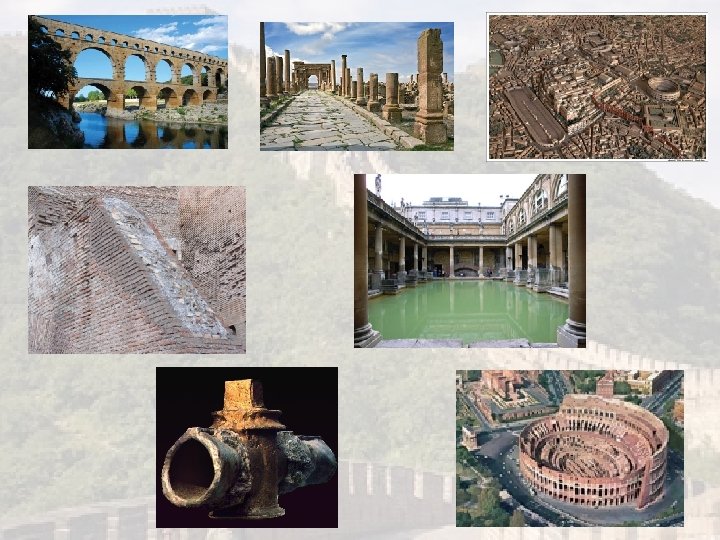
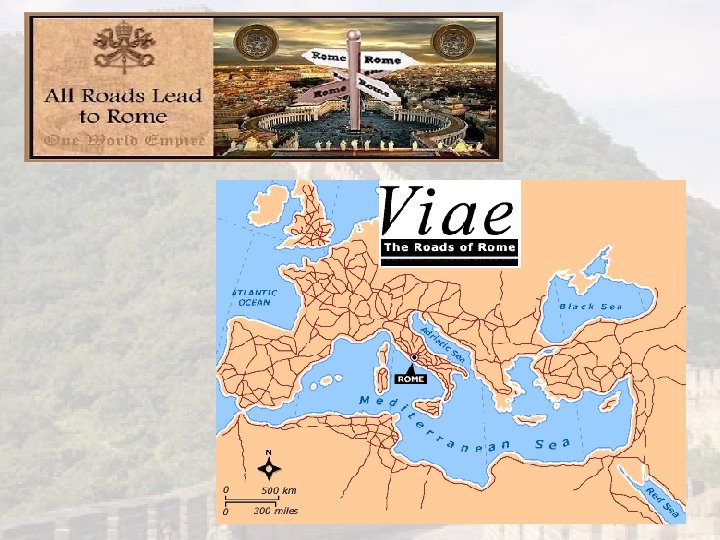
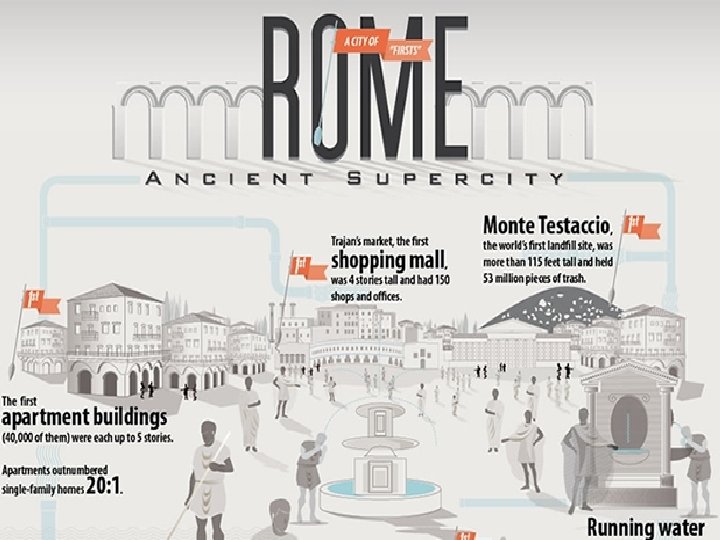
Roman Civilization • Whether it was the Republic or Empire period, Rome was the most technologically advanced, wealthiest, and powerful civilization in the western world. • Achievements included: – massive architecture, i. e. , Coliseums, Domes, and the invention of concrete. – Running water via the aqueducts and plumbing – Heated baths – Modern City Planning and a network of paved roads
- Slides: 51