
The classic coreperiphery model Myrdal Friedmann Demands from

- Slides: 6
The classic core-periphery model: Myrdal & Friedmann Demands from center for goods/services yields payments to periphery Abundant Labor Supply of materials and products Abundant Capital Scarce Labor Center Capital flows to periphery Periphery Shortage of labor in center creates stimulus for labor migration from periphery Supply of labor from periphery will create labor shortage in periphery and raise wages and incomes Adequate Labor Adequate Capital Scarce Capital
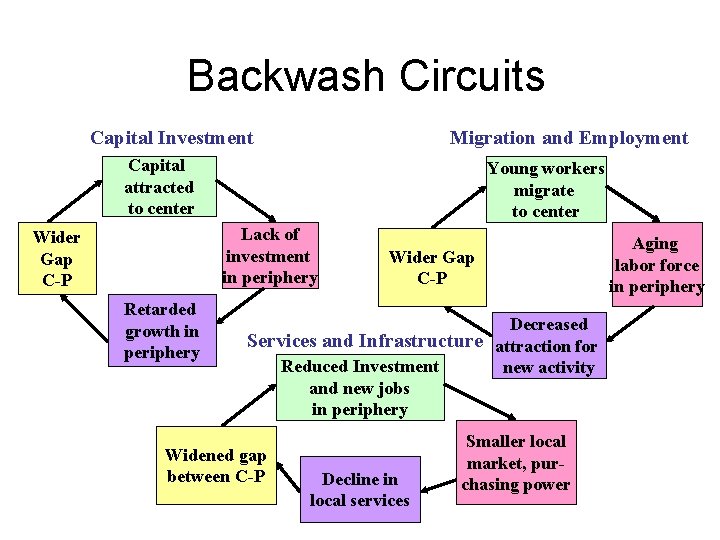
Backwash Circuits Capital Investment Migration and Employment Capital attracted to center Young workers migrate to center Lack of investment in periphery Wider Gap C-P Retarded growth in periphery Wider Gap C-P Decreased Services and Infrastructure attraction for Reduced Investment new activity and new jobs in periphery Widened gap between C-P Decline in local services Smaller local market, purchasing power Aging labor force in periphery
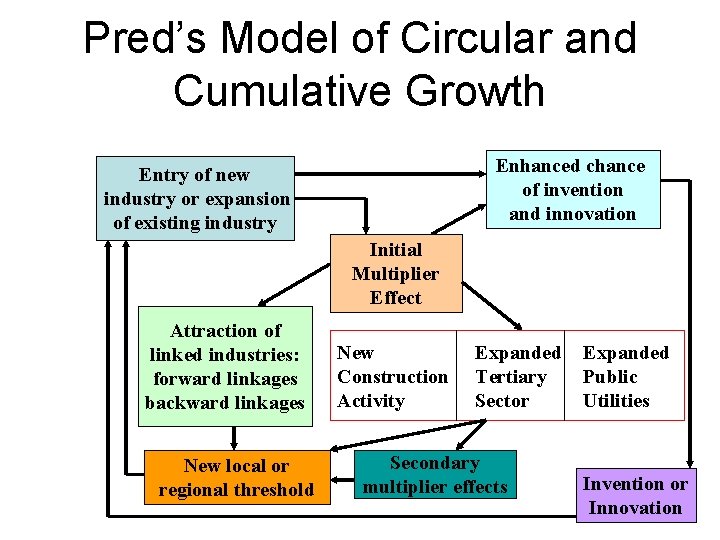
Pred’s Model of Circular and Cumulative Growth Enhanced chance of invention and innovation Entry of new industry or expansion of existing industry Initial Multiplier Effect Attraction of linked industries: forward linkages backward linkages New local or regional threshold New Construction Activity Expanded Tertiary Sector Secondary multiplier effects Expanded Public Utilities Invention or Innovation
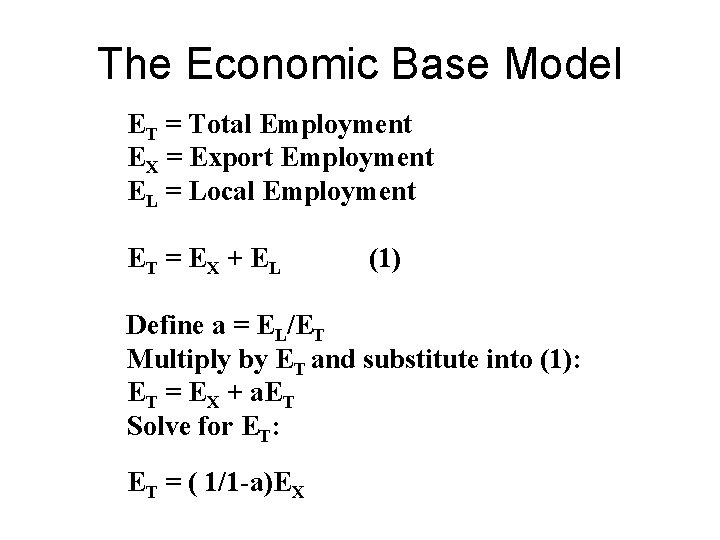
The Economic Base Model ET = Total Employment EX = Export Employment EL = Local Employment ET = E X + E L (1) Define a = EL/ET Multiply by ET and substitute into (1): ET = EX + a. ET Solve for ET: ET = ( 1/1 -a)EX
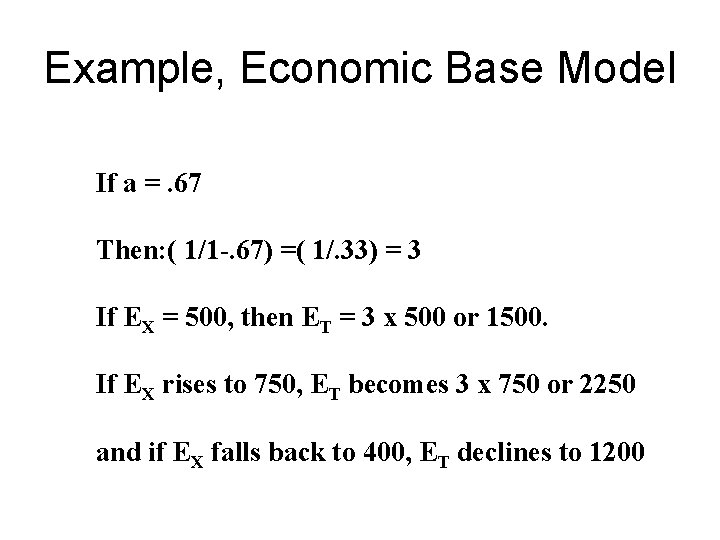
Example, Economic Base Model If a =. 67 Then: ( 1/1 -. 67) =( 1/. 33) = 3 If EX = 500, then ET = 3 x 500 or 1500. If EX rises to 750, ET becomes 3 x 750 or 2250 and if EX falls back to 400, ET declines to 1200
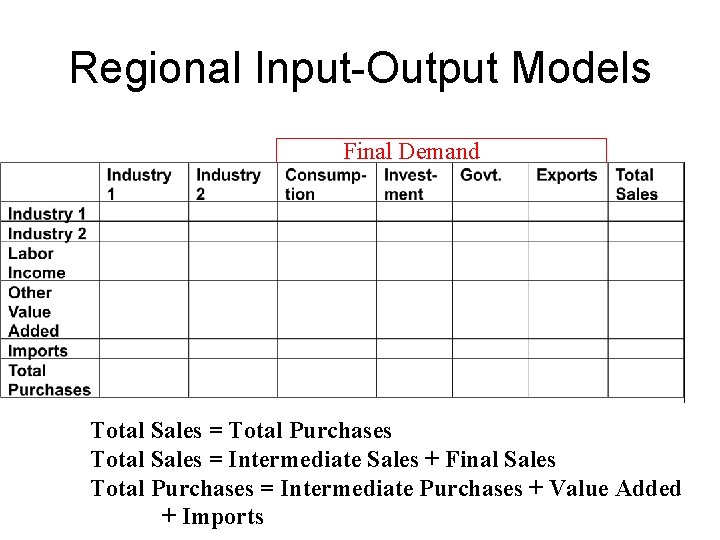
Regional Input-Output Models Final Demand Total Sales = Total Purchases Total Sales = Intermediate Sales + Final Sales Total Purchases = Intermediate Purchases + Value Added + Imports