
The Civil War The Flags USA CSA Battle
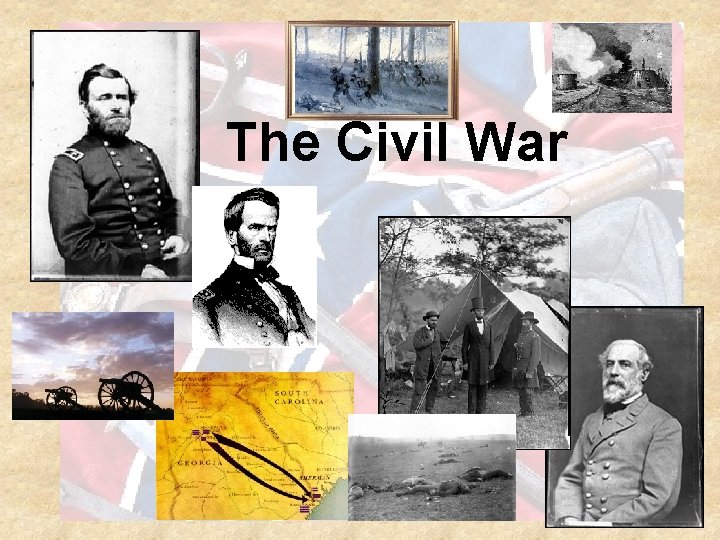
The Civil War
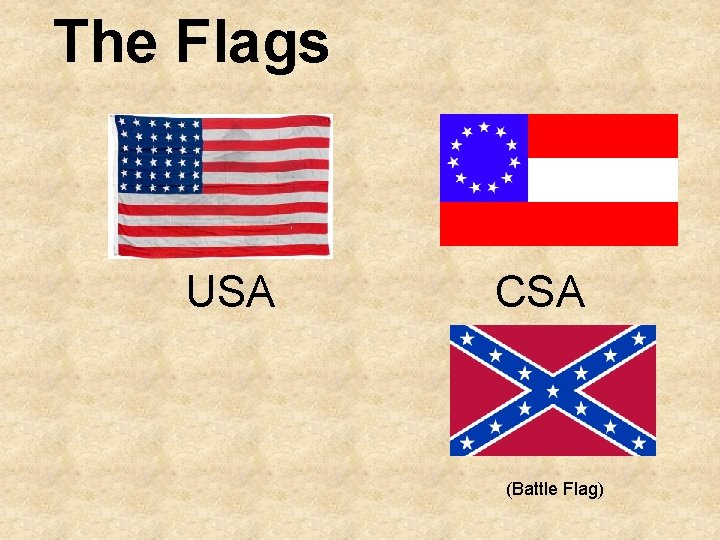
The Flags USA CSA (Battle Flag)
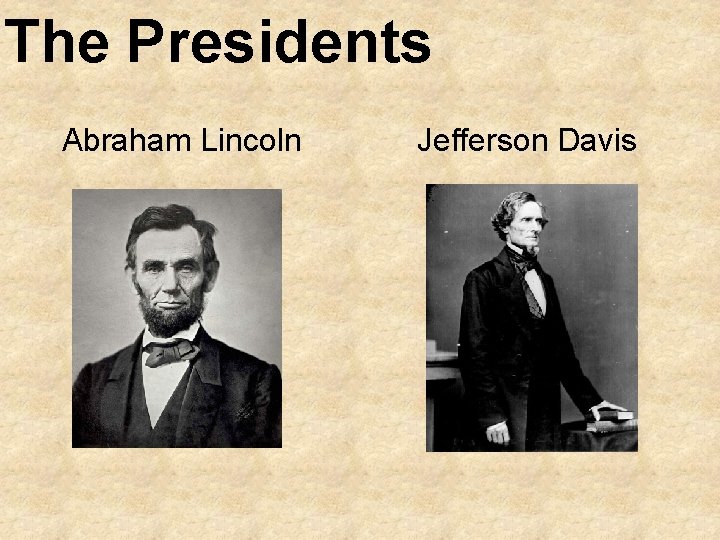
The Presidents Abraham Lincoln Jefferson Davis
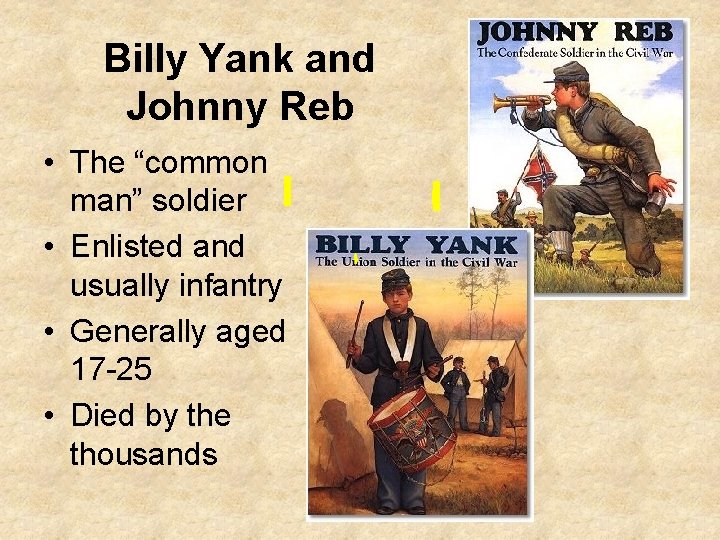
Billy Yank and Johnny Reb • The “common man” soldier • Enlisted and usually infantry • Generally aged 17 -25 • Died by the thousands
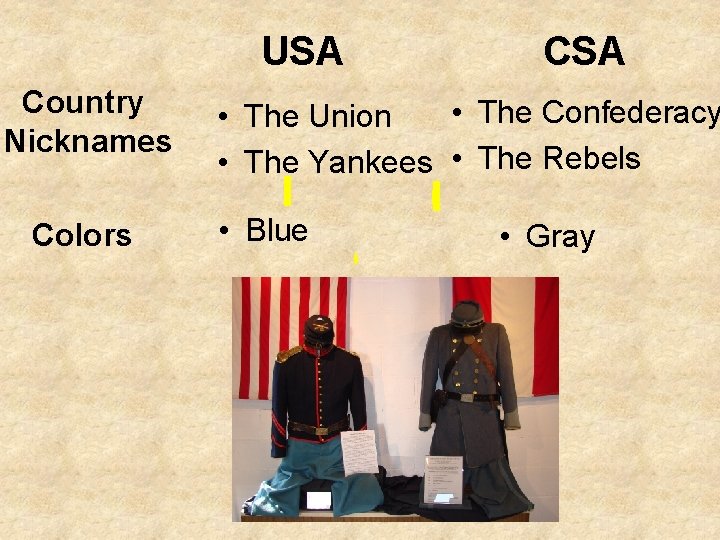
USA Country Nicknames Colors CSA • The Confederacy • The Union • The Yankees • The Rebels • Blue • Gray
The Union’s Strategy 1. Gain control of the Mississippi River and split the Confederacy in half 2. Blockade the South to keep it from sending cotton to Britain and France and cut off weapons and supplies. ANACONDA PLAN
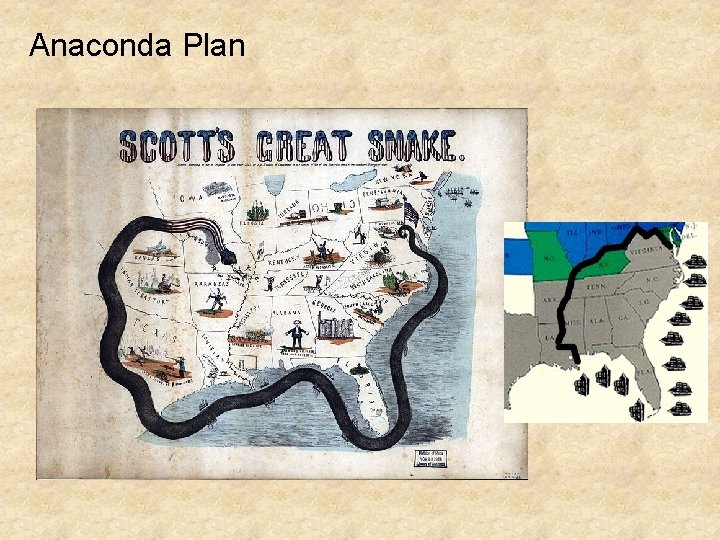
Anaconda Plan
The Confederacy's Strategy • Fight a “war of attrition”- win by not losing. • Turn back every Union advance until the British or French joined their side • Fight defensively • Make the people of the North weary of fighting • Force Lincoln to negotiate
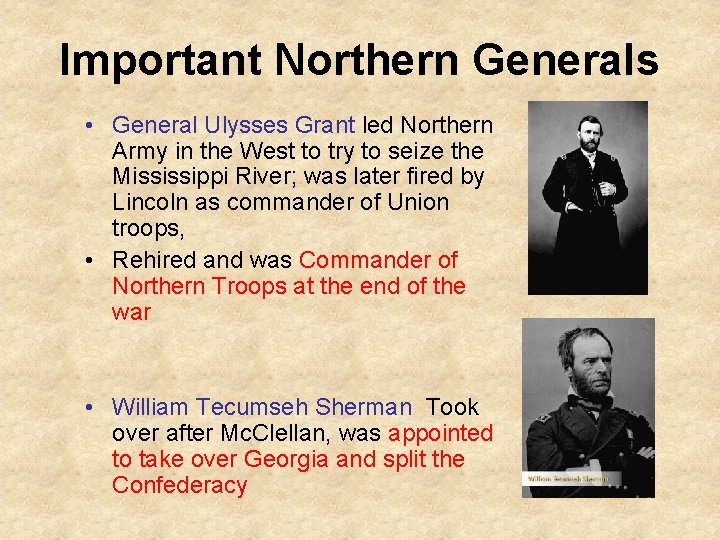
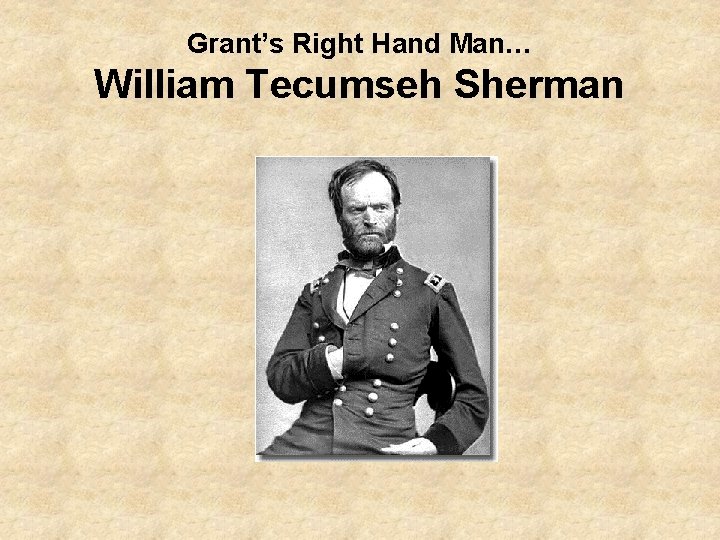
Important Northern Generals • General Ulysses Grant led Northern Army in the West to try to seize the Mississippi River; was later fired by Lincoln as commander of Union troops, • Rehired and was Commander of Northern Troops at the end of the war • William Tecumseh Sherman Took over after Mc. Clellan, was appointed to take over Georgia and split the Confederacy
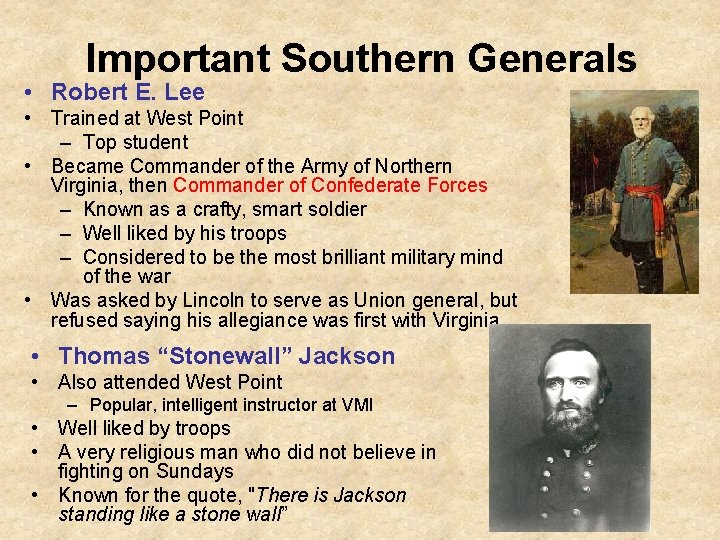
Important Southern Generals • Robert E. Lee • Trained at West Point – Top student • Became Commander of the Army of Northern Virginia, then Commander of Confederate Forces – Known as a crafty, smart soldier – Well liked by his troops – Considered to be the most brilliant military mind of the war • Was asked by Lincoln to serve as Union general, but refused saying his allegiance was first with Virginia • Thomas “Stonewall” Jackson • Also attended West Point – Popular, intelligent instructor at VMI • Well liked by troops • A very religious man who did not believe in fighting on Sundays • Known for the quote, "There is Jackson standing like a stone wall”
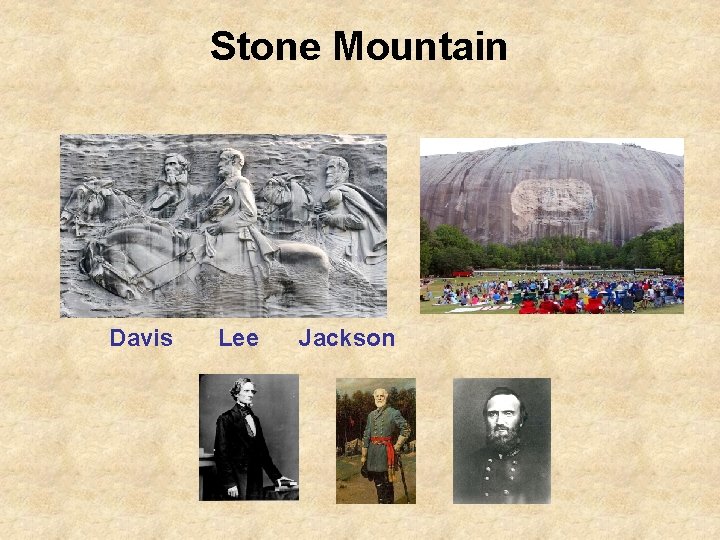
Stone Mountain Davis Lee Jackson
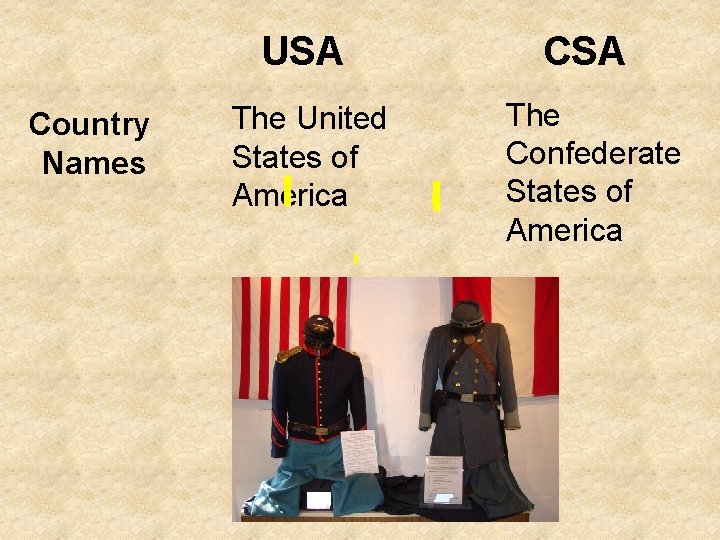
Country Names USA CSA The United States of America The Confederate States of America
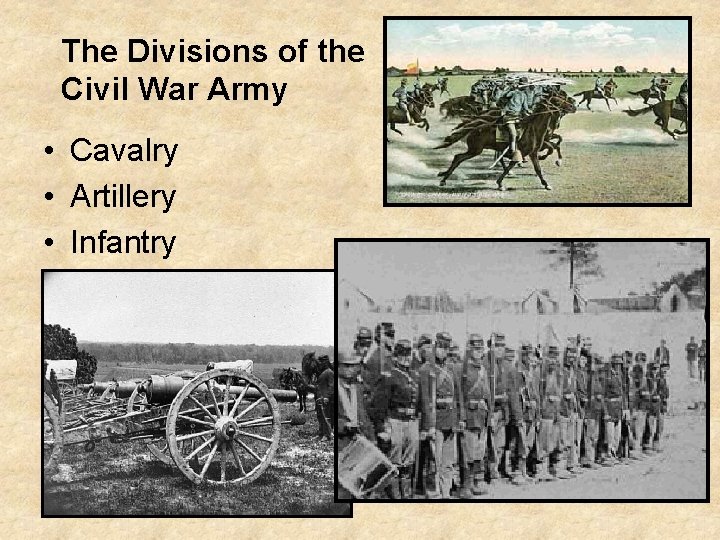
The Divisions of the Civil War Army • Cavalry • Artillery • Infantry
The Draft v The North v 1863, required military service for all white males 20 to 45. v. Could pay $300 or hire a substitute to serve v The South v. Required 3 -year military service for all white men 18 -35 vlater moved to age 50 v. Large slave owners excused; wealthy hired substitutes
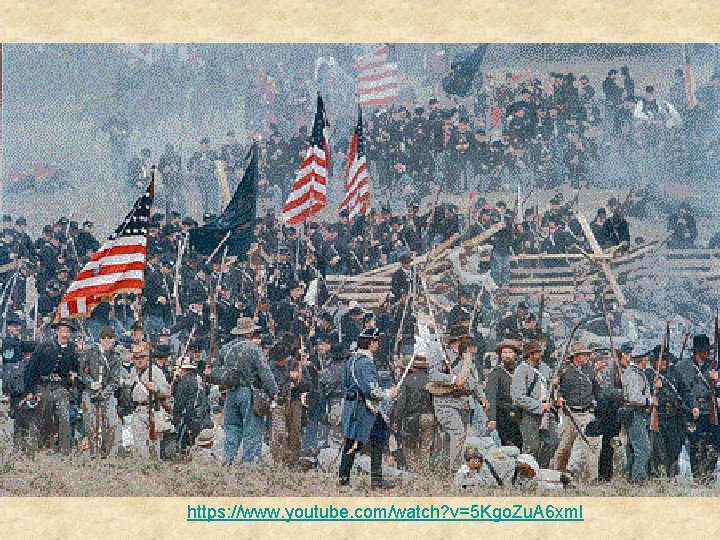
https: //www. youtube. com/watch? v=5 Kgo. Zu. A 6 xm. I
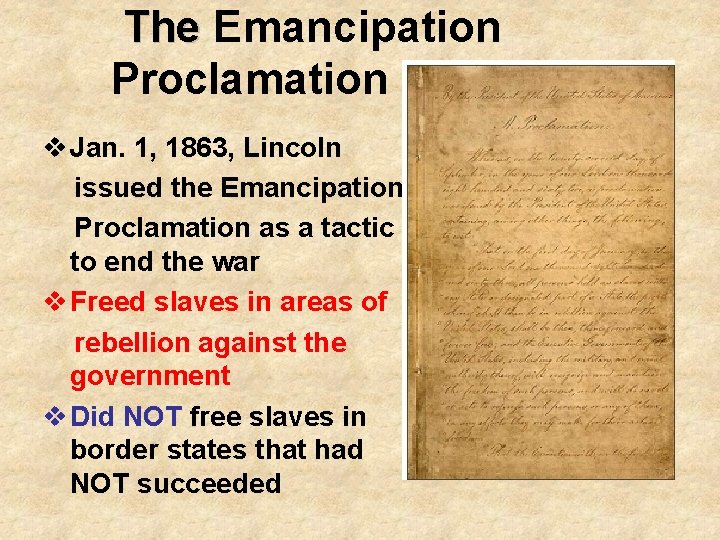
The Emancipation Proclamation v Jan. 1, 1863, Lincoln issued the Emancipation Proclamation as a tactic to end the war v Freed slaves in areas of rebellion against the government v Did NOT free slaves in border states that had NOT succeeded
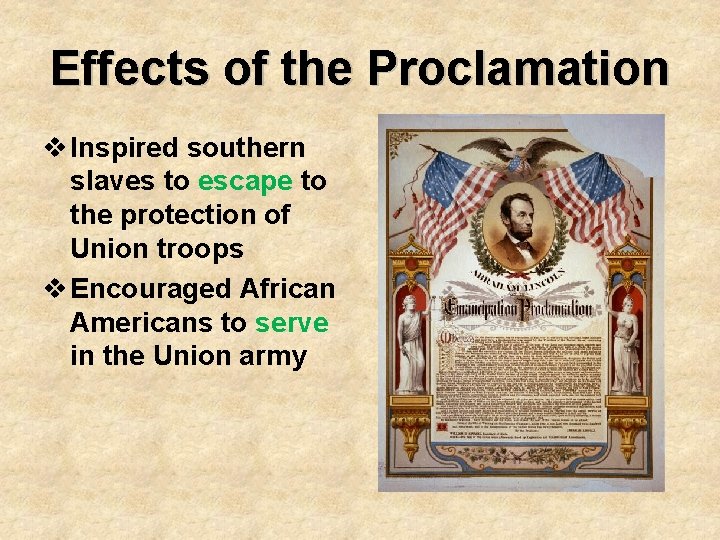
Effects of the Proclamation v Inspired southern slaves to escape to the protection of Union troops v Encouraged African Americans to serve in the Union army
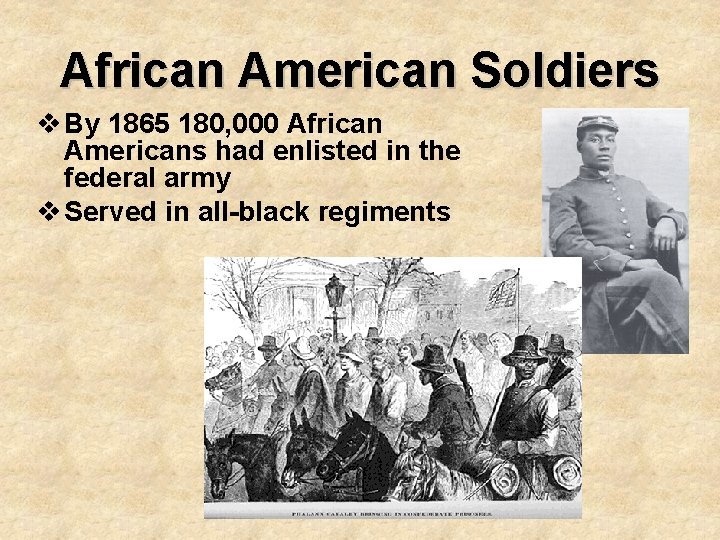
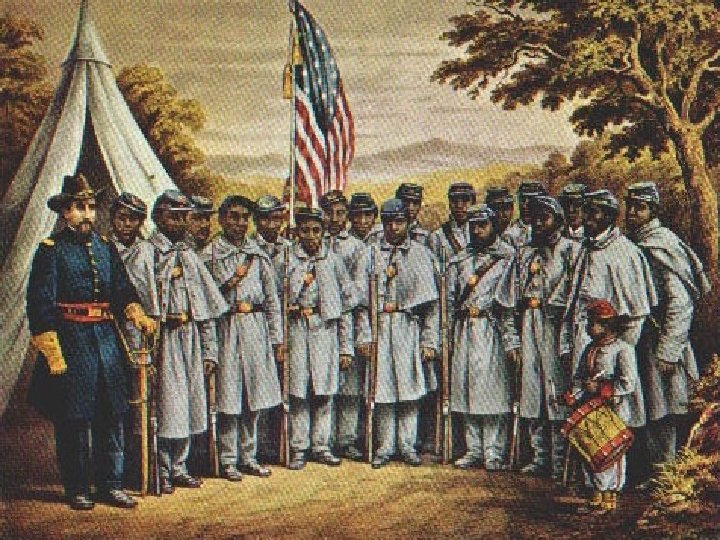
African American Soldiers v By 1865 180, 000 African Americans had enlisted in the federal army v Served in all-black regiments
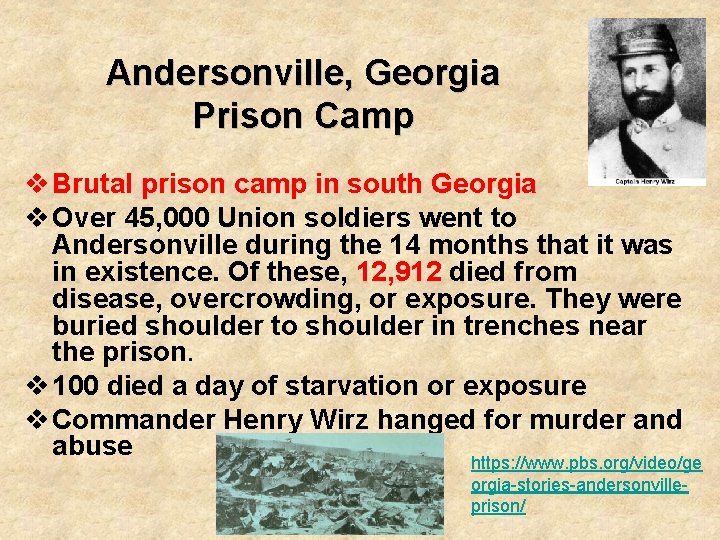
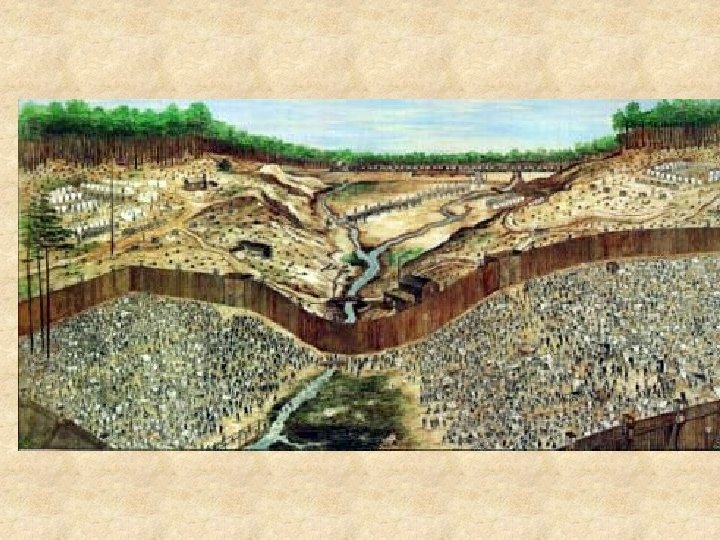
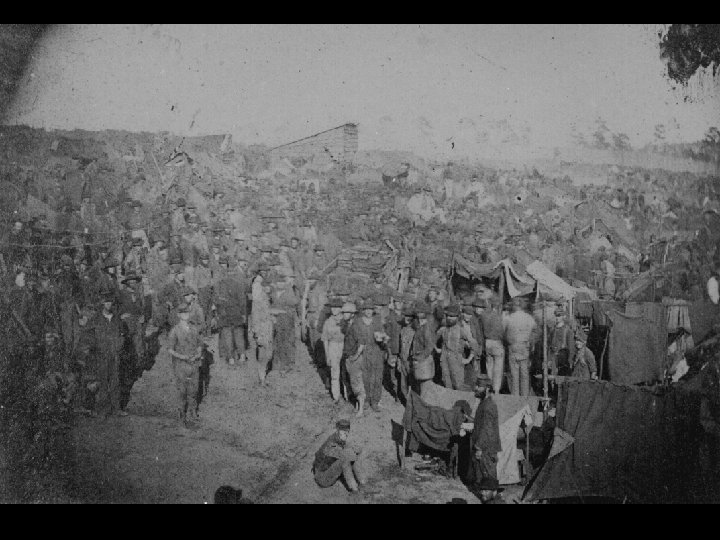
Andersonville, Georgia Prison Camp v Brutal prison camp in south Georgia v Over 45, 000 Union soldiers went to Andersonville during the 14 months that it was in existence. Of these, 12, 912 died from disease, overcrowding, or exposure. They were buried shoulder to shoulder in trenches near the prison. v 100 died a day of starvation or exposure v Commander Henry Wirz hanged for murder and abuse https: //www. pbs. org/video/ge orgia-stories-andersonvilleprison/
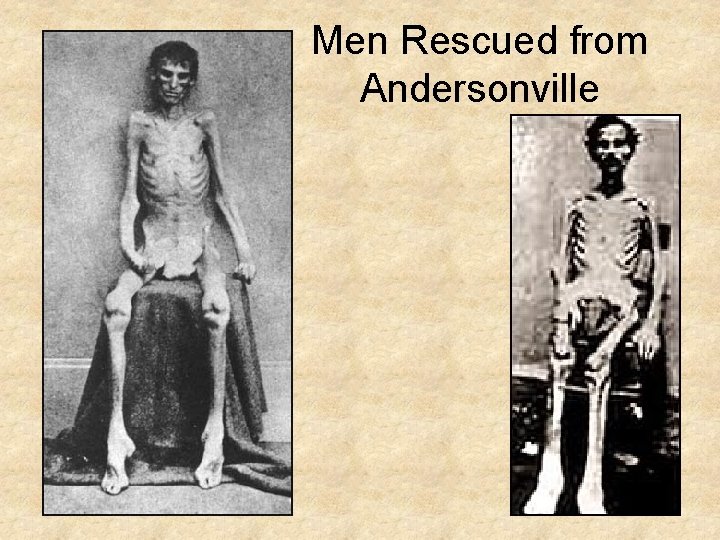
Men Rescued from Andersonville
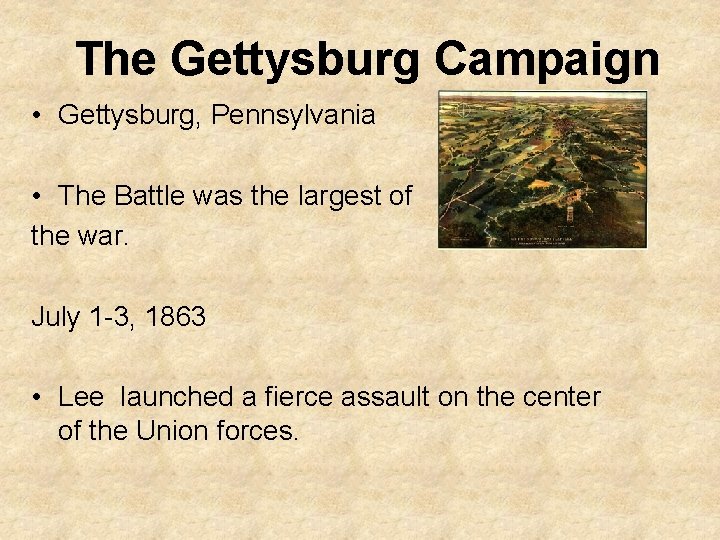
The Gettysburg Campaign • Gettysburg, Pennsylvania • The Battle was the largest of the war. July 1 -3, 1863 • Lee launched a fierce assault on the center of the Union forces.
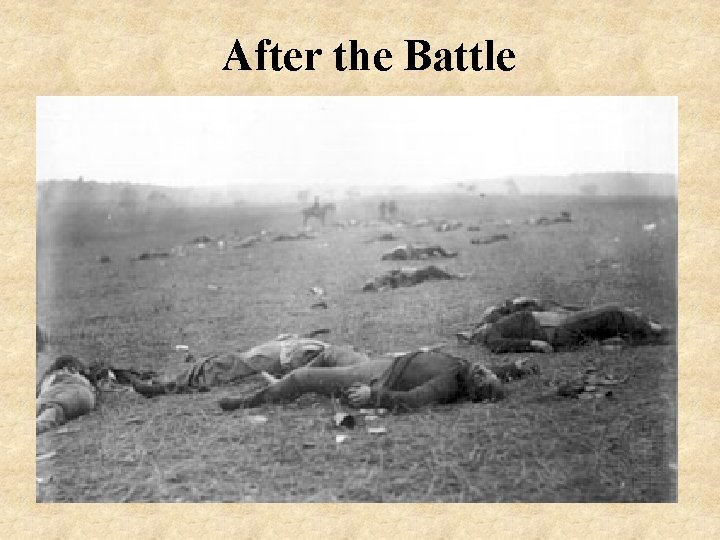
After the Battle
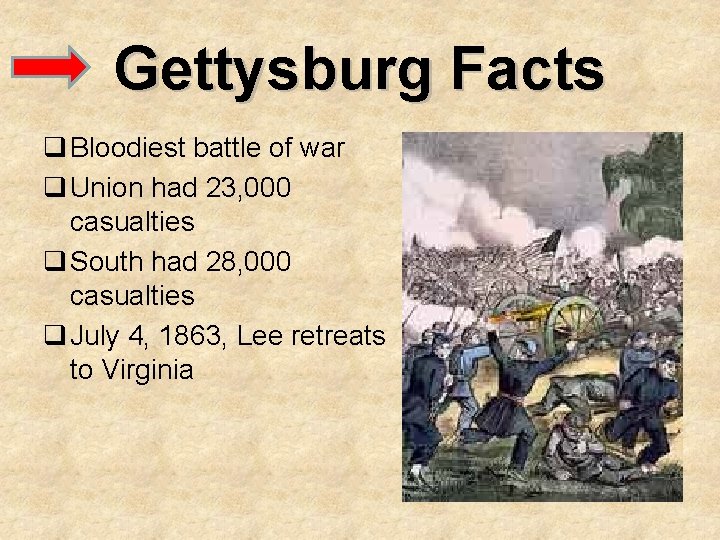
Gettysburg Facts q Bloodiest battle of war q Union had 23, 000 casualties q South had 28, 000 casualties q July 4, 1863, Lee retreats to Virginia
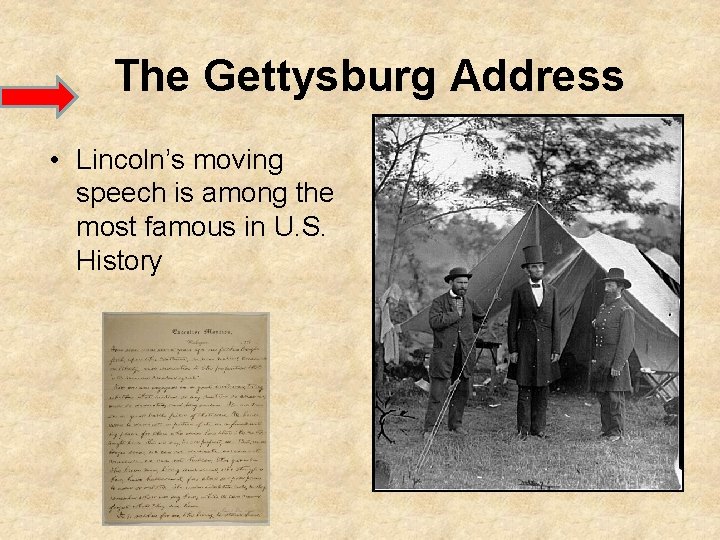
The Gettysburg Address • Lincoln’s moving speech is among the most famous in U. S. History
Four score and seven years ago our fathers brought forth on this continent a new nation, conceived in liberty, and dedicated to the proposition that all men are created equal. Now we are engaged in a great civil war, testing whether that nation, or any nation so conceived and so dedicated, can long endure. We are met on a great battlefield of that war. We have come to dedicate a portion of that field, as a final resting place for those who here gave their lives that nation might live. It is altogether fitting and proper that we should do this. But, in a larger sense, we can not dedicate, we can not consecrate, we can not hallow this ground. The brave men, living and dead, who struggled here, have consecrated it, far above our poor power to add or detract. The world will little note, nor long remember what we say here, but it can never forget what they did here. It is for us the living, rather, to be dedicated here to the unfinished work which they who fought here have thus far so nobly advanced. It is rather for us to be here dedicated to the great task remaining before us—that from these honored dead we take increased devotion to that cause for which they gave the last full measure of devotion—that we here highly resolve that these dead shall not have died in vain—that this nation, under God, shall have a new birth of freedom—and that government of the people, by the people, for the people, shall not perish from the earth.
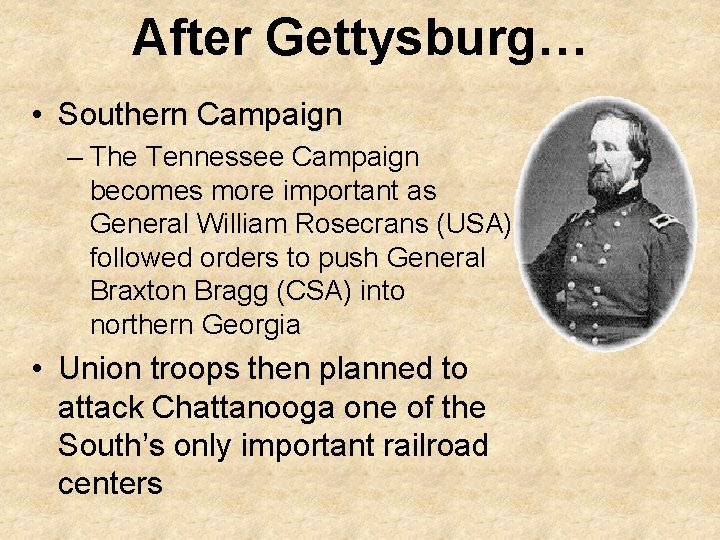
After Gettysburg… • Southern Campaign – The Tennessee Campaign becomes more important as General William Rosecrans (USA) followed orders to push General Braxton Bragg (CSA) into northern Georgia • Union troops then planned to attack Chattanooga one of the South’s only important railroad centers
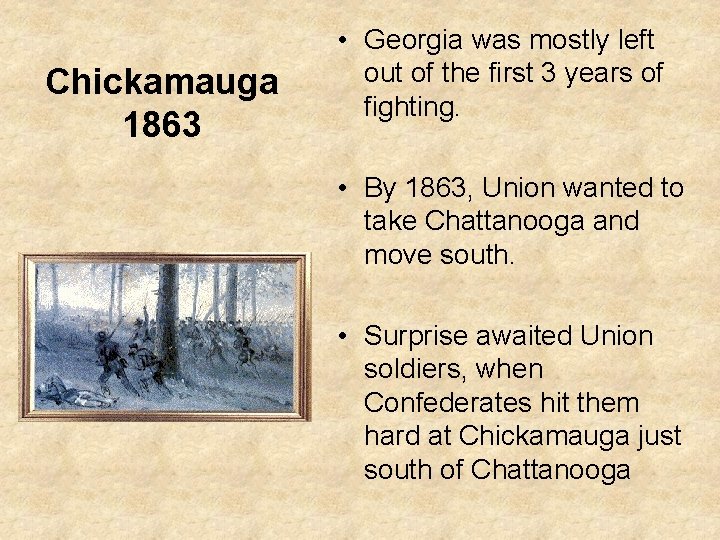
Chickamauga 1863 • Georgia was mostly left out of the first 3 years of fighting. • By 1863, Union wanted to take Chattanooga and move south. • Surprise awaited Union soldiers, when Confederates hit them hard at Chickamauga just south of Chattanooga
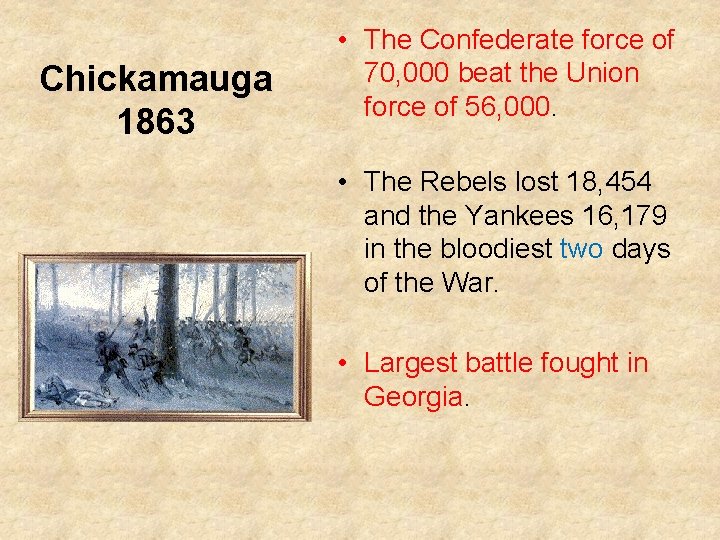
Chickamauga 1863 • The Confederate force of 70, 000 beat the Union force of 56, 000. • The Rebels lost 18, 454 and the Yankees 16, 179 in the bloodiest two days of the War. • Largest battle fought in Georgia.
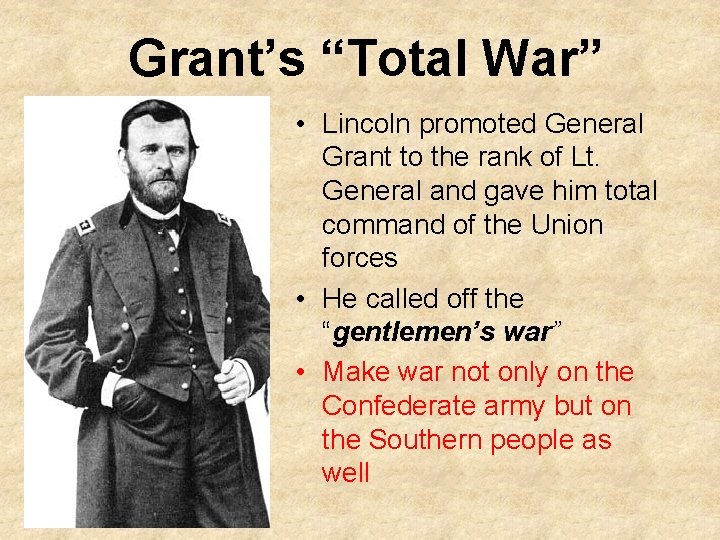
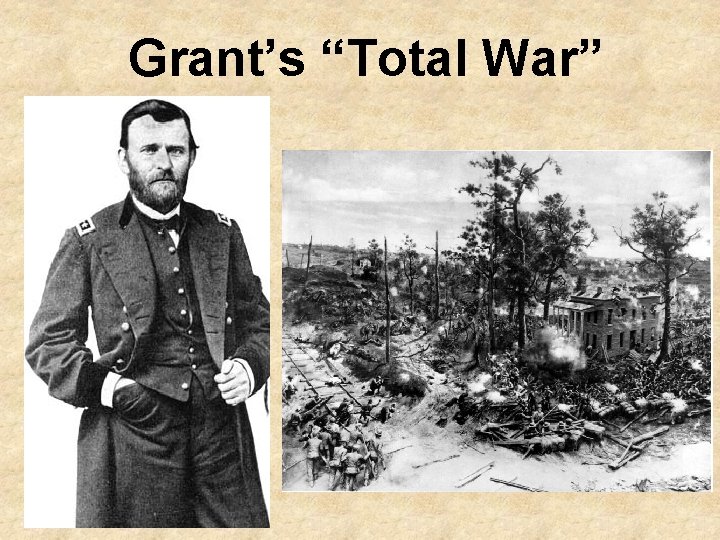
Grant’s “Total War” • Lincoln promoted General Grant to the rank of Lt. General and gave him total command of the Union forces • He called off the “gentlemen’s war” • Make war not only on the Confederate army but on the Southern people as well
Grant’s “Total War”
Grant’s Right Hand Man… William Tecumseh Sherman
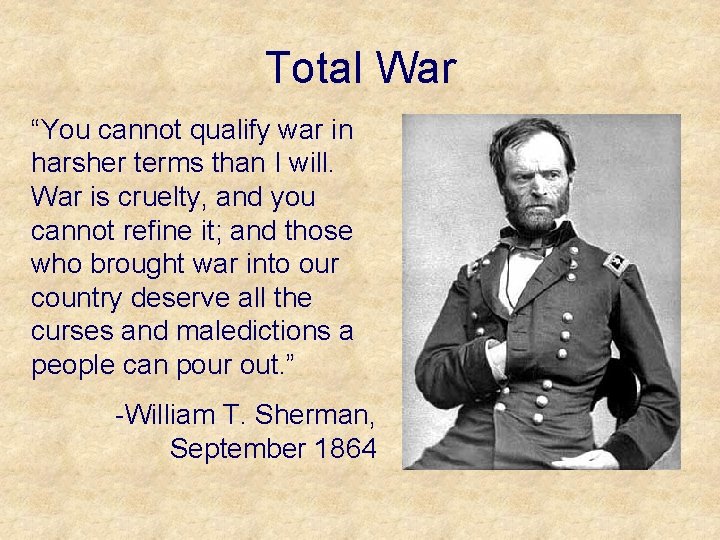
Total War “You cannot qualify war in harsher terms than I will. War is cruelty, and you cannot refine it; and those who brought war into our country deserve all the curses and maledictions a people can pour out. ” -William T. Sherman, September 1864
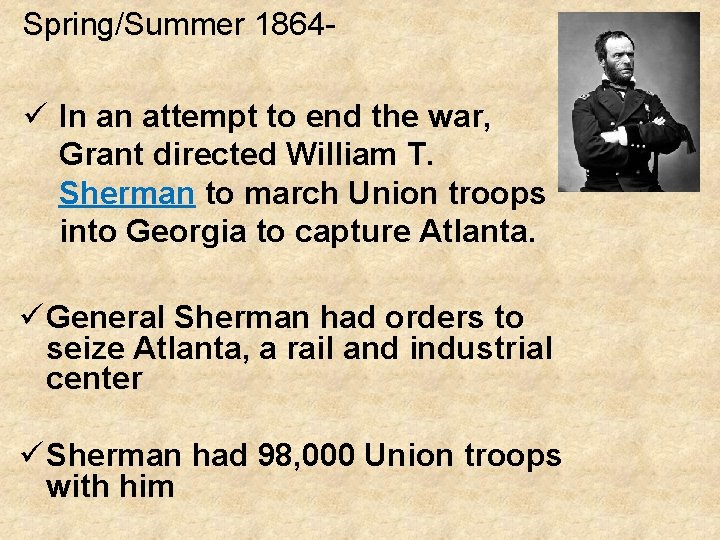
Spring/Summer 1864 - ü In an attempt to end the war, Grant directed William T. Sherman to march Union troops into Georgia to capture Atlanta. ü General Sherman had orders to seize Atlanta, a rail and industrial center ü Sherman had 98, 000 Union troops with him
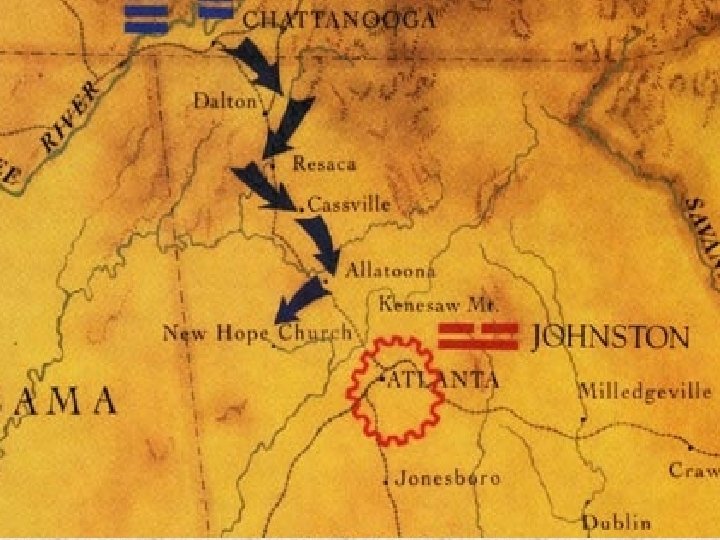
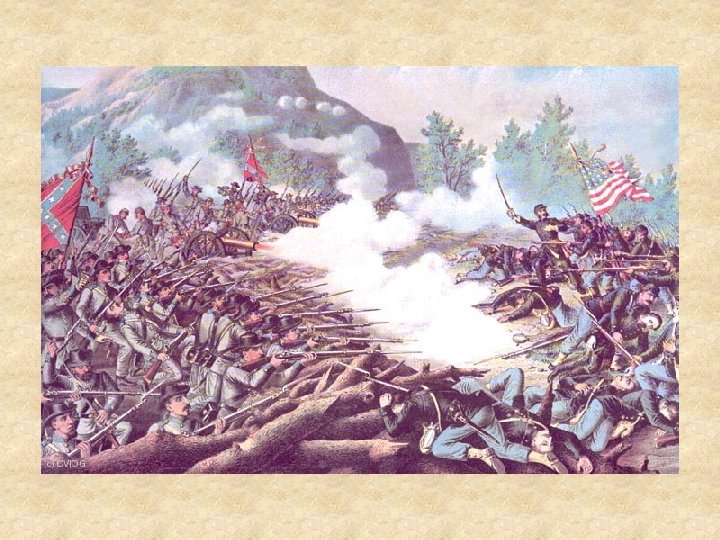
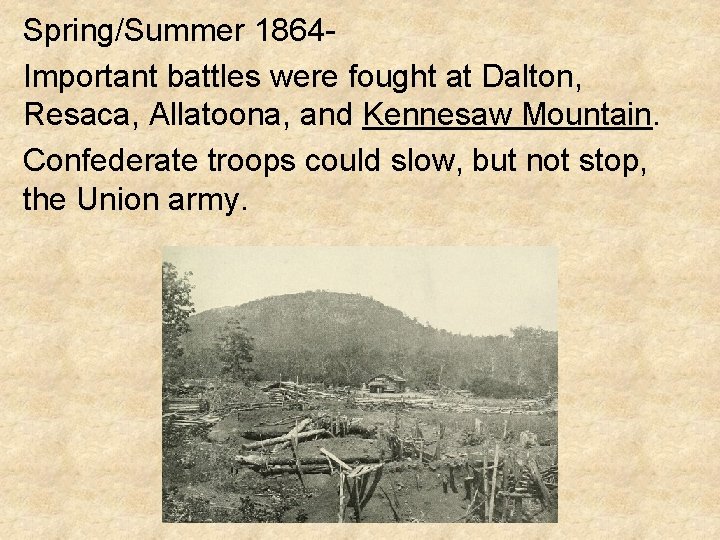
Spring/Summer 1864 Important battles were fought at Dalton, Resaca, Allatoona, and Kennesaw Mountain. Confederate troops could slow, but not stop, the Union army.
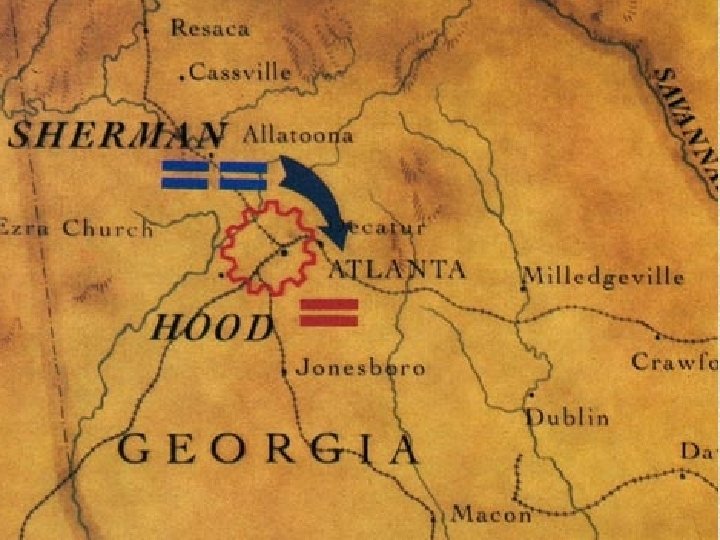
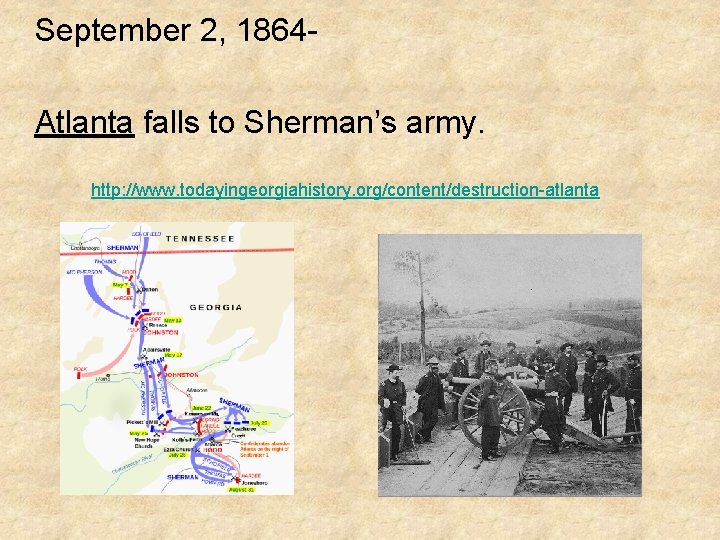
September 2, 1864 Atlanta falls to Sherman’s army. http: //www. todayingeorgiahistory. org/content/destruction-atlanta
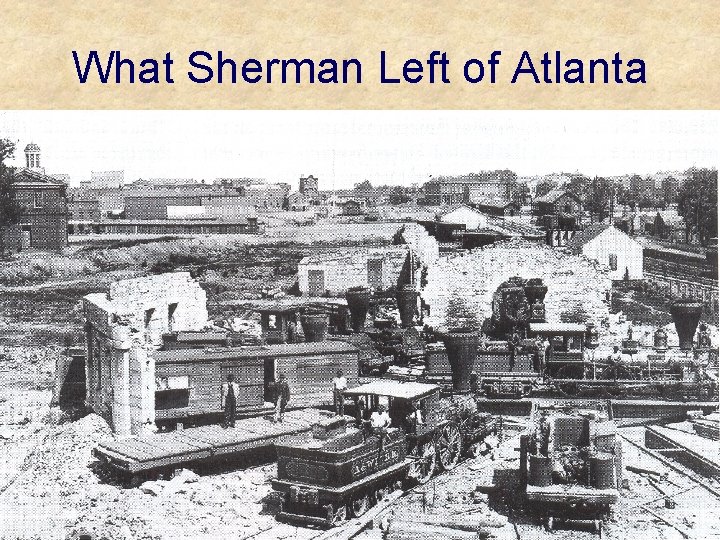
What Sherman Left of Atlanta
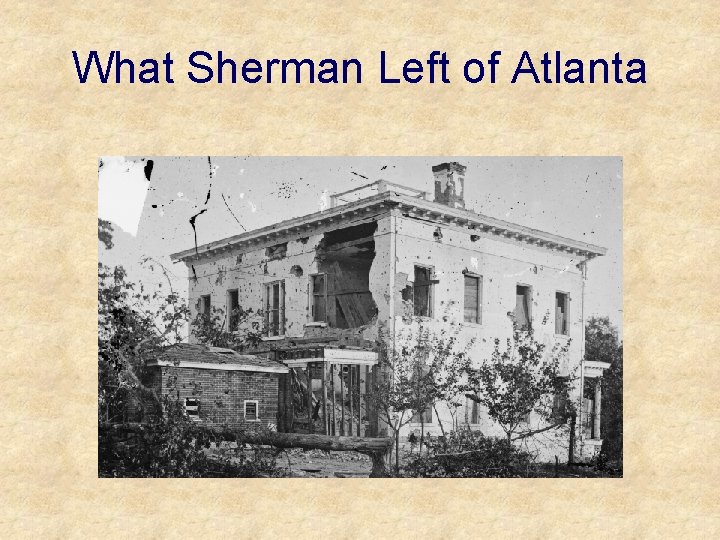
What Sherman Left of Atlanta
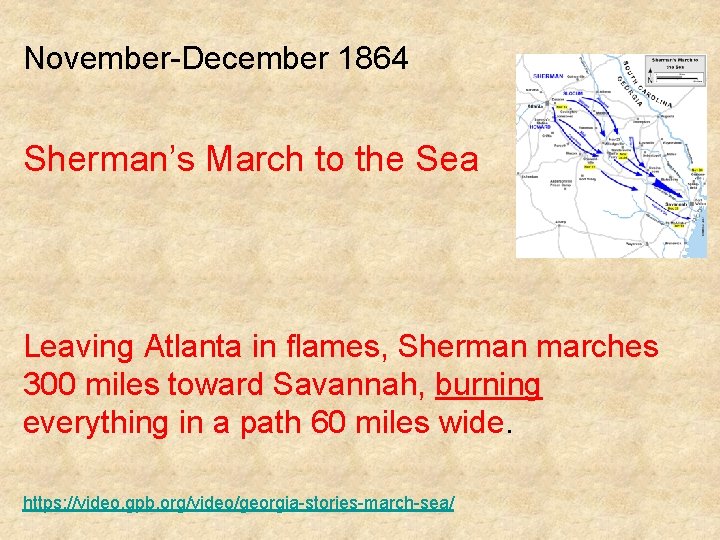
November-December 1864 Sherman’s March to the Sea Leaving Atlanta in flames, Sherman marches 300 miles toward Savannah, burning everything in a path 60 miles wide. https: //video. gpb. org/video/georgia-stories-march-sea/
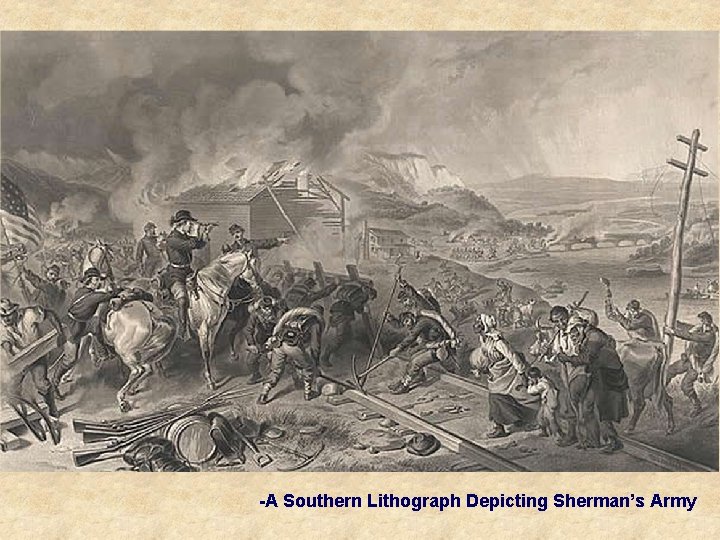
-A Southern Lithograph Depicting Sherman’s Army
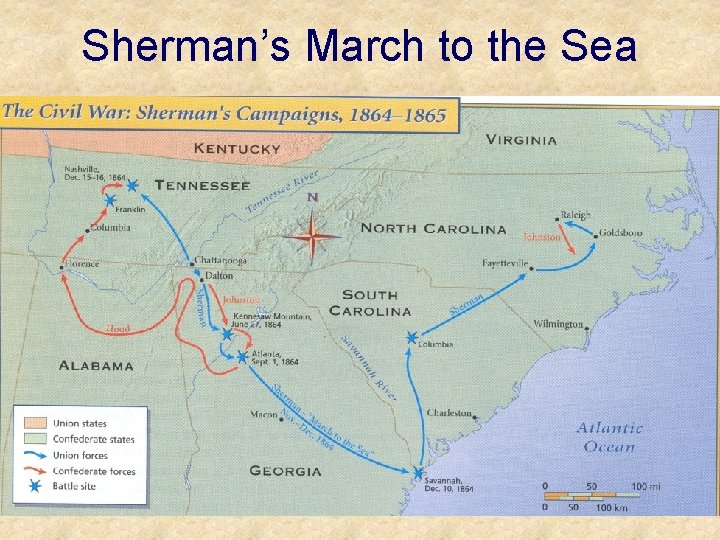
Sherman’s March to the Sea
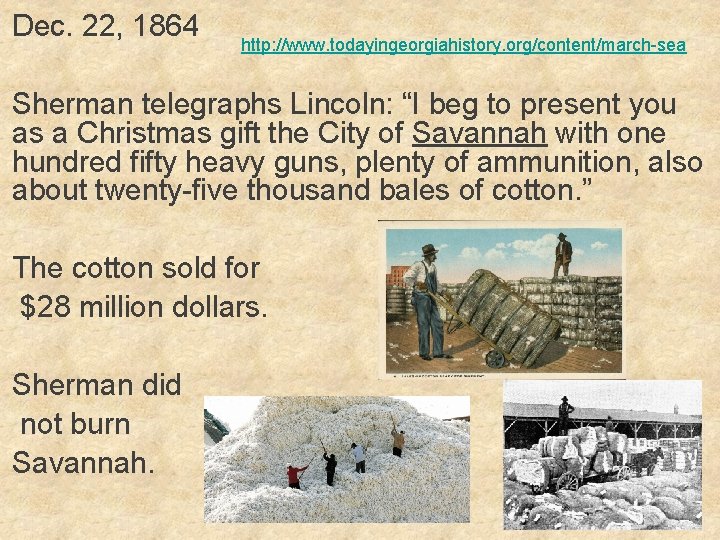
Dec. 22, 1864 http: //www. todayingeorgiahistory. org/content/march-sea Sherman telegraphs Lincoln: “I beg to present you as a Christmas gift the City of Savannah with one hundred fifty heavy guns, plenty of ammunition, also about twenty-five thousand bales of cotton. ” The cotton sold for $28 million dollars. Sherman did not burn Savannah.
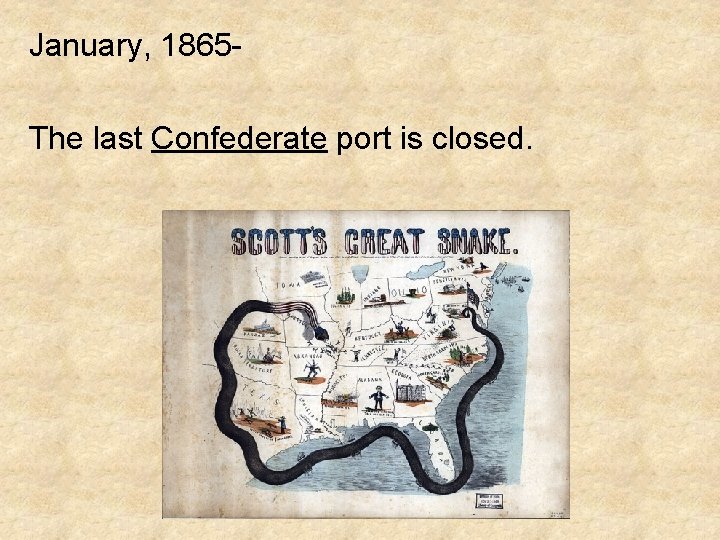
January, 1865 The last Confederate port is closed.
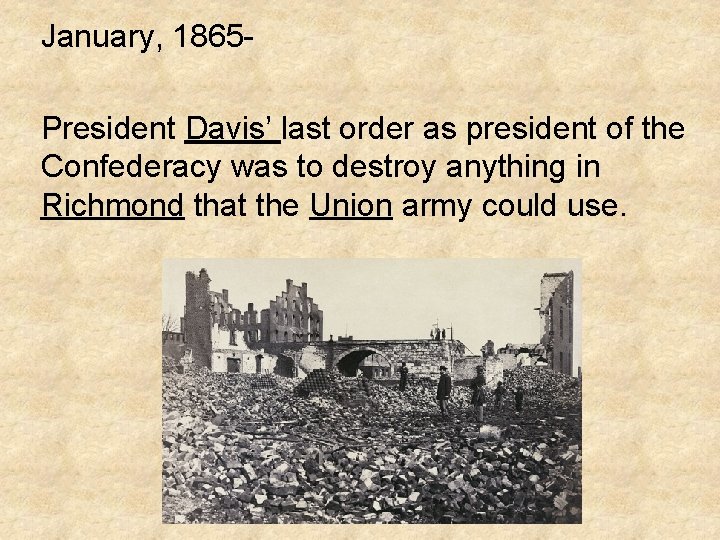
January, 1865 President Davis’ last order as president of the Confederacy was to destroy anything in Richmond that the Union army could use.
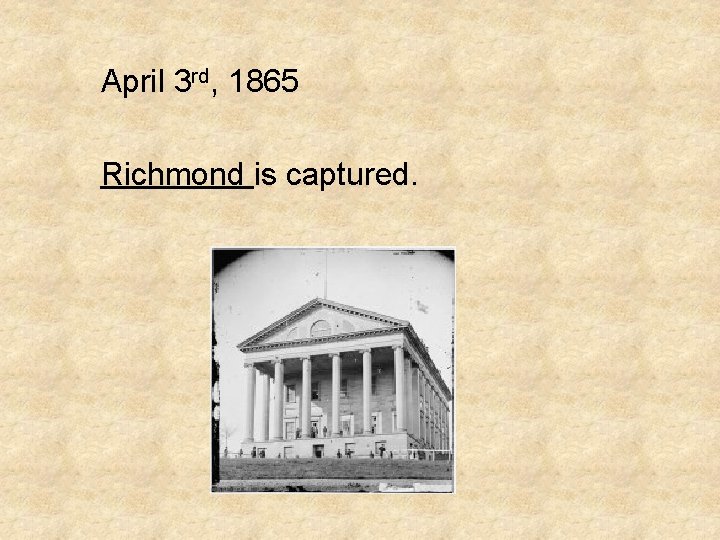
April 3 rd, 1865 Richmond is captured.
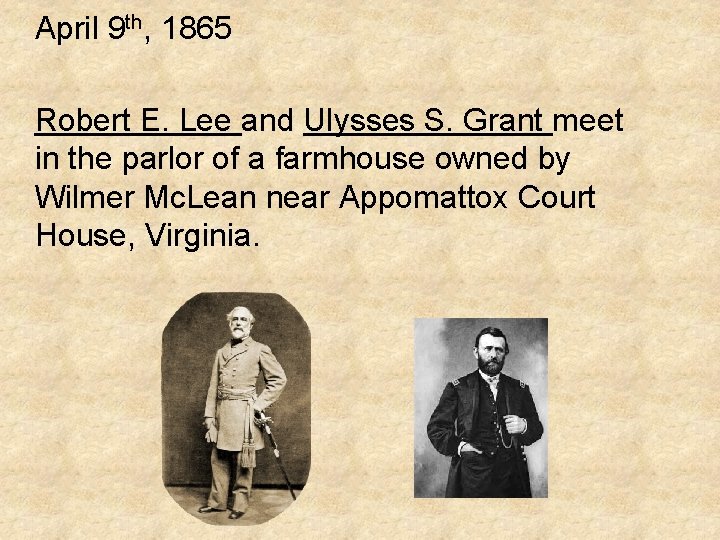
April 9 th, 1865 Robert E. Lee and Ulysses S. Grant meet in the parlor of a farmhouse owned by Wilmer Mc. Lean near Appomattox Court House, Virginia.
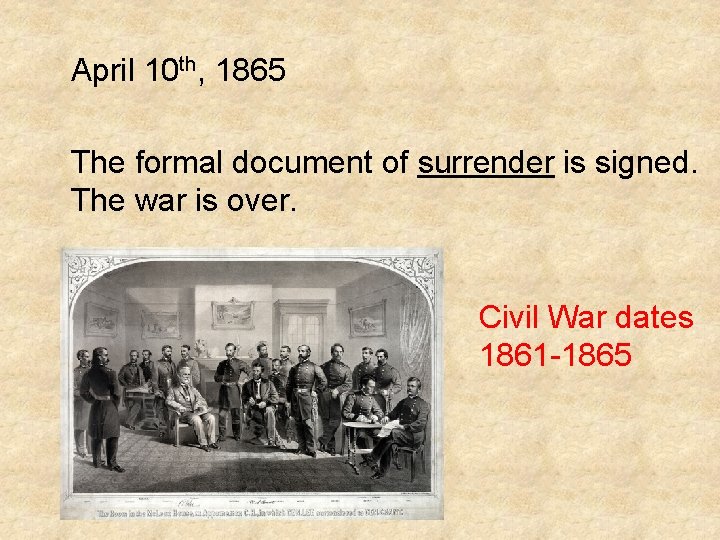
April 10 th, 1865 The formal document of surrender is signed. The war is over. Civil War dates 1861 -1865
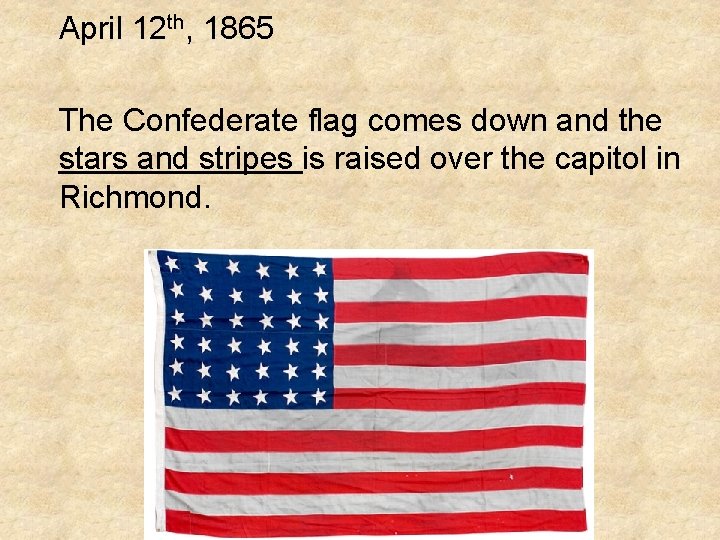
April 12 th, 1865 The Confederate flag comes down and the stars and stripes is raised over the capitol in Richmond.
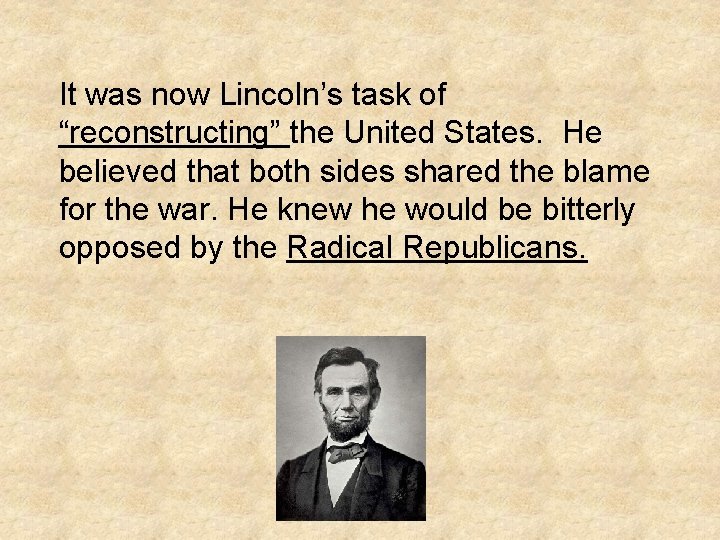
It was now Lincoln’s task of “reconstructing” the United States. He believed that both sides shared the blame for the war. He knew he would be bitterly opposed by the Radical Republicans.
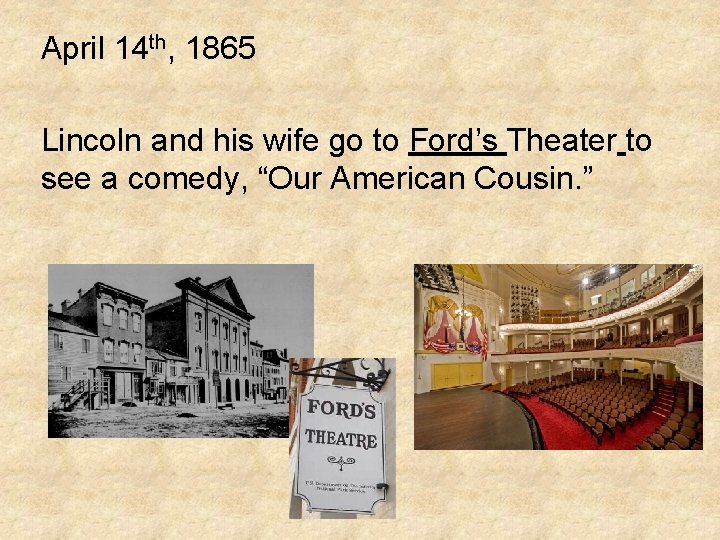
April 14 th, 1865 Lincoln and his wife go to Ford’s Theater to see a comedy, “Our American Cousin. ”
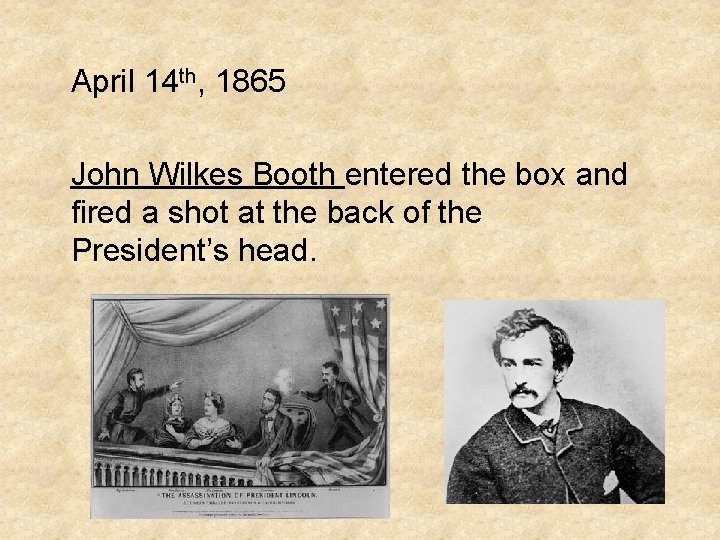
April 14 th, 1865 John Wilkes Booth entered the box and fired a shot at the back of the President’s head.
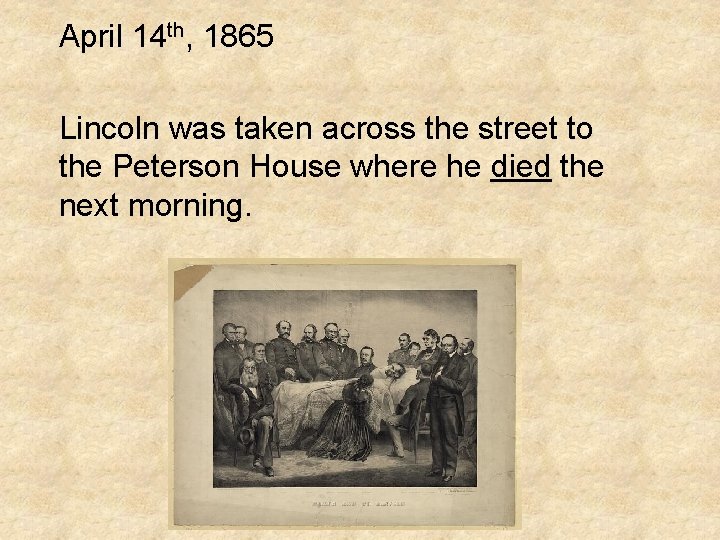
April 14 th, 1865 Lincoln was taken across the street to the Peterson House where he died the next morning.
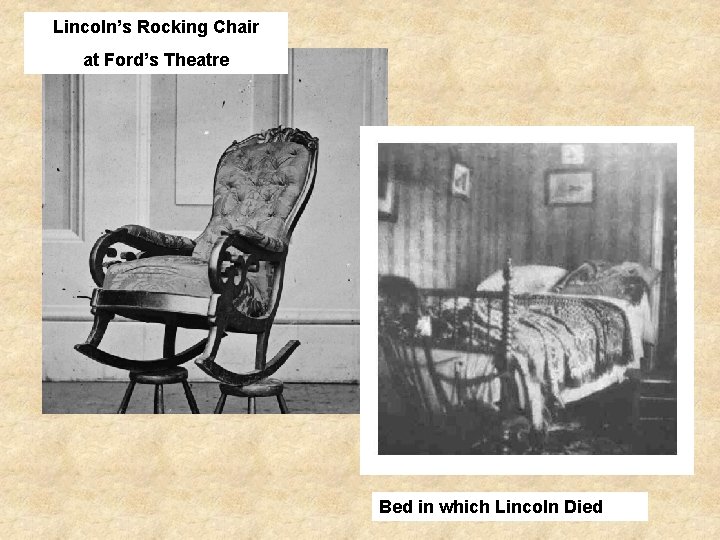
Lincoln’s Rocking Chair at Ford’s Theatre Bed in which Lincoln Died
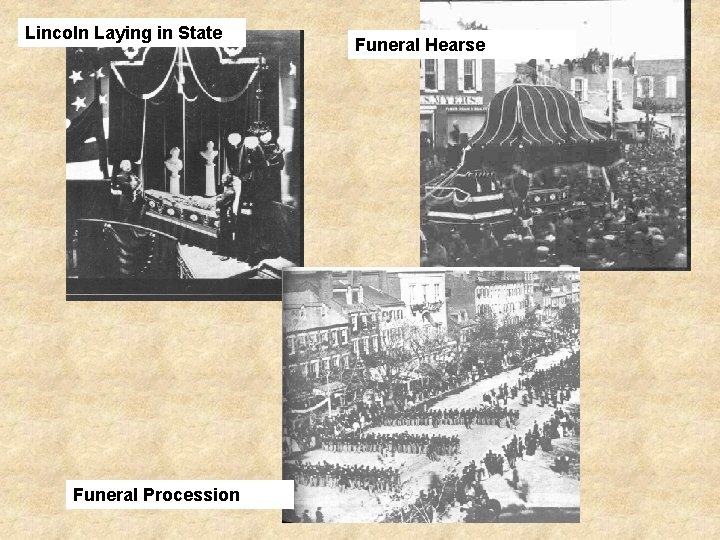
Lincoln Laying in State Funeral Procession Funeral Hearse
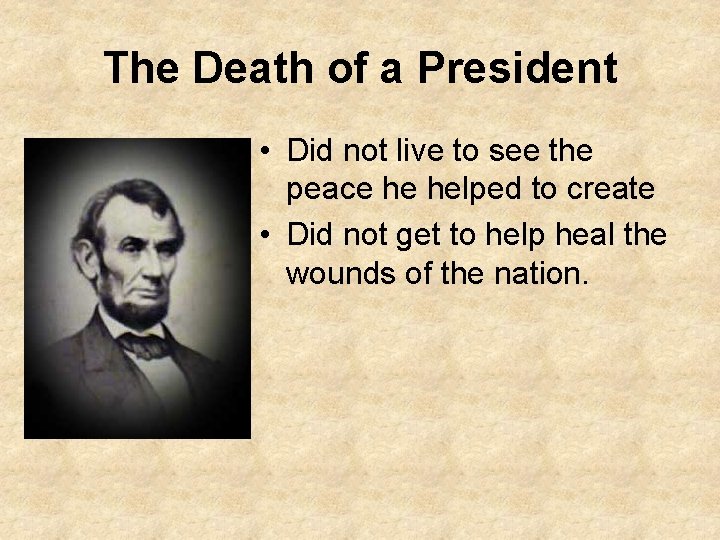
The Death of a President • Did not live to see the peace he helped to create • Did not get to help heal the wounds of the nation.
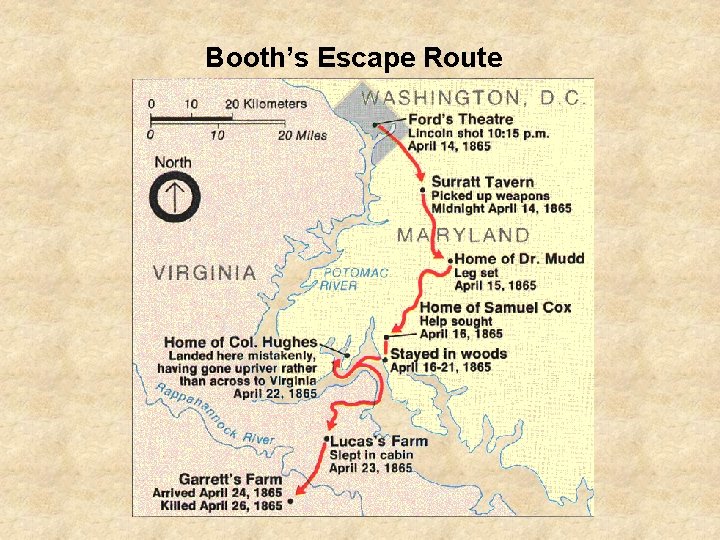
Booth’s Escape Route
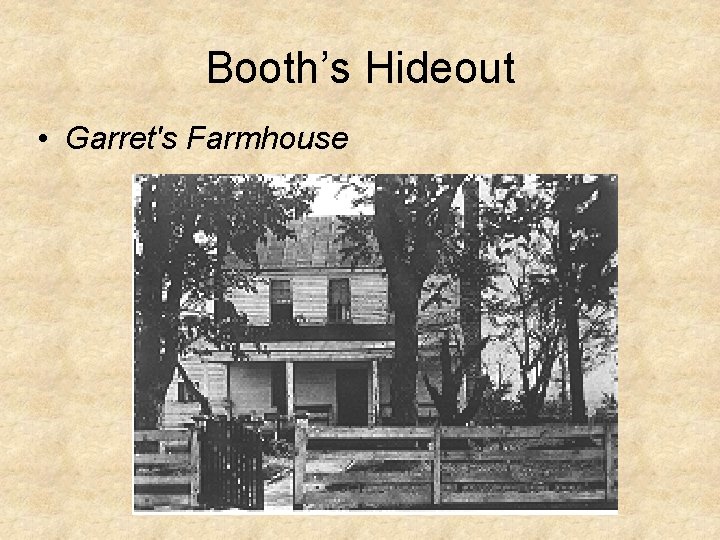
Booth’s Hideout • Garret's Farmhouse
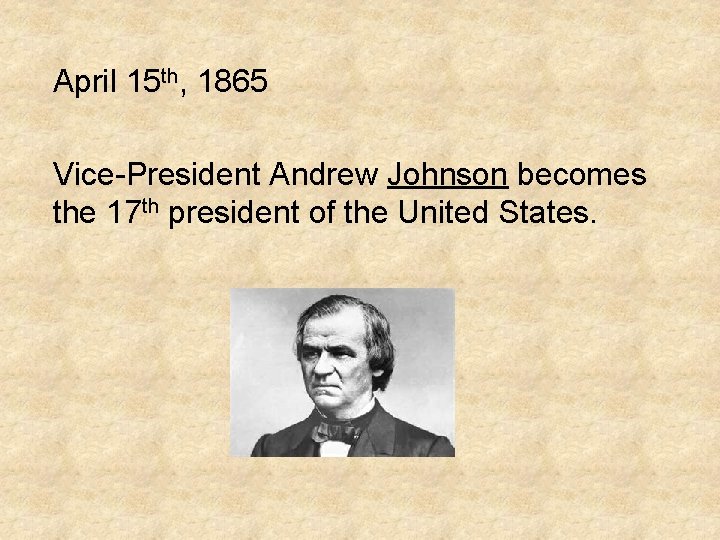
April 15 th, 1865 Vice-President Andrew Johnson becomes the 17 th president of the United States.
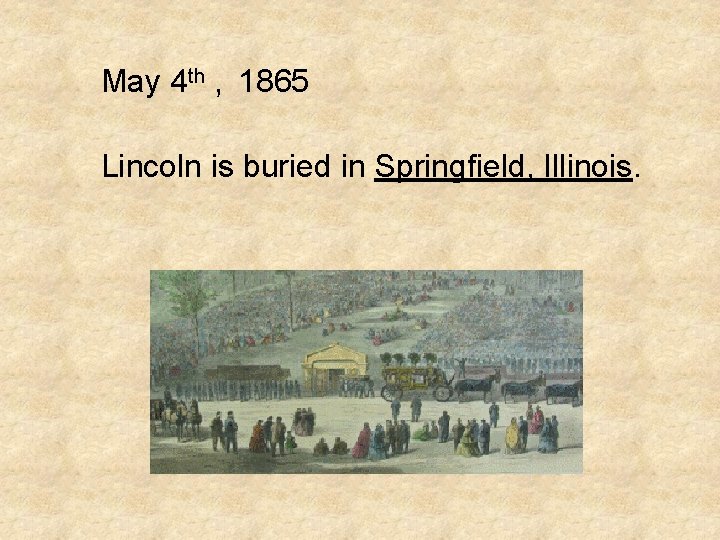
May 4 th , 1865 Lincoln is buried in Springfield, Illinois.
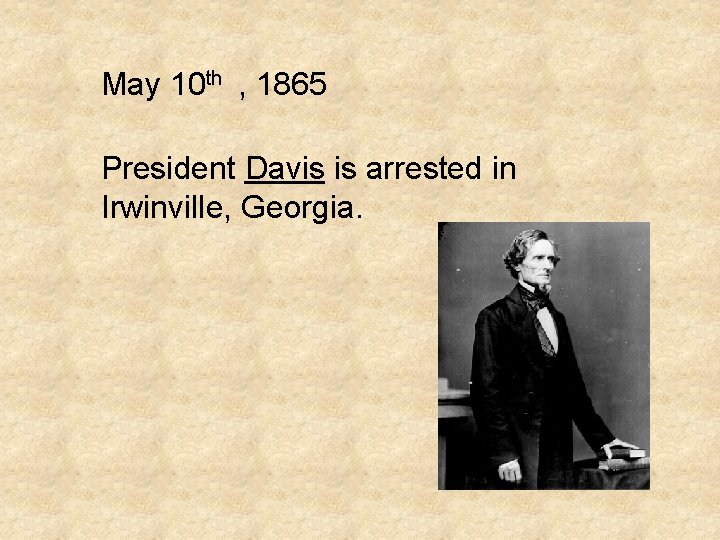
May 10 th , 1865 President Davis is arrested in Irwinville, Georgia.
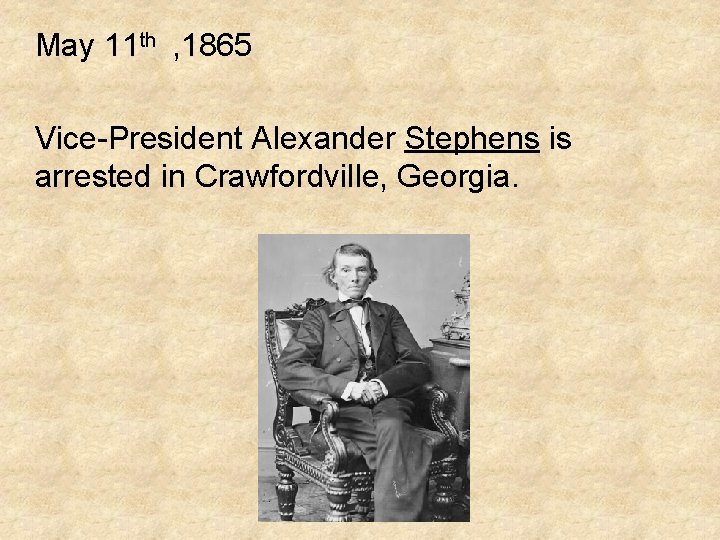
May 11 th , 1865 Vice-President Alexander Stephens is arrested in Crawfordville, Georgia.
- Slides: 66