
The Civil War 1861 1865 Part 2 The
- Slides: 20
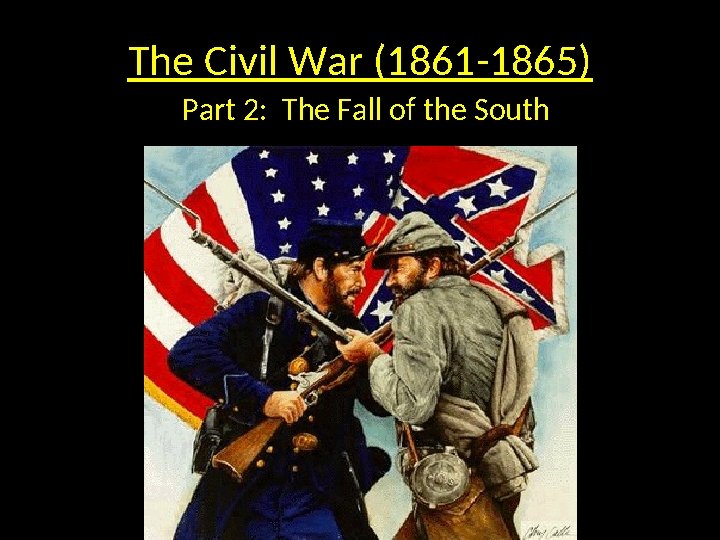
The Civil War (1861 -1865) Part 2: The Fall of the South
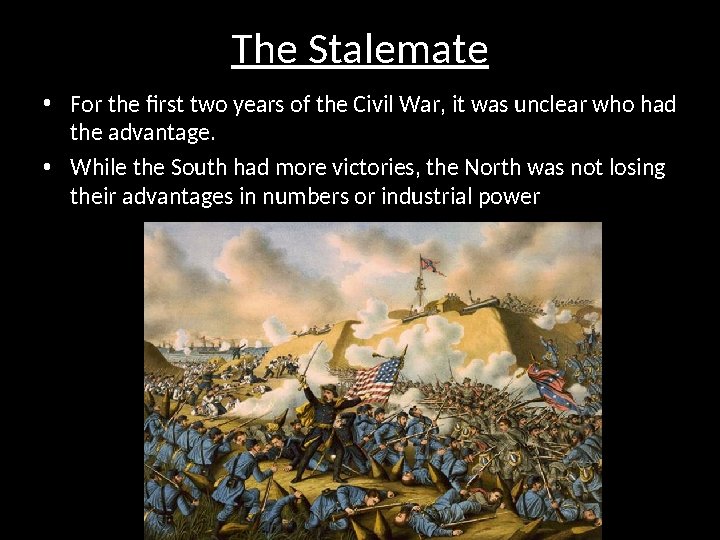
The Stalemate • For the first two years of the Civil War, it was unclear who had the advantage. • While the South had more victories, the North was not losing their advantages in numbers or industrial power
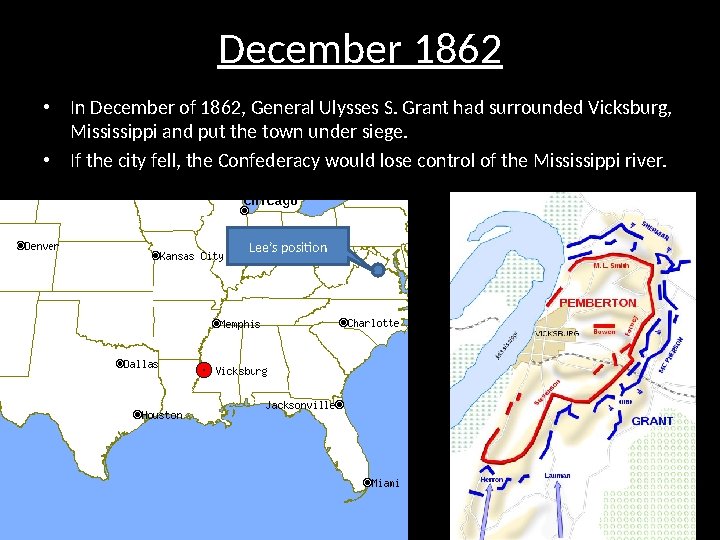
December 1862 • In December of 1862, General Ulysses S. Grant had surrounded Vicksburg, Mississippi and put the town under siege. • If the city fell, the Confederacy would lose control of the Mississippi river. Lee’s position
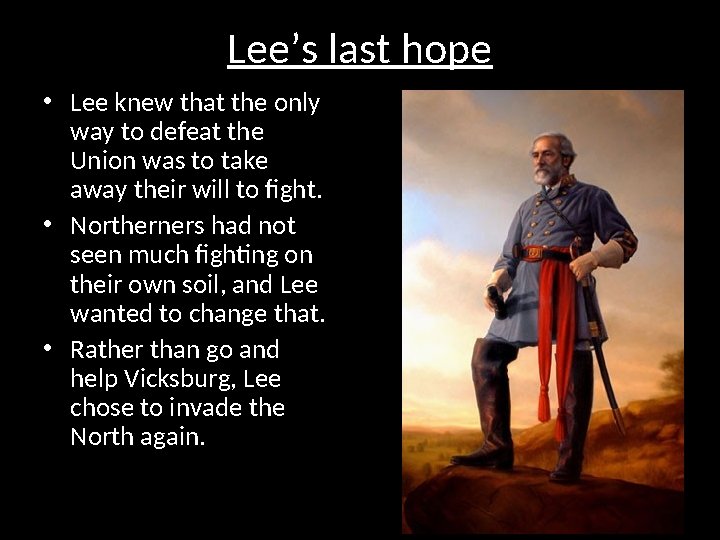
Lee’s last hope • Lee knew that the only way to defeat the Union was to take away their will to fight. • Northerners had not seen much fighting on their own soil, and Lee wanted to change that. • Rather than go and help Vicksburg, Lee chose to invade the North again.
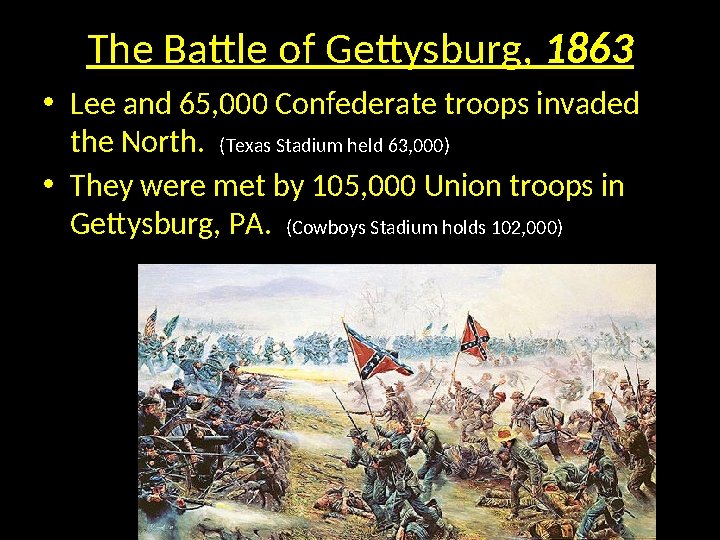
The Battle of Gettysburg, 1863 • Lee and 65, 000 Confederate troops invaded the North. (Texas Stadium held 63, 000) • They were met by 105, 000 Union troops in Gettysburg, PA. (Cowboys Stadium holds 102, 000)
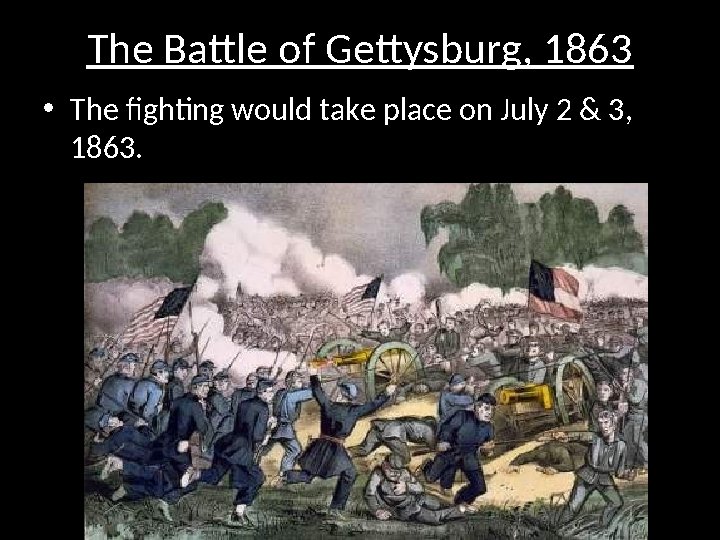
The Battle of Gettysburg, 1863 • The fighting would take place on July 2 & 3, 1863.
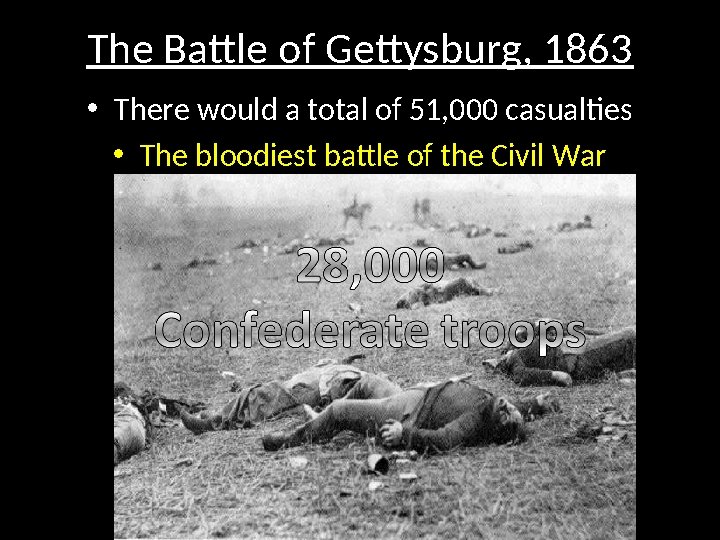
The Battle of Gettysburg, 1863 • There would a total of 51, 000 casualties • The bloodiest battle of the Civil War
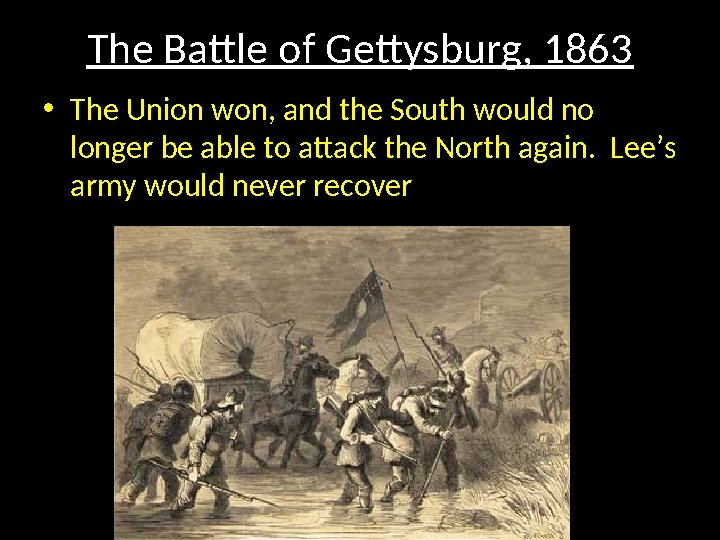
The Battle of Gettysburg, 1863 • The Union won, and the South would no longer be able to attack the North again. Lee’s army would never recover
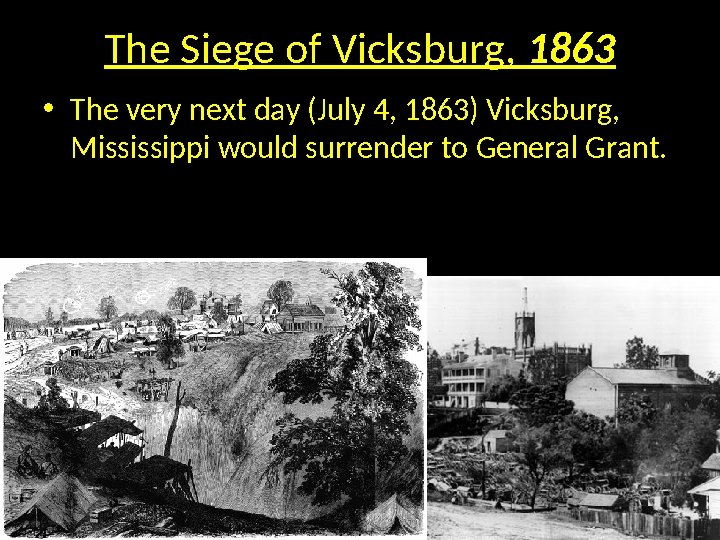
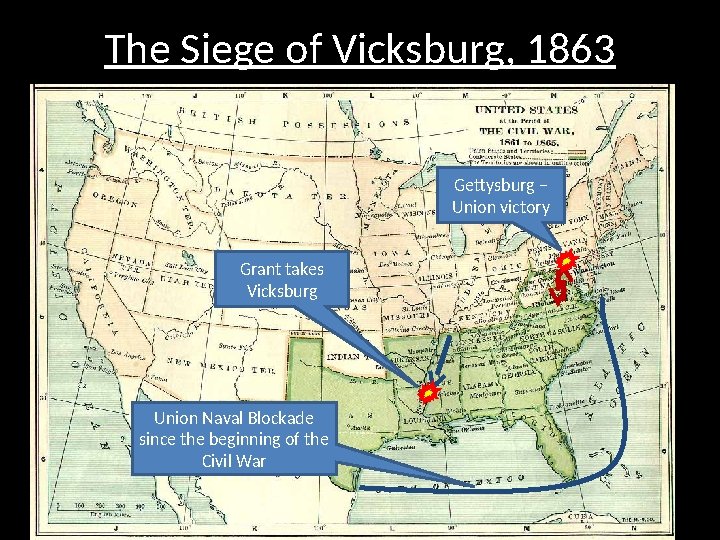
The Siege of Vicksburg, 1863 • The very next day (July 4, 1863) Vicksburg, Mississippi would surrender to General Grant.
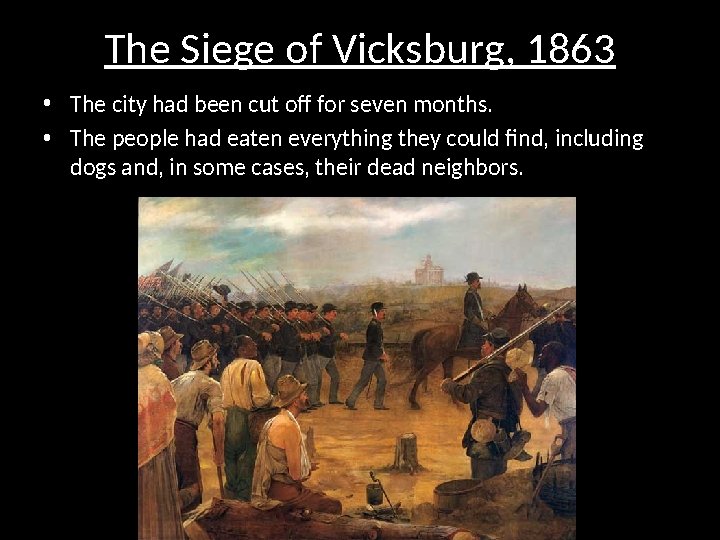
The Siege of Vicksburg, 1863 • The city had been cut off for seven months. • The people had eaten everything they could find, including dogs and, in some cases, their dead neighbors.
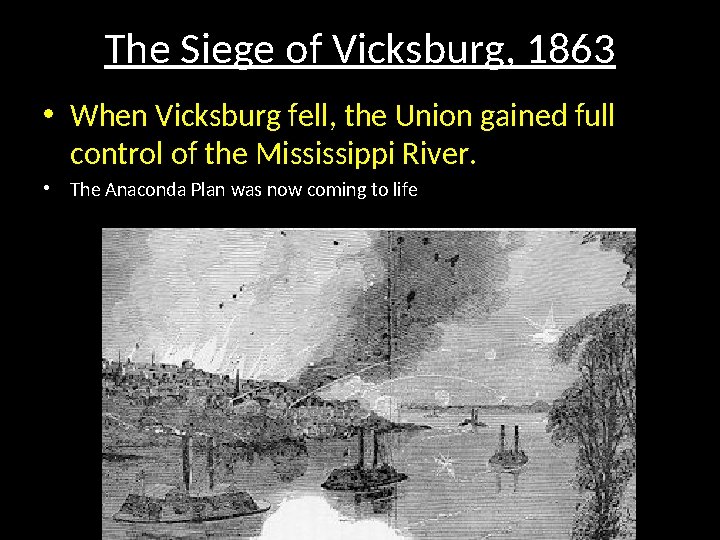
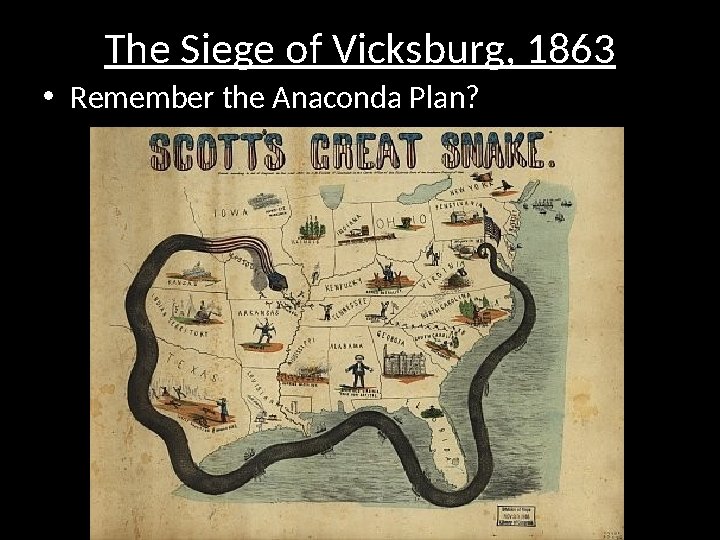
The Siege of Vicksburg, 1863 • When Vicksburg fell, the Union gained full control of the Mississippi River. • The Anaconda Plan was now coming to life
The Siege of Vicksburg, 1863 • Remember the Anaconda Plan?
The Siege of Vicksburg, 1863 Gettysburg – Union victory Grant takes Vicksburg Union Naval Blockade since the beginning of the Civil War
Turning Points of the Civil War • Gettysburg and Vicksburg would be the turning points of the Civil War. • Became clear to all involved that the North would win eventually.
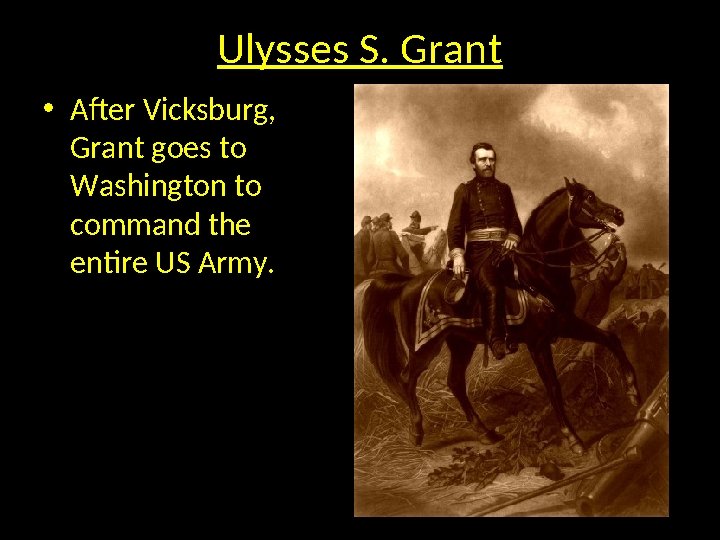
Ulysses S. Grant • After Vicksburg, Grant goes to Washington to command the entire US Army.
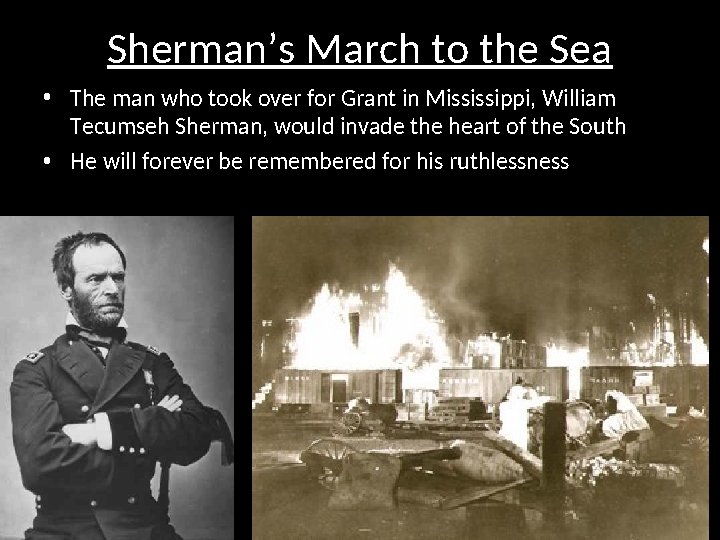
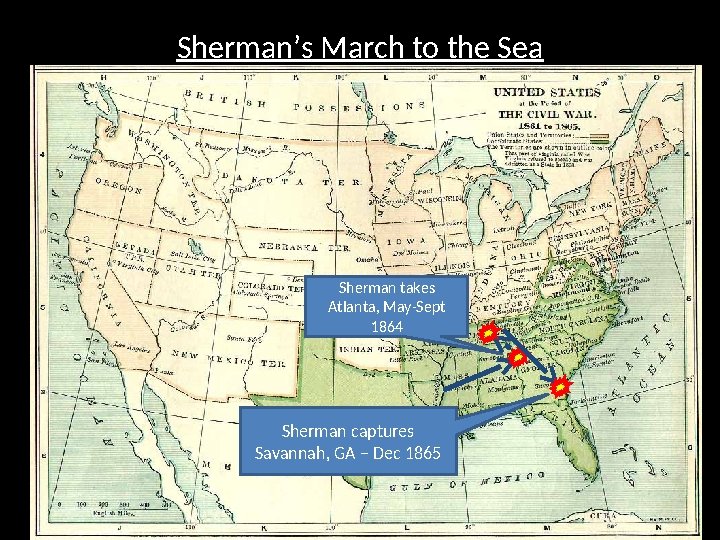
Sherman’s March to the Sea • The man who took over for Grant in Mississippi, William Tecumseh Sherman, would invade the heart of the South • He will forever be remembered for his ruthlessness
Sherman’s March to the Sea Sherman takes Atlanta, May-Sept 1864 Sherman captures Savannah, GA – Dec 1865
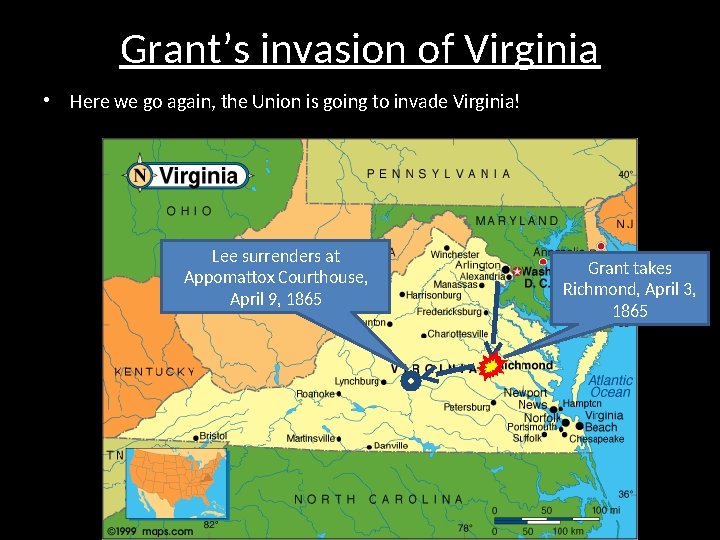
Grant’s invasion of Virginia • Here we go again, the Union is going to invade Virginia! Lee surrenders at Appomattox Courthouse, April 9, 1865 Grant takes Richmond, April 3, 1865
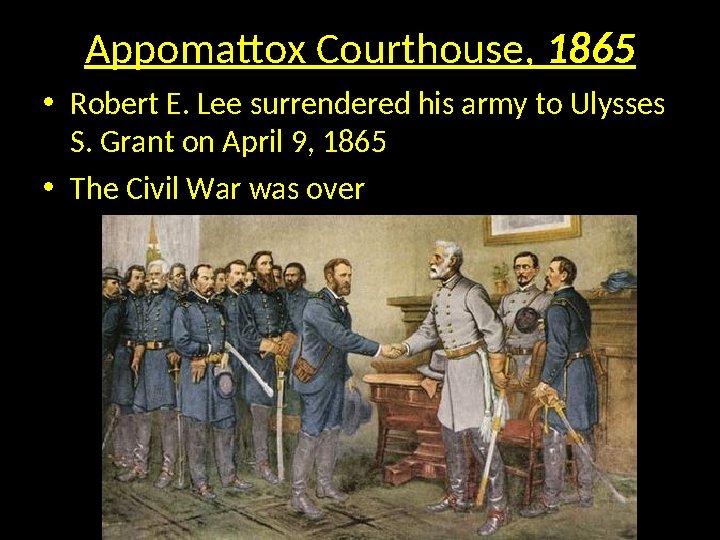
Appomattox Courthouse, 1865 • Robert E. Lee surrendered his army to Ulysses S. Grant on April 9, 1865 • The Civil War was over
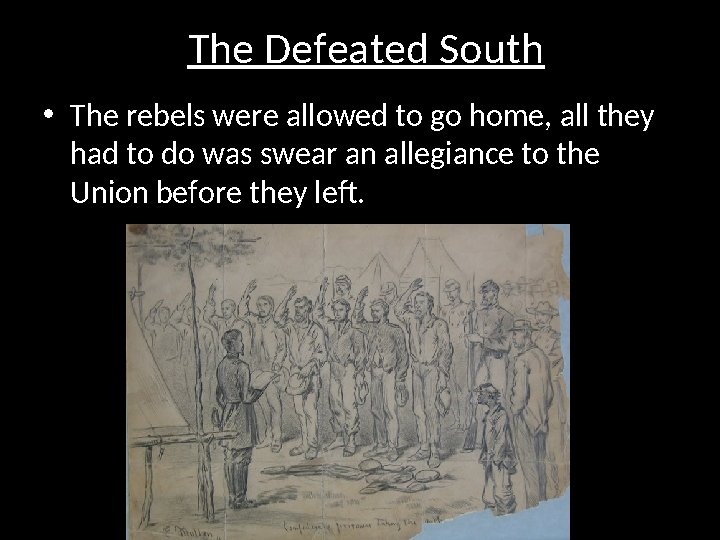
The Defeated South • The rebels were allowed to go home, all they had to do was swear an allegiance to the Union before they left.