
THE CIVIL RIGHTS MOVEMENT Key events of the
- Slides: 21
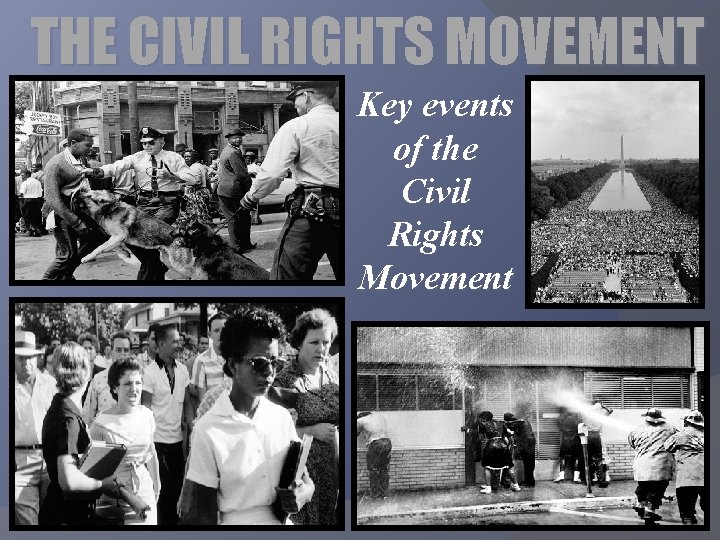
THE CIVIL RIGHTS MOVEMENT Key events of the Civil Rights Movement
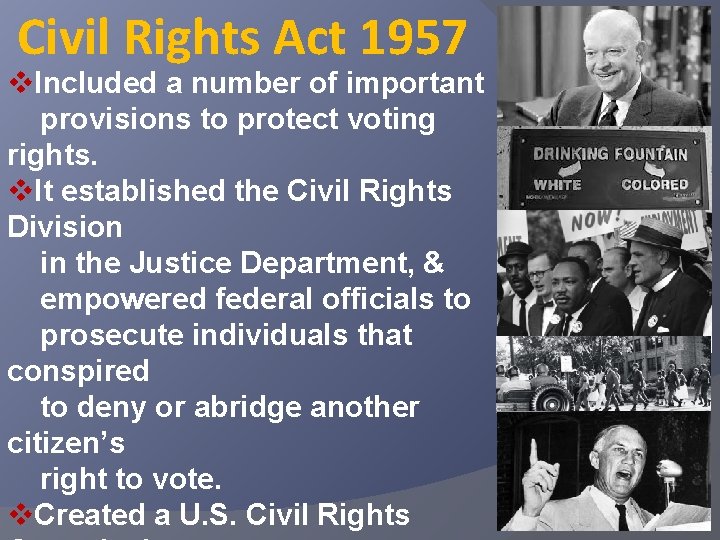
Civil Rights Act 1957 v. Included a number of important provisions to protect voting rights. v. It established the Civil Rights Division in the Justice Department, & empowered federal officials to prosecute individuals that conspired to deny or abridge another citizen’s right to vote. v. Created a U. S. Civil Rights
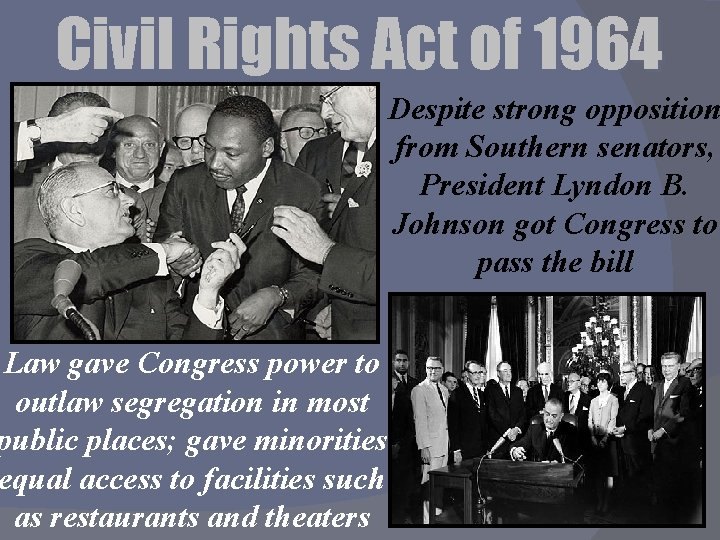
Civil Rights Act of 1964 Despite strong opposition from Southern senators, President Lyndon B. Johnson got Congress to pass the bill Law gave Congress power to outlaw segregation in most public places; gave minorities equal access to facilities such as restaurants and theaters
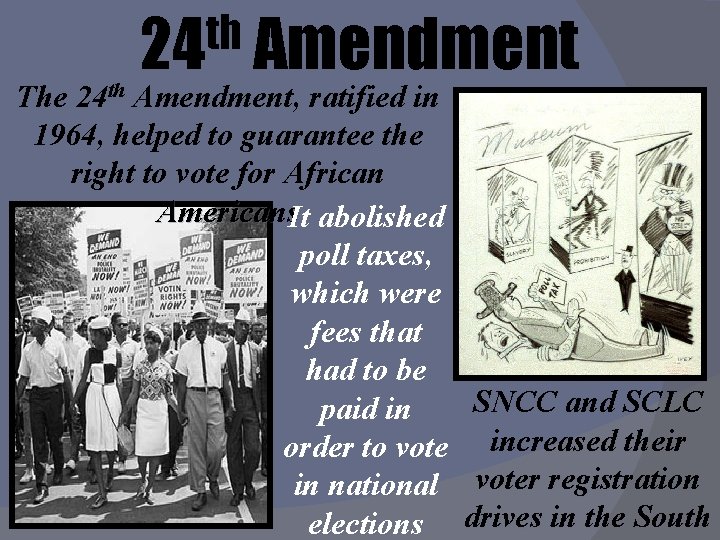
th 24 Amendment The 24 th Amendment, ratified in 1964, helped to guarantee the right to vote for African Americans. It It abolished poll taxes, which were fees that had to be paid in order to vote in national elections SNCC and SCLC increased their voter registration drives in the South
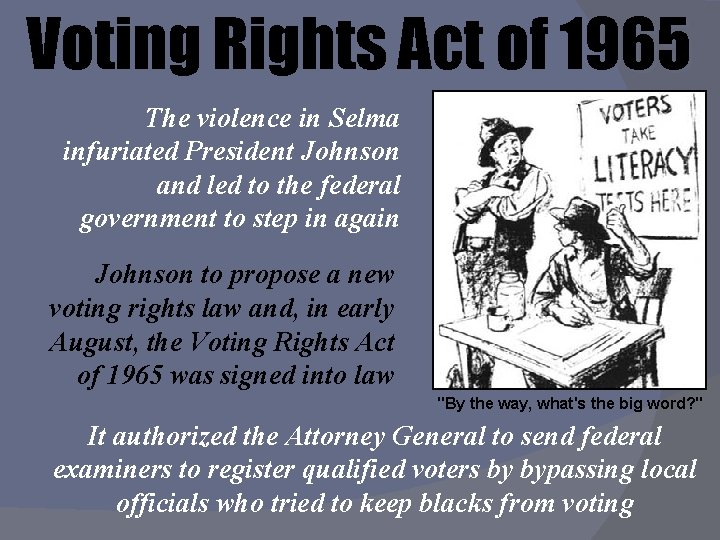
Voting Rights Act of 1965 The violence in Selma infuriated President Johnson and led to the federal government to step in again Johnson to propose a new voting rights law and, in early August, the Voting Rights Act of 1965 was signed into law "By the way, what's the big word? " It authorized the Attorney General to send federal examiners to register qualified voters by bypassing local officials who tried to keep blacks from voting
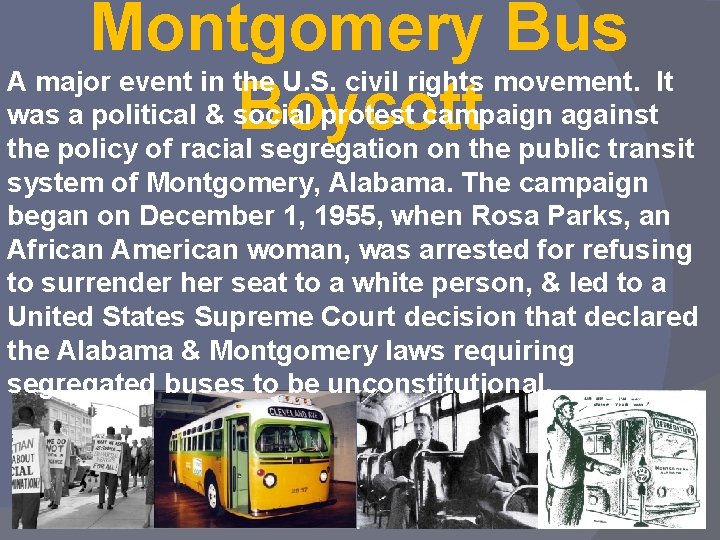
Montgomery Bus A major event in the U. S. civil rights movement. It was a political & social protest campaign against Boycott the policy of racial segregation on the public transit system of Montgomery, Alabama. The campaign began on December 1, 1955, when Rosa Parks, an African American woman, was arrested for refusing to surrender her seat to a white person, & led to a United States Supreme Court decision that declared the Alabama & Montgomery laws requiring segregated buses to be unconstitutional.
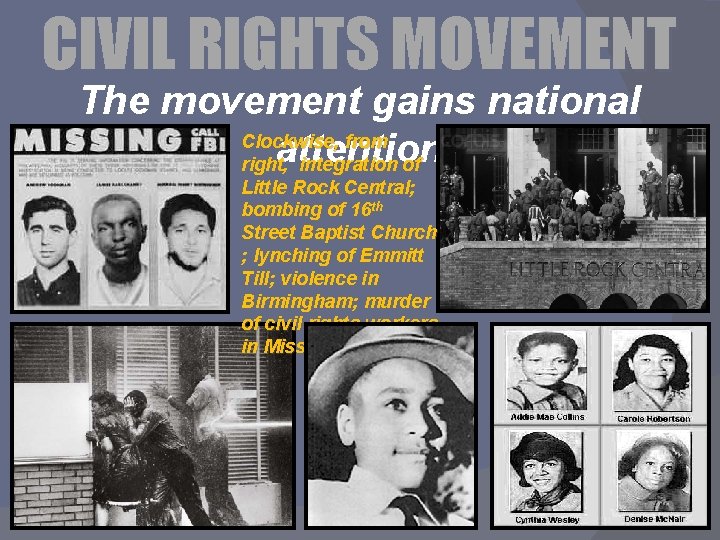
CIVIL RIGHTS MOVEMENT The movement gains national Clockwise, from attention right, integration of Little Rock Central; bombing of 16 th Street Baptist Church ; lynching of Emmitt Till; violence in Birmingham; murder of civil rights workers in Mississippi
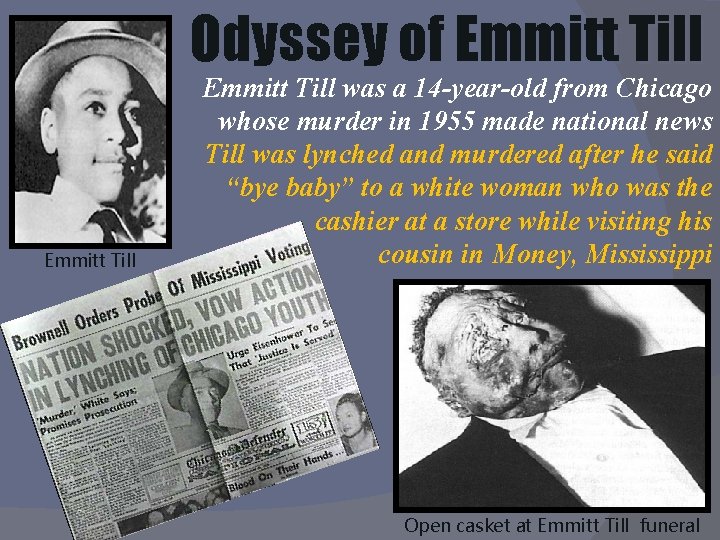
Odyssey of Emmitt Till was a 14 -year-old from Chicago whose murder in 1955 made national news Till was lynched and murdered after he said “bye baby” to a white woman who was the cashier at a store while visiting his cousin in Money, Mississippi Open casket at Emmitt Till funeral
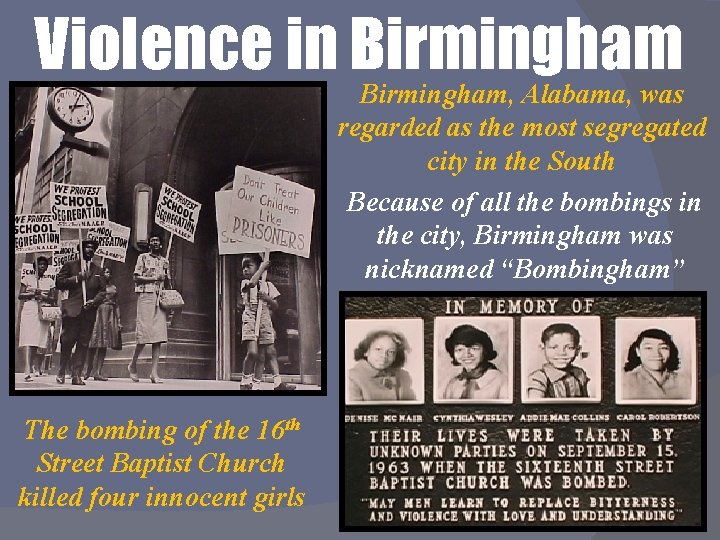
Violence in Birmingham, Alabama, was regarded as the most segregated city in the South Because of all the bombings in the city, Birmingham was nicknamed “Bombingham” The bombing of the 16 th Street Baptist Church killed four innocent girls
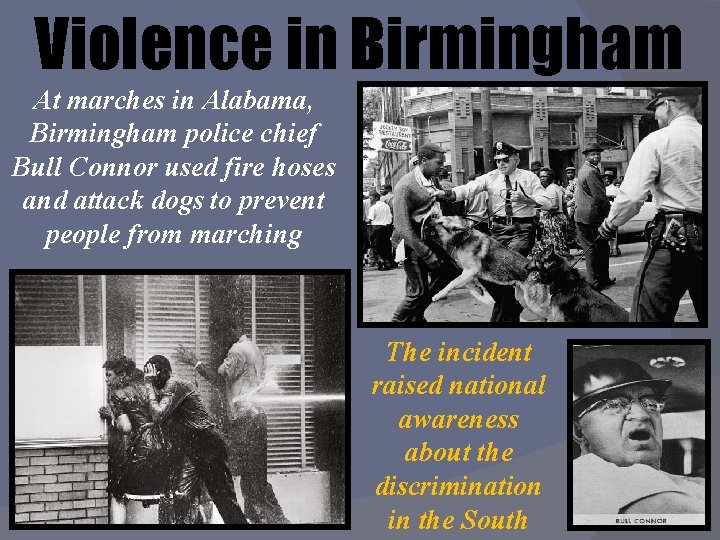
Violence in Birmingham At marches in Alabama, Birmingham police chief Bull Connor used fire hoses and attack dogs to prevent people from marching The incident raised national awareness about the discrimination in the South
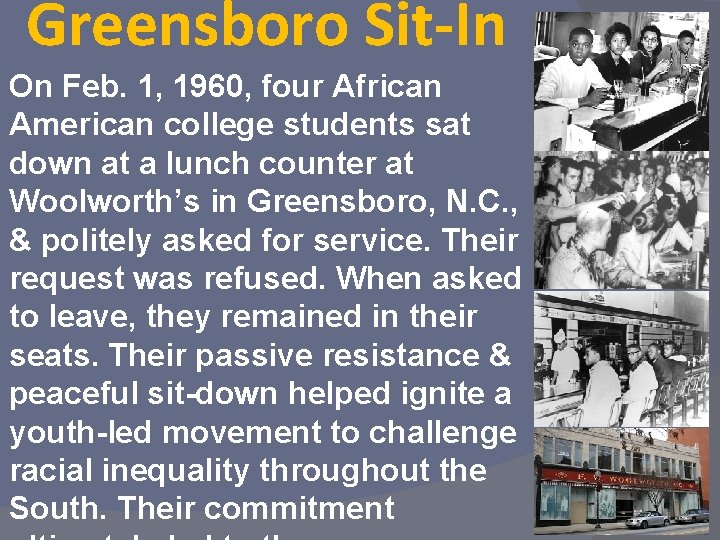
Greensboro Sit-In On Feb. 1, 1960, four African American college students sat down at a lunch counter at Woolworth’s in Greensboro, N. C. , & politely asked for service. Their request was refused. When asked to leave, they remained in their seats. Their passive resistance & peaceful sit-down helped ignite a youth-led movement to challenge racial inequality throughout the South. Their commitment
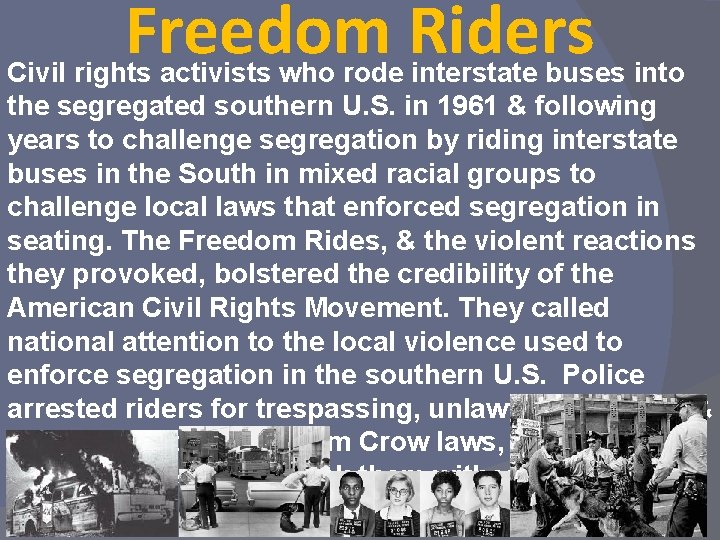
Freedom Riders Civil rights activists who rode interstate buses into the segregated southern U. S. in 1961 & following years to challenge segregation by riding interstate buses in the South in mixed racial groups to challenge local laws that enforced segregation in seating. The Freedom Rides, & the violent reactions they provoked, bolstered the credibility of the American Civil Rights Movement. They called national attention to the local violence used to enforce segregation in the southern U. S. Police arrested riders for trespassing, unlawful assembly, & violating state & local Jim Crow laws, but they often first let white mobs attack them without intervention.
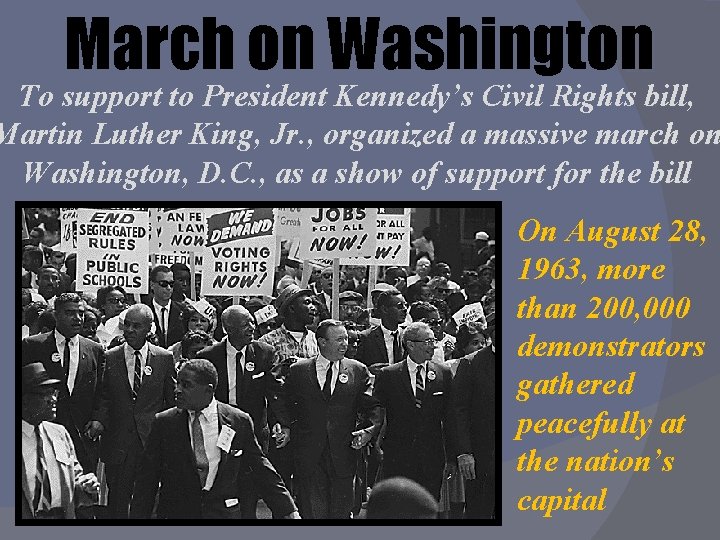
March on Washington To support to President Kennedy’s Civil Rights bill, Martin Luther King, Jr. , organized a massive march on Washington, D. C. , as a show of support for the bill On August 28, 1963, more than 200, 000 demonstrators gathered peacefully at the nation’s capital
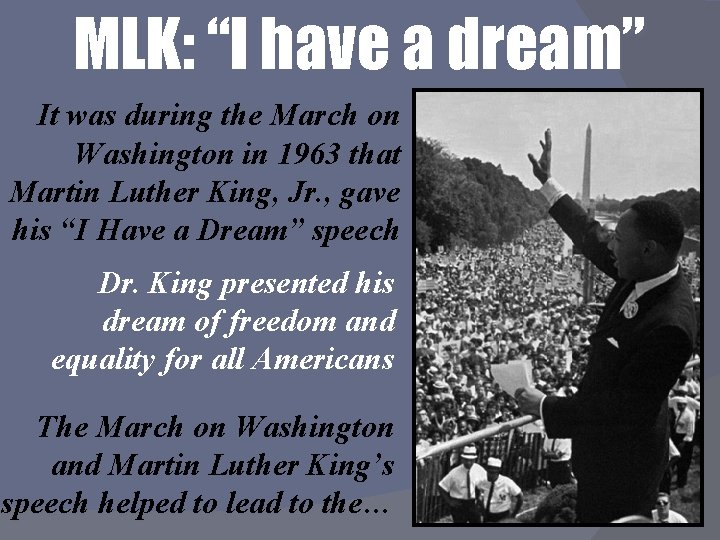
MLK: “I have a dream” It was during the March on Washington in 1963 that Martin Luther King, Jr. , gave his “I Have a Dream” speech Dr. King presented his dream of freedom and equality for all Americans The March on Washington and Martin Luther King’s speech helped to lead to the…
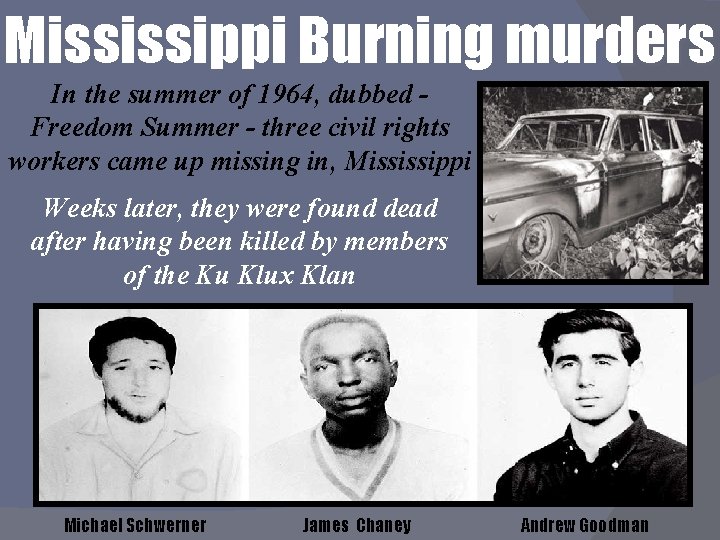
Mississippi Burning murders In the summer of 1964, dubbed Freedom Summer - three civil rights workers came up missing in, Mississippi Weeks later, they were found dead after having been killed by members of the Ku Klux Klan Michael Schwerner James Chaney Andrew Goodman
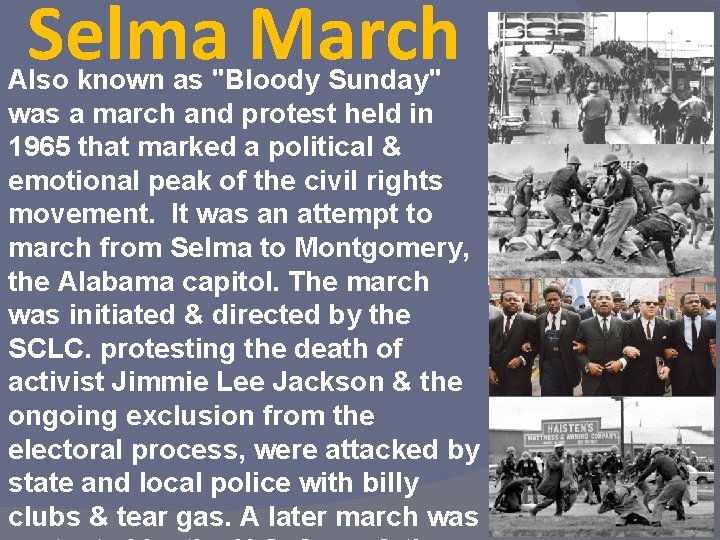
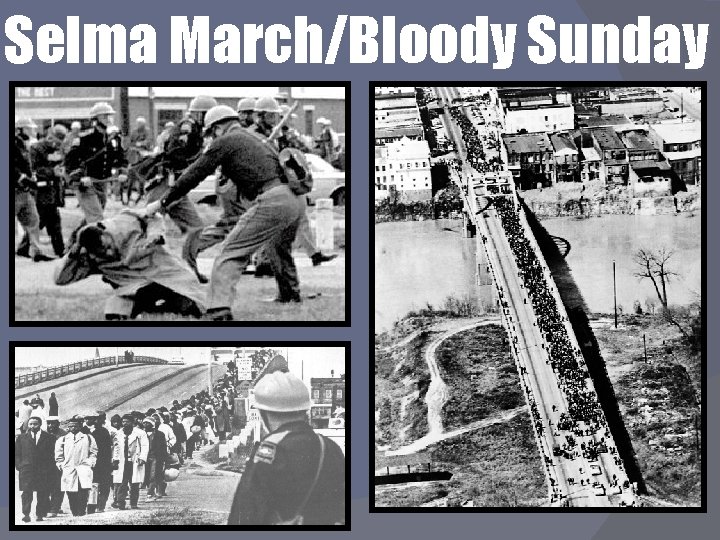
Selma March Also known as "Bloody Sunday" was a march and protest held in 1965 that marked a political & emotional peak of the civil rights movement. It was an attempt to march from Selma to Montgomery, the Alabama capitol. The march was initiated & directed by the SCLC. protesting the death of activist Jimmie Lee Jackson & the ongoing exclusion from the electoral process, were attacked by state and local police with billy clubs & tear gas. A later march was
Selma March/Bloody Sunday
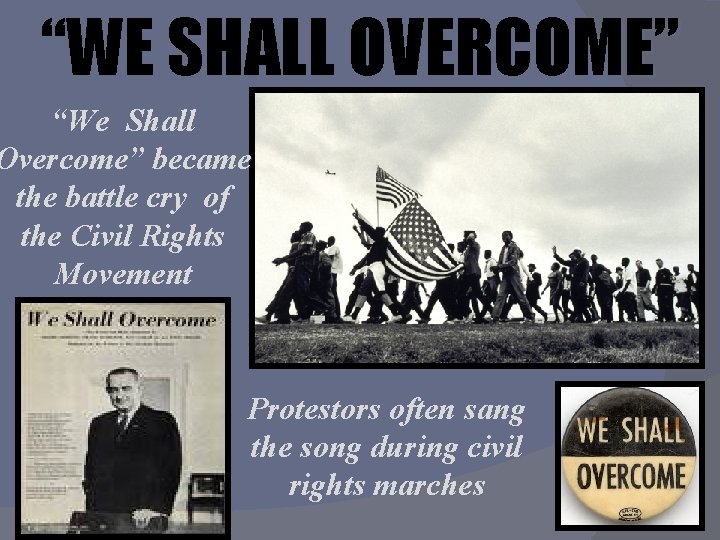
“WE SHALL OVERCOME” “We Shall Overcome” became the battle cry of the Civil Rights Movement Protestors often sang the song during civil rights marches
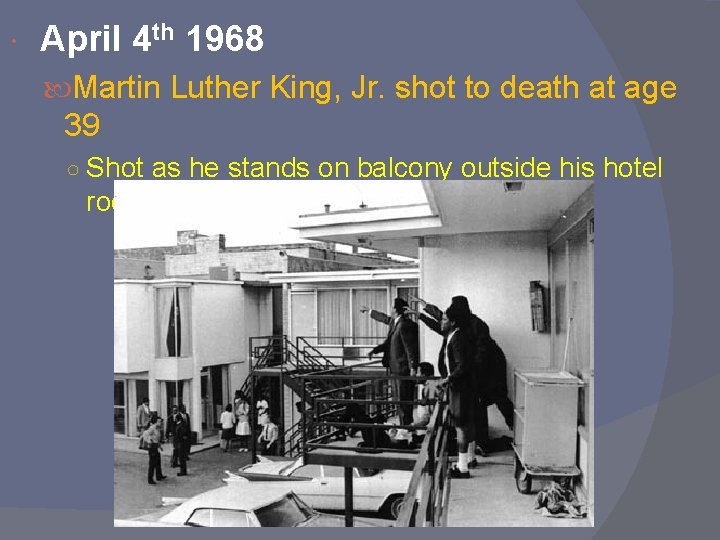
April 4 th 1968 Martin Luther King, Jr. shot to death at age 39 ○ Shot as he stands on balcony outside his hotel room in Memphis, TN
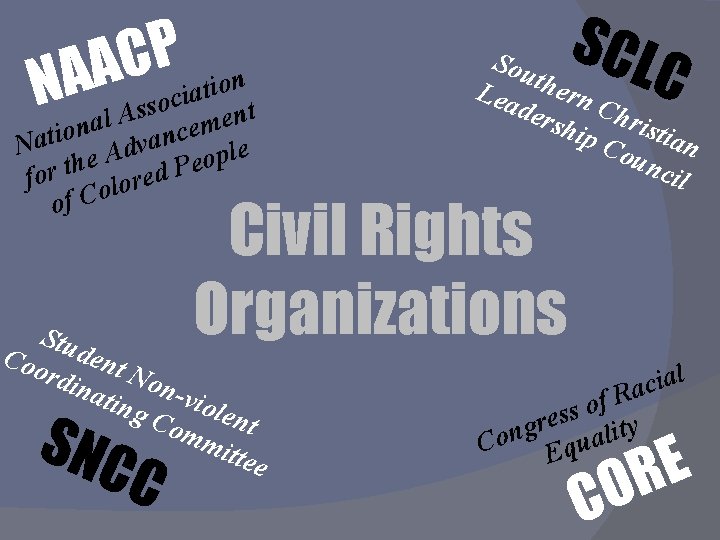
P C A n o A i t a N ci o s s t A n e l a m e on c i t n a a v N d e l A p e o e h for t olored P of C SCL C Sou Lea thern Chr der ship istia Cou n nci l Civil Rights Organizations Stu Coo dent rdin Non -vio atin len g. C t om mit tee SNC C l a i c a R f o s s re y g t i n l o a C u q E E R CO
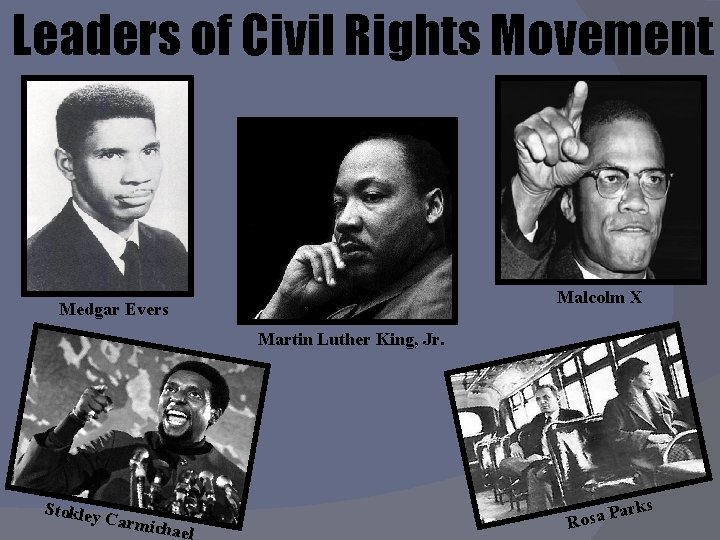
Leaders of Civil Rights Movement Malcolm X Medgar Evers Martin Luther King, Jr. Stokley Carmic hael rks a P a Ros