
The Civil Rights Movement Essential Questions What impact


- Slides: 10
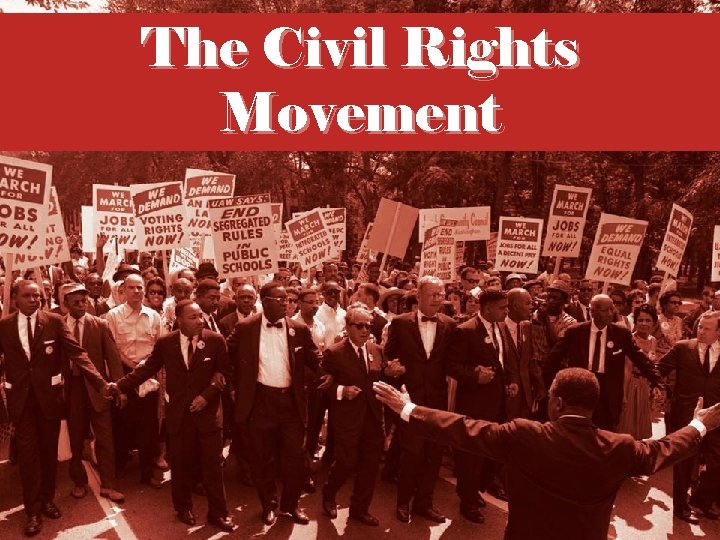
The Civil Rights Movement
Essential Questions • What impact did the Dred Scott case and the Emancipation Proclamation have on the early struggle for civil rights? • Why did the Supreme Court interpret early civil rights laws and the 14 th Amendment narrowly in the late 19 th century? • What gains did the movement make in desegregating schools and public places in the mid-20 th century? • What other goals did the civil rights movement strive for in the middle and late 1960 s? • In what ways did the civil rights movement
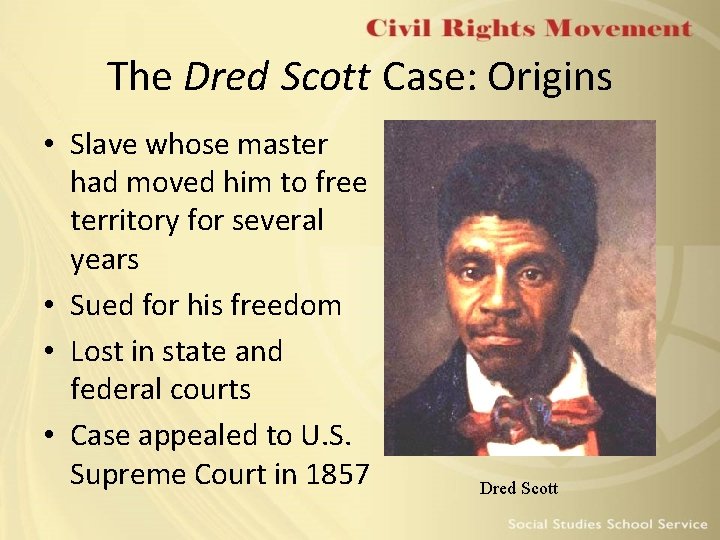
The Dred Scott Case: Origins • Slave whose master had moved him to free territory for several years • Sued for his freedom • Lost in state and federal courts • Case appealed to U. S. Supreme Court in 1857 Dred Scott
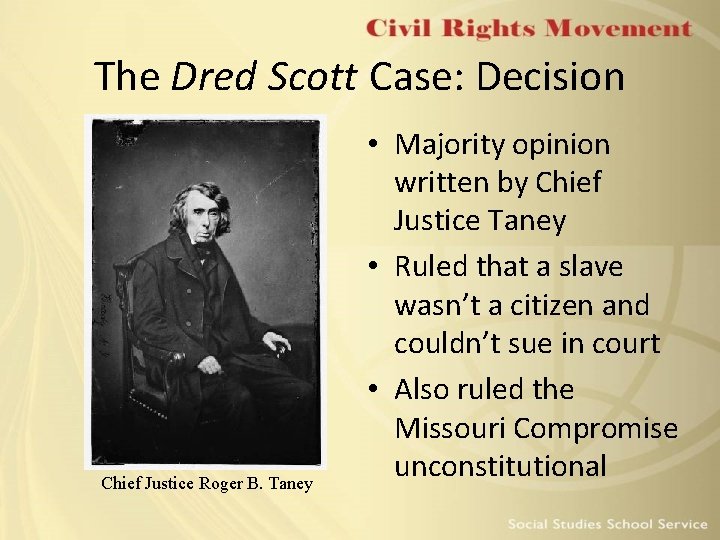
The Dred Scott Case: Decision Chief Justice Roger B. Taney • Majority opinion written by Chief Justice Taney • Ruled that a slave wasn’t a citizen and couldn’t sue in court • Also ruled the Missouri Compromise unconstitutional
The Emancipation Proclamation • Announced by Lincoln in 1862 after the Battle of Antietam • Freed slaves only in “territories in rebellion, ” not border states • Signed on January 1, 1863 President Abraham Lincoln reads the Emancipation Proclamation to his Cabinet
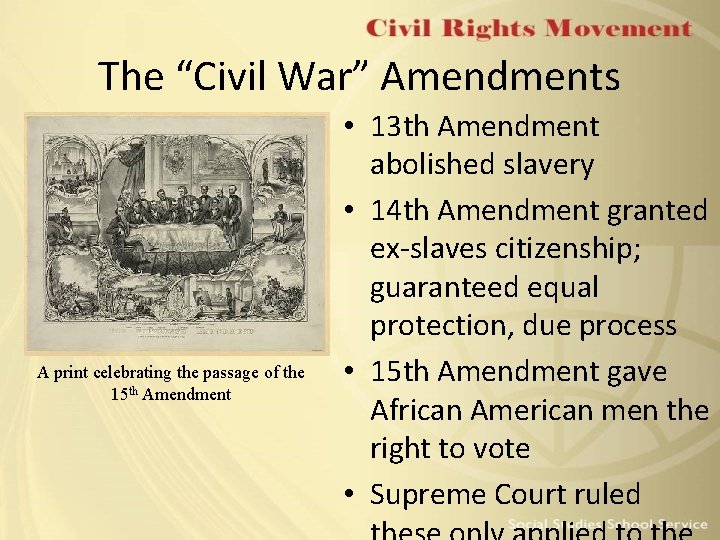
The “Civil War” Amendments A print celebrating the passage of the 15 th Amendment • 13 th Amendment abolished slavery • 14 th Amendment granted ex-slaves citizenship; guaranteed equal protection, due process • 15 th Amendment gave African American men the right to vote • Supreme Court ruled
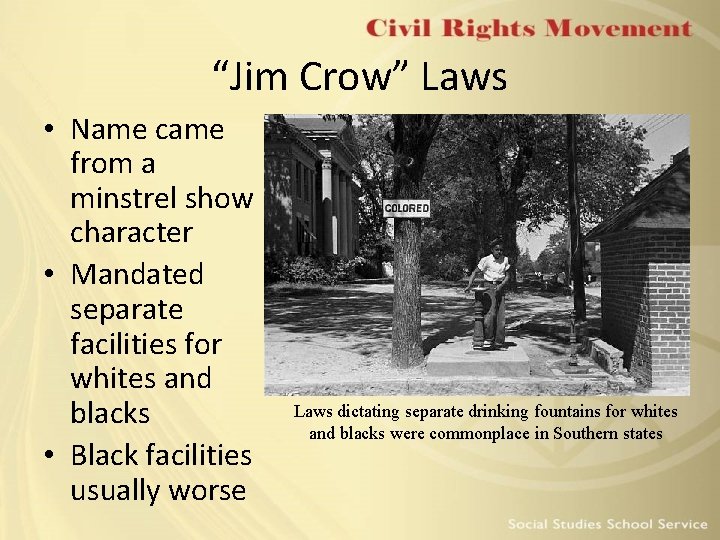
“Jim Crow” Laws • Name came from a minstrel show character • Mandated separate facilities for whites and blacks • Black facilities usually worse Laws dictating separate drinking fountains for whites and blacks were commonplace in Southern states
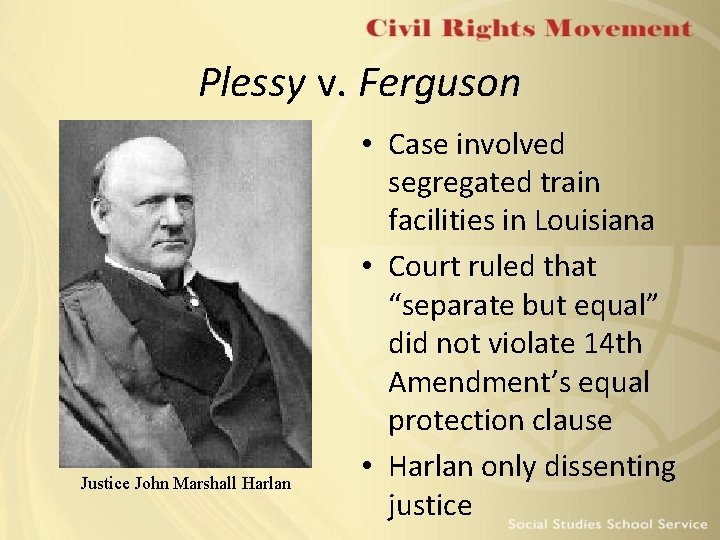
Plessy v. Ferguson Justice John Marshall Harlan • Case involved segregated train facilities in Louisiana • Court ruled that “separate but equal” did not violate 14 th Amendment’s equal protection clause • Harlan only dissenting justice
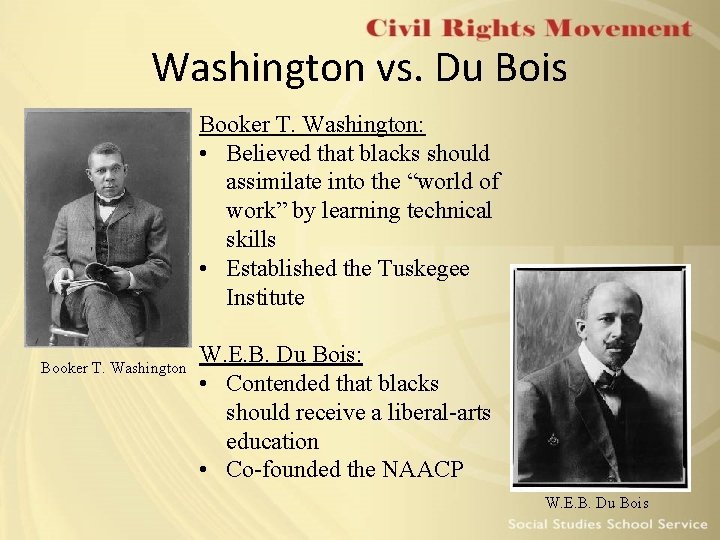
Washington vs. Du Bois Booker T. Washington: • Believed that blacks should assimilate into the “world of work” by learning technical skills • Established the Tuskegee Institute Booker T. Washington W. E. B. Du Bois: • Contended that blacks should receive a liberal-arts education • Co-founded the NAACP W. E. B. Du Bois
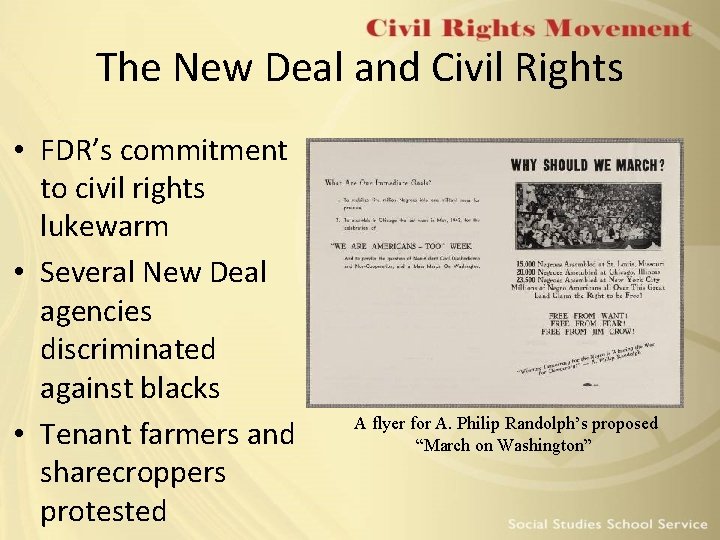
The New Deal and Civil Rights • FDR’s commitment to civil rights lukewarm • Several New Deal agencies discriminated against blacks • Tenant farmers and sharecroppers protested A flyer for A. Philip Randolph’s proposed “March on Washington”