
The Civil Rights Era Outcome The Movement Changes
- Slides: 14
The Civil Rights Era Outcome: The Movement Changes
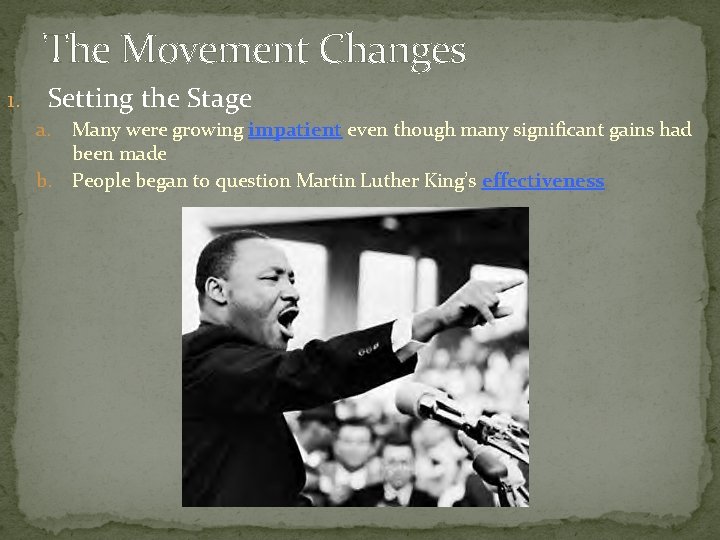
The Movement Changes 1. Setting the Stage a. Many were growing impatient even though many significant gains had been made b. People began to question Martin Luther King’s effectiveness
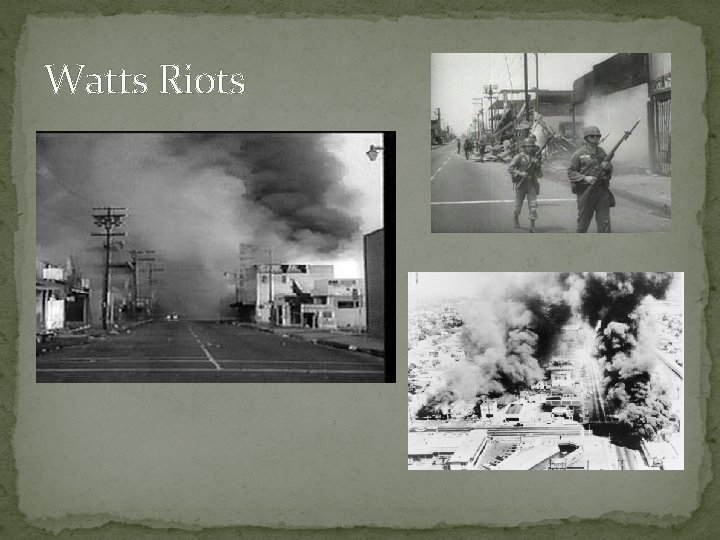
The Movement Changes 2. Watts Riots a. Six days or riots in Watts neighborhood of Los Angeles b. Started when a white police officer arrested a black driver after he failed the field sobriety test (drunk driving) c. Angry crowd watched and started threw rocks and threatened police d. In the end: 34 dead, 2, 034 injured, 3, 952 arrested e. Riots were viewed by some as a reaction to racial tension
Watts Riots
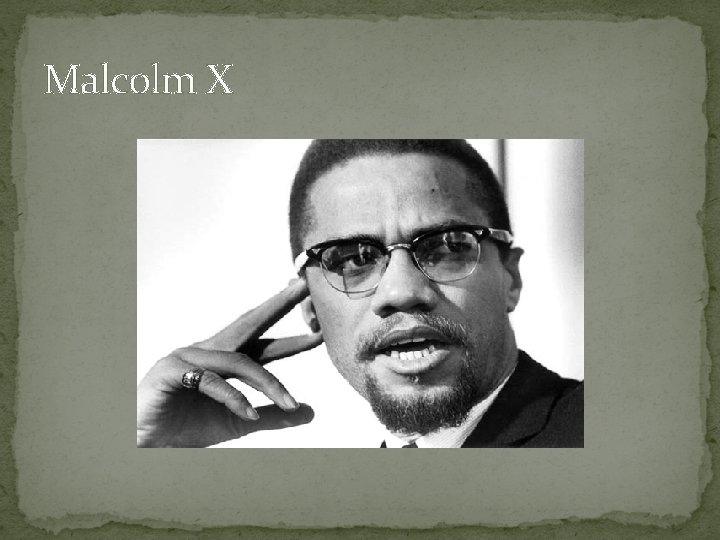
Malcolm X
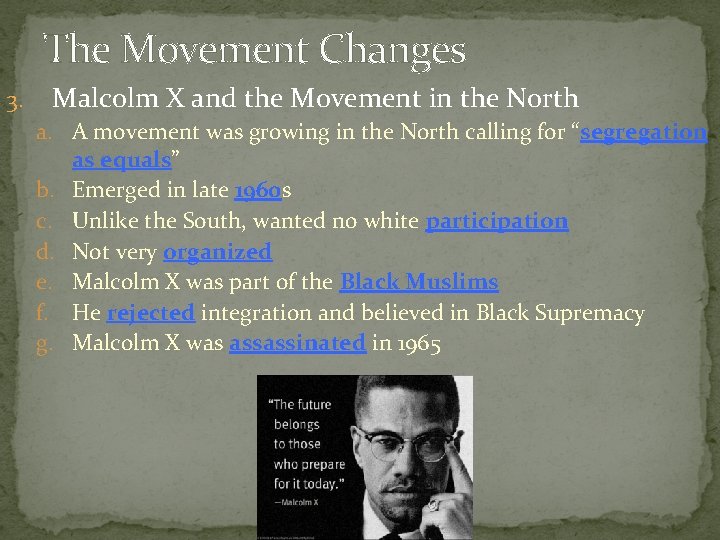
The Movement Changes 3. Malcolm X and the Movement in the North a. A movement was growing in the North calling for “segregation as equals” b. Emerged in late 1960 s c. Unlike the South, wanted no white participation d. Not very organized e. Malcolm X was part of the Black Muslims f. He rejected integration and believed in Black Supremacy g. Malcolm X was assassinated in 1965
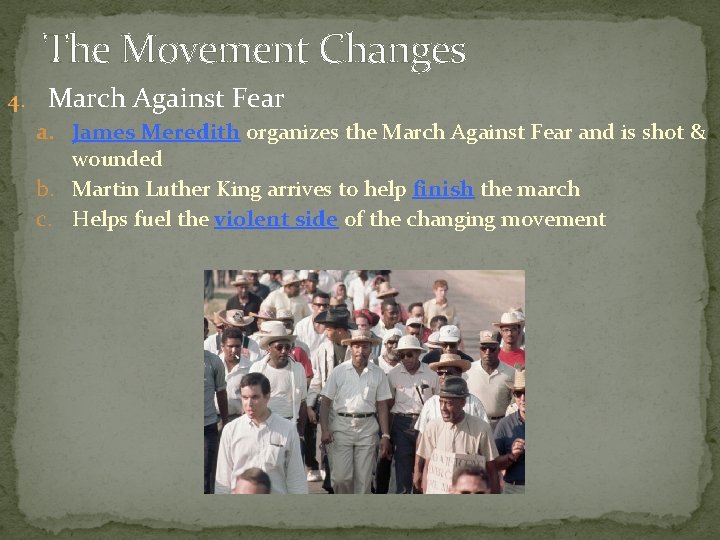
The Movement Changes 4. March Against Fear a. James Meredith organizes the March Against Fear and is shot & wounded b. Martin Luther King arrives to help finish the march c. Helps fuel the violent side of the changing movement
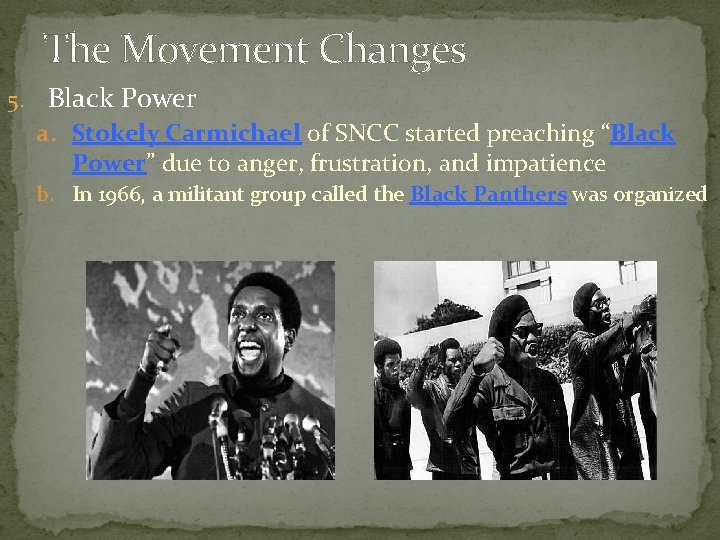
The Movement Changes 5. Black Power a. Stokely Carmichael of SNCC started preaching “Black Power” due to anger, frustration, and impatience b. In 1966, a militant group called the Black Panthers was organized
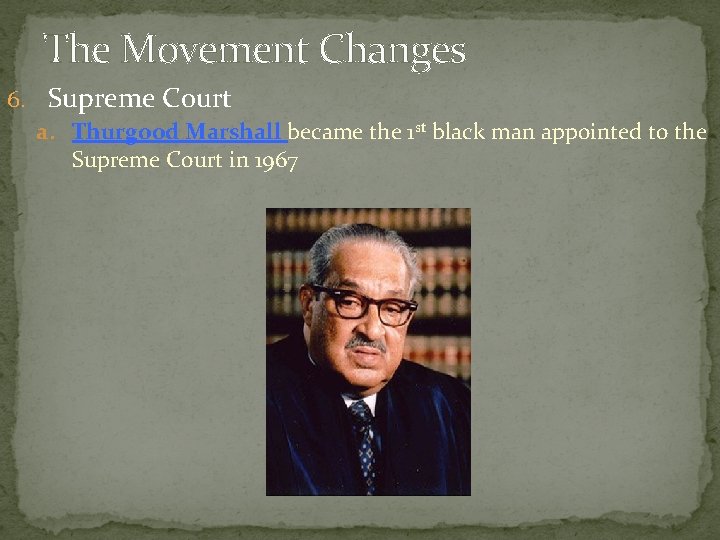
The Movement Changes 6. Supreme Court a. Thurgood Marshall became the 1 st black man appointed to the Supreme Court in 1967
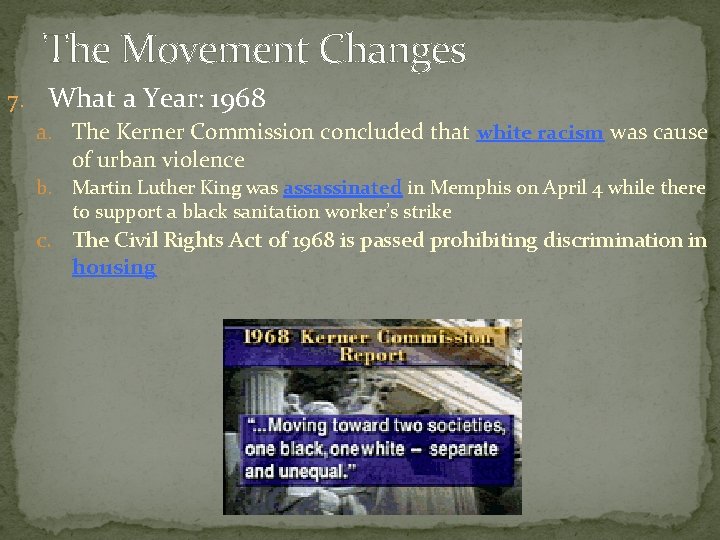
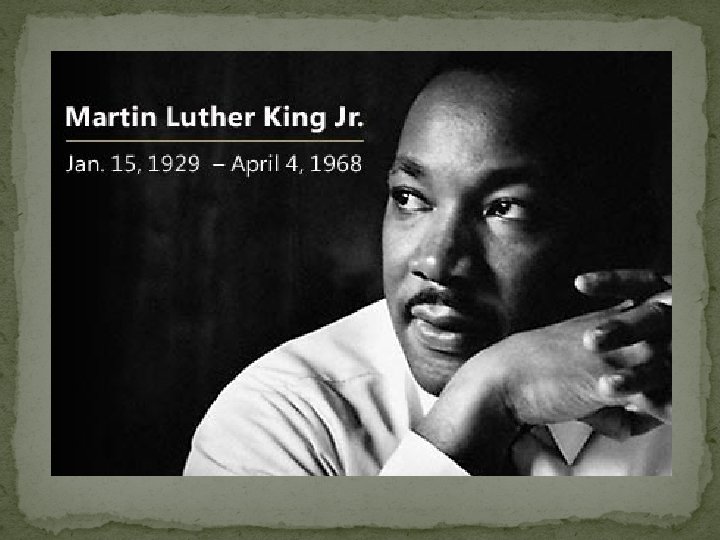
The Movement Changes 7. What a Year: 1968 a. The Kerner Commission concluded that white racism was cause of urban violence b. Martin Luther King was assassinated in Memphis on April 4 while there to support a black sanitation worker’s strike c. The Civil Rights Act of 1968 is passed prohibiting discrimination in housing
The Movement Changes � Result: The movement does not die with Martin Luther King’s assassination, but it does begin to fade away. The work had been done, however. Schools, busses, and bus facilities were integrated, voting rights were established, blacks were served at lunch counters, and the movement had the Federal government on its side. Today, although not perfect, blacks in this country have many freedoms and opportunities available to them that were only made possible by those patient protesters who worked hard to bring about change during the Civil Rights Movement.
The Movement Changes
The Movement Changes