
The citric acid cycle The citric acid cycle


- Slides: 44
The citric acid cycle
The citric acid cycle • What role does the citric acid cycle play in metabolism? • What is the overall pathway of the citric acid cycle? • How is pyruvate converted to Acetyl-Co. A? • What are the individual reactions of the citric acid cycle? • What are the energetic of the citric acid cycle, and how is it controlled?
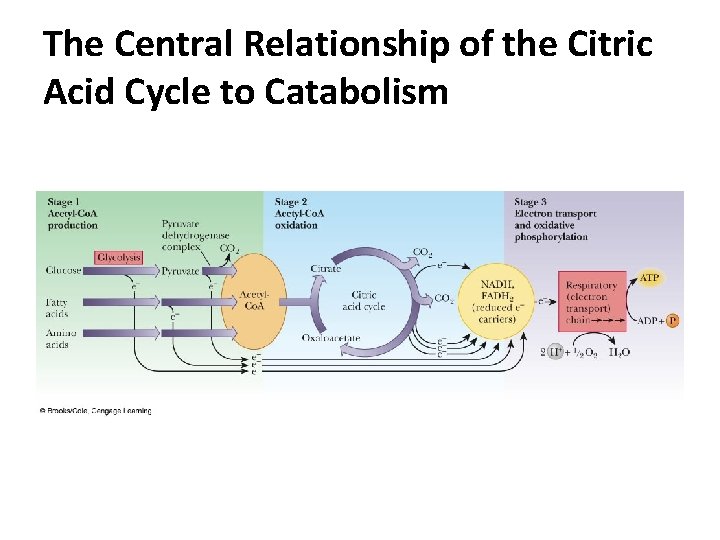
The Central Role of the Citric Acid Cycle • Three processes play central roles in aerobic metabolism plays a pivotal role in the production of energy by a cell – The citric acid cycle (CA cycle) – Electron transport reactions (Chapter 20) – Oxidative phosphorylation (Chapter 20) • Metabolism consists of – Catabolism: the oxidative breakdown of nutrients – Anabolism: the reductive synthesis of biomolecules • The citric acid cycle is amphibolic; amphibolic that is, it plays a role in both catabolism and anabolism. It is the central metabolic pathway
The Central Relationship of the Citric Acid Cycle to Catabolism
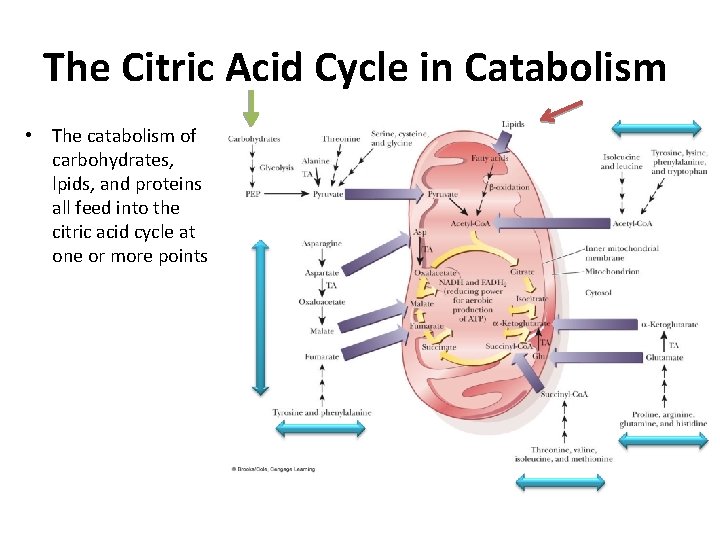
The Citric Acid Cycle in Catabolism • The catabolism of carbohydrates, lpids, and proteins all feed into the citric acid cycle at one or more points
Summary • All metabolic pathways are related, and all of them operate simultaneously • In catabolic pathways, nutrients, many of which are macromolecules, are broken down to smaller molecules, such as sugars, fatty acids, and amino acids • Small molecules are processed further, and the end products of catabolism frequently enter the citric acid cycle, which plays a key role in metabolism
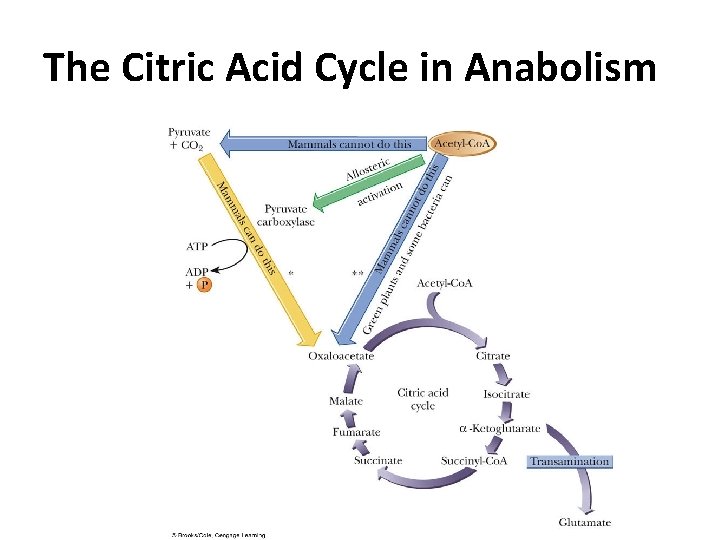
The Citric Acid Cycle in Anabolism • The citric acid cycle is the source of starting materials for the biosynthesis of other compounds • If a component of the citric acid cycle is taken out for biosynthesis, it must be replaced • oxaloacetate, for example, is replaced by the carboxylation of pyruvate • A reaction that replenishes a citric acid cycle intermediate is called an anaplerotic reaction
The Citric Acid Cycle in Anabolism
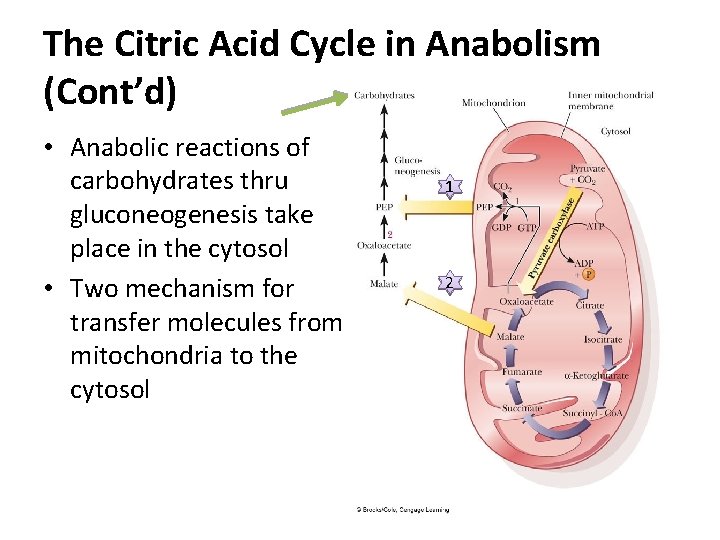
The Citric Acid Cycle in Anabolism (Cont’d) • Anabolic reactions of carbohydrates thru gluconeogenesis take place in the cytosol • Two mechanism for transfer molecules from mitochondria to the cytosol 1 2
Lipid Anabolism • Lipid anabolism begins with acetyl-Co. A and takes place in the cytosol – acetyl-Co. A is produced mainly in mitochondria from catabolism of fatty acids and carbohydrates – an indirect transfer mechanism exists involving citrate Citrate + Co. A-SH + ATP -----> Acetyl-Co. A + Oxaloacetate + ADP + Pi – the oxaloacetate thus formed provides a means for the production of the NADPH needed for biosynthesis
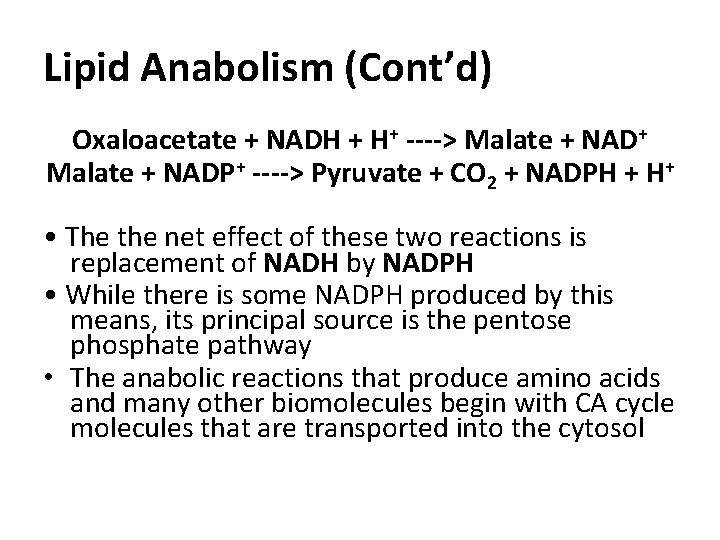
Lipid Anabolism (Cont’d) Oxaloacetate + NADH + H+ ----> Malate + NAD+ Malate + NADP+ ----> Pyruvate + CO 2 + NADPH + H+ • The the net effect of these two reactions is replacement of NADH by NADPH • While there is some NADPH produced by this means, its principal source is the pentose phosphate pathway • The anabolic reactions that produce amino acids and many other biomolecules begin with CA cycle molecules that are transported into the cytosol
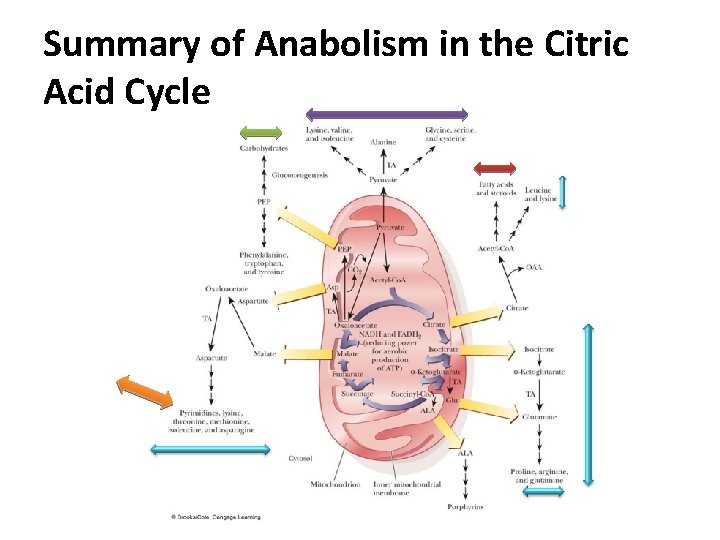
Summary of Anabolism in the Citric Acid Cycle
Summary • The citric acid cycle plays a central role in anabolic pathways as well as in catabolism • Pathways that give rise to sugars, fatty acids, and amino acids all originate with components of the citric acid cycle
The link to oxygen • The citric acid cycle is considered part of the aerobic metabolic process because of its link to the electron transport chain and oxidative phosphorylation • NADH and FADH 2, two important cofactors generated by the citric acid cycle, ultimately pass their electrons to oxygen
The citric acid cycle • Definition – The citric acid cycle is a series of reactions in mitochondria that bring about the catabolism of aetyl-Co. A, liberating reducing equivalents, which, upon oxidation through respiratory chain of mitochondria generating ATP. – location
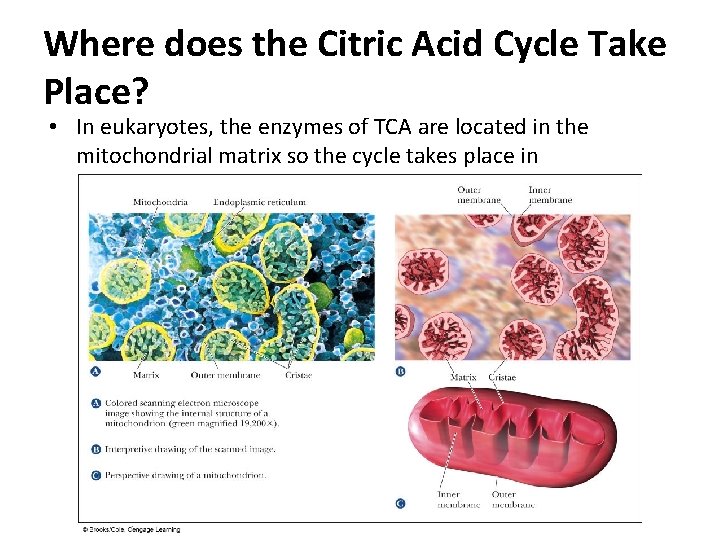
Where does the Citric Acid Cycle Take Place? • In eukaryotes, the enzymes of TCA are located in the mitochondrial matrix so the cycle takes place in
The citric acid cycle
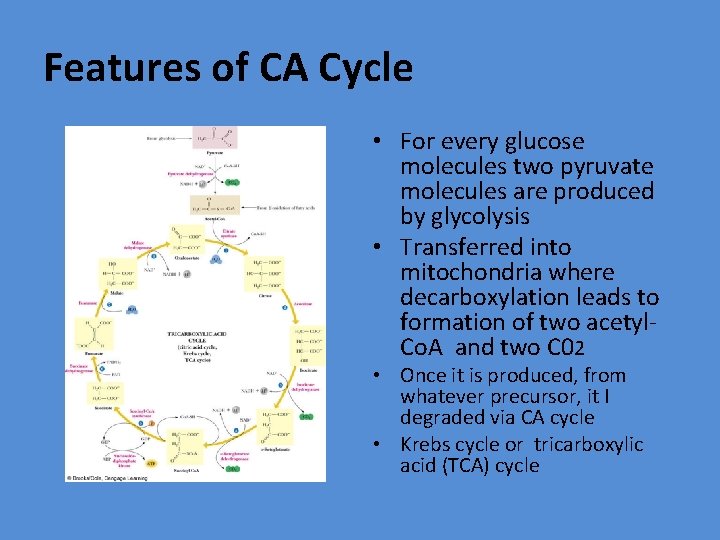
Features of CA Cycle • For every glucose molecules two pyruvate molecules are produced by glycolysis • Transferred into mitochondria where decarboxylation leads to formation of two acetyl. Co. A and two C 02 • Once it is produced, from whatever precursor, it I degraded via CA cycle • Krebs cycle or tricarboxylic acid (TCA) cycle
Pyruvate is Converted to Acetyl-Co. A • Pyruvate dehydrogenase complex is responsible for the conversion of pyruvate to CO 2 and the acetyl portion of acetyl-Co. A • Five enzymes in complex: pyruvate dehydrogenase, dihydrolipoyl transacetylase, dihydrolipoyl dehydrogenase, pyruvate dehydrogenase kinase, pyruvate dehydrogenase phosphatase
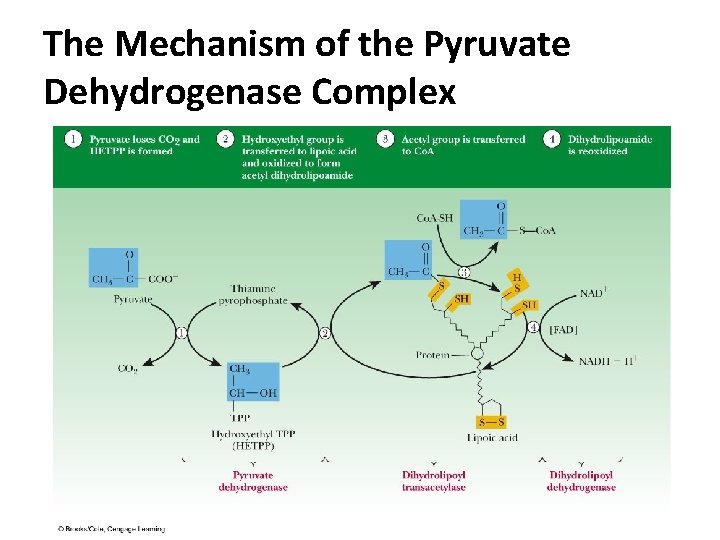
Pyruvate is Converted to Acetyl-Co. A (Cont’d) • First, pyruvate loses CO 2 and hydroxyethyl. TPP (HETPP) is formed • In the second step, the active form of lipoic acid is bound to the enzyme, dihydrolipoyl transacetylase, by an amide bond to the -amino group of a lysine • The hydroxyethyl group (HE) is oxidized and transferred to a sulfur atom of the reduced form of lipoamide • Lipoamide is reduced to dihydrolipoamide • In step 3, the acetyl group is transferred to the sulfhydryl group of coenzyme A • Next, dihydrolipoamide is oxidized to lipoamide
The Mechanism of the Pyruvate Dehydrogenase Complex
Summary • The two-carbon unit needed at the start of the citric acid cycle is obtained by converting pyruvate to acetyl-Co. A • This conversion requires the three primary enzymes of the pyruvate dehydogenase complex, as well as, the cofactors TPP, FAD, NAD+, and lipoic acid • The overall reaction of the pyruvate dehydogenase complex is the conversion of pyruvate, NAD+, and Co. A-SH to acetyl-Co. A, NADH + H+, and CO 2
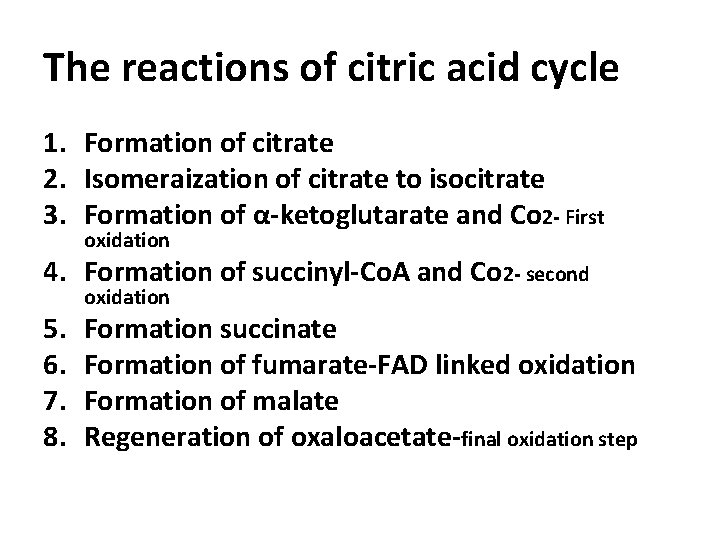
The reactions of citric acid cycle 1. Formation of citrate 2. Isomeraization of citrate to isocitrate 3. Formation of α-ketoglutarate and Co 2 - First oxidation 4. Formation of succinyl-Co. A and Co 2 - second 5. 6. 7. 8. oxidation Formation succinate Formation of fumarate-FAD linked oxidation Formation of malate Regeneration of oxaloacetate-final oxidation step
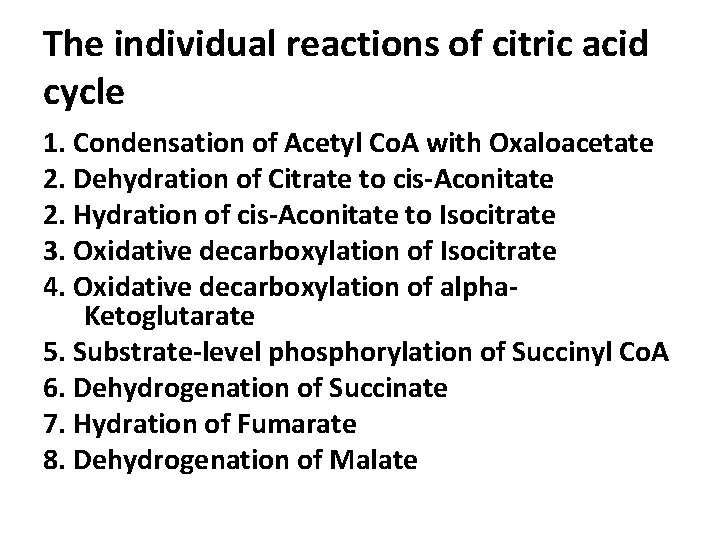
The individual reactions of citric acid cycle 1. Condensation of Acetyl Co. A with Oxaloacetate 2. Dehydration of Citrate to cis-Aconitate 2. Hydration of cis-Aconitate to Isocitrate 3. Oxidative decarboxylation of Isocitrate 4. Oxidative decarboxylation of alpha. Ketoglutarate 5. Substrate-level phosphorylation of Succinyl Co. A 6. Dehydrogenation of Succinate 7. Hydration of Fumarate 8. Dehydrogenation of Malate
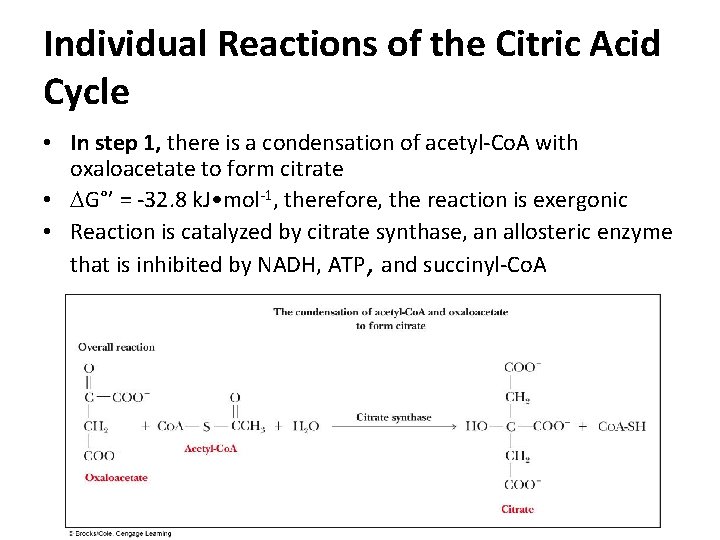
Individual Reactions of the Citric Acid Cycle • In step 1, there is a condensation of acetyl-Co. A with oxaloacetate to form citrate • G°’ = -32. 8 k. J • mol-1, therefore, the reaction is exergonic • Reaction is catalyzed by citrate synthase, an allosteric enzyme that is inhibited by NADH, ATP, and succinyl-Co. A
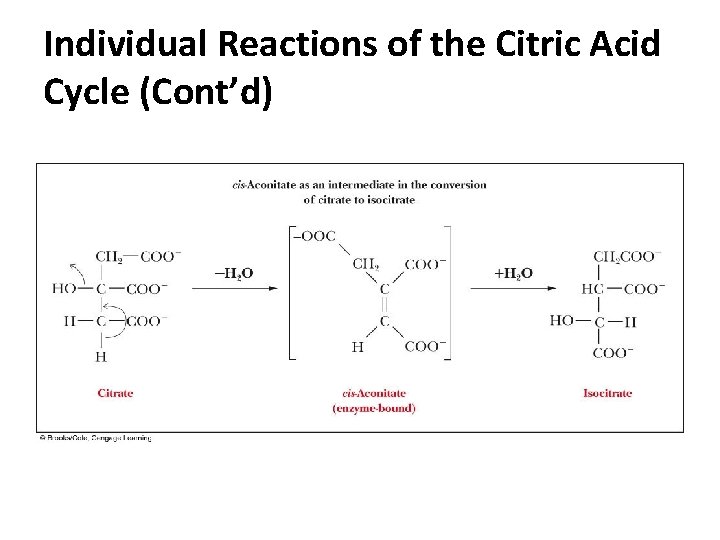
Individual Reactions of the Citric Acid Cycle (Cont’d) • In step 2, citrate is isomerized to isocitrate. The reaction is catalyzed by aconitase • Citrate is achiral; it has no stereocenter • Isocitrate is chiral; it has 2 stereocenters and 4 stereoisomers are possible • There is only one of the 4 stereoisomers of isocitrate formed in the cycle
Individual Reactions of the Citric Acid Cycle (Cont’d)
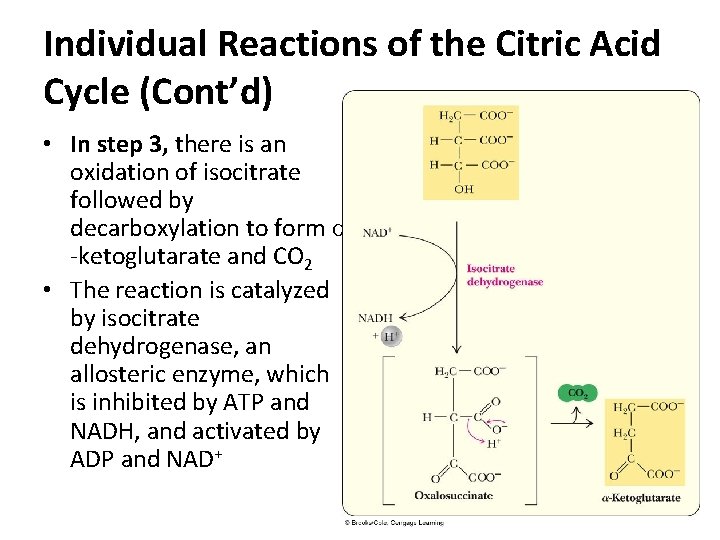
Individual Reactions of the Citric Acid Cycle (Cont’d) • In step 3, there is an oxidation of isocitrate followed by decarboxylation to form -ketoglutarate and CO 2 • The reaction is catalyzed by isocitrate dehydrogenase, an allosteric enzyme, which is inhibited by ATP and NADH, and activated by ADP and NAD+
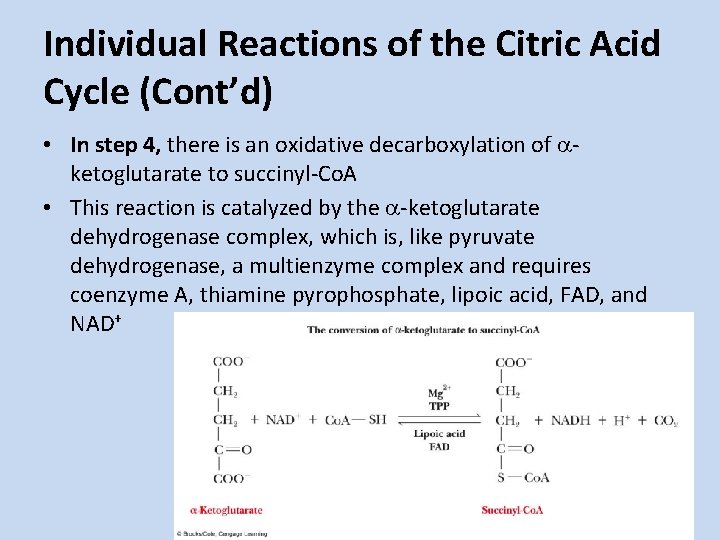
Individual Reactions of the Citric Acid Cycle (Cont’d) • In step 4, there is an oxidative decarboxylation of ketoglutarate to succinyl-Co. A • This reaction is catalyzed by the -ketoglutarate dehydrogenase complex, which is, like pyruvate dehydrogenase, a multienzyme complex and requires coenzyme A, thiamine pyrophosphate, lipoic acid, FAD, and NAD+
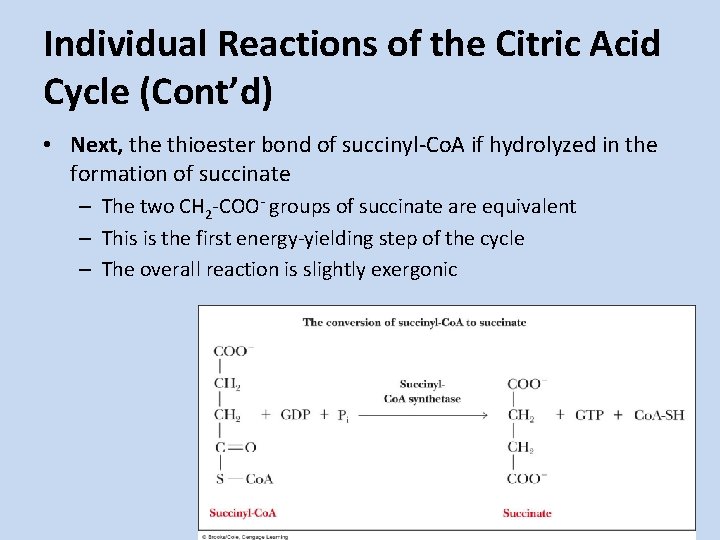
Individual Reactions of the Citric Acid Cycle (Cont’d) • Next, the thioester bond of succinyl-Co. A if hydrolyzed in the formation of succinate – The two CH 2 -COO- groups of succinate are equivalent – This is the first energy-yielding step of the cycle – The overall reaction is slightly exergonic
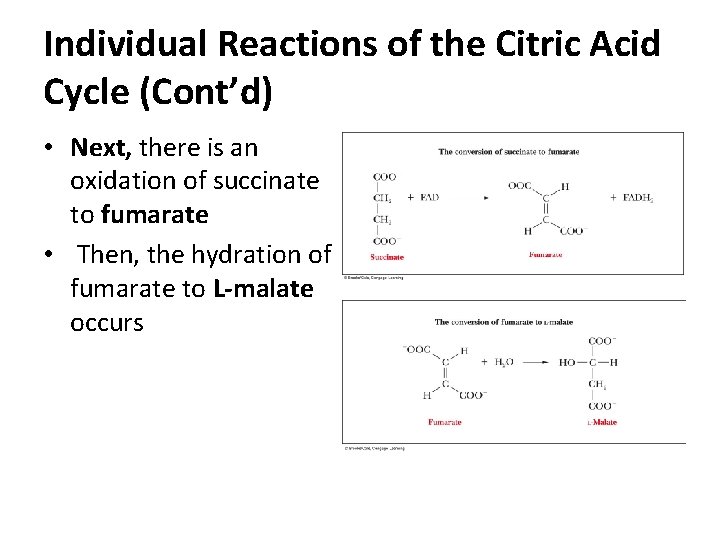
Individual Reactions of the Citric Acid Cycle (Cont’d) • Next, there is an oxidation of succinate to fumarate • Then, the hydration of fumarate to L-malate occurs
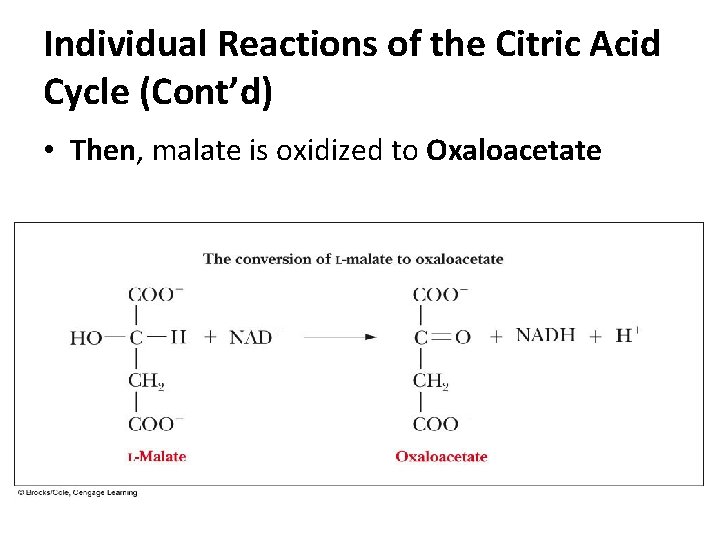
Individual Reactions of the Citric Acid Cycle (Cont’d) • Then, malate is oxidized to Oxaloacetate
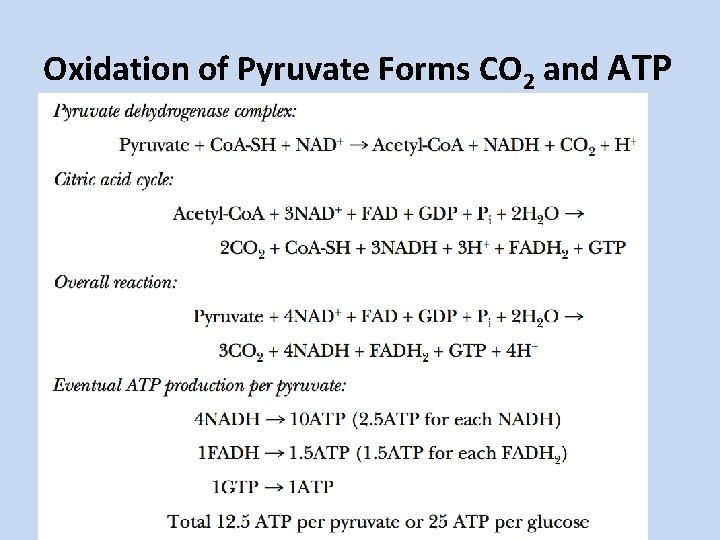
Oxidation of Pyruvate Forms CO 2 and ATP
Summary • In the citric acid cycle and the pyruvate dehydrogenase reaction, one molecule of pyruvate is oxidized to three molecules of CO 2 as a result of oxidative decarboxylation • The oxidations are accompanied by reductions involving NAD+ to NADH, FAD to FADH 2 • GDP is phosphorylated to GTP
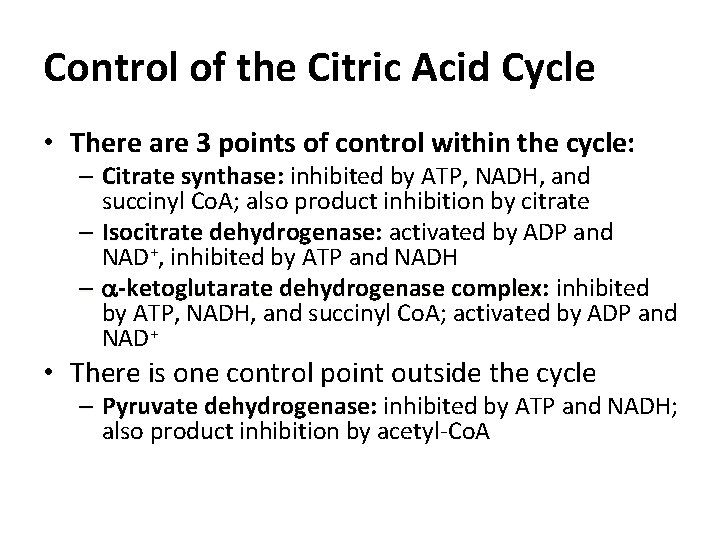
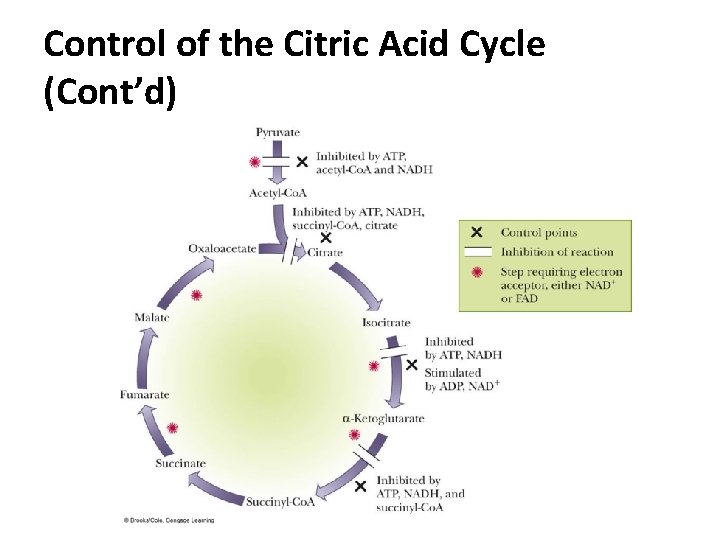
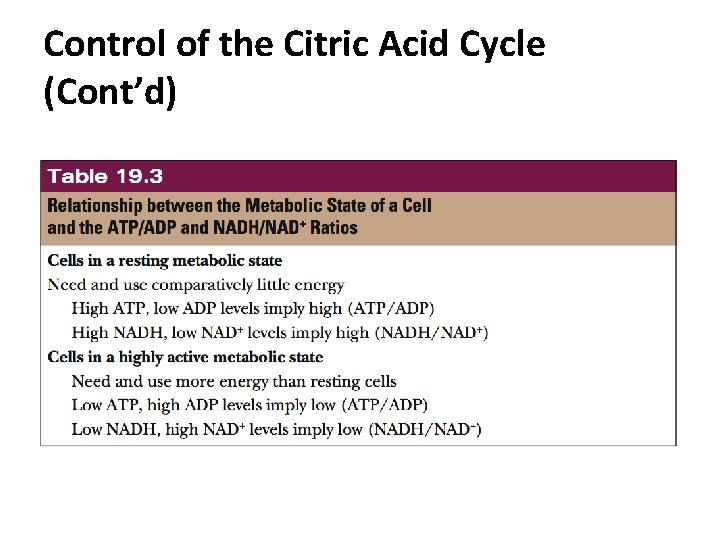
Control of the Citric Acid Cycle • There are 3 points of control within the cycle: – Citrate synthase: inhibited by ATP, NADH, and succinyl Co. A; also product inhibition by citrate – Isocitrate dehydrogenase: activated by ADP and NAD+, inhibited by ATP and NADH – -ketoglutarate dehydrogenase complex: inhibited by ATP, NADH, and succinyl Co. A; activated by ADP and NAD+ • There is one control point outside the cycle – Pyruvate dehydrogenase: inhibited by ATP and NADH; also product inhibition by acetyl-Co. A
Control of the Citric Acid Cycle (Cont’d)
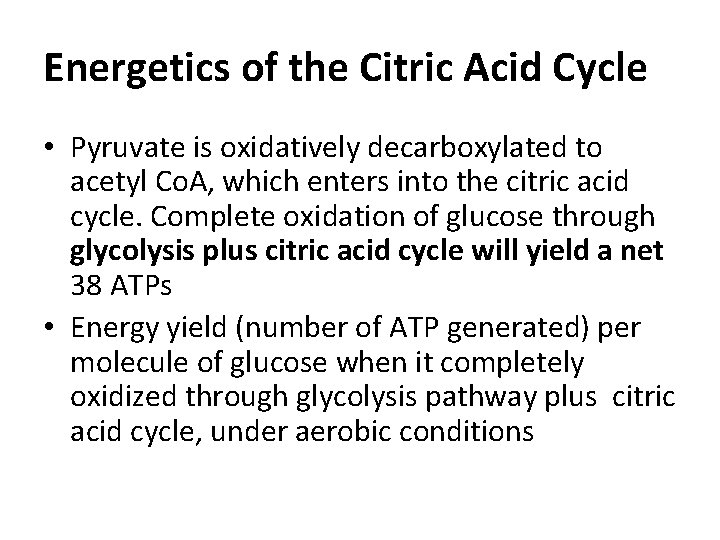
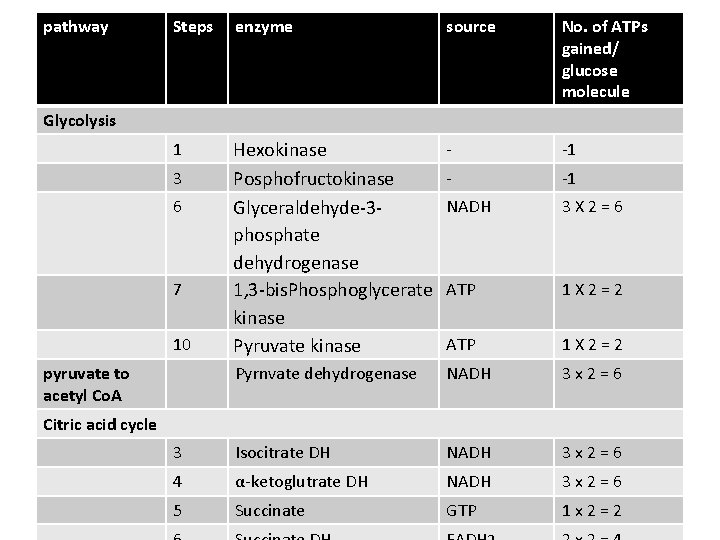
Energetics of the Citric Acid Cycle • Pyruvate is oxidatively decarboxylated to acetyl Co. A, which enters into the citric acid cycle. Complete oxidation of glucose through glycolysis plus citric acid cycle will yield a net 38 ATPs • Energy yield (number of ATP generated) per molecule of glucose when it completely oxidized through glycolysis pathway plus citric acid cycle, under aerobic conditions
pathway Steps enzyme source No. of ATPs gained/ glucose molecule 1 Hexokinase Posphofructokinase Glyceraldehyde-3 phosphate dehydrogenase 1, 3 -bis. Phosphoglycerate kinase Pyruvate kinase - -1 NADH 3 X 2=6 ATP 1 X 2=2 Pyrnvate dehydrogenase NADH 3 x 2=6 3 Isocitrate DH NADH 3 x 2=6 4 α-ketoglutrate DH NADH 3 x 2=6 5 Succinate GTP 1 x 2=2 Glycolysis 3 6 7 10 pyruvate to acetyl Co. A Citric acid cycle
Control of the Citric Acid Cycle (Cont’d)
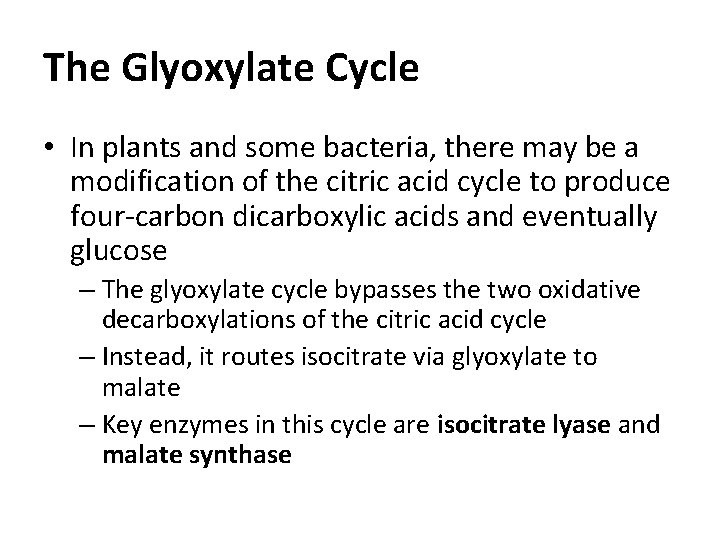
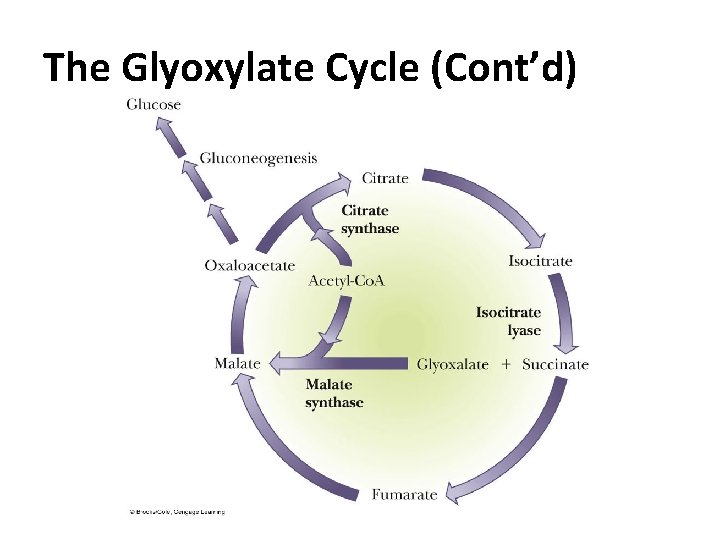
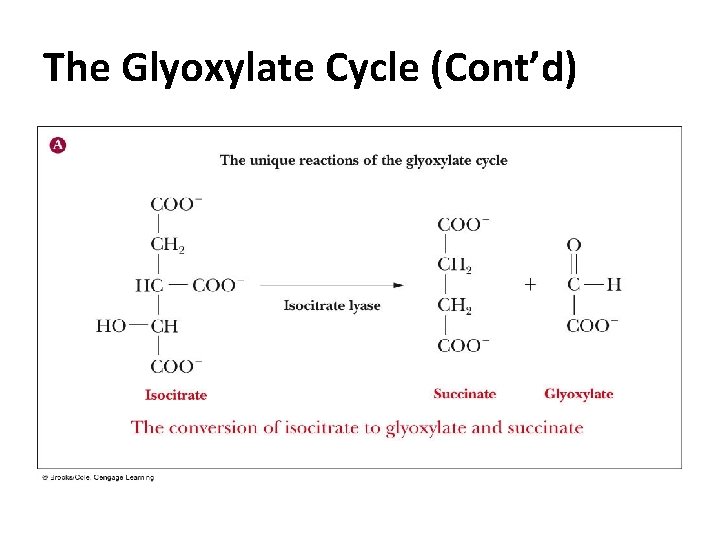
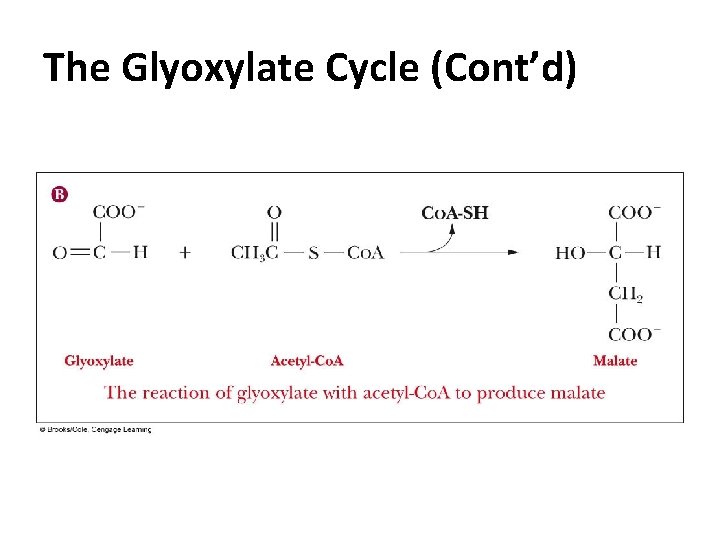
The Glyoxylate Cycle • In plants and some bacteria, there may be a modification of the citric acid cycle to produce four-carbon dicarboxylic acids and eventually glucose – The glyoxylate cycle bypasses the two oxidative decarboxylations of the citric acid cycle – Instead, it routes isocitrate via glyoxylate to malate – Key enzymes in this cycle are isocitrate lyase and malate synthase
The Glyoxylate Cycle (Cont’d)
The Glyoxylate Cycle (Cont’d)
The Glyoxylate Cycle (Cont’d)
The Glyoxylate Cycle (Cont’d) • The glyoxylate cycle takes place: – In plants: in glyoxysomes, specialized organelles devoted to this cycle – In yeast and algae: in the cytoplasm • Helps plants grow in the dark: – Seeds are rich in lipids, which contain fatty acids – During germination, plants use the acetyl-Co. A produced in fatty acid oxidation to produce oxaloacetate and other intermediates for carbohydrate synthesis – Once plants begin photosynthesis and can fix CO 2, glyoxysomes disappear