
The Citric Acid Cycle II 11172009 The Citric

- Slides: 33
The Citric Acid Cycle II 11/17/2009
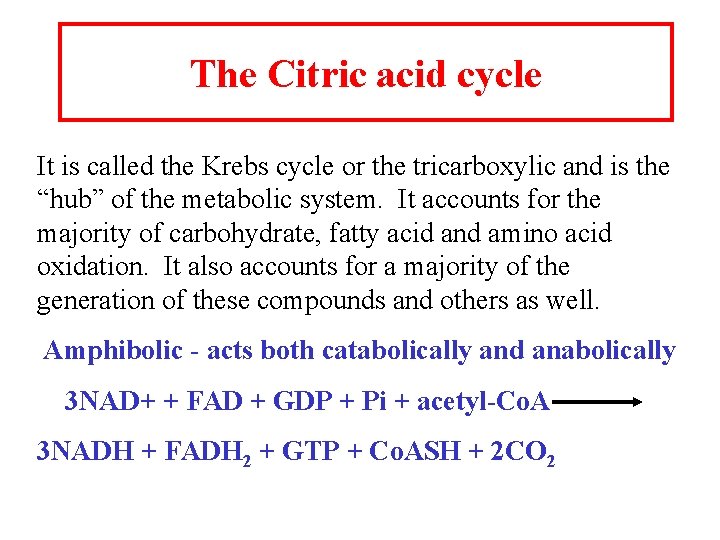
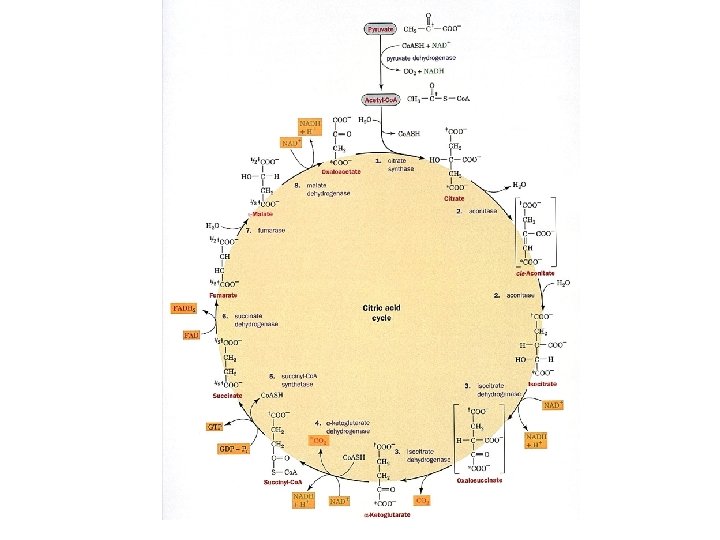
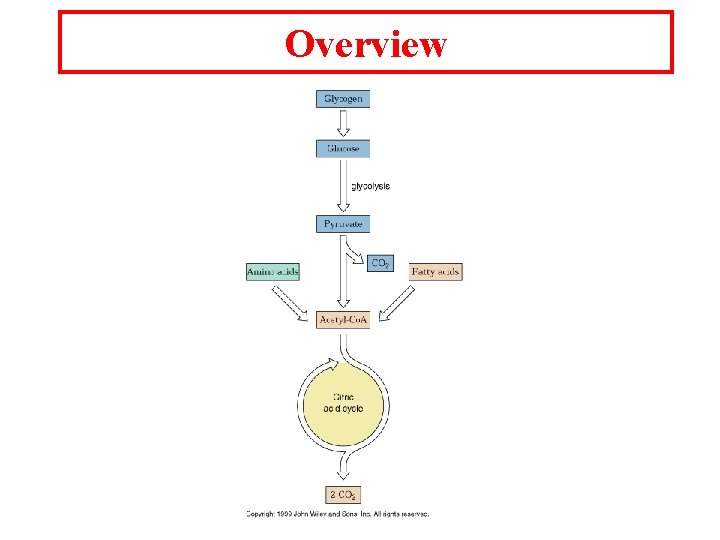
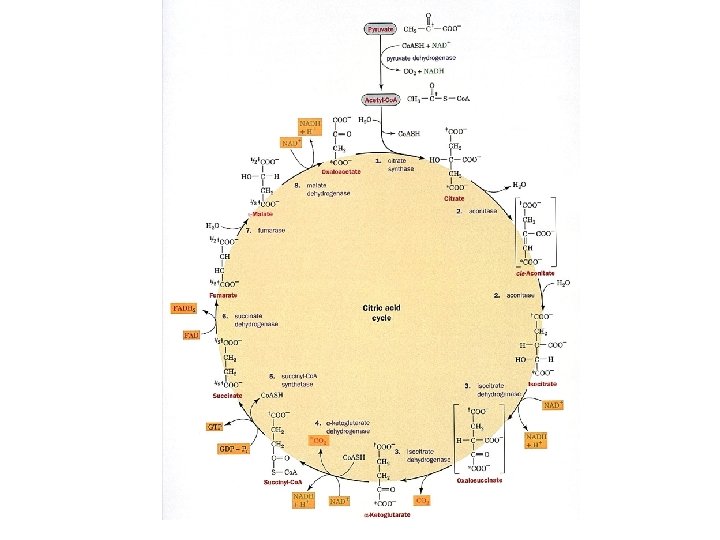
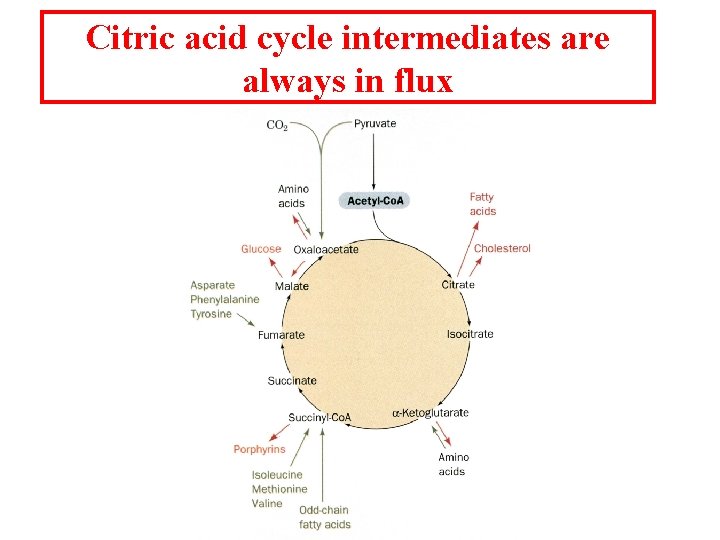
The Citric acid cycle It is called the Krebs cycle or the tricarboxylic and is the “hub” of the metabolic system. It accounts for the majority of carbohydrate, fatty acid and amino acid oxidation. It also accounts for a majority of the generation of these compounds and others as well. Amphibolic - acts both catabolically and anabolically 3 NAD+ + FAD + GDP + Pi + acetyl-Co. A 3 NADH + FADH 2 + GTP + Co. ASH + 2 CO 2
Overview
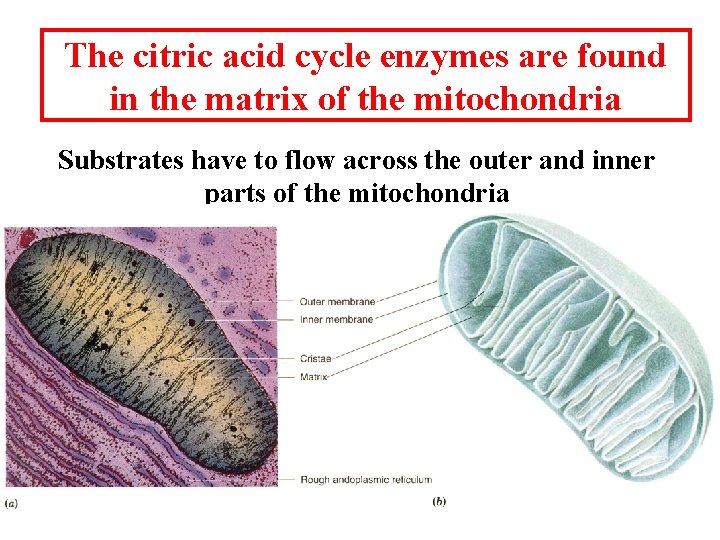
The citric acid cycle enzymes are found in the matrix of the mitochondria Substrates have to flow across the outer and inner parts of the mitochondria
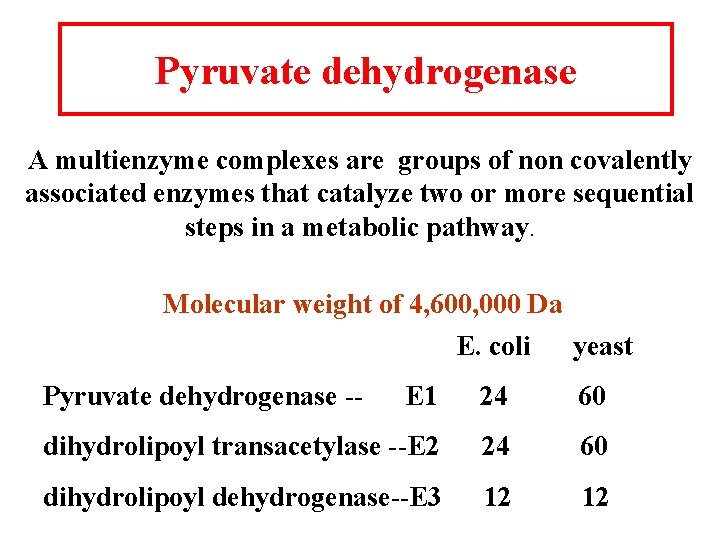
Pyruvate dehydrogenase A multienzyme complexes are groups of non covalently associated enzymes that catalyze two or more sequential steps in a metabolic pathway. Molecular weight of 4, 600, 000 Da E. coli yeast Pyruvate dehydrogenase -- E 1 24 60 dihydrolipoyl transacetylase --E 2 24 60 dihydrolipoyl dehydrogenase--E 3 12 12
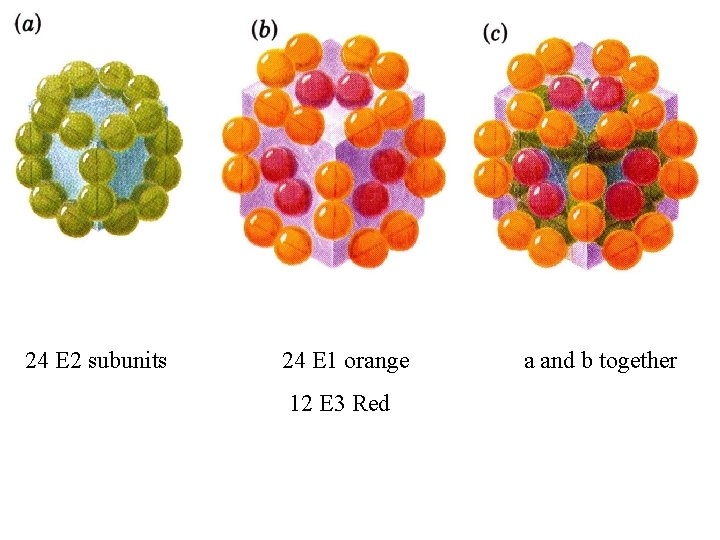
24 E 2 subunits 24 E 1 orange 12 E 3 Red a and b together
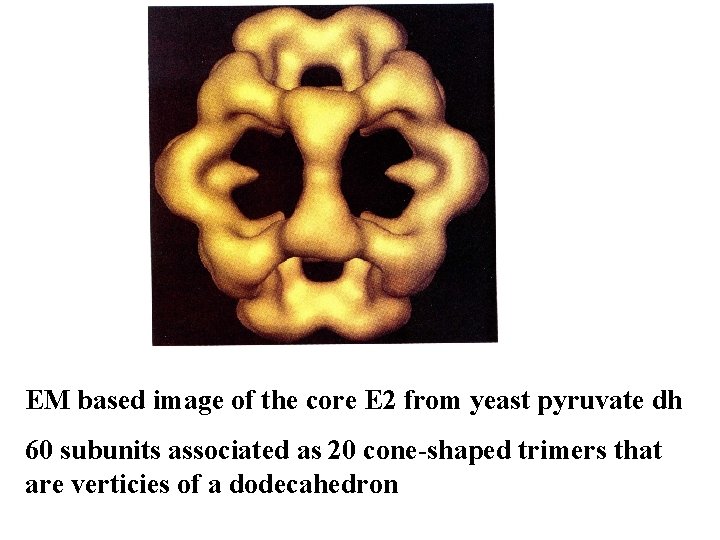
EM based image of the core E 2 from yeast pyruvate dh 60 subunits associated as 20 cone-shaped trimers that are verticies of a dodecahedron
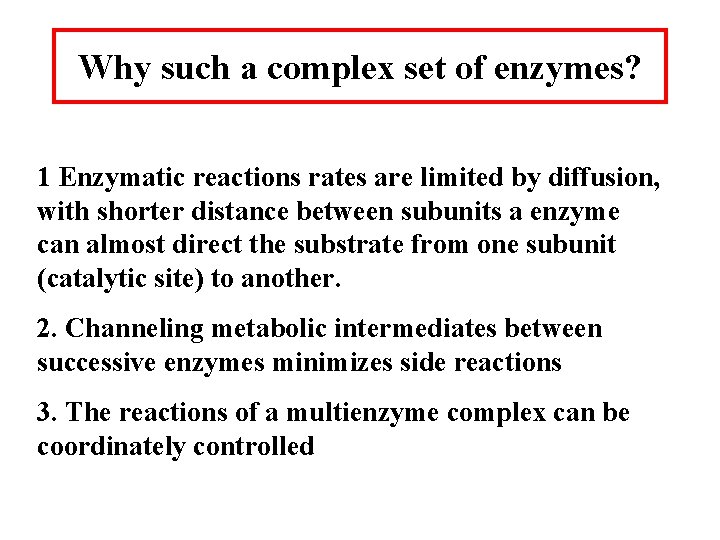
Why such a complex set of enzymes? 1 Enzymatic reactions rates are limited by diffusion, with shorter distance between subunits a enzyme can almost direct the substrate from one subunit (catalytic site) to another. 2. Channeling metabolic intermediates between successive enzymes minimizes side reactions 3. The reactions of a multienzyme complex can be coordinately controlled
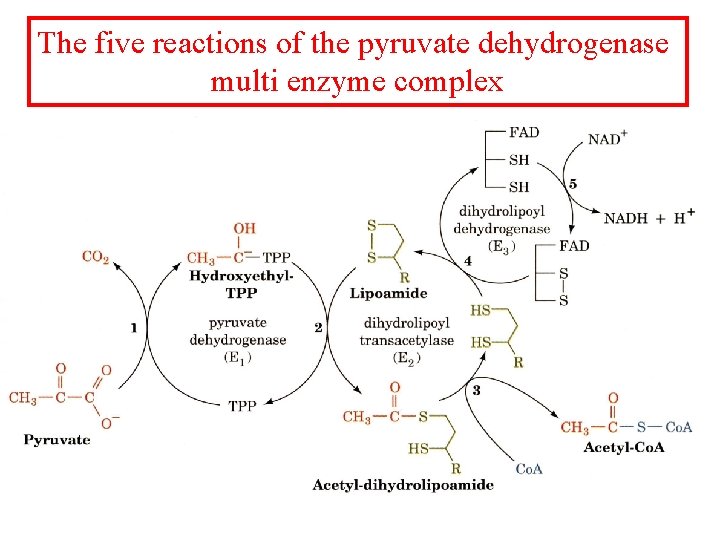
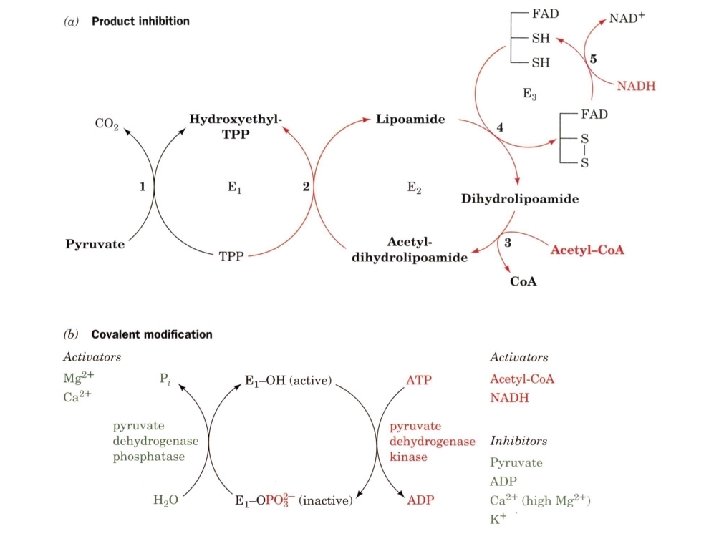
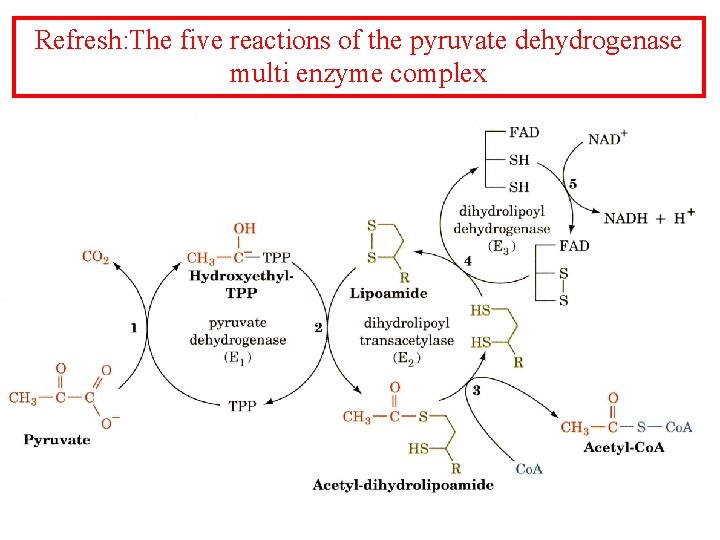
The five reactions of the pyruvate dehydrogenase multi enzyme complex
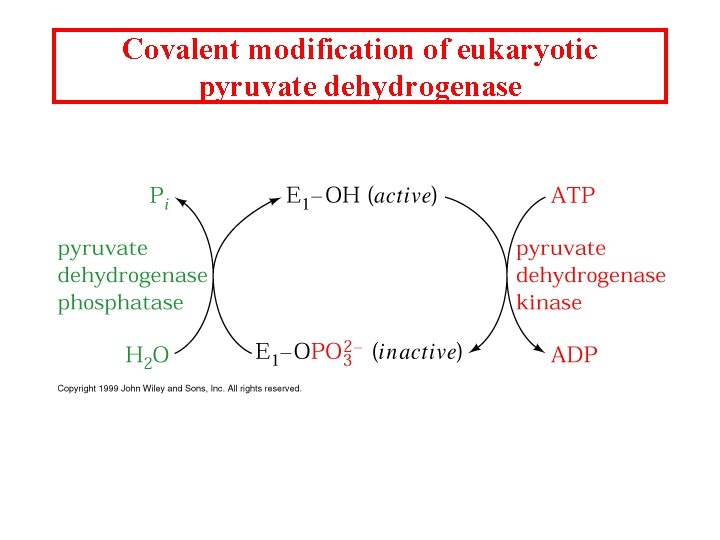
Covalent modification of eukaryotic pyruvate dehydrogenase
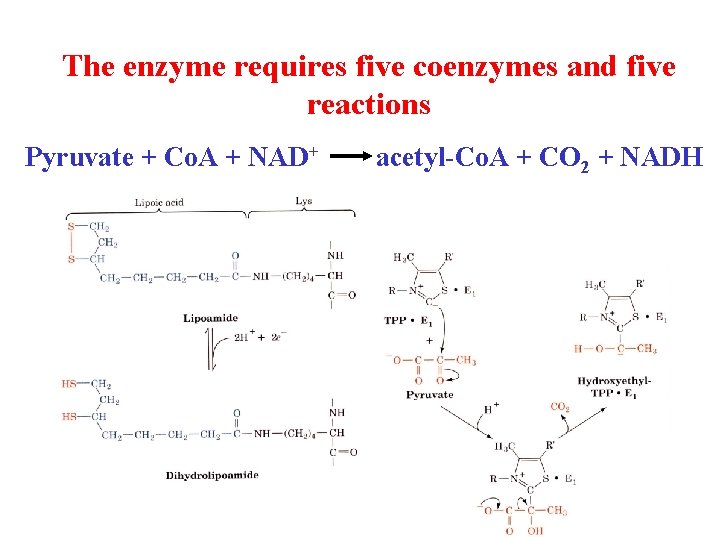
The enzyme requires five coenzymes and five reactions Pyruvate + Co. A + NAD+ acetyl-Co. A + CO 2 + NADH
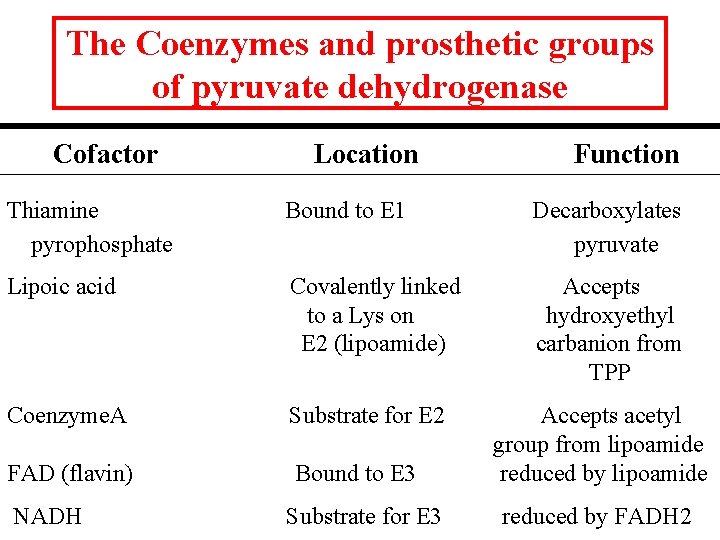
The Coenzymes and prosthetic groups of pyruvate dehydrogenase Cofactor Location Function Thiamine pyrophosphate Bound to E 1 Decarboxylates pyruvate Lipoic acid Covalently linked to a Lys on E 2 (lipoamide) Accepts hydroxyethyl carbanion from TPP Coenzyme. A Substrate for E 2 FAD (flavin) Bound to E 3 NADH Substrate for E 3 Accepts acetyl group from lipoamide reduced by FADH 2
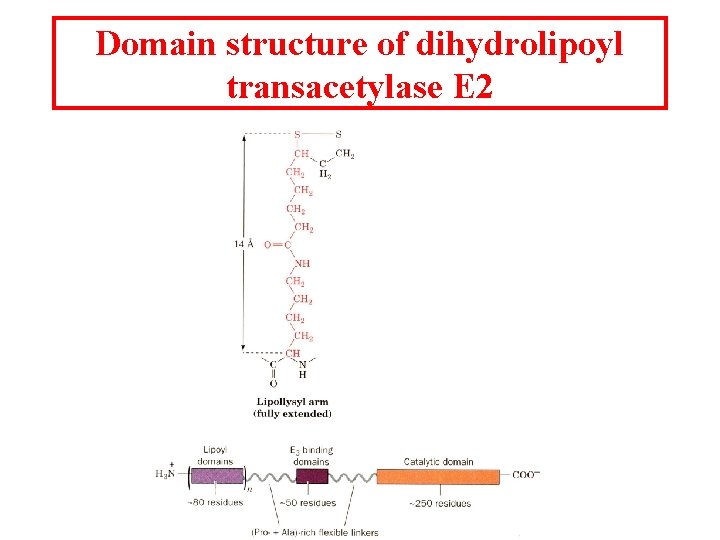
Domain structure of dihydrolipoyl transacetylase E 2
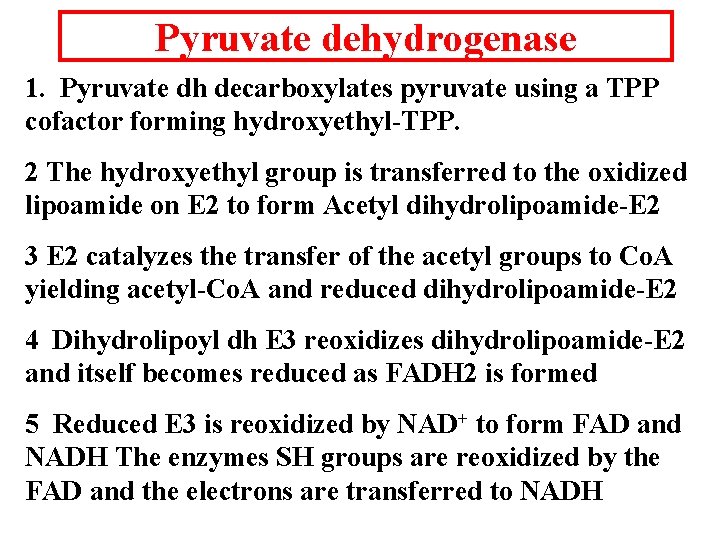
Pyruvate dehydrogenase 1. Pyruvate dh decarboxylates pyruvate using a TPP cofactor forming hydroxyethyl-TPP. 2 The hydroxyethyl group is transferred to the oxidized lipoamide on E 2 to form Acetyl dihydrolipoamide-E 2 3 E 2 catalyzes the transfer of the acetyl groups to Co. A yielding acetyl-Co. A and reduced dihydrolipoamide-E 2 4 Dihydrolipoyl dh E 3 reoxidizes dihydrolipoamide-E 2 and itself becomes reduced as FADH 2 is formed 5 Reduced E 3 is reoxidized by NAD+ to form FAD and NADH The enzymes SH groups are reoxidized by the FAD and the electrons are transferred to NADH
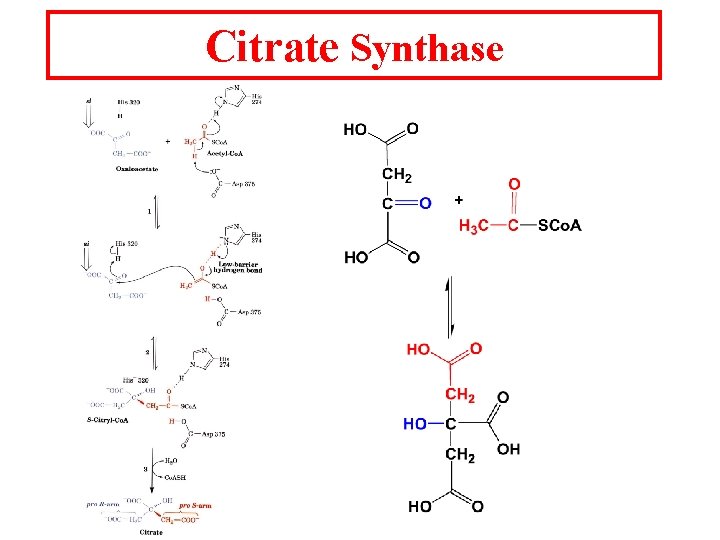
Citrate Synthase
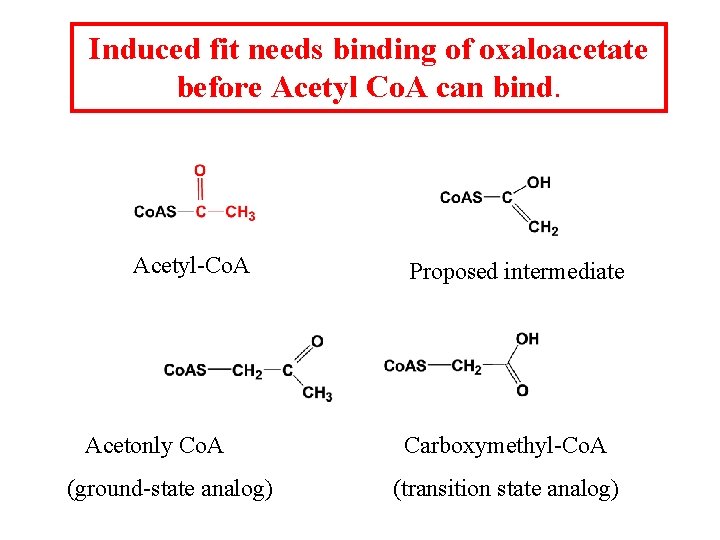
Induced fit needs binding of oxaloacetate before Acetyl Co. A can bind. Acetyl-Co. A Acetonly Co. A (ground-state analog) Proposed intermediate Carboxymethyl-Co. A (transition state analog)
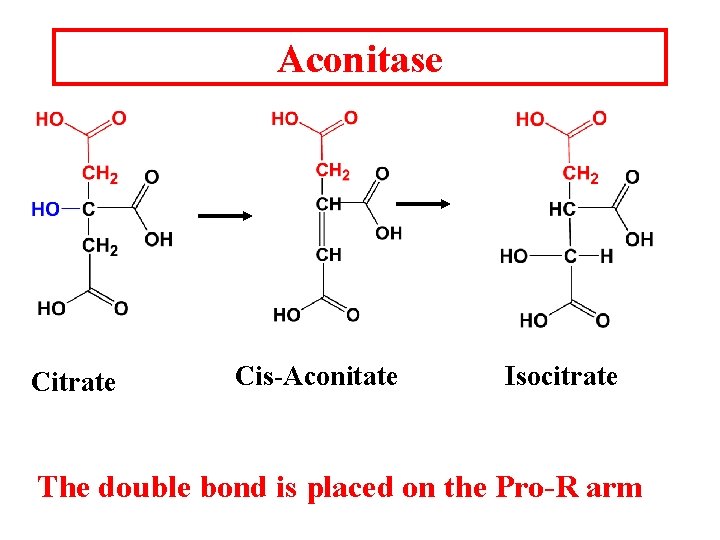
Aconitase Citrate Cis-Aconitate Isocitrate The double bond is placed on the Pro-R arm
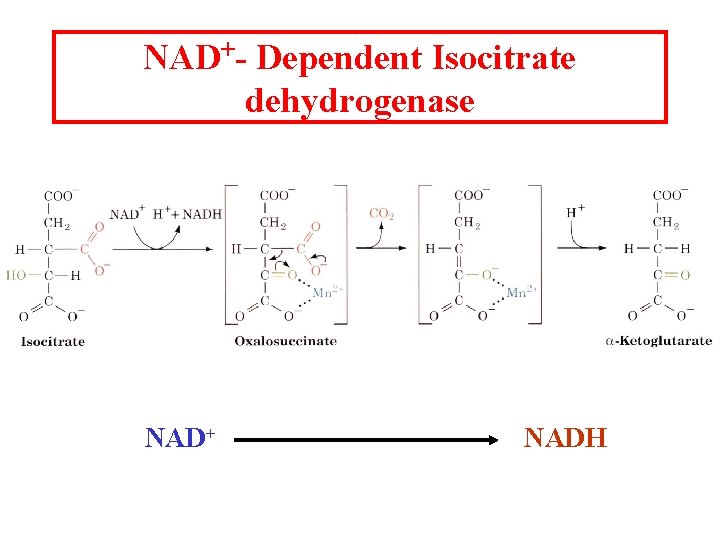
NAD+- Dependent Isocitrate dehydrogenase NAD+ NADH
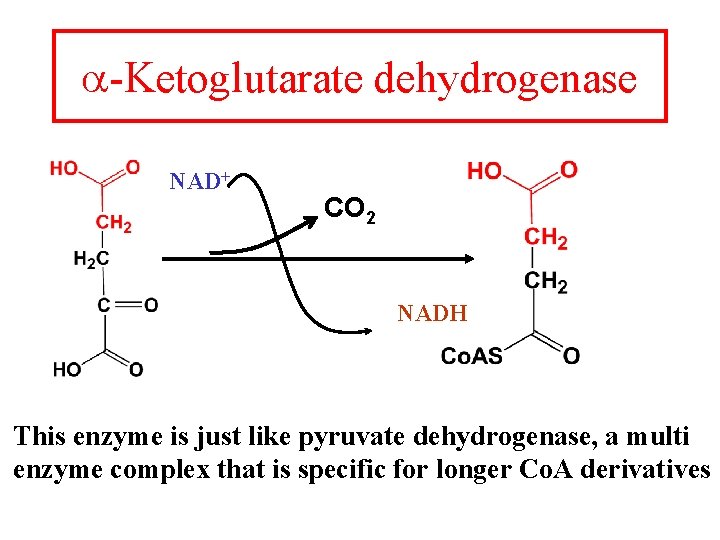
a-Ketoglutarate dehydrogenase NAD+ CO 2 NADH This enzyme is just like pyruvate dehydrogenase, a multi enzyme complex that is specific for longer Co. A derivatives
Refresh: The five reactions of the pyruvate dehydrogenase multi enzyme complex
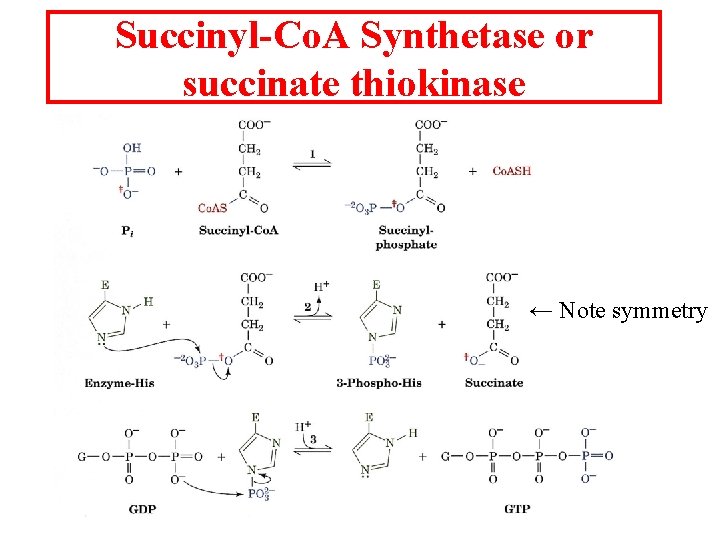
Succinyl-Co. A Synthetase or succinate thiokinase ← Note symmetry
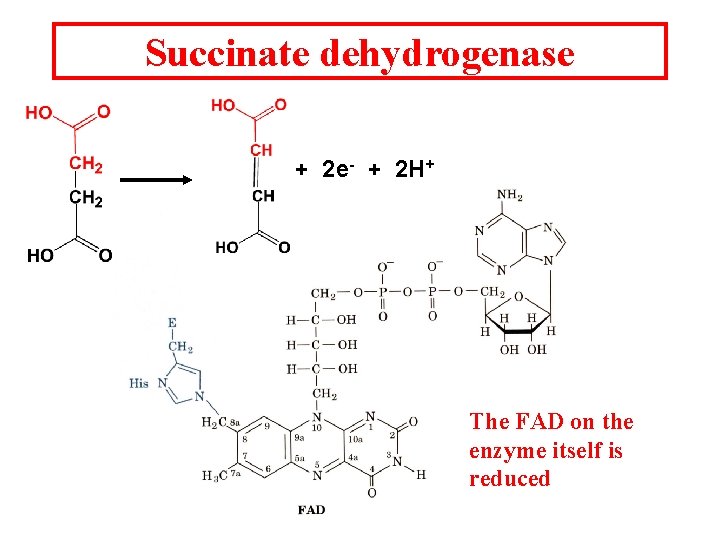
Succinate dehydrogenase + 2 e- + 2 H+ The FAD on the enzyme itself is reduced
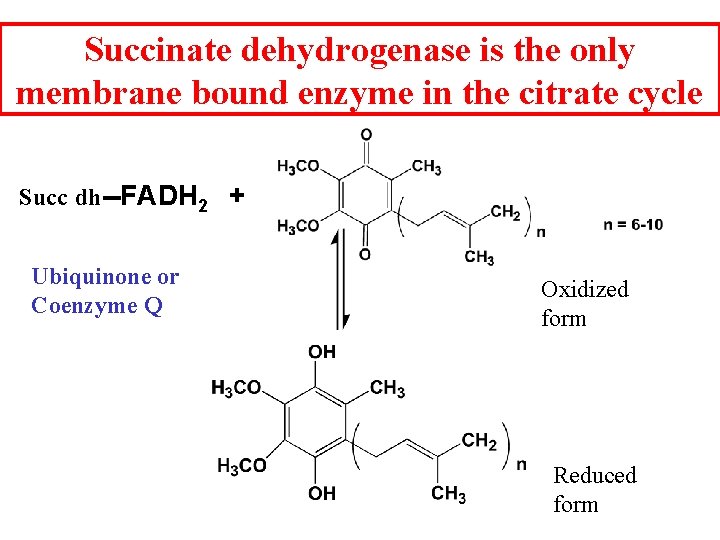
Succinate dehydrogenase is the only membrane bound enzyme in the citrate cycle Succ dh--FADH 2 + Ubiquinone or Coenzyme Q Oxidized form Reduced form
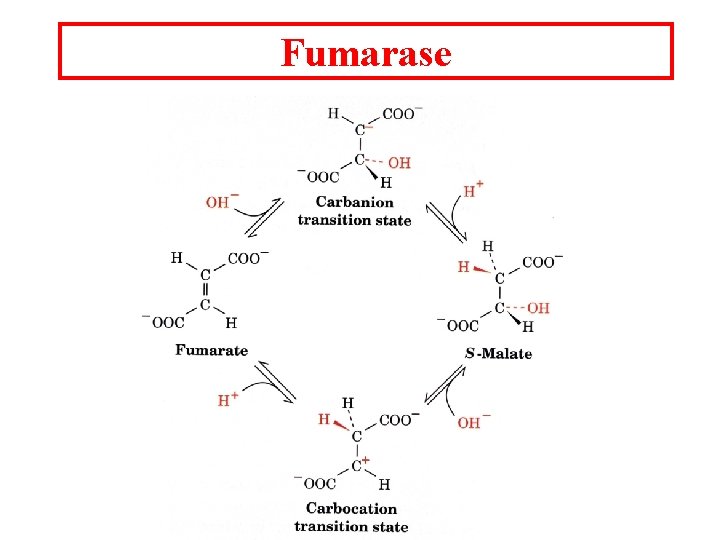
Fumarase
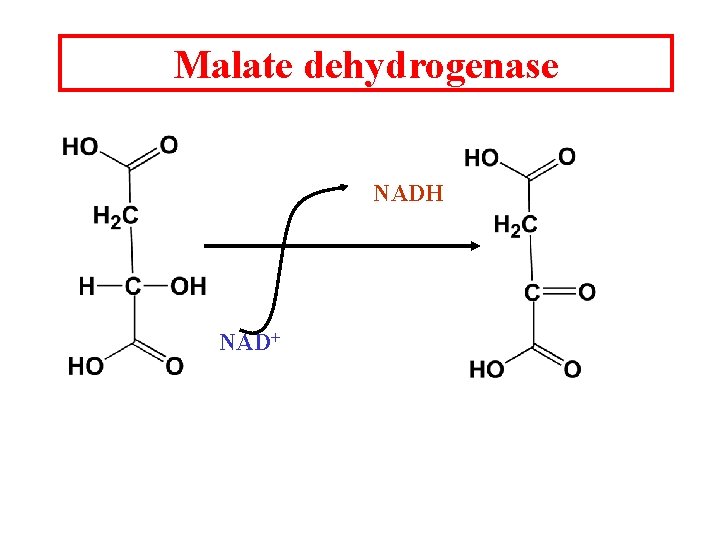
Malate dehydrogenase NADH NAD+
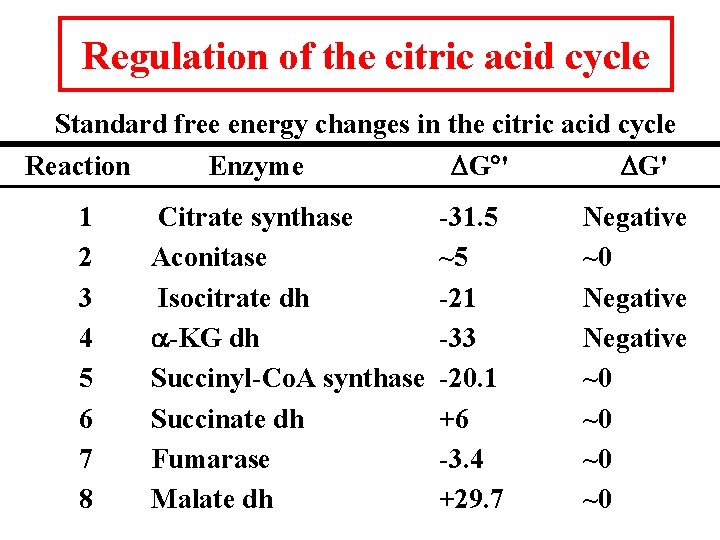
Regulation of the citric acid cycle Standard free energy changes in the citric acid cycle Reaction 1 2 3 4 5 6 7 8 Enzyme Citrate synthase Aconitase Isocitrate dh a-KG dh Succinyl-Co. A synthase Succinate dh Fumarase Malate dh DG ' -31. 5 ~5 -21 -33 -20. 1 +6 -3. 4 +29. 7 DG' Negative ~0 ~0
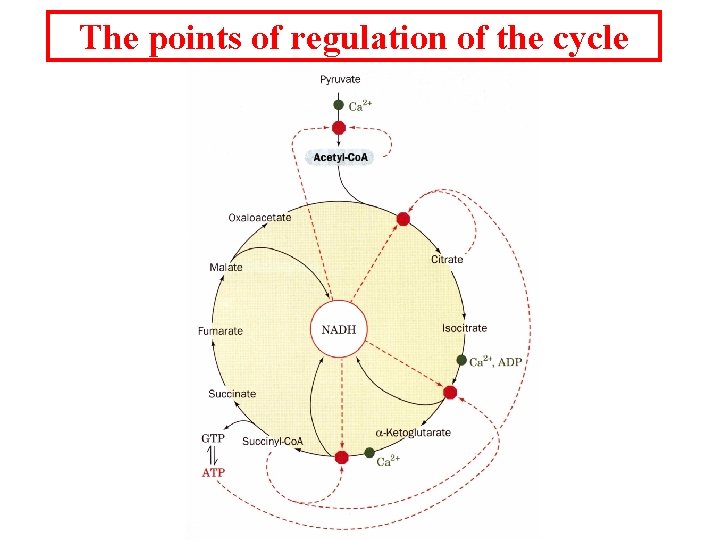
The points of regulation of the cycle
Citric acid cycle intermediates are always in flux
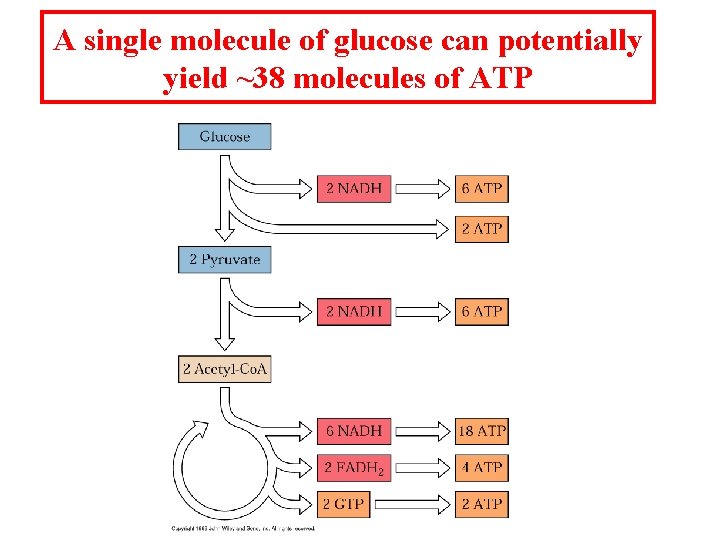
A single molecule of glucose can potentially yield ~38 molecules of ATP
Next Lecture Thursday 11/19/09 Exam II Review