
The Circulatory System Sketch the basic structure of
The Circulatory System • Sketch the basic structure of the heart • Add as many labels as you can
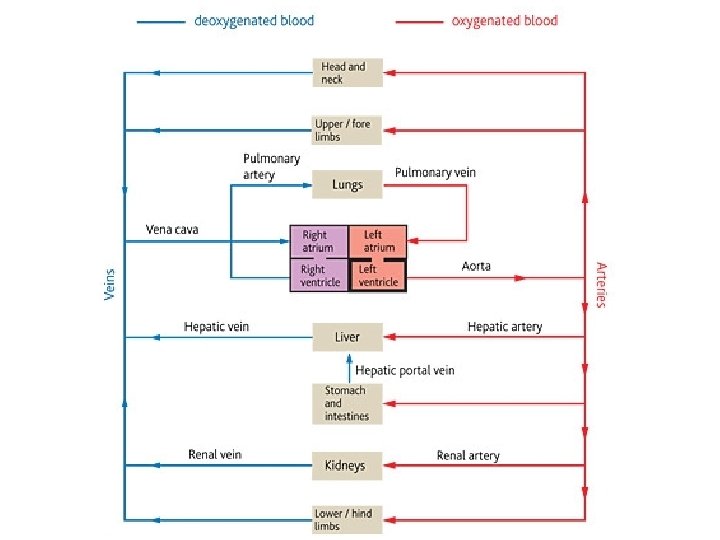
Circulatory System of a Mammal
The Blood System • The general pattern of blood circulation in a mammal. Names are required only of the coronary arteries and of blood vessels entering and leaving the heart, liver and kidneys.
Why do large organisms need a transport system? • Increasing size = decrease in the SA to Volume ratio. • Can no longer rely on simple diffusion and need to develop specialist exchange surfaces these are linked to transport systems.
Transport System in Mammals: • A suitable medium in which to carry materials - Blood • A closed system of tubular vessels that contains the transport medium – Blood vessels (arteries, veins and capillaries)
Transport System in Mammals: • A mechanism for moving the transport medium within vessels - Muscular contraction of the heart • A mechanism to maintain the mass flow in one direction – valves • A mechanism of controlling the flow of the transport medium – heart rate, vasodilation, vasoconstriction
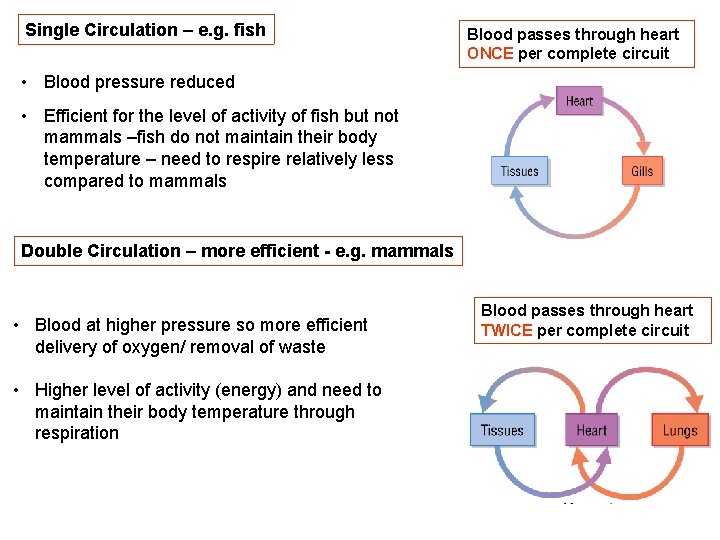
Single Circulation – e. g. fish Blood passes through heart ONCE per complete circuit • Blood pressure reduced • Efficient for the level of activity of fish but not mammals –fish do not maintain their body temperature – need to respire relatively less compared to mammals Double Circulation – more efficient - e. g. mammals • Blood at higher pressure so more efficient delivery of oxygen/ removal of waste • Higher level of activity (energy) and need to maintain their body temperature through respiration Blood passes through heart TWICE per complete circuit
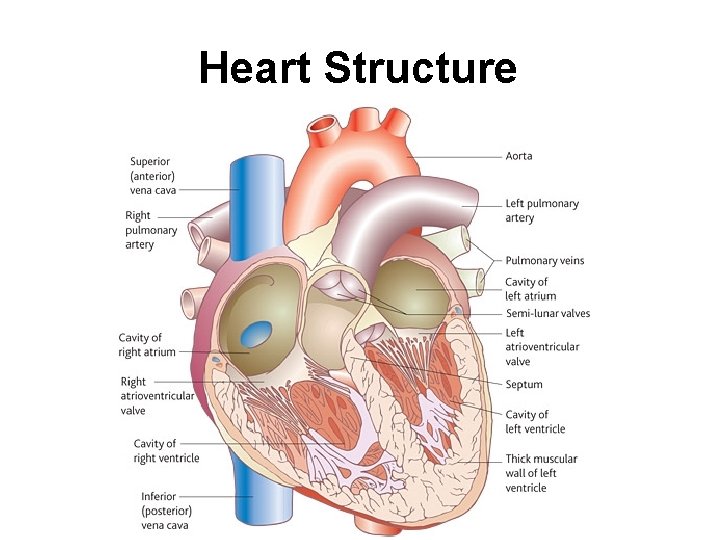
Heart Structure
Heart Dissection Follow the instructions in the practical booklet 1. Examine external features 2. Cutting the heart and examining inside – make a note of the thickness of each chamber wall 3. Labelling as many structures as you can 4. Take a photo? 5. Clear away – heart and gloves into biohazard bag, tools into tubs of ethanol, boards in the bowl of soapy water, wipe the desks with disinfectant. https: //www. youtube. com/watch? v=y. E 3 Y-XR 8 Ax 4

Answer in your lab book… 1. How thick is the wall of the right atrium? 2. Approximately how thick is the wall of the right ventricle? 3. Why is the wall of the right ventricle thicker than the wall of the right atrium? 4. What do you observe at the junction of the cut right atrium and cut right ventricle? 5. At which phase of the cardiac cycle is backflow from the pulmonary artery into the right ventricle liable to occur? 6. Why do you think the wall of the pulmonary vein thinner than the wall of the pulmonary artery? 7. How thick is the thickest region of the wall of the left ventricle? 8. Explain why the thickness of the muscle mass differs in the walls of the right and left ventricles. 9. Compare thickness of the walls of the aorta and the pulmonary artery. Why is there a difference in their thicknesses?
- Slides: 12